Book Report: The Blues Brothers by Miami Mitch (1980)

Book coverWell, this book is probably the one that leads me to end my reading of other movie and television tie-in books for the nonce. It, of course, novelizates the classic film based on a Saturday Night Live sketch (which makes it movie and television tie in).

All right, for those of you born in the twenty-first century (Just kidding! What is this, an app-based video because the damn kids can’t even handle a YouTube video that’s measured in tens of minutes? Not hardly!), I will sum up the plot: After a failed robbery to pay the members of his blues band, Jake Blues goes to prison for a couple of years. When he gets out, he discovers that the orphanage where he and his adopted brother Elwood grew up is under the threat of closure for nonpayment of taxes (what?), and a group of Nazis are hoping to buy it at auction. So they decide to get their blues band back together to do a special gig at a ritzy joint where they’re not actually scheduled to perform.

So that’s it. The story is them gathering the band members who have scattered and putting on the show.

The movie, as you recall, gentle (old man) reader, was almost a musical with numbers by James Brown, Aretha Franklin, Ray Charles, and others in their various scenes. However, in each of those iconic scenes, the mention of any music is omitted, and the whole scene is over in a couple of sentences or a paragraph. Other lengthy segments from the film, such as the car chase through the mall, are also handled quickly and dismissively, with memorable lines like “The new Oldsmobiles are in early this year!” completely missing.

Given that this is much of the draw of the film and that the humor in the film is kind of droll and not really laugh out loud funny to begin with, the book is not a very good read. As I mentioned, it’s probably put me off of movie tie-ins for a bit, especially as I think the running theme is played out (although with its help, I am at 49 books read so far this year).

I did pick out a couple of things from the book to flag though, tucked below the fold so I do not further tax your patience with my book reports which are more about me reading the books than the books themselves.

Continue reading “Book Report: The Blues Brothers by Miami Mitch (1980)”

Buy My Books!
Buy John Donnelly's Gold Buy The Courtship of Barbara Holt Buy Coffee House Memories

Book Report: Cocoon by David Saperstein (1985)

Book coverIn continuing with my movie tie-in book reading of this year, I picked up this book which has been haunting my to-read shelves for thirteen years and two homes. I remember the film well–it was on Showtime in my youthful trailer park days, and as you might remember, gentle reader, when a movie was on Showtime between 1985 and 1988, I saw it a bunch. So I remember the film passably well, especially Steve Guttenberg shouting, “If this is foreplay, I’m a dead man!” which of course would have stuck with a fifteen year old who probably learned about foreplay from the American Heritage Dictionary. Remember Steve Guttenberg? In the late 1980s, he was in every other movie (actually, it was only nine major movies in four years, so it was only every other non-action film).

But I digress.

The book has a different story arc than the movie: A charter boat fisherman takes an assignment for what he quickly learns are aliens (I mean, on page 15, they reveal themselves as aliens). They’re looking to recover almost a thousand (not ten like the movie) of their fellow Antareans that have been submerged in coccoons off the coast of Florida after the sinking of Atlantis. They’ve bought an incomplete senior condo project and turned one of the buildings into a processing center for reviving the dormant aliens. Four seniors from the complete building on the property discover the processing room and mistake it for a health club, so they try the equipment and find that it rejuvenates them. When the Antareans find that the salt water has damaged the cocoons, they’re left without an army–until they decide to recruit seniors from Earth.

So it’s quite different from the movie, which is a simplified version of the novel with subplots removed. I wondered if the book had come first followed by the simplified movie, but according to this article from 2019, it sounds like it went from story-for-movie to movie to novel:

Finding a way to get my story out to an audience did not come easily. I heard 51 “noes” before a “yes.” Among the rejections were many who deigned to read a few pages and said things like, “This is a wrinkle story,” and “Old people don’t go to the movies.”

It took five years to get a movie made, with a script by established screenwriter Tom Benedek and direction by Ron Howard, in 1985. The positive reactions to the story said to me that I got most of it right. The movie won two Oscars, and critics called it “feel-good” and “uplifting.” My novel was published after the movie. Cocoon was a New York Times best seller and became a brand of sorts, and I went on to a new writing career.

So perhaps the novel tracks more on what Saperstein had in mind; although he provided the story and later wrote the novel, he did not write the screenplay. He does work in a bunch of back story for the characters, including talking about what the seniors and their wives did before retiring to Florida. He even drops a couple of paragraphs describing a helicopter pilot into the middle of the narrative. So it gets some of its novel length with these back stories which are naturally not in a movie.

It was a pretty good read, though, even with its changed story line.

Brian J., did you flag anything in this fun little novel? you might ask. Of course I did! Not that I remember what. Let’s see if I can remember why I marked passages in the book.

Continue reading “Book Report: Cocoon by David Saperstein (1985)”

Buy My Books!
Buy John Donnelly's Gold Buy The Courtship of Barbara Holt Buy Coffee House Memories

Book Report: Journey through Heartsongs by Mattie J.T. Stepanek (2003)

Book coverI regret having read this book.

When I bought it this weekend, I thought it was a collection of grandmother poetry based on the name Mattie. Short for Matilda. Oh, but no. Mattie is short for Matthew.

The poems are not very good, but Mattie is, at the time of publication, 13 years old.

And that would be that, but I came across a poem that he wrote when his older brother died. Each of the poems is dated, and when I got to the bottom of the poem, I did the math. He purportedly wrote this poem when he was four years old. Which is when I looked a little deeper and found the cult of Mattie. Continue reading “Book Report: Journey through Heartsongs by Mattie J.T. Stepanek (2003)”

Buy My Books!
Buy John Donnelly's Gold Buy The Courtship of Barbara Holt Buy Coffee House Memories

Book Report: The Great Optimist by Leigh Mitchell Hodges (2003)

Book coverI bought this book in December at ABC Books because it was inexpensive, and as it was filed with the poetry, I thought it was an old collection of poems. As it stands, though, it is a collection of essays or newspaper columns–apparently, the author was a columnist in Philadelphia back when a lot of the people mentioned in Heroes and Outlaws of the Old West, the lawmen anyway, were still alive.

So we have ten short essays–I would put them at 600 words, tops, and it’s only 35 pages total. The column/essays are:

  • “The Great Optimist”, a column about Christmas and how Jesus was the Great Optimist. I wondered as I started it whether I was in for a dozen sermons, but no; although the author is Christian, he’s a columnist and not a pastor.
  • “A Darkened Cage” about how a little darkness teaches a songbird to sing. You know what it’s a metaphor for; it reminded me of I Know Why The Caged Bird Sings, Maya Angelou’s autobiography I was assigned in freshman English. The same metaphor, anyway.
  • “A Spring Song”, which talks about the optimism of spring and mirrors a poem that I’ve put down the first lines of somewhere.
  • “Making the Most”, which is about making the most of your talents (of course).
  • “The Flag”, a patriotic piece whose sentiments we might look askew at today, as it says all Americans can rally around it, which is not the 21st century reality, ainna?
  • “Ma Brither”, which recounts this story:

    Ian MacLaren tells somewhere a sweet story of his native Scotland–what while sauntering along a country lane one hot afternoon, he met a bonnie wee lass, all humped up and red, puffing with the weight of the chubby laddie she was carrying.
    “Isn’t he too heavy for you?” asked the dominic.
    “He’s not hivvy, sir,” came the reply, with a smile of loving pride; “he’s ma brither.”

    I tried to track down the source of this story; although Hodges attributes it to Ian Maclaren (pen name of John Watson), apparently it appears in The parables of Jesus, an 1884 book by James Wells. So it was already an established trope by 1903.

  • “Failure”, about how failure leads to success, which is a strangely contemporary message delivered to you by all your software that breaks easily.
  • “The Grasshopper”, about finding beauty in everyday things.

    Notable because:

    One Wednesday afternoon back in the baby days of the last century, three poets who were friends met together, as was their custom. Before parting, each agreed to write a sonnet on “The Grasshopper,” and to read it the following Wednesday. How would you like to have been there when John Keats, Percy Shelley, and Leigh Hunt–for they were the friends–read each his fourteen lines!

    The poems are from 1816. So the poems were newer to Hodges than Hodges book is to our day.

  • “My Friend,” about real friends. Shades of the first essay in that Montaigne book I have not finished yet.
  • “Thanksgiving,” which is about the holiday and gratitude. Which go together!

So the book kind of follows the year from Christmas to the next Thanksgiving.

The essays are nice, but I probably won’t remember much from the book except that it was old and that I read it. Which is what this post is for, ultimately, gentle reader–to remind me of what this book was actually about.

Also, as a side note, I have read three of the six books I bought at ABC Books that day and I have started the fourth (the English novel Pamela which I will undoubtedly mention over and over as the serious book that I am reading whilst posting book reports on smaller books I have read during the span, much like the recently completed David Copperfield. Dare I make this a twee goal for 2021, to complete all six of these books, kind of like I made it a goal in 2019 to read all of the books that I bought at Calvin’s Books that May? The collection of Paul Dunbar might be daunting, though–although it is only the beginning of May.

Buy My Books!
Buy John Donnelly's Gold Buy The Courtship of Barbara Holt Buy Coffee House Memories

Book Report: Heroes and Outlaws of the Old West by Shane Edwards (1993)

Book coverI asked yesterday whether you thought I would delve into a book that I bought over the weekend or if I would read another movie tie-in book next. Hah! Gentle reader, as you well know, this is an example of a false dilemma. As it turns out, I picked up a thin children’s (I dare say it’s younger than Young Adult, but who knows in the 21st century?) book about, well, the title says it all, I suppose. I bought this book in 2012 along with Hud and a couple of M*A*S*H books, which might make this movie/television tie-in adjacent. That, and the other thing that we will get to.

The book is 128 pages of quick read–it took me about two hours start to finish. It lists, alphabetically, a variety of lawmen or outlaws from the frontier days (which means the latter half of the nineteenth century and maybe the first decade of the 20th–it’s amazing how not long ago this was). It’s got some of the usual suspects–Jesse James, Black Bart, Butch Cassidy and the Sunset Kid–and it pretty much has everyone from the Lincoln County War, including Billy the Kid amd Charlie Bowdre, so one wonders if the author was a fan of the film Young Guns which came out in 1988 (and the sequel in 1990).

The information within is perhaps dubious–it espouses the view that Butch Cassidy survived the shoot-out in Bolivia among other things. And it has something of a message, as all the outlaws die young by violence, and all the lawmen live to an old age after they retire in their 40s.

So a good idea book if you’re looking for things to write about in the old west, but probably not a source you’d want to cite. And, as I mentioned, a quick read even if it took me nine years to get to it.

Buy My Books!
Buy John Donnelly's Gold Buy The Courtship of Barbara Holt Buy Coffee House Memories

Book Report: Alien by Alan Dean Foster (1979)

Book coverWait a minute, Brian J., didn’t you already write a book report about this book this year? you might ask. Gentle reader, I understand why you might think so. But the movie novelization by Alan Dean Foster that I read earlier this year was Alien Nation. They would be shelved together in the used book store assuming that Alien Nation came before Aliens, which Foster also novelizinated. Of course, they might not even be in the used book store at the same time. Certainly my copies will not be until perhaps after my death.

Okay, so this is the novelization of Alien. I have not actually seen the film even though I have it and, I believe, the first two sequels on videocassette. I thought it would be too spooky–as a kid, I shied away from spooky movies, even spooky science fiction movies from the early days when I didn’t want to go see John Carpenter’s The Thing with my babysitters when I was ten years old. So I have probably backburnered this film with that same kind of dread. Although I did see Aliens in the theatre when I was fourteen years old. But probably not since. Now that I’ve read the book, I am a little more prepared for the movies, so perhaps I will give them ago. Albeit without my boys, who are probably not ready for it yet even though they might think they are.

So, the plot: Seven crew members on a faster-than-light tugboat are awakened from their cryogenic sleep to investigate a ‘distress call’ on a planet in a sector they’re passing through. They land, and as they explore a derelict alien craft, one of them gets attacked by an alien that attaches itself to his face. They bring him aboard, against all procedure, and eventually a different alien bursts from his chest, and the crew tries to hunt it down but finds itself outmatched, especially as someone on the crew seems to be helping the alien. I mean, you know the basics, right?

A third of the book is in setup before the attack on the derelict occurs, and about another third elapses before the Xenomorph is loose on the ship, so we get a rather brief run through of fighting the alien. I have to wonder if the movie itself is paced this way, or if this is another instance (like Alien Nation) where a lot of time is spent on world building in the beginning that doesn’t appear in the movie. This article explains some of the differences between the original screenplay and what was shot and also mentions a couple of things left on the cutting room floor that appear in the book.

So I’ll be set up for jump scares that never come, maybe.

But I liked the book all right; it’s got a We Find A Mystery Of Another Civilization/Race thing that I like, and I like the detail Foster builds into the world of being a working-class space farer. And I like Alan Dean Foster. So you know if I find other Alan Dean Foster books in the wild, I’ll grab them, but they’ll have to be at smaller book sales or garage sales unless they’re misfiled in the Martial Arts section at ABC Books or the Ozarks section at the Friends of the Springfield-Greene County Library book sale since I don’t go out seeking science fiction books. But they manage to find me.

At any rate, I only flagged one thing in the book, and it was because of a coincidence:

Unexpectedly, a realignment of priorities in her [Ripley’s] querying jogged something within the ship’s Brobdingnabian store of information.

I came across that sentence immediately after my beautiful wife played some Brobdingnabian Bards filk music while we were playing cards, and I explained the origin of the term (Gulliver’s Travels). It’s not quite the Jeopardy! nexus, but still.

So, now, the question: Do I read another movie novelization or television series tie-in, or do I delve into the stack of books I bought last weekend. I am keeping you in suspense, gentle reader, because I have not decided just yet.

Buy My Books!
Buy John Donnelly's Gold Buy The Courtship of Barbara Holt Buy Coffee House Memories

Book Report: Home Is Where The Heart Is by Thomas Kinkade (1998)

Book coverNot to be confused with Home Is Where The Quick Is which was a MOD Squad tie-in paperback that I read in 2012, proving that I have long had a thing for those kinds of books (my run through them this spring notwithstanding).

Instead, this is a Thomas Kinkade property. It’s 47 pages long. It has 18 Kinkade paintings reproduced; opposite pages have quotes from famous literary works. In it, Edward Guest has two or three such pages; as his most famous poem is called “Home” and the title comes from it, I understand why. Also, his works were known for being kitschy and sentimental and are mostly forgotten now–so you can see how he might fit in with Kinkade.

So I looked over the pictures here with a bit of a gimlet eye (not Gimlet’s eye, gentle reader; don’t be morbid) to try to see what some find so offensive about them. Well, it’s only la-di-dah public types who tend to get quoted disapproving Kinkade’s work. They’re homey scenes like something out of Currier and Ives, but, and I think this might be the start of the disapproval, the skies are usually fairly bright even at night–perhaps a nod to his Christian beliefs–and the light spills kind of unnaturally out of every window of the houses in the nighttime scenes, which seems wasteful at best and an anachronism if you try to figure out how the light was so bright and even though it’s horse-and-buggy days, probably precluding electric light for most of these places. Those would be some very bright gas lamps indeed. But, you know what, it’s also to emphasize the homey, so I get it.

It’s a shame about his tragic personal life, and it’s a shame people dunked on him when he was alive and probably after he died. Knocking him because he purportedly outlined things and had assistants fill them out or whatnot. C’mon, man, aren’t you familiar with Renaissance art practices?

At any rate, a nice little book that I could use in between chapters of other things.

I suppose I would be remiss in noting this is the first of the books that I read from this weekend’s binge. I was actually looking for a book of poetry, but when I shelved the books, I scattered the smaller books across the stacks in my offices, and this was the first quick browser that I came across. So it didn’t make it until football season.

Buy My Books!
Buy John Donnelly's Gold Buy The Courtship of Barbara Holt Buy Coffee House Memories

Good Book Hunting, May 1, 2021: The Friends of the Springfield-Greene County Library Book Sale

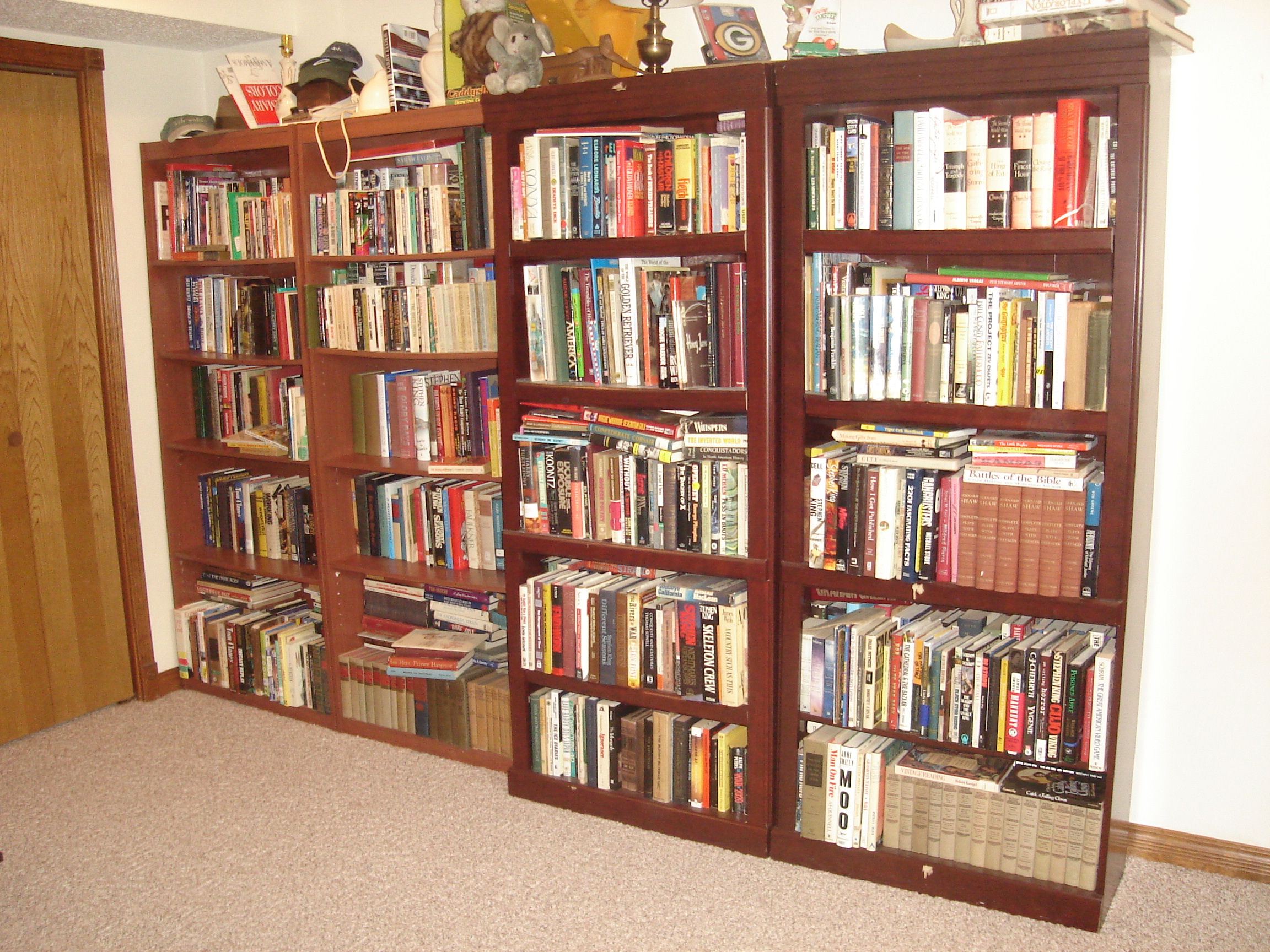
I know, I know; you saw my post about albums I bought this weekend, and you said, Who cares about the cheap, obscure easy listening records you buy in an attempt to find something of yours on Lileks’ Thrift Store Vinyl feature on Fridays?. Well, my bibliophile friend, it’s your turn to feast your eyes on the bonanza I got on half price day:


Click for full size

The audio courses section was pretty picked over, but I got:

  • From a series of two-cassette lectures on philosophers, I got bits on Neitzshe, Kierkegaard, Aristotle, Dewey, Hume, Spinoza, Aquinas, St. Augustine, and Socrates.
  • Lost Worlds of South America.
  • Comedy, Tragedy, History: William Shakespeare on cassette–I shall certainly miss having a cassette player in my vehicle again should I ever get another.

It looks like I mis-filed and mis-appropriated my beautiful wife’s audio course Myths, Half-Truths of Language Usage. Because I wanted to impress you with the height of my stacks, gentle reader, I stooped to inadvertent deception. It looks like I stacked 2001 Things to Do Before You Die in my books as well. As you can imagine, it has been banished to her shelves. Our books cannot conmingle.

The books I got include:

  • The Caine Mutiny by Herman Wouk in the Reader’s Digest World’s Greatest Reading edition. I have started to accumulate these books, but I bypassed a number of titles that I already have in other editions. So where’s my dedication really?
  • Peter Ackroyd by Charles Dickens. Because I actually finished David Copperfield and need more Dickens to read.
  • Long Lost signed by David Morrell, whose books I continue to accumulate without reading.
  • The Art of Carl Fabergé by A. Kenneth Snowman.
  • Fabergé Eggs, a browser dedicated to the designer’s fantastic eggs.
  • Louis C. Tiffany: Rebel in Glass by Robert Koch. Although it includes a lot of pictures, it’s a reader more than a browser.
  • American Art Deco by Eva Weber. A coffee table book, but hopefully someday I will understand what Lileks and Ed Driscoll are talking about when they talk architecture.
  • Motels: American Retro, a browser that would be right up Lileks’ alley.
  • Strive and Succeed, a two novel omnibus from Horatio Alger that includes Julius and The Store Boy. It’s in better shape than the other Alger novel I have, so I will probably read it first.
  • Rebecca of Sunnybrook Farm by Kate Douglas Wiggin. It looks to be a 1903 ex-library copy, but it’s in such good shape that I think it might be a later edition.
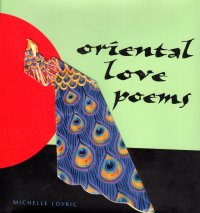
  • Oriental Love Poems edited by Michelle Lovric. It looks like it has some kind of pop-up cover, or it has some wrapping paper stuck on the front cover. I am not sure which.
  • I’ve Seen It All at the Library by Jonathan M. Farlow, a memoir by a librarian.
  • The Electric Life: Essays on Modern Poetry by Sven Birkerts. Of course, the book is dated 1989, so it’s less modern by now than the title would indicate. Given that I am trying to write poetry these days, I thought I might buy a book of criticism. Although who knows when I might read it.
  • The Use and Abuse of Literature by Marjorie Garber. Definitely longer than The Use and Abuse of Books.
  • Poetics South by Ann Deagon, a short collection of poems.
  • The Story of Philosophy by Will Durant. Longer than The Lessons of History, but shorter than the Story of Civilization.
  • The Decameron by Giovanni Boccaccio. To be honest, I remember looking at this book and touching it, but not putting it into my stack, but my visit to the Better Books section’s Literature section was late in our trip; by this time, my beautiful wife was taking small stacks from my hands to put on the holding tables, so I lost track of a lot of what I bought.
  • Tales from the Missouri Tigers by Alan Goforth. I am thinking of giving this to my mother-in-law for Christmas, but we might already have done so. Which might lead me to justifying keeping it for myself.
  • For Everything There Is A Season by Carolyn Gray Thornton, a collection of light essays by a regional author.
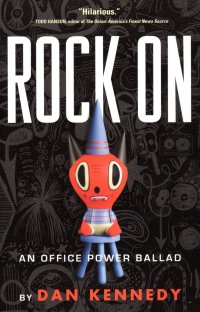
  • Rock On: An Office Power Ballad by Dan Kennedy, who took a job in the music industry to find it wasn’t like the movies advertised.
  • Chin Music from a Greyhound: The Confessions of a Civil War Reenactor Volume One: 1978-1987 by Robert W. Talbott.
  • The Innocents Abroad by Mark Twain, also in the Reader’s Digest World’s Best Reading edition.
  • Journey Through Heartsongs by Mattie J.T. Stepanek, which looks to be a collection of grandmother poetry in hardback.
  • Privilege and Privation by Todd Parnell, a local author.
  • Home Is Where The Heart Is a collection of Thomas Kinkade something something. To browse during football games or something.
  • Moon of Mutiny by Lester Del Rey in the library binding just like the ones I read in middle school. Which might have included this one. My youngest is tearing through YA fantasy these days; perhaps I’ll give loan him some rocket jockey fiction to see if he likes it.
  • Confucius Lives Next Door: What Living in The East Teaches Us About Living In The West by T.R. Reid. Probably that it’s better, but we will see.
  • Fourteen Acre Gold by Georgie Hicks. Looks to be grandmother poetry, although it says on the back she got her start when her twenty-year-old son died.
  • Messages To Lelia by Billy Reed. More poetry.
  • McAddoo About Nothing, a collection of old columns by a local columnist.
  • The Old Dog Barks Backwards by Ogden Nash. A paperback, and not one of the collections I already own.
  • Death to the Death of Poetry by Donald Hall. More criticism of poetry to inspire me to read poetry.
  • Early Royko: Up Against It In Chicago by Mike Royko. Man, it’s been a while since I read Royko. How come nobody collects John Kass’s columns? He’s about the closest Chicago or most major cities have to Royko.
  • Golden Gate: The Life and Times of America’s Greatest Bridge by Kevin Starr.

I also grabbed four copies of the local university’s literary magazine, the Moon City Review, which recently rejected several of my poems; I wanted to see what kind of poetry does appear in the digest to see if I should submit again. I picked up the 2009 issue, and every time I found a later one, I picked it up, intending to put the less recent copy down, but by that time, my beautiful wife was whisking them away, so I didn’t get the chance to put three of them back.

Apparently, in taking the photograph, I also purloined my wife’s copy of The 29% Solution. She tends to read more practically applicable books than I.

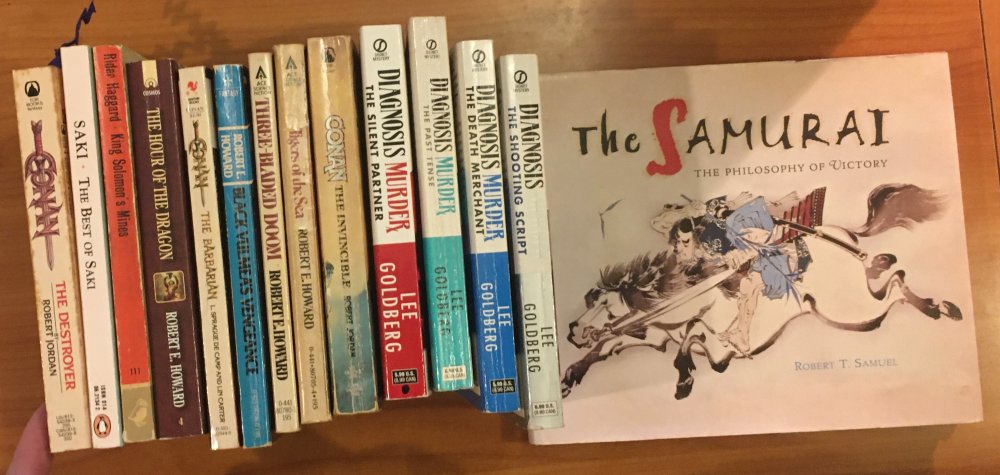
But you know what I did not find? Any Lee Goldberg. So, you know what is right across the highway, practically, from the Ozark Empire Fairgrounds? ABC Books.

So we diddly-bopped into ABC Books and told Ms. E. that we were just from the book sale and couldn’t find anything, which she likely did not believe. Although I found that my martial arts section was still not restocked, I found a couple of books by local(ish) authors and several by Lee Goldberg.

I got:

  • Mr. Monk is Miserable in hardback.
  • The Shooting Script, The Death Merchant, The Dead Letter, and The Waking Nightmare in the Diagnosis Murder series by Lee Goldberg. Although I like Lee Goldberg, as I mentioned, I am not going to hurry to pick up these books any time soon as Dick Van Dyke, the star of the show, is still alive, and this year my reading has adversely impacted world events.
  • The Underwater Window by local author Carol Shackleford. The name sounds really familiar.
  • The Reluctant Bachelor and Why Aren’t We Rich Yet? by Andy Willoughby, a local author that ABC Books promoted on its Facebook page. I thought the books sounded interesting in the post on Facebook, so I meant to seek them out.

Even though the mysteries were 25% off due to a sale I didn’t know was taking place, the full price of the local author books and what my wife bought meant we almost spent as much at ABC Books as we did at the book sale.

At any rate, a good haul, and it is making me rethink my current streak of reading books based on television shows and movies. But we will see how it goes when I actually get into the reading chair.

The funny thing is that, with the 40+ books I’ve read so far this year, I was able to straighten my to-read shelves so that most books were vertical, albeit double-stacked. Welp, that was that. Now they’re laid atop each other willy-nilly again. Which is their native state here at Nogglestead.

Buy My Books!
Buy John Donnelly's Gold Buy The Courtship of Barbara Holt Buy Coffee House Memories

Book Report: Mr. Monk Goes To Hawaii by Lee Goldberg (2006)

Book coverAll right, all right, all right, I said I was going to finish David Copperfield before I picked this book up, but I did a couple of chapters of Dickens and wanted another break. So I picked this book up a week later. This one, recall, gentle reader, I bought at the Friends of the Christian County Book Sale in 2017; given that this particular sale generally runs concurrently with the Friends of the Springfield-Greene County Library Book Sale, I checked to see if it, too, was running this week. Oh, but no: it was an in-library event the first weekend of the month. Which I would have known if I only subscribed to the Christian County Headliner. And, I suppose, read it in a timely fashion (I often fall a week or two behind, so I generally only later discover events I would have wanted to attend).

But enough about me: This book has Natalee, Mr. Monk’s assistant, dropping a bomb on him: her best friend is getting married, so she has an all-expense trip paid for to a resort in Hawaii for a week, and she waits until the day before to tell him. She expects to have a week away from him, but he, with the help of a prescription from his psychiatrist, flies on a plane (with all of his inhibitions and habits gone) to join her.

Mr. Monk is the man to speak up at the wedding, as he noticed things that indicate that the groom is a liar and potential bigamist; after that, an older (sixties!) woman with a trophy husband is murdered; it turns out that he has married older women and inherited them before, but in the past, they’ve died of natural causes (or have they?). She was bashed in the head in her bungalow after reporting hearing voices. Meanwhile, a spiritualist next door filming his television show says he has messages from Monk’s dead wife and Natalee’s dead husband, and Monk wants to prove him a fraud.

Again, a good book, and I am going to look for Lee Goldberg work next Saturday at the book sale. Which is me going out of my way to the fiction tables; most of the time, I only hit the records, audio courses, art books, old books, and local interest sections. But I am planning to not take my boys, so I’ll have a little more time to wander.

At any rate, flags and stuff below the fold.

Continue reading “Book Report: Mr. Monk Goes To Hawaii by Lee Goldberg (2006)”

Buy My Books!
Buy John Donnelly's Gold Buy The Courtship of Barbara Holt Buy Coffee House Memories

Book Report: Mr. Monk Goes to the Firehouse by Lee Goldberg (2006)

Book coverI don’t know where I picked this up; it’s a nice hardback edition, and it doesn’t have any price stickers or internal markings to indicate whether it came from a library book sale or ABC books. One of the mysteries of the universe, I guess.

The book is based on the television series Monk which ran the early part of the century. That makes it ten or twenty years younger than the other television- and movie-based properties I’ve been reading the last couple of months. This is the first in the series, which pleases me, as I also came across the paperback copy of Mr. Monk Goes To Hawaii that I bought in 2017, and I managed to grab the earlier one first (unlike the Babylon 5 episode guide I just read, which is for the second season but I’ve learned that I have the episode guide for the first season around here somewhere).

And I really enjoyed this book.

The schtick of the program is that Adrian Monk, the detective, is obsessive-compulsive and germaphobic, but his slightly warped mind is good for solving murders because he notices little details that other people overlook. The book is written in a first person narrator style where his assistant, a former bartender who keeps him in handiwipes and intercedes with normal people on his behalf, tells the story. So it has a Holmes/Watson structure, and it’s fun to read. And no politics; a lot of twenty-first century crime fiction, especially by established authors (Ed McBain, Robert B. Parker, Marcia Muller), has some jabs or worse at people who vote differently than the authors. You get nothing of the sort in this book, and it’s set in San Francisco.

My beautiful wife tells me she has read works by the author and some of his collaborations with Janet Evanovich and has enjoyed them; perhaps when I hit the Friends of the Springfield-Greene County Library book sale next week, I will actually walk past the fiction section and the mystery tables to see if I can spot some of his other works.

Which is not to say I did not find things to flag and quibble and snark over.
Continue reading “Book Report: Mr. Monk Goes to the Firehouse by Lee Goldberg (2006)”

Buy My Books!
Buy John Donnelly's Gold Buy The Courtship of Barbara Holt Buy Coffee House Memories

Book Report: Babylon 5: The Coming of Shadows by Jane Killick (1998)

Book coverWhen I bought this in 2007, I said:

I have seen like five minutes of Babylon 5 in my life, and I’m buying a book tie-in? I blame it on book-acquisition-drunkeness.

In the fourteen years since, I have not seen any more Babylon 5. I thought back then that this was a tie-in novel, but, you know, looking at the cover indicates that this is an episode guide for the second season, apparently the one where The Scarecrow (Bruce Boxleitner) takes over from Sisko the other guy. The joke is on me, though, as I bought the episode guide for season one, Signs and Portents in an ABC Books order last year during the Great Empausening, as I could have read the first season’s episode guide before this one.

At any rate, the book is an episode guide that talks about the second season. There’s a new commander on the space station, and a couple of the races whose ambassadors reside on the station are gearing up for war–one race with the assistance of an ancient race that almost conquered the universe a long time ago. The book starts with an article on producing the series on a budget, and then the individual episodes have a cast list, a summary, and then the cast and crew talking about their memories of making the episode. As such, you don’t get a lot of intricate connections between the episodes, although it does mention the arc stories as they developed.

While reading, I was struck by the actors who played in Star Trek series and Babylon 5, including Walter Koenig and Dwight Schultz. I see Miguel A. Núñez, Jr., was a guest star in one episode this season; I saw his film Juwanna Mann in the theatre because I remembered him from Tour of Duty, and looking at his oevre, I see that I have seen him in a lot of movies, although I don’t remember him in them (they’re small roles), but undoubtedly I recognize him and say his name when I see him in those bit roles, only to forget he was in them if I happen to think of them.

At any rate, a couple quotes and remarks below the fold.
Continue reading “Book Report: Babylon 5: The Coming of Shadows by Jane Killick (1998)”

Buy My Books!
Buy John Donnelly's Gold Buy The Courtship of Barbara Holt Buy Coffee House Memories

Book Report: Hackers by David Bischoff (1995)

Book coverYou know, I am pretty sure I saw this film sometime in the early part of the century on videocassette or DVD, but I don’t remember it that much. I watched a lot of these hacker movies around that time when I was writing John Donnelly’s Gold, and I meant to throw in a lot of allusions to hacker movies. I don’t think I included one from this movie in the novel, and I kind of confused it with Antitrust even as I started reading this. And, maybe sometimes Sneakers when just thinking of the title.

In it, a young man who was convicted as a juvenile for releasing a virus in 1988, turns 18 and can use a computer again. He and his single mother have moved from Seattle to New York City, and he is starting at a magnet school for smart kids where he finds a group of hackers. One of them, a lesser light trying to prove himself, hacks into a mining company’s computer and finds a salami attack in place where the head of security and the head of marketing are embezzling small amounts of money a lot of times. So they frame the kid/kids for a computer-based terrorist attack on one of the company’s oil tankers, and the hackers have to unite to clear the protagonists and expose the plot. Along the way, we get school pranks, young love, high school party/rave scenes circa 1995, and parental worry about what the boy is becoming.

I flagged a bunch of silly little inaccuracies, like arming the Secret Service strike team with AK-47s, saying BBS is short for Bulletin Board Service (it’s system, you damn kids), 1995-era teen hackers knowing Pascal, calling a wardialer a “WarGames” scanner, you get things like “It isn’t a virus! It’s a worm!” (which I guess it was, but still, in the 21st century we worry more about trojan horses, ainna?), and whatnot. I flagged them like it was worth mentioning, but the person writing the novel might have had less knowledge about contemporary technology than the screenwriters–some of the inaccuracies come in the non-dialog text. It’s been a while since I saw the film, as I said, so I don’t know.

You get some very dated technology with a “Pentaflex” (someone didn’t pony up for product placement) computer chip running at 30MHz. You get apocryphoral scenes like one at the World Trade Center. But you do get a shout-out to 2600: The Hacker Quarterly (which might have been filmed, so the author of this novelization was not responsible for it). You get unfortunate instances of pineapple on pizza–c’mon, man, that couldn’t have been filmed that way, could it? You get hacker speeches where they talk about freed information, wanting to learn, and being free. You get what looks to be an actual social security number (and some )

So, basically, it’s a teenager movie about hacking, with the focus on the teen themes and some pre-AOL level cinematic hacking for the plot.

I mentioned the virus release in 1988: This was based on the Morris worm. I remember that incident very acutely because at that very moment I was writing a research paper for my high school composition class, and I had picked computer viruses as the topic. I was in a tight spot, though, as the sources at the local library (magazines and books) that one could find on viruses were pretty thin. My mother drove me forty five minutes to the nearest St. Louis County Library branch twice. The first time, the branch had nothing I could use, and I could not request ILL books since I was not a St. Louis County resident (and back in those days, computers weren’t used much for card catalogs, so finding an ILL book would have been a challenge). However, the second time was after the release of the Morris worm, and I had suddenly lots of sources since every news magazine ran a story about virii and worms with sidebars I could quote).

At any rate, a lesser quality novelization of a lesser quality book. No allusions to this appear in John Donnelly’s Gold.

Buy My Books!
Buy John Donnelly's Gold Buy The Courtship of Barbara Holt Buy Coffee House Memories

Book Report: The Bookshop by Penelope Fitzgerald (1978, 1997)

Book coverI picked up this book right after High Fidelity because that book features a protagonist that owns a record shop; this one, presumably, was about someone with a book shop. I was even willing to forego a book tied into a film for this connection, but as it turns out, this was made into a film in 2017. So it actually is a book with a movie tie. Whoa.

At any rate, this book, too, is set in England, albeit the northeast of England. In a small town, a retired widow wants to open a book shop in a building that has been abandoned for many years but that is several hundred years old. However, a noveau riche society matron had hoped that building would be the town’s arts center, under her leadership, someday, so she sets out to thwart the protagonist. After a number of incidents and third person interactions with the quirky characters of the small village, the bookshop closes.

The book was first published in 1978; I have the first American paperback edition from almost twenty years later; and twenty years after that, the movie came out. So I was expecting some twist or theme that would have made it a college literature staple, but I’m not sure it ever comes. Reports indicate that the big twist was that she stocked Lolita when it was controversial, but this is really underdeveloped. But it is a British book, a book featuring an older British woman (which I found reminiscient of The Handyman written by a different Penelope). It’s only 123 pages, but it’s fairly dense third person narration in the British style, and not in the fun Dickens sense.

I only flagged one thing in it, the motto of the olde riche family whose last member, and elderly man, supports the book shop owner. The family motto, above the door of the manor, is Not to succeed in one thing is to fail in all. That’s a pretty grim motto. It does make me realize that, although I have named my houses, I have not come up with a proper family motto. So I will give that some thought, and then I will probably make a wood burning of it. But nothing as dispiriting as that one.

At any rate, I shall turn my attention to American movie and television books between chapters of David Copperfield for the near term and will try to avoid books with elderly British women not named Jane Marple from here on out.

Buy My Books!
Buy John Donnelly's Gold Buy The Courtship of Barbara Holt Buy Coffee House Memories

Book Report: High Fidelity by Nick Hornby (1995, 2000?)

Book coverIn keeping with the movie books, I selected this book, Nick Hornby’s first novel which was made into a film with John Cusack. Remember him? He was like an American Hugh Grant but with a shorter career and a less British career. Maybe I am conflating the two a little more than one does, but this book has his picture on the cover, and the setting of the book is England instead of Chicago so it’s more Hugh Grant territory than the American film. At any rate, I got this book from ABC Books as part of the cover story for my visit when Julian Lynn visited to sign books. I know, you don’t care, really, but sometimes I can search the blog and link the book back to its purchase point so I can see what else I might have bought then and have read since (although it was only a small trip, I’ve only also read The Physics of Love).

So. The story of the book is that the protagonist, a 35-year-old record store owner named Rob Fleming gets dumped by his long-time live-in girlfriend for the guy who formerly lived upstairs from them (and the two move in together elsewhere), which triggers Rob’s reflection on his relationships and his life which seems to have stalled. Prone to making a list, Rob lists his top five heartbreaks of all time and gets in touch with those women and moons over Laura, whom he met while he was DJing at a defunct club. She has gone onto become an attorney at a big law firm in London, which creates a gulf between them in Rob’s mind, and he’s starting to get a little bitter.

The book is told in shortish chapters of first person narration, more stream of consciousness than stream of time, and a bit unreliable as he might be trying to present the best possible rationalization for his actions, but somewhere underneath he might think he can improve. And at the end of the book, he might, but the reader has enough to doubt but hope for the best for the guy.

It captures the nineties and young peoples’ relationship anxiety zeitgeist pretty well, or at least what I remember of it (although, gentle reader, my humble love life narrative from the era is pretty pedestrian), but the character is 35, which seems a bit old, but certainly prone to self-doubt if he’s living the same life that he lived in his 20s ten or fifteen years later.

So I rather liked the book. At times, its expression of mortality and uncertainty struck me pretty raw, and it certainly made me glad I was not Rob or Lloyd Dobler at 35.

I did mark some things in the book for extra attention; you can find them below.

True Words

You need as much ballast as possible to stop you from floating away; you need people around you, things going on, otherwise life is like some film where the money ran out, and there are no sets, or locations, or supporting actors, and it’s just one bloke on his own staring into the camera with nothing to do ad nobody to speak to, and who’d believe in this character then?

I’ve had moments where I feel this way, too: the day-to-day maintenance of work-parenting-chores-bed leads a lot of things and friends to fall away. One does have to work a bit to keep busy. Maybe not everyone; maybe just introverts or lazy people like me who have, a lot of times, not bothered to keep those other things going.

On the other hand, I have a seventeen-year-old blog to keep me company. No, wait, that might be the same hand.

Oprah Alert

Speaking of the number of sexual partners he’s had, Rob thinks:

Ten isn’t a lot, not for the thirtysomething bachelor. Twenty isn’t a lot, if you look at it that way. Anything over thirty, I reckon, and you’re entitled to appear on an Oprah about promiscuity.

I wonder if I need to make a separate category to list books that mention Oprah as a cultural touchstone.

Also, to confess, I have not enough sexual partners to even trigger one of the conditions he mentions. At times, I wonder what was wrong with me. Which might be a good character thing to put into a book to strike right into the self-doubt of many middle-aged people. Or, perhaps not.

A False Dilemma, But

In Bruce Springsteen songs, you can either stay and rot, or you can escape and burn. That’s OK; he’s a songwriter, after all, and he needs simple choices like that in his songs. But nobody ever writes about how it is possible to escape and rot-how escapes can go off at half-cock, how you can leave the suburbs for the city but end up living a limp suburban life anyway. That’s what happened to me; that’s what happens to most people.

The book contains a lot of this expository sorting out of emotions, the aggrandizement of the narrator’s own self-doubt and whatnot. Which works, for the most part, where it doesn’t work in other books.

So, to sum up, I liked the book but didn’t want to be the character. I think some people liked the drama of those uncertain relationship times and would want to be Rob, but not me, brother. I’m glad I outgrew whatever I had in common with him.

Buy My Books!
Buy John Donnelly's Gold Buy The Courtship of Barbara Holt Buy Coffee House Memories

Book Report: On Bullshit by Harry G. Frankfurt (2005)

Book coverThis is an essay by a philosophy professor emeritus at Princeton, published in hardback by Princeton University Press. I don’t know where I got it; I only know I picked it up as a break between movie novels because it’s pretty short.

Within, the author talks about the difference between lying and bullshit, and the basic crux of the article is that the liar knows he’s lying and subverts truth whereas the bullshitter doesn’t care whether what he’s saying is true or not. It contains lots of philosophical speak like talking about the truth-value of a statement and referring to Wittgenstein (whose progeny call themselves WittgenSTEEN), and the author digresses into how bullshit relates to humbug and whether bullshit has any nutritive value.

I think his definition of bullshit conflates two things that bullshit tends to mean in real life. Bullshit is generally puffing up or marketing kind of talk that is at its heart false, and the person spreading it might or might not know it. I think this author finds bullshit to be worse than lying, but when it’s just marketing or puffing, it’s actually less offensive and wrong. Unfortunately, in some cases, it does cross the line into outright lying. The subtle difference makes all the difference. How to capture into words the distinction, though, is the challenge, and this book really doesn’t go into it.

So, basically, it’s kind of an insipid bit of modern philosophy. Instead of tackling the weighty questions of existence, we have a little pop culture book with a catchy name that does a little of philosophy and refers to some other philosophers. Perhaps the authors of such books (which includes The Simpsons and Philosophy which I started three or four years ago and still languishes on my chairside table) want to introduce philosophy to the masses by roping it into pop culture and hope it will spur the people on to read primary sources. I think it’s probably as useful as feeding kids books full of crude drawings like the works of Dav Pilkey and Jeff Kinney in hopes it will lead children to reading real books–take it from me, as hard as I try, my junior high and high school students still read the Captain Underpants and Diary of a Wimpy Kid books over and over again instead of something more mature. Or maybe the authors want to make a buck.

Regardless, I did flag some quibbles with the book, but I’m not going to bother to go into them. Probably not worth my time.

After a slight detour, it’s back to David Copperfield and movie books.

Buy My Books!
Buy John Donnelly's Gold Buy The Courtship of Barbara Holt Buy Coffee House Memories

Book Report: Men in Black II by Michael Teitlebaum (2002)

Book coverI continued with my movie and television tie-in books with this volume which is apparently the children’s / young adult version of the movie. It’s very short (143 pages, possibly shorter than the actual screenplay) and uses simple language. It deals with the sequel to the first film, where Jay has to find Kay because he had a previous mission hiding a powerful energy source that a new alien threat who looks like Lara Flynn Boyle wants it to conquer some other aliens–and Earth isn’t important, but she’s willing to take on the Men in Black and capture their headquarters to find it.

I just watched the first film in the series last year when my quaranteens were watching it during their work-from-home phase, and I plopped down to watch it again. So I have seen the first film maybe three or four times. This one, I probably watched once soon after it came out, so I did not remember the plot of it, but some of the scenes came back as I was reading them.

I was just pleased that I could remember the name of the woman playing the Alien Big Boss: Lara Flynn Boyle. She was featured in a Maxim or FHM magazine around this time, when I was young enough to subscribe to them and convince myself it was to keep hip on the things the kids were into whilst I was getting toward middle age (in my defense, I also subscribed to GQ and Spin around the same time, so the impulse was real). I remembered she was in that lawyer show that I never watched. Ally McBeal? Nah, I thought, but yes. Also, The Practice.

So not as much fun as True Lies, but not as long to read, either, I guess.

That said, I will probably not rush out and get the six (!) other movie tie-in paperbacks they released in support of the movie.

Eesh, I can’t imagine kids being that excited about this particular movie.

Oh, and I did flag some quibbles. With a children’s book. BECAUSE I HAVE NO LIFE.

Mostly, I flagged anachronisms. Kids at the turn of the century might have known what these things met, but kids these days would be clueless.

A Wut?

“I sent you an interstellar fax,” Serleena said. “Didn’t you get it?”

I think all but the most recalcitrant of official documents go through the Internet now.

At Where?

“Sephalopods have been making counterfeits at the Kinko’s on Canal Street.”

After almost forty years of being Kinko’s, Kinko’s became Kinko’s FedEx Office in 2004, just after this film, and then just FedEx Office in 2008 (according to Wikipedia). So Kinko’s has not existed in any name for almost thirteen years.

The When?

Kay reached into the locker and took an old digital watch–circa 1970–from a tall clock tower.

Hmmm, that seems a little out-of-time. PC Mag says the first commercial digital watches arrived arrived in 1972 and cost as much as a car–although in a decade, they would become less expensive and get into wider circulation. Probably the authors were too young to know.


At any rate, an amusing and quick read even though it lacks any real depth. On the plus side, I can’t call it depraved unlike some things I’ve read recently. But I am just the kind of prude who yesterday turned down a job interview with a company that did not mention in its job listing that it is in the adult entertainment industry. PRUDE, I TELL YOU!

Buy My Books!
Buy John Donnelly's Gold Buy The Courtship of Barbara Holt Buy Coffee House Memories

Book Report: True Lies by Dewey Gram and Duane Dell’Amico (1994)

Book coverI don’t remember if I saw this movie in the theater in the middle 1990s–I think I saw it first on videocassette–but I remembered the whole plot and most of the scenes. I remember I tried to watch it in the early part of this century, but I had to pop the VHS tape out as the attacks on September 11, 2001, were too fresh for me to enjoy a film that features a nuclear detonation in the continental US. I have since watched it, though, and in continuing with the theme from this year, I read this book, the novelization.

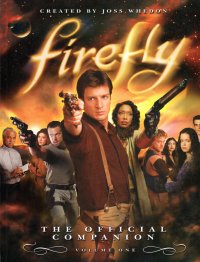
The book is a cut above many novelizations as the authors include some interior life to the characters instead of just reporting the action in the script or in the movie. As such, the book is a little deeper than the film, and the insertions keep the playful tone of the movie itself. It’s not like when they made Serenity after Firefly and suddenly all the characters were darker and haunted instead of happy-go-lucky.

If you’re not familiar, the story follows a secret agent with an agency that tracks nuclear weapons and threats. He has a wife and a daughter that he sees rarely as he is called away often for his computer job cover story. He has a set piece in the Alps, and an Islamic terrorist from the set piece follows him to try to kill him to protect the terrorist plot to smuggle nuclear weapons into the United States. Set piece, set piece, comedic subplot that the wife is getting bored and a used car salesman has crafted a secret agent story to seduce her, set piece that the daughter is acting out, set piece, nuclear detonation, Harrier jump jets (remember when they were a thing?), one-liner, happy ending.

Spoiler alert. There is a nuclear detonation in this film. But I guess I already mentioned that.

So, a pretty fun book with some minor variations from the film–the last voice over by Harry’s handler that ends the film is missing–but no great differences, so this is from a fairly late draft or early cut of the film.

A couple things I noted below the fold.
Continue reading “Book Report: True Lies by Dewey Gram and Duane Dell’Amico (1994)”

Buy My Books!
Buy John Donnelly's Gold Buy The Courtship of Barbara Holt Buy Coffee House Memories

Recklessly, I Picked Up….

So, I finished reading Supercarrier, and I then picked up Supership. When I bought it in 2007, I thought it was a novel set on a supertanker, but I have since learned it is actually a nonfiction account, sort of like Supercarrier on a tanker.

I started reading this, and the cargo ship got stuck in the Suez Canal.

So I picked up The Last Picture Show, and Larry McMurtry died.

I told my beautiful wife these two events, and although she laughed, I feared my reading selections might have more power than providing me several nights’ worth of reading leading to eventual, or sometimes sudden, disappointment.

Maybe what I decide to read dictates world events.

Keeping with my reading of novelizations or sources for movies in paperback, I picked up True Lies.

I am sorry; if that happens, it’s all on me.

Meanwhile, reading of David Copperfield continues a couple chapters every couple of nights. So far, no major mining disasters. So maybe it really is a coincidence.

Buy My Books!
Buy John Donnelly's Gold Buy The Courtship of Barbara Holt Buy Coffee House Memories

Book Report: The Last Picture Show by Larry McMurtry (1966, 1979)

Book coverWell, as I mentioned, Larry McMurtry died while I was reading this book. I read Books: A Memoir in February, and I knew I had a couple of his novels on the shelves. I came across this one while I was looking for something to read before picking up Hud, the movie version of Horseman, Pass By.

And I came here to bury McMurtry, not to praise him.

This book, which the cover calls the precursor to Texasville even though this book and its movie came before the second book in what would eventually be known as the Thalia Trilogy and its movie. Published in 1966, the book is set a decade or so earlier in a small Texas town. It’s the sort of literary novel favored by serious artists and those who love them: The novel of pissing on where you came from, your home town where everyone is pitiable. So I did not like the book at all, and that’s before nine teenaged boys ran a train on a blind heifer and the novelist assured us that all the small town boys have sex with farm animals, if not cows and horses then dogs and chickens. Whatever is available. It’s not often that I call a book depraved, but here you go.

I mean, the main character or protagonist, such as it is, is a high school kid estranged from his father and lives in a rooming house with another high school friend. The friend is dating the daughter of one of the rich families in town, a girl who wants to be a legend in town and is a climber, always plotting her next move and/or boyfriend. The book is chock full of characters–the local coach, who might be a latent homosexual; his wife, Mrs. Robinson Ruth, who is turning forty and discovers orgasm with the protagonist; the owner of the pool hall/picture show/diner who is like a father figure to the town boys; and so on. You don’t really like any of them. Mostly, you pity them. The story, such as it is, follows a winter/spring/summer of the boys’ senior year, including football season, a trip to Mexico to score with some prostitutes, sexual escapades/adultery/sociosexual climbing and more prostitutes, it’s all pitiable and games until someone loses an eye, and then…. Well, it ends. To be taken up thirty years later in Texasville if you’re so inclined. I am not.

So this is why I like genre fiction. Because it has heroes and adventures, not normalish-but-quiet-desperation-amid-meaningless-sex vignettes.

I did flag a couple things to comment on, but I have decided not to bother except to bring up two points below the fold.
Continue reading “Book Report: The Last Picture Show by Larry McMurtry (1966, 1979)”

Buy My Books!
Buy John Donnelly's Gold Buy The Courtship of Barbara Holt Buy Coffee House Memories

Book Report: Supercarrier by George C. Wilson (1986, 1989)

Book coverI started this book because I’m on a novelization/source of movies kick to begin the year, and I remember the short-lived television series from the 1980s. This book is not a novelization of it or a novel that’s the source: It is a non-fiction book that was purportedly source material for the television show, but I don’t think they had much to do with one another aside from the name and the type of boat.

The author is a Washington Post reporter and a former pilot who embeds before embedding was a thing with the crew of the USS John F. Kennedy as it deploys for a seven month cruise in 1983-1984. Originally scheduled to steam out to the Indian Ocean, it gets put on point off of Lebanon after the attack that killed the Marines in their barracks. The posting climaxes early in an ill-conceived bombing raid that results in the loss of two planes and the deaths of two aviators.

Initially, I thought the author was playing it pretty straight, but in gestalt, not so much. He proffers some respect for the people on the ship–and he gets around, so he gets to know people in every position from the captain down to the boiler tenders–but, really, he’s kinda for the guys who are in the Navy because they had no other prospects in their slums or backward small towns. And when we get to the bombing raid, he really takes some time to call out the civilian leadership of the military (Reagan and the Republicans) for attempting a limited retaliation for a missile strike. Which is weird because he mentions Operation Eagle Claw which was launched in an election year by Carter, but he doesn’t call that a political operation.

So, basically, the author tries to be for the troops while pissing on the military and the political leadership.

However, the left-leaning subtext is fairly subtle compared by modern standards, and in between its blushes we get some good stories and insight into various occupations and life on a deployed aircraft carrier. The cover says it was a controversial book, and I bet it was, as a lot of people who would have liked a straight narrative got a Political Message in it. But, as I said, by the standards of today, it’s relatively subtle and mild. Although books like this likely led us to where we are now.

I can’t give it a completely unalloyed recommendation, but it was insightful in spots.

Quibbles and targeted snark below the fold.
Continue reading “Book Report: Supercarrier by George C. Wilson (1986, 1989)”

Buy My Books!
Buy John Donnelly's Gold Buy The Courtship of Barbara Holt Buy Coffee House Memories