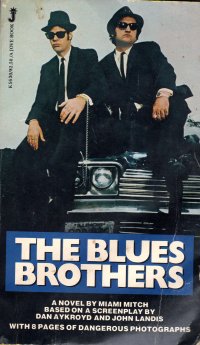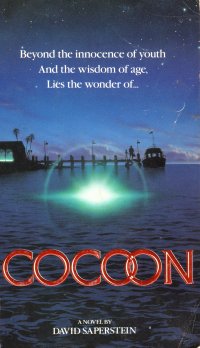
Book Report: More Book Lust by Nancy Pearl (2005)

Book coverAfter I read Book Lust in January for the Winter 2021 Reading Challenge, I was surprised/not surprised to find I had the sequel on my bookshelves. I didn’t buy them at the same time–I bought the first at the Friends of the Christian County Library Book Sale in autumn 2015 and this volume, signed by the author but not inscribed but with the recipient’s name, in autumn 2018 at the Friends of the Springfield-Greene County Library book sale. So of course they were not really anywhere near each other on the bookshelves, and any time I saw one, I probably saw the other.

At any rate, it’s much like the first volume: A collection of topics and books for that topic. Really, one, and by “one,” I mean I is not so much looking for books to read about a topic–one has a disorganized library full of books on many topics (books on boomerang and whip making, for example) and actual book sales this year to fill the few gaps one creates by reading these smallish paperbacks. So it’s more about keeping score on books I have already read.

Which is not a lot, actually–the bulk of the topical book listings list relatively recent books for the most part and avoid poetry, read: grandmother poetry and chapbooks, and classical literature. The book also dodges overtly political content, but the leftist bent is in evidence, more acutely in this book than in the previous one as she explicitly says about some older books that it’s hard to read because contemporaenous views on race were not contemporaenous to this book and because a lot of the selections are on the Race question–pretty much the whole state-by-state selection of Southern fiction deals with racial matters.

Still, I flagged a number of books she mentioned that I have read:

  • Killing Floor by Lee Child (see below)
  • The Last of the Mohicans by James Fenimore Cooper
  • The Deep Blue Goodbye by John D. MacDonald
  • Stormy Weather by Carl Hiaasen
  • The Autobiography of Benjamin Franklin (although I do not have a book report on it, I did ask my boys to read it last year)
  • Hamlet by William Shakespeare
  • Rosencrantz and Guildenstern Are Dead by Tom Stoppard.
  • Nickeled and Dimed: On (Not) Getting By In America by Barbara Ehrenreich
  • Frankenstein by Mary Shelley
  • The Picture of Dorian Gray (this year)
  • “The Cask of Amontillado” by Edgar Allan Poe (I read it most recently in Selected Tales and Poems in 2017)
  • I Am Legend by Richard Matheson (apparently, I cleaned up on the books listed in the “Horror for Sissies” section)
  • Anna Karenina by Leo Tolstoy
  • David Copperfield (in progress)
  • Moby-Dick by Herman Melville
  • The Scarlet Letter by Nathaniel Hawthorne
  • The Adventures of Tom Sawyer by Mark Twain
  • The Adventures of Huckleberry Finn by Mark Twain
  • A Connecticut Yankee in King Arthur’s Court by Mark Twain
  • Winesburg, Ohio by Sherwood Anderson
  • “The Love Song of J. Alfred Prufrock” by T.S. Eliot. It’s not a whole book, but I haven’t brought up that I used to go to poetry open mic nights and recite the whole thing from memory in almost a year
  • The Dive from Clausen’s Pier by Ann Packer (ugh)
  • The Autobiography of Benjamin Franklin by Benjamin Franklin
  • Rosencrantz and Guildenstern Are Dead by Tom Stoppard
  • Jane Eyre by Charlotte Brontë
  • By The Shores of Silver Lake by Laura Ingalls Wilder, in the section on South Dakota, as are
  • The Long Winter
  • Little Town on the Prairie
  • and These Happy Golden Years
  • True Grit by Clinton Portis
  • The Princess Bride by William Goldman
  • A Farewell to Arms by Ernest Hemingway
  • Millennium by John Varley
  • Hedda Gabler by Henrik Ibsen
  • The Awakening by Kate Chopin
  • To Kill a Mockingbird by Harper Lee

Those are the ones I flagged as having read, anyway. To be honest, in the week or so where I read the book off and on, I might have stopped flagging the ones I’d read if I felt like I was flagging too much and then started after a couple of pages without flagging anything.

Most of the books that I read are mentioned in passing and are not actually the subject of the entry. Also, note that only, what, three of them that I have read are from within the last fifty years.

I also flagged a couple of passages for snark, but I’ll tuck them below the fold to keep this book report from completely consuming the front page here.
Continue reading “Book Report: More Book Lust by Nancy Pearl (2005)”

Buy My Books!
Buy John Donnelly's Gold Buy The Courtship of Barbara Holt Buy Coffee House Memories

Good Book Hunting, March 18-19, 2021: ABC Books / Hooked on Books

So after watching Fletch on Monday, I thought I would see if I could find a copy of the book or others in the series for my oldest son, whom I’m always encouraging to read a book with words in it instead of cartoons.

However, the Fletch series seems to have aged out of the used books–most of them would have been sold in the 1980s, remember–so I did not find books at either book store. Perhaps I will get lucky at the upcoming book sales this year.

I did, however, pick up a couple things:

At ABC Books, I got:

  • Semper Fidelis by M. L. Brummett, a local author. I had just been at the Air and Military Museum of the Ozarks, as you might recall.
  • Earth Games, a short collection of poetry by Ruth Loring.

At Hooked on Books, I got a couple of $1 books:

  • The Design of Everyday Things by Don Norman.
  • Ender’s Game by Orson Scott Card.
  • Blood and Thunder by Max Allan Collins.
  • Neon Prey by John Sandford. I know, I know, I swore these off, but it was only a buck. And note that this went from a new book at the library in April 2019 to the dollar cart outside a used book store in under two years. I wonder if his popularity is widely suffering.

The sale room in the back was pretty bare, but I still saw some books with red dots on the spines. Gentle reader, Hooked on Books used to mark their discount books with the red dot (which, two years ago, a cashier there didn’t know because it had been so long ago). So those books had been in the building for quite some time indeed. I expect that young man no longer works there, so they outlasted him by quite a margin.

At any rate, now that Spring Break is over, I hope I can get back to my normal reading schedule. I realize you have not had a book report in quite some time, gentle reader (eleven days since Mission: Impossible), and I know I am your primary source for book reports on twee books of decades past. Soon. Soon.

Buy My Books!
Buy John Donnelly's Gold Buy The Courtship of Barbara Holt Buy Coffee House Memories

Book Report: Mission: Impossible by Peter Barsocchini (1996)

Book coverI don’t want to make you feel old, old man, but this novelization is from the first Mission: Impossible movie which came out 25 years ago. I mean, I was still working in a printing plant. Five years later, when I worked for my first start-up around the turn of the century, I had the audiocassette single of the theme song from the movie queued up, and if someone asked for something outlandish, I’d ask them to wait a minute, and I would play the cassette while they asked. Here we are, twenty years later, and I’m reading the paperback novel of the film because some such movie novelizations percolated to the top of my to-read shelves while I was looking for something else recently. Meanwhile, the 7th film in the series is scheduled for release this year, but probably not to theatres. Somehow, Tom Cruise has not aged, unlike the rest of us.

At any rate, the plot: The IMF finishes an op in Russia and immediately heads to Prague to hunt for a mole who might be selling the list of Eastern European covert agents. The mission goes South, and the team is killed. Ethan Hunt, the only surviving member of the team, is accused of being the mole, but manages to escape and recruit a team to clear his name. To do so, he must meet a shady information broker, to whom he promise to sell the worldwide covert operative list for $10 million and for the person who was going to sell the other list–the mole who got his team killed.

A couple of set pieces later, and a couple of outrageous stunts in the movie later, Ethan discovers the mole was closer than he thought.

A quick read, but it suffers from the pacing problems I noted in Alien Nation and a bunch of Executioner novels that are written from provided outlines: A lot of development in the first half, but then the book runs through set pieces to end quickly. I haven’t seen the film in ages–perhaps twenty-five years–but I don’t remember the Prague elimination of the team taking up half the movie.

Also, SPOILER ALERT, but the book uses a limited omniscient narrator who peeks into the heads of the people and tells what they’re thinking at times. Which is cheating the reader badly when it dwells for chapters on Jim Phelps, the leader of the IMF team, and SPOILER ALERT, I REPEAT, who is eventually revealed to be the mole along with his wife and other team member Claire, and none of his thoughts are about his plans to betray his team. For Pete’s sake, that’s some cheating right there. In the movie, you don’t get that interior life, so it works better. A straight third person narration would have served better. However, it couldn’t have provided the depth in the characters, even though some of that depth was the false bottom in a briefcase.

At any rate, I did mark a couple of things for the quibbles section.

Where The Wisconsinians Go

He’d been making serious judgment calls his entire life. Bachelor’s degree from Wisconsin State University, master’s from Princeton, FBI training, CIA training, special tactics and forces training, special weapons training, advanced linguistics and electronics. Ethan knew his judgment calls were not pulled out of thin air. They were based on solid training and field experience, not to mention the stability of a strong family background.
He’d grown up on a farm not far from Madison, Wisconsin, the only child of devoted parents who recognized early on that their son was exceedingly bright.

Given the proximity to Madison, I believe that the author means the University of Wisconsin. When I was attending the premier university in Wisconsin, not far from University of Wisconsin-Milwaukee, I liked to call it University of Wisconsin-Madison to take the flagship state university down a peg. But I would not have called it Wisconsin State University.

Although I understand changing the names of universities for some prestige reason was a thing for a while. Maybe the author was trying to get ahead of the curve here.

The Deep State As The Bad Guy
Phelps tries to name a civil servant as the mole:

Phelps went silent, brooding into his coffee. “When you think about it, Ethan, it was inevitable. No more Cold War. No more secrets you keep from everyone but yourself, operations where you answer to no one but yourself. The one morning, you wake up and find out the president of the United States is running the country–without your permission. The son of a bitch! How dare he? You realize it’s over, you’re an obsolete piece of hardware not worth upgrading, you’ve got a lousy marriage and sixty-two grand a year.”

The good news is that in the 21st century, we know that the President of the United States no longer runs the country. The last one couldn’t because of the resistance of the lifers, and the current one probably isn’t, either.

The 90s Ubiquity of Oprah

This book, like Alien Nation, refers to the all-powerful one:

“I told him not to hold his breath. Just chalk it all up as another sign of the decline of Western civilization.”
“He’d probably rather hear that from the president.”
“Exactly what he said to me. Maybe he’ll settle for Oprah.”

Twenty-five years later, she [Oprah] has just perhaps (the tabloids hope) aired the interview that might end the monarchy in Britain. Although, honestly, the tabs can’t hope it ends. Their stories of Katie Price (who?) won’t last forever.

Eight Track Technology
The books sometimes really tries to impress us with the latest technology, but it would better have served its own longevity to obscure the tech a bit (I did once write and sell, for money, an article to a writing magazine about how to avoid these pitfalls, although it was twelve years too late for this author). While talking about diskettes (instead of disks, which one could almost conflate with a CD or DVD or microdisc), while mentioning various architectures (unfortunately, probably from movie dialogue which needed preservation) to talking about laptops with PCMCIA cards–really, you’re dating it more than you have to.


Still, a quick thriller that made me wonder if I should pick up watching the movies. I am pretty sure that I saw the first and the second of these in the cinema, but I haven’t seen any of the other ones since then. Perhaps I should give them a try, but I already have a cabinet full of videocassettes and DVDs to get to.

Buy My Books!
Buy John Donnelly's Gold Buy The Courtship of Barbara Holt Buy Coffee House Memories

Wonderlic Throws Brian J. Some Shade

So I’m taking the Wonderlic test as part of a recruitment process, and one of its personality sampling questions is this:

I would like to write a great novel or play. Agree | Neither Agree nor Disagree | Disagree

Ah, but I have already written a great novel and play.

I guess most people have to treat that question as a hypothetical.

But Wonderlic is saying that neither of them is great.

Perhaps I can agree if we use great to mean successful.

Buy My Books!
Buy John Donnelly's Gold Buy The Courtship of Barbara Holt Buy Coffee House Memories

Book Report: The Biggest Lie in the History of Christianity by Matthew Kelly (2018)

Book coverMy wife spotted this book on my to-read shelves and brought it to my attention: I should read it soon, or it might disappear from my shelves. She has read other things by the author, a three-time cancer survivor, so that might be how she knows of him. So after I finished the Winter 2021 Reading Challenge, I picked it up.

It’s a contemporary Christian….self-help book? It’s in the vein of The Power of Positive Thinking or Eat the Cookie…Buy the Shoes with a bit of focus, I guess, on living as a Christian in the 21st century and helping to expand the Church’s reach/the power of the Church. The author is either first or also a business consultant, so it has a lot of focus on large-scale outcomes and uses the term continuous improvement referring to the experience of Christianity.

Spoiler alert: The biggest lie in the history of Christianity is that holiness, living a holy life, is impossible in the 21st century.

The book is a little bifurcated: He creates the concept of Holy Moments, essentially paying-it-forward by doing nice things for people to represent Christianity well, and then, rather unrelatedly, he then talks about The Church as if it’s some monolith that need Christians to band together to maximize its influence and whatnot. I am not sure that he leads from one to the other very well, and I’m not sure you can do that very well. I mean, Christianity is about one’s own relationship with Christ; once you start talking about the organization of the Church, especially as some ecumenical megalith, you start losing me.

He talks, briefly, about the Church doing a big thing, all Christians together:

Everybody knows the world needs changing. We may disagree with our non-Christian sisters and brothers about what changes are needed, but the need for change itself is indisputable. And so, the key to repositioning Christianity as an incredibly positive and powerful force in our culture is what I like to call a 100 percent issue. A 100 percent issue is one that no reasonable, rational man or woman of goodwill can disagree with. For example, I believe that no child in the United States should go to be hungry. That’s a 100 percent issue.

. . . .

If I said no American should go to bed hungry at night, it would no longer be a 100 percent issue. Some people would argue that many of the hungry and homeless are lazy, are voluntarily abusing substances, and have chosen the lifestyle they are living. They may be right. I don’t know. It doesn’t matter right now, because while some people may disagree about every American, everyone agrees that no American child should go hungry. This is a 100 percent issue, which means nobody can disagree with you without looking foolish at the very least.

Now, just one minute, Admiral. Before I, who might not be reasonable, rational, or of goodwill, will check those terms and conditions:

  • What is a “child”? Up to age 26 like a medical insurance dependent?
  • What is “hungry”? Hankering for a snack even though they’ve already had their necessary dietary needs met?
  • When, exactly, is going to bed going to occur? Must we guarantee that an eighteen-year-old who has been playing Far Cry for eighteen hours should have a banana at four o’clock in the morning?
  • Can parents opt out, or do reasonable, rational men or women of goodwill get to compel behavior?

The book and its conception of the Holy Moment can be useful as a frame of thinking of small acts of kindness that a Christian can perform every day to act more according to the teachings of the New Testament, but too often it kind of veers into the macro. Also, it really kind of goes from deontology–do good works because it’s the right thing to do or because it’s God’s will–to teleology–do good works to show everyone what good Christians do or to make the Church look good/broaden its power and influence. That is, do good with a worldly goal in mind.

So, yeah, not buying it.

At any rate, the book is only 114 pages, but it took a fair amount of themeatic repetition to get there. So I will mark this into my library database and annual reading total, but instead of onto the read shelves, I will probably pass it onto my wife. Perhaps she will enjoy it or get more from it than I.

Oh, and other things I marked upon which to comment:

Check Your Theology

Other common lies today include: Christians hate all non-Christians; Christians think everyone else is going to hell; smart people are not Christian; Christianity isn’t dying and won’t be around for much longer.

I disclaim that I did not even complete my (Catholic) theology minor at the university (I dropped Philosophy and Theology because it was an 8am class, had used all my absences by midterms, and thought I was getting a worse grade in it than I was), but I am pretty sure that the the only way to the Father is through the Son is still taken pretty seriously if not stridently. Some denominations in the diverse monolith that is the Church emphasize it more than others, but I’m not sure that those who have eliminated it constitute a majority. So it’s not a lie told about Christians.

Endymion Rears Its Head

This is a thing of beauty. The first line of John Keats’ poem Endymion reads: “A thing of beauty is a joy forever.” A Holy Moment is a thing of beauty. The poem continues, “Its loveliness increases; it will never pass into nothingness.”

The author here is referring to a good deed or a single action as a thing of beauty; however, Keats himself is referring to actual things:

A thing of beauty is a joy for ever:
Its loveliness increases; it will never
Pass into nothingness; but still will keep
A bower quiet for us, and a sleep
Full of sweet dreams, and health, and quiet breathing. 5
Therefore, on every morrow, are we wreathing
A flowery band to bind us to the earth,
Spite of despondence, of the inhuman dearth
Of noble natures, of the gloomy days,
Of all the unhealthy and o’er-darkened ways 10
Made for our searching: yes, in spite of all,
Some shape of beauty moves away the pall
From our dark spirits. Such the sun, the moon,
Trees old and young, sprouting a shady boon
For simple sheep; and such are daffodils 15
With the green world they live in; and clear rills
That for themselves a cooling covert make
’Gainst the hot season; the mid forest brake,
Rich with a sprinkling of fair musk-rose blooms:
And such too is the grandeur of the dooms 20
We have imagined for the mighty dead;
All lovely tales that we have heard or read:
An endless fountain of immortal drink,
Pouring unto us from the heaven’s brink.

Keats is talking about actual things, earthly things that one can enjoy, externally triggering joy, over and over again. Hey, I know the feeling. See also my preference for personal relics as physical triggers for memories I might not remember otherwise.

Also, this might be a good time to drop in a little design knock on this book. A lot of books have callouts, where they put little snippets of the text in a larger font on the page so you can remember it when you’re flipping back through the book or to emphasize a point. When I read books that use them, I skip the larger text because it’s generally a little aphorism out of context.

This book, however, puts whole paragraphs in larger font; text which does not otherwise appear, so they’re not callouts, they’re emphasized part of the text. The stuff the author would underline for you if he could, and it’s whole paragraphs.

I think that’s poor design. And you can take it to the bank since the closest thing I have to an official review of my last collection of poetry was the poetry sucks, but the design is awesome!

Take That, Pelagius

It is also important to note that we need God’s grace to create Holy Moments. We can’t do this alone. This is not self-empowerment.

I always feel smart when I can name the heresy.

Top-Down Approach

So, it is going to take a brilliant strategic effort to place Christianity back at the center of modern culture. But the most brilliant strategies are usually simple, and the simplicity at the center of whatever strategy we can all agree to adopt will be Holy Moments.

Again, this is the greatest dispute that I have with the book. It talks about doing good and being holy as part of a strategy with an earthly goal in mind. I think that any resurgence of Christianity and traditional morals must be a by-product of people just doing it, not the goal of a strategy.

Whoa, There, Joseph Smith

Kelly starts out a chapter called “Everyday Miracles” with a story that must be a parable, but:

A thousand years ago, a missionary was visiting a village on a small island deep in the Amazon, when he came upon three old friends talking, singing, and laughing.

I think the parable is about how the Church and its official emissaries cannot teach holiness to Christians who are already holy. I don’t think this squares with the Church having an official strategy. But I do know that missionaries weren’t visiting the Amazon a thousand years ago. The official Church wasn’t even going to retake the Holy Land in the Crusades yet, and Constantinople and the Byzantine Empire hadn’t fallen.

It’s a glaring mistake. But the book itself has a bit of a dashed-off quality.

It looks like the author dashes off a couple books like this every year. So that explains it.


So, a quick read. Not a lot of depth, just a couple of ideas repeated in various forms like motifs in a musical work. And little for me.

Buy My Books!
Buy John Donnelly's Gold Buy The Courtship of Barbara Holt Buy Coffee House Memories

So That’s Why The Wards of Iasos II Is Still “Coming Soon”

My bike shop posted a bit about someone losing weight riding bikes:

Hey, I know that guy. It’s the author of The Wards of Iasos Book 1: The Leftovers which I read in 2017. When I bought his first book in September 2017, I said:

I saw him at LibraryCon 2017, but he was speaking in a panel when I passed by his table on the way out, so I didn’t buy his book. I saw him and caught a little of a talk he gave at the Ozark Mini Maker Faire the next week. When I saw him yesterday at a table in Hollister, his old home town, I told him if he was going to keep following me to fairs and festivals, I’d buy his book. Now, when I see him around, I’ll remind him of that.

I would think he was stalking me to buy his second book, but:

  1. It’s not out yet after four years. But, Brian J., you haven’t self published a novel in almost ten years. Shaddup, italics voice. Shaddup.
  2. I don’t do the Bicycle Outlet Monday Night Rides because we only have a three bike mount for the back of a car, which means one of our family would have to ride out to Bicycle Outlet to join in and then back some seven or eight miles in the dark. As a result, currently, the family does the Friday night rides in Battlefield, which is only a couple of miles away.

Of course, this means I’ll be looking for him when the Friday night rides start up again, and I’ll have to start seeing him at events and hounding him for the next book in the series.

Which, truth be told, I’d only buy and throw on the stack.

The only local author I can look in the eye at the next LibraryCon, someday, is Joshua Chase Dodge Merrin. Because I’m way behind on Shayne Silvers and William Schilcter.

Buy My Books!
Buy John Donnelly's Gold Buy The Courtship of Barbara Holt Buy Coffee House Memories

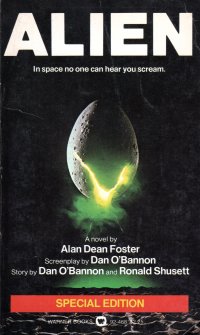
Book Report: Alien Nation by Alan Dean Foster (1988)

Book coverIn rummaging through my books last month to find a book by a native author, I went through the collpsed bookshelves and percolated a couple of movie novelization tie-ins to the top. So, gentle reader, you might look forward to reading book reports on a few of them here in the near future.

I told my boys about these movie books and how, before the home video revolution in the 1980s, if you wanted to experience your favorite movies outside of the cinema in a format you controlled, you had to go with the movie paperback. The novelization if you wanted the story in depth or the storybook if you wanted pictures from the movie (and, sometimes, things that were cut from the movie as in the Star Wars Storybook which shows pictures of Luke and Biggs on Tatooine). They, being of the Internet age, are pretty used to having any movie approved and licensed by big tech available at any time, although they will be the last amongst our people to remember going to an actual video store.

But I digress.

I must have seen the film at some time, but I am most familiar with the television series–enough to remember the star’s name even though he really hasn’t appeared in a leading role anywhere else. The television show lasted a season, my senior year in high school, when the fledgling Fox network didn’t have a full week’s worth of programming. According to the Wikipedia entry, Fox cancelled the series because it wasn’t making enough money at the time–but that its enduring popularity led to five television movies through the 1990s. Which is four movies past Firefly if you’re keeping score, brother.

Of course, by now, it’s a forgotten science fiction cult classic, maybe, so I should probably explain the setup. An automatically piloted alien ship appears out in California containing thousands of aliens that come to be called Newcomers (or Slags if you prefer the slur). These aliens were supposed to be slave delivered elsewhere, but inadvertently arrived at Earth. So the government has quarantined the aliens for a while but are helping to integrate them into human society. This has been ongoing for a bit–ghettos have formed where the Newcomers live, and some are starting to work alongside humans.

When human Detectives Sykes and Tuggle witness trouble brewing in the Newcomer area of Los Angeles, they witness and try to stop what appears to be a robbery in progress at a Newcomer-owned store. The robbers kill the storekeeper and then shoot their way out of the store, killing Tug. I think I’ve actually seen the movie and not the television show because I seem to recall this scene, with shotgun blasts punching completely though cars. But that might be a scene from another movie.

So one of the Newcomers on the police force is promoted to detective, and Sykes volunteers to partner with him. Although he’s not supposed to work on the case of his partner’s death, Sykes knows the Newcomer detetive, “George,” is working on a murder that might be related. So they navigate the hidden world of the Newcomers, finding a plot that deals with an alien drug ring and not the prevalence of super shotgun shells.

The book has a lot of good commentary on relating to The Other and integration, which means it’s certainly out-of-step for the 21st century. But they’re univeral themes, the alien in a host society, and the book explores some of these concerns without banging the race drum too much.

Foster handles the cinematic elements well, but the book’s pacing kind of matches some of the Executioner novels in that a larger part of early pages sets the tone and characterization, but then we get about three quarters through it and we have to cover the slam-bang finish and false endings in detail. Not on of Foster’s greatest works, but it’s still pretty good and kept him in kibble.

I don’t think anyone had actually read this paperback before. The spine was uncracked, and as I read it, the binding popped a couple of times and pages came loose. Which is okay, ultimately, as I suspect that once this book disappears into my paperback shelves, no one else will ever read it. Because, c’mon, man, I’m hoping to own the book for another couple of decades, after which I fully expect “reading” to be a lost art, and even if people still do it, most of it will be tech-approved content on tech-provided devices. But I digress.

I flagged a couple of things for comment as I’ve started doing, and I will risk the spine of this book further to provide this bit of commentary to you, gentle reader.

I Remember When

His hand reached out to automatically slap the rewind/playback switch on the answering machine. It whirred as he advanced on the kitchen. One time he’d put a funny greeting tape on the machine, a gag gift from a fellow officer. Only trouble was that his mother had called once and had been forced to suffer throught the tape’s bouncy barrage of four-letter words. All copspeech, unsuitable for mentally stable civillians. Now the machine requested its messages in a noncontroversial monotone.

When I finally moved out of her basement, my sainted mother bought me an answering machine so that she could leave me messages. In those days, although cell phones existed, they were still on the lower end of the adoption scale. I didn’t have one for a couple of years yet. I didn’t think I’d need an answering machine as I was not expecting a lot of calls. And, as I expected, she was the only one to leave messages. Well, mostly.

Also, note how much Foster has inserted here: In the movie, James Caan comes in the door and hits the button on the answering machine. But Foster adds depth with a little story about the protagonist’s mother. This separates the better novelizations from the lesser.

1 Out Of 2 Is Kinda Bad

“Wrap sheet shows one armed robbery conviction, a couple for sale of a controlled substance. He also beat a number of raps back East.”

Copyediting on paperbacks was not a big line item on even major books from major houses based on a major motion picture even in the 1980s.

The Other Water

There was muzak in the air and the cheesy aroma of canapes on trays. Waiters moved obsequiously through the crowd, dispensing Perrier and champagne and soaking up a month’s worth of gossip which the more astute among them would peddle a little at a time and for high fees to the city’s more prominent columnists.

Widows mentions Pelligrino water, which is my preferred sparkling water brand simply because I am not hoity-toity, and in the 80s, Perrier was pitched to the hoity-toity as it is a marker for a high class function here.

Also note how Foster here also injects a little characterization for some of the wait staff. The line in the script might be “A busy party scene.” Or, I suppose, the script could have included some of this in its description. But I prefer to attribute it to the seasoned pro (more on that in a bit).

Someone Has Kids

He tapped the picture. “That’s Kristin there. My daughter. It’s kinda an old picture, but you know how you get about old pictures. You always have this one special image of your kids, when they’re a certain age, when they look a certain age. When you’re seventy-five and they’re fifty, you’ll still see them the same way.”

Analysis: True.
I have a rotating set of pictures running on one of the monitors here in the lab, and since the Macintosh cannot recognize shortcuts nor include subfolders in its screensaver rotation, it mostly plays the root folder from one or more of my boys’ photo collections, which is disorganized photos from their extreme youth. And although they’re teenagers, about, now, they still have that toddler or little boy in them to me even though it was a lifetime ago to them. Not to me.

But Hasn’t Actually Scheduled a Wedding In A While
A paragraph later, talking about his aforementioned daughter’s wedding:

“When is the happy occasion?”
“Sunday. This Sunday.

In my experience, most weddings take place on a Saturday. Churches generally have other things scheduled on Sundays.

Of course, I’ve only been married once, and the wedding itself was long ago.

A Nice Line

They sat at the table and talked about small things suddenly becoming large, big things that no longer seemed half so important, and the debris of a person’s life called memories.

Definitely a noir coloration in the black and white text.

The Other Oprah Effect

His partner refused to be mollified. “She’s very progressive, I’m certain she’s considering it. She watches television all the time, and not just the Newcomer channel. She’s taken up flower arranging in her spare time. If she can pick up a human habit as bizarre as that, why not also divorce?”

I’ve heard that the other Oprah effect is that women who find themselves at home start watching programs like this and that they then find unhappiness in their marriages and the path to empowerment and fulfillment following a divorce. A friend pretty much attributed his divorce on Oprah.

Based on the screenplay by Rockne O’Bannon

I first became acquainted with the name Rockne O’Bannon from the episode of the middle 1980s Twilight Zone series. The segment was called “Personal Demons”, and it dealt with an older writer named Rockne O’Bannon who is plagued by destructive physical demons who damage his car and whatnot and, when he confronts them, they say they want him to write about them. When he does, they leave.

Because the character Rockne O’Bannon is older in the show, I thought O’Bannon himself was older. However, O’Bannon was at the beginning of his career in the middle 1980s. He did several stories for The Twilight Zone, one for Amazing Stories, and then this movie. He’s also responsible for Farscape (which I’ve never seen and would probably confuse with Lexx very easily since I didn’t see that program either).

I mention it because I think it’s funny that I thought that O’Bannon was a grizzled veteran in the 1980s, but he’s probably not that much older than I am.


So, to sum up, a good novelization of a mostly forgotten science fiction film. But it makes me want to go out and get the DVDs for the movie, the television series, The Twilight Zone 80s edition, and maybe Farscape and Lexx. Actually, I don’t have to go out to get them; I can simply conduct an Internet search online and be shocked that it’s so expensive and not buy any of them.

Which is just as well–I don’t carve out time for watching television, so they’d languish on the cabinet for years until I got around to them. Because I spend my time reading books based on movies and television programs instead.

Buy My Books!
Buy John Donnelly's Gold Buy The Courtship of Barbara Holt Buy Coffee House Memories

Book Report: A Ginger on a Mission by Lynn Daake (2015)

Book coverI bought this book at an undocumented trip to ABC Books (sometimes, as I mentioned, if I only end up with one or two books, I don’t make a special Good Book Hunting post for it since the hunting, in those cases, wasn’t particularly good). I spotted it in the local author sets, and I asked Mrs. E., the proprietrix, if it was Mama Daake. We know the Daakes from church, and the younger Mr. Daake, whose children received our boys’ Mega Bloks collection and still receive odd Mega Bloks from time to time when they turn up at Nogglestead, is not married to Lynn. So I thought it might be his mother, but, no, it’s his sister or sister-in-law. So bear that in mind, gentle reader: I know the family, and younger Mr. Daake is very large; although very good natured, I would not want to give him offense by savaging his sister or sister-in-law’s book.

With that disclaimer out of the way: The book is what it says it is. The subtitle is My Trip to Egypt, so it’s essentially culled from her diary/journal of a two week mission trip to Egypt. Daake is not a professional writer, so really the text is a bit of a cleaned up version of a journal which focuses on the travel aspects of the trip and the siteseeing a bit with only a little description of the mission work (cleaning up a park in Hurghada). You get some detail about the work, but a lot more of the time is spent on where the group is going in their non-work time, the souvenirs they seek, what they’re eating (a lot of Western chain restaurants), and impressions of the city. Also, a quest for hairbraiding.

So. It was a fairly quick read, the first thing I finished since finishing the Winter 2021 Reading Challenge (this book could have fit into the In a Different Country and Memoir categories). It doesn’t go into a lot of detail, it’s not particularly spiritual (although it does cite scripture a couple of times). So it kind of fits into the normal person biographies that I tend to read, but this one is contemporary.

I do wonder, though, how much of mission tripping is mission tourism industry, though. I mean, they paid money to go to a tourist city on the Red Sea to work half days on a project not directly tied to a sister church–although they do an activity with a local Coptic church and attend a service or two with them. They’re not directly proselytizing but just setting an example. So whether they’ve brought anyone to Christ through their example is uncertain–the author would like to think so, but I’m from a wee bit more cynical world.

At any rate, it’s the second book recently I’ve read set in Egypt (the other being The Judgment of Caesar). Which might have been why I jumped on it so quickly.

I also flagged a couple of things for comment.

Local Cuisine

The final dish was a beef dish. It had beef made three different ways. One was an interesting site [sic]. They [sic] way that it is made is that the beef is ground into a hamburger consistency and seasoned. Then it is formed around a shish kabob skewer and grilled. When it comes off the skewer and served, it looks like a piece of dog dookie with a hole in the middle of it. I think I was the first one to try it because of its visual appeal, and it actually tasted pretty good.

Strangely, I have recently been thinking of the word dookie. When I was growing up in the projects, it was the slang term of choice for human scat, but it’s not one that my boys have been exposed to–certainly, I don’t tend to use it any more. Then, I was thinking perhaps it was the word duece pronounced incorrectly originally. Of course, I didn’t search for it on the Internet, because, c’mon, man, that will not be good for my appetite ahead of my next meal and for the kinds of ads I would see for the rest of my life.

But sometimes I spend perfectly good brain cycles during the day thinking of things outside of Philosophy.

Shared Mall Experience
While visiting a mall, she notes:

You can even drop your kids off at Magic Galaxy where they can ride a roller coaster, drive bumper cars, or play with over 90 video games while you spend your time shopping. On the 4th floor there is a little tram where you can drop off your kids to ride the tram while you are shopping.

Although the local mall’s arcade does not have that many video games, for a while, it did have a little train that would ride around one small segment of the mall. We used to have our car serviced at the shop by the mall, so I sometimes took my boys up there and we would walk around the mall while we were getting the cars’ oil changed. So we rode on the train a couple of times during its brief presence at the mall. Since we were the only ones who rode it that I ever saw, it did not last long.

I’ve Seen Photos From Other Angles

Seeing the signs meant, “yes, we’re really are going to be able to not only see the pyramids but touch them, and even go inside one”. Then, all of a sudden, there they were. We rounded a corner and the pyramids came into view. They were majestic and stood high above the city buildings.

A lot of photographs make it look like they’re out in the middle of the desert, but I have seen photos of the pyramids showing them in the middle of the city.

Related:

As we started to drive away from the Sphynx and pyramids, Rafik told us that we would be headed to lunch. I was expecting to drive into Cairo to the mall, but we didn’t. Instead we pulled over right across the street from the pyramids. We were eating lunch at a KFC/Pizza Hut in Giza.

Martial Artists Can Relate

Juju and I bonded over martial arts and kickboxing. He showed me some of the moves he knew, and then I taught him a few more. We were having a blast throwing kicks and punches in the middle of the mall while our friends were shopping.

This is true in life: When you find out someone studies martial arts, particularly another type, you ask to see something that you can try out on the people in your school. Or, if you’re like me, you read a pile of books on it to learn dirty tricks.

Sounds More and More Like America

Vanda called Mariette and told us that their block had no power. Ish! We all laughed and decided it was an Egyptian sendoff. We didn’t have electricity when we left Hurghada, and new we weren’t going to have electricity as we left Cairo.

The Springfield area had rolling blackouts during the winter storms a couple weeks ago. I have been trying to get the phrase They’re not going to like the nineteenth century they’re voting for, but it might as well be They’re not going to like the third world country they’re voting for. Either works, I suppose.


At any rate, again, an interesting book. I enjoyed it and learned something, but it’s not a professional work, and if you’re not used to that, you probably won’t enjoy it as much.

Buy My Books!
Buy John Donnelly's Gold Buy The Courtship of Barbara Holt Buy Coffee House Memories

Book Report: Karate! by Russell Kozuki (1974)

Book coverThis book was previously published as Karate for Young People, and if I had read the back of the book when I picked it up in August 2019 at ABC Books, I would have seen that the book describes itself as being for all young people between 10 and 17. Maybe I did. I am not sure it would have dissuaded me. I certainly do pick up the martial arts books for young people at ABC Books. But not the ones for old people. I assume that’s the market for the tai chi walking books that are piling up because I’m not buying them.

At any rate, this is a very cheap paperback–almost pulp magazine quality more than a book–which offers a list of the basics of karate. Stances, strikes, kicks, blocks, and sparring. The techniques are shown with a series of three or four pictures, each of which takes up most of a page with a paragraph of explanation. The photos are not as helpful as the ones in Boxer’s Start-Up, but that books pictures and diagrams in that book really set a high bar. This volume has a couple instructive ones.

As I have said before, these books really serve to supplement an actual class since the motions are hard to learn from mere pictures. I mostly read them to draw comparisons with the martial arts class that I study. Some of the main differences that I see are that the karate ready positions tend to have a more closed stance (hips are aligned toward the opponent) and the hands are lower. But I’ve seen many of these forms already, but not lately–as I’ve mentioned, the school has focused a lot on boxing over the last couple of years.

But, still, there’s something to learn. One combination strike is called the U-punch, which is thrown from a front stance (which my school has never emphasized) and involves a cross and a backwards uppercut. It reminds me of my Matador combination, which is a knifehand toward the head from the forward hand with a low cross coming under it almost simultaneously. Although I haven’t really sparred in over a year with the way things have gone, this was one of my favorites. But, again, we’re not focusing on tae kwon do strikes these days.

So a good review over a couple of hours where I wasn’t at the dojo. Which I haven’t been much the last two weeks with the weather and whatnot. I need to get back so that I don’t fall further behind and I can wear my business gi again sometime.

Buy My Books!
Buy John Donnelly's Gold Buy The Courtship of Barbara Holt Buy Coffee House Memories

Book Report: The Judgment of Caesar by Steven Saylor (2004)

Book coverIt’s been six years since I read Saylor’s Last Seen in Massilia. I bought a bunch of these at a garage sale or something, and when I read Last Seen in Massilia, I had them together on the bookshelves, but I had put the first two I owned of the series out of order. Since then, the shelves upon which I’d put them in order collapsed, so they have kind of been just piled onto the remaining bookshelves. When it came time to find books to fill out the Winter 2021 Reading Challenge categories, I grabbed the Saylor book that was on top. This one.

It takes place well after the events of Last Seen in Massilia. After Caesar defeats Pompey. Gordianus, the protagonist, is returning to Alexandria, Egypt, with his wife, a native of that land, as well as his two adopted charges and the hulking mute brother of Gordianus’s recently deceased lover, whose ashes she wanted spread on the Nile. As they see the light of the Great Lighthouse at Pharos, a storm comes up and blows their ship into the remnants of Pompey’s fleet. Pompey hates Gordianus (Caesar is not terribly pleased with him, either), and he looks forward to executing the Finder (Gordianus’s nickname) after he returns from the shore expedition where he (Pompey) hopes to ally himself with the Ptolemeic royal family–but Pompey is assassinated before he reaches the shore.

The Egyptian fleet chases off the remnants of Pompey’s forces. Caesar arrives, and Gordianus finds himself caught between Caesar, Ptolemy, and Cleopatra in their various intrigues.

Basically, I thought the book was going to just come down to a historical intrigue book and not something hinging on a crime, but on page 209 (of 323), one of Cleopatra’s food tasters dies from drinking poisoned wine that she and Caesar were going to share, and suspicion falls on Meto, Gordianus’s adopted son who went missing in Massilia and whom the Finder disowned at the end of that book for throwing in his lot with Caesar. So Gordianus leaps into action to try to find out who really did it. Which he does in the back quarter of the book.

You know, I couldn’t help but think that this book is just like The Good Girl’s Guide To Murder (I mean, they even both came out the same year). The first half of the book deals with familial relationships, the pressures of mothers/daughters and fathers/sons (respectively), and the reader expects a crime but gets a lot of rumination until, yes, there it is, somewhere in the 200s, something happens (a murder/attempted murder). Then, very quickly, the protagonist solves it without an awful lot of legwork. You see? Exactly the same.

Except that this book has a lot of flourishes of interesting historical locations and events, even basing some of the dialog on things recounted in Caesar’s account of the Civil War (which I read not long after Last Seen in Massila). So it’s more relatable to me than the McBride novel.

Which is good. I have several others in the series hidden in the piles on the to-read shelves. Hopefully, it won’t take me six years and a prompt from a Winter Reading Challenge to get to them. But one thing I have recently rediscovered is that I have a lot of really cool books to read, starting with the partially finished David Copperfield (which I paused early in January so I could get a coffee cup from the library’s Winter 2021 Reading Challenge.

Oh, and things I marked:

I Feel Smart
The book talks about Crassus, the other part of the first triumvirite.

Pompey was not her first husband. Her previous marriage had been to Publius Crassus, the son of Marcus Crassus, the lifelong rival of Caesar and Pompey. When the elder Crassus set out to conquer Parthia some five years ago, he took his son with him; both perished when the Parthians massacred the invading Romans.

I am listening to an audio course lecture series called History’s Great Military Blunders and the Lessons They Teach; one of the lectures is on the battle at Carrhae. So by the time I read this, I could talk about that particular battle in detail.

Me, Too

“I am a slave–of Isis. I serve the goddess and belong to her completely, body and soul, in this world and the next.”

Yeah, me, too. That’s what I get for naming a cat Isis.

Not a lot marked here, but what am I going to complain about, the description of Alexandria? I will say of the two Civ IV Great Wonders from Alexandria, I prefer the Great Lighthouse to the Great Library.

Thank you, that is all.

Buy My Books!
Buy John Donnelly's Gold Buy The Courtship of Barbara Holt Buy Coffee House Memories

Mission: Accomplished

On January 9, I announced my participation in the Springfield-Greene County Library Winter 2021 Reading Challenge.

Although the rules indicate that you only need to read five books from the fifteen categories, of course I had to try to hit all fifteen.

Which I did.


Click for full size

Actually, I read sixteen books in the fifteen categories so I could do a software testing boundary analysis gag on LinkedIn.

Still, that puts me at 25 books so far this year, which would put me on pace for 150 this year if I kept it up. Which I won’t, of course, as the last eighty percent of David Copperfield, which I paused to complete this challenge, awaits.

Still, having to select something from these categories directed my reading in a fashion that did not leave me wondering what I was going to read next. When I finished it up this weekend, I was at a bit of a loss as to what I was going to read in addition to David Copperfield.

But I got over it.

Buy My Books!
Buy John Donnelly's Gold Buy The Courtship of Barbara Holt Buy Coffee House Memories

Book Report: She Had Some Horses by Joy Harjo (1983, 2008)

Book coverWhen I went to the library to get a book about food for the Winter 2021 Reading Challenge (Chocolate: The Consuming Passion), I also got this book, a collection of poetry by a Native American woman who, it turns out, is the current Poet Laureate. Which might explain why this book is in print nearly forty years after it or its content first appeared.

Well, her poetry lines are generally longer than those of Linda Hogan, whose book I read in December, short before I knew I would need to read something by a Native American author in the beginning of 2021.

But the same knocks I applied to Hogan, except perhaps the short lines, although some of the poems in this book also have short lines. But the poetry is not concretely evocative. It’s lyric in spots, and probably works better in performance than in reading from the page. But, come on, if the poetry depends upon a predetermined interpretation and delivery, it’s only so good.

The first paragraph and sentence of the introduction say:

What do the horses mean is the question I’ve been asked most since the first publication of the book She Had Some Horses in 1984. I usually say, “It’s not the poet’s work to reduce the poem from poetry to logical sense.” Or, “It’s not about what the poem means, it’s ‘how’ the poem means.” Then I ask, “So what doe the horses mean to you?”

Like most poets, I don’t know what my poems or the stuff of my poetry means exactly.

Spoken like a professional academic poet.

Maybe that’s my problem. I do know what my poems mean, and it’s my job as a poet to convey the meaning poetically, through words that feel good when you read them out loud, not that sound good when I read them out loud (although back in my open mic days, they did–or maybe they were just loud). Of course, I am not a professional poet, although I did get paid $100 for a poem once. Between that and my other sales to national magazines a decade ago, I am entitled to the professional tier in various writers’ guilds when I have been known to join.

At any rate, most of the poems flowed over me like water and back into the bookearth from which they came. I don’t expect to pick up another of her works, although the author is also a musician and a saxophone player, so perhaps I will catch something of hers on YouTube and order a CD.

Or maybe not. A little too Native American-influenced for my tastes.

Buy My Books!
Buy John Donnelly's Gold Buy The Courtship of Barbara Holt Buy Coffee House Memories

Book Report: Chocolate: The Consuming Passion by Sandra Boynton (2015)

Book coverBrian J., you might ask, exactly how low will you go to complete all fifteen categories in the Winter 2021 Reading Challenge? Well, gentle reader, I went to the library the other day to find a short collection of poetry by a Native American author and a book on food since I can’t find the book I pulled from my personal library about food. And I found this book on the shelves of the library in the food section. It’s a short humor book with lots of illustrations, but, c’mon, man. It was in the library’s own Food section, and not the kids’ food section. So it counts.

At any rate, it is an update of a 1985 volume that contains the sort of thing one would find in an “I Am….[Food Type]” article on Reader’s Digest if anyone besides me subscribed to it in the 21st century. You have information about how cacao is grown, how it is made into chocolates you can eat, where to buy the best chocolate, how to store it, all presented with a sense of humor and a lot of drawn hippopotami. Strangely enough, you can learn a lot from this book if you’re interested. It includes steps to grow cacao beans–step one is basically live in Africa or South America–and also recipes. So the book has it all.

But, yeah, it’s a very short read–it took me an hour or so. As I said, it’s more of a long article with the cartoons. But still informative.

I did flag one thing, though:

The new millennium has brought with it a quiet but insistent counter-trend to mass production: exquisite artisan-made food and drink. Wine, cheese, coffee, beer, bourbon–each has drawn a fanatical core of small-batch makers who strive for new vistas of nuanced taste experience. In turn, those makers attract a core of deeply devoted followers.

And so it is with chocolate.

The chocolate that these driven iconoclasts make is kown as “bean to bar” or “craft chocolate.” The makers begin at the beginning, working directly with smale-scale cacao farmers to determine how to grow and nurture the best possible beans, and how to optimize the methods by which these beans are sorted, fermented, and dried.

She’s talking about Askinosie Chocolate based here in Springfield, Missouri–and she does mention him in the thank yous at the end.

So I am down to two books to read in the next nine days. I am starting to feel very confident that I will complete the Winter Reading Challenge the hard way.

Buy My Books!
Buy John Donnelly's Gold Buy The Courtship of Barbara Holt Buy Coffee House Memories

Book Report: Vespers by Ed McBain (1990)

Book coverI first read this book fifteen years ago (or, at least, I first reported on it fifteen years ago). That was when the book was fifteen years old, so basically its age has doubled. Mine, almost, too. Or so it feels sometimes.

At any rate, this book precedes Widows, and as I mentioned, I spotted this volume on my bookshelves right after I read that book. I ordered this book last spring from ABC Books during the beginning of the Ongoing Unpleasantness; I got it because it is an autographed copy.

Not only is it autographed, but it is inscribed.

Much like the English copy of The Caribbean Mystery, I have to wonder how it ended up in Springfield, Missouri, for me to pick up.

The book has two unrelated plots: Carella and Hawes investigate the murder of a priest, and they have a bunch of suspects: A member of the congregation who has a beef with the priest; a member of the Satan-worshipping church down the street, whose rites are described in some tawdry detail; members of the the church staff; a local drug dealer who might have hidden drugs in the church; local youths/drug distributors who chased the drug dealer into the church after the drug dealer stole the drugs; someone who might be having sex with and/or blackmailing the priest; and the eventual murderer. The second features Marilyn Hollis, the former prostitute who is involved with Detective Willis, whose past catches up with her in the form of two South Americans who want the money she stole from her former pimp when she killed him.

The first plot moves a little recursively, as the stories of each person change according to the other peoples’ stories, until Carella returns to the scene and uncovers additional evidence that allows him to solve the mystery pretty quickly; the other meanders to a conclusion abruptly.

So not the best of the lot, but still an engaging read, and I read it in three nights, so pretty fast for my modern pacing.

I ended up picking it up because, when I was handling Widows, I saw that it was a selection of the Literary Guild. Which is a book club. So this is my Book Club Selection for the Winter 2021 Reading Challenge.

Oh, and I did mark some things as I went along.

Anachronism Alert

“This was late in the afternoon,” Krissie said, “this black kid came running into the church with his head all bloody. Hald a dozen white kids were chasing him with stickball bats and garbage can covers, chased him right into the church, right up the center aisle to the altar.”

I am not convinced a twenty-two year old woman from Minnesota would use the term stickball bat, especially since everyone else in the book calls it a baseball bat.

Attacking George Bush
I might have mentioned that in the 21st century, McBain let some sucker punches into his work. But here in 1990, he also criticises the earlier George Bush:

The black man in America knew where it was at. And where it was at was not here, not in these mean streets. Where it was at was uptown someplace, so far uptown that the black man had never been there, could not even visualize it there, knew only that uptown was a shining city somewhere high on a hill, a promised land where everyone went to Choate and Yale and a thousand points of light glistened in every cereal bowl.
Read my lips, Carella thought.

A little zinger for Reagan, too, who borrowed shining city on a hill from John Winthrop.

The Baddest Word
Clearly, there is a black kid in the book and it muses on racial questions, so we get the superbad word.

In the movie theater, sitting there in the dark with mostly white people, Hooper likes to wet his pants laughing every time Eddie Murphy does another one of his shrewd things. White people all around him are laughing, too. Not at any dumb nigger but at dumb Charlie who the nigger’s fuckin’ around. Hooper doesn’t completely understand why all these white people are laughin’ at theyselves, but he knows it makes him fell damn good.

Yeah, the superbaddest word of all appears throughout this book; it should be cancelled harder than Widows. But McBain does capture something of race relations at the time–Eddie Murphy’s characters were protagonists, black but relatable, and even white folk could identify with him. However, that’s not allowed or encouraged now–it’s not our shared humanity to discover and celebrate, but our assigned categories to defend.

Tie-In To Something I Just Saw

Marilyn wondered if there were such things as passionate, poetic men who looked like lions and made their homes in subway caves.

I just saw the intro for Beauty and the Beast when reminiscing about the New Shows of 1987.

McBain Knew No Goths

Carella recognized in the group of teenagers the two young girls he’d spoken to yesterday. They were dressed more sedately today, not in black–this was largely an alien color in a young person’s wardrobe–but in dark shades of blue that seemed appropriate to the day’s burden.

Apparently no metalheads either. In my high school years which ended in 1990, black was not uncommon.

Anachronism Alert (II)
One of the white local youths:

So we were, I don’t know, showing off for the girls, clowning around. I remember Allie was doing his imitation of what was supposed to be Tony Bennett singing I Lost My Heart in San Francisco, but he sounded more like Jerry Lewis, did you ever hear Jerry Lewis sing?

Probably not what a group of teens in 1990 would be doing, imitating Tony Bennett but sounding like Jerry Lewis.

Asimovian Self-Insertion

“Carlos Ortega,” Morente read out loud from the computer screen, and then turned to the faxed record and said, “Carlos Ortega,” and then kept turning his head from screen to paper like a spectator watching a tennis match, comparing records, speaking the facts out loud, “forty-two years old, born October fifteenth,” and said in an aside to Willis “Birthdate of great men” but did not amplify, “six feet three inches tall, two hundred and sixty-five pounds, brown eyes, bald with black sideburns, this is some kind of miracle, broken nose, knife scar over right eye, they sound like twins except your guy was born in Argentina and this guy in El Salvador.”

Ed McBain was born on October 15, you see?

White Privilege Alert
McBain also includes several slurs for white people and one for the Italians:

This was getting to be a regular reunion of WOPS, the World Order for the Prevention of Subterfuge, a watchdog society dedicated to the proposition that any American born with an Italian name must keep that name forever, neither changing it completely nor even Anglicizing it, lest he be mercilessly and eternally hounded to his grave with reminders that he is meely an ignorant peasant with hoity-toity pretensions.

As you might remember, Ed McBain’s birth name was Salvatore Lombino; he later changed it to Evan Hunter. Note that the aforementioned Tony Bennett also violated this precept and changed his name to a more American-sounding name.

So he is pointing out that anti-Italian prejudice and the reaction, Italians ‘policing’ themselves to find people who are not authentic enough, existed in living memory. Which, unfortunately, is not living memory to many people in the 21st century, or it would maybe give them some perspective other than what they’re given by the authorities.


At any rate, I flag things to comment on just so I can give a little more to these book reports. I don’t want to be pedantic, and I don’t want to spend hours composing these book reports, so you’re getting, for the nonce, a comment on things that strike me while reading the book.

In sum, I liked the book, and I tried to keep the Doritos dust off of this since it’s a warmly inscribed first edition, so it might be briefly collectible until the remainder of us who like to read physical books and not just content delivered to our devices and managed/’curated’ by big tech companies. Especially books with bad words in them even when the thoughts were, for the time, good.

Buy My Books!
Buy John Donnelly's Gold Buy The Courtship of Barbara Holt Buy Coffee House Memories

Book Report: Force Down The Executioner #180 (1993)

Book coverBrian J, you say, surely you’re not going to count an Executioner novel as your book set in another country? Well, gentle reader, time will tell: I have a little over a week to finish as many books in the Winter 2021 Reading Challenge categories as I can, and I have five slots left. So I might not have the chance to read something with more heft and depth for the In A Different Country slot.

And, truth be told, this book takes place in several different countries: The Executioner goes to Brazil to establish a relationship with counter-insurrgency agents as they raid a paramilitary group’s hideout to rescue a woman being held for ransom–willingly, as it turns out. Then he stops by Miami for a briefing, and then he’s off to Jamaica with a cross-national defense team to take on the paramilitary group’s beachhead there, and then he goes back to Brazil to take on the paramilitary group with the counter-insurgency agents, and then decapitate–or deliver the coup-de-grace–by eliminating the businessman behind the scenes. And, finis!.

The stop in Miami makes me wonder if I can truly, in good conscience, say this book took place in a foreign country. But ethics fall by the wayside when it comes to filling out my Winter 2021 Reading Challenge form.

As Executioner novels go, it has a lot of development in the first half to two-thirds of the book, which lead me to think maybe it was the beginning of another trilogy in the series, but no–about two thirds of the way through the book, it jumps into action set pieces and finishes quickly. Also, Bolan is a bit of a bystander through much of it compared to other adventures where he works solo. But it’s not a bad entry in the series.

I am down to 13 volumes in The Executioner series, not counting the Super Bolan books and related series. My goodness, what will I do without Executioner novels as the default for times when I need a book to read? It’s taken me ten years to read the 47 books my beautiful wife bought me for my birthday in 2011 and the others I have picked up since then. They’ve been a constant on my bookshelves almost since we moved to Nogglestead. So I will, someday, miss them.

But I probably won’t re-read them, unlike the Ed McBain and John D. MacDonald books that I come across again.

Buy My Books!
Buy John Donnelly's Gold Buy The Courtship of Barbara Holt Buy Coffee House Memories

The Real Mystery Is How I Got A Hold Of It

So, over the weekend, I scoured my bookshelves for a book on food and a book by a Native American author to fill out my Winter 2021 Reading Challenge form. I thought I might have a Native American poet (another one, I mean, since I read Linda Hogan’s Savings right before the challenge began) or maybe a collection of Native American folklore like Raven Steals the Light written by a Native American. At the very least, I know I have a contemporary history of the Spanish conquest called The Broken Spears (which I bought in 2008 that I could count.

But I came up empty.

Well, not exactly: I found a complete idiot or dummy’s guide to healing foods, which I promptly lost again after I set it aside. I also found a lot of good books I want to read when the reading challenge is over, including Larry McMurtry’s The Last Picture Show and Hud, the latter being the movie tie-in for Horseman, Pass By (I just read McMurtry’s Books: A Memoir for the reading challenge, as you might recall).

But I did find an independent copy of Agatha Christie’s The Caribbean Mystery, which I read last year in the omnibus edition of Five Miss Marple Mysteries. As I started to enter it into my book database because I can safely put it on my Read bookshelves (and if I didn’t do it now, gentle reader, I would likely have forgotten that I read it the next time I encountered it on my To-Read shelves). When I opened the cover of the cheap book club edition, I saw a previous price stapled to the front cover.

40p? That’s English pricing right there.

Sure enough: This particular edition is from the Crime Club, a London book club, and this particular volume was in the Kensington and Chelsea Public Libraries for a while before being remaindered and sold, perhaps for sixty pence.

You know, I’ve gotten books that started out in England before (see Five Themes of Today). I’m always amazed when they end up in my library here in the southwest corner of Missouri. Perhaps, sometimes, the books could tell better stories of their journeys than the stories in their covers.

Buy My Books!
Buy John Donnelly's Gold Buy The Courtship of Barbara Holt Buy Coffee House Memories

Book Report: Danger on Vampire Trail by “Franklin W. Dixon” (1971)

Book coverAs you might know, gentle reader, the Winter 2021 Reading Challenge has a category Re-read a Childhood Favorite. At first, I thought I would skip this category–one only needs to fill out five to get the free coffee cup–but when I was dusting and re-arranging the shelves last Sunday, I came across this volume. Which I have owned since childhood, gentle reader; this book was one of the books that my recently departed aunt gave to us because her step-children had outgrown them. That was when we were young and in the housing projects; we got a little bookshelf and a couple dozen volumes of young adult literature, which in those days meant a Hardy Boys book (this one), a couple volumes from other mystery series (Nancy Drew, The Power Boys), a couple of boy-and-his-dog books, and a couple of a young-person-and-his/her-horse books. As you might guess, I read most of the mystery books, but the books about pets? C’mon, man, I was living in the projects. Murder and crime, I could imagine. Pets? No way.

So this might trump (sorry, is that word verbotten yet? No? But it will be, and here I used it before it was officially double-plus-ungood) Me and My Little Brain as the longest time between re-reads. I re-read that book in 2018, but I am not sure in what order I read these books in my youth to establish which I might have re-read after thirty-eight years and which I might have read after only thirty-seven-and-a-half years.

In this volume, Frank and Joe and their chums Biff and Chet (who were The Missing Chums in an earlier entry in the series–forty-three years in real-time) go out west to the Rockies to investigate credit card forgers, and they come up with some illegal sapphire miners to boot. So, yeah, that’s it. They travel, have some adventures and whatnot, and solve the mystery of Vampire Trail, which is a path that leads up the mountain to the villians’ redoubt.

You know, for someone who feels as though he was steeped in the Hardy Boys’ mythos, I can only say for certain that I read three of the books. This one, and The Missing Chums and The Twisted Claw, but surely I read more of them when I was young, ainna?

I’ve tried to get others into the series–when he was young, I bought my half-brother the first two books in the series for his birthday or for Christmas and told him that I’d get him a new one every time he finished one. He never hit me up for another, so I don’t know if he ever read them. I’ve also picked up other copies from the series and set them out for my boys to read, but I don’t think they got into them. I asked the youngest, and he said in not so many words that they were too formulaic. How sophisticated the youth have become through the years. Although I think it’s more that they didn’t have enough cartoons in them.

At any rate, it ticks off a box–or fills a line–on the summer reading challenge form. And, as my wont, as far as one can develop a wont in but a month and a week, it would fulfill two categories: Re-read a Childhood Favorite and Crime. So I have not filled out the form completely (yet), but I have filled it with things that cross categories.

Buy My Books!
Buy John Donnelly's Gold Buy The Courtship of Barbara Holt Buy Coffee House Memories

Book Report: Widows by Ed McBain (1991)

Book coverIn keeping with my Winter Reading Challenge schtick, I have selected a book that would fit into two categories: One Word Title and Crime. Since we’ve already got Larry McMurtry’s one-word titled memoir about books Books in the one-word title slot, this will have to be my crime book for the challenge.

I first got into Ed McBain novels in the middle 1980s, about twenty-five years into the series, and I read a bunch of them from the library and from my aunt’s collection, out of order, but the eariler books, it seems, were more episodic and less serial in nature–but that might be only my memory of it, since Steve Carella first marries Teddy sometime back there, and his kids get born somewhere along the way. And patrolman Kling becomes a detective. So, nah, I’m mistaken. Strike this whole paragraph from the record, your honor.

But by the time the 1990s were rolling along, I was reading the books pretty soon after they came out, so I was following the series business in real time. But by now, I’m a bit lost. Who is dead by this book? Who has joined the team? Is Fat Ollie a force yet? I was thinking maybe there would be some small market for an 87th concordance to help put one back into the proper context when picking up a book in the middle of the series. Not that I would do that, gentle reader; that’s a lot of work, and I have many other things to read before I return to this series (although I did just spot a copy of Vespers on my bookshelves and, from a distance, thought it might be a duplicate of this book, so I might read that after David Copperfield).

In this book, the 87th has to find the killer of a kept woman. The man who was keeping her, an attorney, is also killed, and was the writer and recipient of any number of naughty letters reproduced in titilating detail in the book. In another part of the city, Carella’s father is killed during a hold-up, and the detectives from that precinct work on that case. The third main strand is that Eileen Burke, fresh from trauma that I’ll probably read about in Vespers, starts training with the hostage negotiator team. The first thread does not tie into the other two, but when they close in on the people who killed the elder Carella, they take a hostage, which ties those bits up.

So, definitely a good book. McBain was one of the masters, although by mid-career here, the books have expanded a bit to befit higher prices, I guess. And we have the cop-and-therapist trope. Maybe that just seems so outsized because it was such a thing in the Parker books. I dunno.

But I liked the book, and I’ve picked up McBain books here and there, so I’ll have to re-read them a bit as time goes by. Unlike John D. MacDonald, I think I have read all the McBains, although that’s probably only the ones that are easy to come by. Regardless, enough time has elapsed that I won’t remember the plots too clearly and can enjoy them with a little newness again.

I did flag a couple bits.

Asimovian Self-Insertion

Actually, it was a greenboard. Made of some kind of plastic material that definitely wasn’t slate. Eileen wondered if the move she’d seen on late-night television last week would have made it as Greenboard Jungle.

Lombino/Hunter/McBain wrote the book The Blackboard Jungle, but not the screenplay.

I’ll Have What He’s Having

“Yes, sir, that’s it, Pellegrino, like the mineral water.”

In 1991, I would not have known what that meant. In 2021, I was drinking Pellegrino’s whilst reading it.

The War

Tommy had moved back to the house that used to be his parents’ while he was away in the army. Nowadays, you did not have to say which war or police action or invasion a man had been in. If you were an American of any given age, you had been in at least one war.

Which was true at the time. When this book was published, it would have been Vietnam or Panama or Grenada; earlier books would have been World War II (the series began in the 1950s) or Korea. However, with the end of the draft in the 1970s, later generational military endeavors, from Desert Storm to the second Iraqi War and Afghanistan, were not widely shared amongst the young people. But you can still talk about veterans who have been overseas under fire.

Misquoting Yogi

And, as Yogi Berra once remarked, “When you come to a crossroads, take it.”

Ackshully, he said when you come to a fork in the road, take it. Perhaps McBain is misquoting on purpose?

What We Could Show McBain In The Future

The kid had been black.

That meant that one of the city’s foremost agitators, a media hound who liked nothing better than to see his own beautiful face on television, had rounded up all the usual yellers and screamers and had picketed both the project and the local precinct, shouting police brutality and racism and no justice, no peace, and all the usual slogans designed to create more friction than already existed in a festering city on the edge of open warfare.

Yes, he means Sharpton. But what would Sal Lombino think about Sharpton and 2020?

Shoot Him In The Leg

“And you’re wrong when you say she had to put him away. She didn’t have to. Her perception–and, again, the reality as well–was that this man was going to cut her if she didn’t stop him, she was going to get cut again if she didn’t stop this man. But she didn’t have to kill him in order to stop him. The man was armed with only a knife, and she had her service revolver, a .44 caliber Smith & Wesson–plus a .25 caliber Astra Firecat in her handbag. She certainly did not have to kill him. She could have shot him in the shoulder or the leg, wherever, anything of the sort would have effectively stopped him. The point is she wanted to kill him.”

The therapist is talking to Kling about Burke’s recent justified shooting, and McBain is demonstrating a bit of ignorance about guns and self-defense informed by popular culture which says that’s a good idea.

Help Is On The Way

That was the trouble when a city started sliding south. You couldn’t bother about the little things anymore. When people were ggetting killed, you couldn’t go chasing kids spraying graffiti on walls. You couldn’t ticket a truck driver for blowing his horn. You couldn’t bust people who were jumping subway turnstiles. When you had murder and rape and armed robbery to worry about, the rest was merely civilization.

You might think that in the Dinkins era. But a couple years after this book appeared, Rudy Giuliani became mayor of New York, and the police started enforcing a Broken Windows policy that says you do arrest and punish for those petty crimes, and the effects trickle up. It certainly seemed to work, and current large city administrations are looking to prove the opposite is true as well. Well, mainly, they’re just looking to limit prosecution for petty and small larcenous crimes, and the resulting crime spike is completely unforeseen.

Again, The Future Has A Surprise For You

The people form the nearby project all came out to watch the Late Night Show. This was either Die Hard or Die Harder on a summer’s night at the very top of August. Except this wasn’t a high rise in L.A. or an airport in D.C.

The third entry in the series, Die Hard with a Vengeance (1995) takes place in New York City. As you know, gentle reader, The City of the 87th Precinct is a stand-in for New York City.

Cancellation Notice

The Preacher was in the streets already, doing what he did best, doing in fact the only thing he knew how to do, which was to agitate people into a frenzy. Pacing behind the barricades, long hair slicked back, gold chains gleaming in the reflected light of the spots, bullhorn in hand, he kept telling the crowd that whenever a white girl yelled rape, then the nearest African-American males were always accused of it…
“But take a pure innocent young virgin like Tawana Brawley, who gets reped by a screaming mob of white men who then scrawl the word nigger…”

I sure read a lot of books with that word in it. I must be a racist. No telling what Ed McBain would think of this modern world where characters like The Preacher are running the asylum. McBain passed away in 2005; he barely had any time to work in anti-Bush sentiments into his novels much comment on or embrace the rising ethos. When you read the books from the later part of the 20th century, you get a sense of cynicism and detachment. I’m sort of glad we didn’t get to see how earnest he might have become.

Don’t Now Much About Guns And Stuff (II)

She saw a big, muscular man with a close-shaved skull, wearking a white T-shirt, that was all she could see of him in the window frame. AK-47 in his right hand. Just the sight of that gun always sent a shiver up her spine. The illegal, Chinese-made assault rifle–a replica of the gun used by the Viet Cong–was a semiautomatic, which meant it required a separate pull of the trigger for each shot. But it could fire up to seventy-five shots without reloading, and its curved clip gave it the lethal look of a weapon of war, no matter how many claims the National Rifle Association made for its legitimate use as a hunting rifle.

Well, he got the semiautomatic part right, and that it should be illegal because it looks scary; however, the 75-round magazine is a drum, not a curved banana magazine. C’mon, man, do you even read Executioner novels (or, as the younger generations do, play first person shooters)?

Still, even though sometimes McBain’s politics seeps into the books–like that passage above, it’s not odious and permeating and he offers enough sentiments that an evil-thinker can agree with to make up for it.

So, yeah, McBain is up there with John D. MacDonald as masters of the craft that didn’t get to the phoning it in phase of a career or to injecting politics into the books so overtly as to alienate readers who didn’t vote for Dukakis. The books have depth, and just a bit of series business seeping in.

You will know how serious I am in the endorsement by how soon you see a report for Vespers. Well, I mean another one.

Buy My Books!
Buy John Donnelly's Gold Buy The Courtship of Barbara Holt Buy Coffee House Memories

What! Not Robert B. Parker?

Neo posts the complete Macbeth quote that includes the passage sound and fury which Faulkner later used as the title far a book. Actually, I made it through the first section of The Sound and the Fury some years after I was assigned the book in college; the first part is the disjointed bit told by the mentally handicapped brother, and it was only after I got a bit into Quentin’s section that I put it down.

The focus on Shakespeare’s quote and the Faulkner book are because, apparently, a journalist tried to Ha, ha! a Republican Senator for quoting the Shakespeare when everyone knows that’s Faulkner. Because that’s journalism in the 21st century: Ha-haing the ignorant Republicans. Even when they’re right.

But that’s neither here nor there.

What I did want to point out was that the Shakespeare speech that yielded the title of one of Faulkner’s most unreadable works (right up there with the rest of his work) is the source for the title of two Robert B. Parker novels:

Tomorrow, and tomorrow, and tomorrow,
Creeps in this petty pace from day to day,
To the last syllable of recorded time;
And all our yesterdays have lighted fools
The way to dusty death. Out, out, brief candle!
Life’s but a walking shadow, a poor player,
That struts and frets his hour upon the stage,
And then is heard no more. It is a tale
Told by an idiot, full of sound and fury,
Signifying nothing.

Not to mention the old Signifying Nothing blog. And an Alistair McLean novel (The Way to Dusty Death).

But Real Important Journalists are forgiven for overlooking genre fiction and Chris Lawrence (sorry, Chris).

At any rate, in researching this post, I have learned that I stopped reading in the Parkerverse, for the most part, about five or six years ago, and it looks like I am, what, fifteen or twenty behind? Well, I say behind as though I’m planning to catch up. Which I am not–I have plenty of Executioner novels yet to read as well as finishing up the Winter Reading Challenge and then David Copperfield (which is not going to be the In a Different Country category, as I am only a third of the way through it and could probably not finish it in the next two-and-a-half weeks if I tried).

Buy My Books!
Buy John Donnelly's Gold Buy The Courtship of Barbara Holt Buy Coffee House Memories

The Covered Books of Nogglestead

I said last week:

As you might remember, gentle reader, I inherited a box of my grandfather’s old books when my aunt passed away a little over a year ago. They have remained in the box as they include a fourteen volume (plus index) set of The Classics in Greek and Latin from 1909 that I really don’t have shelf space for as a unit. Although I did get the books that I stacked on it during the great ABC Books ordering frenzies during the lockdown of Spring 2020 moved up into the shelves, the box has remained on my office floor the whole thirteen months. And I’ve had to move it around to keep it from the background of video computer calls during that period. The number of which has been increasing as I’ve been interviewing for other work and presumably will continue once I accept an offer since everybody does video calls now.

I recently ordered a small roll of clear book-covering to put over the covers of some of my older works, especially the ones I hope to read some day–I recently covered a nineteenth century collection of poetry with an old paper bag the way we did old text books back in the days when public school kids learnt something instead of playing computer games all day on suddenly imperative expensive school budget line items (get offa my lawn).

I wasn’t kidding about the paper bag.

It’s an 1886 copy of Mrs. Mary D. Brine’s From Gold to Grey, a collection of poems of what appears to be an American Romantic sort–I covered it to protect it whilst I browsed it during football games, but I didn’t get too far into it before the football season ended.

So I spent some time this week using up that small ten-yard roll of plastic. I got the 16″ wide stuff, which was probably too wide for my application as I cut several inches off of it for each book. But I did wrap the Brine:

My wrapping is not really tight yet, and I don’t use squares, protractors, and cutting boards like I’ve seen in the YouTube videos, but I am an amateur here.

So I had enough for the fifteen volumes plus index of the 1909 Parnassus Edition of The Classics: Greek and Roman by the Vincent Parke and Company, my grandfather’s copy of The Poetical Works of Alexander Pope Illustrated from the 19th century, and the Longfellow I just bought.

Here’s the slightly-wrinkly collection of the classics in their new home:

I have numerous other books I’d like to cover, but I might hold off on ordering another ten yards from Amazon or something like the 100-yard rolls directly from Brodart because covering those books is work. I mean, in addition to the couple of hours actually covering the books (badly), I spent four hours moving and tidying the bookshelves to make room for these books. I might not have to put in that level of effort in covering, say, covering my Edna St. Vincent Millay books, but you never can tell. This also probably leads me to buying another smaller roll than a bigger one so I can tackle these projects in smaller chunks.

Maybe after my nap.

However, hopefully practice will make me better at it.

Then perhaps I can start tackling books with dust jackets by covering the dust jackets, not just being lazy and covering the jacket with the book.

Buy My Books!
Buy John Donnelly's Gold Buy The Courtship of Barbara Holt Buy Coffee House Memories