Book Report: The Sins of the Fathers by Stanley Schmidt (1976)

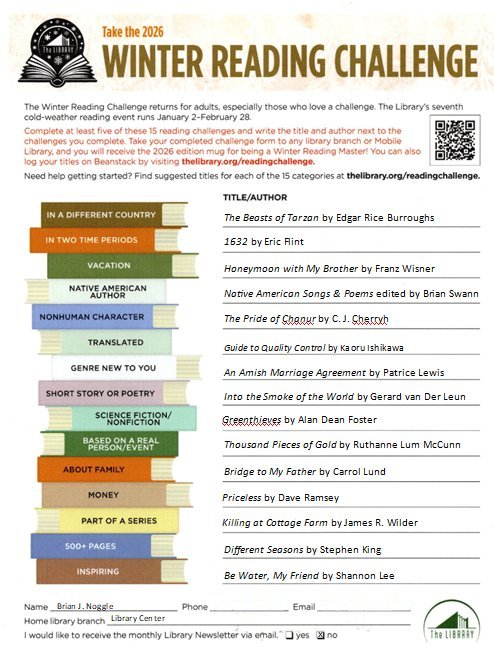
Book coverI picked this book up last weekend at ABC Books because I hoped it would have a time travel element in it, as the back of the book indicates that it tells the story of a ship that went back in time to make some astronomical observations, and on the way back, the astronomer on the crew of three went mad and killed the captain of the vessel. And I thought I was it would fit into the set in two times category of the 2026 Winter Reading Challenge, especially as the first bit of it is set on the ship in the past (which is still our future a bit). However, at the end of the prolog, it says it’s an excerpt from the surviving mate’s log. Uh oh.

So: The first part of the book is the mystery as to why the astronomer went mad. Well, apparently, in their trip to the past, they discovered from their position not only in the past but 100 light years over from Earth’s position that the galactic core had exploded a long time ago, and the shockwave of radiation would reach earth 20 years after their own time. That alone wasn’t quite enough to make the astronomer mad–he also had some “hallucinations” that they were being followed on their return to earth for months in the starless void of their hyperspeed (from which they dropped periodically to take additional measurements to make sure they were not mistaken).

When they return to Earth, the mate reveals the story to the head of the international science agency–and then they discover that the astronomer was right–they were followed by aliens who land at Kennedy Spaceport and offer their help, which would involve turning the planet into a ship, but that would not only put the inhabitants into hardship as they hardened domiciles and whatnot but would also use up most of earth’s mass as fuel, rendering it not like it is now when they eventually reach the M31 galaxy (some time in the future). So the middle part is a boggy bit of bureaucratic stuff while they try to make the decision politically appealing and the head of the UN tries to pawn off ultimate responsibility to the head of the science agency. And the big mystery is why are the aliens helping? And that do they want in return? The middle comprises months of interactions, public reactions, and ruminations. But I guess it’s hard to write an emergency that is seventeen years in coming.

The end is pretty quick, though, when the aliens force a decision and reveal the reason they’re helping–their forefathers accidentally triggered the explosion, and they’re traveling to safety at near-light speed so they can find and help along other civilizations that they might find. And they want the humans’ help because they’ve become dependent upon a “coordinator,” a hive mind intelligence (via computer) which has guided them for thousands of years and which is going to “die” because they won’t have energy to run it–so they need humans who are closer to nature to be able to help them survive on wild planets they find. And, finis.

I hope you don’t mind that the book report here as spoilers, but, c’mon, man; the odds of you finding this book and picking it up in the wild are pretty low, and I would not go ordering it off of the Internet. It has a bit of a 70s vibe to it, not the eternal Soviet vs. US thing you get out of many books from the era, but the other, more “optimistic” one where international bodies kind of rule (although it’s worth noting that the book does not shy away from describing the human nature of those who run the organizations). But the thought of the UN being a unifying force for humanity is so 1900s, man.

So the book is not a direct ancestor of the movie Event Horizon (the novelization of which I read in 2008), but I can see how it might have been an inspiration. Someone takes the base conceit–a ship went somewhere extra-dimensionally/extra-timely and its occupants went mad–that someone put their own spin on. You know, if I were more of a writer instead of just a twee little blogger, maybe I would mine the 1970s midlist fiction I read from time to time for ideas. Ah, but that’s effort, and I’m not giving up nap time or time to try to finish the Winter Reading Challenge for actual productivity of any sort. Perish the thought!

Buy My Books!
Buy John Donnelly's Gold Buy The Courtship of Barbara Holt Buy Coffee House Memories

Book Report: Be Water, My Friend by Shannon Lee (2020)

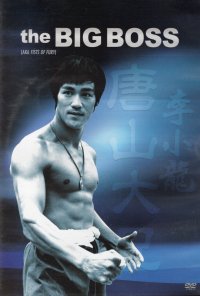
Book coverAh, gentle reader. I combed my stacks for something “Inspiring” to read for the 2026 Winter Reading Challenge. You might remember, gentle reader, that I also had trouble with the “Feels Good” category last year, settling for Hope Always Wins. Which might have made a good entry this year for this category, but, alas, I’d already read it. I had one of the small poetry collections I get bundled for fifty cents at the Friends of the Springfield-Greene County Library book sale with “Inspirational” in the subtitle, but I’ve already got two poetry collections on this list. So I found this book, which I bought…. I dunno. No book sale marks on it, no ABC Books sticker on it–I think I received this as a gift. Someone gave me a book. Probably my beautiful wife. Its subtitle is The Teachings of Bruce Lee, and the author is his daughter (who was four when he died).

So, inspiring? Well, it made me want to practice martial arts (which, of course, I haven’t, because that would not be wasting my time like writing twee little apps) and to watch the Bruce Lee movies I bought a year ago (soon, now that I’m about a book and a half away from completing the Winter Reading Challenge). This book is really three books in one:

  1. A biography of Bruce Lee’s adult years, studying philosophy, working in Hollywood, starting his martial art (jeet kune do), and writing.
  2. A memoir of the daughter as she works through some of her issues, seeking knowledge from a variety of thought sources and practices, and landing on her father’s writing as she takes the reins of Bruce Lee’s enterprises in adulthood.
  3. A self-help book, nominally based on the works and writings of Bruce Lee (paraphrased), but run through a corporate-speak blender. At several points in the book, I lost the thread of thought because I was counting variations on to be as the verb in a sentence. In some places it was over fifty percent. Maybe sixty. It’s just not compelling writing, although it improved later in the book where it got punchier.

It was definitely a slow read for its subject matter, better in the spots where she’s exegesisating on something of her father’s, and I did get one or two things out of it, particularly the way the book differentiates react versus respond. Also, she documents one day of his workout regimen which includes hundreds of punches, which reminds me (as so much does) that I have a heavy bag which I rarely use–and I should, especially since a martial arts class yesterday showed me again how my left side kicking strength has withered. So the book inspired me to watch Bruce Lee movies and to work out more, especially in my martial arts skills.

The book could have benefited from an editing to trim the corporatese language and to punch it up with some action verbs. Did I use “punch up” and “punchier” in a book report on a book about Bruce Lee? You betcha. It’s my blog, and I do what I want.

Buy My Books!
Buy John Donnelly's Gold Buy The Courtship of Barbara Holt Buy Coffee House Memories

Something Something Needs Congressional Action

Equifax accused of price gouging Medicaid programs

Equifax is being accused of price gouging regarding Medicaid programs.

Democratic Sens. Elizabeth Warren and Ron Wyden and Independent Sen. Bernie Sanders wrote a letter to the company’s chief executive asking for answers regarding its business practices.

* * * *

Many states use an Equifax program called The Work Number, which quickly verifies a Medicaid applicant’s work hours and wages.

According to a probe by The New York Times quoted in the senators’ letter, Equifax often raises the price for The Work Number.

So Equifax raises prices, gouging all customers (it follows the shake-every-nickel-from-clients philosophy so prevalent in big tech, after all), and some of the clients happen to be states, who happen to use it to distribute Fedbux…..

Yeah, some senators want to Do Something, which is likely to extract a settlement of some sort, on behalf of their constituents, which are people who receive Fedbux.

Full disclosure: I used to work for the company that made The Work Number for Everyone, which Equifax bought. That company’s stock endowed a scholarship with my father-in-law’s name on it, and Equifax stock which I received in exchange for my old company’s stock has been instrumental in funding my current Travis-McGeelike “retirement.”

Buy My Books!
Buy John Donnelly's Gold Buy The Courtship of Barbara Holt Buy Coffee House Memories

It Will Make Insurance Rates Rise

Missouri families push senators to support diabetes treatment bill:

Missourians are asking the state’s two senators to help pass what they call a life-changing bill. Supporters say it would make long-term treatment for diabetics more accessible.

Senator Ted Budd from North Carolina and Mike Lee from Utah introduced the Islet Act in November 2025. This would change the wording on pancreatic cell transplants.

* * * *

However, currently, those transplants are categorized as a drug instead of an organ, which affects insurance coverage.

“It’s not done as much here in the United States because of this issue of categorizing the islets as drugs rather than as an organ, which that’s what they are,” Yosten said.

Making everyone pay for this treatment will make insurance rates go up.

I mean, I hope everyone who wants, needs, or gets this treatment is healed, but this bill is about making everyone pay more so they can get it. Not making the treatment available.

So I expect it to pass; Schmitt, as you know, was proud of similar efforts he led in the past.

Buy My Books!
Buy John Donnelly's Gold Buy The Courtship of Barbara Holt Buy Coffee House Memories

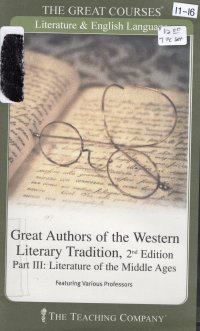
On Great Authors of the Western Literary Tradition, 2nd Edition, Parts 1 and 2, by Professor Elizabeth Vandiver (2004)

Book coverI bought this bonzer of a collection in 2024; it’s 42 discs total, and it’s broken into 7 parts with 5 different instructors. It will take a little while for me to go through the whole thing, I decided I would break my “reports” of them into parts separated by lecturer.

The first part is Near Eastern and Mediterranean Foundations with these lectures:

  1. Near Eastern and Mediterranean Foundations
  2. The Epic of Gilgamesh
  3. Genesis and the Documentary Hypothesis
  4. The Deuteronomistic History
  5. Isaiah
  6. Job
  7. Homer–The Iliad
  8. Homer–The Odyssey
  9. Sappho and Pindar
  10. Aeschylus
  11. Sophocles
  12. Euripides

The second part is Literature of the Classical World with these lectures:

  1. Literature of the Classic World
  2. Herodotus
  3. Thucydides
  4. Aristophanes
  5. Plato
  6. Menander and Hellenistic Literature
  7. Catullus and Horace
  8. Virgil
  9. Ovid
  10. Livy, Tacitus, Plutarch
  11. Petronious and Apuleius
  12. The Gospels
  13. Augustine

Jeez, but not to be a braggart or anything, but a lot of this seemed familiar. But I have listened to courses on The History of the Bible: The Making of the New Testament Canon, The Bible as the Root of Western Literature: Stories, Poems and Parables, Socrates, Aristotle, e Aeneid of Virgil (by this same professor), Augustine: Philosopher and Saint, and Augustine. I’ve read Pindar (recently), Sophocles, Euripides, Aristophanes, and The Making of the Old Testament. I’ve got, certainly, Plutarch, Livy, Homer, Virgil, Ovid, plenty of Plato, Augustine, The Epic of Gilgamesh and maybe Tacitus, Aeschylus, and Horace around here somewhere for me to read sometime after the 2026 Winter Reading Challenge completes. So, look at me! I am a learnèd man! Or at least a guy with an English and philosophy degree he takes seriously.

But, as this course is moving chronologically, it does kind of put the authors in order and in their eras. So, briefly, I know when the Hellenisitc era begins and when it ends and the order in which the Greek tragedians wrote, and…. Well, no, their exact years are gone from my memory. I wasn’t taking notes, you know–I was driving (and sometimes taking the long way home to finish a lecture). But, yeah, I get more familiar with these things the more I listent to them, and if nothing else, they do make me want to dive into the original materials. Although that itself does not mean much–I’ve had a copy of Pamela only slightly read for probably five years since I listened to the audio course The English Novel in 2020 and bought the early epistolary novel in 2020 because it was mentioned in the book. But, oh, it moves so slowly. Slower than my reading of slow books even.

At any rate, I have five (5) more binders of CDs to listen to (I guess they’re really DVDs, so I could watch them in the house if I really wanted to), and that could well take me into the summer or autumn. Which, again, is why I’m going to report on them professor-by-professor. So I can enumerate what I’ve already read or already own, I guess, since I’m not sharing with you, gentle reader, much about the development of verse and prose from Ur to the fall of Rome. Which is: It did. A major turn from the old Greek tragedians who wrote epics with the gods in them to the new comedians who didn’t write so much about gods but more about every day people. Well, every day royalty or aristocrats, but still, more narrow in scope. Will I remember that next week? Maybe. Ask me then.

Buy My Books!
Buy John Donnelly's Gold Buy The Courtship of Barbara Holt Buy Coffee House Memories

Book Report: An Amish Marriage Agreement by Patrice Lewis (2025)

Book coverFor the 2026 Winter Reading Challenge‘s “Genre New To You” category, and given how voraciously, profligately, widely, and not very wisely read, I definitely had to go narrow and niche. So I thought of an Amish romance because I read Lewis’s blog (Rural Revolution). Which is good, because the only other thing that might qualify as some of the more modern monster erotica, and, well, let’s just say I’d only go 14 of 15 on the Winter Reading Challenge if that were my only choice.

So I ordered this book new from Amazon as part of the $10 in padding I needed to get the spare oven heating element I ordered after replacing it yet again in our tiny oven. Ah, gentle reader. I had to return that heating element because it was mailed in a plastic bag and had, strangely enough, gotten bent in transit. A couple days later, I sat down to read a copy of this book, but I discovered that it, too, was no good–someone has spilled coffee or something on it in the bindery, on the pages, before it was bound. The cover was pristine, but the first forty pages were completely unreadable–I mean, the paper quality on this little throwaway are pretty thin, but spilling coffee on them made them translucent and washed much of the print off of them. And some employee let this go through rather than stop the line. I guess I cannot say anything–when I ran a printing press, I let some prescription blanks of questionable quality pass because I was already attracting attention for my waste. Fortunately, Amazon took the second return from three items ordered that day and sent a replacement post haste ergo post (he said, trying to make a pun in Latin because he’s been listening to lectures on Roman authors recently). And I got to read a legible copy. Although, I must note that the replacement copy had light damage, dinging and whatnot, to the edges of the book. Probably as much from the cheap materials as Amazon mishandling, but my Amazon tweehad continues.

So: Well, the characters are all Amish–no Englisch (that is, non-Amish Americans) have speaking roles. Olivia has just moved to a settlement in Montana from Ohio after her father’s death. She is settling into her rental cottage and life as a spinster–she’s almost 30, and, as she and other remind us, she is awfully plain in appearance. One morning, she hears something on her doorstep, and she discovers a baby and a note. Her estranged wild-child sister is off with yet another man and has left her months-old baby for her sister to take care of. Olivia doesn’t know much about children, and when a local handyman appears at the door, she turns to him for help. And he’s handsome, unattached, and also new to the settlement. They’re both kind of starting over after losses–she took care of her father until he died; the handyman is looking for a new start after a relationship ends. They decide to buy a farm together, and to get married to do so–but they encounter some opprobium and a little resistance from the community–and when the sister returns, Olivia is worried she will tempt the handyman–or take the baby away.

The book has rather few events in it, instead padded out a bit by the interior thoughts of the main characters, each wondering at length if the arrangement will end up in a love match, but, no, the other person couldn’t love me. And the book recounts the initial arrival of the baby several times as they recount the story to different people in the settlement.

And it had a couple of things that didn’t seem right to me. The Amish people talk a bit more modern than I would expect despite the interjection of German into the dialog. In the first two chapters, the setup–the baby on the doorstep–is called cliche twice. A couple of different speakers use “literally” when describing something–they use it correctly, but “literally” is a speech tic that not everyone shares. That sort of thing, a speech tic shared by multiple characters, has been something I’ve watched out for ever since college, where one of my colleagues wrote a play where all of the characters exclaimed the name of the person they were talking to when surprised–something she did, but not everyone else did. She, too, probably called a lot of things cliche as was the style at the time. But I guess I could be mistaken–maybe the Amish do say “Whatever” and stuff. My experience with the Amish is avoiding their buggies on regional highways and reading occasional books about Englisch encounters with them. Maybe I should go to some of the localish Amish shops to do my own research.

Eh, not really my genre. I’m sure Mrs. Lewis knows her market and what she’s doing. She’s sold more copies of this book than I have all of my books and my apps put together. Of course, as I read her blog, I can see some parallels to her life in it–like building a pantry into their farmhouse–her husband did that when they moved to their new place a couple years ago–so when I say “I can see,” I mean I sorta can–I remember the pictures she posted.

At any rate, probably a serviceable entry in the genre, but I feel like my boys when they were younger: It would have been better with guns in it (like the genre paperbacks available by subscription that I generally read). I mean, I liked the movie better.

Buy My Books!
Buy John Donnelly's Gold Buy The Courtship of Barbara Holt Buy Coffee House Memories

Good Book Hunting, January 31, 2026: ABC Books and Hooked on Books

I had to go into town yesterday afternoon to pick my beautiful wife up from a short church-related trip she took, so of course I left a couple hours early so I could go to ABC Books because they had a book signing and Hooked on Books because I had a gift certificate.

So I bought a couple things.

At ABC Books, I got:

  • The Sins of the Fathers by Stanley Schmidt. It talks about a space ship that goes to the past and comes back with one person on it who is insane. Sounds like the plot for Event Horizon. I’m hoping it has a flashback or part of it set in the past because I need a “Set In Two Time Periods” book in February.
  • The Wicked Among Us by James Owen. The cover says “Murder, Blackmail, and Book Collecting in the Ozarks.” It’s a true crimish thing based on a murder that occurred in the Springfield area a couple years before I got here. The author had a line of people–I guess some people knew him, and a radio station mentioned the book signing (and he mentioned he’d already sold 1000. Maybe 1500). Clearly, it was not an instance of me being the only one buying the book or one of a couple sold. But the book looks interesting.

I got a $50 gift certificate from Hooked on Books for Christmas, which is odd: although it is probably the closest used book store, I don’t go there that often any more–I came more frequently when I lived in St. Louis (probably). And I struggled to find something to buy, gentle reader. I started on the south side of the store, looking at the mysteries to see if they had any old John D. MacDonalds–as I mentioned, a long time ago, they had a lot, and not expensive, but I didn’t buy a lot because I thought they would always be there. I made my way through the science fiction section, looking for a title that said Set in Two Time Periods. I looked at their shrunken philosophy section. I inspected the incomplete classic literature sets. I made my way to the north wall and looked at “collectible” (basically, just old) books. But when I got to the eastern corner of the store, opposite of where I started, I found the martial arts section

I got:

  • Nightmare in Pink in paperback (so old that it was not labeled–so it might have been one I overlooked back in the day–and A Deadly Shade of Gold, the 1974 first hardback printing (this one first appeared in paperback). $2 and $6 respectively. I’ll have to check my collection to see what I actually have and what I am missing and mindfully seek to fill the gaps.
  • Why We Suck by Denis Leary. It was $7.50; they had a trade paperback which I also looked at, but it was only fifty cents cheaper, so I went for the hardback.
  • How Things Stack Up, a collection of poetry (signed and inscribed, but not to me or anyone I know) by Michael Castro, the former editor of River Styx. You know, he might have hosted the poetry readings at Brandt’s on Sunday nights which I used to lure and ensnare a pretty poet living in Columbia in 1997.
  • Moon City Review 2020, a local literary magazine which has rejected me several times. I’ll look to see what they like. Or what the students liked in the before times.
  • Comprehensive Applications of Shaolin Chin Na by Dr. Yang Jwing-Ming. $12.50.
  • Krav Maga: Real World Solutions to Real World Violence by Gershon Ben Keren. They have several krav maga books; I just got one (so far).
  • The Overlook Martial Arts Reader edited by Randy F. Nelson. Subtitle: “Classic Writings on Philosophy and Technique.

All told, I spent…. Nothing. I had the gift certificate and the remnant of a gift card for sitting through a timeshare presentation (of which, I have a couple dollars left toward a grocery bill).

Two of the martial arts books have Bee written on the top and bottom but no library marks on them. I noticed these on a couple of the Story of Civilization books I bought in 2019. I wonder what school or organization marks their books this way. I’ll have to ask Mrs. E. if she knows next time I’m at ABC Books. I’m not sure the twenty-somethings working the counter at Hooked on Books would know.

At any rate, something to fit into my bookshelves somehow and to work on…. Sometime. After the 2026 Winter Reading Challenge. So, maybe…. Next week!

Buy My Books!
Buy John Donnelly's Gold Buy The Courtship of Barbara Holt Buy Coffee House Memories