Walmart is showing self-checkout machines the door at additional supercenters as the retail giant’s automation experiment continues to unravel.
The world’s biggest retailer removed the machines from its South Philadelphia store in March, and brought back traditional cashier lanes.
It’s only the latest location to ax self-checkout. A Walmart store in Missouri removed all self-checkout machines after the kiosks led to 509 police calls in just five months.
In 2024, the retailer brought back staffed checkout lanes for Shrewsbury, Missouri, and Cleveland, Ohio storefronts, in an effort to give customers a more ‘efficient’ checkout experience.
Bosses insist the shift is about service. ‘These changes are guided by feedback from associates and customers, local shopping patterns, and the needs of the business in each community,’ the company said.
The change was aimed to ‘improve the checkout experience and enable associates to provide more personalized customer service.’
Sure, sure. Like the aisle widths, which narrowed a couple years ago to the point where it was damned difficult to navigate with a cart when other shoppers were present, widened guided by feedback and customers again, coincidentally the same time that associates wheeling giant online order carts started needing to get through it.
You know, I’ve written some marketing copy and press releases/communications from time to time, but we’ve definitely gone from putting the best face on something to tincturating down one’s lats and expressing precipitation, ainna?
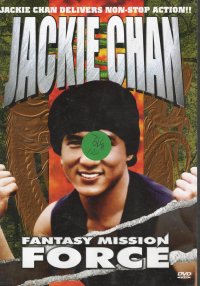
I got this film three years ago, and since I have been watching films with and/or about Bruce Lee, I popped this film in and…. what did I just watch?
This is a direct-to-video or direct-to-cable kind of movie, something that might have appeared on USA Network’s Up All Night program where they played outlandish films like Hell Comes to Frogtown or Surf Nazis Must Die. Heck, maybe they did play it at some point.
So, the plot: In World War 11 II, four allied generals are captured by the Japanese. A, erm, Chinese military man puts together a band of misfits to attempt a rescue, including a varmint, a con man, a guy who is dressed like Elvis, a couple of gay-coded, kilt-wearing members of the British Indian forces (I presume), a woman whom I thought was actually the hero, and a couple other interchangeable pieces, none of whom is Jackie (or Jacky) Chan. The first part of this film is the assembly of this group, after nixing James Bond, Snake Plissken, Rocky (I guess Rambo: First Blood Part 11 II was not yet the phenomenon)–no fooling, they’re offered as possible rescuers but are rejected–the first part, then is the, what, Allied authorities capturing these brigands to carry out the raid. Jackie Chan and a partner appear as grifters as well, but they’re not part of the main group–they just want to recoup the money they lost in a grift-within-a-grift, so they’re following the group. After assembly, the group travels toward the place where they think the generals are being held, and they visit–and destroy–a village of cannibalistic martial arts women and then a haunted house, where each individual is tempted in his or her own way by undead creatures, and then they get to the final destination to find a bunch of dead Japanese, and then they’re attacked by Japanese Nazis in 70s muscle cars festooned with Nazi swastikas, and then they’re all slaughtered except for Jackie Chan and his partner, who learn that it was all a double-cross from the beginning.
The film was dubbed from the original Chinese, and I do so wonder what might have changed in the translation. Perhaps not much, as outlandish as it was in English.
I invited my boys to watch the film because, hey, Jacky Chan, but I’m glad they demurred (as they always do, now). Because they were not steeped in the direct-to-cable schlock in the 1980s and they would not have been acutely amused to watch something like it. Will I watch it again? Probably not, but one never knows.
Ah, gentle reader. I have picked this short book to be a mild distraction whilst I work through That Hideous Strength, The Complete Works of Shakespeare, Pamela, and the second book in the Story of Civilization set by the Durants. Well, mostly, That Hideous Strength right now, which I thought might go better/go faster after reading the Gothickish mess of The Unloved, but, oh, no. Still slow going there–a couple of segments of a chapter or a chapter of it a night. So: This book, which I acquired at ABC Books in 2023 (along with two books on how to play guitar, strangely enough–clearly this is a sign that I need to learn to play guitar).
So: It is a rather recent book as the books I acquire goes. It is a basic instruction book on Kendo, Japanese swordfighting techniques for a hand-and-a-half sword, focusing on fighting armored opponents. It has a list of exercises and drills and a couple of illustrations, but mostly it directs the user to YouTube videos for actual demonstrations. Which is atypical for the books I read on martial arts–most of them are old enough that they precede YouTube. I haven’t watched the videos, though, as I’m still a fencer more than a kendo guy, and that will be all right until people start wearing armor again. Good enough for duels, anyway.
And, as I mentioned, or meant to, it’s a slash and chop martial art, designed to cut through samurai armor. Try this on full plate, and you’re probably in a world of hurt. So some stepping and chopping from overhead strikes. I wonder how well I could pick it up from some of the diamond footwork drills I’ve learned (and included in Boxing Drill Companion, available on the Apple App Store!). Simple research indicates there are three kendo dojos in Missouri, none in Springfield, and my dojo only trains sticks these days (in the past, we did some sword work, other weapons, and other styles, but that was a long, long time ago).
I’m thinking about going through some of the thinner martial arts books I’ve got to continue with the breaks from the homeworkish reading. It makes me feel like a martial artist in a period where I’ve gone through a little lull in my studies due to many circumstances, only one of which is that I’m lazy and feeling old at the same time.
At the same time, I really believe in the people of Springfield. I’ve seen what we can do when we come together. We know how to collaborate, solve problems and do great things together.
He forgives you, Springfield. Please try do do better next time. Soon.
I don’t know where I got this Book Club edition; as it does not show up on any Good Book Hunting reports, I’ll assume that I inherited from my aunt who passed away 20 years ago whose few bookshelves were packed with 70s and 80s horror and thrillers. You know, in my Ebay peddling days, she came along to estate sales a time or two and tried the Ebay thing for a while as well–at least, she listed, sold, and shipped a few things from what she picked up, mostly the collectible statuary of the era. She did better than Pixie, who more frequently accompanied me, who collected items but didn’t generally get around to listing them on Ebay.
At any rate, I read Creature in 2019, and I thought it was okay. But this book? Absurd. Absurd. I did not like it.
So: A prodigal son is called back to his childhood home, Sea Oaks, as his mother is dying. So he brings his nuclear family to the island and its antebellum mansion off the coast of the southern United States. His mother is a harridan who has been hard on his sister who wanted to be a dancer but fell down the stairs and broke a hip which put off her dreams, which to be honest were as much her mother’s dreams. The old woman dies, and then the daughter goes crazy (again) and begins to kill everyone one-by-one. The wife. Her dance students. Her housekeeper. Her brother. And so on. Somehow, the fact that these deaths are piling up on Sea Oaks in a relatively short time (like a couple weeks) doesn’t draw any attention, and somehow, this middle-aged woman with a pronounced limp can get the drop on a whole bunch of people and can handle corpses like a professional coroner, and….
Oh, for Pete’s sake. I have recently dinged authors for having their plots too informed by video games; this book’s plotting seems ripped from contemporary (then) direct-to-video slasher films. Eesh, one of the first video cassettes we owned in 1985 was Alice, Sweet Alice, and this book is right on par with it.
I mean, Saul is an adequate writer. He spends a little too much time, perhaps, setting up the tropish Southern Gothic setting (the first hundred pages of the 300 page book are setting the scene, it seems). But.
Yeah, you know, I’ve often, at least in person, commented on how some writers of the past who are wildly successful in their time are forgotten now. When I was hitting the estate sales around the turn of the century, as the, what, Silent Generation and maybe Greatest Generation were cleaning out, I saw a hella lotta Frank Yerby novels. A lot of Harold Robbins novels. Probably my share of John Saul novels. But you don’t hear much about them now, and reading this book written and published in my lifetime, I can kind of see how it happens. Wildly popular, a product of its time, but not timeless in any sense.
I don’t know how many other Saul novels I might have floating around here; however, I can say that it will probably be another seven years before I get to one. Unless I decide I must read all the John Saul books right now like I sometimes do. But I hope not.
Ah, gentle reader. I have mentioned that when my contracts get thin, I have extra time, and I often squander it (that post was a full-time position ago). I left that aforementioned full-time position sixteen months ago, and I’ve been cruising on a couple of contracts–one that I’ve worked on intermittently since that post in 2020 and one that engages me half time for six or seven week stretches. Well, the first has gone into remission for a bit, and the other went down to ten hours a week max billed for a role that really requires closer to the 20. So I have sent some finalish bills, and in the interim in this year and almost a half…..
I guess I have squandered a lot of time, again.
I guess I have been doing something–developing and releasing a number of apps which have sold in the double digits now (combined). But over the winter, I fell into the doomscrolling again–I would hit the job boards, read some blogs, and then after lunch I would refresh certain selected things and launch a game of Civ in the background.
So it occurred to me in the middle of the night one day last week that I could have learned to play guitar by now. As you might remember, gentle reader, I bought a guitar some years ago and took some lessons, but in those busier times, I didn’t have a lot of time to practice. So it sits in the corner of the office, gathering dust with a bass guitar I bought some years later some years ago now. If I had spent an hour or even a half hour on weekdays plucking at them, I probably could have learned to play something by now.
So as the spring begins, I’m resolved to tackle some things. I’ve started cleaning out the garage a bit. I’ve added some projects to Goal-Task-Chore, the app I developed for just such a purpose. And look at this:
My brother gave me that coffee table and end chairs in 1999 because I was into wood refinishing. Which means about that time I refinished something or other and wanted to do others–including a desk whose hardware I removed but never got to refinishing but instead have used as a desk in my office in all of the homes I’ve lived in since then without the hardware attached (and, as a matter of fact, I found one of the pieces of metal trim on the floor of the garage before my workbench when I was cleaning up over the weekend–no idea where the rest of it is). When I received this living room furniture, which he got tired of moving while he was in the Marine Corps, I broke it into individual pieces so I could stain them individually. And I broke one of the pieces when knocking the pieces with a rubber mallet.
And, gentle reader, I then moved those pieces from Sycamore Hills to Casinoport to Old Trees to Nogglestead, and they were on the bottom shelf of one of the plastic shelving units in the garage for fifteen years until last year when I started cleaning the garage and determined I would refinish them finally. Ah! But they remained unassembled and unrefinished because I could not find two of the cross-braces.
However, I found them as part of this weekend’s cleaning, and I glued the broken piece since I’m suddenly gluing a lot of furniture (and have many furniture/bar clamps all of a sudden). Today, I put them together for the first time in thirty years, and this weekend I shall begin stripping and sanding them, and….
Well, I’m not sure what I’ll do with them when I’m done. I’d thought about actually putting them in the living room, but now that I see them again, the end tables might be a little short. But, we will see.
And when they’re done or drying, maybe I’ll pick up the guitar.
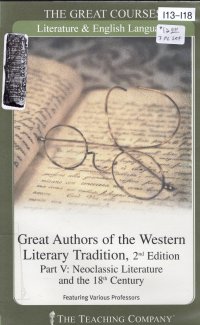
Wow, I’m relatively tearing through this set. I “just” finished up the previous binder, a 6 disc/12 lecture set, last month. And, with each as we get later into the canon, which spreads and broadens after antiquity, I think, “Man, I don’t think I will have read or will want to read many I’m about to hear about.” But in this set, I am wrong.
This set is taught by Dr. Heinzelman, an Englishwoman whose accent was almost somnulent at the beginning, is subtitled “Neoclassical Literature and the 18th Century”.
Individual lectures include:
Molière
Jean Racine
Sister Juana Inés de la Cruz
Daniel Defoe
Alexander Pope
Jonathan Swift
Voltaire
Jean-Jacques Rosseau
Samuel Johnson
Denis Diderot
William Blake
Johann Wolfgang von Goethe
Sorry, I guess with a book quiz, I would have highlighted what I have read and would have posted links to what I have read in the last 20 years, but I didn’t. Allow me to say I just read Swift’s Gulliver’s Travels in 2016. I thought I’d reviewed some Blake on the blog, but maybe I was thinking about Drawings of William Blake in 2016 (also) or hearing a lecture on Blake in The Lives and Works of the English Romantic Poets last year (a recurring theme, as the next set kicks off with Wordsworth). I listened to Voltaire and the Triumph of the Enlightenment in 2021, and my beautiful girlfriend (now wife) and I read Candide to each other while courting (although she identified with Cunegonde, but my wife is beautiful and baked me little rhubarb pies to take to work when I was going to work in the 1900s). I read Robinson Crusoe on my own in high school. I read Sor Juana de la Cruz…. In high school? In college? But en español (so, of all the things we will cover/will have covered in this lecture series, this will be the only non-native English writer I will have read in the original, although I remember only a bit/concept). Also, no, no Molière, but to contrast Wisconsin with Missouri, at least we pronounce Racine correctly (even though many or most people up north do not know who Racine was). Also, although I did not read Faust in the original (I read Dr. Faustus by Marlowe in 2020 and saw the opera form of it at Loretto-Hilton Center in St. Louis with that same beautiful girlfriend who would become my beautiful wife), I am almost there in pronouncing Goethe with the invisible R like an educated person.
So: I’ve read a bunch. I might need to look into my Classics Club editions to see what I can read from these authors (and authors from previous binders in this series). Hopefully, some Diderot. But I listened to this, and I came home from St. Louis, and I found a substack from Jack Baruth quoting Samuel Johnson. So maybe I should pick up that volume, should I have it in the stacks, first. After all the other things, cheap and/or deep, I have stacked up beside the chair.
In 1981 the nerdiest Canadian rock band to ever exist released Red Barchetta. I loved it. I still do.
It’s the story of a young man who lives in a dystopian future. His uncle possess a glorious little sports car but “motor laws” have outlawed(?) such things. As any true rock protagonist should, he ignores this and goes tearing through the countryside in the beautiful mechanical delight. Shortly a “gleaming alloy aircar” appears, then a second, both intent of destroying him and his little car. The antique sportscar enthusiast outdrives the behemoth machines and flits back to safety at his uncle’s farm.
Being Gen X I’d been hammered about environment since I was born. I assumed “motor laws” were an environmental thing. Later I read the sci fi story that was the song’s inspiration.
He’s talking about a Rush song. But he’s also talking about the Lee Majors film The Last Chase, ainna? It also came out in 1981, and I saw it several times at the home of the family friends who had HBO.
Interesting: I thought I’d mentioned seeing this movie before because it was set way in the (then) future of 2011 and because they were taking the red car to “free California” which was the opposite of the totalitarian state they were fleeing (which followed a viral pandemic). But a quick search of the archives indicates I have not yet mentioned it. Or that my blog does not want me to find it.
I used Äi! Äi! Cthulhu fhtagn! in a LinkedIn post today, which spins Iä! Iä! Cthulhu fhtagn! from the Cthulhu mythos and uses it to poke fun at the cult of LLMs.
Ah, gentle reader. I might have mentioned that I have been dabbling in poetry again for, what, the last six years? (I completed a poem six years ago which had taken me years to write it, they were the best years of my life; it was a beautiful song, but it ran too long–if you’re gonna have a hit, you gotta make it fit, so they cut it down to 3:05-wait, no, that wasn’t me, except that I finished that poem after having parts of it on a legal pad for years, unfinished.)
Anyway, so: I’ve been working on a poem about estate sales. Basically, it tells about how I used to haunt estate sales at old, dated houses (back around the turn of the century, I would spend Saturday mornings at estate sales and the other weeknights listing books, games, et cetera, that I bought on Ebay. But, now, after 16 years at Nogglestead with little change, I can understand why someone might have found their 1960s or 1970s home comfortable.
So I thought it would be two stanzas. But then I thought maybe a hinge stanza about my aunt who died in 2019, parceling out furniture while she was still alive. And I thought about it for a long time without really putting pen to paper, but considering it a bit, you know.
Well, a couple of weeks ago, I got the opportunity to go to the coffee shop for a little bit and put pen to paper. And, after another coffee shop visit a couple of days later, I had the hinge stanza. And when I got to the computer to add it to the official Word document, I discovered that I’d finished(ish) the first stanza last October. Jeez Louise, given this pacing, I’ll be lucky to finish the poem this year.
Ay, me. I am not breaking any land-speed records with these poems, and I’m certainly not a professional. But that’s okay; I’ve been reading a lot of The Complete Works of books, and even the best poets have a lot of chaff with their wheat (apologies to Leah Lathrom Wallace for stealing her chapbooks’ metaphor). Maybe I’ll just focus on the wheat. Which might well be just chaff.
I will be glad to exorcise this particular poem, however. Between a comment my wife made sometime ago (along the lines of her hoping to die before me so she doesn’t have to deal with all my stuff), the slow-motion end of Lileks’ marriage, including a downsizing sale (this weekend, in fact), and suddenly, I have been walking trhough my house like I was walking through my own estate sale. I mean, I have a lot of books, and my boys no longer like to read. The personal relics which were things my family members owned will mean little to them–they did not know much of my family. I have no urge to go to the book sales this year. I’m starting to get rid of the reified potential in my garage–I will donate some of the things to the new Lutheran High School thrift store if it gets off the ground. I brought in some wine glasses I’d bought to–I guess paint with stained glass paint, since three of them had masking tape around the lip line.
Hopefully, a combination of finishing this particular poem and maybe cleaning my garage a bit so I can do some project work in it will help fight the old ennui.
Ah, gentle reader. As you might have gleaned from the tone of the blog lately, I’ve been fighting vainly the old ennui. But last week, I had a magical moment which might have set things aright, or at least made things a little better.
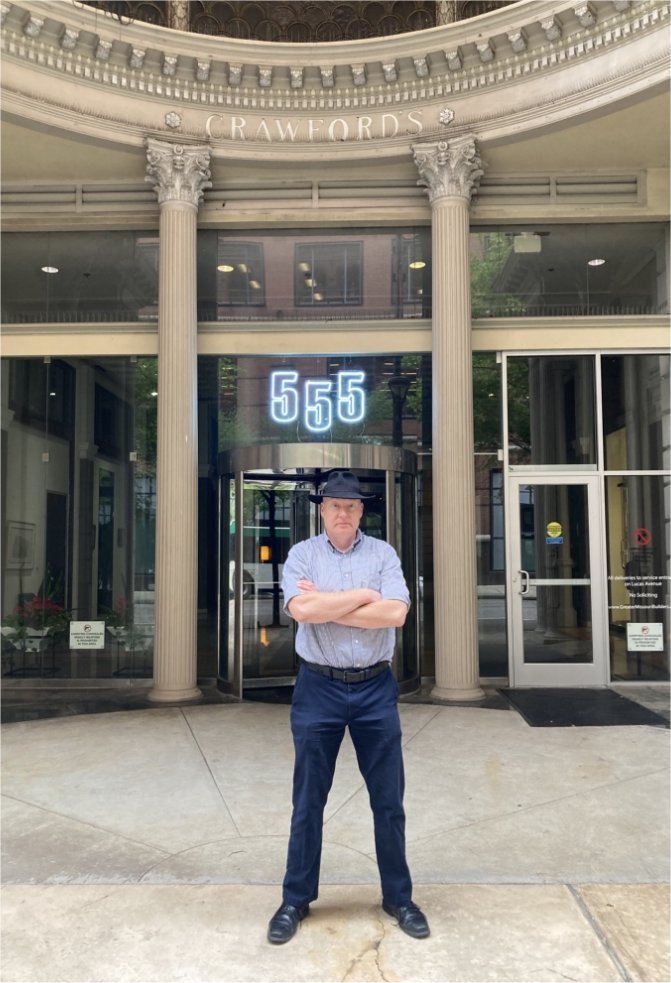
My beautiful wife had submitted, almost off-handedly, a talk for the cybersecurity day in St. Louis’s Tech Week, and it was accepted. So we decided to make a little trip of it–instead of driving up early on the day of the conference, we went up the night before and stayed two nights. We ended up stationed about two blocks from where I worked when I was an executive at a marketing agency, so I spent a little time while she was in a woman’s event in the early evening walking around, trying to remember where things were. Was it this corner where Carlos with the grill sold me lunch (two brats, plain)? Is this coffee shop where the Starbucks used to be, our daily destination for work breaks? And so on. A lot has changed in the 20 years since I left that office. I walked back to the women’s tech event to escort my wife back to our hotel (“Did you walk with me just for safety?” she asked on the drive back home. Yes.)
The room was nice; I sent a picture to my oldest, and he wanted to know about the foot traffic. Not a lot–a pedestrian every block or so. The hotel is right by the convention center. There are some offices and residences down there, I guess, but the big office towers are a little to the north and the well-known loft district is a little to the west. So the foot traffic is less than what we encounter in Springfield in its more compact and destination downtown. Not too many homeless around–no tent cities, just a couple people wandering around, one guy sprawled outside the venue where her women in tech event was held–and an associate who was trying to rouse him. The pocket park outside the Old Post Office was packed with the indigent, and I picked up the cap from a nip bottle on the bottom of a shoe like a single tap for a couple dozen yards–but I didn’t feel unsafe, just wary.
And our hotel room: Ah, I don’t know whether it was developed as a hotel or was originally a loft building chopped into a hotel. Our room had high ceilings–12 or more feet–and floor to ceiling windows as two walls. Nice, but the southern exposure meant the room warmed up. No problem: Blackout drapes for the win. But it was really nice, although I often punched the wrong button at the elevator because the restaurant, fitness center, and pool were on the upper floors of the five-story building.
At any rate, what about Jim Manley?
Well, gentle reader, as you might not be aware, Jim Manley is a St. Louis trumpet player who gets played plenty on WSIE, which I stream on my computer most days. When I decided to tag along to this conference, I started checking the calendars of the local jazz artists, and–well, I didn’t get far because Manley plays weekly on Wednesday nights at Sasha’s Wine Bar in Clayton. As my wife plays trumpet, I thought this would be the right choice, and it was.
We took a rideshare from another Tech Week event to Clayton, arriving two hours early, and we told the waitress we were in no hurry as we were there for Jim Manley. So we had a leisurely dinner, and our server told us she’d reserved one of her tables where he would play. Sasha’s is a charming little shop, a jumble of rooms carved out of two buildings on Demun, and Manley played in a barroom with, I guess, a retractable roof, which came in handy. His first set started at 8:30.
It was a low-key thing; he was just the guy in the corner with a trio (he started without his drummer, who arrived fifteen minutes late and maybe intoxicated). The other people in the room continued their conversations; we had a large table of a ladies night out beside us. But we were front and center, with chairs the server had turned to face Jim Manley. Nobody else knew it was a Jim Manley concert..
As he played, storms started rolling in from the west; when I turned to glance at my wife, she was framed by flashes of sheet lightning behind her. In the middle of his set, a downpour provided its own percussion. God didn’t know it was a Jim Manley concert.
After his first set, my wife went to talk to him, and he was very gracious as they talked trumpets and then came over to talk to me was well. Because I knew it was a Jim Manley concert.
We took advantage of a brief interlude in the storm to head back to our hotel; as we began, the tornado sirens went off with a tornado warning. As St. Louis had a bad tornado rip through last year, no doubt they’re pushing that button a lot this year–it was the same after the Joplin tornado down here, where the weather people lit it up many times the next year or so, reverting to the mean (one or two a year, maybe) in more recent years.
And after a chapel service at the Lutheran seminary just a couple blocks form Sasha’s, we returned home.
I mean, people in Clayton can go see Jim Manley every Wednesday. But would I? I dunno. When we lived in Old Trees, we lived two blocks from the theater where the opera theater group and the St. Louis Rep play, but I haven’t been there in…. Almost thirty years? I guess we were in a different place then, with very young children, but…. Eh, who knows? Before children, I/we got around a little more. But now it’s fairly rare, although maybe we’ll get around the Springfield area more often. Or maybe (and probably more likely), this trip, like my “trip to see Janet Evra” in 2019, will just underline how I enjoy these little concerts. More than I did when I lived in St. Louis and could see a corner musician in a coffee shop all the time. Perhaps these experiences are more meaningful because they are excursions, expeditions, and not just part of the background noise of everyday life.
Ah, well. Jim Manley didn’t have an CDs for sale, so I didn’t get any autographed, and it looks like his most recent releases are download-only. So when I get a couple bucks, I’ll order a couple of older releases on CD. Until then, I’ll hear him on WSIE almost daily.
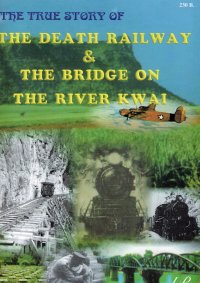
I kind of thought that I’d bought this book with the collection of books on Korea that I bought in 2014 in Clever, where I speculated that the previous owner might have served in Korea (during the war or after) and returned as a tourist later. But I actually bought this book in in 2024, also in Clever, and notes indicate that a previous owner visited Thailand in 2004; a World War II vet would be getting up to almost eighty, so perhaps not someone who directly served. But most likely someone with an interest in the subject. Which is not to say there are not many; this book is a product for tourists put out by a company in Thailand.
It tells the story of the Western POWs who the Japanese empire made to construct an ill-advised railroad from Thailand to Burma to help the Japanese with their Asian land-based operations after their Pacific naval advance was stopped at the Battle of Midway six months after Pearl Harbor. I mean, I read The Battle Off Midway Island in 2014, but this book (under review) gave a timeline of the Japanese explosion in 1941 and early 1942, when they captured a bunch of southeast Asia and knocked on Australia’s doorstep but their Pacific campaign was basically nullified after the Battle of Midway, so they turned their eyes towards the land mass of Asia and maybe thought about invading India after this rail line was in place. But that was not to pass, happily.
The book details the conditions the prisoners (mostly British and Australian) and Asian slave labor faced–back-breaking work in the heat, working on a rail line that the British and Germans had surveyed decades before but said was too difficult, the deaths, and the constant need to repair problems and handle damage from Allied bombing (and prisoner sabotage) meant that it never performed like the ill-informed Japanese imperial powers thought it would.
So the actual building and destruction did not line up with the film (The Bridge over the River Kwai), but the film stirred interest, I guess.
The text of the book looks to be translated, as it features a number of, erm, ill-developed bits of English, and the typography and layout are a little faulty. It includes a lot of small, ill-reproduced photographs of the era, but dayum, man, they’re photos of the history. Some of the text repeats itself a bunch–the book is “Organized by J.P.”, so maybe it’s sourced from a bunch of pamphlets cut-and-pasted without altering and smoothing the text.
But it’s lightweight and informative for people who did not know about the Asian land front in World War II. Which does not probably align with people going to Thailand to see it. But as a man approaching middle age who is not sure whether he is on team World War II or team Civil War for old man history interests, it’s making its case for Team World War II.
Oh, and as I mentioned when talking about the record with marches that belonged to my grandfather (in 2012, gentle reader; I forgive you if you’ve forgotten), the record includes the whistled march tune from the film. Which I can depict now, although probably not whistle accurately as I am tune-deaf. So I knew kinda about the story, if not the real history (I have not seen the film, but will undoubtedly look for it now).
And I could place when the previous owner visited the site because the book and a paper pamphlet included at no cost to me both say Sept 24 2004 on them. The included paper is not part of the book, and it’s too big for a Found Bookmark post, but I read it as well. It’s entitled “History of the Thailand-Burma Railway”.
But only counted the whole as one book in the annual total. A quick read whilst dodging the quick read in between Shakespeare plays and while I dodge the remainder (most of) That Hideous Strength.
The artist of this book is the son of someone we knew from church in Old Trees, and when their Christmas letter indicated that he’d done a comic book, a book of comic art that is and not a saddle-stitched comic book, I ordered it on the pretense of giving it to my children, and I took possession when I culled my youngest’s bedroom of books and children’s books earlier this year.
This particular volume is mostly comic art; it lists heroes (men and women) of the Bible and has a comic art portrait of them. A few selected heroes have a portion of their stories in a single page of related panels, but mostly it’s portraits.
So, yeah, much like a modern comic book. But it’s a quick palate cleanser after Love’s Labour’s Lost, the most recent Shakespeare play I read (thoughts forthcoming), and A Deadly Shade of Gold.
Now, about the arbitrary rules: I will count it as a book I’ve read this year, and I will put them on the bookshelves instead of comic boxes (unlike the Bongo Simpsons comics, which have a flat spine and more actual content than this book). Why? Because I wanna.
I see Boggs has not only produced more similar (and probably with actual plotting) Biblical comics, a Western-looking comic book, and a book about being a business artist in the AI-world. Ah, gentle reader! If I ever get a job and have disposable income again, I shall consider buying more of his work if I can avoid Amazon.com (I’m back fighting my tweehad against it).
I guess this is a re-read; I did a book report on it not long after I picked it up in Cleverin 2012. So I must have re-patriated it to my bookshelves when I culled the youngest’s book shelves earlier this year. Which means I should probably not add it again to my book database program from 2000 when I finish the re-book report.
The cover of the book indicates this collection is not drawn from the daily strip and instead is original material. Man, Dilbert was part of that fin de siècle zeitgeist (he said, mixing two foreign languages to show you how smart he is), ainna? (The south Milwaukee slang killed that vibe, ainna?)
So, basically, it’s Dogbert giving etiquette advice for people who lack it. Each page is four panels dealing with an individual boorish behavior, and the cartoons are grouped thematically. Amusing in (a lot of) spots, and the jokes are of a sort you could make in 1993 that would be problematic in the latter part of the first quarter of the 21st century. As with so many things, Scott Adams, who was on the naughty list for a while and was pop-culturally cancelled for…. Oh, some transgression; aren’t they all the same? And one wonders whether it was because he shifted or because the culture did.
The book is in pretty good shape, which means that my children didn’t sleep with it, so perhaps they, 21st centurians, didn’t get it. The oldest has an office job these days. Perhaps he’s better primed for Dilbert and Office Space than he was when he was six.
I bought this from Hooked on Books in January. I remember when I first shopped at Hooked on Books, nearly thirty years ago, that they had a good selection of John D. MacDonald books, but then they didn’t. Since I had a gift certificate from Christmas, I stopped in and discovered that they once again had a good selection of MacDonald’s books. Perhaps the people who bought them twenty-some years ago are now downsizing or dying, and the same books are coming back in. Maybe I’m thinking too much of estate sales this last, apparently, year.
So: This is a 1960s Travis McGee novel. It originally appeared in paperback and then, a decade later, in this hardback edition when MacDonald books transitioned to the big time. A former friend of McGee, a boat bum who disappeared after walking out on a happy relationship, reappears and want’s McGee’s help in reconnecting with the woman he left behind, and McGee meets him, looking haggard and gaunt from a cross-country drive, at a remote motel where he shows McGee a gold statue and alludes to using it to set himself up. But when McGee returns after contacting the woman who wants to see the love of her life right now, they finds the man dead and the statue gone. So McGee and the woman head to Mexico to the town where the man worked during his missing years and find a despised Cuban exile (remember, gentle reader, that when this book came out, the Castro revolution was only a few years on–hard to fathom, since it’s been in place my whole lifetime, but old books and movies remember). Bloodshed, bombs, and much McGee musing, and he eventually breaks up a Hollywood blackmail ring which also preys on expats from Latin America, and finis!
I mean, it’s a lot more than that–the book is 336 hardback pages, which would have been quite a chonker for the paperback era. It’s full of the McGee-musings that give the books their depth–asides where MacDonald goes off on the modern era, the politicians, the culture, and the loss of the preceding era. You know, when I was in my teens, that sort of zeitgeist–you find it in early Parker, too, the 1970s stuff maybe up until the Hollywood era–the loss of something as subdivisions and development (in Florida or inland Massachussetts) encroaches on the wild spaces, and the politicians make things worse. You know, that probably hit me a little more precisely in that adolescent era where my parents divorced and I was removed to Missouri. Reading it now, it’s okay–I can see that MacDonald was an old-school liberal in his inclinations, a little more against big business corporate politicians and up-with-people in an era where the politics weren’t overt sucker-punches calling one half of the country troglodytes (who probably didn’t read books anyway).
MacDonald also sits in between Chandler and Parker in that the plot is labyrinth and shifts and that the resolution ultimately ends with a truce and understanding between the person who killed the boat bum and McGee because he, McGee, has just gotten tired of all the killing in the book. He’s weary in a way that they didn’t really capture at the end of the 20th century in protagonists, not really. The depth of the asides really layers that on.
So MacDonald is still really, really good, but I’m not so sure how I relate to Travis McGee now that I’m older. I might have transitioned to too old for the real figurative consanguinity. But I’ll think again about raiding Hooked on Books to make sure I have a good and completer set of MacDonald’s work.
When I tried to release the third PhrazeMaze (Shakespeare) puzzle game, the app store balked and said it was spam. Instead of releasing individual apps which had a set of similar puzzles, they wanted me to release a game with in-app purchases for the game packs. So I have.
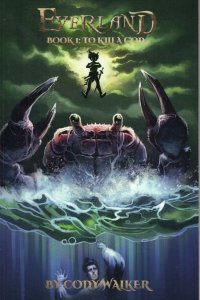
Ah, gentle reader, I just bought this book from the author at Rublecon, where “just” in this sentence means July 2024. So I have owned it longer than the Ben Wolf books, and I finished the Ben Wolf accumulated over two different trips to Davenport, Iowa, first. But that might be because of my experiences with other Walker books: Down the Road and Back Again (poems based on the television show The Golden Girls), Loot the Bodies (other poetry), and Hang Me If I Stay, Shoot Me If I Run, a short novel.
So: The plot, such as it is, is that a sick young man is taken from his bed to a place called Everland, run by a Boy-God, who is a dark analogue of Peter Pan. The Boy-God, not named, likes to watch the people in Everland, mostly pirates, fight and die with one another. He especially takes issue with a particular pirate whom he allows to succeed and then wrecks his ship. Inland, we have natives. And, periodically, the denizens of the sea rise and slaughter the people in the seaside town, but as Everland is always summer and the people, aside from the battles, don’t age or die, and they tend to forget the previous Reaping when the sea monsters rise. So the boy, who lands with the Everland equivalent of the Lost Boys but doesn’t completely buy in, the one-eyed pirate, and a native girl who kills a seamonster that killed her father team up to kill the Boy-God.
The actual text of the book runs 134 pages, and then the book is padded with 50 pages of behind-the-scenes things. The author did a Kickstarter before producing this book, and I guess it was originally going to be a comic book series–the book contains panel outlines for several issues, incidents which appear in the book–and which might have worked as one-off stories in a series of comics, but integrated into a “novel,” they are threads that go nowhere. One such story is a pirate who goes overboard and is about to drown, but he’s saved by a seamonster whom he thinks is a beautiful mermaid–and it tells about him meeting the monster’s father, and then…. Well, he is killed. Why bring him into the story? I mean, it’s Stephen Kingesque, but this 130-page book shouldn’t have room for such asides–it just pads out a short novella to a longer novella length. The book has some world building, but its depth is pretty shallow for all that. I mean, we get almost a Space Trilogy sort of cosmology, but it’s never really addressed, and some of the characters are built up and do…. not much.
I mean, the setup and material would have made for a longer book, but it’s really just repurposing some material from a proposed comic book to get it out the door. The author is a better writer than Ben Wolf whose books I’ve just read–but the plot is underdeveloped. The book that comes to mind, though, is A Blade So Black by L. L. McKinney just because hers was a modern fantasy twist on Alice in Wonderland and other works by Lewis Carroll. But, again, that book was fully developed as a novel where this was a little underdone.
Actually, I have the sequels or next book in the series from both these authors–The Lion, the Witch, and the Eye by Walker and A Dream So Dark by McKinney. I actually picked up A Dream So Dark from the bookshelves but decided against it for one of my next reads. Who knows where I’ll go with my twee reading themes–to finish the Walker books I own in case he’s back at Rublecon, or maybe to finish the books my son got me for my birthday. Given that I’ve only got a couple of each, perhaps I’ll complete them all before long. Certainly before the Shakespeare I’m working my way through.
11 auto features that we miss (titled “The Good Old Ways: Many once-common features removed from today’s cars are now sorely missed in the AAA Explorer magazine from which I tore the article one evening).
They are:
Uncovered engines; after about 20 years, the list plastic pegs disappear, so they gradually become less covered over time.
Oil dipsticks; the newest car amongst us still has one, as the oldest kept seeing a warning light and tried to use the dipstick but ended up overfilling his oil.
Analog instruments; two of the three vehicles have spinning pointers, but they’re probably electronically determined.
Buttons, knobs, and levers; two of our three still have buttons for heating and radio and whatnot. To be honest, I don’t know about the newest vehicle because I don’t drive it. One of our three even has no screen.
Unconnected infotainment systems; one of them has a screen, but it does not play videos–although it will play DVDs’ audio, as I have learned, so I can listen to DVD lectures.
Full-size spare tires; one of the three does. Which means it has one more Tire Pressure Monitoring System sensors to report low pressure at odd moments.
Glorious color; Well, one of the three is not black or white.
CD players; at least two of the three do have it–and one has an audiocassette player. If we get a newer car, I will want a CD player installed as I have lots of audiocourses to get through yet.
Unpainted bumpers; yeah, no, all plastic and will total the cars if bumped.
Printed owner’s manual; at least two of the tree have them, and I’ve looked in one of those two in the last week (story forthcoming, maybe).
Drivers; we don’t have any of the new lane assist or blindspot warnings even. I work in tech. I’m not sure I’m going to ever have a self-driving car.
Yeah, I am not looking forward to getting a vehicle which is later than 2010, ever.
 I got this film
 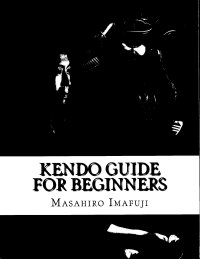 Ah, gentle reader. I have picked this short book to be a mild distraction whilst I work through That Hideous Strength, The Complete Works of Shakespeare, Pamela, and the second book in the Story of Civilization set by the Durants. Well, mostly, That Hideous Strength right now, which I thought might go better/go faster after reading the Gothickish mess of
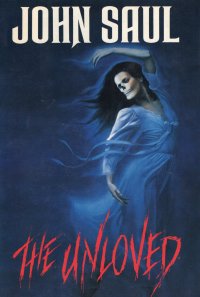 I don’t know where I got this Book Club edition; as it does not show up on any Good Book Hunting reports, I’ll assume that I inherited from my aunt who passed away 20 years ago whose few bookshelves were packed with 70s and 80s horror and thrillers. You know, in my Ebay peddling days, she came along to estate sales a time or two and tried the Ebay thing for a while as well–at least, she listed, sold, and shipped a few things from what she picked up, mostly the collectible statuary of the era. She did better than Pixie, who more frequently accompanied me, who collected items but didn’t generally get around to listing them on Ebay.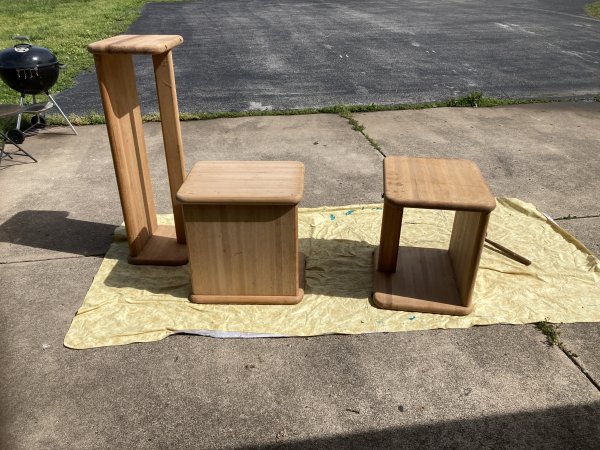
 Wow, I’m relatively tearing through this set. I “just” finished up the previous binder, a 6 disc/12 lecture set,
  My beautiful wife had submitted, almost off-handedly, a talk for the cybersecurity day in St. Louis’s Tech Week, and it was accepted. So we decided to make a little trip of it–instead of driving up early on the day of the conference, we went up the night before and stayed two nights. We ended up stationed about two blocks from where I worked when I was an executive at a marketing agency, so I spent a little time while she was in a woman’s event in the early evening walking around, trying to remember where things were. Was it this corner where Carlos with the grill sold me lunch (two brats, plain)? Is this coffee shop where the Starbucks used to be, our daily destination for work breaks? And so on. A lot has changed in the 20 years since I left that office. I walked back to the women’s tech event to escort my wife back to our hotel (“Did you walk with me just for safety?” she asked on the drive back home. Yes.)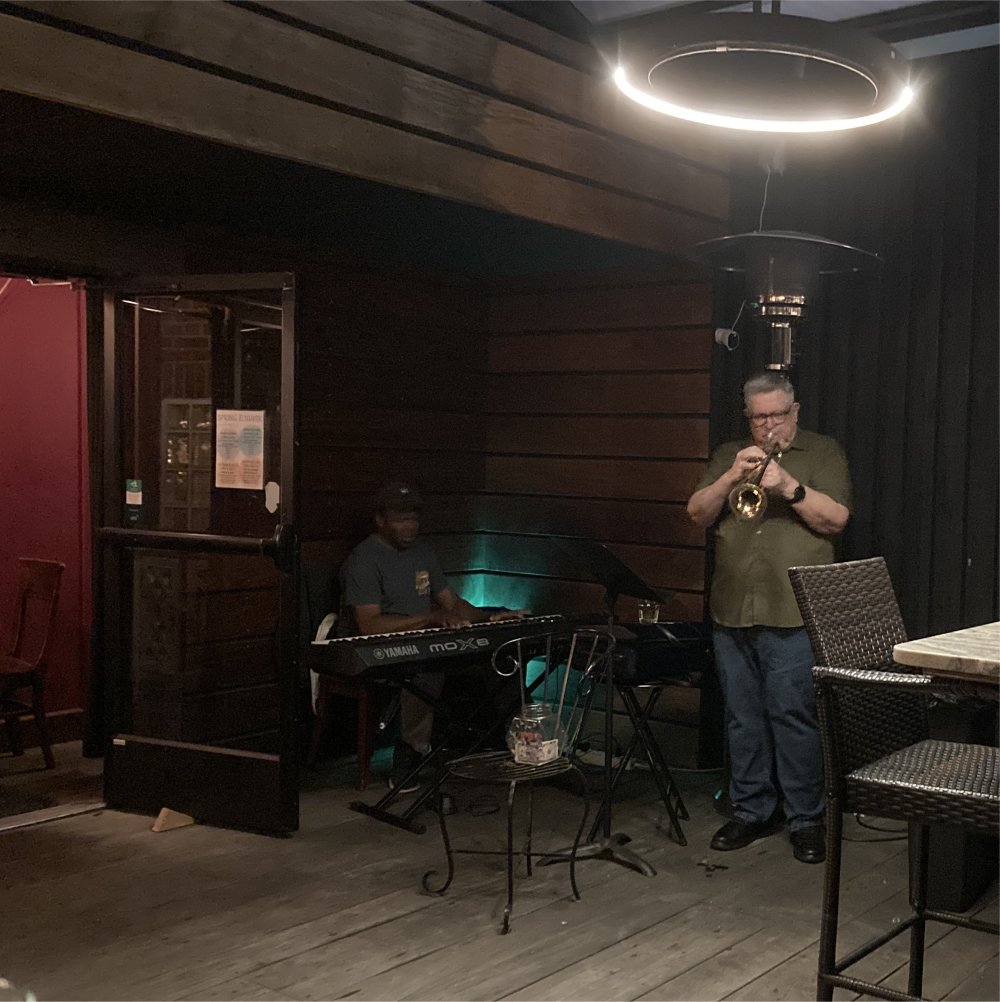
 I kind of thought that I’d bought this book with the collection of books on Korea that I bought in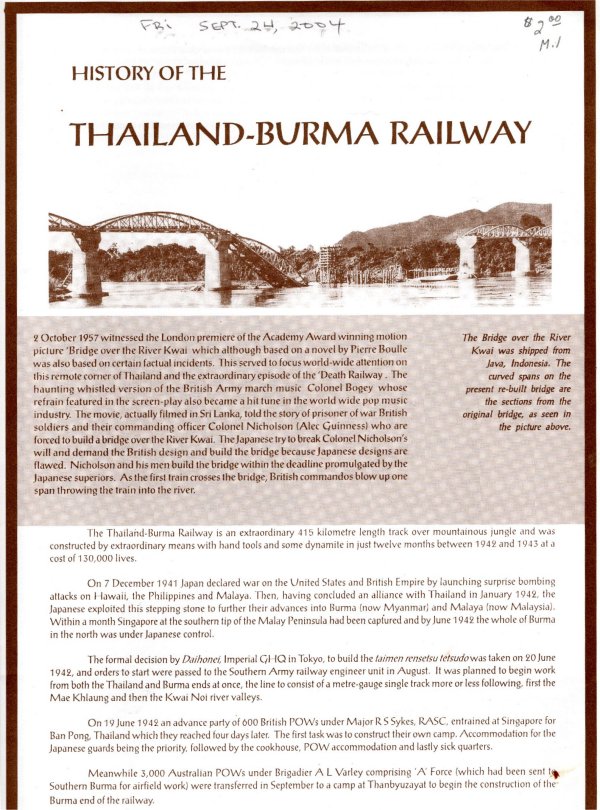
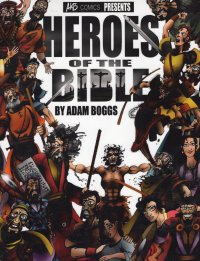 The artist of this book is the son of someone we knew from church in Old Trees, and when their Christmas letter indicated that he’d done a comic book, a book of comic art that is and not a saddle-stitched comic book, I ordered it on the pretense of giving it to my children, and I took possession when I culled my youngest’s bedroom of books and children’s books earlier this year.
 I guess this is a re-read; I did a book report on it not long after I picked it up
 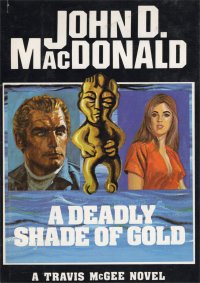 I bought this from Hooked on Books
 Ah, gentle reader, I just bought this book from the author at Rublecon, where “just” in this sentence means