Good Book Hunting, July 8, 2021: It’s a Mystery BookStore, Berryville, Arkansas

I mentioned that I learned about the It’s a Mystery BookStore in Berryville, Arkansas, in April when I was looking for a road trip destination and almost almost made the big mistake of going which would have triggered a Wuhan flu celebratory quarantine for my youngest since going thirty minutes into Arkansas was more dangerous according to the Official Protocols than going four hours to a different corner of Missouri.

Now that the media hysteria about the DELTAEPSILONTRILAMBDA variant(s) is spinning up just in time to close the schools for the next year, I decided we should jump to and make the trip now instead of August right before school starts to ensure that we beat out any late breaking protocols and service interruptions.

So we drove down Highway 13, through Kimberling City and Lampe. I made a wrong turn in Blue Eye which added maybe a half hour to our trip (I’m at Big Cedar Lodge? D’oh!) And I got off the track a little ways down the right direction, but apparently all roads in the top of Arkansas lead to Berryville, so we arrived at the quaint town square book shop. Which required masks, so the oldest chose to read in the car instead of look for new books. And the youngest came in to remind me often of how much time I was spending.

The shop itself is not that large–none of the shops on the square are, as the buildings date from the late 19th century, but I managed to find something.

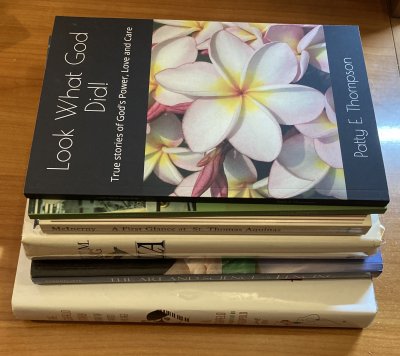
I got:

  • Four Diagnosis: Murder books by Lee Goldberg: The Past Tense, The Silent Partner, The Death Merchant, and The Shooting Script. You might recall, gentle reader, that I picked up a couple of these books in May after reading a couple of Monk books during my television-and-movie books phase earlier this year. I thought the books were priced at fifty cents each as the price inside is 4/2 (some books outside were five for a buck or free), so I grabbed them all. Turns out I already had the last two. Well, they will be a good gift for someone. And the notation in the front is not actually the price–or it is fractionally, as the books were $2 each.
  • Conan the Barbarian by L. Sprague de Camp and Lin Carter and Conan the Destroyer by Robert Jordan, the movie tie-ins.
  • Conan the Invincible by Robert Jordan, another Conan book.
  • Speaking of Robert E. Howard, I got paperback copies of Black Vulmea’s Vengance, Three-Bladed Doom, Tigers of the Sea, and The Hour of the Dragon: The Weird Works of Robert E. Howard Volume Four.
  • King Solomon’s Mines by Rider Haggard. Technically, this could also be considered a movie book since it was made into a movie with Richard Chamberlain in the 1980s.
  • The Best of Saki by Saki. You know, I am pretty sure this is the first Saki I have outside of some of the college textbook anthologies I have held onto but have not yet fully read.
  • The Samurai: The Philosophy of Victory by Robert T. Samuel. It’s the only hardback I bought, and it’s a Barnes and Noble edition that combines short bits with a lot of art for a quick, easy read. I bet it offers quite the contrast to Hagakure: The Book of the Samurai written by an actual, you know, samurai.

I also got a Jackie Gleason CD, Lush Moods. It says it’s two LPs on one CD, but it does not indicate which LPs it might be. Perhaps they only mean that it’s 20 songs. The proprietrix of the shop commented that she likes Jackie Gleason but that most people did not know what he did before television and the movies. Ah, but gentle reader, as you know, I have accumulated a number of Jackie Gleason LPs over the years, so you know I wondered which LPs were on the CD.

At any rate, the final accounting (for such few bullet points) was about fifty dollars (apparently, the paperbacks were not fifty cents each). And it was my lucky day, for I visited the ATM machine and entered my PIN number a couple days ago and had some cash in my wallet.

Because a lot of Berryville is cash or check. No fooling.

Not only did the bookstore not accept credit cards, but the first restaurant we stepped into for lunch was cash or check only as well. To be honest, the strange throwback, trusting checks but not taking a 5% hit on every transaction for security, as a bit disorienting. So if you’re going to Berryville, bring cash.

Which, you know, I might do again someday. It’s only about an hour and a half down if you don’t miss the turn in Blue Eye, which is not that much longer than a trip to the remaining used book stores in St. Louis from anywhere, and although it’s a bit longer than the trip to ABC Books or Hooked on Books, it’s an event in itself.

Although I did not take my beautiful wife along yesterday, I can envision doing so in the future. She likes to dream of trips to exotic places, but I am coming to appreciate trips to small towns in America.

Buy My Books!
Buy John Donnelly's Gold Buy The Courtship of Barbara Holt Buy Coffee House Memories

Book Report: Asian Crucible The Executioner #209 (1996)

Book coverI read this book on my recent little getaway with my beautiful wife. Well, okay, like all the books I read on the trip, I started reading it at home, but I finished it on the trip, okay? As I was about a chapter or two from completion, it was the first I finished but the last I reported on. And in the intervening days, I almost forgot what it was about except Mack Bolan doing Mack Bolan things.

But, you know what, I remember it: secret forces in the U.S. government are hoping to start a second Vietnam war by faking the return of a military man held POW for twenty-five years and by faking up some border incidents with Laos and Thailand. Bolan goes to Thailand to investigate and discovers rogue elements of the CIA are working with a Chinese Triad involved in drug smuggling to get the war started.

Bang! Boom! Set pieces! Problem resolved.

Not a bad book; one might say it has elements of First Blood Part II blended with a bit of Air America.

Recognizing the influences isn’t a bad thing once one knows that creative works have borrowed, homaged, and ripped off other works forever. It’s only since the RIAAfication and Disneyfication of copyright laws in the United States that it’s gotten risky.

So how many do I have left? Not many in the originals of the series; I might push on to finish those titles this year, safe in the comfort that ABC Books has more. Kind of like the false security I had about Hooked on Books having a huge selection of John D. MacDonald paperbacks. They did, until they no longer did.

Buy My Books!
Buy John Donnelly's Gold Buy The Courtship of Barbara Holt Buy Coffee House Memories

Book Report: My Cat Spit McGee by Willie Morris (1999)

Book coverMy goodness, I bought this book thirteen years ago, clearly anticipating a time when I might need to read a book about an animal for a summer reading challenge. I thought I would read a Cleveland Amory book that I’ve got around here somewhere, but I found this one first.

The author is a former editor of Harper’s of some controversy back in the 1960s who then moved back to Mississippi where he became a university professor and eventually wrote several books, one of which (My Dog Skip) was made into a major motion picture.

The book describes how the author, in coming into a second marriage late in life, discovers that his fiancee likes cats, and they’re going to get one. So he thinks about and writes about (a lot) what it would mean for him, a dog person. Then he gets a cat, and that cat’s kitten is Spit McGee who becomes his cat. And they get other cats.

The chapters are about this musing, the lineage of Spit, some adventures with Spit, and whatnot. To be honest, I typed Skip twice in that sentence because the book might have been a bit of a cash-grab trailing the success of the movie and its interest in its book. The dog Skip, the cat Spit, see? But the dog story is about a boy growing up in the south in the olden days (when everything was racist, which is different from now, where everything is racist), and this book is dedicated to a child actor from the film who met Spit McGee when the author brings the cat to the set. The author also takes the cat various places, like his childhood home and his father’s grave. So Spit McGee and this book are also a bit of a story about getting older and life changes there as a bit of subtext. The author actually died in 1999, not long after finishing the book.

And boy howdy, the name-dropping. He lives in Jackson, the state capital, so he’s familiar with pols, including Trent Lott; he mentioned being friends with Eudora Welty; and so on, a bunch (yes, he did meet Cleveland Amory once).

I also had some Mmm-hmm moments about things he drops in. He proposed to his second wife in the Old Senate Caucus room in front of a thousand people. He and his wife buy a stately old home built in 1940. Friends, when this book was written, that home would have been fifty-some years old. Gentle reader, Nogglestead is almost that old. Honormoor in Old Trees would have been forty years old when we lived there. The house in Old Trees was seventy years old when we lived there (although renovated and stripped of its stained glass before we moved in). So the house might have been nice and had Spanish moss draping from the magnolia trees, but it was not that old. Ah, well. I also flagged a couple of extraneous name drops, but most of the names didn’t actually mean anything to me.

So, I dunno, it’s okay as a book, and it’s competently written, but I am not really sure how much it needed to be written nor what it’s goals were.

But I’ve counted it as my True story about an animal entry for the reading challenge even though it’s more about the man than the animal.

Buy My Books!
Buy John Donnelly's Gold Buy The Courtship of Barbara Holt Buy Coffee House Memories

Book Report: Three Comedies by Aristophanes edited by William Arrowsmith (1969)

Book coverI started this book right after listening to Socrates because the audiobook mentioned that the idea of Socrates as a blasphemer probably comes more from the play The Clouds (in this volume) than his actual dialogues with Athenians. Also, it was at the top of the stack which is odd since I bought it three years ago and not recently.

At any rate, the plays are purportedly translated, but really they’re adapted for modern audiences circa 1969–this particular volume was someone’s (presumably) college textbook around the time I was born. The plays have some highlighting, mostly the aforementioned The Clouds, but no dialoguing with the text notes in the margins–that would come later, I guess, as it was quite the thing when I was in school. Or maybe the owner of this textbook thought about as much of it as I did.

As a product of that black age, has illustrations in it that would get a gentleman’s D in elementary school art classes.

I mean, can you imagine living in a time where someone, probably someone well paid in the publishing industry, thought that that would add to the reading experience? How little they thought of the hippies on the college campuses.

As I mentioned, these plays are adapted, not translated. That means that some liberties have been taken with the original text to make them more palatable for 20th century students. For example, a communication from Olympus is given as a telegram; the plays contain some Biblical allusions; and the poems have end rhymes. Although Aristophanes might have done the last of these in the original Greek, it’s likely he did not include the first two unless he was some kind of prophet indeed. With that in mind, it makes it hard to analyze just how many fart and gay sex jokes were in the original to compare it to, say, Hot Tub Time Machine 2 to see if humor in the classics of antiquity was truly as crude as modern works.

At any rate, about the plays:

  • The Birds is about two guys who a la Kipling’s “The Man Who Would Be King” try to convince the birds that they, the birds, are the real gods and that they, the birds, should set up their own kingdom and have men sacrifice to them instead of the gods. They, the men, hope to be important figures in this new kingdom called Cloudcuckooland (whether that’s the name in the original is unclear). As the birds go along, a whole set of men in grifting occupations (politicians, philosophers, artists) comes along to wet their beaks, so to speak.
  • The Clouds deals with a father who has accrued debts because his son likes high living and owning horses, so he tries to get his son to attend the school of Sokrates next door to learn to be a sophist who can argue his way out of debts. One of the things Sokrates says in the play is that the gods do not exist; instead, it is the clouds that provide everything and are all powerful. When the son does not attend the school, the father tries himself but is not very smart; eventually, the son does attend, learns to argue, and uses that power to upend traditional structures and to be indolent. So, kind of like an actual university education except without the ability to actually argue part. This is the strongest of the three plays.
  • The Wasps, the third play, is translated adapted by someone other than the editor. It pokes fun at old men serving on juries and voting to convict everyone. The son of such a man tries, in a very comic fashion, to keep his father from attending the juries one day, and the father tries to escape from the house in various methods, but is ultimately stymied by the son and the servants/slaves. The other jury members, also old men who speak of their time at wars, come buy to try to free him, but they do not succeed, and finally the son gets the father to stay and to judge things in the household. This has it’s moments, but it’s probably the weakest of the three as it kind of veers off in the end.

So the plays have comic moments, set ups that read well for humor in the play, but of course they’re structured like classical Greek plays (called Old Comedy in the academic) with choruses and with the playwright or an actor portraying him coming out an appealing for the audience to vote for his play for the prize at the drama festival. The choruses and sometimes characters break the fourth wall.

But, again, I am not sure how many of the jokes are kind of retold from the original. The plays name a lot of names with end notes explaining who they were, and it’s a bit troublesome to flip to the back of the book to get the notes about who they are–I would have preferred these as footnotes, but the end notes sometimes ran to paragraphs as the professionals got their profsplaining on.

Also, in a scandal of all scandals, I did not read the introductory material. At all. Sometimes I will wait until the end, reading the original material before reading what I should think of it, but this time I bypassed it entirely because I’m not reading this to write a paper on it, and I don’t need the citations. Am I counting this as a whole book, albeit a single book, in my annual reading total anyway? You bet your bippy. And am I counting The Birds as an animal-based book for the purposes of the Summer Reading Challenge 2021? You bet. I have yet to determine, though, if it’s animals in another country (Cloud Cuckooland) or Featuring Imaginary Creatures. Probably the former, as I might squeeze in a fantasy novel in the coming months.

So: An amusing read if you’re into reading classical literature. Amusing enough for a blend of 2300-year-old and 50-year-old gags. Better than Hot Tub Time Machine 2 anyway.

Buy My Books!
Buy John Donnelly's Gold Buy The Courtship of Barbara Holt Buy Coffee House Memories

Good Book Hunting, June 26, 2021: ABC Books and The Library

On Saturday, ABC Books had a book signing from a local author and the Library Center, our home library branch, had an author signing books like they used to a long time ago, so we made a circuit to the north end of Springfield and then down south to the library.

ABC Books had author James R. Wilder; one of his books is Tough Times in Grubville. Grubville is not too far from where I graduated high school (closer than De Soto), so we talked a bit about the area.

I also found a couple things in the Martial Arts section as well. Overall, I got:

  • Three Executioner novels: Force Down, War Hammer, and Black Hand. You are right, gentle reader–I have already read these books (see here, here, and here). These are gifts for my oldest son, who is turning fifteen here soon, and whom I’m trying to get interested in adult fiction finally. It’s also a bit of a twist: When he was four, right after we moved to Nogglestead, my beautiful wife took he and his brother out to go shopping for a birthday present for me. Although she swore them to secrecy, he announced immediately after getting out of the car, “We got you books about guns!” So it’s a bit of turnabout. I looked in the suspense and the thrillers section before asking Ms. E. in a low voice, “I don’t want to offend you, but do you have any Executioner novels?” She did, and I wanted to pick out a couple that I had read and thought was good, and I did not want to get him one I haven’t read, but I ended up getting him this three pack. And I know where to go to pick up others when I finish up the ones I have and want to fill in some gaps.
  • Old Acquaintances, a signed book by Ursula Gorman, a local author (?) who has a couple books at ABC Books. More than I do, certainly.
  • Terror Near Town, Tough Times in Grubville, and Sheriff Without A Badge, the three books by James R. Wilder. I learned from my mistakes with Mary Phelan: Buy all the books in case you like them.
  • Ultimate Aikido by Yoshimitsu Yamada with Steven Pimsler and Deadly Karate Blows: The Medical Implications by Brian Adams. Ms. E. said they had just gotten those into the Martial Arts section, and I said I know. She said that there are two or three other people who prowl that section regularly, and I admitted it was probably good that two did not show up at the same time.
  • At the library, I got Tea in the Time of COVID by Ann Kynion. It’s 100 musings from the first 100 days of the lockdowns last year. I expect it to be similar to Coffee Is Cheaper Than Therapy.

I must admit, gentle reader, that since I have finished he Winter Reading Challenge and broke off of reading movie and television books, I’ve been kind of wandering aimlessly and fruitlessly. I have been stacking up incomplete books in my book accumulation points; I have been underwhelmed and not really been excited about what I am reading; and I have been dulling the pain with uneven Executioner novels. So it’s good to have in my hands books that look interesting and that I might be excited to read.

Ha! Just kidding. While typing this post, I have put them into the nebulous Nogglestead to-read stacks, and they’re lost for a couple years.

Buy My Books!
Buy John Donnelly's Gold Buy The Courtship of Barbara Holt Buy Coffee House Memories

Book Report: Death Whisper The Executioner #208 (1996)

Book coverI have been pleased with a couple of the Executioner books I’ve picked up lately. This book and Rescue Run are a cut above, although this one does get a little outlandish at the end.

In this book, Bolan goes to Arizona near the border to investigate a mining company that runs the town and runs off or kills those it cannot control. A lawman known to the man from Justice dies, triggering Bolan’s investigation, and he basically discovers that Soviet deep agents have acquired the mining company and have built a large tunnel into Mexico for smuggling. Bolan has to bust it up, but the mining company has hired an army of ex-Spetsnaz troops to defend the complex.

So Bolan has to singlehandedly, with the help of the dead lawman’s daughter, now the chief of the local police, put a stop to it. Which he does in a set of exploits that get a little ridiculous at the end, and the Able Team and Phoenix Force parachute in to help mop up.

So a cut above, but trending down.

Also, who wrote this, Lee Child?

Larquette snapped out of her daze. She pulled a lever action rifle from a rack off the wall and chambered a round. With a sudden afterthought, she snatched up an extra box of shells and then positioned herself in a crouch between the filing cabinets.

If enough of these books call rifle food shells, I’m going to start doing it, too.

Buy My Books!
Buy John Donnelly's Gold Buy The Courtship of Barbara Holt Buy Coffee House Memories

Book Report: Selected Poems by Mary Phelan (2004)

Book coverI bought this collection of poems at the Webster Groves Book Shop; it (this book, not the book shop) was on the local interest bookshelf near the door. The book is chapbook-sized, but chapbooks aren’t really that chap any more–when I was hawking Unrequited and Deep Blue Shadows, I priced them at $3 each. This volume was like ten bucks; although the author had another volume available, I only bought one in case I didn’t like the poems. Which is kind of the opposite reaction I have when buying cheap LPs, wherein if I find a bunch from a new artist for a buck each, I buy them all in case I like the artist. The philosophical difference is the difference between a buck and ten bucks, I guess.

Which is a shame, as I did like the poems in the book.

They deal with aging, traveling, family matters, and whatnot; the poet might have been a professional instructor in the liberal arts or might just have been a vagabond when younger. But the poems have heart, rhythm, and relatively longer lines at times, so I enjoyed them. Not grandmother poetry at all.

You know, this book is dated 2004, and the poet would have been in St. Louis at the time, but it was five or six years after my Coffee House Memories days, so I have no idea who she is and don’t recognize any names in her acknowledgements/thank yous. Perhaps she was an academic-minded poet and not a coffee shop/open mic brawler like me. Or maybe that few years was long enough to completely turn over the crowd.

So worth a read. The next time I am in the St. Louis area, I hope to pick up a copy of the later collection.

Buy My Books!
Buy John Donnelly's Gold Buy The Courtship of Barbara Holt Buy Coffee House Memories

Book Report: Coffee Is Cheaper Than Therapy by Ann Conklin Unruh (2015)

Book coverI bought this book almost two weeks ago (already?) when we visited Old Trees during our vacation and promptly read it since it’s a collection of short, what, essays? A woman in late middle age or early later age meets friends for coffee, and she captures some of the things they talk about into these brief paragraph or so musings. They’re kind of grouped by topic, but mainly they’re just musings on life, the goings on in the world, and family by a local author.

It clocks in at 102 pages with room in the back for discussion questions (and To and From on the frontspiece) that indicates this book is not supposed to be heavy literature but rather something to perhaps trigger other discussions. But, you know, discussions between people, not “discussions” that are Serious Political Messages You Must Present Strenuously Until Your Family Agrees Just To Shut You Up. The entries are not Political, but sub-political. That is, real life, but which percolates up into the political these days, unfortunately.

And I liked the–voice? The paragraphs are a little thin to really have a narrative voice. But I agreed with a lot of it, which kind of worried me: Why am I, so very young-thinking and -acting (why, I just this week showed off a bit in martial arts class by doing a set of ten push-ups as clapping push-ups which I impressed my sainted aunt with on one of my visits to the St. Louis area in 2019), why am I agreeing with a woman of a certain age so much?

Because I guess I am getting to that certain age, albeit reluctantly. And, as this blog attests, I was a curmudgeon in my relative youth.

The author is a toastmistress, she mentions in the book, and the book came with a the top of Toastmasters Item 163 which is a ballot/evaluation form for speakers at a meeting. Given that only the top remains, I have to wonder if this book was used as part of the discussion at a Toastmasters event and then found its way to the Webster Groves Book Shop. As you know, gentle reader, I once thought about (and created) a blog called Found Bookmarks (now a category on this blog, and the sparse entries in that category indicate why it never went anywhere. This stub would not warrant a full entry in that line, but it did make me look up the local Toastmasters clubs–and there are five entries in Springfield, Missouri, in 2021. So now I am thinking about maybe sitting in and seeing what it’s all about.

So, definitely worth my time in reading on my vacation. Better than an encyclopedia of disasters, truly, but that’s a lower and lower bar to clear.

Buy My Books!
Buy John Donnelly's Gold Buy The Courtship of Barbara Holt Buy Coffee House Memories

Book Report: Rock On: An Office Power Ballad by Dan Kennedy (2008)

Book coverThe book bears the subtitle An Office Power Ballad. It details the author’s brief employment as a marketing executive at a record company headed for a takeover told in a series of short vignettes. The voice is a bit neurotic, a bit “I can’t believe I’m here” laced with imposter syndrome as he meets different musical artists and normal-in-these-books corporate interactions.

So it’s kind of like mixing one’s Stanley Bing (Lloyd What Happened and You Look Nice Today) and one’s Joshua Ferris (Then We Came To The End) except that it’s not fiction. The book goes through those office politics and through his layoff with some anecdotes about being laid off (shades of Executive Blues by G. J. Meyer).

The book kind of disappointed me; as it’s just a collection of vignettes, it doesn’t really lead to anything beyond the amusement of its anecdotes. Still, it was better vacation reading than an encyclopedia of disasters.

Buy My Books!
Buy John Donnelly's Gold Buy The Courtship of Barbara Holt Buy Coffee House Memories

Book Report: Moon of Mutiny by Lester del Rey (1961, 1982)

Book coverWhen I bought this book in May, I said I might loan it to my youngest who is reading dystopian YA fiction these days. I offered it, but he demurred. So I took this on my recent trip and read it quite early in the vacation.

At any rate, this is young rocket jockey fiction from the 1960s that was still in print in my formative years and filled the library shelves of my middle school. A young man notorious for stealing a rocket and joyriding to the moon and requiring rescue washes out of rocket flight school and returns to the space station where he was raised by a distant father. He’s at loose ends at the station, where everyone has a job to do but him, but he gets a chance to go on an underfunded mission to the moon as a junior pilot, where his piloting skill and unnaturally good mental ability to calculate trajectories comes in handy. But he gets a reputation for being bad luck as difficulties befall the scientific survey team he’s on, and he mutinies when another space ship, a prototype fast rocket, crashes somewhere other than the computers calculated it would–and he gets the chance to save the very instructor who opposed him in the rocket academy.

The narrative is a collection of scenes more than a truly cohesive narrative–the climactic problem really does not arise until the end of the book–with a bunch of neat-o speculative science fiction things and explanations as to how they work to keep the mid-20th century boys interested and maybe thinking about an engineering career. The book also addresses some social-political considerations of space flight and exploration, including the tenuous economics and support for space exploration/colonies and some logistical challenges therein.

So it’s young adult fiction, but the young adults from sixty and seventy years ago–and just forty years ago when these books remained on school shelves–must have been a bit more educated than they are today. But, of course, this being an old-timey blog and not a TikTok, you already expected that kind of messaging, ainna?

Del Rey is a cut below the Heinlein or the Asimov, but still good enough for a quick read.

(Previously on MfBJN: The Early Del Rey.)

Buy My Books!
Buy John Donnelly's Gold Buy The Courtship of Barbara Holt Buy Coffee House Memories

Book Report: Hell Road The Executioner #205 (1996)

Book coverWe don’t skip but a month ahead in time between publication (in December 1995) Rescue Run and this book (January 1996), so no great leap forward in my life. Of course, I failed to mention that my father passed away in the last gap and we moved from the house down the gravel road, to whence I returned after college, to the rundown suburb in south county where my mother grew up. In two months, I will get the printing job which was my last non-IT job, and sometime later this year, I will break up with the young lady whom I’d dated for, what, two years? At any rate, that’s personal trivia and not a discussion of the book.

I brought this book on our vacation in De Soto as one of the two little fiction books to read among the Important Books I brought to compel myself to read. So, of course, I read it and the other fiction book before I completed The Pessimist’s Guide to History.

However, this is not one of the better entries in the series.

The plot: The Israelis have captured a major Iraqi terroist (ca 1996) and will, reluctantly, turn him over to the United States for trial. However, he’s broken out of captivity with the help of an Israeli turncoat and an agreement with an American mercenary leader to lead him back to Iraq. The American mercenary also has picked up a couple of nuclear missiles from Russia (nee: The Soviet Union) that he hopes to sell with the freed Iraqi to The Iraqi Madman (so-called, but not named until later in the book, which made me wonder).

So. Yeah. That’s a complicated plot as they’ve started to get. How’s it executed?

Bolan shoots a guy in the leg with a .44 Magnum so he (the shootee) will be available for questioning. And he shoots a guy with the same gun who runs off, relatively unhurt. Also, the book calls a C-130 airplane a “gun ship.” So one gets the sense that the subscription author might not know what he’s talking about.

So.

I guess one could say that the book was interesting in the abstract, but not so much in the… execution.

I cannot believe that I haven’t said that so far in the series, but you might expect to see that again in the future given that I have a dozen later titles in the Executioner series and a several dozen in other previous, current, and later related series to go.

Buy My Books!
Buy John Donnelly's Gold Buy The Courtship of Barbara Holt Buy Coffee House Memories

Book Report: The Pessimist’s Guide to History by Stuart Flexner and Doris Flexner (2000)

Book coverThis is the book of disasters and diseases that I brought along on my recent vacation and kind of kind of hamstrung my enjoyment of said vacation. This book is basically a year-by-year encyclopedia of bad things happening in history. You can basically break the things up into categories like Natural Disasters, War, Disease, and Accidents with some lesser incidents sprinkled in. It’s in chronological order, so it is a bit light on the earlier material but picks up steam and dedicates more pages to individual years as modernity occurs. Kind of like the pacing of a Civilization IV game, as a matter of fact. And many of the paragraph or multi-paragraph accounts have a zinger at the end that most of the time does not zing and just represents a bit of “We know better now” thinking which was bad enough in 2000–a revised edition would be unreadable.

As the book stems from 2000, we don’t get accounts of the presidential recounts of 2000 (the impeachment of Clinton is included along side with natural disasters that killed hundreds of thousands or diseases that killed millions). Also missing because of the impossibility of time travel: the attacks of 2001 (although the bombing of the World Trade Center in 1993 makes its appearance); a couple of earthquakes in Iran that killed tens of thousands; the 2004 tsunami in Indonesia; the long wars in Iraq and Afghanistan; the presidency of Trump (which the authors might be inclined to include in a revised edition); and, of course, the COVID infections which the press and certain elements of society continue to press as a Big Deal, seriously you guys an Extinction Level Event.

So, yeah, not a fun read, really, and the numbers overwhelmed me too much to retain much for trivia nights should such a thing ever occur again.

One could read it as a bit of an Optimist’s Guide to the Present, though; biblical disasters killed many thousands of people at a go in the old days, with earthquakes, tsunamis, and hurricanes leveling entire cities routinely. At least in the West and certainly in the United States, we have some deaths from such events, but one can mark the difference between the 1906 and the 1987 earthquakes in California; the latter caused less damage and substantially fewer deaths. And in the old days, fires routinely burned cities to ash or portions thereof, including London, Boston, and Chicago, sometimes many times, once every decade or so. Our fires are much more contained now.

Not what I needed to start a vacation, for sure. Perhaps I should have taken some movie tie-in paperbacks instead.

Buy My Books!
Buy John Donnelly's Gold Buy The Courtship of Barbara Holt Buy Coffee House Memories

A New Challenge Has Entered The Arena

My beautiful wife took the boys to the library yesterday, and she brought me back the Summer Reading Challenge for 2021:

It has an animal theme, so I probably won’t get all fifteen.

But I am currently reading The Birds by Aristophanes (and I started it after June 1, so it counts), so I have a head start.

Let the games begin.

Also, free me from having to try to pick out books from the Nogglestead library without a theme, on my own.

Buy My Books!
Buy John Donnelly's Gold Buy The Courtship of Barbara Holt Buy Coffee House Memories

Book Report: Whoppers: Tall Tales and Other Lies Collected From American Folklore by Alvin Schwartz (1975)

Book coverI bought this book last year on an ABC Books order during the Great What-The-Hell-Were-They-Thinkingening.

The book reminds me of some of the Ozarks humor books I read. The chapters segment the book into different categories like Ordinary People, Ordinary Events, Fancy Clothes and Narrow Escapes, Animals and Insects, The Weather, and Putrefactions and Other Wonders. The zingers range from one sentence of hyperbole to a couple paragraphs or pages of a tall tale punctuated with cartoonish illustrations. (The celebrated jumping frog does not appear).

I picked it up for a quick read, and it’s not a deep dive into Paul Bunyan or Pecos Bill, but they make their appearances. I am sure the fact that it was a children’s book made it quicker; I don’t remember what I was thinking back when I ordered it, but I am sure I was not specifically seeking out children’s books for quick reads.

Although it sometimes happens that way.

An amusing hour or two’s worth of reading for kids or their adult equivalents.

Buy My Books!
Buy John Donnelly's Gold Buy The Courtship of Barbara Holt Buy Coffee House Memories

Book Report: I Remember Vince Lombardi by Mike Towle (2001)

Book coverI got this book at the same time that I bought Life After Favre, so I read it soon after the latter book as a palate cleanser.

This book is structured a little like Louder than Hell: The Definitive Oral History of Heavy Metal. The chapters represent different eras of Lombardi’s coaching career, from high school to West Point to the New York Giants and then, finally, as head coach of the Green Bay Packers (and the Washington Redskins, they tell me, but it was a very brief visit before he passed away). Within each chapter, we’ve got quotations from different people broken into blocks of a couple paragraphs preceded by their names and relationships with Lombardi. So it’s like an oral history.

You know what? I read books about Lombardi, and I’m fascinated. I mean, I read Run to Daylight, and I read Instant Replay (twice) where Lombardi appears, but this book reveals some of him that I’d have to go to a biography to get otherwise.

Like when he was a high school coach, he was also a teacher, and that he taught physics and chemistry. He went to Mass every day. And he knew Latin and liked to play Latin conjugation games with old school friends. Incredible. Here, I read an English literary novel and maybe a classic or two every year and think I’m something special. Sadly, in this day, maybe I am. But perhaps it would be better were I a dullard.

I flagged just a couple bits of trivia for noting:

Even Then
A player who started with Lombardi in the 1950s says:

As the defensive signal caller, that meant I would get on the headphones with him when I came to the sideline, and he would tell me what he thought we ought to call and why and what changes we ought to make and other things.

This was the middle of the 20th century. We think that the technology is fairly new, with the green dot headsets. But they did certain things even then. One has to wonder if the constant chatter in the helmet has made things better or worse. And whether putting the radios into other players would make them feel like video game characters instead of men (who are playing a game, but still, they’re the ones playing the game.

Ibid.

A sports columnist wrote about Lombardi going to coach the Redskins:

“It is true that our hero has treated us rather shabbily at the end. Vince Lombardi has gone off, without asking us about it, and made himself a deal in a foreign land to the east. He has cast us aside, rather roughly at that. It is probably true that our former idol has been crafty, calculating, even a little deceitful with us.”

Well, as you know, gentle reader, Aaron Rogers is playing the Brett Favre game this summer, perhaps for the first time, perhaps for the only time. Even Vince Lombardi left Green Bay, but he’s more fondly remembered than Brett Favre and probably Aaron Rogers will be because he didn’t drag it out. He just left. Of course, he died shortly thereafter with only some success in Washington. Who knows how it would have been if he’d lived longer and had beaten Green Bay a couple of times. Probably, though, the clean break would have been good enough.

At any rate, a pleasant read if you’re a Packers fan or if you like excellence.

Buy My Books!
Buy John Donnelly's Gold Buy The Courtship of Barbara Holt Buy Coffee House Memories

Book Report: Rescue Run The Executioner #204 (1995)

Book coverAll right, then, let’s skip ahead. The last Executioner novel I read was Lethal Agent from 1994 when I was just embarking on a romance with the girl whom everyone thought I would marry. This book came out two years later, and I was on the verge of ending that relationship. Well, maybe not that close: I don’t have my resume handy, but at the end of 1995, I was done working at the industry magazine where I’d had a temporary Assistant Editor position for a special project, and I’d not shone enough to extend it, so I was only working at Sappington Farmers Market. I was at loose ends of a sort. But in a couple of months, I’d land my job as a printer that would put my workplace halfway to Columbia, and in about a year I would meet my beautiful wife. So that late mid nineties period is a bit of a blur of changing jobs and circumstances. Which is more than you hoped to get from a book report, gentle reader, but these subscription titles are also a prompt for me to reflect where I was when these books were fresh on the grocery store racks.

At any rate, this book takes place in Rwanda right after/during the unpleasantness of the middle 1990s. A visiting theatre/variety act troop including an aging woman star (she’s like old, man: she’s like forty), an older (sixties) star of westerns who dresses more like Roy Rogers than John Wayne, a young action star who thinks he’s God’s gift to women, and a makeup artist, escape renewed fighting while they’re performing–a native promoter leads them to safety and hides them in one of his hideouts. Bolan gets sent in to find them and rescue them because…. Well, I forget; essentially, it’s because this is an Executioner novel.

So the book goes between Bolan and his allies looking for the theater troupe and the theatre troupe on the run, a nice blend. A subplot involves the action hero behaving dangerously boorishly and a budding romance between the Western star and the actress.

One of the hard men who helps Bolan is nicknamed Tater, which is kind of funny in 2021, where a CNN host has been nicknamed Tater by elements of the conservative blogosphere, and picturing the CNN host as an action hero does not compute.

So worthier of a read than others in the series, like the next one which I’ll get around to reporting on in the next couple of weeks–movies, books, and audio courses are piling up, and I’m not spending a lot of time at my desk this summer.

Buy My Books!
Buy John Donnelly's Gold Buy The Courtship of Barbara Holt Buy Coffee House Memories

Good Book Hunting, Thursday, June 10, 2021: Webster Groves, Missouri, Book Stores

Gentle reader, it has been over a decade since we left Old Trees, Missouri. Back when we left or shortly thereafter, one could buy books at The Webster Groves Book Shop or Pudd’nhead Books in Old Orchard. My, times have changed. Now you can buy books at The Novel Neighbor and the (new) Webster Groves Book Shop. So it’s kind of the same, except that it’s not. Old Trees was very maskappy, with a lot of people masked up.

But they were near the old homestead, and I was jonesing for more books for my vacation. And I felt compelled to pick up something at each place.

At The Novel Neighbor, I had to wander the store a number of times before I finally picked up The Vintage Geek, a quiz book about “geek” stuff that I thought perhaps we could quiz each other on the ride home. As it stands, though, when the car starts, the devices turn on, and I watch the road and listen to lectures.

At the new location of The Webster Groves Book Shop, I was also kind of flummoxed as to what to buy until I found the local author’s section, where I found:

  • Coffee Is Cheaper Than Therapy by Ann Conklin Unruh.
  • Nuts About Squirrels by Don Corrigan.
  • Selected Poems by Mary Phelan.
  • White Knight Escort Service by Leah Holbrooke Sackett.

So that’s five books at full price. Which was expensive. But it might have saved my vacation, as it gave me a couple of interesting things to read not only at the resort in De Soto, but also into the future.

Sadly, though, I only know one of the authors. Although Don Corrigan, the editor of some of the local free papers, did publish one of my letters back in the day.

Buy My Books!
Buy John Donnelly's Gold Buy The Courtship of Barbara Holt Buy Coffee House Memories

Book Report: Life After Favre by Phil Hanrahan (2009)

Book coverI bought this book in 2019. Maybe I didn’t know when the time would be right to read it, but given the nonsense in this off season, wherein people are claiming that Aaron Rodgers doesn’t want to play for the Green Bay Packers any more, I knew the time was now. As to the truth of the Rodgers situation, I can believe it. In spite of his being good at Jeopardy! and an entertaining host of it, I can find it easy to believe he wants to leave–I saw the look in his eyes last year, when the conference championship was at Lambeau Field. He did not want to be out there playing football in the cold. So I can find it easy to believe that he might want to play somewhere warmer. But if he does, a pox on him.

But that’s not about this book. This book. Well, it’s an interesting book, all right, a bit interesting in its conception and execution. The author, living in LA at the time but a native Wisconsinite, decides he wants to write a book about the year after Favre left. So he moves to Green Bay for the season, but also attends several games in different places and travels to Kansas to watch a game in Jordy Nelson’s parents’ bar, travels to Kiln, Mississippi, the home of Brett Favre, and travels all over while renting a place in an extended stay in Green Bay. He goes around, talks to other fans, and…. Well, that’s the book. Not a whole lot of insight into the Favre thing other than recounting a bit of it which had kinda fallen out of my mind, and he brings up the names of some nearly forgotten Packers players for some pleasant memories. The book plays up the young Aaron Rodgers as eager to please, to lead, and to make a good impression with his teammates–an impression that, over time, looks a bit disingenuous.

Of course, as I’m reading this, I’m wondering who’s paying for it. I mean, fronting the money for that sort of thing must have been fairly expensive, and this is not a big name author or the member of some media organization. This looks to be about his only book. In the acknowledgements, he thanks his parents for his support, and I thought, a-ha! When I read the back flap of the dust jacket after I finished the book (I removed it while reading the book–funny, it’s there to protect the book, but nowadays we, and by we, I mean I, protect the protector more than the protected), I discovered that he taught writing at Marquette. He must have been after me, I told my beautiful wife, but actually we overlapped–but he must have been an adjunct or associate professor, teaching the 001 classes or something, since I did not take his classes, and I was not only in the Writing Intensive English program, but I had so many English credits that my graduation was in jeopardy (is that the second time that word has appeared in this book report? Is double jeopardy even allowed in these things?).

At any rate, so how did the Favre thing compare to the Rodgers thing? Kinda close, actually: Rumors and hints in the national media, a primadonna star quarterback who believes unfallibly that he’s in the right and that he’s not respected, and the general manager should be sacked. Worry that nobody would want to play for Green Bay without the recently departed star quarterback. The Packers did really get lucky with two really good quarterbacks in a row leading to 25 years of really good football–I’m a fair weather fan who really only got into it about twenty years ago, so I don’t remember the lean years. Perhaps if the Packers revert to the mean, I will end up only kind of following them and catching a game here or there kind of like I follow the St. Louis Blues these days. Eh, we will see.

So I did flag a couple of things for comment.

Continue reading “Book Report: Life After Favre by Phil Hanrahan (2009)”

Buy My Books!
Buy John Donnelly's Gold Buy The Courtship of Barbara Holt Buy Coffee House Memories

Book Report: Lethal Agent The Executioner #182 (1994)

Book coverI said I was done with movie tie-in and television tie-in books for the nonce, so I dived right into an Executioner novel.

This book starts in media res with Bolan in Burma, rescuing Brognola from Russians who are holding him. To make a couple of paragraphs of treatment into a novel, a former Russian army officer whose brother died in Afghanistan has continued work on nerve agents in the Burmese jungle with the protection of a local warlord. He hopes to make enough nerve gas to use in Afghanistan to get revenge and to embarrass the Russians who have left Afghanistan behind. Bolan goes into the jungle to stop it before the Russian can further test the nerve agents on innocent villagers and finds both Russian and US teams on the Russian’s trail as well with their own agenda.

So pew pew pew, meetings with friendly village militia, Bolan running around with a bullet hole, and dramatic final confrontation where the Russian says he and Bolan are a lot alike (join me, Luke!), and finis.

So it’s a Bolan in the jungle book, not one built with the layers of a thriller like some of the other books in the series. Which is nice that some of these later (but not latest) books move between the two story styles to keep things fresh. After all, I have twelve eleven Executioner novels and 34 related titles left. It turns out I had a copy of Evil Kingdom, the middle book in the Medellin Trilogy, filed not in the numerical order with after all and did not have to order it off of the Internet at an exorbitant price. It was not in numerical order because it was a Super Bolan title, so it was shelved a little to the right of the numbered entries in the series. On the one hand, dang; on the other hand, one less book in the series I have to read.

Strangely enough, I don’t see Executioner books much in the wild at book sales these days. Mainly because the Clever book sale ended as the Clever Library folded into the Christian County Library system and because I only intermittently get to the Friends of the Christian County Library book sale in Nixa or Ozark (when it’s regularly held, which is not in a year and a half). I don’t tend to visit the cheap paperbacks at the Friends of the Springfield-Greene County library sale. Which prevents me from the dilemma of whether I want to get more of these books–after all, I might be but a year or four out from finishing the set I have. Do I want to extend that? I don’t think so, enjoy them as I might. But time will tell when the temptation is there.

Buy My Books!
Buy John Donnelly's Gold Buy The Courtship of Barbara Holt Buy Coffee House Memories

“So What Do You Want To Do In Branson?” My Beautiful Wife Asked

I had mentioned maybe taking a weekend in Branson this summer to my beautiful wife this weekend, and she said, “So what do you want to do in Branson?”

“Go to Calvin’s Books,” I said. I mean, I guess we could do a show. But Calvin’s Books was a given, along with walking up to the Uptown Cafe to see a country singer while I eat breakfast.

Well, strike that trip to Calvin’s Books. Well-known Branson bookstore closing doors due to pandemic challenges, rent spike:

Calvin’s Used Books owner Heidi Sampson said the bookstore faced tough financial struggles during the COVID-19 pandemic, and a recent rent spike leaves them with no other choice but to walk away from their business.

Although the video story shows them moving their inventory out instead of liquidating it, so one can hope that perhaps they might reopen later in Hollister or West Branson where rents might be less expensive.

So we might as well cancel our weekend in Branson since there’s nothing to do there now.

Buy My Books!
Buy John Donnelly's Gold Buy The Courtship of Barbara Holt Buy Coffee House Memories