Book Report: Si-cology 101 by Si Robertson with Mark Schlabach (2013)

Book coverI got this book in my first ABC Books online order during the past-but-sorta-current unpleasantness, and after I finished the Agatha Christie omnibus, I fully expected to jump immediately into the ordered books because last in, first out. After all, I was excited to receive them in the mail, so I should jump on them as soon as I could while I was still sort of excited about them. Also, these books will be atop and in front of other books, so they’ll be the ones closest at hand.

Si, a member of the Duck Dynasty clan and a popular part of the show, recounts his life through stories from his youth and his army days peppered with tall tales and old jokes recounted as though they actually happened to him. It’s a pleasant enough read; it’s 230 pages, but lightweight prose that moves quickly.

I do have one quibble, though. When he’s talking about a military posting in Massachusetts, he talks about the crazy accents they have, and he says:

The first time I walked into my barrack, I asked a sergeant where I could find some water to drink.
“The bubbler is down the hall,” he said.
“The what?” I asked him.
It took me a few minutes to realize he was talking about a water fountain.

That sergeant isn’t from Massachussetts. He’s from Wisconsin, Jack!

I have never seen the program, but Duck Dynasty had been a gift schtick for my recently passed aunt. She’d mentioned something about the show at some point, probably tut-tutting it, so for most of the last decade she got at least one Duck Dynasty branded product (but not the wine) as a Christmas gift. So reading the book kind of reminded me of her. Strangely enough, my other aunt (who once lived in Texas) spent a great deal of the decade living down the road from the Robertsons in Louisiana. Well, as down the road as Mickey Gilley’s anyway. That other aunt, my only remaining one from that side of the family, was and is a vagabond and is probably due to move soon.

Having read the book, I’m interested in seeing a bit of the program to see what prompted the interest in Si–it’s claimed that fans of their outdoor program and later Duck Dynasty wanted to see more of him telling stories like those in this book. I would, too. He is a couple of years older than my father was, and an outdoorsman, so he could serve as some middle-aged proxy of sorts. Well, not that psychologically deep, but still.

At the end of the book, there’s a page marketing the other books in the Duck Dynasty series, including a cookbook and a book by/about the head of the clan/company. Which leads me to believe that someone believed that fans of this show could read, which probably differs from what the friends Facebook shows you would believe. Maybe I’ll pick some of them up at the book sales to pair with my Duck Commander wine if they even make that any more.

Buy My Books!
Buy John Donnelly's Gold Buy The Courtship of Barbara Holt Buy Coffee House Memories

Book Report: Cullen Bunn Presents: A Passage in Black by Cullen Bunn et al (2019)

Book coverI bought this book at LibraryCon last year (is it showing off my riches to link to posts that illustrate how profligate I am in buying independent artists’ and writers’ work at fantasy conventions?). After reading the long Agatha Christie omnibus, I wanted something shorter to pad out my annual to-read collection. So I essentially read this on Wednesday night after finishing the Agatha Christie.

I told my beautiful wife that Cullen Bunn was a horror writer, but that’s not exactly true. He’s a comic book writer, and this is an independent collection of some of his stories that he’s turned over to other comic book artists (aside from his normal co-workers at the big publishing houses) to draw up and whatnot.

We’ve got eleven stories set in the horror milieu with different drawing styles. Unfortunately, the depth of the stories is a little thin–at least from a textual perspective. As you know, gentle reader, this is a peccadillo of mine: That modern comics have thinner stories to make more room for the art work, which someone decided is the whole reason for comics in the first place and should be paramount.

The stories themselves are of the type you’d find in D.C.’s Secrets of the Haunted House (although how would I know? I was a Marvel kid), albeit a little thinner. Perhaps those old stories were padded to stretch two into a comic, or maybe they had ads in them to make them seem longer.

At any rate, a quick enough read (look). It didn’t inspire me to try my hand at more fiction like The Twilight Zone Encyclopedia did, but, on the other hand, this represents eleven story set-ups that Bunn came up with that turned into a finished product. Which is a far better track record than I have over the last decade, which is basically two completed poems and maybe a short story nope, that was completed in the first decade of the century, not the second. So maybe I should get to work and get into the game before I tut-tut someone else’s comic book stories too much.

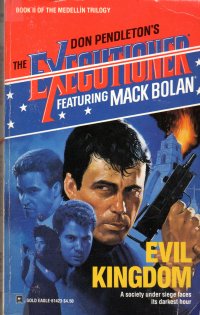
Also, when I went looking for the book of Charles Sander Peirce last weekend, I turned up a lot of books I wished I could read right now but I had to finish the Agatha Christie omnibus. Now that I’m done, though, I’ve forgotten which books I was so hot about, so I’ll probably pick up another graphic novel I bought at LibraryCon or an Executioner novel instead.

Buy My Books!
Buy John Donnelly's Gold Buy The Courtship of Barbara Holt Buy Coffee House Memories

Book Report: Five Miss Marple Novels by Agatha Christie (1984)

Book coverThis is the famous five-novel omnibus that my grandmother sent me earlier this year. It includes the following novels:

  • The Mirror Crack’d, wherein a movie star buys a home and renovates a home in St. Mary Mead, home village of Jane Marple. The movie star throws an open house, and a woman dies immediately after meeting the movie star. Poisoned! Miss Marple investigates.
  • Caribbean Mystery, wherein Miss Marple is on holiday at a Caribbean resort, when an elderly blowhard offers to show Miss Marple a picture of a murderer. When he glances at the photo whilst taking it out of the wallet, he reacts to it and puts it back without showing Miss Marple. He then dies, and when Miss Marple investigates, she discovers the photo is no longer in his wallet, and someone else to whom he told the story must be THE MURDERER. Other bodies hit the floor sand before Miss Marple strikes!
  • Nemesis, wherein a rich fellow from Caribbean Mystery leaves a strange bequest/challenge for Miss Marple when he dies: Travel on a garden and sites bus tour and solve a mystery. What is the mystery? He doesn’t say, but ultimately it might be to clear his estranged, ne’er-do-well son of a murder. Other bodies hit the floor treacherous mountain trail before Miss Marple, along with some dead rich guy-funded guardian angels, nab the bad guy before Miss Marple becomes the next victim!
  • What Mrs. McGillicuddy Saw!, wherein a friend of Miss Marples is convinced she has seen a murder on a train on the next track, but the police find no evidence and no body. But Miss Marple believes her friend and finds herself in a remote town with a catspaw investigating a rich house full of suspects. When the catspaw discovers the body, everyone might be a suspect, but whose body is that in the sacrophagus? Also, poisoning occurs!
  • The Body in Library, wherein friends of Miss Marple find a body in their library. For novelty’s sake, this body was strangled, but it’s not anyone known to the Bantrys, in whose library the body was found. So Miss Marple comes to investigate on behalf of her friend, and as the other bodies hit the floor canyon in a flaming wreck, she has to uncover the real murderer.

So, Brian J., did you figure out the murderers? You know, I knew by page 70, about halfway through The Mirror Crack’d, but I might have read that book before. I also remember Mrs. McGillicuddy seeing the murder from when I read that book in high school, but I didn’t remember whodunit. So I was one for five, ish, as I knew in what direction the murderer lie in What Mrs. McGillicuddy Saw!. But perhaps I kind of remembered it. Also, I knew kind of something in Nemesis, but not exactly.

My beautiful wife asked me which was my favorite, but to be honest, that’s like asking what your favorite Executioner book is. They’re formulaic, but of a different formula than men’s adventure paperbacks. Someone Miss Marple knows or somewhere Miss Marple goes has a murder on her/its hands, and she acts all dithery but listens to people and compares them to a list of people she’s known to ferret out the killer. The books often feature common tropes, such as:

  • A child or young person interested in the murder who looks for clues or tries to help, and sometimes finds a relevant clue. Although in one such book, playing against type, the child is the murderer (not in any of these books, though).
  • The murderer(s) kill a second person to confuse the issue by dressing the second person, a random townie, up like the person he/she/they meant to kill in order to confuse the time/circumstances of the original murder. This happens a couple of times in these books.
  • Poison is the method of choice for many of these murderers, or strangulation. Neither of which leaves a messy crime scene–at least, not a crime scene that would have yielded many details in these days.
  • Rich men who are almost dead or invalid. Such characters appear in two of these books and trigger a third.
  • The murderer is generally present throughout the story, but is not under suspicion until the big reveal at the end.

Reading five relatively close together means I can spot these tropes. I imagine if I read a bunch of them, I would get better at figuring out whodunit. I think I was better at them when I was reading a bunch of them at the beginning of high school, but in the interim, I’ve gotten a little more used to hard boiled or modern thrillers which are less clue-driven whodunits.

Also, the body in the library thing. The last novel is entitled The Body in the Library, as a matter of fact. You know, in reading these old English mysteries, libraries aren’t good for much except killing people or stashing bodies. You know, I have often dreamed of having a home with a proper library, but English mysteries might be killing that urge in me.

So it was a nice way to pass some time. Although I’m not sure I am in the frame of mind, really, to get the most out of English or modern cozy mysteries, although I will read them from time to time when I find them on the to-read shelves. Or when my grandmother sends them to me.

This is a pretty nice edition, too, with Genuine Bonded Leather cover and gold paint atop. Probably archival paper, too. Chatham River Press must be akin to Easton Press in publishing nice editions of books, but it looks like they’re no longer in business. Still, although Nogglestead does not smell of mahogany, it’s nice to have as many leather-bound books as possible.

Buy My Books!
Buy John Donnelly's Gold Buy The Courtship of Barbara Holt Buy Coffee House Memories

Book Report: On the Way Home by Laura Ingalls Wilder and Rose Wilder Lane (1962, 1990)

Book coverLike The First Four Years, this book was not published in Laura Ingalls Wilder’s lifetime and is based on a loose diary she had of her trip with Almanzo (Manly), Rose, and another family from South Dakota to the land they eventually bought near Mansfield, Missouri, which became Rocky Ridge Farm and their forever home. The diary entries are leavened with Rose Wilder Lane’s recollections and some photographs not only of the family but also of the places they passed through, although many are historical photos of the time when the Wilders passed through and are not of or by the Wilders themselves.

That said, the book does not have a great narrative structure and does not characterize the people in it much. The trip occurs after repeated crop failures and both Laura and Almanzo suffer from bad cases of diptheria. I read Willa Cather’s O, Pioneers! after I started reading the Little House books, and this one reminds me most of the Cather book. Whereas the other Little House books (except, perhaps, the aforementioned The First Four Years) emphasize the technical skills and mindset in being a pioneer, but the diary entries in this book catalog not only how pretty the land is that they visit but also the price of land per acre and the expected yield in bushels per acre.

The other stunning metric from the book is that she reports the daily high temperature on their trip until she loses the thermometer sometime along the way. Many or most of the days of their trip through South Dakota and Nebraska the temperature was 100 degrees in July and August. In 1894. Don’t the models predicting our imminent demise from the boiling seas take data from after that to make their predictions? All I know is that we’ve had two cool springs in a row here in southwest Missouri, this one with a late freeze that killed my peach blossoms (again), so I’m inclined to believe that temperature has varied and continues to vary. But I am no scientist, just someone who takes his lived experience and tries to make sense of it.

I have two other books of Little Houseiana here: A biography of Laura Ingalls Wilder and a collection of her “discovered” writings in pompous hardback that I suspect will be more unpolished bits that she didn’t plan to publish but that the Trust put out on her behalf eventually. I was going to power through them, but I’ve decided to power through the last novel in the Agatha Christie omnibus instead. Because, despite all the cool books I’ve recently found and want to read right now, this is a situation that calls for powering through books I’m not excited about. But soon: fun!

Buy My Books!
Buy John Donnelly's Gold Buy The Courtship of Barbara Holt Buy Coffee House Memories

A Voyage of Rediscovery

So I’m hoping to write an article that uses Charles Sander Peirce’s “The Fixation of Belief” as a bit of a starting point. So, Sunday, I faced a dilemma: Read it online or spend an hour scouring the Nogglestead library’s to-read shelves for a copy of The Essential Peirce that my beautiful wife gave me for Christmas nearly twenty years ago.

So, of course, I opted to go through my library.

I kind of remembered having seen it on the leftmost shelves in my office, so I started there.

I hoped it would not be on the second set of shelves, which broke eight years ago (!) and that I have not replaced. Instead, another of the shelves has broken to irrepairable levels, and I’ve stacked books on books so that the lowest remaining shelf (not the bottom) is actually held up by the books on the bottom shelf. The stacks on that shelf are the height of two missing shelves, which is to say about three feet. So I saved that bit for last.

I only had one martial arts weapon fall on me as I searched, a practice (wooden) kama. Here’s what it looks like:

I provide this image as a public service so you won’t go performing an Internet search on “kama” only to discover that the kama also means sexual desire and longing in Hindu and Buddhist literature which means a lot of art of scantily clad Indian women. That link goes to Wikipedia, but the entry also is probably not safe for work. Assuming any of you are at work during the current unpleasantness. The research for this part of the post cost me another hour, by the way.

If only I was looking for William James’ work on Pragmatism, I would have found it in no time at all as it’s atop the books stacked on the floor.

If I were looking for The Will to Believe, which I read twenty-ish years ago (and probably six or eight years after it was assigned to me in college), I would have found that pretty easily, too. When we first moved into Nogglestead, I organized the shelves with the books I’ve read pretty well. In the decade since, the organization has fallen off as I’ve moved bookshelves around and later had to jam books wherever they fit. But traces of the organization would probably have made it easy to find. As an experiment, after writing the preceding, I went to my to-read shelves and found it in about four minutes. It was next to Nature Noir which I read in 2006 and just mentioned a week and a half ago comparing it to something else I ordered from ABC Books. On the other side: We Can’t Go Home Again by Clarence E. Walker, the very first book I reported on for this blog in 2003.

If only I were looking for Kant, Sartre, Kierkegaard, Jung, or a Neibuhr, I would have found something much earlier as I have multiple volumes by those hoity-toityish authors. You know, it might be handy to group them together, but I don’t have a lot of room to work with here, and that’s a project for another day or days.

I have a lot of books on how to do software testing, which I could probably read if I want to get into that line of work. I think I have actually read three in total (maybe just two: How to Break Software and How to Break Software Security). I have certainly started and abandoned any number of books on testing. Which are still on the to-read shelves to this day.

I probably own more David Morrell books than anyone else besides David Morrell himself. I read First Blood and First Blood Part II in 2008, and I liked them well enough to pick up other books of his as I’ve come across them. I haven’t read any since then, however.

I found in my office a book called More Book Lust; I was surprised and delighted to find I owned the original, which I found in the book shelves in the hallway. I did not think to group them, although I did put Foxfire 3 between Foxfire 2 and Foxfire 4. I spotted a couple other things that I should have grouped: The Heechee novels that my beautiful wife bought me for Christmas after I read Gateway in 2013 have scattered amongst the book shelves in my office; there’s a Ross Thomas paperback floating around in the hallway where two or three are together in my office; and Alice in Wonderland in the Children’s Classics edition rests in the hallway whilst Black Beauty, Hans Brinker, Heidi, and Twenty Thousand Leagues Under the Sea in the same series are on the bottom shelf of the collapsed bookshelves in the office (and are dutifully holding up their brethren).

I have two copies of Lady Chatterley’s Lover: One in an omnibus of Lawrence’s work and one in a paperback that features an essay about the censorship of the novel. So, of course, as they are not the exact same edition, I cannot get rid of one. Although when I read one, I suppose I can move the other to the read shelves so long as I read that essay. If I remember. I might well forget an read the book again, although that’s a greater risk with genre fiction.

I did find, though, that I have made enough gaps in selecting and rearranging books that I was able to get all of my recent purchases from ABC Books onto the shelves. The History of Civilization series and the books atop it, as well as the ones I inherited from my aunt recently, have no home on the shelves yet.

And I did go through the stacks on the collapsed shelf, but I did not find the book I was looking for. So I started again, and as I stood books that had been stacked on the out-facing rank of books onto their edges, I found it.

I had remembered it with a blue cover, which is probably why my eyes skipped over the tan spine the first time. But it was approximately where I thought it was.

And it was an hour later that I found it.

All the time I had allocated in the day for reading “The Fixation of Belief” and starting the thing I wanted to write were lost to the search for the book and this blog post. So I’ll have to take that up another day.

But I’ve rediscovered a lot of cool books that I want to read, so I should spend a little more time actually reading than sitting at the computer here, refreshing my favorite blogs and Facebook and researching kama.

So if you’ll excuse me.

Buy My Books!
Buy John Donnelly's Gold Buy The Courtship of Barbara Holt Buy Coffee House Memories

Good Book Hunting, May 5 and 6, 2020: ABC Books

Friends, last week I place my last order from ABC Books as part of the current unpleasantness. I trolled through the religion and pets sections with the pretext of ordering some books for a friend in Wisconsin who has lately not had satisfactory, that is, any, answer when I ask him what he’s reading.

It did not arrive here until this morning, but yesterday marked the easing of restrictions in Missouri and particularly Springfield and Greene County, so I went to ABC Books. With the pretext of picking up gift cards for teacher appreciation week, but also to pick up a couple books by an author I read about in an ancient (2016) Garden & Gun magazine.

I only got seven books for myself:

They include:

  • Lay Down My Sword, Cimarron Rose, and Jolie Blon’s Bounce by James Lee Burke, the author I read about in Garden and Gun magazine. I’d looked for the first in his acclaimed Dave Robicheaux series, Neon Rain, but ABC Books didn’t have it. I took their complete inventory, though, including two first editions. Unfortunately, they’re from three different series. At least I will get a broad sampling of the author’s work. Eventually.
  • History of the North American YMCA by Richard C. Morse. The history through 1922, anyway, which is a lot less history than it has now. Fun fact: I was once asked if I wanted to be on the board of the local Y because apparently I travel in the circles of people who do that sort of thing these days. But I would need two things at the very least before I agreed: 1) to read up on the history of the organization, and 2) to volunteer at the local Y for a period of time to get the inside view. I’ll be able to do one soon, and after I complete the second part, I’ll learn that the current board member was talking to my beautiful wife at the time.
  • Eat the Cookie, Buy the Shoes by Joyce Meyer. Another book by a popular evangelist. Ms. Meyer is based in the St. Louis area, and apparently her sprawling organization hires a lot of technical people, but I never worked there.
  • Bad Dog! A Memoir of Love, Beauty, and Dark Places by Lin Jensen. I got cat books for my friend, but this dog book for myself. It helps that I have been catching up on my ancient Garden & Gun magazines which features a column about a Good Dog by varied authors every month. I’m primed.
  • The Interpreter’s One-Volume Commentary on the Bible edited by Charles M. Laymon (rimshot!), a 1300+ page bonzer that does not include the text of the Bible, but instead offers commentary on the books and verses of the Bible as well as some Apocrypha. Includes a large number of essays on the history of the Bible as well as the region and the early church. Looks like a good thing to read alongside a reading of the Bible, kind of like I did with Asimov’s Guide to the Bible back in 2015. Has it been that long? What can I say? The history of Judea after Solomon bogs me down every time.

That should be the extent of my book buying for the spring and maybe summer aside from a garage sale here or there. But if my friend doesn’t like the surprise books arriving on his doorstep, I’ll ask him to send them my way.

But there’s not going to be a Friends of the Library book sale, either in Christian County or in Springfield, until the fall. So I should be safe from myself unless I run into a really good church garage sale someday, when such things are allowed again.

Buy My Books!
Buy John Donnelly's Gold Buy The Courtship of Barbara Holt Buy Coffee House Memories

Book Report: Four Weddings and a Funeral by Richard Curtis (1996)

Book coverYou know, I actually saw this film once, probably on videocassette when it was fresh and Hugh Grant was a leading man and I was dating a girl who liked these sorts of films. And perhaps thought I was something like Hugh Grant. But all I remember, really, was whose funeral it was, and that Hugh Grant was wooing Andie MacDowell.

So I’m not really going to go into the plot much here but to contrast this screenplay with the plays I generally read. The screenwrighter says it took him a long time to write it, and I believe it, but contrasted with a play for stage, it’s just a bunch of scenes, camera directions, and very, very terse dialog. We get scenes with a single line or a single word (generally fuck) and then we’re elsewhere. It’s the nature of film making versus staging a play, and I get it. I had a screenwriting class, surely, and I’m pretty sure I read Mamet’s book. Somebody’s book.

But I tend to think in terms of drama, and Heaven knows I read more of it than screenplays. So I favor the other over this style, especially for reading. It works better for films qua films, I know.

At any rate, the book also contains some appendices that give some insight into professional screenwriting, including deleted scenes, marketing concepts and brainstorms, and the need to adjust the language to fit an American television cut.

So worth more for these insights rather than a good read. And it’s probably better as a film than a text to enjoy on its own.

Buy My Books!
Buy John Donnelly's Gold Buy The Courtship of Barbara Holt Buy Coffee House Memories

Out of the Way; I Want To See The Books

A couple of ads have hit my feeds lately with books in the background:

Get out of the way; I don’t care what you’re selling. I want to see the books.

Do you remember when visiting someone’s home for the first time, going to the bookshelves to see what kinds of books they owned? Yeah, that’s been a while. Partly because of the stay-at-home orders, partly because I don’t get invited to many peoples’ homes these days, and partly because not many people read any more.

Still, if you come to Nogglestead and try to do that, you won’t really glean many insights into my personality based on what’s on my bookshelves or beside the various sitting surfaces other than Man, this guy buys books profligately and pretty indiscriminately.

Buy My Books!
Buy John Donnelly's Gold Buy The Courtship of Barbara Holt Buy Coffee House Memories

Book Report: Science Fiction’s Greatest Monsters by Daniel Cohen (1980, 1986)

Book coverAs I predicted when I got this book, I jumped on it quickly as an interlude between books in the Agatha Christie omnibus I’m reading. Also, as predicted, it’s a school book order kind of book, geared to youths in the late 1970s and early 1980s in elementary school who wanted to read about monsters and science fiction. Nerds, we were called in those days. The text looks to have been original in 1980 with an update in 1986, so I would have been a couple years too old to have ordered it from Tab, Arrow, or Scholastic. Now, of course, I’m very old indeed.

At any rate, the book groups monsters, mostly from cinema, into different groups: Alien invaders, aliens in space, robots/androids, horror monsters, and invisible monsters. It then touches on some of them from movies, as I said, from the 1940s to Return of the Jedi (an update to the original 1980 text, natch). It’s kind of a high level enumeration rather than any in-depth exploration, but it’s a kid’s thing, for crying out loud.

And although it touches upon giant insect movies from the 1950s and a couple of giant octopus/dinosaur movies, it does not really go into the Godzillaverse at all, which is odd, since those films were in heavy rotation on Saturday afternoons in the 1970s. Maybe that was only Milwaukee. But no name-checks of Rodan, Gamera, Mothra, or Mechazilla. So a clear oversight.

And the best thing is the very last section:

What is the most frightening of all the monsters of science fiction? I suppose everybody has his or her own favorite. And I have mine. Like the other creatures discussed in this chapter, my favorite does not have a solid body. It appears only as a color.

The thing–it has no name-is in a story called The Colour Out Of Space. The story was written in 1927 by H.P. Lovecraft.

* * * *

The Colour Out Of Space is a truly frightening story. Someday you may wish to read it yourself. Let me give you one piece of advice. Don’t read it just before going to sleep.

A 2020 update of this book would probably mention that the film version of this story came out this year. And it might not mention the story at all or only in passing instead of the three page treatment it gets in the book–the longest non-movie or television treatment of text.

At any rate, I didn’t get much out of it except a reminder of some of the films I haven’t seen yet and probably won’t as they’re old and don’t appear on streaming services or in my local video store anymore. I did get an entry in my list of annual books read, though.

Buy My Books!
Buy John Donnelly's Gold Buy The Courtship of Barbara Holt Buy Coffee House Memories

Book Report: Endangered Lighthouses by Tim Harrison and Ray Jones (2001)

Book coverThis book identifies and documents a number of lighthouses that are (or were) at risk of falling down and need preservation and restoration. The book looks at a variety of lighthouses in different regions, including the northeast, the south, and the Great Lakes (and on on Lake Tahoe, but it’s not really a lighthouse in the lighthouse sense of the word).

It gives, in dribs and drabs, some history of the Lighthouse Service, which handled lighthouses before the Coast Guard took them over, as well as information about some of the players responsible for designing multiple lighthouses and patenting lens systems. Also, some of the lighthouses were staffed and not automated until my life time.

Many were not considerered worth preservation immediately after they were decommissioned, and even now, some are nothing more than brick towers standing on some bit of private land. Although lighthouses in the popular imagination are picturesque, in many cases they were much more utilitarian structures, and one can understand why the government and locals might not have thought them worthy of preservation. Contrast them with something like water towers to get an adeqaute sense of the relationship.

Some of the relics are in parks or public locations where the locals have not allotted budget for restoration, and the book refers to a couple that are on private property (one is being restored for an AirBNB before that was a thing). Man, how cool would it be to have a lighthouse on your land? Of course, I think it would be cool because I would have the urge and perhaps someday the budget to restore it. Note that I had this exact same idea when I read A History of the Rural Schools in Greene County, Mo ten years ago.

I also got to thinking of a recent film set at a lighthouse with Williem Defoe, a Wisconsin native, and that guy from those vampire movies. I wracked my brain trying to remember the name of it, and that was especially hard because it was the obvious The Lighthouse. And now that I’ve read the plot summary, yep, that’s a movie I’m not going to watch just because I read a book about lighthouses.

At any rate, an interesting browse. Too wordy for a football game browse, but who knows when that will again be an issue.

Buy My Books!
Buy John Donnelly's Gold Buy The Courtship of Barbara Holt Buy Coffee House Memories

Good Book Hunting: April 28, 2020: The ABC Books Order

I placed this order last week early in the week, so I’d hoped it would come last week, but it’s here today. The stay-at-home order for Missouri will end on Monday, May 4, so I’ll stop ordering books online and return to my regularly scheduled trips to the north side. Which will be a bit of a boon, but also I will lose the sense of Christmas I get when unboxing things that I’ve forgotten I ordered.

Last week, apparently I went through the drama and film section again:

I got:

  • Science Fiction’s Greatest Monsters by Daniel Cohen. Closer inspection of the actual item indicates that this is actually a children’s book. Which means I will jump on it quickly to pad my annual numbers which are getting hamstrung by the omnibus collection of Agatha Christie that I’m working through.
  • Education of a Working Man by Louis L’Amour, a memoir by the western author.
  • General Principles of Play Direction by Gilmor Brown and Alice Garwood, an ex-library textbook-looking book published by Samuel French, which was a publisher of plays to perform.
  • The Way of the Seal by Mark Divine with Allyson Edelhertz Machate. To compare and contrast with the Marcinko books, although I must note I do not have his nonfiction leadership book.
  • A Delicate Balance by Edward Albee, a play.
  • Four Weddings and a Funeral by Richard Curtis. I saw this film when it was newly on video. Yes, it was chosen by my girlfriend at the time.
  • Signs and Portents by Jane Killick. An episode guide to the first season of Babylon 5. I don’t think I’ve seen a whole episode of it.
  • Fifth Avenue, 5 A.M. by Sam Wasson. A musing on how Breakfast at Tiffany’s made the modern woman. I can’t wait to see if it says that’s a good thing or a bad thing. I saw this film once back in the day as well, as it was also chosen by my girlfriend at the time (the time we watched it, not the time that it came out. I ain’t that eld.).
  • Born Standing Up by Steve Martin. A biography. I see this one has a sticker still on the back, so I’ll have to be sure to read this one at church in case Mrs. E. is watching.
  • The Cabin by David Mamet. Almost a memoir.
  • The Annotated Monal Lisa by Carol Strickland, PhD. A crash course in art history with some comparisons, but not a pop-up video sort of annotations overlaying great works of art.

The stack of unread ABC Books on the floor is not as tall as I am, so there’s no problem yet. Now that I’m in between novels in the Agatha Christie omnibus, so perhaps I can knock some of these shorter books out.

Buy My Books!
Buy John Donnelly's Gold Buy The Courtship of Barbara Holt Buy Coffee House Memories

Book Report: Sartre for Beginners by Donald D. Palmer (1995)

Book coverThis book is a little wordier than Einstein for Beginners, but one would expect that the sort of people who would write Marxist comic books are probably better equipped to go on at length about Sartre and Existentialism than physics.

But it’s a good primer on Sartre’s thought through his career. It’s broken out by topics, but also a bit of evolution which, spoiler alert! culminates in the highest point of Sartre’s thought which is of course the defense of the Soviet Union and Stalinism found in Critique of Dialectical Reason which was not published completely in his lifetime because he could not square the circle. Fortunately, this comic book does its best to do the same. But, yeah, that’s not what Sartre is best known for and for good reason.

In case you’re wondering, Marx doesn’t appear in this book until page 3. Fortunately, though, he is clothed.

I’m getting a strange sort of pleasure out of these books. I mean, I know they’re simplistic Marxist tracts, but it’s interesting to kind of contrast my understanding of the topic with the comic book and see if I can spot exactly where it goes spinning into nonsense.

This book is sixteen years into the series after Einstein for Beginners, and I see that they’ve got a bevy of books in then-current print. Einstein for Beginners isn’t listed in the covers, nor are Marx for Beginners, Lenin for Beginners, or The Anti-Nuclear Handbook, but we’ve got a mix of then-contemporary-ish titles like Mao for Beginners, Pan-Africanism for Beginners, Black Panthers for Beginners and Malcom X for Beginners along with “timeless” topics like Plato for Beginners, Hemingway for Beginners, and Nietzsche for Beginners. Then we go into the WTF with The History of Clowns for Beginners. And Sex for Beginners–I’m almost afraid how Marxism might ruin that for me. But, still, I have a strange fascination for these books now, and I know if I see any of these in the wild for a dollar or two, I will buy them and read them soon.

Buy My Books!
Buy John Donnelly's Gold Buy The Courtship of Barbara Holt Buy Coffee House Memories

Book Report: The Iceman Cometh by Eugene O’Neill (1946, 1999)

Book coverI got this book from ABC Books last week, so at a lull in the Agatha Christie omnibus, I picked it up because I thought a play would be a quick read before I returned to Miss Marple.

Well, no.

It turns out that this is an extra full evening play. It runs 196 pages of dense dialog. It’s not the centered character name with snappy dialog that you get in something like, say, The Courtship of Barbara Holt; it’s more like the character name at the upper left and a dense speech that you get out of a thick collection of Shakespeare (the likes of which I should probably pick up again two (!) years later).

It’s of the subgenre, which is apparently a subgenre given the propensity of plays with similar setting and characters, of “grifters and losers in a bar” type (see also The Time Of Your Life by William Saroyan) which differs from another subgenre of the “grifters and losers in their home” type (such as The Homecoming by Harold Pinter and another play I saw staged at St. Louis Community College-Meramac twenty-some years ago). Given that these were Big Plays that appeared on Broadway or in London, I have to wonder about the class implications of the hoity-toity people getting together to watch the pale imitations of the lower classes get together and be losers together. Undoubtedly, one could also say something about the lower classes coming together to watch well-to-do losers and grifters come together to grift on The Real Housewives of New York, New Jersey, Beverly Hills, or Khardasia. Meanwhile, I keep stumbling upon these books.

At any rate, a group of souses at a rundown bar in 1912 await the coming of Hickey, a salesman who comes for a bender every year on the owner’s birthday, and buys all the drinks. We get introduced to a couple of leftists, a couple of “tarts” (not prostitutes) run by the bartender (not pimp). We’ve got another “tart” who has been planning to marry the other “bartender.” We’ve got a number of people who’ve lost their jobs or positions, presumably for love of the bottle, who’ve thought to sober up and get their things together “tomorrow.” And when Hickey comes, he’s a changed man, sober, and ready to help them come to acceptance of their lots by showing them that they really don’t want to do those things at all.

So it’s long, it’s got a lot of characters, and it’s depressing. Which is why it keeps getting revived, sixty years later (the cover ties into the 1999 revival starring Kevin Spacey, Tony Danza, and Paul Giamatti; the 1966 version had Mr. Drummond Conraid Bain in a juicy role).

It might be the first Eugene O’Neill I’ve read; it won’t be the last, as I have A Moon for the Misbegotten which looks to be shorter.

Also, note that this is the second book in a row that I’ve completed which features the ultrabad word nigger (The House of Man being the first). Is this a sign of my latent racism, or just luck of the draw? The Internet would probably agree to the former. I bet the word is cut or will be cut from the newest revival of the play, though. Even when depicting a different time and place, whitey can’t say that, especially in anger (as it appears in this play).

Buy My Books!
Buy John Donnelly's Gold Buy The Courtship of Barbara Holt Buy Coffee House Memories

Good Book Hunting, April 21, 2020: ABC Books

So I ordered my weekly (soon to be more than weekly ABC Books order before the weekend, which means I got it on Tuesday instead of Thursday.

Which means I can order again already.

I got:

  • 97 Ways To Make Your Cat Love You by Carol Kaufmann. This is humor. I hope.
  • Lafayette by Martha Foote Crow. Part of the True Stories of Great Americans series. You can tell we’re off to a roaring start when we talk about the great American Lafayette.
  • The Cat Who Came To Christmas by Cleveland Amory. I’m surprised I don’t own one of these books already (a search for “amory” on the blog brings up a couple of Heinlein books for their polyamory). I think I listened to one of his books on tape, but that must have been twenty (!) years ago or so.
  • The Poems of Alice Meynell by Alice Mynell, a 1923 edition and in a Mylar cover. Who? you might ask. Look it up on Wikipedia like I just did. An Englishwoman poet from the turn of the 20th century. A contemporary, but a little older, than Edna. St. Vincent Millay.
  • Whoppers: Tall Tales and Other Lies by Alvin Schwartz.
  • Napoleon’s Hemorrhoids and Other Small Events That Changed History by Phil Mason, a collection of pop history pieces.

Meanwhile, my beautiful wife got some books in the mail:

From other used bookstores.

You see, she knows of a book and goes looking for it. Me, I want to see what ABC Books (or the various book sales) have that I might want. One could probably draw all sorts of conclusions about our life philosophies from this anecdote.

At any rate, restrictions might ease in the next week or two, which will mean that I’ll be back to only buying four or five books for every book I read. Which is a more normal pace.

Buy My Books!
Buy John Donnelly's Gold Buy The Courtship of Barbara Holt Buy Coffee House Memories

Good Book Hunting, April 16, 2020: The Weekly ABC Books Shipment

So I’m a bit conflicted: I tend to order my books from ABC Books online on Saturday or Sunday, but that means I don’t get them the next week until Thursday. So I am thinking about ordering the day I get them, so I can get them earlier. However, this plan would probably prove more expensive.

I got:

  • As I said, I should read more Longfellow, so I got three books: A 1913 edition of The Courtship of Miles Standish and Elizabeth that was somebody’s fifth grade textbook in 1926; a children’s book binding edition of Evangeline from 1962; and a Library of America edition of Longfellow: Poems and Other Writings (which includes The Courtship of Miles Standish and Evangeline).
     
  • Winter’s Bone by Daniel Woodrell. This is Woodrell’s big hit which was made into a movie that launched the career of Jennifer Lawrence. I read The Maid’s Version in 2014.
     
  • The Inner Game of Fencing by Nick Evangelista. About fencing, which I haven’t done per se in a while. I’ve done some sword sparring in my martial arts classes and ate up the sword-swingers with my rapier fencing techniques. But I just reconnected with the fellow I was fencing with on Maryland Avenue in the middle 1990s when we were threatened with arrest for doing so, so I picked up a book to read on it. Because, face it, I buy books on the thinnest of pretexts or sometimes for no reason at all.
     
  • An inscribed copy of Vespers by Ed McBain. For $16. Don’t kids these days remember Ed McBain? He signed it Ed McBain, though. Not Evan Hunter or Salvatore Lombino.

Well, that should hold me for a while. Although the “while” will be scattered over the coming decades.

And I’ll place another order this weekend for a set of random books.

As I mentioned I was looking forward to the re-opening of things so I can support the local authors and save on shipping, handling, and Alibris vig costs.

Buy My Books!
Buy John Donnelly's Gold Buy The Courtship of Barbara Holt Buy Coffee House Memories

Book Report: The First Four Years by Laura Ingalls Wilder (1970, ?)

Book coverThis book has an introduction to it written by Wilder’s attorney who explains the provenance of this book since Laura Ingalls Wilder did not publish it, and it did not appear until after Rose Wilder died. So it was published by the estate, the intellectual property machine that later came up with other “generations” of Little House books likely not envisioned by Laura Ingalls Wilder herself. And I can guess why.

This book is short, only 134 pages, and it outlines the first four years of Laura and Almanzo’s marriage, their hardships holding onto both homesteads Almanzo had, and the birth of Rose. The book does not go into details, and it does not include actual scenes, really, between the characters.

What we do get is a lot of bad things happening. Almanzo buys a lot on credit, and his crops fail due to new and inventive ways (a hail storm right before harvest, four days of extreme heat before harvest). He retrenches a bit, but at the end, their last shanty burns down. And the book ends. The Wilder family moves to Missouri afterwards, but On The Way Home is not considered part of the series generally.

I can see why and how this book was not included in the books Wilder published. The books through These Happy Golden Years are romanticised, where the men are generally competent–although some hints of less do appear–and the families generally come out okay at the end of the book. The earlier books in the series describe “Laura”‘s childhood through her marriage, and the marriage and her moving into her first house as a bride kind of cap that story arc. This book, on the other hand, does not really provide much of a coda to the series or cap it like the end of These Happy Golden Years did.

So I can see why she was content in her lifetime to stand pat on the books as she published them. Because they were uplifting and set a good example, whereas this book lacks that.

Buy My Books!
Buy John Donnelly's Gold Buy The Courtship of Barbara Holt Buy Coffee House Memories

Book Report: The House of Man by William A. Bone (1919)

Book coverThis book, like Red Plush and Black Beard, is a pamphlet-sized publication that I probably bought in a bundle. It’s subtitled “A Lecture”. Research indicates that the presenter was a humorist/poet who performed on the chautauqua circuit (see this and this where he was on the bill with Carrie Nation). Hey, I know what a chautauqua is! So although one might, at the outset, think it’s a piece by a clergyman and this represents a sermon or theological lecture of some sort, it’s not.

What is it, then? Well, I suspect an entertaining and potentially uplifting/inspiring way to pass an hour or so in a tent in the summertime.

His conceit is something out of Maslow’s heirarchy of needs or chakras: basically, mankind consists of four “floors”: The base needs, the heart, the intellect, and the soul, and he ties them to levels in the body. He then goes onto a little politics trying to stretch the metaphor, but it doesn’t work.

The prose is chock full of poems of the author’s own creation to illustrate the point. The poems aren’t half bad; better than the typical grandmother poetry, but they would have to be–he wrote and probably refined these poems for performance.

In the middle of the book, he goes into a riff about black churchgoers and a sermon delivered to them in dialect, which includes the word niggers, which will probably give modern audiences the vapors if not make them faint right out. Of course, it’s not racist–it’s a black preacher telling a black congregation to quiet down–kind of like its appearance in modern rap songs (but in this case, it’s a white author using it, so: vapors).

Wait a minute, Brian J., did you just type out the whole n-word? I did. It’s just six letters, not a magic talisman.

I’ve had to type it and a lot of other squicky words in testing content filters in my day job. And I grew up in the projects, so I’ve heard it. I might even have said it, but I cannot remember doing so and probably wouldn’t have as I was a small white boy in the projects, and saying THE BAD WORD in anger would likely have led to a beating. But that was in the 1970s, when Blazing Saddles was made. Somehow the word got worser since then, if you can imagine. A word. But I digress. And I used a derogatory term for Caucasians in this paragraph, and you probably went right over it.

He also uses the term mick in a couple poems, but, again, they’re Irish people calling themselves that. So according to modern accounting, I guess he’s twice as anti-Irish as Racist. But in neither case is he saying that blacks or Irish people are bad. Which is what racism and anti-Irishism is, don’t forget. Not just using words neutrally.

To be honest, those parts of the book in dialect, including the Black church scene and the two Irish poems, really bog the reading down as you have to try to sound out the phonetically spelled words. But, again, this was written not so much as a “lecture” but as a performance piece that had to fill an hour or so in a tent on a hot summer evening.

So it’s an interesting piece as much for what it is as what it says.

Buy My Books!
Buy John Donnelly's Gold Buy The Courtship of Barbara Holt Buy Coffee House Memories

Book Report: Ziggys of the World Unite by Tom Wilson (1976) / Catss by Gross by S. Gross (1995)

Book coverBook coverI got both of these books this week from ABC Books, and I jumped right into them as I procrastinate starting the next of the Miss Marple novels in my omnibus. So let that speak to my character: I jumped right into the cartoons instead of naughty book.

You know, I haven’t seen Ziggy in the local papers lately. I’m not sure if that’s because his presence on the funny pages are just so much like the atmosphere that they don’t stand out or if the Ziggy’s syndication has contracted. But reading through a bunch of Ziggy cartoons at once led me to realize what a sad sack Ziggy was. Kind of an everyman, a bit lonely, a bit Existential. Still, I got a couple of chuckles out of the collection which is more than I can say for some of the multi-panel strips (such as Sally Forth) from back in the day. Some of the humor refers to then-current events, so maybe my boys won’t understand when they make off with this book, but, as I sad, I chuckled.

I was pleased to see that Catss by Gross was not of a type with 101 Uses for a Dead Cat; apparently, Gross is the name of the cartoonist and not the type of humor one finds within. Instead, it’s a number of one-panel cartoons featuring cats. Several of them appeared in The New Yorker, so it’s that sort of dry, sophisticated pictured wit. I got a chuckle or two out of the book; not as much as the volume of Ziggy, but enough to be pleased to have read it (quickly).

Now, enough procrastinating; back to the Agatha Christie. After I read the other comic book I bought at ABC Books this week.

Buy My Books!
Buy John Donnelly's Gold Buy The Courtship of Barbara Holt Buy Coffee House Memories

Good Book Hunting, April 9, 2020: ABC Books Online Order

As I remind you, gentle reader, you can order books from the ABC Books. Or you will be for a couple weeks yet, before I end up having bought the entire inventory.

So I got the chance to unpack it and play “What did I click on last weekend?”

Apparently, I added these things to my cart:

  • Ziggys of the World Unite, a collection of Ziggy cartoons. Research indicates it’s still a thing, but I’m not sure if I’ve seen it in the local paper when I’m at the dentist’s office, which is the only time I see the local paper in its physical manifestation.
  • Whiskey words & a shovel by r.h. Sin, a collection of poetry by a poet with a lot of books at ABC Books.
  • Two plays by Eugene O’Neill, A Moon for the Misbegotten with Gabriel Byrne on the front cover and The Iceman Cometh with Kevin Spacey on the front cover. So you know they’re older plays but still relevant in New York.
  • Late Night Thoughts on Listening to Mahler’s Ninth Symphony by Lewis Thomas.
  • Sartre for Beginners by Donald Palmer by the same Marxists that brought us Einstein for Beginners.
  • Catss by Gross by S. Gross. A collection of cartoons about cats, I guess.
  • The Politically Incorrect Guide to Science by Tom Bethell. I’m not sure if I’m going to read this first or encourage my oldest to read it to counter some of the notions he’s getting from pop culture and TikTok. Which he doesn’t have, but apparently, YouTube contains montages of them.

So the weeks are basically like this: On the weekend, I place my order; on Thursday, I get my order, and it’s like Christmas because I don’t know what I ordered; and then I cannot wait until the weekend to place another order for five or ten books whose name and subject matter I will remember by Monday. Redux.

I’ll be happy when the current unpleasantness is over, when we can cruise up to ABC Books on a Saturday afternoon to attend a book signing by a local author and pick up a couple of books plus the in-house author’s work.

Which is why I hope you’ll join me, gentle reader, in placing an order to help make that dream of mine happen.

Buy My Books!
Buy John Donnelly's Gold Buy The Courtship of Barbara Holt Buy Coffee House Memories

Book Report: Red Plush and Black Beard (Condensed) by Marguerite Higgins (1955)

Book coverThis is a condensed, pamphlet-sized version of a longer book (which is $300 on Amazon if you search via Bing but $8 if you search on Amazon?) about Marguerite Higgins’s experience in the Soviet Union. It clocks in at 16 pages, and I probably got it in a bundle of chapbooks/pamphlets for a buck at a Friends of the Springfield-Greene County Library Book Sale some time ago. But I’m counting as a book I read regardless of the length.

At any rate, you don’t have to be a Russiaphile to know what she finds: Brutal architecture, primitive living, but a resilient and resigned people.

But enough about this little publication of the Good Reading Rack Service. It leads to a little wondering about the Good Reading Rack Service itself. The book has no price markings; what was the Good Reading Rack Service? Internet searches yield no history of the company but a boatload of entries from their series. Was it teaser giveaways for bookstores trying to sell the books themselves?

Also, how about Marguerite Higgins herself? A woman war correspondent who covered World War II, the Korean War, and Vietnam along with being the bureau head in Moscow when she wrote Red Plush and Black Beard. Wow, that’s more interesting than what she had to say about Moscow in the middle 1950s.

Buy My Books!
Buy John Donnelly's Gold Buy The Courtship of Barbara Holt Buy Coffee House Memories