The Second Most Viewed Book Report on MfBJN

I might have mentioned, gentle reader, that amongst the 1500-odd book reports on this humble blog, for some reason my book report from 2013 on Robert Louis Stevenson’s The Sire de Maletroit’s Door is very popular. Probably because it’s on the first page of Google search results.

Would you care to guess what is the second most popular book report here?

Continue reading “The Second Most Viewed Book Report on MfBJN”

Buy My Books!
Buy John Donnelly's Gold Buy The Courtship of Barbara Holt Buy Coffee House Memories

Book Report: The Meat in the Sandwich by Alice Bach (1975)

Book coverThis is nominally a children’s book. I bought it almost twenty years ago from a table in the foyer of the Bridgeton Trails branch of the St. Louis County library back when we lived in Casinoport. We didn’t have children then, but if I was going to have children, I would want them to read a book about young hockey players (as my beautiful wife and I watched every St. Louis Blues game at that time). As it turns out, a couple years later, I had children (well, my beautiful wife gestated and emitted them, but you know what I mean). A couple years after that, they could read, but neither of them were much interested in the old-timey children’s books I had, favoring the cartoonish children’s books of today. A couple years later, I finally picked up this book since there’s no hockey season. Was there one earlier in the year? It seems so long ago.

I say “nominally” a children’s book because, although the main character is in fifth grade, it’s 182 pages of dense, adult-focused text. I mean, I know kids books today are dumbed down, but compared with other kids books of the past like the Great Brain series and the Little House series, not to mention the Peggy Parrish books, and this is freaking Ulysses.

So the main character is a fifth grader who has two sisters (one older, one younger, so he’s the meat in the sandwich of the family), a father with a job at the electric company, and a stay-at-home mom (in 1975, this was still the norm or the ideal, gentle reader). His best friend and the star of the elementary school hockey team lives with his mother after his parents divorced, and that’s a big deal in 1975. A new kid moves in, a competitive kid whose father drives his own son and the main character to be better athletes, but not without tension (the usual “we train hard, and everyone else is a loser” mentality). When a new hockey coach splits the team into two squads, the main character and his athlete ‘friend’ are on different squads, so they’re not really friends any more.

In addition to that main story line, the protagonist’s mother wants to pursue her dream of being a painter, so the whole family has to divvy up the chores, including the cooking and the cleaning. His friend’s divorced mother pursues her dream of opening a little swap shop in her home where people can trade things they need without spending money. The protagonist’s mother offers her paintings in the shop, but nobody is interested in her abstract works which her children don’t think are very good.

The turning point in the book comes in a scrimmage between the two squads, when the protagonist is checked hard into the boards by his former friend. The protagonist ends up knocked out and with an injured shoulder, and as he mends (and hides from returning to school in shame), he rethinks his life and determines, hey, he doesn’t have to be a star athlete after all!

So, yeah. The voice is too sophisticated for a fifth grader, and it reads more like what a 1970s feminist would like to instruct little boys. Women’s empowerment and don’t be a boy. Learn to love the liberation of the new world which will lead to the utopia we see today. Meh.

Perhaps I’m a bit down on the book because I come out of that liberated millieu to some deleterious effect. But, yeah, there’s probably a reason why this book was marked $.25 after sitting in a library, likely unread, for 25 years. I can’t imagine what a millenial child would have gotten from it.

Buy My Books!
Buy John Donnelly's Gold Buy The Courtship of Barbara Holt Buy Coffee House Memories

Book Report: Charles Russell by Sophia Craze (1989)

Book coverI got this book at ABC Books a week ago. I think in lieu of reading during football games, I will set artists’ monographs and travel books beside the recliner to browse through after a couple chapters or sections of other books I’m reading. Kind of like I used to do with comic books. I’ll use them to fill out the evening when I don’t want to start another chapter before bed.

This book gives a brief bio of Russell, a native of St. Louis and the child of a well-to-do family (Russell Avenue might well be named after the family), who decided early that he wanted to be a cowboy. The family, of course, were against it and tried to get him schooled and whatnot, but he kept hanging around with unsavory types. So they sent him out to Montana hoping to get it out of his system, but he caught on as a cowboy and whatnot until he found that he could draw and paint, and he became known as the cowboy artist. Unlike Frederic Remington, Russell did work from the frontier, but he did visit and have art shows back east and around the world.

You know, Russell is active painting and whatnot at the same time that Laura Ingalls Wilder’s Little House books cover, but it’s a very different frontier. Of course, the images would have to be more dramatic and marketable with images of cowboys and Indians and whatnot. That and perhaps the difference in locations explain the differences in the depictions.

“So, Brian J., Remington or Russell?” you might ask. To be honest, I guess it’s been ten years since I reviewed the Remington monograph. The works of both artists tend to be dramatic, with action depicted, and I prefer my art to be a little more still. Renoir portraits and landscapes and whatnot. So Remington and Russell are of a type that’s interesting to look at briefly, but not something I would hang on the walls of my home nor sit on a bench in an art museum and contemplate. Not that I do that with art that I do like, either.

So Remington and Russell. If that’s not a cop-out.

Buy My Books!
Buy John Donnelly's Gold Buy The Courtship of Barbara Holt Buy Coffee House Memories

Good Book Hunting, June 27, 2020: ABC Books

I know, it’s been a whole week since I was at ABC Books, but as I announced as I entered, I had read three of the books (out of seven) that I bought last week so I needed more.

Actually, I visited because ABC Books hosted Donald D. Shockley for a book signing, and, as you know, I go up to get signed books whenever I can.

I only got four books this trip. Well, five, sort of.

I got:

  • Shockley’s Fertile Crescent Religions, a history of Judaism, Christianity, and Islam. Shockley, an engineer, spent a lot of time in the Middle East and wanted to write this history from a Christian perspective. It’s got full color maps throughout and short, topical chapters, so I’m looking forward to reading this book soon, or someday if it gets lost in my stacks. I am primed for whenever I go on a Biblical history kick that is not bogging myself down in Kings/Kingdoms/Chronicles.
  • Bass 1 in case I want to learn to play my newest instrument.
  • The second of Jeff Patrick’s Rock Rogers books, Subzero. I read his first book, My Name Is Rock last week, and I wondered if it was supposed to be young adult. The proprietrix said this was indeed the case: the author wanted to write military thrillers his kids could read without sex and language and a little bit of prayer instead. So I bought another copy of My Name Is Rock and gave it to my boys to see if they’re interested in it. I mean, I wasn’t going to give them my copy to sleep with and to store on the floor of the truck beneath their wet feet for months.
  • A Few Flies and I, a collection of haiku by Issa. R.H. Blyth, whose Games Zen Masters Play I read last autumn, is one of the translators.

I will leave it up to you, gentle reader, to speculate as to which of the books I read first. I think it might be the Jeff Patrick book, as I’ve got a couple volumes of poetry in the poetry-reading queue already. I won’t actually “read” the bass book–books on how to play musical instruments are like technology/how to program or reference books in that I don’t go through them from beginning to end in a way that I do with fiction, other non-fiction, or poetry. I don’t get around to reviewing them because I never actually “finish” the book. Also, I don’t have a great track record on learning the skills in the books, either, but that’s more me than the books themselves.

At any rate, it was good to go to an author signing again.

Buy My Books!
Buy John Donnelly's Gold Buy The Courtship of Barbara Holt Buy Coffee House Memories

Book Report: Earthborn Awakening by Matthew S. Devore (2018)

Book coverI got this book at LibraryCon last year and read it over the course of two days (vacation makes that possible).

Well, this book is pretty good. I actually just ordered it and its sequel for my nephew for Christmas, and if DeVore is again at LibraryCon this year, I’ll buy both inscribed by for my nephew/godson and give the ordered set to my cousin-once-removed whom I think likes fantasy (but I haven’t asked for sure because I wouldn’t know what to get him for Christmas if not fantasy). So last year’s trip to LibraryCon was especially fruitful, as everyone got A Blade So Black.

In the distant past, elves lived on Earth. It wasn’t their home world, but they lived here and built large cities and did their magic until the technologically and militarily advanced Urlowens conquered the planet and exterminated the Earthborn elves. One manages to make it to a stasis chamber, an experimental device designed to preserve a life; she hopes to only stay in stasis for ten years.

Meanwhile, after the fall of the Elves, apparently the Urlowen withdraw because ten thousand years later Humans have risen, and the Urlowens return. Although the nations of the planet have formed an Alliance to defend against space-borne threats, they’re not much of a match for the Urlowen–who seem to have lost the ability to do magic themselves. But a member of the ragtag resistance stumbles upon the stasis chamber and releases the Earthborn Elf, and maybe the Humans have a chance.

The book weighs in at 326 pages, but it moves very well, drifting between the points of view of an elite team of Urlowen and the resistance members. The Humans get some help from the newest member of the Urlowen Council Guard, but it’s related to intrigue among the Urlowen rather than benevolence.

As I said, I read it in two days and will probably read the second book in the series, Earthborn Alliance, before long. According to the author’s Web site, the third book is not yet out. Maybe by LibraryCon 2020 should such a thing occur.

Oh, and although the author is self-published, he thanks/acknowledges a professional editor. Man, perhaps I should give that a whirl. This book is pretty professional in design and in its content. His Web site also talks about the business of self-publishing. Perhaps I should pay attention if I ever come up with another novel.

Buy My Books!
Buy John Donnelly's Gold Buy The Courtship of Barbara Holt Buy Coffee House Memories

Book Report: My Name Is Rock by Jeff Patrick (2012)

Book coverI bought this book last weekend before our getaway (given how often I’m using that phrase in book reports this week, I should make a macro out of it). This, however, was the first of the books I read.

It’s the first in a series, and it reads more young adult than adult thriller. It weighs in at 144 pages total which includes the title/copyright pages, a list of characters, and a couple of pages of information about the guns in the book as well as the about the author pages, a sample of a later book, and promotional pages for other books in the series. So it’s not very long at all. The prose is very simple. The set pieces are set, but also simple. You can see that the author is kind of patterning the books after men’s adventure thrillers.

In this book, agent Zackary Rock Rogers is called to rescue the stepson of a Senator who’s being held in northern Africa by bad guys for a ransom. Other agents in the area have died suspiciously, and it becomes clear that someone on the inside is a double-agent. But he must effect rescue before the kidnappers realize the ransom isn’t coming.

As I said, some set pieces connected a little more simply than in a Mack Bolan book. So it’s a little better than the worst of the Executioner novels but not as good as the best of the line.

I note that the book has a prologue that comes from an exciting moment later in the book. If I had to guess, I’d say someone told him that it started out too slow and he should start it off with a bang. I say that because someone told me that about John Donnelly’s Gold, and for one draft, I did the same thing–pulled a dramatic scene (the break-in scene to the point of entering John Donnelly’s house) as a prologue, which made the first chapters of the book a flashback, I guess. I thought it a cheat and removed it from my book. I’m not sure it really works in this book, either.

I won’t write the series off–I’ll maybe try another at some future time to see how the author might mature. But not anytime soon. I’ve got plenty of other things to read, including a couple dozen of those lesser entries in the Mack Bolan series.

Buy My Books!
Buy John Donnelly's Gold Buy The Courtship of Barbara Holt Buy Coffee House Memories

Book Report: The Violet Hour by Richard Greenberg (2004)

Book coverI must be some kind of racist since this is the third book I’ve read this year that features the word nigger in it. In this book, a black woman who is seeing a white man calls herself that in a heated moment, using it to characterize her race from his perspective. So it’s not really used by a person in anger calling a black person it. But even into this century, playwrights whose works appeared on Broadway and who won big awards used the word without fearing what would happen to them for using it. Which is why so many of them are having things happen.

At any rate, I got this ABC Books just before my trip down to Branson this week. And it’s one of the three books I read there, albeit not the first.

As I mentioned when I got it, the book centers on a man who comes from some wealth who is starting a publishing house and figures he can publish one book. He is seeing an older jazz singer, the aforementioned black woman, whose memoirs he can publish. Also, his best friend from college has a manuscript, a mammoth like in Wonder Boys. So the lover and the best friend from college pressure him to publish the book whilst his assistant flits in and out providing some comic relief. As he is talking to either the lover or the friend–who is hoping to impress a Chicago heiress’s father with the book’s publication–a machine arrives. In the second act, the machine is spitting out pages from books and papers in the future that describe what has happened in the future, including to the characters, based on whichever way the publisher is leaning in the moment. Also, he might be a closeted homosexual with feelings for his friend from college. And possibly consummation in the future.

Well, it’s an interesting conceit, and it moves along well enough. It doesn’t have a stage full of characters in a bar unlike some things I’ve read lately (if you count, as I do, March of last year as ‘lately’). The playwright does emphasize pronunciations by capitalizing some syllables, particularly for the assistant, and italicizes some words for other characters. I think that takes a little from letting the actors interpret the roles, but I guess some impositiion of vision can be called for in some cases.

This might have been an interesting play to see live, but we probably won’t see a revival of it any time soon. And certainly not in its original form.

Buy My Books!
Buy John Donnelly's Gold Buy The Courtship of Barbara Holt Buy Coffee House Memories

Good Book Hunting, June 22, 2020: Calvin’s Books and Books-a-Million

As I might have mentioned, we took a short vacation to Branson, which of course means a visit to Calvin’s Books. The first couple of books I looked at were priced very reasonably indeed ($2 or $3 for the Firefly books below and $1 for the travel/picture books), so I was afraid that maybe they were going out of business, but other books in the fiction section were priced as you would expect, and the store was cluttered more than usual, so they’re still buying books to sell.

My beautiful wife was also interested in some chess books and newer books, so we went to the new retail development on the north side of town which has a Books-a-Million, so I got a couple of new books as well.

At any rate, we got a few amongst the four of us.

I got these at Calvin’s Books:

  • The aforementioned Firefly books: The Official Companion Volume One, The Official Companion Volume Two, Still Flying (short stories by the television writers), and Serenity: The Official Visual Companion. The whole lot cost $10.
  • Travel/picture books depicting Notre-Dame de Paris, Castle of Chenonceau, Westminster Abbey, Marseille, Stratford-Upon-Avon and the Cotswolds, All Montserrat, Windsor Castle, and Versailles. As I said, these were $1 or $2 each. That’s book sale pricing. I’m set up if I ever want to watch sports again.
  • Violence of Action by Richard Marcinko, a Rogue Warrior novel without John Weisman and at a new publisher.
  • Deep Six by Clive Cussler, a Dirk Pitt novel without a named co-author. I said I might give this series a try, so here it is. When I give it a try remains to be seen.
  • The March of the Millenia by Isaac Asimov and Frank White. I might already have it, but why pass it up and take the chance that I don’t?
  • The Unauthorized Jimmy Buffett Concert Handbook by Elizabeth and John Encarnacion. I’m no parrothead, but I might eat at one of his restaurants sometime or write a book with a Jimmy Buffett fan in it. I remember how I used to use research for writing as an excuse to buy books. The only thing I write about now is buying books.

At BAM, I got:

  • Why Not Me? by Mindy Kaling.
  • Family Business by Car; Weber with Eric Pete; looks to be about a black-owned car dealership. Weber had a lot of books on the discount table, including an apparent sequel to this book.
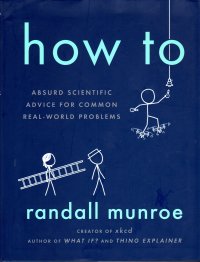
  • A signed copy of How To by cartoonist Randall Munroe. I read his What If? a couple years ago. My oldest son also got a copy of the book.

I also got a couple of magazines (not depicted): Skeptical Inquirer, which I subscribed to once upon a time, and Triathlete (I’m not; I just do triathlons).

The sum total: A bunch. And, if you look closely, you’ll see that my wife did not get any chess books as she forgot to look for them by the time we got to Books-A-Million.

Well, that should give me something to read until the next time I buy some books which is probably next week.

Buy My Books!
Buy John Donnelly's Gold Buy The Courtship of Barbara Holt Buy Coffee House Memories

Book Report: Louder Than Hell: The Definitive Oral History of Heavy Metal by Jon Wiederhorn & Katherine Turman (2013)

Book coverMy beautiful wife gave me this book for Valentine’s Day. I started it in mid-March, using it as my “carry book” when I went to the podiatrist amidst The Pandemic even though this book chonks in at 700+ pages. I mean, I didn’t carry it a lot, and I certainly did not get the chance to sit on a bench in church during the Sunday school hour to read it.

Basically, the book is two music journalists presenting the evolution of some metal through the artist’s own words. It groups bands into genres like original metal, British new wave metal, thrash, nu metal, death metal, and so on, and then lets the band members talk about being in the band and so on. The timelines overlap, so we get a little re-starting.

It’s interesting that I recognize the bands up to the early 1990s, and then I have a gap until maybe 2010 or so except for the bands that started / got recognition in the very late 1990s or the bands that were around throughout. So I’m more familiar with the work of Judas Priest, Van Halen, and Testament and then suddenly Disturbed, but I don’t know much about Korn or Slipknot. Also, I’m light on the European bands.

Basically, the cycle is we started a band when we were teenagers, toured a bit, got a record deal, did a lot of drugs and had a lot of debaucherous sex varied a little. The crossover (punk and metal) bands swapped out acts of violence and fighting for the sex, and the black metal bands swapped out killing each other, killing themselves, and burning Norwegian churches (generally not in that order) in for the sex and fighting. So I found it a bit repetitive in the middle sections (nu metal, death metal, black metal) where I didn’t really know the bands.

But it did improve my sense of my own metal cred. I once saw Biohazard in Milwaukee, the week of my college graduation, in a small hall, and lots of bands (or at least the authors of this book) indicate Biohazard was very inspirational. And Static-X was big influence in the industrial movement, and I got a couple Static-X CDs a couple of years ago at a Lutheran rummage sale. So I am at least as hard core as your regular Lutheran.

I flagged a couple of bits in the book: The first is one of the Black Metal guys saying:

There have been times we felt that the whole scene was heading the wrong way, like ’97, ’98, ’99. The scene was permeated by this goth influence, and black metal was suddenly all about synthesizers and these large, pompous orchestrations and female vocals and harmonies and melody, and everything was so soft and so gothic and so romantic.

Frost, the drummer for Satyricon, is here poo-pooing the rise of symphonic metal, one of the biggest subgenres going today and possibly my favorite, although it’s hard to draw a hard line between metalcore with female melodic vocalists and true symphonic metal.

The second thing I flagged was this unfortunate admission of my cred:

We had this bootleg videotape that we had named “Sex, Death and Mayhem”. It had all this crazy animation, snuff shit, and real death. We decided to splice together an hour of footage for a holiday show, and the footage culminated with the Bud Dwyer suicide. [Dwyer was the former treasured of Pennsylvania who, in 1987, after being accused of accepting a bribe, held a press conference in which he removed a .357 Magnum from an envelope, inserted the loaded revolver in his mouth, and pulled the trigger.]

Ew, you know, I saw that video in 1994 when I was staying with Dr. Comic Book (my friend from college who got a doctorate in rhetoric and now teaches college courses on comic books who, after reconnecting with me on Facebook this century, unfriended me because of our differing political beliefs). We were going to see The Mask and walked over to some the apartment of some of his friends. As Dr. CB also came from a rough neighborhood, his friends are a little sketchy, and they had this death on videocassette, and they watched it over and over again before we went to the movie.

Eesh, I have a lot of cred for a kid who got picked on by metal fans a lot throughout high school.

At any rate, at 746 pages including index, the book is long, but probably not as comprehensive as it would suggest in its subtitle–especially as new subgenres have arisen since then, and several of the interviewees have passed away. Some bands around in the very end of the period this book covers have become very big indeed (Shinedown, Five Finger Death Punch, and so on) aren’t even mentioned in passing.

Worth a glance, I suppose, but probably in small doses, maybe a chapter here and there to keep the almost monomythic narrative fresh. Or if your beautiful spouse gives it to you.

Buy My Books!
Buy John Donnelly's Gold Buy The Courtship of Barbara Holt Buy Coffee House Memories

Book Report: Age of Bronze: A Thousand Ships by Eric Shanower (2018)

Book coverI got this book at LibraryCon in 2019. It’s the first of a series of graphic novels retelling the story of the Trojan War. It takes 200 pages to get to the launching of the 1000 ships–almost; we have not gotten to Iphegenia yet.

The 200 pages tell about the run-up. We get the story of the young Paris, raised as a cowherd away from the palace because of the prophesy that he would bring doom to Troy. We get the story of Odysseus feigning madness because of the prophect that he will wander for twenty years after the war ends. We get Achilles hidden amongst an obscure king’s daughters until Odysseus tricks him into revealing himself as a boy. We get machinations on both side and a pretty good fleshing out of the characters.

The book takes a human-centric approach, consciously as the afterword says, because the author wanted to make it more realistic. The afterword also goes into detail about the sources the author/artist drew upon (buh-DUM-sh) for both the story and the drawings of the period, including the clothing, weapons, palaces, galleys, and so on.

The books is well-illustrated, but not with a look-at-the-comic-art way you get in a lot of comics and graphic novels these days (like this). It tells the stories, not just shows you widely disparate images from the story.

So I will look for the others in the series should we ever have a thing like a con again.

Buy My Books!
Buy John Donnelly's Gold Buy The Courtship of Barbara Holt Buy Coffee House Memories

Good Book Hunting, June 20, 2020: ABC Books

My beautiful wife participated in a virtual bike ride Saturday in part by riding around the annual Republic Pregnancy Resource Center Happy Feet 5k run course to look after participants whilst we ran it. To pick up her t-shirt for the bike ride, she had to go to an event space way up north, which is to say, right by ABC Books.

So we made a family outing of it.

I found a little something that I didn’t order during the lock-in:

I got:

  • Superstar, a novel by Christopher Long, about a singer on top of the world who is not happy. The author has been to ABC Books numerous times, mostly on weeknights. And Ms. E., the proprietrix, bought some marketing t-shirts to give away with each purchase of the book. I declined as my t-shirt drawer is already bulging from athletic event t-shirts, not yet including the shirt from today’s run with my company’s logo on the sleeve.
  • Ain’t No Such Animal by Larry Dablemont. I actually ordered another of his books from ABC Books in March. I was very pleased to learn as I prepared this post that it was not the same book.
  • My Name Is Rock by Jeff Patrick, a thriller in a series about a special agent. The author has a whole stand-up display at ABC Books, so he’s invested in his book. And if I like it, there are others in the series.
  • The Violet Hour by Richard Greenberg, a play about a publisher starting out who has to choose between his lover’s book and his best friend’s book, and something zany and magical happens.
  • Loveroot by Erica Jong. I read her How To Save Your Own Life before I started this blog and wasn’t impressed. I can only hope I like this collection of poems as much as Danielle Steele’s Love.
  • Two monographs: Charles Russell, a western (cowboys and indians) artist, and Georgia O’Keeffe. Both look to be mostly images and some text, the kind of thing I would flip through whilst watching football, although I’m not sure whether there will be football this year or whether I will watch it. Basically, I am coming to enjoy flipping through these on their own with no sporting event at all. And they count as a full book no matter how little text they have.

As she was ringing me out, I asked Ms. E. to drop the hundreds place when she announced the total out loud. And she did.. Well, the total, including a couple books for the boys (not depicted) was just a shade under $100 (the local author books were dull price and the monographs were $10 each). But a bibliophile has to do what he can when the spring book sales were cancelled and the fall ones are in jeopardy.

Buy My Books!
Buy John Donnelly's Gold Buy The Courtship of Barbara Holt Buy Coffee House Memories

Book Report: The Country Roads and Other Poems by Hazel Adelman (1972)

Book coverI am on a streak of sorts: This is the second book of poetry in a row that I’ve read and enjoyed (the other was 100 Love Sonnets by Pablo Neruda).

Mrs. Adelman didn’t win the Nobel Prize for Literature (and she wasn’t a communist, either, which probably helped Neruda with his). Instead, she fits into the World War II generation of grandmother-poets who kept several magazines afloat with their literary reading and writing even though many of them didn’t have much formal education.

The poems in the book are a cut above a lot of the grandmother poetry I’ve read. The book called them ballads, and they are longer, lyrical lines with end rhymes–and some internal rhymes–with a good sense of rhythm that is not regularly iambic. The topics are concerns of mid-20th-century housewives: Family, home, church, and patriotism. Although she writes about church, the poems themselves are not religious- or Christian-themed like you find in some similar works. Well, you would find them there if you read similar works. Sometimes I think I’m the only one reading these books decades later.

This is not a chapbook, by the way. Mrs. Adelman published this through Vantage Press, which was the bigest vanity press “publisher” of the latter half of the 20th century. Basically, you paid them a bundle (thousands of dollars) up front and provided them with a manuscript. They laid it out for you, designed the book cover, and printed a couple hundred or a thousand copies for you to distribute. So when she published her collection, Mrs. Adelman invested in it.

And a nice collection it is.

Buy My Books!
Buy John Donnelly's Gold Buy The Courtship of Barbara Holt Buy Coffee House Memories

Book Report: 100 Love Sonnets by Pablo Neruda / Translated by Stephen Tapscott (1959, 1986)

Book coverAs you might know, gentle reader, I used to sit and read poems to my child and then children while they played. This book, along with Ogden Nash’s I’m A Stranger Here Myself, represent probably the last two I started to read with them before they were resigned to the nightstand book accumulation point. So this, aside from the unfinished legendary collection of Emily Dickinson that I started in 1994, might be the longest I’ll ever go between starting and finishing a book of poetry.

To be honest, in the middle 1990s, a girl I was dating got into Neruda probably because her film class studied Il Postino (the other The Postman). She borrowed a translation from the library, and as I was examining it, I showed off my Spanish-language chops by comparing the original Spanish on the left with the English on the right. One of the first poems I saw if not thefirst translated something along the lines of “no me hace nada con muerte” to “I ain’t got no truck with death.” I laughed out loud and guessed the year of the translation–I was correct: 1974. But the particular flavor of translation clung to Neruda.

Which is unfortunate. This book also presents the Spanish on the left, so I was able to track the translations a bit, and this one was pretty straightforward. I only found a couple of variations, where the syntax of lines was rearranged. It was made easier, no doubt, that these were not actually sonnets in the original Spanish with rhymes and all. Instead, they’re earthy fourteen line love poems written for Matilde Urrutia Cerda. The book includes a picture of a portly, older Neruda kissing the head of an older woman, and you think, Aw, that’s pretty sweet, until you learn that he wrote these poems for a woman who was his side piece for like a decade until she became his third wife, which definitely dulls the luster.

However, I wish I had written these poems for my beautiful wife. They’re earthy, concrete, and they flow pretty seamlessly from metaphor to metaphor but still hold together. The poems are chock full of carnations, wheat, and bread, and they contain some maturity in their tone and conceits. A nice change from most of the poems I generally read, and even from the classical poems I’ve been reviewing with my children.

Although I’m not sure how much I want to delve into Neruda’s other poems as he was a committed communist. These poems only lightly touch on that as he talks about those who oppose him in contrast with the lover, and certainly in contrast with the film which revels in his communism.

Still, worth a read. And, perhaps, in time, a re-read.

Buy My Books!
Buy John Donnelly's Gold Buy The Courtship of Barbara Holt Buy Coffee House Memories

Book Report: Everyday Zen by Charlotte Joko Beck (1989)

Book coverIt took me a long time to go through this book. A couple of years, actually. I had it as my carry book for a while, which meant I’d put it on my dresser (a book accumulation point) and would throw it in my gym bag when going to the martial arts school or carry it along to church to read during the Sunday school hour, after which I throw it into my beautiful wife’s tote bag as I carry it to the car.

At some point, the book disappeared, and I thought I had put it into the tote bag, and it had disappeared into my wife’s sometimes untidy office, and I kind of found something else to read.

Well, I was recently cleaning out my gym bag, and I found that it had fallen to the bottom, beneath eight year old magazines that I’ll read one of these days at the martial arts school. No, scratch that: as our boys are in class with us for the nonce and are rapidly reaching the age of the adult classes, the nights where I’d show up at the school at 4:15 and have two hours until my class started are over, so I won’t be reading much at the dojo at all. So I can probably remove those old magazines unless I’m keeping them in the gym bag for the rare occasions when I go to the YMCA and finish my workout before my family does. But that does not happen often. So the glory days of the carry book are over.

But I digress. This book collects talks that Zen master Joko gave during sesshin weekend retreats like what you find in Shunryu Suzuki’s Zen Mind, Beginner’s Mind.

I’ve mentioned before, I think, that the Buddhist ontology really doesn’t work for me. I’m one of those grazers who reads this sort of thing for the mindfulness and detachment lessons, but this book really does emphasize elements of the ontology that make me recoil a bit. I mean, the passivity in accepting each moment as it unfolds and not wanting anything out of it conflicts with, you know, getting anything done. Whether it’s picking up the house or changing the world, the book and its talks glides around what exactly it is that makes you decide what to do to do it instead of just chilling and enjoying the moment at a near-id level.

I think I’ll stick with stoicism which at least gives a little bit of a spark to get you moving. And the mindfulness training that you find in both.

Buy My Books!
Buy John Donnelly's Gold Buy The Courtship of Barbara Holt Buy Coffee House Memories

Book Report: Random Fantasies by Elton Gahr (2016)

Book coverI read Gahr’s Random Realities last October after having bought these (and one or two others) at LibraryCon last year. I said then:

Well, I liked the book.

It’s a collection of science fiction short stories. Some of them are very short indeed–a couple of pages, which means they’re coming it at under 1000 words. So flash fiction. The plots are imaginative, but the execution is a little unsophisticated at times. The prose lacks any flourish, even the flourish of austerity. But, you know what? Who cares? Did I mention the plots are imaginative? And the stories are not woke parables, which I understand is a problem in some modern sci fi.

Well, basically, you could search and replace science fiction and sci fi with fantasy to describe how I feel about this book, although the stories tend to be longer (the last is novella-length). Still, interesting stories, simply told.

The book rather highlighted some difficulties I’ve had in completing fiction in recent years decades–trying, perhaps, for too much sophistication and perfection instead of just telling a story. Also, perhaps I am too focused on the concept or the gimmick and less on the people in the story. I’ve also got a pile of short stories from the olden days; I wonder if I could mind the peaks of my output and produce a collection of short stories for publication. Although since Charles Hill has passed away, I’m not sure anyone would buy it.

But I digress. I rather like Gahr’s work. Other books I have of his are novel-length, one in fantasy and one in science fiction. I will have to delve into them when I get my stack of in-process books down a bit.

Buy My Books!
Buy John Donnelly's Gold Buy The Courtship of Barbara Holt Buy Coffee House Memories

In A Bit Of Overexuberant Optimism

I have started to read Will and Ariel Durant’s The Story of Civilization series.

When I bought most of them in May of 2019, my wife asked me if I was going to read them. To be honest, my positive response at the time was probably a little optimistic when I gave it, but after scouring the library for Charles Sanders Peirce last month, I managed to squeeze most of the books I’d ordered from ABC Books this spring and things I bought at LibraryCon last year (and the copy of Pragmatism by William James depicted in the post on Charles Sanders Peirce) into the gaps on the bookshelves.

But not, of course, the 30 inch stack of The Story of Civilization. I don’t have any 3″ gaps left on the shelves, much less 30″.

So I decided to start reading them. I mean, I found The Lessons of History to be readable even with their the old Left viewpoint expressed in the 1968 book.

I didn’t have the first volume, Our Oriental Heritage, as the one in the set I saw last spring was marked $129 (the whole story of my incomplete mismatched set is in the above linked post). So I ordered one off of eBay. And I started it.

The first volume is a book about the history of Egypt, China, and India, which the Durants (well, Will in this case, as Ariel becomes official co-author later in the series) assert offer the roots of Western civilization. I’m interested in getting these histories because although I got some history of Egypt from the audio course Origins of Great Ancient Civilizations, more is always better. I haven’t gotten much history of India (that is, the divided kingdoms that became the India of the British Raj and has since split again into separate nations). The Chinese history is pre-revolution, so I am interested to see how it differs from the more recent histories I’ve read.

But to get to that, I have to make it through 100+ pages of Durant laying out what he means by civilization and what makes a civilization civilized. Through it, we get a good table-setting of the old Left viewpoint, where natural rights do not exist and relativism between civilizations where the historian takes a dispassionate, detached view comparing the different customs and morals. Although some values are more better than others, of course. When talking about sexual morals and marriage, communal sex and partner swapping among primitive tribes is better than marriage, which treats women like slaves (as did primitive man, who hunted a bit and rested while the women foraged, kept the homes, and reared the children). So there’s a bit of pining for communal systems that did not lead to anything but sustenance level existence, a view you still find today.

I’m a bit of a homer who thinks Western civilization is the best produced so far (and which might adopt better practices it finds from other cultures, which is a feature of Western civilization). And I don’t think the Durants have written a polemic here, so it should prove readable and enjoyable once we get to the history.

I’m overexuberantly optimistic that I’ll read it all the way through, as it does run some 10,000 pages, but, come on, that’s like nine Stephen King and/or Tom Clancy books (I have that much on my shelves and most of it in the remaining five volumes of The Dark Tower alone). I’ve bought many fine series: Sandburg’s biography of Abraham Lincoln, Winston Churchill’s history of World War II, the complete works of George Bernard Shaw, Thomas Copleston’s A History of Philosophy. But I’ve rarely committed to reading them. I mean, I started Volume I of A History of Philosophy and took copious notes on it, but I was using it as a carry book and bogged down that way.

So I’m trying to read a chapter every day or so just to make incremental progress. Perhaps once the history part takes off, I’ll find it more riveting and captivating to read. However, it’s definitely a stretch goal to finish reading the this year or next (see also how I bogged down reading the complete works of Shakespeare: I got five comedies in 2018, and it’s languished beside my reading chair since).

So stay tuned to see how my reading goes. Assuming I make any progress, of course; if I don’t, I won’t speak of it again.

Buy My Books!
Buy John Donnelly's Gold Buy The Courtship of Barbara Holt Buy Coffee House Memories

Book Report: Naturally Nappy by Bonnie Lynn Tolson (1992)

Book coverThis book is dated 1992, and although it’s got a flat spine, it has a chapbook vibe to it, so I kind of think of Bonnie Lynn Tolson as a contemporary as those were my fruitful poetic years. The back cover says that she has written and performed many years, though, and I only got started in like 1993 with my performance days. The back cover also says she has a real job, too, and in 1992, I’m a ways off for anything like that. So she’s a little older than I am, and, well….

Most of the poems are built on lines of two or three words in a stream that flows down a full page. I can hear the poets like this reading-slash-performing poems of this type. A couple of words, a pondrous pause, a couple more words. With lines of just a couple words, you really can’t build up any performance rhythm or read images,

so we
just get
words of
blackness worth
something because
the poet
is black.

I mean, yeah. Most of the poetry is about being in the inner city, but it doesn’t take you there because it’s two words on a line, and maybe thirty to forty words in the poem, and that will not have much impact.

It’s not a race thing, it’s a poetry thing. I’ve seen a lot of poets who were young, who were old, who were in college, who might have been in college once, writing and performing this way and writing this way. But it’s not poetry. It’s the 20th century curse where expressing yourself trumps execution, where the canvas is more important than what it depicts.

I did flag a couple poems, “The Portrait of My Friend” and “Dancer”, which were a cut above the rest. I also flagged one called “Cha Cha” about what would then have been called a transvestite but now would be called transgender. I flagged the last because kids these days would not have believed anyone cared for the marginalized before they were born, and to point out that perhaps they’ve “won”? Time will tell.

At any rate, it doesn’t look as though Tolson went on to write much more. Also, although I thought I might have ordered this from ABC Books during the recent unpleasantness, it turns ought I bought this in that distant past of last November.

Buy My Books!
Buy John Donnelly's Gold Buy The Courtship of Barbara Holt Buy Coffee House Memories

Book Report: Paul Cézanne by Carl Belz (1975)

Book coverI just read the book on Marc Chagall and didn’t care much for it. Cézanne is a generation earlier than Chagall, a contemporary and exhibitor with the Impressionists, and he differs from the Impressionists and especially the later Impressionists in his depth of representation–which means he doesn’t quite treat the canvas as a flat thing to look at instead of to look through.

Still, later he gets into some strange perspectives, and the text indicates that he is a forerunner of Cubism, so he has that going against him.

Like the Chagall book, this one has black and white images along with 20 slides that are five years younger than the Chagall slides, but they have also faded to red. I have to wonder why these slides are so much more faded compared to other slides I have inherited or bought at church garage sales.

At any rate, I like Cézanne better than 20th century painters, but I’m not sure I’m going to find anything of his to put on a wall in place of a Renoir print.

I noted two things in the book:

By 1870 Cézanne had been painting for nearly a decade, though without any kind of critical or public recognition. Still, he persisted, dividing his time between Paris and his family’s home in Aix

I guess that’s not quite Nevertheless, she persisted but you can see that basic formulation was out there decades ago.

Also, I could have written this:

On the other hand, Cézanne’s decision to separate himself from impressionism had an intuitive rightness about it. He once said that he “wanted to make of impressionism something solid and durable like the art of museums.” His remark was directed at an aspect of the style that began to appear toward the end of the 1870s, when impressionism increasingly became a style of dissolution. That is, it tended more and more to lose the illusion of three-dimensional space and of plastic, three-dimensional figures. The “losses,” however, were not intentional; they resulted from a natural process whereby the painters who invented impressionism conscientiously pursued the basic implications of their own method. As they sought to capture the effects of light falling on objects, their brushstrokes became increasingly divided and their palettes became increasingly varied. The surfaces of the things on which natural light settled assumed the greatest importance. But as the assault on surface and light continued, the impressionists’ pictures tended more and more to dissolve into a haze of flickering color incidents. Deep space and solid figures were forced out of the paintings, which became decidedly flatter than they had been at the outset of the movement. In addition, the gestural surfaces of the paintings compelled an awareness of the artists’ tools, particularly his brush and pigments, which gradually accrued interest in and of themselves instead of serving an illusionist purpose. In part, this development is the paradox of impressionism: conceived as a modern version of an Old Master premise–namely, that paintings are windows through which we see fictive images of the visible world–it eventually repudiated the Old Masters by proposing that paintings are discrete objects whose surfaces are to be looked at rather than through.

Which is pretty much the thesis that I’ve kind of developed to describe the breakdown of visual art and even literature/poetry in the 20th century, and I’ve also often suspected that the Impressionist movement proved to be the point where it all went wrong. So I guess it’s been noticed before I mentioned it.

Although the author of the book is the sort of person who writes books about artists, so he’s cool with the new things.

Buy My Books!
Buy John Donnelly's Gold Buy The Courtship of Barbara Holt Buy Coffee House Memories

Book Report: Tron: The Storybook by Lawrence Weinberg (1982)

Book coverClearly, I am not above reading children’s books to pad my annual total (I did just complete the Little House books, for crying out loud), so why not one of those movie-novelizations-for-children that were popular in the 1980s. I say popular based on the limited knowledge that the Star Wars Storybook was disseminated far and wide (I gave the copy from my childhood or from my beautiful wife’s childhood to our children and still see it at sales from time to time in the wild) and that this book exists for the movie Tron. Perhaps they’re the only two movie storybooks ever, and I just happened to chance upon them.

At any rate, it’s been a while since I’ve seen Tron–I must have rented it around the turn of the century. I know back then, I got into the habit of making sound schemes for my Windows computer, and I set a Tron theme that made it say, “Greetings, program!” whenever I launched an application and the Master Control Program saying “End of line” whenever I shut the computer down. I also had a sound theme for the original Battlestar Galactica, but that’s not relevant since I’m not talking about its storybook.

If you don’t know the story, it’s about a company called ENCOM that’s into artificial intelligence (although they didn’t call it that then). The head of the corporation is partnered with the Master Control Program, which is hacking into and taking over other systems. A renegade programmer, fired for his independent thought, now runs an arcade and is trying to hack into the system to find the goods on the corporation. A still-employed programmer, suspicious of the company, has created an independent security auditing program that he wants to run. So they break in to the offices, and the renegade programmer, Flynn, gets scanned into the system and learns about its whole anthropomorphized ecosystem under the control of the Master Control Program and his heavy Sark.

To be honest, even if you do know the story, that’s it.

The technology is steeped in mainframe metaphor, with all of the computer terminals connected to a big computer somewhere, so it’s a little different than what we experienced with the personal computer revolution. Although I suppose if you replace ‘mainframe’ with ‘cloud’ it’s not that dissimilar any more.

At any rate, the storybook rather indicates the prosaic vs. special-effect driven coolness in the movie in that the setup for the movie, before Flynn is scanned into the computer, is a full third of the book. Then the middle third is a bit of introduction to the computer world, but by the midway point of the book, the pages give over to pictures with brief descriptions of the action.

So it’s probably a better reminder of what you saw in the movie than a separate accounting.

But it reminded me that I haven’t seen this in a long time and that my boys (and, admittedly, my wife) have never seen it, so I have since ordered it. Amazon then proffered me several other science fiction movies of the time period, such as The Last Starfighter and others that I already own, thank you very much. I was almost ashamed to have Amazon suggest those films. More ashamed than I am at reading a kid’s storybook anyway.

Buy My Books!
Buy John Donnelly's Gold Buy The Courtship of Barbara Holt Buy Coffee House Memories

Book Report: Marc Chagall by Alfred Werner (1969)

Book coverI bought this book last spring at the Friends of the Springfield-Greene County Library book sale back when we had such things.

I didn’t review it during football games last year because I ended up traveling a lot and not watching that much football, and this book is a little text heavy for browsing as the book has some black-and-white images, but this book comes with a set of slides instead of the colored images.

After fifty-one years, the slides have all washed out into tones of red, so one cannot really appreciate the artist as the critics should you should appreciate him, which is to say for his use of color.

Because, let’s face it: In technique, he’s a twentieth-century man. The text says he’s the product of Gauguin and Matisse, so you know what I think about it. Middle school stuff. Look at this picture. Superficial no matter how much the critics will tell me that there is metaphor in it and that it’s an evolution or improvement over realism that came before it.

I have another volume like this for Cezanne which I’ll look over in the next couple of days or weeks. I might not like that, either. So it’s more a matter of reading it for completeness, so I can say why I don’t like a particular artist and be definitive about it.

Plus it’s an easy +1 to the annual reading list.

Buy My Books!
Buy John Donnelly's Gold Buy The Courtship of Barbara Holt Buy Coffee House Memories