 Alan Dean Foster might well be the greatest living science fiction writer. There, I said it. At the very least, I have enjoyed his work ever since I got a book in the Spellsinger series in middle school.
Since then, I’ve read and reported on:
It looks like it’s been nine years since I read one of his paperbacks, which is odd since I have several of his books in the to-read shelves, but if you’ve seen the to-read shelves, you’d understand why I have a wealth of things from which to choose. Given that I posted about Some Paperbacks of Note, the in middle school link above, in 2016, that means it’s been four years since I last completely dusted and shuffled the to-read shelves lineup. I should probably do that again. Likely I would shake out other Foster paperbacks to read next year.
At any rate, I have reached the point in Wuthering Heights where I want to read something else after a couple of chapters of that Literature, so this was just the thing.
In it, a low-level thief kills a jewelry store owner who won’t pay protection to the local crime boss and then kills the crime boss’s killers who come for him because he’s… different. So he works his way up the levels, and that is numbered levels, of being an illegal, and when some of the political powerbrokers on Terra take an interest in him, he pulls a trick to become legal businessman, again starting at a low level number and working his way up. He makes an alliance, essentially becoming a spy for an alien race but seems to play both humanity and the aliens off of each other until a grander scheme comes to fruition–allying the humans and these aliens against a menace from the galactic core.
The first half of the book focuses on the main character himself and deals with how he goes about what he’s doing; the second shifts to a psychologist of the alien race who suspects the main character has some sort of plot going against his race and tries to thwart him–all the while playing into his hands. The book ends with a short resolution where these antagonists talk it over and discover that the main character does all his plotting, including his latest, a mocked-up alien armada that looks as though it is about to invade the combined spaces of the humans and their new allies–he does all this just because he does not want anything to have control over him. Also, the improved commercial environment makes the humans, their new friends, and the man himself richer.
So ultimately, it’s a little thin, but it’s a roaring read. I thought the ultimate twist would be that it was some sort of video game, what with the marking levels playing so much of a part early. That was not the case, though. But a fun read, interesting characters–the main character is an amoral, pragmatic man much like say Raymond Reddington in the television series The Blacklist or similar anti-heroes that abound here in the 21st century. It seems a bit ahead of its time, but I am sure one could find other examples of it in other works preceding this one.
 Well, I have completed the first three books in the series, which I bought
  I said when I reviewed
 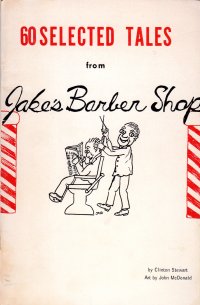 This book is of unknown provenance; it has no title page or copyright page, and the Internet has never heard of it. I’m guessing that it was written in the early to middle 1970s because it refers to Spiro Agnew and Richard Nixon. It has the feel of small town paper’s humor column (or maybe something from the Springfield papers at the time, but it’s before the Internet), and a later entry does start out “This week” which lends credence to the belief.
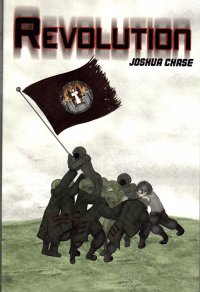 This is the second of Joshua
 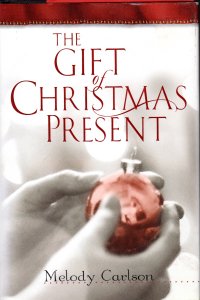 I have a confession to make: Despite the fact that I have bought several years’ worth of Christmas novels at book sales past, when Christmas time closes in, I can’t find the Christmas books I already own (and this year, I am certain they are not by the
 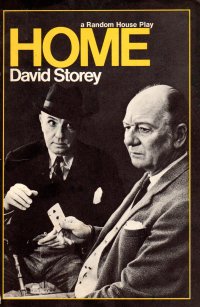 I hit my bookshelves looking for a Christmas novel to put me into the mood for the holidays, and I did not find one. Instead, I found this play by a playwright whose name I didn’t recognize. Of course, whilst I was reading it, I spoke of it with my beautiful wife, and we got to naming modernish–that is, twentieth century, playwrights. She could only name, sort of, Alan Ayckbourn, “The Norman Conquests” guy, and Neil Simon. I could name a couple more, being a reader of twentieth century drama, but not this fellow, so I thought he must have been pretty obscure. Although “pretty obscure” does not generally get a Random House hardback and Book Club Edition.
 Well, gentle reader, I have found these books which I ‘lost’ on my to-read shelves after I bought them
  This book is a small collection of newspaper column-length text accompanied by one of the artists’ drawings of people and places near Alley Spring in northern Shannon County, Missouri. Self-published in 1980, this book includes interviews with local figures who were born around the turn of the century and remember traversing the county in wagons, in cooling their perishables in springs, and who used or restore old mills and steam equipment.
 I have described “carry” books from time-to-time, gentle reader. These books I throw into my gym bag to read at the martial arts school whilst my boys are taking classes before my class or to carry to church to read during the Sunday School hour. Well, this year has eliminated the latter, and time itself has eliminated the former. When my boys were younger, they took early afternoon young children’s classes, and the adult class was at 7:00, so I would spend sometimes three hours at the dojo before my class. Then, they were in older kids’ classes, which meant I would still spend an hour or so with time to read. But with the new abnormal, once the dojo opened back up, the older kids and adults had classes together, so we have all had class at the same time. And if the school ends up with enough kids again to split the kids from the adults, my boys will both be old enough to take adult classes. So the days of the carry book, or at least the one that goes into the gym bag, are over. And this is one of the last that I will finish, although it spent some time (years) on the
  This is a collection of poetry, or rather a group of cantos about America. Spoiler alert: About the only good thing about America is jazz music. Everything else is pretty much killing the Indians, slavery, and oppression. Well, not exactly that bad but mostly so.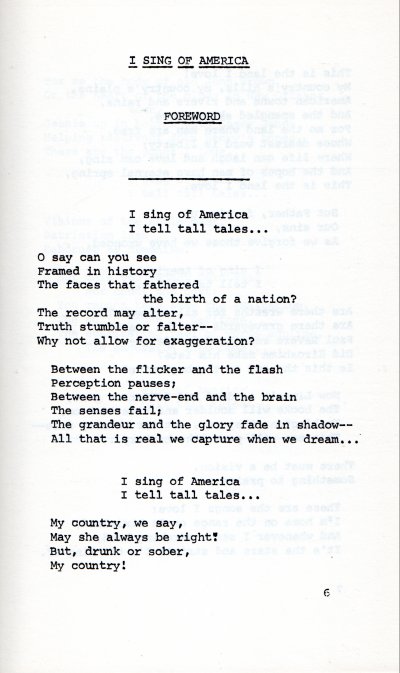
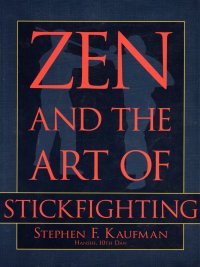 I bought this book at ABC Books
  As you might recall, gentle reader, I ordered this book from ABC Books
 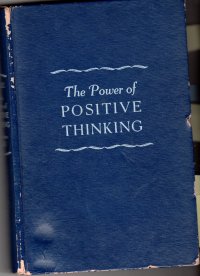 This book might well represent the longest time between reads on my shelves. I read it in late middle school or early high school when I got this copy, perhaps from the flea market up the hill from the trailer park or perhaps from my grandmother. Or maybe I am confusing it with How To Win Friends And Influence People by Dale Carnegie which I got about the same time in paperback. Given that I
 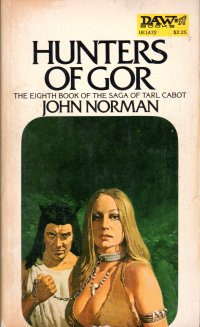 As
As  I was looking for something to read, so I picked up this Tarzan book that has been floating around the outer ranks on the to-read shelves in my office for a while now. I mean after all, I just read a couple of Tarzan books, didn’t I? Well, no–I read
  I read Gahr’s short story collections
 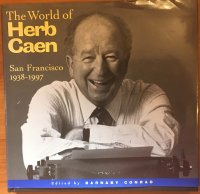 Apparently, I have blown through the monographs, travel books, and chapbooks I have recently acquired, so I had to delve into the back recesses of my to-read shelves to come up with this book which I bought in
 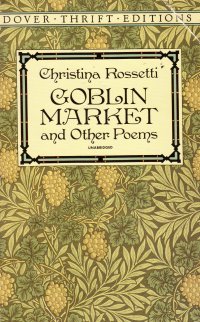 I was supposed to read “Goblin Market” in college, perhaps in my poetry class. I had a literature poetry class, but not a poetry writing workshop because the latter was held at the same time as the advanced fiction writing workshop class my last semester, and I was going to be a fiction writer. Too bad they didn’t have an obscure blog writing workshop class; I could have really put that to use.
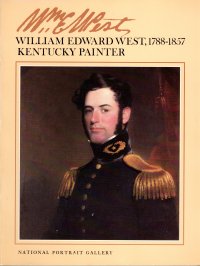 This book is a little text-heavy for reading during football games, but I started out browsing it last Sunday and finished it late last week in the reading chair.