Book Report: Bait and Switch by Barbara Ehrenreich (2005)

Book coverYou probably don’t know, gentle reader, that I read Ehrenreich’s Nickel and Dimed: On (Not) Getting By In America around 2003 (my beautiful wife read it and sort of fisked it in two parts, Nickels and Dimes, about the same time). It’s before I was doing book reports on this blog, so you’ll have to take my word for it. The premise of that book is that Ehrenreich beams herself into communities and works for minimum or low wage jobs there and tries to lead a life on low wages.

In this book, she decides she’s going to do the same with white collar jobs in Corporate America, so she mocks up a resume and hopes to catch onto a series of middle management sorts of jobs not so much to see if she can survive on $60,000-80,000 a year, but to take the pulse of the middle class who must be also terribly frightened of losing their livelihoods. That’s the plan, anyway.

However, she finds it hard to get a job with her faked-up resume as an independent PR consultant looking for a full time job in corporate America at an advanced salary. So the book instead turns into an indictment of career coaches, job fairs, the Christers (of course), and networking events in general. She tries many different avenues of meeting people who would hire someone like her, but she doesn’t get job offers until she starts hitting the bottom feeders of commission-only sales jobs and pushing Mary Kay.

Basically, she spends 230+ pages LARPing G.J. Meyer of Executive Blues: Down and Out in Corporate America, but without the actual experience of being a corporate professional at all. Apparently, she has read that book, as she includes it in the footnotes a couple of times.

The book doesn’t provide any insight into anything much about anything except Barbara’s inauthentic attempts to be middle class and out of work. I mean, she chooses a profession (PR) that easily sheds experienced workers and hires English and communication majors right out of college. I mean, they’re down to Content Writers now with a going rate of blog posts for $20 each.

She does mention in her conclusion that someone in her fake career would have had a Rolodex full of contacts to reach out to after, you know, actually getting the fake experience she had on her resume. So perhaps, at the end, she recognizes the flaw in her premise. But she wrote the book anyway.

And I read it anyway.

Nickel and Dimed didn’t really match the experience I had with being poor or working entry level jobs. This book certainly doesn’t match being middle class and white collar or being white class and between jobs (as an actual consultant, I’ve been between jobs from time to time). I wonder if she’s not writing these books for people who have experienced these things, but rather for an audience of older Manhattanite women who wonder what it might be like and who might believe it’s anything like an Ehrenreich book.

But, on the plus side, I am at 80% completion of the books I bought at Calvin’s Books in May (and reading all five from that trip is one of my goals for the year).

And, as a means of comparison, this book did not make me as angry as Into the Wild. I didn’t swear at it nearly as much, although I might have flipped it off a time or two and might have said dumb bint a couple of times. I didn’t even hate it as much as Nickel and Dimed, but that might be because I’m mellowing. But Ehrenreich remains a curse word in the Noggle home in a way that Krakauer or whatever that kid’s name was will never be.

Buy My Books!
Buy John Donnelly's Gold Buy The Courtship of Barbara Holt Buy Coffee House Memories

That Looks Familiar

Patrice Lewis is getting ready to move, and she has a picture of most of her library boxed and ready to travel.

As you might recall, gentle reader (because I bring it up over and over), when we moved from Old Trees to Nogglestead, we filled a 16′ PODS container with books and bookshelves.

And that was ten years’ worth of good book hunting ago.

My new financial planning goal is to get rich enough to be able to afford movers should we leave Nogglestead. So please be sure to buy one of the books listed to the right. Although, due to the wonders of print on demand, each book you buy is not one fewer I need to move.

Buy My Books!
Buy John Donnelly's Gold Buy The Courtship of Barbara Holt Buy Coffee House Memories

Brian J. Lacks A du Toitian Education

Kim du Toit has posted a list of things he encouraged his children to read while homeschooling them.

A list of books? That’s a quiz!

So how do I do compared to a du Toit?

Once again, I will bold the things I’ve read and underline the things I own but have not yet read.

  • 1984 George Orwell
  • Animal Farm George Orwell
  • Of Civil Government John Locke
  • On Liberty John Stuart Mill
  • Our Enemy, The State Albert Jay Nock
  • The Prince Niccolo Machiavelli
  • Basic Economics Charles Sowell
  • The Wealth of Nations Adam Smith
  • From Dawn To Decadence Jacques Barzun
  • Heroes Paul Johnson
  • A History Of The American People Paul Johnson
  • A History Of The Jews Paul Johnson
  • The Iliad Homer
  • The Odyssey Homer
  • The Proud Tower Barbara Tuchman
  • United States Declaration of Independence
  • The Articles of Confederation
  • United States Constitution
  • The Federalist Papers
  • Carnage And Culture Victor Davis Hanson
  • The First World War Martin Gilbert (or John Keegan)
  • A History Of Warfare John Keegan
  • The Second World War John Keegan
  • A War Like No Other Victor Davis Hanson
  • The Bible (The NIV, so one of the short ones)
  • The Book of Journeyman Albert Jay Nock
  • Confessions St. Augustine
  • Essays Moral and Political David Hume
  • Intellectuals Paul Johnson
  • Meditations Marcus Aurelius
  • Memoirs of a Superfluous Man Albert Jay Nock
  • The Republic Plato
  • Summa Theologica St. Thomas Aquinas
  • Coriolanus William Shakespeare
  • Hamlet William Shakespeare
  • Julius Caesar William Shakespeare
  • King Lear William Shakespeare
  • Macbeth William Shakespeare
  • A Midsummer Night’s Dream William Shakespeare
  • Othello William Shakespeare
  • Richard III William Shakespeare
  • Romeo & Juliet William Shakespeare
  • Billy Liar Keith Waterhouse
  • Faust Goethe
  • The Importance of Being Earnest Oscar Wilde
  • Lysistrata Aristophanes
  • ‘Tis A Pity She’s A Whore John Ford
  • Waiting For Godot Samuel Becket
  • “The Eagle”, “Charge Of The Light Brigade” Alfred, Lord Tennyson
  • “Dover Beach” Matthew Arnold
  • “The Soldier” Rupert Brook
  • “The Rime Of The Ancient Mariner” Samuel Taylor Coleridge
  • “The Good Morrow” and “A Valediction: Forbidding Mourning” John Donne (I’m not sure if the first is in the Selected Poems I read in 2011, and I can’t find it quickly to see.)
  • “Ode To A Nightingale” John Keats (If not now, then by the time I finish the complete works I’ve been working on for a year or so).
  • “The Gods Of The Copybook Headings” Rudyard Kipling (I haven’t alluded to it in a whole week!)
  • “To Althea, From Prison” Richard Lovelace
  • The Sonnets by William Shakespeare
  • “Ozymandias” Percy Bysshe Shelley
  • “Leaves of Grass” Walt Whitman
  • “Tintern Abbey”, “The Solitary Reaper” William Wordsworth
  • Adventures of Huckleberry Finn Mark Twain
  • Alice In Wonderland — Lewis Carroll
  • The Grapes of Wrath John Steinbeck
  • The American Henry James
  • Anna Karenina Leo Tolstoy
  • As I Lay Dying William Faulkner
  • Fahrenheit 451 Ray Bradbury
  • A Handful of Dust Evelyn Waugh
  • The Chronicles of Narnia C.S. Lewis
  • The Count Of Monte Cristo Alexandre Dumas
  • Don Quixote Cervantes
  • A Farewell To Arms Ernest Hemingway
  • Emma Jane Austen
  • To Kill a Mockingbird Harper Lee
  • The Invisible Man H.G. Wells
  • Zorba the Greek Nikos Kazantzakis
  • Gulliver’s Travels Jonathan Swift
  • The Mayor Of Casterbridge Thomas Hardy
  • The Sound and the Fury William Faulkner
  • Fathers and Sons Ivan Turgenev
  • Stranger in a Strange Land Robert A. Heinlein
  • Les Misérables Victor Hugo
  • Carry On, Jeeves P. G. Wodehouse
  • Lord Of The Flies William Golding
  • Crime and Punishment Feodor Dostoyevsky
  • Madame Bovary Gustave Flaubert
  • The Harry Potter Stories by J.K Rowling
  • Women In Love D.H. Lawrence
  • The Complete Sherlock Holmes by Arthur Conan Doyle (probably not all of them, but I did read The Return of Sherlock Holmes this year.)
  • Catch-22 Joseph Heller
  • The Portrait Of A Lady Henry James
  • The Wind In The Willows Kenneth Grahame
  • Rebecca Daphne du Maurier
  • Robinson Crusoe Daniel Defoe
  • Sons And Lovers D.H. Lawrence
  • Uhuru Robert Ruark
  • The Birds“, “Don’t Look Now” Daphne du Maurier
  • “The Snows of Kilimanjaro”, “The Killers” Ernest Hemingway (likely, but I’m not 100% sure.)
  • The Pit And The Pendulum” Edgar Allan Poe
  • “Bartleby the Scrivener” Herman Melville
  • “An Occurrence at Owl Creek Bridge” Ambrose Bierce
  • The Jungle Books Rudyard Kipling
  • “A Good Man Is Hard to Find”, “Good Country People” Flannery O’Connor (although perhaps they’re in a collection I bought in 2008 and deserve an underline.)
  • “Boule de Suif”, “The Necklace” Guy de Maupassant (although I also have a collection of his gathering dust which might mean the first need underlining.)
  • “The Secret Life Of Walter Mitty”, “The Unicorn in the Garden” James Thurber<
  • The Gift Of The Magi“, “The Cop And The Anthem” O. Henry
  • “Where I’m Calling From”, “Little Things” Raymond Carver
  • “Sredni Vashtar”, “The East Wing” Saki
  • “Mountain Victory”, “A Rose For Emily” William Faulkner
  • Ars Amatoria Ovid
  • Delta Of Venus Anaïs Nin
  • Lady Chatterley’s Lover D.H. Lawrence
  • Memoirs Of A Woman Of Pleasure (or Fanny Hill) John Cleland
  • The School of Whoredom Pietro Aretino

How did I do?

Not good enough.

Especially since I have not made much progress in thirteen years on improving my score on the list of Kim du Toit’s favorite short stories.

Buy My Books!
Buy John Donnelly's Gold Buy The Courtship of Barbara Holt Buy Coffee House Memories

Good Book Hunting, Saturday, July 13, 2019: ABC Books

Well, ABC Books had a book signing on Saturday, so of course I went to pick up a copy of a local author’s work. Well, two local authors’ work. And a couple other things.

The two fellows signing books were Jordan Bennett and Michael Jay, both fresh out of school and presenting their post-apocalyptic fantasy novel The Book of Heroes (the first volume of a continuing series called The Books of Magic).

I also got:

  • The next Little House book, The Long Winter.
  • A chapbook called Gettysburg Visions by Sam Weaver.
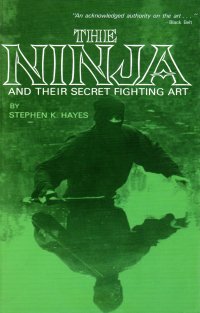
  • The Ninja and Their Secret Fighting Art by Stephen K. Hayes.

I noticed that the Martial Arts section had a couple new titles (well, not for long) and that the Football section next to it had a couple more Green Bay Packers titles.

It’s almost like the proprietrix or the more technologically minded manager have figured me out.

Buy My Books!
Buy John Donnelly's Gold Buy The Courtship of Barbara Holt Buy Coffee House Memories

Book Report: Funny Ladies by Stephen M. Silverman (1999)

Book coverWhen I picked up this book at Hooked on Books last year, I might have though the book was authored by Sarah Silverman, who is a comedienne and might have collected stories of those who came before her (even though in the Good Book Hunting post, I got the author’s full name). I say I might have then, because when I’ve seen it on the bookshelves between then and now, I’ve had the same thought. But it’s by a dude who’s been a reporter and a celebrity book writer for a while by 1999.

At any rate, the book collects short bios about a number of comediennes (I wrote it again because I’m pleased I know how to spell it) from the various 20th century media (including theatre, which is not media per se, and I put those in italics because the italic store had a discount). It runs roughly in chronological order, with women from vaudeville and burlesque through women on The View (Which is 23 years old now? Crazy!).

You’ve got Fanny Brice (and Barbra Streisand, who gets into the book by virtue of playing Fanny Brice). You’ve got Gracie Allen, which reminds me I have more George Burns to read, and I should. You’ve got Mae West, Lucille Ball, Dorothy Parker, Sophie Tucker, Tallulah Bankhead, Carol Burnett, Totie Fields, and so on. When we get to the modern era, we’ve got Roseanne Barr, Tracey Ullman, Ellen, Rosie O’Donnell, Rita Rudner, Margaret Cho, Whoopi Goldberg, and so on. Apparently, Joy Behar was considered a comedienne (I really hope I’ve spelled it right because I made a point of saying I did) at some point.

On the one hand, like Whatever Became Of…?, it makes me realize how many movies from the early part of the century I missed.

The book talks about all the things that the comediennes did in the early part of the century, movies and theatres and television series, but the latest in the book have much thinner resumes. I mean, Whoopi Goldberg has Ghost, The Color Purple, Star Trek: The Next Generation, Sister Act, and Eddie (knowing this last might make me a Whoopi super fan). I like Rita Rudner, but aside from a book and some cable stand-up shows, what does she have? Not to mention Margaret Cho–she had a short-lived television series, I recall.

But after the 1970s, the funny ladies are all a little more, erm, political–as is this book. We get to the 1970s, and suddenly there are jabs at Nixon (“Richard Nixon appointer her [Pearl Bailey] the country’s unofficial Ambassador of Love, one of the few nonpartisan things he ever did.”) and digs at conservatives. And, of course, even beyond 1999, we’ve seen how political comedy has become.

Of course, twenty years after this book, we see what has become of the then-young modern funny ladies (which is easier to spell than comedienne). Mostly talk shows and not a lot of movie credits. It’s a different career now than it was then, I suppose, and the media have changed. These women can maybe get by with an occasional book and movie where the women of the 1940s had lower salaries and had to hustle more, which leads to lengthier IMDB entries.

At any rate, it’s a pleasant book. I wish I would remember more of it than I will; perhaps if I get into actually watching these women, I’ll remember them better.

Buy My Books!
Buy John Donnelly's Gold Buy The Courtship of Barbara Holt Buy Coffee House Memories

Book Report: The Coloring Book by Colin Quinn (2015)

Book coverWell, it has happened: I have finally been reduced to reading an actual Coloring Book to pad my annual reading statistics. Oh, how the might he? have fallen.

You might know Colin Quinn as the guy who was the anchor of Saturday Night Live‘s Weekend Update for five years, but I didn’t watch it then. I know him as the guy from A Night at the Roxbury and the announcer from MTV’s Remote Control.

The subtitle of this book is A Comedian Solves Race Relations in America. Which it does not, really. The book is part a musing on race relations, but mostly a memoir of Colin Quinn growing up in multi-ethnic Brooklyn in the 1970s. “Growing up” might be a misnomer; some of it deals with his pre-adulthood, but a lot of it deals with his early adulthood when he was an ass and drank a lot and did a lot of drugs.

But it does make some interesting points. I do think that race relations were better in the old days, where we had just had normal human friction amongst groups and individuals, not the dialed-up Meaningful animosity. I didn’t grow up in Brooklyn, but I was living in the projects in the era he describes, and I was enmeshed within a vibrant community of different races, backgrounds, and cultures, and we could laugh at each other’s caricatures. Maybe it’s that I was younger then and am different now, but I don’t think so. I think the environment has changed a lot. I mean, I close the shades when watching Blazing Saddles and Airplane! now, and I would have been comfortable watching it with black friends then.

But the book itself is broken into different chapters talking a little about different races blending in Brooklyn at the time, how Quinn related to them, and the drugs and alcohol he consumed. You’ve got lengthy chapters on black, Puerto Rican, Jews, Irish, and Asian immigrants, and then you’ve got some clearly tacked-on short chapters at the end about Europeans and Arabs. But the book bifurcates between the musings on race and the memoir, and it really doesn’t do justice to either theme.

This was actually the second of the books I read from Calvin’s Books this year; I read it before Into the Wild, but I wasn’t sure if I had anything serious to say about Race in America to go along with it. However, I guess not. So the book reports are out of order. Not that you were keeping track. But I am.

Buy My Books!
Buy John Donnelly's Gold Buy The Courtship of Barbara Holt Buy Coffee House Memories

Book Report: Into the Wild by Jon Krakauer (1996)

Book coverI bought this book at Calvin’s Books at the beginning of the summer, and I have set as a goal to read all five of those books this year. I know, it’s one of my twee goals, but it might represent the only time in the last couple of years that I have read all the books I bought at once within the year I bought them.

At any rate, I rage-read this book. It angered me quite a bit. The author says:

When McCandless turned up dead in Alaska and the perplexing circumstances of his demise were reported in the news media, many people concluded that the boy must have been mentally disturbed. The article about McCandless in Outside generated a large volume of mail and not a few of the letters heaped opprobium on McCandless–and on me, as well, the author of the story, for glorifying what some thought was a foolish, pointless death.

Which is exactly how I feel (and I even know how to pronounce opprobrium these days). This is a hagiography of a well-to-do young man from a messed-up family who gave up his comfortable lifestyle after college to wander the country as a vagabond and who had too much confidence in his own abilities, which led to a poor decision to live off the land in Alaska that proved fatal. The author presents this kid as a pilgrim, as an ascetic, and as perhaps as an example to emulate–without the fatal consequences, of course.

I have to wonder who made this book a National Bestseller–as the cover touts. I have to expect that it was done by people who had that sort of wanderlust and sense of invincibility who did something like it and survived (like the author) or people who wanted to do something like it and think they would have done better (likely not). I don’t know. I was four years younger than the subject of the book, so the book is set and is published around my formative years, too. Perhaps there’s something in the 1990s zeitgeist that supports the sort of behavior that no longer exists–or perhaps the young men who would have done something like this, the cross-country car trip with no money or the desire to live off the land (but not in quite as hospitable environment as Alaska) now are in the basement playing video games or covering their faces and taking to the street to start a riot.

The author expands upon his original article (I assume, since these sections seem to be grafted onto the narrative) by adding stories of other people who have wandered out into the wilderness in Alaska and a fellow who wandered into the desert in the 1930s. The author also includes a story about one of his individual expeditions that ended in failure but not in death. He visits the abandoned bus that served as the subject’s base camp and where he died. And he appends an artificial coda of helicoptering the parents in to visit the bus as well.

At any rate, yeah, the subject is not an exemplar of anything positive. He was a poor (rich), misguided young man. I didn’t relate to him much–we both had newspaper columns in the college rag (which means the names Biden and Trump both appear in this book from 23 years ago). He read The Death of Ivan Ilyich. I don’t like to speak negatively of the dead or speak to a hurtful event in a family, but this book is a misguided opposite of that.

I think the book might have triggered a bit of latent classism in me, as I couldn’t think of many in my cohort doing anything like this, and I consider mountain climbing as a rich kid’s game. But I was urban poor and then rural poor in the Midwest. Maybe rural and urban poor in the mountains do free climbing for fun, but they certainly cannot afford a lot of gear and to travel for their hobby.

I must have mellowed; although this book is a paperback, I didn’t throw it at any point. Although I did curse at it a bit. It took me over a week to go through 200 pages. But I’m glad to be done with it.

And as to my twee goal: I still have a Barbara Ehrenreich book to go through. In hardback. So that might block my goal of reading these five books this year.

Buy My Books!
Buy John Donnelly's Gold Buy The Courtship of Barbara Holt Buy Coffee House Memories

Books For The Ages And Brian J.

A photographer for the Washington Post has a listicle up called Books for the Ages which includes a book (or a series, or more) for each year of life.

It’s a silly list, but it’s an excuse for me to compare what I’ve read against the list.

Books I’ve read I’ve put in bold; books I have to read are in orange. I’ve included links for the books I’ve read and reported on on this very blog.

Here they are:

  • The Very Hungry Caterpillar by Eric Carle
  • Llama Llama Red Pajama by Anna Dewdney
  • Where the Wild Things Are by Maurice Sendak
  • Charlie Parker Played Be Bop by Chris Raschka
  • The Giving Tree by Shel Silverstein
  • Ramona the Pest by Beverly Cleary
  • The Complete Calvin and Hobbes by Bill Watterson
  • Harry Potter and the Sorcerer’s Stone by J.K. Rowling
  • Tales of a Fourth Grade Nothing by Judy Blume
  • Smile by Raina Telgemeier
  • Ghost by Jason Reynolds
  • Roll of Thunder, Hear My Cry by Mildred D. Taylor
  • I Am Malala by Malala Yousafzai
  • The Perks of Being a Wallflower by Stephen Chbosky
  • The Hate U Give by Angie Thomas
  • Jane Eyre by Charlotte Brontë
  • Once Upon a River by Bonnie Jo Campbell
  • A Gate at the Stairs by Lorrie Moore
  • The Handmaid’s Tale by Margaret Atwood
  • The Brief Wondrous Life of Oscar Wao by Junot Díaz
  • The Sun Also Rises by Ernest Hemingway
  • Democracy in America by Alexis de Tocqueville
  • The Autobiography of Malcolm X by Malcolm X and Alex Haley
  • Atlas Shrugged by Ayn Rand
  • I Capture the Castle by Dodie Smith
  • Americanah by Chimamanda Ngozi Adichie
  • The 7 Habits of Highly Effective People by Stephen R. Covey
  • Sister Outsider by Audre Lorde
  • In Defense of Food by Michael Pollan
  • The Joy of Sex by Alex Comfort
  • Mastering the Art of French Cooking by Julia Child, Louisette Bertholle and Simone Beck
  • The Grapes of Wrath by John Steinbeck
  • Becoming a Man: Half a Life Story by Paul Monette
  • Beloved by Toni Morrison
  • How to Talk So Kids Will Listen & Listen So Kids Will Talk by Adele Faber and Elaine Mazlish
  • Life Among the Savages by Shirley Jackson
  • The Joy Luck Club by Amy Tan
  • The Sportswriter by Richard Ford
  • What Alice Forgot by Liane Moriarty
  • The Diving Bell and the Butterfly by Jean-Dominique Bauby
  • Rabbit, Run by John Updike
  • The Woman Upstairs by Claire Messud
  • Their Eyes Were Watching God by Zora Neale Hurston
  • The Goldfinch by Donna Tartt
  • Where’d You Go, Bernadette by Maria Semple
  • Salvage the Bones by Jesmyn Ward
  • Stretching by Bob Anderson
  • Bossypants by Tina Fey
  • Walden by Henry David Thoreau
  • Fifty Shades of Grey by E.L. James
  • Who Do You Think You Are? by Alice Munro
  • Men Without Women by Haruki Murakami
  • A Man Called Ove by Fredrik Backman
  • The Denial of Death by Ernest Becker
  • Olive Kitteridge by Elizabeth Strout
  • When Things Fall Apart by Pema Chödrön
  • Remains of the Day by Kazuo Ishiguro
  • The Plague of Doves by Louise Erdrich
  • Dynamic Aging by Katy Bowman
  • The Five Years Before You Retire by Emily Guy Birken
  • Fear of Dying by Erica Jong
  • Major Pettigrew’s Last Stand by Helen Simonson
  • Our Souls at Night by Kent Haruf
  • Old in Art School by Nell Painter
  • 65 Things to Do When You Retire edited by Mark Evan Chimsky
  • The Outlander series by Diana Gabaldon
  • Don Quixote by Miguel de Cervantes
  • The Year of Magical Thinking by Joan Didion
  • I Remember Nothing by Nora Ephron
  • Master Class: Living Longer, Stronger, and Happier by Peter Spiers
  • Midnight’s Children by Salman Rushdie
  • Love in the Time of Cholera by Gabriel García Márquez
  • The Years of Lyndon Johnson four volumes, by Robert Caro
  • Paris in the Present Tense by Mark Helprin
  • The History of Love by Nicole Krauss
  • Women Rowing North by Mary Pipher
  • Gilead by Marilynne Robinson
  • Charlotte’s Web by E.B. White
  • The Coming of Age by Simone de Beauvoir
  • Coming Into Eighty: Poems by May Sarton
  • Devotions by Mary Oliver
  • The Summer of a Dormouse by John Mortimer
  • All the thrillers and mysteries
  • The Last Unknowns: Deep, Elegant, Profound Unanswered Questions About the Universe, the Mind, the Future of Civilization, and the Meaning of Life edited by John Brockman
  • Ravelstein by Saul Bellow
  • Old Filth by Jane Gardam
  • King Lear by William Shakespeare
  • Nearing Ninety: And Other Comedies of Late Life by Judith Viorst
  • A Carnival of Losses: Notes Nearing 90 by Donald Hall
  • Beachcombing for a Shipwrecked God by Joe Coomer
  • Selected Poems: 1988-2013 by Seamus Heaney
  • Nothing to be Frightened Of by Julian Barnes
  • Sapiens by Yuval Harari
  • This Chair Rocks: A Manifesto Against Ageism by Ashton Applewhite
  • The Neapolitan novels by Elena Ferrante
  • Somewhere Towards the End by Diana Athill
  • My Own Two Feet by Beverly Cleary
  • Life Is So Good by George Dawson and Richard Glaubman
  • Little Boy by Lawrence Ferlinghetti
  • Sailor and Fiddler: Reflections of a 100-Year-Old Author by Herman Wouk

Of the books that I don’t have colored in the list above, I don’t expect that I’ll even consider reading. I mean, most of the YA fiction listed above that I haven’t read is message-oriented, as are many of the other novels. I might read Gilead but that’s only because I gave a copy to my beautiful wife and her mother for Christmas a couple years ago, so there’s bound to be one or more floating around by the end of my retirement.

Fun fact: Rabbit, Run and Stretching are both at the chairside book accumulation point. I’ve tried to read Rabbit, Run, but I’ve found it odious. And I got Stretching on the indirect advice of my editor. For years, I’ve meant to take up stretching, but I haven’t yet.

At any rate, make of it what you will, the intersection of my reading habits with that of a photographer.

(Link via Althouse.)

Buy My Books!
Buy John Donnelly's Gold Buy The Courtship of Barbara Holt Buy Coffee House Memories

Book Report: By the Shores of Silver Lake by Laura Ingalls Wilder (1939, 1981?)

Book coverWhen I read the preceding Little House book, On the Banks of Plum Creek in March, I predicted I’d read the next volume (this one) by summer. I missed that prediction by a couple of days.

You know, as the series progresses, the narrator (“Laura Ingalls,” a lightly fictionalized version of the author) becomes more sophisticated. In this book, she’s on the edge of thirteen. At the onset, the family is still in the house on Plum Creek. The mother (Caroline), Mary, and Carrie suffer from scarlet fever (which has made Mary blind). Relatives from Wisconsin pass through; one of the uncles has a job for the railroad running a grading team at the edge of the railroad construction. The uncle offers Charles a job running the company store with a salary and everything, and Charles takes it. So he goes on to join the railroad workers in North Dakota, and the ladies are to join them when they recover fully.

They get to ride on a train, and Laura has been tasked with describing the scenery to Mary as they pass. They meet with the workers’ camp as it’s being dismantled to move to the shores of Silver Lake, and Laura reconnects with her cousin Lena. The family moves to and they arrive at the shore of Silver Lake before the railroad camp arrives to meet them.

The book explores the environs around Silver Lake. Charles hopes to stake a claim to a homestead, and they find a spot. When the construction workers finish for the year, the camp disbands in the autumn, but the Ingalls get to stay on in a finely constructed and comported home used by the surveyors. When spring comes, a rush of homesteaders appear, and it’s only by the intercession of a previous acquaintance that allows Ingalls to beat some competitors to the claim office to ensure he gets the patch he wants. Then he stakes a claim and builds a building in the suddenly developing town of De Smet, which is constructed seemingly overnight.

As I mentioned, the book’s narrator is more sophisticated; we see some indications, as we did in On the Banks of Plum Creek, that Charles Ingalls is a bit of a dreamer, willing to give up what he has with a chance at something better (which does not always work as planned). Caroline is not so much a “Yes, Charles,” believing unalloyed that everything he does is the best possible decision–there’s a little resignation and acceptance demonstrated. And the stories are moving from the rural/wilderness to the urban landscape. With the next books, they’ll be living outside of town (kind of like in the television show), and I expect that the stories will be more centered on small town life and farming. So they’ll come to align with the stories from John D. Fitzgerald (The Great Brain series) perhaps.

At any rate, I’m still enjoying the series, and they’re quick enough reads when I am trying to pad my annual stats so I don’t have to resort to coloring books (given that this is the 56th book I’ve read this year, I think I’m in good shape). I don’t have the next volumes in my library, so I guess I’ll suspend reading them until such time as I find them on the old childrens’ books shelves (technically, not my to-read shelves) where I collected books I thought my boys might like to read–but they didn’t. In their defense, I got most of them from my aunt when I got Captain’s Courageous, and I didn’t read them either. So maybe I should count them as to-read shelves since it took me almost two years to read Captain’s Courageous, and I’m apparently not above reading children’s books now.

Buy My Books!
Buy John Donnelly's Gold Buy The Courtship of Barbara Holt Buy Coffee House Memories

Book Report: Out of Season by Michael Z. Lewin (1984)

Book coverThis book is the bread and butter of 1970s and 1980s midlist genre fiction. It’s toward the sixth book of an eight book series where the seventh and eighth books come at a gap of seven and thirteen years when the first six were within a span of thirteen years. The series character, Albert Samson, is a throwback of a private invesigator who is a bit of a cipher, a guy running around talking to people and taking notes and figuring things out. It might even have been a throwback in the 1980s, actually, since the likes of Robert Crais and Robert B. Parker were writing more vivid, personality-driven detective thrillers.

At any rate, Al Samson is hired by a rich banking family after the wife discovers, in the course of applying for a passport, that her birth certificate is a fake. They want him to look into it and find out why. Meanwhile, a man in a fancy apartment offers to retain him full time indefinitely in a nebulous assignment. During his investigation, he discovers that the woman was raised by an adopted family, and that the birth mother came into some money, and then that the birth mother was a Depression-era singer with a child out of wedlock who then married a society boy and shot him one night. She was acquited in the trial and then disappeared, so the detective has to find out where she is, if she’s still alive.

So the book features the tangled plot of a well-to-do family and layers of deception in the past. Like I said, a throwback. The kind of thing I thought I’d write.

Not a bad read; short, at the 180 page mark of the old timey genre fiction. I wouldn’t mind reading more of the series in time, but to be honest, I probably won’t remember the author’s name to look for more in the line. When my beautiful wife asked me late last week what I was reading, I couldn’t remember the author’s name or book title; all I could remember is that it’s an old school Indianapolis PI.

Buy My Books!
Buy John Donnelly's Gold Buy The Courtship of Barbara Holt Buy Coffee House Memories

Book Report: Selected Poems from Midnight Galleries by Jennifer Silvey (2016)

Book coverI picked this book up for free at ABC Books last Saturday, and I’ve been trying to get back into the habit of reading a little poetry every morning, a habit that had fallen by the wayside with the onset of summer and less structured mornings here at Nogglestead. So I picked this book up instead of jumping right back into the Keats.

It has a dinosaur on the cover, and a number of the poems have fantastic collections of words centering on dinosaurs. To be honest, many of the poems are rather collections of images and words, and I didn’t get a real sense of what they were about. But a couple of the samples were more cohesive, especially when they didn’t involve dinosaurs.

It looks like the author funded the full book with a Kickstarter campaign that raised $1775. Clearly I’m not doing something right here; I self-funded Coffee House Memories and am not yet in the black on it (and probably never will be).

At any rate, Kickstarter campaign materials seem to indicate that poetry is not her main form of creative expression and that she’s just having fun with it perhaps rather than trying to write Serious Literature. Which makes me feel a little better.

Buy My Books!
Buy John Donnelly's Gold Buy The Courtship of Barbara Holt Buy Coffee House Memories

Book Report: Retraining Your Mind by D. Dyneska (2019?)

Book coverI bought this book just last Saturday, and after I read Ice Wolf, I needed something to read, and I certainly couldn’t read another Executioner novel as the default right after an Executioner novel (there are rules, arbitrary as they are). So I picked this one up since it was on the top of one of the stacks.

When I was talking with the author, she asked if I read a lot of books in this line. I said I read more Buddhist thought than self-help books, and she said this wasn’t really self-help. I don’t mean to demean the genre when I call it that–I don’t tend to think of self-help as exclusively concerned with battling addictions or abusive relationships or whatnot. I think it also includes the sort of thing my wife likes to read about building good habits, making your bed in the mornings, and thinking right. Books concerned with the practical things. Which, to be honest, is what I read Buddhist thought, Stoics, philosophy, and literature for–to figure out how to live the best possible life. So maybe I do read books like this a lot. Amongst the innumerable men’s adventure books.

At any rate, the book has the feel of a journal more than a denser, dare I say it, self-help book. It contains a number of inspirational quotes and chapters on defeating excuses, getting to know yourself, allowing positive distractions, setting priorities, and whatnot. It’s a short book, weighing in at 130-some pages including some lined pages for your own notes and featuring generous margins. So it’s not a heavy read.

As I mentioned, the book reads more like a journal–it’s written matter-of-factly, and mostly in the second person (you can do this, you can do this) and with few examples or stories from her own life and mind retraining. She alludes to recovering from a devestating house fire, but it’s only mentioned in passing; this would have been a pretty gripping example of keeping a positive mindset.

This book certainly is from Springfield, though: When discussing things that can make you smile, such as jamming to music, painting, taking a walk, taking a bubble bath and massaging your own feet, she lists shooting guns. You won’t get that out of an author writing this kind of book in Connecticut or California, werd.

Buy My Books!
Buy John Donnelly's Gold Buy The Courtship of Barbara Holt Buy Coffee House Memories

Book Report: Ice Wolf the Executioner #131 (1989)

Book coverI picked this up right after Creature; the Executioner series is the default for “I’ve just finished a book and need to pick up another, but I don’t want to spend much time picking it.” And it will be for some time to come as I still have 30 on the shelf (not counting the spin-off series like Stony Man or Able Team).

In this book, Bolan is on a security team for a summit between the President and Mikhail Gorbachev in Washington when Leo Turrin tips him to a hit team that is eliminating people in the witness protection program. Bolan prevents this team of trained pros from killing one target and reaches out in his own particular way to a local mob boss who hired the hit team–who reached out to him with the offer. Bolan eventually discovers that the hit team is killing the witnesses as a red herring to distract law enforcement from their real target: the President and Gorbachev. Like so many other fictional antagonists from the 1980s (and, sadly, to this day), they’re Nazis who emerged from a deeply hidden program to take over the world again.

The book weighs in at about 250 pages, a little longer than the pulp entries from early in the series, and they have the makings of an interesting modern (well, 80s) thriller. The big bad Nazi, trained to be a killing machine by his father, might be jeopardizing his mission by hunting for a woman who escaped from his clutches that he must possess; the aforementioned red herring subplot; and infiltration of the security teams by the long-planning Nazis. But ultimately, it’s a couple of set pieces and then the author gets to about page 220 and has to wrap it up with sudden revelations (the woman is his twin sister!) and a climax that is abrupt and we’re done.

So I’m comparing this book to Creature, and I have to say that I’ll remember the plot of Creature better than Ice Wolf in the days to come. I suppose that series books lend themselves to a little bit of this confusion–what plot happened with which title (especially since series titles tend to fit a pattern to increase salability rather than describe elements of the plot). However, I’m sure authors of these series are happy to accept this trade off with profitablity on our behalves.

Which is why I need these posts–so I can keep the plots of books and my thoughts of them clear as the years pass. Although, to be honest, I rarely go back to Executioner titles to see what I had to say about them.

Buy My Books!
Buy John Donnelly's Gold Buy The Courtship of Barbara Holt Buy Coffee House Memories

Good Book Hunting, June 15, 2019: ABC Books

ABC Books had an author in to sign her book yesterday, so I headed up after a martial arts class. As is my wont, I acknowledged the author, headed to the martial arts section, then the artist monographs, then the philosophy and poetry shelves, all of which are getting more and more sparse as I pick them over. Only then do I go to the author’s table to see what the author has to offer.

Here’s what I got:

You cannot see them, but they include:

  • Selected Poems from Midnight Galleries by Jennifer Silvey, a free giveaway promoting a collection of poems.
  • Zen and the Art of Stickfighting by Stephen F. Kaufman. We’ve been working with sticks at my martial arts school for six or eight months now; certainly this book will be more useful to me than Zen and the Art of Knitting.
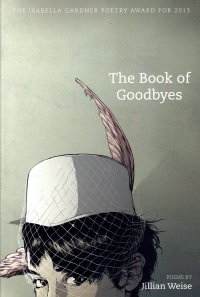
  • The Book of Goodbyes, a collection of poems by Jillian Weise.
  • The Meaning of Human Existence by Edward O. Wilson.
  • Retraining Your Mind by D. Dyneska, the author who was in shop. It’s a little more practically minded, so to speak, than the Buddhist and Stoic thought that I read to try to get my mind right. It’s more in line with what my beautiful wife reads. Perhaps I should have had it inscribed to her and gave it to her for her birthday.

Not depicted: A monograph on Antoine Watteau and a five hundred page biography of Vince Lombardi. I had to save something for the next time there’s an author signing.

The proprietrix also related a story: The author who appeared on May 19 was a little saddened to learn that I attend the same church as the owner of ABC Books; she thought it meant I would not like her work. The owner of ABC Books reassured her that I read a lot of different things, that I’m well educated, and that I’m a poet myself, which seemed to make the author feel better.

Of course, the owner does know that I not only buy a vast variety of books, many from her, but she also catches me from time to time sitting on a bench at church with a book in my hands. I’ve explained to her the code–if I’m holding the book so its cover is visible, it probably has an ABC Books sticker on the back. If I have the book in my lap, it’s from some other book store. Or, more likely, a garage sale or a book sale.

But enough about that–I have to get back to reading.

Buy My Books!
Buy John Donnelly's Gold Buy The Courtship of Barbara Holt Buy Coffee House Memories

Book Report: Creature by John Saul (1989)

Book coverAfter reading Cabal, I thought maybe I’d knock out a couple of the 80s-era horror books I have around. I have a couple from John Saul, so I picked up this one. Who knew that it might actually be the next in alphabetical order?

At any rate, the plot is that a nuclear family moves to a small company town in the Rockies when the father gets a promotion at the tech company he works for. They find the town idyllic, but it’s controlled almost top-down by the tech company. The local football team has boys that are bigger and meaner than other nearby schools, and it’s because the local “sports” clinic, funded by the tech company, is conducting experimental treatments on the boys. It makes them bigger and stronger, but sometimes makes them feral. Of course, the gentle son of our nuclear family decides abruptly that he wants to become stronger and so he falls under the influence of the doctor running the clinic. When some of the mothers of the affected children start wondering if their children are in danger, the tech company and the fathers align to protect the program and the company.

So it’s got a children in danger theme to it that seems fairly common to the genre, and it has helpless wives who lack the power to get their children out of danger. It reminded me a lot of The Stepford Wives in that regard. It got under my skin a bit–I cannot imagine any of my mother’s sisters or my mother dealing with the issues as the mothers in this book do. And they all lack a support network outside the town, so nobody calls a sister or friend for a sanity check. Stephen King’s books often featured isolated locations, but it doesn’t seem forced. Here, it is.

The book ends very quickly with a burst of violence; it was sudden that I thought right before it that it was leading up to a cliffhanger or a sequel. But no, a little bloodshed and not a complete set of revenge which might have left room for a sequel.

I did flag a bunch of things in this book:

  • Some anachronisms. Or the opposite of anachronisms: things that would seem to belong to a future era, more like the present, than 1989.

    They’d gone first to the software section, where a group of top programmers, all of them casually dressed, were working at computer terminals or whispering quickly to each other in strange programming language that Blake had never been able to comprehend. “We have an Artificial Intelligence unit working here,” Jerry said in reply to Blake’s inquisitive glance. “We’re far ahead of the guys in Palo Alto and Berkeley, but of course they don’t know it. In fact, as far as they know, we’re only working on a new operating system to compete with Microsoft.

    Aside from the locations or writing an operating system, that could be cut from a novel from today.

  • The family moves to a house on Telluride Drive. One story behind the name of Telluride, Colorado, is that it’s from To Hell you ride. Or at least that’s what Michelle Malkin told me.
     
  • Observe this barbarity, the worst in the book:

    “In a few minutes, honey,” she told the little girl. “How’d you like to take care of the steaks for me?”

    Kelly’s eyes glittered with pleasure, and she instantly picked up the large fork from the counter by the grill and stabbed experimentally at one of the thick T-bones that were just barely beginning to brown. “Is it time to turn them?”

    “Every four minutes,” Sharon replied, glancing at the meat and deciding she had at least fifteen minutes in which to talk with her son.

    Oh, the humanity!

  • Recovering from a beating at the hands of a nearly feral football player, the undersized lad says:

    Mark winced with almost every motion, but when he finally made it, he forced himself to grin at the nurse. “See? Nothing to it. I could run a ten-K if I had to.”

    It’s presented 10K these days, and it’s about an hour of running at a six-mile-per-hour pace. Which is easier for kids.

  • It must have seemed quite cutting edge at the time:

    “May I help you, Mrs. Tanner?”

    Sharon frowned, then glanced instinctively at the girl’s lapel, searching for the identification badge that all TarrenTech employees wore.

    The girl wore none.

    The girl’s smile broadened as she realized Sharon’s dilemma. “I’m Sandy Davis,” she said. “And you don’t know me. The security system did a photo comparison on you, so I knew who you were even before you came into the building.”

    But now we just assume it, ainna?

  • Marty Ames opened the bottom drawer of his desk and pulled out the .38-caliber pistol he’d started keeping there when he first realized that some of the boys might become dangerous.

    You know, I would have gone with a larger caliber.

  • Speaking of isolated:

    For the first time that morning she was able to think about the funeral without crying. She didn’t know whether it had been like other funerals, because she’d never been to one before. There hadn’t been very many people there, and it hadn’t taken very long, and as she sat in the front pew of the little church, listening to a man she’d never seen before talking about her family–and she knew he’d never even met her family, so how could he talk about them?–she tried to convince herself that it really was her father and mother and brother in the three coffins lined up in front of the altar.

    Notice there’s no other family members nor a church support network. Artificial isolation that really sticks out.

So ultimately, the book really didn’t work for me. I’m not a great fan of the genre, and this book hasn’t made me want to read another any time soon.

In thinking about this book and John Saul’s sort-of ubiquity–you could see his books available back in the day, and they were prevalent at book sales a couple years ago–made me wonder how the collapse of book clubs altered book buying. Book club editions were a staple of the book sales for a long time. I think we might have seen that bubble burst as members of my parents’ generation have downsized their libraries. What am I talking about? Even I don’t know.

Buy My Books!
Buy John Donnelly's Gold Buy The Courtship of Barbara Holt Buy Coffee House Memories

Book Report: Sanibel Shell Shocked by Art Stevens (1992)

Book coverSpeaking of beach vacations, I dived right into this book after buying it last week in Branson. I felt a little like I was betraying Branson by reading about another vacation destination while vacationing in Missouri. But that didn’t stop me from reading the book.

It collects newspaper columns by Art Stevens who was (is?) a part-time resident of Sanibel Island, splitting time with New Jersey, where he made enough in six months to afford a spot on the island. Although this book dates from 1992, Stevens’ column continues to this day.

It takes on topics such as tourists, alligators, and development on the island. It’s Florida stuff, the kind of thing you find in Barry or Hiassen (and treated more seriously in John D. MacDonald books). As I started the book, perhaps I expected too much of the author; perhaps he suffered in comparison to Barry, who is about the only humor columnist that has made me laugh out loud.

However, some of the columns amused me. So the humor is akin to Mike Royko when he was doing his outlandish pieces.

So worth the read if you’re into Sanibelernalia.

Buy My Books!
Buy John Donnelly's Gold Buy The Courtship of Barbara Holt Buy Coffee House Memories

Book Report: Cabal by Clive Barker (1985, 1988)

Book coverClive Barker was all that in the late 1980s. He had a couple of movies out, including Hellraiser and, um, what’s that other one?

Well, this book collects a novella and several short stories. The novella, “Cabal”, talks about the Nightbreed. Ah, there it is!

At any rate, this book has on the outside edge of my to-read shelves since I cleaned up my library (::cough, cough:: three years ago). I read Barker’s Books of Blood (I, but that was before they needed Roman numerals) in 1994, and I’ve picked up a couple of his books here and there because every once and again, I think I’ll read some horror and maybe write some (which tends to come out more like H.P. Lovecraft than Stephen King or one of the modern Urban Fantasy people).

At any rate, this book contains:

  • “Cabal”, in which a mentally unhealthy individual is convinced he’s committed horrible murders, so he tries to go to a remote Canadian town where monsters are welcomed. Once there, he finds that he is not the monster he thought he was, but there are monsters in this world–human and otherwise.
  • “The Life of Death”, wherein a lonely woman becomes enamored with the thought of the dead and becomes a killer inadvertently and meets Death, although not in the way she expected.
  • “How Spoilers Bleed”, wherein some adventurers acquire land rights in the jungle and try to displace a native tribe only to fall under a curse.
  • “Twilight at the Towers”, wherein an espionage agent discovers he’s not just human, and that he has more in common with others of his kind than his handlers.
  • “The Last Illusion”, wherein an investigator with experience (not pleasant) with the occult is called to help protect the body of a magician from dark forces.

I mean, they’re okay stories, a bit gory as expected and with a touch of S&M (graphic at times) that spawned more than one Goth in the 1990s.

So perhaps I’ll read a couple more of these 1980s horror books that I’ve accummulated over the years. Back then, horror books (as with so many other books) were thinner, running 200 or 250 pages (this volume is 338, but broken over multiple stories, it seemed shorter), and horror books must have been fairly popular in book clubs, as you can see bunches of them available at book sales. For a little while, yet. I have to wonder if they’ll all disappear soon as the baby boomers finish downsizing and if another burst of availability will occur when the readers of Generation X start downsizing.

Buy My Books!
Buy John Donnelly's Gold Buy The Courtship of Barbara Holt Buy Coffee House Memories

Book Report: Who Built That by Michelle Malkin (2015)

Book coverI don’t know where or when I bought this book; it cannot have been too long ago as it’s a book of recent vintage and it was not buried in my to-read shelves. I picked it up to read because I might be going to an event where Malkin is speaking this autumn, and I wanted to be able to say I read one of her books.

At any rate, this book is not a political polemic as one might expect from a political commentator. Although the book piggybacks off of an Obama quote (“You didn’t build that.”), the book focuses on a number of what Malkin calls “tinkerpreneurs”: inventors whose innovations changed our lives, sometimes in ways that seemed small but had big impact. She looks at Carrier and Lyle (air conditioning), the Roebling family (steel cables and suspension bridges), Libbey and Owen (glass), and others. The book looks at how many of them had humble origins (and by humble, I mean nineteenth century origins, which meant they went to work, often in manufacturing, and then improved upon the things they did every day through mehanical automation). No eight year degrees in inventing for them.

So it was an inspiring book. One of my stretch goals for my life is to get a patent for something. Unfortunately, I’ve ended up working in computers, where patents and innovation are squirrelly instead of actually working for a living. So it’s made me want to tinker (where other books make me want to write more).

I just need to clear some space in my garage to get going.

Buy My Books!
Buy John Donnelly's Gold Buy The Courtship of Barbara Holt Buy Coffee House Memories

Good Book Hunting, May 29, 2019: Calvin’s Book’s, Branson, Missouri

This week we spent a couple of days at Big Cedar Lodge down in Ridgedale, Missouri. Of course, I hid that fact from you, gentle reader, by queuing up a week’s worth of posts so you wouldn’t know to come ransack the fabled libraries of Nogglestead in my absence. Clearly, you cannot trust me at all.

But since we were near Branson, of course we had to stop at Calvin’s Books.

As we had packed our SUV to the brim with cooking gear, food, and clothing, I exercised some discipline in my purchases.

I got:

  • Sanibel Shell Shocked by Art Stevens, a collection of humor newspaper columns from the 1980s and very early 1990s. While in Branson, my beautiful wife started talking about booking our vacation next year. A beach vacation. She’s hoping for Sanibel Island. So this book was the first that I saw, and I picked it up.
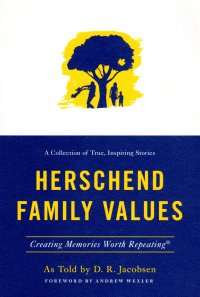
  • Herschend Family Values, a polemic about the Herschend family, who bought the Marvel Cave attraction, built Silver Dollar City around it, and turned it into a vast business empire.
  • Into the Wild by Jon Krakauer about a guy who sells everything, hitches to Alaska, and walks into the woods only to be found dead shortly thereafter.
  • Bait and Switch by Barbara Ehrenreich. In hardback. Which might prove damaging.
  • The Coloring Book by Colin Quinn. A musing on race relations from that guy from the MTV game show Remote Control (no, the other guy) and the actor in A Night At The Roxbury.

Unfortunately, Calvin’s didn’t offer a good selection for my children, who failed to pack any books for the trip (also, toothbrushes, it was revealed on the last night there).

Since I only bought five books, I could conceivably read them all by the end of the year.

Ha! Just kidding.

Buy My Books!
Buy John Donnelly's Gold Buy The Courtship of Barbara Holt Buy Coffee House Memories

Book Report: Life Lessons From Your Cat by Anthony Rubino, Jr. (2007)

Book coverI rescued this book from a box of outgoing books that my beautiful wife was winnowing from her collection (from time to time, she gets rid of books, a concept that is very foreign to me). I grabbed it because it looks like something I would browse during a football game.

However, I browsed it after reading How To Read A Poem as sort of a palate cleanser.

This compact book was probably designed to be a humorous little gift for the cat lover you know (the one you always give cat-themed things because that’s her gift schtick). Undoubtedly, my wife got this for similar reasons.

But the book really isn’t that amusing. It’s one or two sentences or sentiment per page from your cat’s point of view, but nothing really insightful and not much that’s really clever. So I was disappointed with it, but I’m happy to not have browsed it during a football game as I’d like my forthcoming disappointment with the 2019-2020 Packers to be unalloyed.

Now I’ll put it on my read shelves, from whence my children will poach it, love it, and likely destroy it as they have Bad Cat.

Buy My Books!
Buy John Donnelly's Gold Buy The Courtship of Barbara Holt Buy Coffee House Memories