ABC Books had another book signing this weekend, so of course we went. Jovanna Schlossenberg, a children’s book author from Kansas City, was signing copies of her first book JoJo Knows RVs, and she was glad to tell me and my oldest son all about it. So I bought two copies: One for my boys and one for my niece’s son who is more within the target age.
I also picked up a couple books. Which is funny: I come up there specifically for the book signings, but I pick up a couple other books before I come back to the table with the author. To cover my true purpose. Also, because I like books.
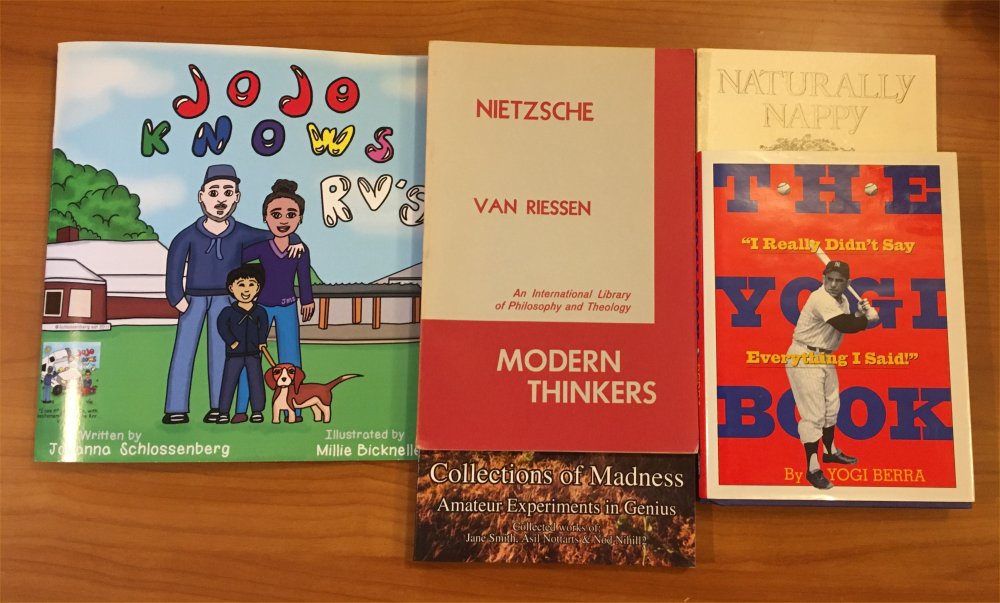
I got a couple volumes of poetry (Naturally Nappy by Bonnie Lynn Tolson and Collections of Madness by Jane Smith, Asil Nottarts, and Nod Nihin2). I got The Yogi Book by Yogi Berra because I was offended by a St. Louis Post-Distpatch story saying Max Scherzer replaced Berra as the best baseball player from St. Louis. I haven’t read a Yogi Berra book in two years. I also got a small survey book on Nietzsche from the Modern Thinkers series by Van Riessen.
I will probably read the poetry first but might bull through the Nietzsche book since it’s pretty small and not likely to be as dense as actual, you know, Nietzsche.
I also suffered from an awkward, and perhaps even rude, moment. Ms. Schlossenberg was very friendly, effusive, and she shook my hand first thing when I stopped by her table. I shook reflexively, but I remembered that I was coming fresh from a boxing-centric martial arts class, and my hands smelled like the inside of boxing gloves. I.E., nasty. So after she signed both books that I was buying, she extended her hand again, and I said that I didn’t want to shake her hand again. I tried to explain I’d just been boxing, but I’m a middle-aged (at least) man, so that might not have been very clear. So I’m afraid she might think I didn’t want to shake her hand because she was black or something.
Crazy, I know. But it’s the little kind of I didn’t mean it that way that will linger in my conscience in a slightly obsessive way.
 After reviewing my annual reading list (so far) and lamenting how many picture books and poetry books I’ve read, I sat down with a Mack Bolan men’s adventure novel to get some narrative fiction on the list. Which is not saying that I reached high into the qualitysphere.
 This book is my 100th of the year, and it’s not even November. Of course, I look back at what I’ve “read” this year, and it is a lot of artist monographs and poetry collections, so perhaps I should not be so proud.
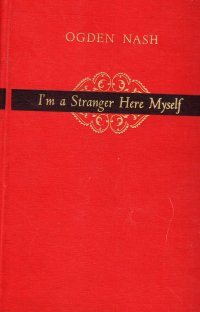 Aside from the (then) complete works of Emily Dickinson that I started to read in 1994, this might have been the book that took me the longest to read from beginning to end. I started this book probably nine years ago, back when I read other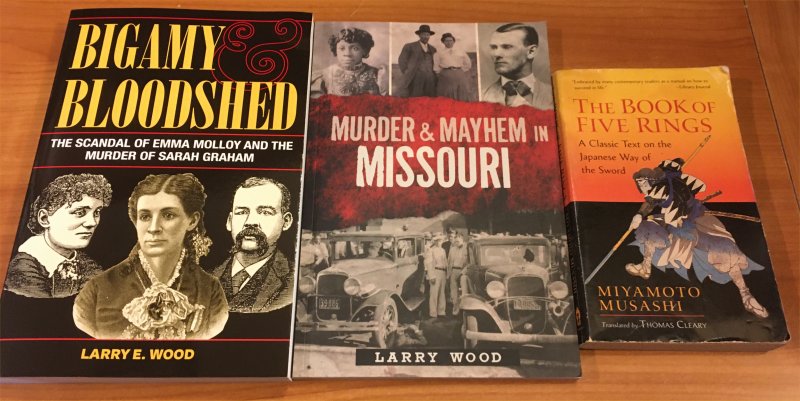
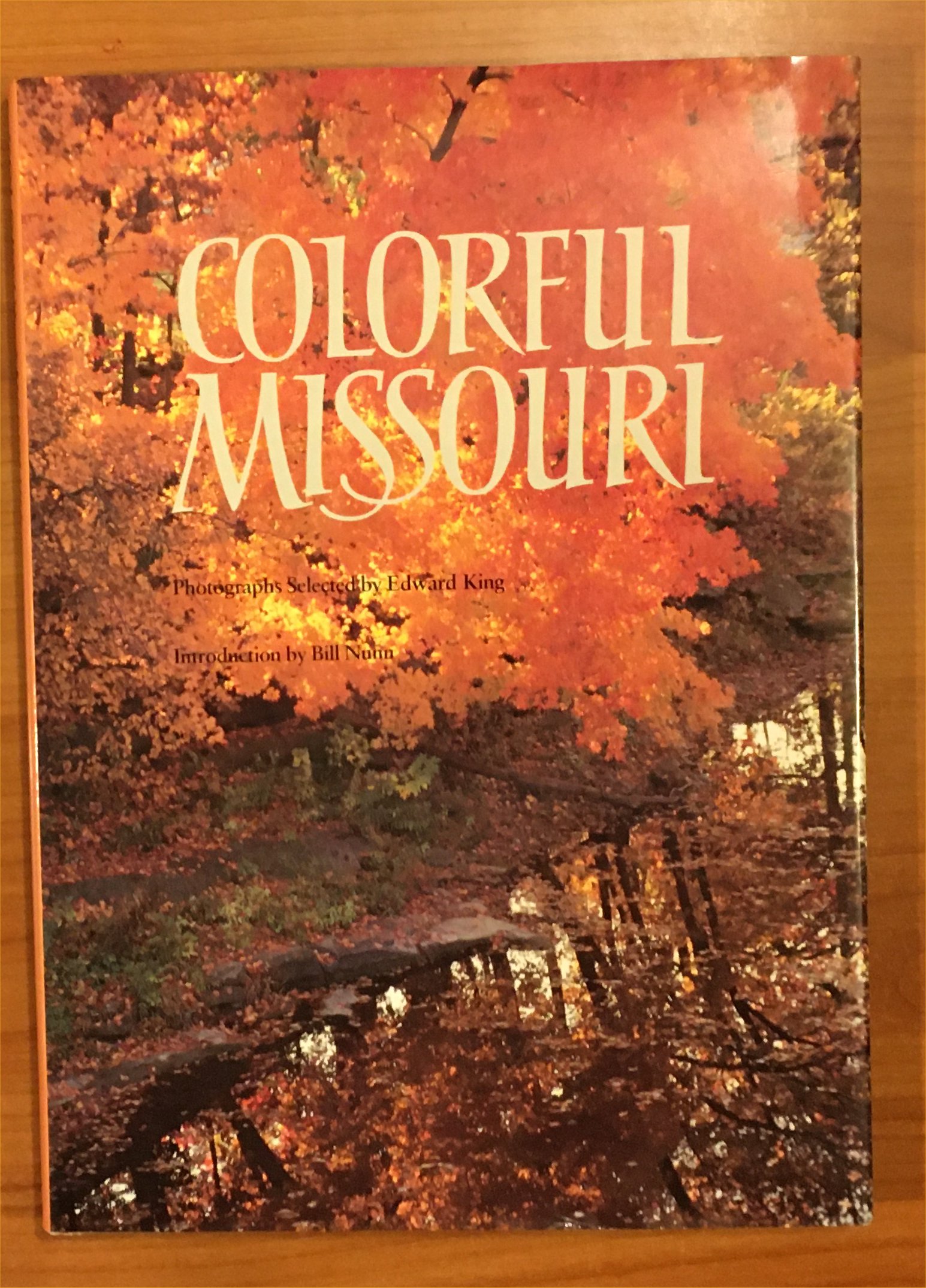 I got this book
  The second of the books I bought
  As I accurately predicted
 Technically, this is not a book report, as I listened to the book on CD. So I don’t count it toward the annual reading goal, but I do want to comment on it just to pad out your daily content allotment on this blog.
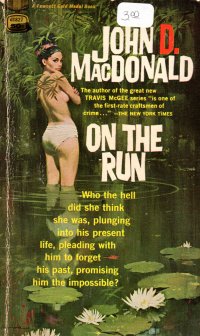 Ooops, I read it again. I first read this book
 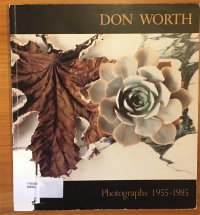 This is a collection of photographs from a mid- to late-twentieth-century photographer who focused (ba dum tiss) on close-ups of flowers and other flora who then moved into landscapes, male nudes, and still lifes during his career.
 This collection of drawings’ introduction describes the life and times of Adolf Dehn without getting into the Importance of the artist in the milieu. It talks mostly about how the artist approached his work, which is by sketching a bit and then later interpreting his sketch and memory in the finished sketch.
 This book is an ex-library book from some unstated library that I picked up
  This book is a short biographical sketch and literary history of the early science fiction author who wrote The Time Machine, The Island of Dr. Moreau, The War of the Worlds, and others.
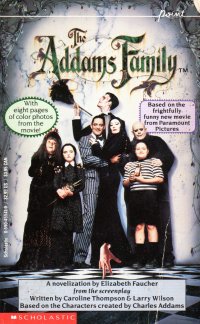 I guess a new animated film of The Addams Family is coming out. Now that I’m watching football, baseball, and hockey on the television, I see more advertisements these days. And, apparently, my youngest son saw an episode of the television show in school last week, for some reason, and he asked me if I’d seen it. I had, but The Munsters played more in syndication in Milwaukee, so I’ve seen more of them.
 I don’t know if I should count this as a “classic” or high literature in my annual self-accounting, as it is simply a story about a boy and his dog. Sort of. But it’s a classic, sort of, and it certainly spawned a number of movies and television shows so much that you can still say “What’s that girl? Timmy’s fallen in the well?” and people will get the allusion even though the television show has been off the air for, what, forty years?
 As I mentioned when I read Gahr and Seth Wolfhorndl’s
  This “monograph” is more of a marketing piece for the (former) Steuben Glass, which was part of Corning that made and sold high-end hand-blown glass objects as well as created pieces for museums to promote the consumer glass.
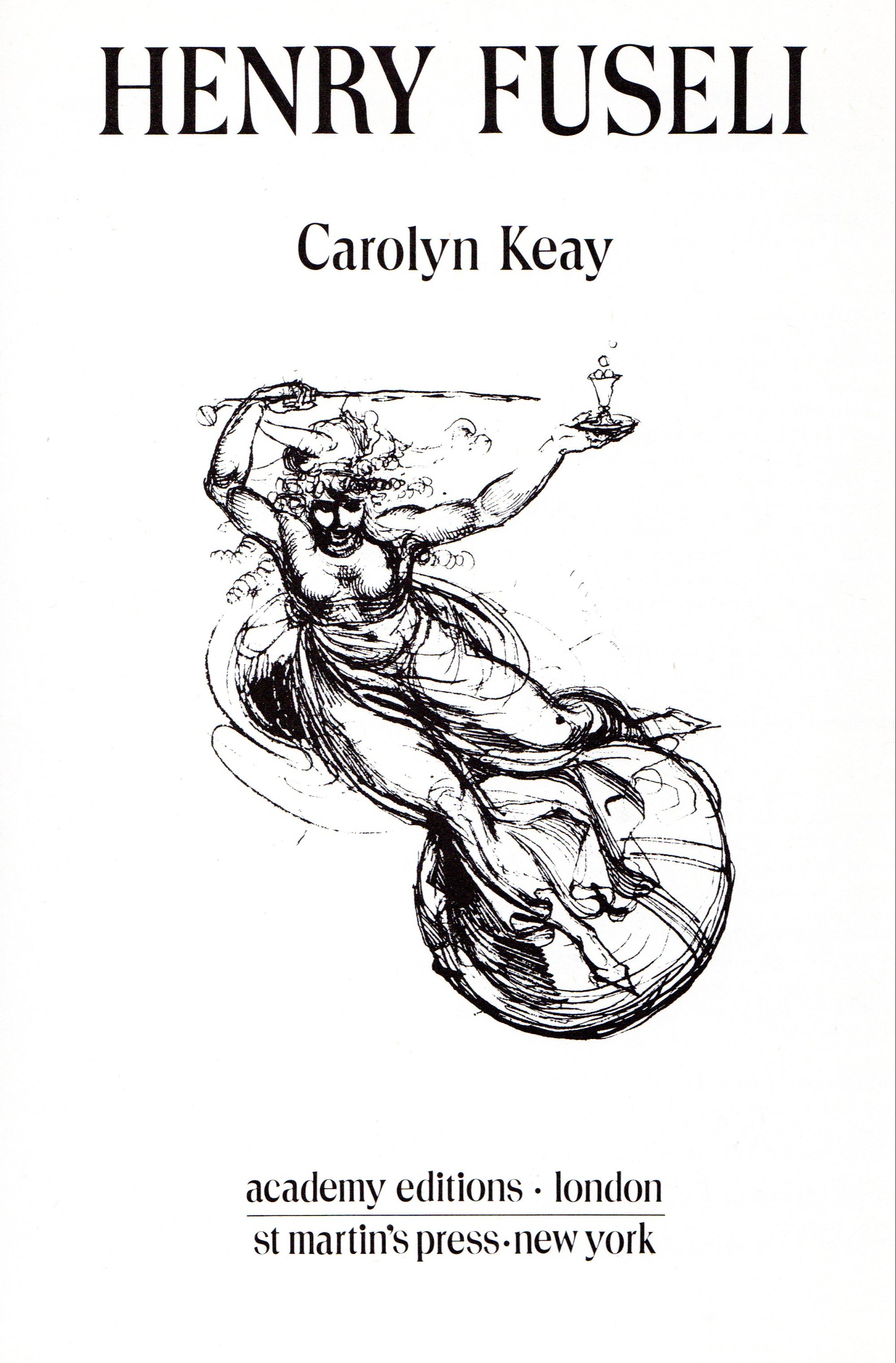 You know, the front material on these monographs tends to be of two varieties. One offers biographical information. The second offers critical interpretation of the artist’s work and what it means and why it’s important. I’d like to generalize and say that the more famous the artist is, the more likely the monograph will have the first type of introduction. You know, they’re famous because their art meant something. However, that’s a bit misleading, as the