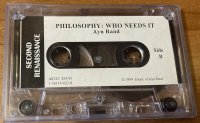
 I must have bought this cassette of of eBay around the turn of the century–or did I order it directly from Second Renaissance Books back in the day? In the 1990s, Second Renaissance published a lot of Ayn Randia, and maybe you could order stuff from its catalog or from the forms in the back of its books. I know I subscribed to The Intellectual Activist (wow, that was still a going concern as late as 2021, so maybe I saw ads in it (probably not). I even read Objectivism: The Philosophy of Ayn Rand and The Ominous Parallels back in college. I was a pretty dedicated little-o objectivist back then.
I found this audiocassette in one of the bins in my desk cubby; I am not sure why it was up there or why it was floating around. Perhaps it had been in a desk drawer and I moved it to the cubby at some point. I got it out with the intention of relocating it to our other collection of music audiocassettes, but when I saw the 2023 Winter Reading Challenge has a “Listen to a Book” category, I thought maybe it was the text of the book of the same name, or maybe just the title essay. However, it’s a speech delivered at West Point in 1974 along with a little question and answer session. No doubt the title essay of the book comes from this speech and probably others she gave in the line, I could not in good conscience count it as listening to a book after all.
You can hear the speech on YouTube:
Now, thirty years have passed my first exposure to Objectivism (I read The Fountainhead the summer before college after the Swedish mechanic who lived next door to my father shamed me for not reading literature, and I remembered The Fountainhead from flyers advertising the Objectivist Institute’s scholarship contest that I’d missed out on). And you know what? I still agree with a lot of the premises and conclusions of Objectivism. The basics. So it was a pleasant listen, and it reminds me that I have not read The Fountainhead since 2005 which means it’s long overdue.
And during the question and answer period, listen to the seeds of modern wokeism–out of, what, five questions we get one about the United States’ guilt for slavery and native genocide? At West Point? Man, it’s amazing how far back the long march started, but that’s why it’s been a long march and why not many reacted to its slow approach.
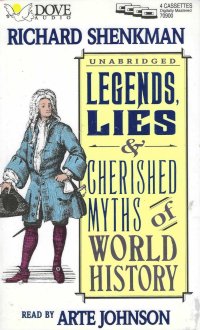 I started listening to this audiobook on the drive to and from the St. Louis area in October and finished it up last weekend on a trip to Poplar Bluff. It’s read by Arte Johnson, whose name I recognized. He was that guy on that one comedy sketch show you played a Nazi. You know, when you could laugh at Nazis instead of think they were the worst thing to compare your contemporary foibles to. No, not the “I saw nothing!” Nazi. The “Very Interesting” Nazi from Rowan and Martin’s Laugh-In:
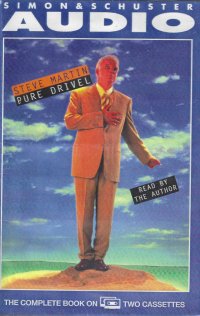 I have been holding out on you, gentle reader. And by “holding out on you,” I mean “have been lazy.” I actually listened to this audiobook the last weekend of October on the way to my boys’ last marching band festival of the year and have only gotten around to writing about it now. Which means I will have forgotten anything I really want to say about it. Actually, I don’t know if I had anything in particular I wanted to say–it’s hard to put a little sticky note into the pages of an audiobook when you’re driving 80 miles an hour down the highway.
 I picked this book up on the dollar side of the
 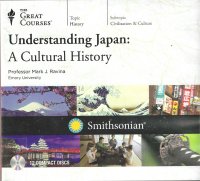 I borrowed this course from the library because I’ve only a passing knowledge of Japanese history from thin books like
  Not long after having Charlton Heston and vocal talent narrate
  This is an old timey Great Courses/Teaching Company set of cassettes. The copyright date says 1996, but the instructor at one point talks about the 1980s as being the present time, so it might have been recorded a couple of years before the copyright date. The lectures feature a live audience, so people laugh at his jokes and you can hear them shift from time to time–and one can expect that it’s actually them applauding at the end of each lecture–a sound effect that the company has kept throughout even though you cannot hear the audience otherwise or see them on the few DVDs I have watched.
 I have read a couple of books on Kierkegaard (
 I took a break in the Charlton Heston-narrated cassettes on philosophers to listen to this Teaching Company/Great Courses series on French author Voltaire. Although I had read Candide–my beautiful wife and I took turns reading aloud from it during our courtship–I was not that familiar with him. This course certainly set me a-right. Apparently, he was the biggest European author/thinker of the 18th century, although it might be a touch exaggerated since it is a course on Voltaire, and the course slant tends to be a little homer if you know what I mean.
 I had hoped that this would be an antedote or rebuttal of
 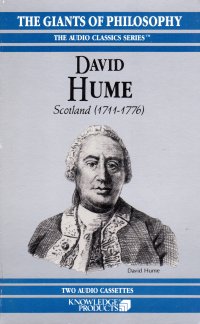 All right, all right, all right–it’s actually been a couple of weeks since I finished listening to this short, two-cassette overview of David Hume’s life and thought. This is from the Giants of Philosophy series as were
  After listening the Charlton Heston narrating
 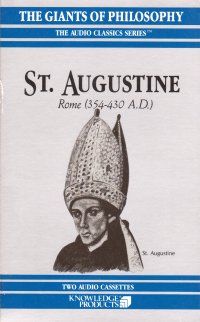 I listened to these lectures, er, audio books, out of order–I listened to
 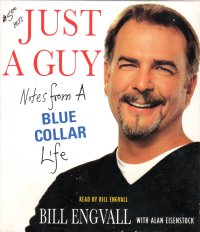 You know, I first heard about Bill Engvalls in the middle 1990s, when my girlfriend referred to him as the guy who says, “Here’s your sign.” The Blue Collar Comedy Tour was, what, almost twenty years ago? And this book is from fourteen years ago, so it’s not fresh and new. It’s the story of Bill Engvall’s life up until that point, from his childhood in Winslow, Arizona, and Texas to his marriage and his start and climb into comedy.
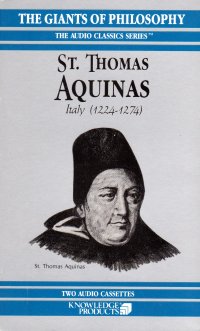 Charlton Heston reads this one, as he did
 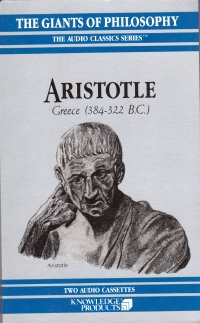 I actually started listening to this pair of audiocassettes pretty soon after listening to
 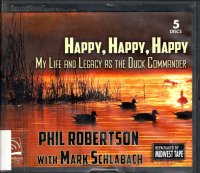 Taking a break from the audio courses, I picked up this set of CDs to listen to in the few times I’m in the car alone for any length of time these days. As it’s summer, I’m not spending half of my car time going to pick up or coming back from dropping off a boy–I generally have one or more with me. So it took me a while to get through this set of 5 CDs even though it only runs about five hours. In the other seasons, I can easily listen to five hours of lectures/audio books a week.
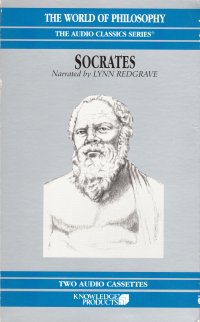 This is not a Teaching Company/The Great Courses production (or even Modern Scholar). It’s a mid-1990s Knowledge Products two cassette set that I bought
 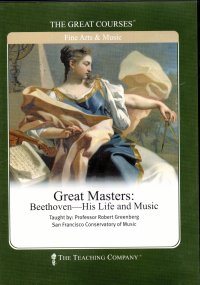 As you might recall, gentle reader, I have listened to a couple of other lecture sets in the musical Great Masters series, most notably
  After
After