It’s been four years since I read the first book in Don Pendleton’s Ashton Ford series, Ashes to Ashes; in it, I said I had another in the series, the third. However, I must have been mistaken or I might have not put that in the series grouping the last time I deeply cleaned and reorganized my to-read shelves six years ago, as this is #4 in the series, and I also have picked up #6 somewhere.
In this book, Ashton Ford investigates murders occurring around a new Age style preacher who, with some wealthy production backers, is building a worldwide multimedia organization. And she’s gorgeous and also gifted on the paranormal spectrum. As Ashton mucks around, he finds that church members, the woman’s family, and a group of early Hollywood actors and actresses are intertwined, with the results leading to murder which might or might not be precipitated by other worldly spirit guides including maybe the father Ashton never new.
So it’s less action-packed than other investigative or suspense series that Pendleton did, and it’s a little woo-woo for my tastes. As Ashton has astral sex with the woman while she’s locked up in jail and seemingly impregnates her leaving her still a virgin, one wonders if the next two volumes in the series have a big wrap-up story line that I’ll only get when I pick up the last book in the series four years from now.
It reminds me of Dean Koontz’s Odd Thomas books–they started out with a premise and they could have been episodic, but they moved into being parts of an overarching story with the pregnant woman in Odd Hours and Odd Apocalypse. Which is where I kind of wandered off. I read Odd Apocalypse being eight years ago, and although I bought the last/latest book in the series, in 2018, I haven’t bothered to pick up the in-between book, Deeply Odd, in the interim. I wonder if I could find it if I looked in the fiction sections at the book sales I go to every year. Maybe, but I will likely not think of it in the spring.
So as to the Ashton Ford books, I’m glad I only have one remaining. It’s not a series I’d follow in real time. But by the time all is said and done, I will have read half of the series.
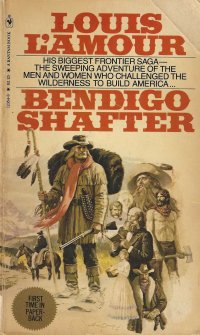
Gentle reader, I have been reading, although not as much as normal over the end of the summer, and I have been really slow at writing up my thoughts on the books I have (I have read three and almost five in the last month). I finished this book on September 13, and I am only now getting around to typing up my thoughts which are likely to be even more brief than my normal book reports as I have probably forgotten what I want to say.
A brief synopsis: Bendigo Shafter and his brother are working on a wagon train on the Oregon trail, but the they decide they will not make it through the mountains before the winter seals the passes, so they build a town in Wyoming. Some unsavory characters appear, Shafter saves an Indian’s life and the Indian vows revenge, a known gunman protecting two children wides up one winter night, and various other things happen, challenging the good men of the town. One local man finds a little bit of gold, which makes him the target of some bad men. Shafter is chosen to take a pool of the townsfolk’s money to Oregon to buy cattle for them, a trip that takes him almost a year. He starts alone but befriends a couple of Indians on the way, and they join the town. When Shafter returns, he finds some of the bad men have basically gotten themselves put into positions of authority until Shafter and his brother intervene. Then Shafter finds some gold, goes back east to New York City looking for the now-grown little girl he earlier saved, and when he returns to Wyoming he goes with the aged Indian he met on his cattle drive to an ancient Indian monument of some sort.
It’s basically a coming of age story telling about how Bendigo grew to be a man, which give L’Amour time to pontificate on manliness in spots. They’re akin to the little asides that Pendleton put into his Executioner novels, a bit of philosophizing to add depth, although L’Amour does more of it. And although Friar said the last third of it was a bit weak–I’m not sure whether that’s after the cattle drive or not–I did not find much of it dramatic. I mean, in the tense scenes and trials, Bendigo pretty much knows what to do and does it, so I didn’t feel like he was ever in any danger. I don’t know–your mileage may vary. I have several other L’Amour books on my to-read shelves to review, and I will learn if that’s just the way he wrote.
I cannot help but compare the arc a bit to My Ántonia in that the main character, the young man who gets educated, goes back east and compares it to his experience in the west. Unlike that book, though, Bendigo Shafter ultimately prefers the west. Which is because this is a Western and not literary fiction.
At any rate, I flagged a couple things ago a month ago. Let’s see if I remember why.
Bendigo is better read than I am.
Fixing myself a cup of coffee, I then went up the ladder to my bed and got the book I was reading. Only this time she had given me two at the same time, and I decided to take both of them down. The first was the Essays of Montaigne. The second was the Travels of William Bartram.
As you might recall, gentle reader, I started the Montaigne five years ago and only made it a couple of essays in, after which it remained on my dresser for a year or two before I put it back into the stacks. Which is not the longest a book has been unread on a book accumulation point. I’ve not made it through the Classics Club collection on Plato nor the first volume of Copleson’s History of Philosophy in far longer periods of time.
I Have Been To The House
When they had gone old Uruwishi came out of the brush with his old Hawken rifle.
The Hawken House, where the maker of the Hawken rifle lived, is in Old Trees, Missouri, and is home of the Historical Society. I actually have the commemorative tile from being a member prominently displayed on my desk.
Everybody Goes To Delmonico’s.
On his New York trip, Shafter does.
We met at Delmonico’s. It was, at the time, the most favored eating place in the city.
Come to think of it, this book takes place at the same time as Clarence Day’s Life with Father sketches. They went to Delmonico’s, too.
Mindfulness in the 19th Century As Told In The 1970s.
It is my great gift to live with awareness. I do now know to what I owe this gift, nor do I seek an answer. I am content that it be so. Few of us ever live in the present, we are forever anticipating what is to come or remembering what has gone, and this I do also. Yet it is my good fortune to feel, to see, to hear, to be aware.
Buddhism was making some inroads in the 1970s. I wonder if this influenced L’Amour.
So it was an interesting read, and I will not avoid the other L’Amour books when I’m going to the bookshelves for something to read.
And I cannot help but note that I have metamorphosed into a man who reads Louis L’Amour books. What kind of man is that? Oh, yeah, an old man.
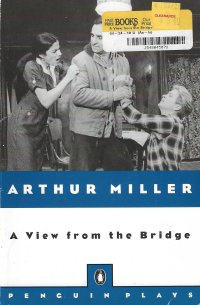
It was this play, and maybe I should actually make a point of buying plays to read in hotel rooms when I travel; you might remember (but if not, the blog is semi-forever) that I read The Marriage of Bette and Boo in a hotel room right after I bought it in Leavenworth, Kansas at a book store that might be named Half Price Books but is also possibly not related to the book store I visited this weekend. It definitely had a different vibe.
I’ve read The Death of a Salesman, but apparently not in the last 19 years or since I’ve started reporting on books on this blog. This play, which premiered in the middle 50s, deals with a family of Italians in a tenement in New York City: A husband, his wife, and their niece. When they agree to shelter the wife’s cousins, illegal immigrants from Italy, everything goes awry. One of the brothers is a hard worker on the docks with the husband, but the other brother, who does not even look Italian, likes to sing, has home skills like sewing, and starts dating the young niece. The husband doesn’t like it because the boy is different and perhaps because he has romantic feelings for her himself, or at least does not want to let her grow up. Things come to a head when the husband calls the immigration authorities to remove the men.
I have to wonder if it was a bit anachronistic in the 1950s, hearkening back to a past from that point in time. A fairly simple play, not very clever but very serious in its indictments of tradition and the patriarchy.
You know, back in college, I read David Ball’s Backwards and Forewords, and one thing still sticks with me: He said that every character in every scene has his or her own agenda, his or her own goal, and that you should have that in mind when writing every scene. The characters in this play seem a little thin: I cannot figure out, really, what the wife wants, or the older of the cousins wants aside from the broadest of strokes. I read it, and I get a sense that the playwright had a story to tell and maybe at a bit of sacrifice of real characters.
At any rate, not bad, but not great. It’s not what Miller was known for.
Which reminds me: The author has an introduction to this play written for this edition, thirty years from its original run. As is my wont, I did not read it before I read the play, and I should remember to read it now that I have read it.
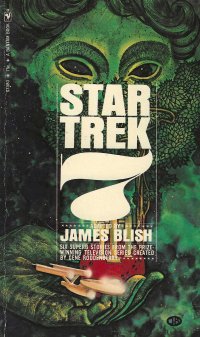
So, apparently, as I worked my way through this set of books eighteen years ago, my book report for Star Trek 7 was the first one where I enumerated the episodes that were included in the book. So I’ve already done that in a previous post, but I’m going to do it again.
I was speculating that the most popular and recognized episodes would be included in the first volumes of the series, as Blish was not working in series order but rather worked a bit off of what fans wanted. But in this seventh volume, we’re still getting recognizeable episodes. Well, episodes I recognize anyway.
The book contains:
“Who Mourns for Adonais?”, the one where a giant hand in space grabs the Enterprise, and they find an ancient Earth god who wants followers again and who woos a crewwoman. C’mon, man, that’s one you remember, ainna?
“The Changeling”, where an old lost and damaged probe merged with some alien technology and confused its programming to elimination of imperfect life. Kirk has to do one of his logic tricks to shut down the computer (which he also does in a Harry Mudd episode). You might recognize the plot because it was recycled into Star Trek: The Motion Picture (and a bit of Star Trek IV: The Voyage Home). I’d like to point out it’s been a whole week since I’ve seen an allusion to this episode elsewhere.
“The Paradise Syndrome”, another one of the Enterprise finds a simple native culture who needs help of a forgotten alien technology (very similar to “The Apple” in Star Trek 6). In this one, Kirk loses his memory after interacting with it and lives a bit of another life while the Enterprise limps back to the planet on impulse power.
“Metamorphosis”, where the Enterprise away team are brought to be companions of the lone survivor of a wreck who has befriended an alien intelligence that provides his needs–and when he said he needed companions, the alien brought the Enterprise. The character here is Zefrim Cochrane, who is seen again in Star Trek: First Contact.
“The Deadly Years”, where the Enterprise visits a planet where the young humans have aged–and the away team starts aging as well, just in time for a confrontation with Romulans. In 2005, I equated this episode with an episode of Star Trek: The Next Generation where this happens to Dr. Pulaski, but 18 years later, I cannot remember that episode. Which is a testament either to the staying power of the orginal series or to the fact that I periodically revisit it.
“Elaan of Troyius”, where the Enterprise is sent to pick up a woman who is to marry into the ruling family of a rival planet to end years of warfare, but she’s a brat, and the women’s tears enthrall men, and she enthralls Kirk, but his duty makes him stronger than her tears.
So a quick read, the book equivalent of catching one of these episodes (well, all of them, actually) on television and continuing to watch it. A bit like brief binge watching, I guess. I have a couple more of these on my to-read shelves, and by the time I finish them, I will have almost the full set (apparently, I lack 12). Maybe I will look to complete the set. Afterwards and into next year, perhaps I will get into Alan Dean Foster’s adaptations of the animated series. Or maybe it will be back to men’s adventure fiction. But for the nonce, the old school science fiction, including the Asimov and even the Bradbury are what I need right now.
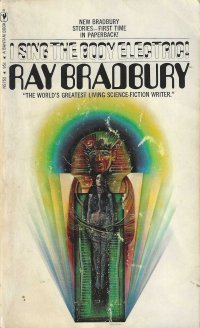
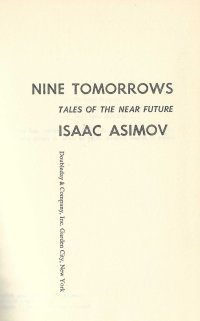
I actually started reading this before I started Nine Tomorrows by Isaac Asimov; after finishing another book, probably Red Snow and Death Had Yellow Eyes, I hit the stacks and the hardback Asimov collection caught my eye, so I read it instead of completing this collection, which underwhelmed me.
First and foremost, it is not a collection of science fiction stories. It seemed like the book was only a third science fiction, but a review makes it clear that it was not that little. The book contains:
“The Kilimanjaro Device”, wherein a stranger in a time-traveling truck is seeking Ernest Hemingway, hoping to help him to a better death (the plane crash in Africa) than the one Hemingway eventually got.
“The Terrible Conflagration Up At The Place”, wherein a group of locals decide to burn the lord’s house, but when they find him there, he convinces them in a roundabout fashion to not by asking that they keep the treasures and heirlooms safe after the house burns.
“Tomorrow’s Child”, wherein a couple discover that new birthing technology has trapped their baby in another dimension–he only appears weirdly in this one–and although scientist cannot solve the problem yet, they can send the parents to join the child.
“The Women”, wherein a man and his wife are at the beach, and something in the water calls the man, and the wife knows and tries to keep him from going into the water.
“The Inspired Chicken Motel”, wherein a Depression I-era family stays at a motel with a chicken with the gift of prophecy, and the chicken gives them hope.
“Downwind from Gettysburg”, wherein an actor named Booth shoots an animatronic Lincoln.
“Yes, We’ll Gather At The River”, wherein the owners of buildings along main street on the highway spend the last night before the authorities open the new highway that bypasses their town.
“The Cold Wind and the Warm”, wherein strangers visit an Irish town and inspire the locals to look at things differently.
“Night Call, Collect”, an old man left on Mars as a young man after the rest of the population returned to Earth to fight in the atomic war keeps getting phone calls that he programmed into the system to keep himself company. After decades, he hates it.
“The Haunting of the New”, wherein a wealthy but decadent woman invites a frequent visitor to the debaucheries at her manor because it burned, and she reconstructed it completely the same, but this new manor does not want the orgies to continue.
“I Sing The Body Electric”, wherein a recently widowed man orders a robotic grandmother for his children, to help take care of them and to tutor them.
“The Tombing Day”, wherein a town has to move the graves in a cemetary because the highway is coming through, so a woman has the coffin of a man, her beau, who died 60 years ago, brought to her house. She discovers his body perfectly preserved at 23, and she laments her own aging.
“Any Friend of Nicholas Nickleby’s Is a Friend of Mine”, wherein a conman lodging in a boarding house on the prairie pretends to be Charles Dickens and pretends to write the author’s works using his photographic memory. Even after the ruse is discovered, a boy in the house wants to believe.
“Heavy-Set”, wherein a mother worries about her 30-year-old son who is still at home and who avoids most social interactions even though people and girls invite him places–with incest only hinted at. Just kidding! It’s more than a hint–it’s the twist at the end of the story.
“The Man in the Rorschach Suit”, wherein a psychologist finds a learned professor purportedly dead on a bus wearing a special shirt. The not-dead research psychologist asks people what they see in his shirt.
“Henry the Ninth”, wherein climate change (global cooling–remember, this was the end of the world for most of the middle 20th century, child) has driven the population of Great Britain south except for one man who wants to remain.
“The Lost City of Mars”, wherein a rich man takes an eclectic party on a yacht to search for the Lost City of Mars. They find it, and many are sorry they did.
“Christus Apollo”, a poem about space travel as the eighth day of creation.
So it has seven science fiction short stories (out of 18 total works), two of which are set on Mars and could have been in The Martian Chronicles but might have been written too late. Include the “weird” stories with a fantastic element, and you get another one or two. The others are contemporary or historical fiction that appeared in mainstream magazines. I have to guess fans of Bradbury’s science fiction would have been disappointed, but perhaps by 1969, they had realized that he was not a science fiction writer by that time but a writer who sometimes wrote science fiction. Personally, I wonder if he punched above his weight in scientific circles based on a couple of early bestsellers (The Martian Chronicles, Fahrenheit 451).
He did have all the right opinions, though, compared to Asimov, who escaped the Soviet Union, and Heinlein, who was something else. In “I Sing The Body Electric”, for example, the robot grandmother has a chance to rant about cars being bad and guns being bad. In the early part of this century, gentle reader, we had a term “Sucker punch” for that moment in a book where an author dropped in a little homily about a progressive talking point. Strange, we don’t talk about that a decade or fifteen years later–I guess we presume that is just a feature of contemporary fiction.
There’s also a bit where the grandmother sez (only a page after the anti-automobile sermon):
Tell me how you would like to be: kind, loving, considerate, well-balanced, humane… and let me run ahead on the path to explore those ways to be just that. In the darkness ahead, turn me as a lamp in all directions. I can guide your feet.
This seems an allusion to the biblical (Psalm 119:105, given here in the King James Version which features italics not found in the NIV):
Thy word is a lamp unto my feet, and a light unto my path.
Coupled with the last poem where technological advance supplants God, and I think we’ve found another who thinks technology (and expertise) will somehow overcome human nature. Which has not proven to be the case.
When I read The Illustrated Man 12 years ago(!), I was similarly unimpressed.
I don’t think I have a lot of Bradbury floating on the to-read shelves, fortunately.
But the list of books also available in the back:
… reminded me I had started working my way through the James Blish Star Trek books earlier this year. I’d probably better hop onto that if I’m going to finish before football season brings monographs and chapbooks and the Christmas season brings the obligatory Christmas novel.
I bought this book fourteen years ago during an especially gluttonous trip to a book sale not long after my youngest was born. It would have been the autumn after my mother’s diagnosis and but, what, four months before her death? Eleven months before our move to Springfield? A long time ago, to be sure, but sometimes (often) books languish on the to-read shelves for decades. I got 94 books that weekend, and I wondered if this was the first of that lot that I read. Apparently not, as I have already read:
I also started Linda Chavez’s Betrayal for one of the library reading challenges this year in the Hispanic author category, but I didn’t get too far into it because the early 2000s concern about the power of unions in politics seems a little quaint now.
So, at any rate, this book collects nine short stories from Asimov’s magazine work in the 1950s. We’ve got:
“I Just Make Them Up, See!”, a poem about where he gets his ideas.
“Profession”, wherein future humans get tested for professions and get instantly trained for them, but one young man is told he cannot be taught this way, so he goes to a special home where the residents learn from books. Later, he learns that this is not without status, but has the highest status of all, as he can think creatively.
“The Feeling of Power”–in the far future, a lowly technician has a weird hobby–doing math by hand–and he is brought before the elites who do not believe that a mere human can replicate the magic of computers. The story was very familiar to me, and I thought that I might have recently read it. Well, when you get to my age, recently can be 8 years ago.
“The Dying Night”, a murder mystery wherein one of a trio of astronomers who have been stationed off-planet has killed an old classmate who apparently learned the secret of teleportation.
“I’m in Marsport Without Hilda” wherein a secret agent of sorts is on Mars without his wife. He plans an assignation with a local woman, but he’s roped into an assignment looking into drug-running.
“The Gentle Vultures”–a spacefaring race that generally swoops in to help societies after their nuclear wars in exchange for tribute grows frustrated as Earth’s nuclear war has not occurred.
“All the Troubles of the World”, a young boy is sent on a series of tasks ultimately designed to destroy the super-powerful computer, and the ultimate planner who almost leads him to success turns out to be the computer itself.
“Spell My Name with an S”–a scientist goes to see a “numerologist” to become successful, and the numerologist suggests he spell his name with an S–which leads to a series of investigations and events that averts a nuclear war and leads to a plumb professor position.
“The Last Question”, wherein mankind asks Multivac and its successors how to reverse entropy, and the far-evolved computer ultimately does. I’d read this story as a young man, and I’ve remembered the last twist since then.
“The Ugly Little Boy”, wherein a company has learned to create a stasis field that can grab something from the past and maintain it in the present. They demonstrate by grabbing a neanderthal child, and they bring in a nurse to help with the child. Over time, as their funding and success grows, the boy becomes less important to the company.
“Rejection Slips”, a poem about rejection slips. I bet my collection dwarfs Dr. Asimov’s.
So great classic science fiction. A lot of worry about nuclear annihilation that we don’t tend to fear as much since the 1980s. But imaginative and quick to read.
I marked a couple of things. The first was the main character in “Profession” is named George, and it mentioned that he grew out of “Jaw-jee” and into the monosyllabic “George,” which made me think about how I pronounce the name. I guess it’s a dipthong, eeor, and technically that’s one syllable, but it feels like it should be two.
In “I’m In Marsport Without Hilda”, I got an allusion:
Of course, the one I wanted might be the first one I touched. One chance out of three. I’d have one out and only God can make a three.
That’s a pun based on the movie Groundhog Day. Asimov was so future-sighted, he made an allusion to a film that would be made forty years in the future!
Just kidding. It’s from a Joyce Kilmer poem, as I am sure you remember.
I liked the book, and, man, am I reading the science fiction short stories this year or what (the rest are the James Blish Star Trek books, but still).
And please remind me, if anyone were to ask me whom I would invite to dinner if I could invite anyone living or dead to dinner, that after my departed family, I should choose Isaac Asimov.
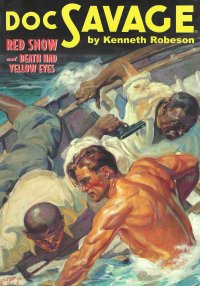
I picked this book up in June in Baraboo, Wisconsin. It contains two Doc Savage stories from the eponymous magazines from 1935 and 1944 respectively.
In The Red Snow, a strange phenomenon, a very localized red snow, completely vaporizes anyone caught in it, and a series of important chemists, engineers, and whatnot get caught in it. Savage is in Florida coincidentally, but gets drawn into investigating it when he’s framed for murder. He discovers foreign agents sowing discord before a planned invasion.
In Death Had Yellow Eyes, Savage investigates the strange disappearance of one of his associates, and is forced into working from the shadows as he is framed for a bank robbery. He discovers foreign agents using an invisibility cloak to sow discord. I forget if it preceded a planned invasion that Doc Savage averted.
Originally, they were novellas in a monthly, then quarterly, pulp magazine, so they’re kind of like precursors to the men’s adventure novels from the 1960s and 1970s (and beyond) that I often read–a house name (Kenneth Robeson) with an editor and outlines provided. Most were written by one man, Lester Dent, but sometimes other people contributed. As I come from a pre-computer age, the stories don’t seem that anachronistic to me, but I wonder how they would play with younger audiences today. Perhaps not too bad if they read anything from the Before Times.
Doc Savage is a polymath and a bit of a Mary Sue, but he does get knocked on the head a time or two.
So they’re quick enough reads, a bit of light adventure fiction, but one does not see the magazines nor the eventual reprintings of the stories in paperback (from the 1960s to the early 1980s) in the wild. Or I do not–but, as I said, I don’t tend to go into “the wild” (book sales) as often as I did in the St. Louis area, and when I do, the book sales are big enough that I focus on areas other than mass market paperbacks. So maybe the world is rife with them, but they’re outside my field of view. Perhaps I will remember to take a look at ABC Books or the upcoming fall Friends of the Library book sale. But probably not.
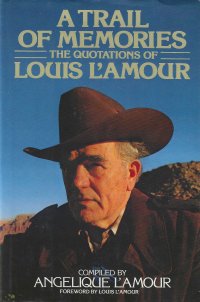
Where the heck did I get this book? A quick search of Good Book Hunting posts does not yield a result. It does not have an ABC Books sticker. It does not have a price penciled on the first page which might indicate another used book store. I certainly did not buy it new as a sixteen-year-old. So I must have picked it up at a garage sale. Perhaps this year’s Lutherans for Life garage sale–I don’t see a Good Book Hunting post for that particular sale this summer, which might mean it was one of a couple books I might have picked up. Without a picture, I have no memory.
At any rate, this book is a what it says: A group of quotations, from a line in length to a couple of paragraphs, grouped in topics like Life, Opportunity, Hard Work, Family and Home, Women, Indians, Honor, the Law, and Justice, and Yondering and Dreaming.
The quotations all share a common flavor and theme, of course: The stoic Western hero on the frontier, skeptical of the soft Eastern ways, manly but not afraid to love and nurture in family ways, which includes education and discipline. It seems like some of the quotations are repeated in different chapters/topics, but it might be because they are so similar–or perhaps they repeat; I did not go back to check. Even though they’re genre and they deal with Men, someone not familiar with genre or prehistoric (that is, pre-social media) writings might be surprised at how in-touch the Western hero was with the environment and how much he respected Indians (that is, Indigenous Peoples, as the current lexicon goes, with its expiration date later in the decade).
Although Louis L’Amour had 101 books in print when this book appeared (maybe just 100, as the book list includes this volume), the quotes are taken from what seems to be a handful of them. But it did help me narrow down which of his books I would most like to read: Bendigo Shafter, The Lonesome Gods, and maybe Conhager. I have read a couple of Zane Grey books, but no L’Amour. And the country was crazy with them in the olden days–I suspect they both had their book clubs in the 1980s. I would say that “I haven’t seen them in the wild,” but let’s be honest: My “in the wild” these days is the Friends of the Springfield-Greene County Library book sale and ABC Books for the most part, and I tend to skip over the Western and/or fiction sections entirely. In earlier days, with smaller book sales, I would be more likely to breeze over the paperback and/or fiction sections where I might see these titles. Perhaps I’ll wander over to the Western section next month at the library book sale to look for these titles.
So a nice thing to read whilst reading other books with longer narratives or themes. Something to spend a few minutes on out on the patio, petting the newly outdoor cat at sunset, staring down the raccoons who are not afraid of humans and want the remainder of the day’s cat food. And then to pick up later.
I bought this book for $10 at Rublecon last month because it’s BFM, man. Its subtitle says A Critical Appreciation of the World’s Finest Actor, which is a bit of hyperbole, of course, but the book is not so much a critical appreciation of Murray’s work, but rather an encyclopedia of alphabetical entries about movies and shows he has appeared in along with topics on his relationships with other people, including his wives and his family. Interspersed with the encyclopedia entries, we get stories about Murray’s hijinks crashing parties and spontaneous appearances with normal people.
So we agree that Groundhog Day and Lost In Translation are amongst his best films, but I disagree with the book about The Man Who Knew Too Little–I think that’s a funny movie, and I not only saw it in the theaters, but I’ve watched it many times since then on home media. I am quite a bit behind on Murray films–I mean, I’ve never seen The Razor’s Edge or Quick Change, for example, not to mention most of the Wes Anderson collaborations (although I did see The Life Aquatic with Steve Zissou, again, in the theaters).
The book also portrays Murray as a complex individual. Although it has its moments of homerism (such as the subtitle), some of the disputes and fallings out he’s had, not to mention a couple of bad divorces, and a reputation of being difficult (Dan Ackroyd called him The Murricane because of his mercurial nature). I mean, I guess anyone who’s been paying attention to Murray as a celebrity probably knows all this. But I somehow haven’t paid attention even though I like his work.
So a pleasant read in between chapters of other things I’m kinda reading, which really means they’re just stacking up on the table beside my reading chair. Informative. And I’m kind of pleased as well that I have so many Bill Murray films yet to see.
This book completes the four books I bought at Calvin’s Books the last time I went there. I was afraid that they were closing, as the Firefly books were only three dollars each, but they were not that inexpensive because they were closing. But they closed never the less.
At any rate, I read the Firefly scripts in Firefly: The Official Companion Volume One and Firefly: The Official Companion Volume Twolast summer and Firefly: Still Flying in January (when I thought it might count as a collection of short stories for the library’s Winter Reading Challenge, but it’s not really).
So this book means the end of the road unless I find some of the comic books or the recent novels cheap. So I am a little sad to come to this end. I’m sure some of that is mixed in with missing Calvin’s Books as well, although I need more books like I need more sunny days without rain here at Nogglestead.
So: It’s the shooting script for the film Serenity. As a reminder, this film came out three years after the television series, so if you watched them altogether as we did, you’ll notice things. Jewel Staite, for example, lost some weight (she said she had to eat a bunch to keep at Kaylee weight for the series in one of the previous books). And they played the characters a little different, and it was cut without some of the humor and playfulness of the television series. So the tone was a lot darker–although it might have been more in the acting and editing than the scripting. And they try to answer a lot of the questions from the television series in a fashion that’s disappointing, not on the Lost scale, but still
The book also has some inside looks at the making of the film, as the previous book does, but having read Star Trek Memories earlier in the year, I notice quite a difference in tone in the descriptions of making the film, even the nitty gritty technical aspects of it. In Star Trek Memories, making a television show is a more blue collar affair, with discussions about hitting budgets and physically doing the work, whereas these books are more about artistic vision, and the people who worked on the show take themselves very seriously. Perhaps it’s a difference in the elapsed time between the books and the television show/movie they depict (26 years have elapsed between Star Trek and its book, whereas these books came out within a couple of years). Maybe it’s a generational shift between the movie makers or between the fandoms. I dunno.
The book talks about a possible movie franchise, but that did not pan out. Maybe killing a couple of the main characters and tweely solving all the mysteries will dim that prospect for you–at least in the Star Trek movies, they only got into the habit of blowing up the ship every movie.
But, you know what? It’s been almost twenty years. Maybe it’s time for a reboot.
As I said, I was a bit sad to come to the end of the books, so I started re-watching the television series. Time will tell if I make it through again and if I watch Serenity. I invited my boys to watch, but they were not interested. So I guess I should stop making allusions to the show since perhaps nobody younger than forty-something will get it or even care.
I bought this book a couple weeks ago at ABC Books when I made the first of my recent runs on the martial arts section. I read it on a recent business trip to Chicago, and I really enjoyed it.
It’s not a long book–133 pages, and the chapters are short, generally a page or two story or anecdote from martial arts training and a bit of a lesson. The Zen it goes into is not the ontological Buddhism nor the practice of completely emptying oneself to escape the futility of life. Rather, it’s more geared to what we would later call mindfulness, with lessons on being present in the moment fully and in flowing. So good reminders.
And let’s talk a moment about the author. I had no idea who Joe Hyams was, but look at his Wikipedia entry. Born in 1923, served in World War II (Purple Heart and Bronze Star), worked for Stars and Stripes, went into newspaperin’, was sent to Mexico to cover illegal immigration (is that still a thing?), wrote a blockbuster story, was given some time off in Los Angeles as a reward and was told–perhaps jokingly–to interview movie stars that he met, and ended up scoring interviews first with Bogart and then his co-stars, became a full time entertainment columnist, studied martial arts as a student with Bruce Lee and then took lessons from Bruce Lee, studied several martial arts disciplines, wrote stars’ biographies, travelled with his wife Elke….
Jeez, the guy is Hemingway: The Next Generation, but without the legacy of novels.
So, yeah, the book has a lot of stories about Bruce Lee teaching this guy lessons. But they’re good lessons. And I really enjoyed the book. If I can remember to and if I’m not overwhelmed by the sheer weight of the unread books in the Nogglestead library, I should like to read it again. Definitely a better devotional than the Thich Naht Hahn, the Joko Beck, the Pirsig, the Suzuki, or even the forgotten The Zen Way to the Martial Arts.
Oh, and his wife Elke? He married Elke Sommer when she was 24 and he was 41. It’s not often I can turn a book report into a Rule 5 post, but here we are.
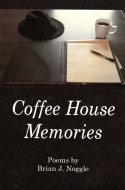
This book bears no copyright date, but some of the poems that are dated come from the late 1960s–and the first is dated 1937 and says it’s the poet’s first poem. So we can assume this is from the 1970s or 1980s–maybe even a little later given that the collection has wingdings between poems that might come from the birth of desktop publishing. Remember, younger readers, desktop publishing referred to being able to lay out your books on your desktop computer for printing, not blogging or e-zines where the work never actually leaves the desktop (which these days includes mobile devices).
The author was a teacher, and perhaps an English teacher, as the poems come in a variety of forms and styles, so it’s clear she liked to noodle with words a bit. The quality varies from simple to some that are actually halfway decent. So it’s a bit of grandmother poetry with a little dash of the cool teacher who might have inspired you to write. Strangely enough, I can’t think of anything in my middle school or high school career where English teachers actually wrote, and my college mentor, such as he was, has published only three or four books in his career.
At any rate, a quick, light read from when poetry was designed to be quick, light reads.
Well, it’s been a while since I bought this book–I got it at the last LibraryCon, in 2019. As I might have mentioned, I recognized the author, who under a different pseudonym wrote Dammit Bre!. So I’ve bought at least six of this guy’s books; this is the second, and the first fiction of them I’ve read.
I guess the point was to write a quick bit of fiction blending urban fantasy with Miami Vice. And, you know what? He did it. I’m going off of his author’s notes here, a bit of Piers Anthony’s thing, as I recall, putting author’s notes about the writing of the book and the reaction of fans to his work.
Alright, so, the plot: The olden folk, elves, orcs, and whatnot, have gone to ground and have hidden from us for centuries, but they’ve also participated in the world a bit where their interests are concerned. In the modern day, an operation of their kind goes awry, and one of the elves betrays his fellows in law enforcement, leaving his partner wounded and left for dead, whilst the elf goes off to help distribute a drug that has different effects on the races. It makes orcs into berserkers, and it elevates humans to be able to see through the magic that hides the other folk. The olden folk want to keep the drug off the streets, and that means that an orc has to partner with a human detective to break the drug ring up.
So it’s a quick, fun read. And I’m a bit inspired by Levi Samuel Rickard–he’s banging out these books, and they’re likely getting better (this is only the second of his I’ve read, but I have four fantasy books floating around somewhere). It’s almost enough to inspire me to work on one of the novels I’ve plotted or stubbed out here, but not yet. Perhaps when the boys are out of the house. But most likely not. But I can appreciate the efforts of those who do.
I bought this book last Saturday, and it would have been a good bet to guess it would be one of the first that I read.
It helps that this book, like so many from the era, was written for children who were getting into martial arts in what must have been a post-Karate Kid boom–so many of the books I see are from the 1980s or now with fewer selections in between. And it really is the basics, designed as something you can review at home after having seen the things in class (and many of the chapters indicate your instructor will likely show you more examples).
So it’s a book that shows basic moves and basic forms with black and white photos for starting positions and ending positions, but unfortunately, that does not capture the flow in any of them. So if you’re thinking you’re going to learn the actual moves from a book, you’re mistaken–as I was in the 80s, when I checked out at least one book from the library about karate. But it’s like learning a language–you have to do more than read a dictionary (which I’ve also done, trying to learn foreign languages from dictionaries before I understood verb tenses and whatnot).
Still, for me, it’s a nice refresher. And I note, again, that the sparring stance for tae kwon do is a more guarded, hide-behind-the-lead-shoulder posture than the one my school teaches. Which makes me want to ask the kyoshi where he got the stance preference.
This book was in the poetry section at ABC Books, but that’s a bit of a misnomer. The author’s bio calls him a social media influencer, and the book reads like a bunch of Instagram posts. Some are a couple paragraphs of prose, and some are “poetry,” although they’re just prose with line breaks.
Thematically, the work is about a man who was sensitive, and then became quite the pick-up artist, but then repented of it and is celibate until he finds his future wife. He talks about an absent father, he apologizes to women he’s wronged, and he encourages them to wait until they find a man worthy of their affection.
I mean, it’s a good message, but I had a complicated relationship with the book. I mean, I’ve known some men who’ve been good with the ladies, my own father and Mike amongst them. And I’ve behaved myself chivalrously and neurotically with women even in my salad days, mostly. So I don’t have much of a score in the scoring department. So when presented with material about a reformed philanderer, I bristled a bit. I’ve always been a good boy; where are my accolades? Eh, not in this world.
Also, when a manipulator says he’s reformed, you can take it to the bank. The river bank.
Still, I hope he’s sincere, and I would have preferred a coda where he has found his soulmate and has been true to her. But I wish him well.
You know, I had almost forgotten that I was working my way through these books earlier this year. So when I was looking at the to-read books in the hallway, I thought, Oh, yeah, and this book provided just what I was looking for: A quick and pleasant read. I mean, I have to get my stats up. I’m only in the 40s in the books read in 2022 list, and it’s almost August. And I’m not sure we’ll have the football package this year for me to browse monographs and chapbooks.
So we’re about half way through the book series which ultimately will include most, if not all, of the episodes of the original Star Trek series turned into short stories by a British author who has presumably seen some of the series even though he had not when he began writing the books–which was about the time the show was on, but this book first appeared in 1972, when the show had been off the air for a couple of years. One has to wonder if the popularity of these books (this 1975 edition was the 10th printing already).
But because we’re halfway through the series, we’re starting to get to the more obscure episodes. This one includes:
“The Savage Curtain”, wherein an alien race, hoping to learn more about good and evil, pits crewmembers from the Enterprise, Abraham Lincoln, and other notables against Ghengis Khan and some other violent people.
“The Lights of Zetar”, wherein an interstellar brain containing the minds of the survivors of a long-dead alien race seek a human host to live in the real world again.
“The Apple”, wherein a paradise-like planet is run by a giant computer whom the child-like natives think is a god.
“By Any Other Name”, wherein aliens from a distant galaxy lure the Enterprise to their rescue; they hope to take over the Enterprise and to use it to return home in several hundred years’ travel, but they find that their presence in humanoid bodies gives them humanoid appetites and emotions.
“The Cloud Minders”, wherein the Enterprise is sent on an emergency run to a planet that is the sole source for a needed material, only to find that the society is bifurcated between the people who live in the cloud city and the miners who do the work.
“The Mark of Gideon”, wherein the Enterprise visits a planet that had avoided contact. Kirk apparently beams to an empty Enterprise that only contains one of the natives, and she’s trying to get infected with a disease that almost killed Kirk in the past because her planet has no germs and the population has remarkable healing powers–so that overpopulation has overcrowded the place, and Kirk’s infected blood can help people die.
I only kind of remembered “The Apple” from my viewing days. Still, a quick, pleasant read with characters I know.
But more interesting is that I am this book’s second owner.
Well, I wish I could say that my confusion between Willa Cather and Eudora Welty is easing with my reading, apparently, a couple of Cather novels in the recent years. Oh, but no. I had this book before me with the author’s name right on it, but I got to thinking Eudora Welty wrote O Pioneers! which I read in 2018. Wow, four years ago? I feel a little better about forgetting who wrote it then, even though I said at the end of the book report:
I do have a copy of My Antonia around here somewhere; this book was a pleasant enough read that I won’t hide from the other novel if I find it.
Apparently, it took me four years (!) to find it even though it was in the front rank of my office bookshelves. You know, where I go most often when looking for a new book to read. In my defense, I probably passed over it a couple of times looking for something quicker or something that appealed to me more in that moment. But I finally picked the book up.
The book is very similar to O Pioneers! Both are set in Nebraska during the sodbusting years; however, this book follows a young man, Jim Burden, sent to live with his grandparents and his friendship with a young Bohemian (from Bohemia, not just wearing hemp) whose family arrives on the same train. She is the Ántonia of the title; the name is pronounced the Bohemian way, not the way to pronounce the small town down the county highway from where I lived my last years in high school. The Shimerda dwelling is basically a cave, and they really do not know how to farm or bust sod, coming from a city in Europe, so they need help, and Jim and Ántonia bond as he helps the children learn English. They have some youthful adventures; then Jim and his grandparents move to town when they rent their farm, and Ántonia, who is a couple years older than Jim, gets a job in one of the houses in town, and although they are not quite peas-and-carrots, when a traveling dance instructor troupe comes to town and hosts dances in a big tent, Jim hangs with Tony (as he sometimes calls her and I’m going to for the rest of the review because the accent on the A is a bother) and some of the other hired girls. Then Jim goes to Lincoln for college; another of the hired girls moves to Lincoln and starts a dress shop which does well, and she spends some time with Jim, but he becomes distracted from his studies, so his mentor, who is moving to Massachusetts to teach at Harvard, encourages Jim to come along, and Jim does. And then, twenty-some years later, Jim returns to Nebraska and sees Tony and her family, which includes her illegitimate daughter, the result of her dalliance with the son of a local railroad baron; the boy had promised to marry her, but he was not a good man, and after they lived together in Denver for a while, he abandoned her, pregnant, to return to Nebraska in shame. In the years since, she married another immigrant and they’ve had a large family. Tony has grown old, lost some teeth, put on some weight, whilst Jim, presumably, has aged better with his law degree and urban lifestyle. Jim feels the same connection with Tony as he had when they were kids–a kinship, more brother and sister though the middle part of the book indicated some romantic leanings–and he promises to visit the family and her boys in the future. And, finis.
One of the dings I, well, dingedO Pioneers! for was that it was a series of short stories or, more truthfully, sketches that Cather stitched together to make a book. You know, this book is also broken into sections. The first two, “The Shimerdas” and “The Hired Girls”, deal with the introduction of the characters and their lives on their respective farms and then their subsequent moves to town (Jim when his grandparents rent their farm, Tony when she hires on at another household). These two sections comprise the first 200 pages roughly of the 277 page book, and they hang together pretty well, hinting that there might be a cohesive plot. The next section, “Lena Lingard”, is about the hired girl who becomes the dress maker and meets up with Jim Burden in Lincoln; we still might have some plot advancement if she really does rival Tony for the author’s affections. Oh, but no. She mentions Tony is going with the ne’er-do-well son of the railroad businessman and seems to like him a lot. In “A Pioneer Woman’s Story”, the next section, takes place a couple years later, when Jim comes back to the Nebraska town after graduating law school and hears the story of Tony’s betrayal and her raising her new daughter at the old Shimerda place. Then the last section, “Cuzak’s Boys”, takes place decades later. The narrator has updated us on the other hired girls and how they’ve gone on in the world. Lena continues to be a successful dress maker, but she has gone to San Francisco and joined another hired girl, who had gone to Seattle, opened a business of ill repute, but sold it to join the Yukon gold rush where she made out big. When Jim, the narrator, returns to Nebraska, he visits Tony, now Mrs. Cuzak, and meets her family. And, that’s it. Ultimately, the book offered indications there might be a plot, which kept me reading along a little better than O Pioneers! (I presume), but ultimately it is just a series of sketches, and the whole My Ántonia title and repeating of Optima dies… prima fugit make one suspect that the author might have wanted to convey more a mood of nostalgia and the loss of youth, but that alone is a little disappointing after 277 pages.
Still, an easy enough read. I note that, like The Red Badge of Courage in the heavy use of colors as adjectives–one cannot go pages without blue sky or orange this or red grass. I think modern writers have been trained to not use colors as adjectives, but they’re easier to see in one’s mind’s eye than other obscure shades used as adjectives. The pamphlet that Reader’s Digest provided with the book says the author became friends with Stephen Crane, and one wonders if this tic was part of his influence on her.
I did flag a couple passages in the book for comment.
Regarding the back story of two Russians who have moved to Nebraska, someone relates that they had been drivers of dogsleds taking a wedding party home, but when the party was beset by wolves, the two men sacrificed the entire party to save themselves.
We did not tell Pavel’s secret to any one, but guarded it jealously–as if the wolves of the Ukraine had gathered that night long ago, and the wedding party been sacrificed, to give us a painful and peculiar pleasure.
C’mon, man. In the 21st century, the Right Thinkers Who Talk On Television have assured me that it’s Ukraine and not the Ukraine. A hundred years of common usage must be publickly discarded so that the current Right Thinkers Who Talk on Television can teach us rubes something and prove their own shibbolestication.
Regarding town living in the late 1800s:
Most Black Hawk [residents of the town, not the tribe] fathers had no personal habits outside their domestic ones; they paid the bills, pushed the baby carriage after office hours, moved the sprinkler about over the lawn, and took the family driving on Sunday.
You know, when the Monkees were singing in 1967:
They were echoing criticisms of the literati of fifty years earlier.
Although I think I just marked the passage because I did not realize sprinklers were a product of the 1800s.
Eh, I flagged a couple of other things and was not really sure what I wanted to say about them when I flagged them.
At any rate, still, a worthwhile read just to remember what life was like a hundred and forty or fifty years ago–and might be again!
As you know, gentle reader, I’m a bit of a fan of his for years (ah, jeez, I posted his video “Midwest Horror Film in October 2020). So when we saw (well, my oldest saw) this book in Baraboo, I had to have it. So we do. I have read it, but he has not yet.
It’s a large hardback running about 288 pages (including acknowledgements and credits) with a fair amount of imagery, photographs, tables, charts, and wingdings with chapters on The Basics, The Language, The People, The Setting, The Driving, Food & Drink, and so on. If you have seen any of his videos on YouTube, you’ve got the flavor of the humor.
Still, it works a little better in the short, three-minute videos than in a three hundred page book. I started it whilst on my vacation in Wisconsin, and I read about half of it, but I set it aside for a while to freshen it up a bit in the second reading. I had a couple quibbles with the book, first and foremost a certain love for Chicago that I assure you proper Wisconsinites do not have. Anyone from Wisconsin who expresses this desire to go to Chicago or any place in Illinois for that matter is suspect–but let us remember that Berens himself moved elsewhere and won an Emmy as a newscaster before returning home to be a Wisconsin-schtick comedian. Also, the book pays a little to self-consciously to recognizes native Americans, women, and other groups who might not have gotten a lot of recognition in the past, but now get all the recognition that’s handed out. Still, it’s only sprinkled in, but if you’re sensitive to the themes, as apparently I am in the 21st century, then you’ll spot it. But it’s just a little bit and not hectoring or particularly off-putting.
I only put a couple of flags in the book, all in the college section. First, my alma whattamattayou is not listed in the intro paragraph as an example of a midwestern university. Second, the book mentions Carleton College in Minnesota, and I remember that college was one of the first to send me brochures, which I liked to look at, but I was committed to going to my alma moneyforadecade since I was 10 years old–but I do wonder how my life might have been different if I had truly gone away to college (as I lived with my father, I was technically a commuter and more a resident of Milwaukee than a student bound to the university), and the last is a mention of Southern Illinois University, which threw me a bit–I did not realize that Southern Illinois University-Carbondale was technically “SIU”–I always thought of it with the town appended, but that’s because I’m a big fan of SIUE, which is Edwardsville, closer to St. Louis and home of the sound.
So a book amusing in spots, probably a bit long. Worth it at a book sale, although I’m not sure it’s worth $27. But I am a bit of a cheapskate when it comes to books. But I’ll keep an eye out for more from Berens, on YouTube and at book sales.
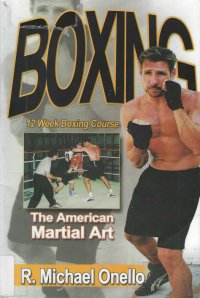
This book is a former library book from Palm Beach County that ended up at ABC Books (from whence I bought it in April). It runs 176 pages, with lots of pictures, but it’s really more of a training plan than an instructional guide. It starts with some conditioning exercises and stretches, and then it goes into punches and combinations, with progressions detailing what you should do in weeks where you work out three or four times a week.
It does talk about combinations using numbers, which is something my dojo has started recently (well, within the last three years), but our dojo’s numbering system differs from the book’s (and our dojo really doesn’t talk about tae kwon do strikes now at all). The book also has a couple of different punches that my dojo does not focus on–a straight right (which is a shorter right than a right cross) and an overhand right, which is a high hard one, like a straight or cross punch but coming kind of down over the opponent’s guard. And the book emphasizes a boxer’s stance, where the lead shoulder is turned more toward the opponent than my school teaches, as that position, although it puts you on a better guard as you can hide behind your lead hand/shoulder and present a smaller target, it pretty much neutralizes your rear arm and leg. Of course, left to my own druthers, I would spar this way all the time.
At any rate, not quite as informative as Boxer’s Start-Up: A Beginner’s Guide to Boxing–remember, that book had a lot of really good illustrations identifying body pivots and angles of motion. But I guess it makes me more of a martial artist that I can sit and read books about the subject when I’m too lazy to go to the dojo.
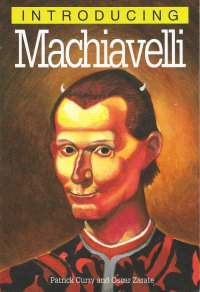
As you know, gentle reader, I am a sucker for these Marxist comic book introductions to various thinkers (see also Sartre for Beginners and Einstein for Beginners), so when I saw this book at ABC Books last August, I knew what I was in for.
So, yes, the book is a Marxist tract that basically implies that Machiavelli was in favor of a proletariat revolution of sorts, but aside from that, it does talk about, yes, The Prince (which is clearly not a satire) and provides context both historical and biographical to its composition.
It has paragraphs (and cartoonish illustrations) that describe Italy of Machiavelli’s time, including the importance of the d’Medicis, the Borgias, and the revolutions and counter revolutions in the city states of the time. So, as I was saying, good context for Machiavelli’s writing and a description of his non-writing career (and how he wanted his writings to ingratiate him to the powerful).
But it recognizes that The Prince is a small part of Machiavelli’s output–apparently, he thought his Discourses on Livy was a more important work–but it gets all the attention and draws everyone’s ire even though it’s a dispassionate study as much as a moral prescription for power. But the book puts it all in context and makes me want to read Discourses on Livy.
Oh, and of course it makes sure to erroneously say that national socialists/fascists are “on the right,” and it does lay out that Margaret Thatcher was pretty close to Hitler (although, the book is strangely hard on Bill Clinton).
So these books are plenty informative, and they’re quick reads since they have less actual text in them than a Diary of a Wimpy Kid book. And they’re funny when you can point at the obvious Marxist insertions and assertions.
I hate to say it, but I rather hope I find more of these books in the wild. I am not so enamored with them that I’ll order them full price, though.
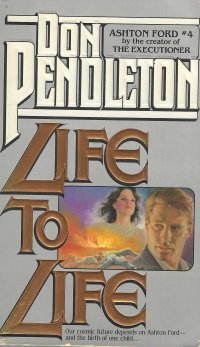 It’s been four years since I read the first book in Don Pendleton’s Ashton Ford series, Ashes to Ashes; in it, I said I had another in the series, the third. However, I must have been mistaken or I might have not put that in the series grouping the last time I deeply cleaned and reorganized my to-read shelves six years ago, as this is #4 in the series, and I also have picked up #6 somewhere.
 Gentle reader, I have been reading, although not as much as normal over the end of the summer, and I have been really slow at writing up my thoughts on the books I have (I have read three and almost five in the last month). I finished this book on September 13, and I am only now getting around to typing up my thoughts which are likely to be even more brief than my normal book reports as I have probably forgotten what I want to say.
 Well, gentle reader, I asked in my
  So, apparently, as I worked my way through this set of books eighteen years ago, my book report for
  I actually started reading this before I started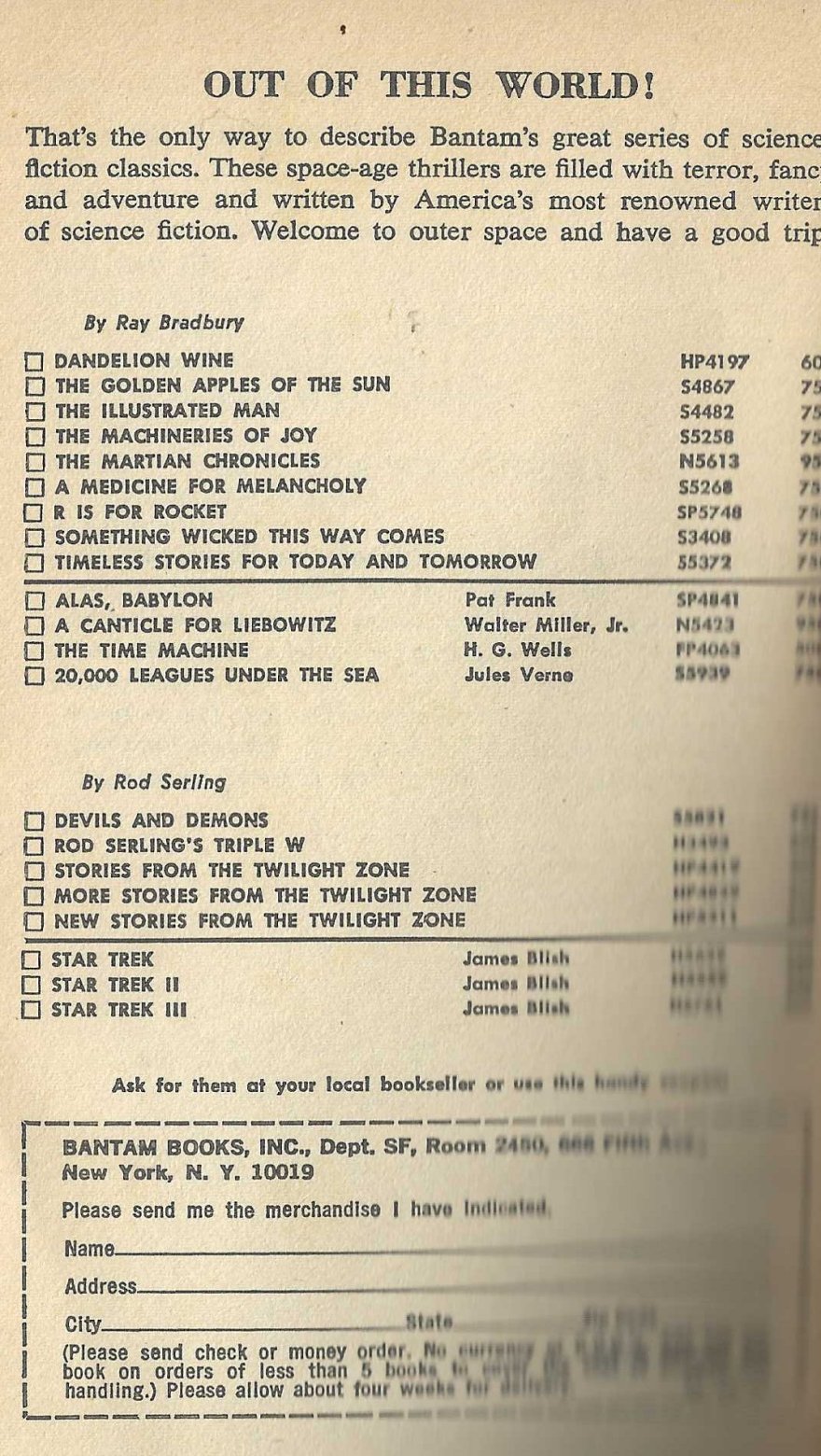
 I bought this book
  I picked this book up in June
  Where the heck did I get this book? A quick search of Good Book Hunting posts does not yield a result. It does not have an ABC Books sticker. It does not have a price penciled on the first page which might indicate another used book store. I certainly did not buy it new as a sixteen-year-old. So I must have picked it up at a garage sale. Perhaps this year’s Lutherans for Life garage sale–I don’t see a Good Book Hunting post for that particular sale this summer, which might mean it was one of a couple books I might have picked up. Without a picture, I have no memory.
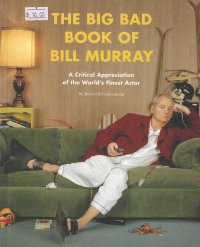 I bought this book for $10
 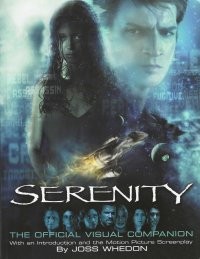 This book completes the four books I bought at
 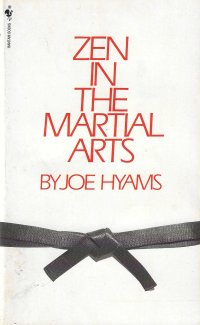 I bought this book
  This book bears no copyright date, but some of the poems that are dated come from the late 1960s–and the first is dated 1937 and says it’s the poet’s first poem. So we can assume this is from the 1970s or 1980s–maybe even a little later given that the collection has wingdings between poems that might come from the birth of desktop publishing. Remember, younger readers, desktop publishing referred to being able to lay out your books on your desktop computer for printing, not blogging or e-zines where the work never actually leaves the desktop (which these days includes mobile devices).
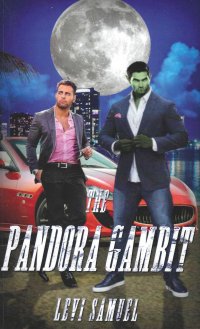 Well, it’s been a while since I bought this book–I got it at the last LibraryCon,
 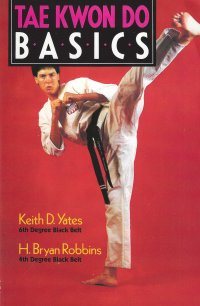 I bought this book
 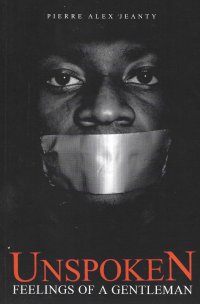 This book was in the poetry section at ABC Books, but that’s a bit of a misnomer. The author’s bio calls him a social media influencer, and the book reads like a bunch of Instagram posts. Some are a couple paragraphs of prose, and some are “poetry,” although they’re just prose with line breaks.
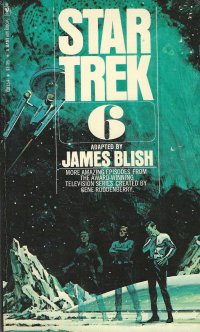 You know, I had almost forgotten that I was working my way through these books earlier this year. So when I was looking at the to-read books in the hallway, I thought, Oh, yeah, and this book provided just what I was looking for: A quick and pleasant read. I mean, I have to get my stats up. I’m only in the 40s in the books read in 2022 list, and it’s almost August. And I’m not sure we’ll have the football package this year for me to browse monographs and chapbooks.
 Well, I wish I could say that my confusion between Willa Cather and Eudora Welty is easing with my reading, apparently, a couple of Cather novels in the recent years. Oh, but no. I had this book before me with the author’s name right on it, but I got to thinking Eudora Welty wrote O Pioneers! which I read
  As you know, gentle reader, I’m a bit of a fan of his for years (ah, jeez, I posted his video “
 This book is a former library book from Palm Beach County that ended up at ABC Books (from whence I bought it
  As you know, gentle reader, I am a sucker for these Marxist comic book introductions to various thinkers (see also