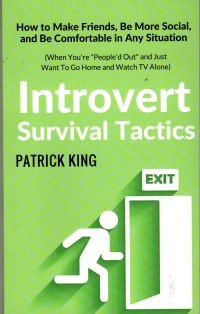
 I saw this book on Instapundit’s blog, I think, and I buy just about everything I see on Instapundit. I mean, we have screaming flingshot monkeys, for crying out loud.
The book is designed for introverts, which the author defines as someone who gets worn out by social contact instead of people who are awkward or shy. So it might not apply to everyone who considers himself an introvert. Me, I think I was XNTJ on the old Myers-Brigg, where I hit right in the middle of introvert and extrovert. So I’m probably not the core audience for the book. I just look like an introvert because I’m reserved and distrustful of people. So the book didn’t resonate with me as I thought it might.
Basically, it’s a collection of tips and tricks for people who just run out of energy in social interactions as to how they can either extend that “social battery” (the metaphor the author uses) or structure their social lives to take into account their introvert nature. Things like make sure that you have an exit strategy/end time for social events, make sure you take little quiet “breaks” during social situations, all the way up to setting up a safe space for introverts when you’re throwing a party (what?).
You know, I like to host people at Nogglestead because I have opportunities to step out of the room for a minute to take care of hosting duties. But when thinking about introversion while reading this book, I started to think that I’m possibly more of an extrovert than my beautiful wife, who is friendly and can chat up strangers fairly easily, but when she’s done working or socializing, she wants quiet time for herself. It amuses me to think that I’m an extrovert, but not a very friendly one.
So if you’re introverted or think you might be, you might find something in this book you can use. If nothing else, it’s a quick enough read about psychology and self-help.

 It took me a little while to get through this book. I took it with me when I went to Leavenworth in July, and I made it about a third of the way through it then, but it’s been relegated to my carry book in a season where I don’t have much time to read my carry book. Let me again explain the “carry book”: It’s usually a smaller paperback that I take with me when I’m going to have an hour or so to read at a location that’s not one of my primary reading recliners (PRRs). Normally, these spaces include church over the Sunday School hour, the martial arts school when I’ll be there an hour before my class begins, or church while my child or children attend the Wednesday evening programming. In summer, our schedules are off, and I don’t really get to sit and read outside the house. So carry books tend to sit on my dresser (like
  My goodness, has it been ten years since I’ve read a Perry Mason novel? The historical documents on this blog indicate it has (the last beeing
  I have this collection in the Reader’s Digest World’s Best Reading edition, which is a series I pick up when I can find them cheap. They’re nicely put together, they often come with a little biographical pamphlet about the author, and they put the academic material where it belongs–at the end of the book, not ahead of the primary material.
 I read the Great Brain books in elementary school, and when I had children, I started picking the volumes up for my boys. Apparently, I picked up two copies of this book as I found a duplicate copy on their bookshelves while helping them clean their room this summer. So I put it on my to-read shelves for nostalgia’s sake.
 I bought this book after I attended the Herb Alpert / Lani Hall concert
  When I cracked open this book, I thought I’d read it before. It begins with a water-infiltration attack on an oil drilling platform. But as I went through the set piece, I thought, No, the other book included an assault on an oil platform in the North Sea, and this one is in the Caspian Sea. Completely different. So it’s like James Bond: Watching the movies rapidly in succession, one realizes how many of the set pieces are repeated, especially ski chases, SCUBA fighting, or the sudden large scale assaults of United States troops, astronauts, or ninja on the enemy compound.
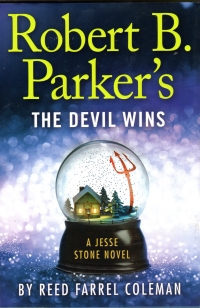 Well, well, well. This was a pleasant surprise. I was not pleased with
 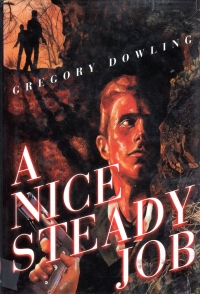 I picked this book from my to-read shelves because, whenever I turned around at my desk to talk to my beautiful wife, the red dot that indicates that it was a dollar book I bought from Hooked on Books once upon a time (probably before this blog existed, werd). I’m very conscious of the red dots these days since the current employees at Hooked on Books
 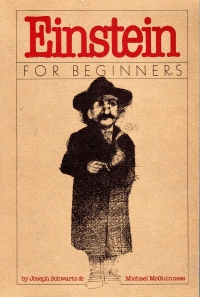 I bought this book in
 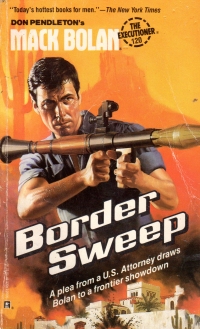 I threatened to pick up the next Executioner novel, and, by golly, I did it. You and I must be punished!
 Well, after reading
  Sweet Christmas, this is the second book in a row that I really enjoyed. I’m wonder if I am not doing the reading-for-pleasure thing correctly this year that I’m so surprised when I really enjoy a book.
 This book has been on my to-read shelf for a while, and I don’t know why. I enjoy Robert Crais’ books more than a lot of the stuff I read. How big of a fan am I? I once spent an afternoon going through microfiche old PDFs of Spider-Man comic books
 You might think Nightmare Town is New York based on
 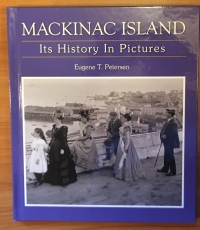 I bought this at the Island Book Store on Mackinac Island when I was up there
  As I mentioned, I recently returned from a trip to Michigan. What are you going to read if you’re going to Michigan? A book set in Michigan which is a series of poems/songs about Native Americans.
  , is pleasingly arrayed in the paperback edition. The Kindle edition, well, you’re reading on an electronic device anyway, you damn kid.
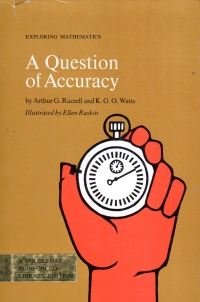 Back in December, I was talking to an engineer, and I said that my FitBit was precise, but not necessarily accurate, when it gave me 250 steps’ credit for sitting on a bar stool and speaking expressively. The engineer was impressed that I knew the difference being that I have an English degree and all. So when I saw this book on the sale cart or in the sale room at Hooked on Books
  Full disclosure: when I moved from a nice suburb and good school district to the trailer park in the middle of my seventh grade year, “R.P.” was the kid assigned to be my friend to help me get around North Jefferson Middle School in Murphy, Missouri. He was a smart kid. I was a smart kid. I’d like to think we were numbers 1 and 2 in the smarts for our seventh grade class, but I might be giving myself far too much credit. By the time we finished high school, I certainly dropped a couple points in the rankings because I didn’t put any effort into my schooling, and he did. But I digress. We go way back, and when I saw he had a book, I ordered it.