Book Report: Tale of the Tigers by Juliette Akinyi Ochieng (2010)

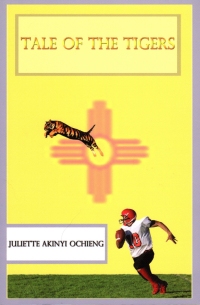
Book coverI must have bought Baldilocks‘ book when it was fresh and new, as it’s autographed and everything, but it’s been floating around my to-read shelves for a while. But, in my defense, such as it is, I have not actually had to move the book unread.

It’s a literary novel set in the early 1990s at a university in New Mexico. A black young woman who has gained some notoriety for past behavior has decided not to leave school and to stick it out meets the white quarterback of the football team, and they like each other and start dating.

That’s the plot in a nutshell; the execution of the book is a slightly talky exploration of how this affects the protagonists, their families, their friendships, and their standing within their communities. It’s a pretty frank set of musings and interactions, and they do have a conservative/classical Liberal bent, so I agreed with the sentiments for the most part, so I didn’t mind them much but I would expect readers with a different, more modern perspective would not be convinced.

It was a quick, pleasant read and worth my time regardless.

Buy My Books!
Buy John Donnelly's Gold Buy The Courtship of Barbara Holt Buy Coffee House Memories

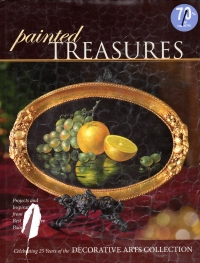
Book Report: Painted Treasures (2007)

Book coverI bought this book for a buck earlier this month, and I had the opportunity over the last couple of weeks to browse it over a couple of football games that I watched parts of because I’ve been disappointed in the Packers’ play this year.

As I alluded to in the Good Book Hunting post, this book is part project book and part catalogue.

As it’s published by the parent company of Writers’ Digest, which also has a number of other art and crafts magazines in its stable, this book has a number of art project discussions of how to make the painted objects, including the colors on the palette and brush stroke techniques to mirror the project originally painted by the artist. I learned how you build up from the background with basic colors and shapes and then add lines, shading, and highlighting to give the actual depth. This is a lot different from the flat way I did painting when I was in school and trying to get extra credit in my art classes, but I wasn’t doing it like Bob Ross told me to even then.

Then we get into some items in the Decorative Arts Collection, which is a 25-year-old (then) club/consortium of decorative painters that got together to promote and to collect historical art of the stripe. Well, not stripe: It’s painting flowers and walking men on various practical articles to tart them up a bit. A lot of painting on tin, a little less kitchy than pure folk/country art, but along those lines.

Prettier to look at than, say, Matisse but with a little less depth than real Art. But still, pleasant to look at, and certainly not something I could do.

Buy My Books!
Buy John Donnelly's Gold Buy The Courtship of Barbara Holt Buy Coffee House Memories

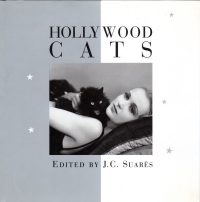
Book Report: Hollywood Cats edited by J.C. Suarès (1993)

Book coverI’ve been haunting the antique malls the last couple of weeks, looking for gifts for different people, and I’d seen something I thought I would pick up last Sunday at Ozark Treasures, a cat-themed game, and I thought it would be good for a friend, but we’ve already taken care of that particular friend this year, so I let it go. But I thought of another friend it would be perfect for, so I returned Friday to look for it. But I didn’t find it. Instead, I picked up this book, which is also cat-themed and would be a good gift for either of the aforementioned friends. But in a stunning turn of events, I decided to keep it because I also like cats.
The book is a picture book of classic through the middle 1980s stars with cats, and there’s a caption telling you who it is. Most cats appear only once, although Morris the Cat and Orangey, who appeared in several movies, appear more than once. We’ve got the cover woman Carole Lombard, we’ve got Marlon Brando, we’ve got Sigourney Weaver with the cat from Alien.

It’s an interesting book to browse mostly if you’re in the intersection of old movies and cats like I am, and, in retrospect, only one of the friends to whom I thought to give this book. So perhaps it’s for the best that I kept it after all.

Although I could, I know, give it away now that I have read it. But that would be most unlike me of all.

Buy My Books!
Buy John Donnelly's Gold Buy The Courtship of Barbara Holt Buy Coffee House Memories

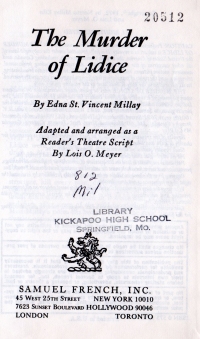
Book Report: The Murder of Lidice by Edna St. Vincent Millay and Lois O. Meyer (1972)

Book coverI might have read this in another form before (I have read plenty of Millay before, which probably lead to my fondness for clunky language and line).

The preface gives the book’s history:

This powerful and deeply moving dramatic poem is as contemporary today [1972] as it was in 1942 when Edna St. Vincent Millay was commissioned by the Writers’ War Board to write a poem immortalizing the village of Lidice, Czechoslovakia. This verse-narrative, arranged as Reader’s Theatre Script, very eloquently voices the protest and horror of all peoples of the world at the wanton destruction of the small village during World War II by the Nazis who claimed that the citizens of Lidice were harboring the assassin of Reinhard Heydrich, a Nazi henchman. Opening on the peacefulness of the village and daily activities of a peasant family, the action soon draws us into its suspense and mounting tension as Nazi soldiers enter Lidice, destroy every structure, kill every man, drive the women into “concentration camps,” and her the children into “educational institutions.” Written in a white heat of outrage and fury after news of the cold-blooded mass murder, Miss Millay’s poem has become one of the great literary classics opposing all war atrocities.

You can read more about the actual event on Wikipedia. Note that this is what actual Nazis did, and that the literal Nazis did not stop their reprisal with this one village. Contrast with political figures compared to Hitler in the modern world.

At any rate, this version of the poem is broken into different narrators so that different sections are told in different voices and sometimes the individuals mentioned in the poem can have a distinctive voice to present the sections of the narrative. I kind of ignored that because in reading, there’s little difference between Woman 1 and Woman 2 or Woman 1 and Man 2. The poem itself delves into the lives of a family in the village, two parents whose oldest daughter is getting to marrying age and is getting courted by two local lads when the Nazis arrive. It’s 32 pages of verse, so a pretty quick read, and it’s pretty well executed.

But it’s more interesting as a snapshot of a time in history where a group of writers came together to promote national unity in a war effort. A sepia-toned and faded snapshot when compared to the behavior of “poets” in the 21st century.

The copy I have is in a library binding from a local high school whose theatre program I support through my business. The book itself stems from 1972, and the checkout form in the back cover shows 11 checkouts in the 1990s. People who went to school with my wife checked this book out. Whoa.

Buy My Books!
Buy John Donnelly's Gold Buy The Courtship of Barbara Holt Buy Coffee House Memories

Book Report: Desert Strike The Executioner #122 (1989)

Book coverThis book isn’t a complete waste of time, which was the wish I expressed in the report for Twisted Path. Mack Bolan doesn’t smoke a cigarette, for example.

The plot: Someone is killing off the Saudi royal family, and it looks like the Iranians and the Russians are working together to install a puppet monarch on the Saudi throne. Bolan goes to Saudi Arabia to uncover the plot, and it leads him and Grimaldi into an assault on a compound at Mecca.

It’s an odd duck of a book; I was first pretty satisfied with it, but then the set pieces in the plot were kind of clumsy. I don’t know how much to ascribe to the writer or to the people who prepared the plots. But the set pieces don’t really seem like they’d be a good idea to advance to the next, and then Bolan charges in with guns blazing. So the writing was okay, but the set pieces were faulty.

Although the book contained a couple of mistakes:

The men were Arabs, probably with the ayatollahs–Iranians in Western dress carrying compact Russian automatic weapons.

Iranians are not Arabic. As I was reading, I wondered if I could tell Arabs from Persians and Semites based on appearance. Maybe, maybe not. But in plain text and history, I can.

Also, at the very end, they crash land a plane that has run out of fuel, and it explodes. Which is one of the nice things about an airplane running out of fuel: The explosions are much lesser.

Still, not a bad entry, but it might be until next year until I get to another, especially as I realize I have not read a Christmas novel yet, and I will have to do so on an emergency basis.

Buy My Books!
Buy John Donnelly's Gold Buy The Courtship of Barbara Holt Buy Coffee House Memories

Book Report: Farmer Boy by Laura Ingalls Wilder (1933, ?)

Book coverWow, how time flies. It’s been September since I read Little House in the Big Woods and Little House on the Prairie. I don’t know where that time has gone, but I guess I have read or finished 27(!) books since then. Which is weird because I don’t vividly remember a bunch of them. I mean, I see the titles and remember what the books were about, but I don’t remember them as having read them this year in particular. Some years, I remember a couple of books easily that I read, and I have to look again at the tally to remember the books. The Little House series are going to be the ones I remember easily from 2018. And probably 2019.

At any rate, this book deals with Almanzo Wilder as a nine-year-old boy and his experiences on his father’s farm in New York State. The Wilders are not vagabonds like the Ingalls family; they have a well-established farm with lots of livestock and acres under plow, and Mr. Wilder is a known and important man in his community. The book follows the pattern of the other books, starting in winter and following the seasons through planting, growing, and harvest. The book details how the farmers worked in those days and offers important life lessons in money management and growth. And it’s from a boy’s perspective; although the point-of-view in the books focused on Laura and her sisters doesn’t dwell too much on their being girls and this one does not completely toxically masculine, but there is a difference–and Almanzo has brothers and sisters, so the family dynamic is different.

So a fun book, a quick read, and it might very well be the first book that my boys and I have all read (not counting books that I read to them). They each read it in fifth grade leading up to a visit to Laura Ingalls Wilder’s home which is nearby (and, I have learned, I know people with firsthand knowledge of Mrs. Wilder and her life there). Hopefully, the boys and I will eventually read other books in common. Of course, now that I think of it, we might have all read a collection of cartoons or a joke book, since they raid my shelves for that sort of material from time to time. But that’s neither here nor there.

Now I need to find the rest of my collection so I can once again determine the gaps and fill them in so I can complete the series.

Buy My Books!
Buy John Donnelly's Gold Buy The Courtship of Barbara Holt Buy Coffee House Memories

Book Report: Dammit Bre by Samuel Rikard (2017)

Book coverI bought this book at Library Con this year. As I mentioned, it’s the author’s account of being a single father for his eight-year-old daughter, chock full of incidents and considerations from dating to juggling work and childcare needs. I related to a lot of incidents in the book, and I related to the humble origin story.

The book kind of falters towards the end, where it moves from parenting topics to more general thoughts, but all in all, not a bad effort.

I’ve got the first in his fantasy series around here somewhere. I’ll have to see how he does at fiction.

Buy My Books!
Buy John Donnelly's Gold Buy The Courtship of Barbara Holt Buy Coffee House Memories

Book Report: The Branson Beauty by Claire Booth (2016)

Book coverI don’t know where I got this book; it has the markings of a Friends of the Springfield-Greene County Library Book Sale, but I don’t see it in the photos from this year. It also has a Barnes and Noble Autographed Copy sticker on the front, so it’s possible I paid full price for it at Barnes and Noble and didn’t take a photo of it. Weird. What is this blog for if not to remind me where I get all these books?

The plot: A showboat similar to the Branson Belle runs aground on Table Rock Lake, and as the local authorities are ferrying the survivors to shore, they discover a murder victim on board. The newly appointed sheriff has to deal with Branson business interests and a blizzard in his investigation.

It’s a standard midlist sort of book, something akin to the Jesse Stone novels from Robert B. Parker.

Except.

Boy, howdy, the author, who resides in California, gets a lot of details wrong. It starts when a deputy says that they’re getting some assistance for the boat rescue from the next county. It doesn’t identify which county, which made me wonder about how many details were going to be wrong. Well, not only does it mention that Table Rock Lake is close to freezing–heaven forbid, the lakes down here do not freeze, especially one of the big dam-created lakes like Table Rock. Then, it’s revealed that the sheriff is from Branson County. But Branson is in Taney County. The kids go to Branson Valley high school, which does not exist–in Branson, the kids go to Branson High School. The book refers to 76 as Seventy-six (this is a copy error, not a factual error). There’s a Latino woman saying there’s no Latino community and that people look at her strangely, but, come on, this is not true. When watching the airports for a fleeing suspect, the sheriff talks about the small airport south of town, the Branson airport, and then talks about friends watching the Kansas City and St. Louis airports, but nobody accounts for the Springfield National Airport here in Springfield. The sheriff waits at a convenience store on the corner of Glenstone and Battlefield across from the mall here in Springfield–and there’s no such convenience store. The Springfield Channel 12 reporter–there’s no such station. Oh, and the cold and snow–it’s not typical down here, so people are not that well-equipped for it and it doesn’t tend to last long.

The book has enough errata of this nature to draw one familiar with the area out of the book and perhaps even doubt if the person whodunit really done it.

Which is not to say that she gets all the details wrong–she mentions the twisty drive to Forsyth, and that’s true, especially if you roll through Rockaway Beach, and she talks captures the drive north out of town on 248 pretty well.

Which makes me wonder about how she got some things right, but so many things so wrong.

Apparently, this is the first of a series, so I’m a bit interested if later books correct some of the errors or whether they just let them slide. If I come across others inexpensively, I’ll pick one up to see. I thought about offering to read the manuscripts to flag things that don’t ring true, but I’m not sure I have the time for it.

Buy My Books!
Buy John Donnelly's Gold Buy The Courtship of Barbara Holt Buy Coffee House Memories

Book Report: The Tao of Christ by Will Keim, PhD (1997)

Book coverI bought this book in February along with three other books at ABC Books, and I predicted I would read it first since I read The Tao of Pooh in 2016 and The Tao of Elvis in November of 2017. However, of the four books I bought that day in February, I have already read two others (The Virtue of Happiness and The Beauty of Gesture); the other, a history of the Celts, joins another history of the Celts that I bought in 1993 floating around in my backlog.

Well, that’s a lot of bookkeeping. What about this book?

I hoped, as I mentioned, that it would be an insightful comparison of the parables of Christ and the teachings of Lao Tzu, identifying similar thematic elements in each as well as a contrast where appropriate. With a focus on how the Bible is better, of course, along with some little hope that people interested in the Tao might find their way to Christianity through this book (as opposed to Buddhism through Christian Eyes which warns Christians about the sweet seductive lure of heathen philosophy).

Oh, but no.

It’s more of a daily meditation structure. Each of the 48 lessons presents a teaching of the Tao, a parable or Gospel teaching, and then Keim’s own meditation, some of which seem to have nothing to do with the preceding. Many of them rely on an, erm, contemporary translation of the Tao Te Ching, such as:

When a country is in harmony with the Tao,
the factories make trucks and tractors.
When a country goes counter to the Tao,
warheads are stockpiled outside the cities.

There is no greater illusion than fear,
no greater wrong than preparing to defend yourself,
no greater misfortune than having an enemy.

Whoever can see through all fear
will always be safe.

Strangely enough, the original does not mention factories, tractors, or warheads. So I started comparing the translations of the Tao in this book with another translation that I have, and it has quite a bit of variation in it. I didn’t compare the translations of the parables, though, but the stories themselves were familiar and not updated to modern contrivances.

But Keim is not traditional in the Christian sense as he often refers to God as She; I thought perhaps it was only a translation thing as he refered to the Tao Te Ching Master as either he or she, but, no, he was probably equitably translating the same there as well.

So I was going to say that the best thing about this book was that it got me to reading the Tao Te Ching again and the parables, but now I’m even not sure I read them in honest translations.

So I’m going to have to say the best thing about reading this book is that I’m done.

Buy My Books!
Buy John Donnelly's Gold Buy The Courtship of Barbara Holt Buy Coffee House Memories

Book Report: Matisse by Volkmar Essers (1989, 2002)

Book coverI bought this book a couple of weeks ago and delved right into it. I hoped it would be a football browser, albeit something I could browse during night games to hopefully not expose the nude model photographed on the back to my children. But it turns out this book has a lot of text that includes not only biographical information about Matisse and a broad discussion of his artwork as it relates to trends in the art world and whatnot but also lush descriptions of the images that explain why the images are awesome.

Text like this:

In 1944 the Argentinian diplomat Enchorrena, who was resident in Paris, commissioned a door to connect his bedroom and bathroom. Initially Matisse opted to present an idyllic theme: a nymph sleeping, observed by a faun. But both subject and composition left the artist dissatisfied, and his work was a trial to him and stagnated. The diplomat persisted, and Matisse tried again. He chose a new subject, and this time succeeded. The mythological ‘Leda and the Swan’ (p. 82) has been stripped of all narrative content. Jupiter, who according to the myth came to Leda in the form of a swan, can be seen in the upper part of the picture, his arabesquely curved neck and head bending across a black space to Leda, who turns away. The monumental female nude has been fashioned sparingly and vastly. The empathetic, streamlined figure has something heroic, and restores the dignity to the myth. To right and left, red panels with a leaf design provied the triptych’s frame and give Matisse’s interpretation a revelatory flavor.

Which describes this:

The text contains a lot of art criticky words about the colors (the subtitle of this book is “Master of Colour”), flattening of the foreground, the additional complexity of the patterns when a table is turned in perspective in an otherwise flattened picture, and the wonderfulness of simple geographic patterns (sometimes repeated!).

But, come on. This stuff is insipid and stupid.

I have mentioned that that I don’t grok primitive art, and I really, really don’t care for the early 20th century’s descent into simplistic, unrefined brushstrokes as art. I mean, looking at a lot of this, I conclude that individual choices in the strokes, lines, and coloring doesn’t really matter. If that crescent had been an inch to the right, what difference would it make? My beautiful wife said she could probably not do better, but I don’t think she could do worse, and she and I are not fine artists with devotees and collectors and some influence (for some reason).

I’m starting to wonder if my beloved Impressionists, even the good ones (Renoir, Manet, Cassatt, and I suppose Monet) irretrievably broke art when they diminished the reliance on clean lines. The bad ones (Degas, Toulouse-Lautrec, and so one) might have led to Cubism and whatever ism Matisse is. In celebration of the hundredth anniversary of World War I, a lot of commentators told us that the war broke Western civilization. Looking at Matisse, I expect the cracks were already there.

So don’t expect to see Matisse prints at Nogglestead nor any other monographs of his work reported on in these pages. A Good Book Hunting post from 2015 indicates that I have another Matisse title around here somewhere, it might be akin to What Makes A Picasso A Picasso?–that is, a children’s book. So that might be the exception–I’ll certainly not buy another Matisse monograph.

Oh, and since this the Internet, I know you’re all jonesing for the back cover. I’ve put it below the fold.

Continue reading “Book Report: Matisse by Volkmar Essers (1989, 2002)”

Buy My Books!
Buy John Donnelly's Gold Buy The Courtship of Barbara Holt Buy Coffee House Memories

Book Report: Bitter Harvest by Hazel Hirst (1984)

Book coverThis book is a collection of 14 poems about living on a farm and then losing the farm. It comes out of the 1980s Farm Aid era of family farms lost to corporate interests, a genre that somehow was a big thing in the middle 1980s (a response to President Reagan, perhaps?) but has dwindled (although, apparently, Farm Aid is still going, so perhaps it’s just my awareness of it that has dwindled).

Apparently, the purchase of this book in 1984 included a raffle ticket to win the Hirst farm. The author and her husband, faced with debt and foreclosure, tried to sell 50,000 copies of the book to pay off their debts, but ultimately they cancelled the raffle. 50,000 is a pretty lofty target for a chapbook. Take it from a poet who thinks 100 copies is a stretch goal.

At any rate, the poems are lyrics, generally over 12 or 16 lines long and end rhymed. Opposite pages have photos of the family farm and the livestock, so it’s a quick enough book to read. Nothing that sticks out, really. A little more meat than Under the Sunday Tree but that’s mostly because the lyrics are lyrics and longer.

More interesting for the story behind it, though.

Buy My Books!
Buy John Donnelly's Gold Buy The Courtship of Barbara Holt Buy Coffee House Memories

Book Report: Under the Sunday Tree Paintings by Mr. Amos Ferguson / Poems by Eloise Greenfield (1988)

Book coverWhen I found this book at the Friends of the Springfield-Greene County Library book sale this spring, it must have been misclassified as Literature (that’s what the first page says) or maybe Art, but it’s actually a children’s book of art and poetry. I think it’s based on the art of the Bahaman artist Mr. Amos Ferguson with some verse by Eloise Greenfield added.

The verse is light and simple, which is not a bad thing in itself, but its depth is aimed at children, so it lacks real poetry meat to it. As does most of the poems I read in cheap chapbooks anyway.

The art, though, is primitive/folk art, and I really don’t know how to appreciate it. I mean, the paintings kind of look like the stuff I painted on the recovered white-coated cardboard tops of doughnut boxes that I used as my canvases when I lived in the trailer park and watched my first episodes of The Joy of Painting. I mean, I can look at Renaissance paintings and judge, knowing that it’s my opinion alone, good and bad, what moves me and what does not. I can do that with Impressionism. I can do that with a lot of European figurative painting. But with primitive and folk art styles, I really lack an aesthetic vocabulary to say whether one thing is good or better than another. So all I can say here is that it ain’t my bag, baby.

Which is weird, because most of the “art” I do in woodburning or etching is pretty primitive and folk-artish. Which explains why I have no idea whether I am any good at it or not. Which probably means “No.”

Buy My Books!
Buy John Donnelly's Gold Buy The Courtship of Barbara Holt Buy Coffee House Memories

Book Report: Ozark Mountain Humor edited by W.K. McNeil (1989)

Book coverWith a title like Ozark Mountain Humor and a subtitle of Jokes on Hunting, Religion, Marriage & Ozark Ways, you might think that this is a humor or joke book. As I did. But, ah, my foes, and, ah, my friends, it is an academic study of jokes as folklore.

Which means that half of the book is end notes describing where the joke was “collected” (via field work, where intense academic types transcribed jokes). Each joke is numbered for easy reference, and each joke is called a “text” when described in the end notes. Motifs, numbered academically according to one or more humor motif codexes, are cross-referenced, and some of the jokes are delineated from humor manuscripts in 15th century Renaissance Italy or old English joke books printed immediately after the Gutenberg Bible.

And one or two of the jokes are funny.

But reading an academic book about jokes that includes jokes adds a bit of remove from the actual jokes, so perhaps I was less prepared to laugh. Also, I don’t tend to laugh at many jokes in these books, and I’m infrequently actually amused.

Here are the notes that I flagged in the book as I was reading:

  • One joke deals with a young girl saying her prayers prior to moving to St. Louis, and she says at the end of her prayer, “This is goodbye, God. We’re moving to St. Louis.” (Text 117.) Even though I was a longtime resident of the St. Louis area, it was a bit reluctantly, so I can empathize.
  • One joke (Text 126) deals with a barber whose shop is visited by a notorious outlaw; this reminded me of a shorter version of “Lather and Nothing Else” albeit with a punchline instead of a moral lesson.
  • Texts 202b and 204a/204b look to be the source material for the Ray Stevens song “Sitting Up with the Dead”:

I didn’t flag the footnote that jokes about black people were removed at the publisher’s request. The jokes about nuns enjoying being raped, however, remained in the book. In 1989, our official sensibilities were only starting to be refined. Although one of the nuns being raped jokes relied on the inclusion of a black nun who speaks with a hyperbolic accent and who already knows a thing or two about sex. One wonders if this text was excised in later editions of the book.

Also, the author refers numerous times to Asimov’s Treasury of Humor (which I don’t think I own, but I will be on the lookout for), but never refers to Lecherous Limericks. Limericks are not part of the native Ozarks oral tradition, apparently.

At any rate: I read it, and it counts as my 75th book of the year. I even read the End Notes, or skimmed them, anyway, as some of them detailed the local people who told the joke, including many people who were born in the 19th century and saw the early 20th century changes to their corner of America.

Buy My Books!
Buy John Donnelly's Gold Buy The Courtship of Barbara Holt Buy Coffee House Memories

Book Report: Specialist from “Hardscrabble” by Elbert Crittenden Traw, DDS (?)

Book coverThe title of this book might fit onto one of the men’s adventure paperbacks I favor or perhaps one of the series Westerns I infrequently indulge in, but instead it is a collection of reminisciences published in the 1940s or 1950s from a man born in 1875 and a graduate of the Washington University School of Dentistry in 1904. So maybe the book is from the 1960s or 1970s, but most of the stories within it come from the late part of the ninteenth and early part of the twentieth centuries.

The book doesn’t move in chronological order, so we get stories of his growing up on a farm following stories of him working for the streetcar line while going to dentistry school. In addition to the memoirs, we get some natural science musings as he talks about different animals he’s seen and killed as well as health musings, including a chapter on constipation that leads to some, erm, novel remedies (and, after bladder trouble, he mentions that he doesn’t drink much water, so 100 years later, we can probably give him a better solution than the ones he recommends).

It’s a bit like listening to an older relative tell stories. I enjoyed it because I like these sorts of books, as you know, where real people put together their recollections and diaries and describe their world more plainly and accurately than historians or historical filmmakers can. What’s most striking about his life is not so much the hunting and fishing stories, but the times he talks about casual brawling with his associates and friends. They’d just start fighting for fun, and Dr. Traw had a long memory for men who whopped him, and he’d just sometimes get them back by starting to throw punches. As an adult. Maybe radio killed this pastime for rural America for the most part.

One thing I’d like to note is that this book ostensibly takes place 40 years or so before E.M. Bray’s Growing Up In The Bend, but how remarkably similar the lives were in the use of farm machinery, wagons, and rural life. It really illustrates how disruptive and changing the 20th century was. So far into the 21st century, we’re nowhere near that on technology. On politics and the future of the country, maybe more so, because that doesn’t require math.

Buy My Books!
Buy John Donnelly's Gold Buy The Courtship of Barbara Holt Buy Coffee House Memories

Book Report: Zen and the Art of Knitting by Bernadette Murphy (2002)

Book coverI read the original (Zen and the Art of Motorcycle Maintenance) earlier this year, and I told someone (probably the precocious kid at my martial arts school who likes to read philosophical works, or perhaps my beautiful wife) that I wanted to read that volume so I could read this sequel to it, as this volume was on the outer rank of my to-read books in the hall and was hence present any time that I went looking for a new book to read and did not have something I’d bought that week that I wanted to jump right into. As you can tell, gentle reader, my Web host offered me a good deal on italics this week, so watch this space for their overuse.

It’s not a sequel, of course; it’s one of the books that play upon the title of the Pirsig work and call themselves Zen and the Art of something.

In this case, it’s knitting. The author does play up some of the mindfulness and “in the zone” elements you can get into when you’re sort of focusing on your knitting, but when the habits of the hands leave the mind free to wander or not.

However, this is not a particularly compelling book.

It really doesn’t have much to say aside from the description above; each chapter doesn’t really build upon a theme. Instead, it’s a series of interviews that the author has with creative professionals, educators, or her aunt the nun about what knitting means to each. Which is generally that they can express themselves and become mindful when knitting.

So I had to gut my way through the book, and in the end, it made me want to take up knitting less than Zen and the Art of Motorcycle Maintenance made me want to tackle small engine repair.

Buy My Books!
Buy John Donnelly's Gold Buy The Courtship of Barbara Holt Buy Coffee House Memories

Book Report: Rococo: A Style of Fancy by Terence Davis (1973)

Book coverThis would have been a book to browse during football games, and indeed, that was the goal last year when this book ended up on the table beside the sofa. However, the text portion of the book is dense at the front of the book, chock full of designer names as it creates a slow-to-read name-checking evolution of the rococo style in France, Italy, Britain, and Germany. Only then does it really go into the photography illustrating the rococo style as it is.

So it lounged on that table for almost a football season and a half before I moved it over to the table beside my reading chair for some attention amid the longer work I’m reading (to be announced probably a couple weeks from now; it’s that long).

So what do I remember from the book?

Rococo followed Baroque style in the late eighteenth and early nineteenth centuries, peaking in France but with some elements appearing in other countries. It, like Baroque, is elaborate and rounded, but it’s more whimsical than its predecessor and influenced a bit by the contacts with the Orient. Also, aside from some of the sculpture, maybe, it’s not for me.

Which is more than I knew before I read the book; all I knew of Rococo before it was the Rocky Rococo pizza by the slice chain, but I am from Wisconsin (where the chain is based). Which is, really, what I hope for when I glance through these things: A short intro course on something I don’t know with information for further learning should I like a topic or style. But Rococo ain’t it.

Buy My Books!
Buy John Donnelly's Gold Buy The Courtship of Barbara Holt Buy Coffee House Memories

Book Report: Lecherous Limericks by Isaac Asimov (1975)

Book coverMy son had a poetry assignment for his seventh grade language arts class, and part of that assignment was to write poems in a variety of styles, including a limerick. Which seems odd to me, gentle reader, as the limerick as properly understood, is a bit off-color in its humor most of the time. In a show of solidarity and to inspire the boy to write the poems, my beautiful wife said that she and I would also write poems, so I scratched out some lines of a clean limerick that isn’t very good. And isn’t very done yet.

But the exercise reminded me of this book, and I remembered its approximate location, so I thought I might browse it while watching football. But it is, erm, “Boldly Illustrated,” and a quick glance at it indicated that I should not read this where my children might see it. For although by the time I was his age, I had illicitly commandeered my mother’s copy of the Frank O. Pinion Dirty Joke book and memorized enough of them to be slightly less unpopular at North Jefferson Middle School. But I’m not sure how much off color humor I want to introduce to my son and, by extension, his Christian school. So I read this book under the blankets in the dark, and I’ll make sure it’s hidden on my bookshelves again where he won’t casually find it.

So. The book is 100 off color limericks by Isaac Asimov. They’re clever for their form, but what makes the book is that Asimov talks about the form in the beginning, and with each limerick he writes a couple of sentences to a couple paragraphs that explain what he thinks of them, how his wife might have helped with it, the circumstances in which he wrote it, and other asides from the mind of Asimov. A book of 100 limericks by Asimov would be less than 200 pages of Asimov talking about his limericks.

So I enjoyed it.

A couple things of note:

  • Asimov used the word lollapalooza before the word became cool and then uncool again because of the musical festival.
  • One of the limericks has a hand written notation “To Martha From the PE Wall” in tidy cursive on a limerick about male masturbation. I wonder what that’s all about.

A good read for an adult fan of Asimov. Unfortunately, these days, is there any other kind?

Buy My Books!
Buy John Donnelly's Gold Buy The Courtship of Barbara Holt Buy Coffee House Memories

Book Report: Hallowe’en Party by Agatha Christie (1969)

Book coverIt was kismet that I would pick this book up next. I’ve been encouraging my older child to start picking up adult books instead of the half book/half comics that they aim at children these days so he could start learning more advanced writing through osmosis, and I mentioned to him that I was reading things like Agatha Christie by his age or a little older (to be honest, I think I was still on the juvie science fiction for another year or so). And it was just about Hallowe’en. So when I came across this book on my hallway to-read shelves, I knew it was the one for me right now.

When I was younger–in high school, probably–I read a lot of Agatha Christie because the libraries–the school library and the community library–had a bunch of them. So I read a bunch. Apparently, in the annals of this blog, I’ve only read one book, Elephants Can Remember, just over ten years ago. I don’t recall seeing a bunch of Agatha Christie at book sales, so I have to wonder if we the English-speaking peoples of the world, have aged out of her books faster than she stopped writing them.

This volume, like Elephants Can Remember, is a later book of Christie’s, written in 1969. So the characters are modern, or at least mod, as some of them sport sideburns and those awfully colored pants that marked the era. Mrs. Oliver, the authoress who joined Poirot in these later books, attends a Hallowe’en party where a thirteen-year-old girl is murdered after claiming to have seen a murder. Mrs. Oliver brings Poirot in to investigate, and he finds that most of the town people think that the young lady was a liar. But someone believed her.

The plot involves a forged will, an au pair who might have forged the will and disappeared, illicit trysts, and a couple of prior deaths that Poirot uncovers as he goes through the list of people who were at the preparations for the party and heard the young lady make her boast.

The twist in the book was pretty obvious, or perhaps it’s just a turn in it, and the resolution rather ended abruptly with an ending that was not hinted at effectively through the book. I didn’t reach it and say, “Oh, yeah, I should have seen that.” So it fails at that, although in retrospect, looking back oh those many decades, I don’t know if any of them actually had the kinds of endings where I thought, Of course! I should have seen it! They either had twists I saw coming a mile away or endings like this one, where you think the detective had some inside information or that the convolutions in the plot revealed only convolutions in the plotting.

At any rate, it was a quick enough read. As I mentioned, I don’t see a lot of Agatha Christie books at the book sales, but then again, I’m generally not going over the fiction section at the Friends of the Springfield-Greene County Library book sale anyway. So unless I see them in a garage sale or the Friends of the Christian County Library, I won’t see them if they are there. I’d add some to my to-read shelves if I found them, but I don’t. So make of that convoluted endorsement what you will.

Buy My Books!
Buy John Donnelly's Gold Buy The Courtship of Barbara Holt Buy Coffee House Memories

Book Report: The Early Del Rey by Lester del Rey (1974, 1976)

Book coverI bought this book seven years ago because I was familiar with the name Lester del Rey, but I think I was most familiar with the name because of the publishing imprint whose juvenile science fiction books in library binding were a staple of my middle school years, at least at M. Gene Henderson Junior High. I don’t know that I’ve actually read any Del Rey, but given how much science fiction I read, particularly in my younger years, I might have.

This book collects 25 short stories that del Rey wrote before he became a professional writer (that is, before he became a writer full-time). It’s more than a mere short story collection, though, as he writes almost as much memoir about the time period (the late 1930s through the 1940s) and his evolution as a writer during that time. He talks about writing not only for the science fiction magazines/pulps but also for other pulps in other genres, about the jobs he held during that period, and where he lived (part of the time in St. Louis). The author’s voice throughout connects the stories and provides now-historical context for writing in that era.

I have been working on reading this collection of short stories for a while. I’d read one or two plus the connective memoir amid reading something else. I think this approach works best with me for short stories, as I have mentioned, because reading collections of short stories has some mental overhead when you have to reset your mind with each short story.

So, 600 pages later and some months after I’ve read some of the stories, what sticks with me? More than I thought as I reflect on it, but perhaps not as much as one would hope for when consuming this much content.

There’s a short story where a little bronze figure becomes sentient and self-aware through some Frankenstein processes coupled with a little Number 5/Edgar accidents, and the little bronze figure is friendly–as a modern reader, I fully expected a little golem to be malevolent, but not so in this book. There’s a short story about a man stranded on Mars by himself after an accident with his space craft which sort of reminded me of The Martian, but he’s helped my real Martians. There are a lot of planetary cataclysms and nuclear wars, which would have been the It thing right after the Soviets got the Bomb. The stories feature a lot of native Martians and even native Moon people that you don’t really get any more.

I did flag a couple of points to make pithy comments.

“…You can’t catch a wolf without something attractive for bait. And maybe he is all sweetness and light. The missionaries meant to help the Aztecs until they found gold and Cortes came…”

This is in “And the Darkness”, a story about one of the few remaining pockets of humanity living in a tiny valley in the Arctic hundreds of years after an atomic war. It also lists some facile sins of humanity, especially the west, in a very early sucker punch. And you know how I feel about Aztec “civilization”.

To Fleigh’s relief, Slime tested the bed in sour displeasure, pulled a blanket off, and rolled up on the floor, leaving the flotation mattress unoccupied. He had as little use for such luxuries as his boss had for his presence in the same bed. Max climbed in and adjusted the speegee dial to perfect comfort with a relaxed grunt of pleasure.

Lester Del Rey invents the Sleep Number® bed, but did not perfect the split that allows you to set the firmness on each side. I guess the adjustable couches were a staple of science fiction even then, though, so he did not invent it. This is from a story called “Unreasonable Facsimile” about an interplanetary intrigue that relies on kidnapping a planetary dignitary and creating an android replica for an important legislative meeting.

The story “Conditioned Reflex” about a post-apocalyptic society rebuilding features a couple of noteworthy bits:

Paul Ehrlich looked up from his wheat cakes in time to see his father exploding upward out of his chair and heading for the kitchen.

The hero of the post-apocalyptic piece is named Paul Ehrlich. Del Rey might have named him after the physicist and not prophesied the rise of the doommonger of the 1960s.

He [Paul Ehrlich] shook his head again, and went on splitting shakes off big pine blocks, while Henry began pounding the crookedness out of their small collection of rusty nails.

This is the second book this year I’ve read with someone splitting shakes to roof a house; the other, of course, was Little House on the Prairie.

“…Integrating the administration of an advanced technological world is inconceivably complex–even the men doing the job have only a vague idea of how complex! The broad policies depend o the results of lesser departments, and so on through fifty stages, vertically and in untold horizontal subdivisions. Red tape isn’t funny; it’s necessary and horrible. Complication begets complication, and that begets disconnection from reality. Mistakes are made; no one can see and check them in time, and they lead to more errors, which lead to war.

That’s a pretty good summary of it, ainna?

Del Rey, speaking of getting his agent, defends reading fees, which I’ve not seen before:

I’ve heard a lot of criticism against agents who charge reading fees to unknown writers, and I had some doubts about the practice myself. But I’m now convinced that it is a necessary and valuable service. True, a lot of would-be writers gain nothing for their money; that’s true in any training course, and even more true of most of the writers’ workshops that seem to be highly approved. I’ve seen quite a few writers who did learn to write professionally through reading fee criticism, and many who shortened the long period of apprenticeship. I’ve also seen unknowns accepted almost instantly to full professional status–something they couldn’t have gained otherwise until they’d sold a pretty fair amount on their own. Richard Prather, for instance, was discovered from reading fee submission; as a result, he began his professional career with the advantage of a well-known agent.

Of course, he was speaking as a former employee of such an agency and not as someone who paid the money and was discovered. But I’ve never seen the practice defended before.

Lester Del Rey foresees Elon Musk and Jeff Bezos:

So naturally, with Unitech’s billionaire backer and new power handling methods giving them the idea of beating the Services to Mars–no need to stop on the Moon even, they were that good–they didn’t include spare linings.

That’s from “Over the Top”, the aforementioned forerunner of The Martian. Patterns in science fiction seemed to indicate space travel would be conquered by individual tinkerers, then later stories featured the government. Will newer stories return to rich industrialists now that the rich informationalists are putting their money into it? I oversimplify, but this is a blog post, and not a dissertation.

So maybe I remember more about the stories than I thought–I could pick the plot back up by reading a couple of paragraphs around the quotes I mentioned above. Perhaps it’s my instant recall that’s fading, or perhaps it’s the indistinct titles that don’t really tie into the plots of the stories that does it. More likely the former, but some of the latter.

So worth a read if you’re into old school science fiction and/or the writing of old school science fiction, but you’d better plan to spend many man hours and calendar days on it.

Buy My Books!
Buy John Donnelly's Gold Buy The Courtship of Barbara Holt Buy Coffee House Memories

Book Report: Sargent by Clare Gibson (1997)

Book coverThis book covers the work of John Singer Sargent, a contemporary of Anders Zorn and Mary Cassatt. According to the bio, he, too, was the son of a family of comfortable means who travelled Europe to be an artist. He met many of the European artists of the time and was influenced by the Impressionists a bit.

Aside from what paintings he liked to do (which showed more of the influence of the Impressionists, with less sharp lines), he really made bank as a portrait artist, in demand for a lot of his life by the rich and the famous. Perhaps because of his success in this line, a lot of other artists had mean things to say about him, basically calling him a sell-out.

Sell-out or not, the portraits and the landscapes are crafted well, and they’re more pleasant for my contemporary eyes than the Renaissance greats. And I can now identify my favorite work by Sargent: Lady Agnew of Lochnaw. Just in case anyone asks. Which no one will, because I will have killed the conversation and dispersed the group by sharing my extensive knowledge of seppuku.

Buy My Books!
Buy John Donnelly's Gold Buy The Courtship of Barbara Holt Buy Coffee House Memories