It Could Be As Effective As Sex Panther, Maybe

Springfield has extended mandatory virtual signaling, and they have followed the Science!TM:

“We know that whether or not masking is 20% effective, or 50% effective, or 90% effective, they are effective, and they will save lives,” said CoxHealth CEO Steve Edwards.

One wonders if 0% effective would still be effective, since it is the noun that the percentage modifies regardless of what the percentage is. According to this accounting, sneezing on a chain link fence is effective if but one tiny virus clings to it instead of floating free.

Sixty percent of the time it works every time.

Buy My Books!
Buy John Donnelly's Gold Buy The Courtship of Barbara Holt Buy Coffee House Memories

Incurious Omission

The New York Times Continues To Ignore Rock Star Deaths:

Somehow, over the past few months, the paper of record omitted obituaries for Steve Priest bass player, singer and co-founder of The Sweet; Pete Way bass player and co-founder of UFO, Fastway and Waysted; guitarist Paul Chapman, also of UFO; Lee Kerslake drummer for Ozzy Osbourne and Uriah Heep; and Franke Banali drummer for Quiet Riot and W.A.S.P..

To be fair, though, I have only known one of these fellows, Frankie Banali, by name and only because I recently read Louder Than Hell. And I am a fan of metal music, although more modern metal than the recently departed.

Also, I am not twenty-six-years-old and a professional.

UPDATE: After I scheduled this post, the news came out that Eddie Van Halen passed away. He shall get an obit in the New York Times. The Wall Street Journal for sure.

Buy My Books!
Buy John Donnelly's Gold Buy The Courtship of Barbara Holt Buy Coffee House Memories

Book Report: Milton’s Minor Poems by John Milton, edited by Philo Melvyn Buck, Jr. (1894, 1911)

Book coverThis book collects four pieces from Milton which do not have Paradise in the title and are not about his blindness. “L’Allegro” presents life as a person with a happy outlook. “Il Penseroso” presents life from a melancholy outlook. “Comus: A Masque” is a brief verse play wherein the sorceror child of Circe and Bacchus tries to tempt a virtuous woman to give up her life of chastity and to enjoy natural, sensual delights. And “Lycidas” is an elegy for a drowned companion that detours into political commentary that diminishes its impact.

It’s less than a 100 pages, these four works sandwiched with a pair of essays about Milton, his time, and his relationship to the Revolution at the time.

To modern readers, even to me a bit, the poems are a bit long-winded and slow without the punchiness that I prefer in shorter modern poems. However, to someone who’s steeped in older poems, though, they read pretty well and have a lot of nice little turns of phrase. Of course, my college poetry professor would point out that I shouldn’t write poems like this–as I did early in college. But I got more punchy.

And these weren’t onerous to read–like some of the wordy, wordy Romantic poet works. So a pleasant way to spend a couple of hours.

These little hardback editions from around the turn of the century seem to have been fairly common–in addition to this volume, I have a couple of works from Alexander Pope in similar editions from similar series. This series, the Eclectic English Classics, look to have cost twenty cents. I wonder if they were the Walter J. Black books of the day.

And I will probably read one of the Pope books–I since I just bought Essay on Man at the last book sale, it’s right on top–before I finish my complete works of Keats and Shelley. Or the Shakespeare I started years ago. Because these little books are Classics, and they’re not daunting. Which was probably their appeal a hundred plus years ago as well. It’s only the reading public that has changed.

Buy My Books!
Buy John Donnelly's Gold Buy The Courtship of Barbara Holt Buy Coffee House Memories

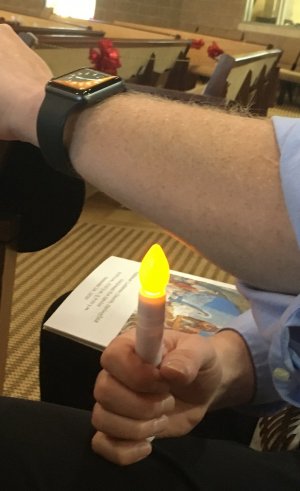
Difficult Things To Do With A Splinted Pinky

I mentioned I have a bit of a sports injury that has the smallest finger on my left hand in a splint.

Over the course of the last four days, I have learned a number of things are difficult in this condition.

  • Hit the Q key. I am not a touch typist, gentle reader, so I can still hit the A key as needed. But the left pinky apparently handled the Q key (and sometimes often the SHIFT, CTRL, and ALT keys over there). So, of course, I find myself queuing up lots of quintessential quokkas and whatnot now, which slows me down a lot.
  • Laundry. I am constantly banging the splint into the basket, the side of the washer tub, or the top of the appliances as I shift the laundry. I hadn’t realized I brushed my hand against all these things routinely, but apparently so.
  • Buckling the seat belt when a passenger in a car. I’ve ridden as a passenger a couple of times, and I’ve had to reach across my body to click it as the big splint does not fit in between the seats so well.
  • Close the driver’s side car door. The contraption does not fit into the grip, so I have to reach across my body to close it. Also, I guess I am used to hitting the window open button with that finger, too. And although I can more easily buckle the belt with my right hand whilst sitting in the driver’s seat, grabbing the belt buckle when it is beside the seat to the left is also a chore.
  • Picking up cats one-handed when they (and by they, I mean Chimera) gets into my office chair when I go for a cup of coffee.

Not depicted: catching a football, because if that were easy for me, I would not be in this predicament.

You know, this is not my first sports injury. And all of my injuries tend to be sports injuries, come to think of it. I have always eventually bounced back, but I get a little down while I mend. I mean, this one is not very painful and is only a little inconvenient, but it reminds me that I’m aging, an intimation of mortality that goes meshes well with my mindset in the current dying time. It’s certainly nowhere near what Jack Baruth just suffered–a broken leg–but the thoughts are very similar. They tell me I will more easily dislocate these joints in the future–so how many jabs can I throw in martial arts classes before I do it again? That sort of thing.

Ah, well, the one thing it is not hard to do, and I feared it might: to hold a book to read it. I can set big art books so that they’re resting on my lap and I’m just holding them up with my hand and few working fingers, and I can hold smaller books with a hand and those smaller fingers. So I can still do that, fortunately.

Buy My Books!
Buy John Donnelly's Gold Buy The Courtship of Barbara Holt Buy Coffee House Memories

The Wall Street Journal Explains

Okay, I am a little behind in my Wall Street Journal reading, again. Which is basically my normal condition when taking the paper. So I have only now come across an article from September 24, 2020, that explains a little more about why it’s often hard to find movies you want to see on streaming services–Why Some Classic Films Still Aren’t Streaming, From ‘Jungle Fever’ to ‘Silkwood’.

Again, note that the “classics” here date back to the 1980s or the 1990s, which means the dark ages where the films were available on videocassette and/or DVD.

Back in 2016, a little before I was making predictions about how fast I would read the remainder of my books in The Executioner series, I lamented I could not find several movies I wanted to see on the streaming services of the day:

After reading a listicle about John Hughes’ Planes, Trains, and Automobiles, I wanted to watch She’s Having A Baby because it’s the most adult of his coming-of-age comedies (and I plan to come of age sometime soon). But it’s not on Netflix nor Amazon Prime.

Then I got to thinking about funny Christmas movies my children might like to watch with me since White Christmas, Holiday Inn, The Bells of St. Mary’s, or The Bishop’s Wife are a little black-and-white for them, and they’re not old enough for Die Hard, Lethal Weapon, or Gremlins. So I checked Netflix and Amazon Prime, and again I was disappointed.

And that I joined a video store in 2017 because it had the DVD of a film I needed for a writing assignment:

Now, gentle reader, you might remember my December rant on the limited catalogs of streaming services (What I Want To Watch, When I Want To Watch It). I still feel that way, but I’m pretending to be frugal now. I had to watch Johnny Mnemonic for a writing assignment (which I read back in 2006), and of course, Amazon Prime and Netflix don’t offer it. My beautiful and sultry wife has a membership at the local video store, Family Video, so we went there to get a film for the boys and to see if the shop had Johnny Mnemonic. They did.

That was years ago. I said about streaming:

Netflix and Amazon Prime streaming are good when you want to watch something as they give you a lot to chose from. But I often do not want to sit down and watch something; I want to sit down and watch a particular film. So physical media still have a vital role in that. Much like the old independent video stores offered something other than the newest releases at Blockbuster.

That was back when you really had two streaming platforms to choose from. Now, every media company has its own twelve-buck-a-month service and is slowly reclaiming its library by letting licensing to Amazon and Netflix lapse. Which means everything that was available is still available streaming, but it’s spread over a rapidly widening set of subscription services.

Although a flack at Fandango says it’s only onesies and twosies that are not available, my experience has proven that the onesies and twosies and foursies and twelvesies coincide with what I want to watch. The newspaper explains why so many things are not available on any streaming source:

The causes of unstreamableness vary. For films made before digital distribution existed, it can be unclear who owns streaming privileges. Restrictions on digital use of the music in a film can hold it back. Some “unstreamables” are movies that have been shunned across all platforms, for one reason or another, like Disney’s “Song of the South,” with its racist stereotypes, and the last Woody Allen and Louis CK films, made by tarnished directors.

A film can also simply become buried in a company’s holdings. For those who want to release older films in new formats, hunting down rights holders can become a Watergate-like investigation. After decades of mergers and acquisitions, the corporate owner of a film may not even know it’s the owner.

So, as you might expect, I still look to buy DVDs and VHS cassettes at garage sales and whatnot and, when I get the idea that I want to watch a particular film, I order the physical medium on Amazon.

Also, I am a curmudgeon.

Thank you, that is all.

Also, follow me for more breaking news from the Wall Street Journal from weeks or months ago.

Buy My Books!
Buy John Donnelly's Gold Buy The Courtship of Barbara Holt Buy Coffee House Memories

A Landmark That I Will Miss

Pokin Around: Story of Robert Rosendahl’s boat has a new chapter: Destination Tahiti:

Stories hold a force that can transcend life.

Few have the power of the tale of Robert Rosendahl, World War II vet who survived the Bataan Death March, and his boat.

Rosendahl died at age 98 on Feb. 2. The love of his life, Bettie, had died 40 days prior on Christmas Day 2019.

But that is not the end of this story.

Six men in their 60s, including Rosendahl’s son Eirik, plan to fulfill Rosendahl’s dream of finishing the boat — that he first started to build in the early 1980s — and sail it to Tahiti in the South Pacific.

For decades, the boat has sat unfinished on the lawn of the Rosendahl home near Golden Avenue and Republic Road.

After Pokin’s first story on the boat ran in 2015, I looked for the boat when I was driving through that area. It was a bit hidden amongst trees, but I spotted it from time to time. When I didn’t think it was on Scenic Avenue just to the east and look for it there.

Golden has become one of our preferred bike riding routes, so I passed that boat a bunch this year. It’s easier to spot as some of the woods around it have been pared back. And I knew that one day soon, something that I’d seen in my few years in Springfield, something whose history I knew (thanks to Steve Pokin), would be gone. The house would be sold, perhaps razed for a business or multifamily housing, and a bit of Springfield lore lost forever.

If it’s going to go, though, I am glad it will be used as the former owner intended.

Buy My Books!
Buy John Donnelly's Gold Buy The Courtship of Barbara Holt Buy Coffee House Memories

I Have Followed Politics Too Long

When discussing this past week’s Monday Night Football game featuring the Kansas City Red Packers against the Baltimore Poe Poems, I told my wife it was a good matchup because the Ravens quarterback, Lamar Alexander, was also a running quarterback who can throw.

And then I thought, Wait a minute. Lamar Alexander is the Senator from Tennessee who ran for president 20 years ago with signs that said simply Lamar!

The Ravens quarterback, Lamar Jackson is only a few years older than this blog.

Buy My Books!
Buy John Donnelly's Gold Buy The Courtship of Barbara Holt Buy Coffee House Memories

My New Least Favorite Pull-My-Finger Game

Yesterday afternoon was glorious. Warm; the temperature topped out at a golden 80 degrees. I finished my work day, and as I had calls until past time to pick the youngest up for school, we could not do our early martial arts class. I had the choice of noodling on my computer until dinner time, which I too often accept as the default, but my boys were also about to default to their choices of spending time on their devices. We told them to go outside, to shoot some hoops or to throw around the football a bit, but they were, erm, reluctant to do so until I divested them of said devices. Even then they only went to the garage to consume an illicit snack of chocolate chips.

So I decided it would be a good time to Make Memories by joining the boys for a little game of catch. Which made a memory, all right. Continue reading “My New Least Favorite Pull-My-Finger Game”

Buy My Books!
Buy John Donnelly's Gold Buy The Courtship of Barbara Holt Buy Coffee House Memories

Book Report: Nature Center Rhapsody by Doug McKean (?)

Book coverAs you might know, gentle reader, I sometimes take my children to the Nature Center here in Springfield, so I’m familiar with some of the locations mentioned in the book. And, in a Springfieldian turn of events, my beautiful wife nows the author: his wife taught algebra and his child played in the band with her. So I’d better not go too hard on the fellow as it might stifle our social life.

The book doesn’t have a date on it, but it’s right about in the 1985-1995 era. It uses a monospace font and lots of clip art which puts it in the early days of PC-based desktop publishing (as opposed to X-acto knives and rubber cement desktop publishing, both of which I participated in with my chapbooks).

At any rate, the first poems in the book made me think I’d picked up another winner. They feature, directly, locations at the Nature Center that I could visualize, probably helping because I’d been there, and the poems throughout the book are shot through with mindfulness/Buddhist themes of stillness and just being with the universe.

However, later poems get more to the modern short line stacks that I don’t like at all. It’s hard to evoke with three syllables–even haiku have five (in their first and last lines and seven in the middle line, I know, gentle reader). But the haiku is trying to make but a moment for contemplation and not a longer poem. I might have to work out a mathematical formula for the minimum number of syllables in a line of poetry before I disapprove. It might be seven. Maybe six. Maybe a more complex algorithm where an average line length over the poem matters more. I dunno. At any rate, the later poems led me to re-read the ones at the beginning and kind of discount them as well.

So it’s okay in spots and thin and tepid in others. Kind of like this blog, come to think of it.

Buy My Books!
Buy John Donnelly's Gold Buy The Courtship of Barbara Holt Buy Coffee House Memories

Prose Poem For A Chilly Autumn Morning

If the hot shower had a coffee pot, I would still be there.

It’s the autumn time of year where we can leave our windows open all day, and then into the night where it really cools the house for some good sleeping weather. We get about two or three weeks of it before we have to go to the furnace or the evening fires to keep the house warm.

But it’s kind of nice, the changing of the seasons.

Buy My Books!
Buy John Donnelly's Gold Buy The Courtship of Barbara Holt Buy Coffee House Memories

I’m Not That Gone Already

So I work a lot on the phone, sometimes leading calls where my microphone is open most of the call.

And this chonker makes himself comfortable on a chair beside my desk and proceeds to nap and snore.

I mean, I might be a short timer, but I am not sleeping through these calls.

This affectionate fellow likes to nestle up with me when I nap or sleep at night, and he snores as loud as a human might. I mean, maybe louder than I do. I can’t tell, because I’m generally sleeping when I snore, but I certainly hope I don’t snore any louder than that.

Buy My Books!
Buy John Donnelly's Gold Buy The Courtship of Barbara Holt Buy Coffee House Memories

Book Report: The Art of Nancy Erkholm Burkert edit by David Larkin (1977)

Book coverNancy Erkholm Burkert is a Wisconsin- and maybe even Milwaukee-based illustrator and artist, and I never heard of her before. Which is probably a ding on my knowledge of Wisconsin, but in my defense, I was not browsing art books all that much in my school days. Although I did go to the Milwaukee Art Museum fairly frequently, and surely it must have some of her work, ainna?

Basically, she got her start and cut her teeth in illustrating children’s books, including James and the Giant Peach back in the day, and later (that is, mid-1970s) she got more into oils and sculpture. Most of the work depicted in this volume, though, are the illustrations which are elaborate and realistic–well, as realistic as you can get in a children’s book, anyway.

The intro text is a bit heavy on the criticism–that is, the discussion of the artist in relationship to other art and whatnot and less biographical, although it is not exclusively critical. But, again, as a casual reader/browser, I prefer a shorter more biography-focused introductions. Although perhaps if I were to specialize in one kind of art to view, I would really get dialed into the relationships and influences more than I am.

Wikipedia indicates that she is still alive at 87, but seems to indicate her career highlights end around 1990 as the thin Wikipedia article would indicate and the lack of a personal Web site might attest. Which is a shame. I would rather look at her work than, say, Patrick Woodroffe’s. And were I in Wisconsin, I would be hopeful that I could pick up one of her original illustrations at a garage sale or something. Or at a silent auction at the Milwaukee Art Museum, where in 1994 or 1995 I once bid a week’s pay on a minor illustration by Picasso, true story. Which I did not win, by the way, and I don’t even like Picasso. Nancy Erkholm Burkert? I like her work.

Buy My Books!
Buy John Donnelly's Gold Buy The Courtship of Barbara Holt Buy Coffee House Memories

Book Report: The New Glass House by James Grayson Trulove (2006)

Book coverWell, now, gentle reader, I will have another section to pick through at the Friends of the Springfield-Greene County Library book sale: Architecture (and home design). I bought this book last weekend from the architecture section because it was right across from the art monographs. I used to read home plans books, magazines, and Web sites regularly, but I’ve gotten away from that since I bought a large house in the country. I’ve let my design, or at least my home and garden, magazine subscriptions lapse except for the quarterly 417 Home that’s part of my subscription to the local local interest slick. So it almost caught me by surprise how much I liked to flip through this book.

It’s got a number of homes made mostly or largely of glass windows. A little section description of where it is and what the goal was, house plans and architectural drawings, and then photos of the building from the exterior and the interior looking out.

The photos, of course, depict showroom houses. Like staged homes you see when you’re shopping for a home: furniture, but no signs of living. You know, my (recently) sainted aunt kept her home very tidy, and she had a lot of showpiece bits of furniture. Mostly antiques, which might not see in a lot of style guides like this, especially for modern architecture–even the rustic-styled lodges with glass walls had modernist furniture made out of wood or faux wood. But my aunt’s finely appointed home had personal touches, and I would guess those are stripped from the photos along with the clutter.

At any rate, these homes aren’t for me. Some of the homes are near others, which means the glass walls give people outside clear views into the home, and whether it’s true in real life or not, most of the windows do not have curtains, blinds, or other shuttering solutions for privacy. Personally, I don’t like to have blinds open on both sides of my house so that someone looking in the front can see completely through the dining room windows. I probably got this from my father, who once said he did not want to live in a fish bowl. Me, either. Although I don’t mind maybe one room that has a wall of windows–or a set of sliding doors to the back yard–I don’t want to let the outside in that badly. I want boundaries to my home and rooms that emphasize that you’re secure inside. Yeah, I like dark colors and paneling on my walls, too.

That said, one thing leapt out at me: Someone built a small, two-story library outbuilding to house his or her 10,000 volumes of Japanese history books (hello, rich professor!). It’s a little out in the woods, and it has a completely enclosed first floor where the books are stored and a second floor with walls of windows on all sides with a sofa for reading and a desk for working. You know, back in my I’m going to be startup rich and build our dream home days (and probably a little under the influence of the observation tower at Big Cedar Lodge), I wanted something like this atop my dream home, although I had in mind more of a round turret style. With a fireplace in the middle of the floor. So I liked it best of the things I saw, even though it did not have a brick or stonework exterior.

And I cannot leave this topic without saying that the new glass houses are interesting, but I like the old Glass Houses the best.

Buy My Books!
Buy John Donnelly's Gold Buy The Courtship of Barbara Holt Buy Coffee House Memories

Brian J. Pulls The Loud Handle

Gentle reader, I am in the process of leaving my full-time job and returning to the world of contracting, or maybe later another full-time job, but it certainly means an interesting time coming up. I have left with but the offer of a part-time contract with one of my favorite clients from the past and the joy of being a bit more self-determining again. It comes as I near the three year mark with my current posting, which historically has been the time I’ve gotten itchy feet at other jobs and after some soul-searching in the current dying time.

Still, I cannot help wonder how irresponsible it makes me or what a poor provider/father I am to leave steady employment for the unknown.

But at least The Kimble Group has me covered as far as new opportunity goes:

I wonder if they reach out to me with any job opening in southwest Missouri regardless of if it matches my LinkedIn profile or not.

I make fun of it, but if I cannot resuscitate my contracting company, I might be looking for anything in the future. So perhaps I should be a bit more humble. Good advice in any case except maybe for blogging, because who likes to read humble blogs?

Buy My Books!
Buy John Donnelly's Gold Buy The Courtship of Barbara Holt Buy Coffee House Memories

Book Report: The Widening Gyre by Robert B. Parker (1983)

Book coverOf course I read this book right away after buying it last weekend. It’s just about the only fiction I bought, as I don’t tend to browse those tables at large book sales. But this was on the Collectibles/Antiquarian tables as it’s a signed first edition from 1983. Which makes it both.

Also, I should note that right about the turn of the century, I read through the Robert B. Parker books in order to that point. It was before I was blogging and before I was writing book reports, so I don’t have any way to review what I thought about them then. But twenty years later, with the early twenty-first century Parkers and the Atkins/Brandman/Coleman continuation of Parker’s series between now and then, I am putting my thoughts down which are only a little about the book and more about the oeuvre and its impact on my youth. I’ve mentioned it before (see my thirty-year-old essay Meeting Robert B. Parker), gentle reader, but all those people coming in from Google in the coming years won’t have heard the story a hundred times before.

So, where are we in the series? Susan has gone off to Washington to work. So it’s before Valediction when she goes out west. And before A Catskill Eagle and before the television series, which I think influenced his work to where the books later become mostly dialog and repeats.

At any rate, the plot: A congressman and Senate candidate comes to Spenser because he needs a head of security, and Spenser’s at loose ends so he hires on. He discovers someone is blackmailing the congressman to drop out and endorse his opponent. The congressman’s wife apparently likes to drink and has ended up videotaped having sex with a younger man. Spenser vows to find out who did it and how to extricate the congressman without exposing his wife or even letting the wife know what is going on. Because the congressman love-loves his wife, you see. Or maybe that should be capitalized as Love because their relationship is drawn to parallel Spenser and Susan’s. Spenser discovers that the son of local mobster Joe Broz, Gerry Broz, is doing a little dealing and grifting on his own to impress his father, and when things go a little sideways, the son asks his father’s second to help clear it up without the father’s knowledge.

When analyzed kind of like I do the Executioner books, I break it into a couple set pieces of actual detecting between sections of self-analysis and conversations with the other characters, and I see how few action set pieces there actually are. Of course, the book clocks in at under 200 pages, so it’s not a Jack Reacher or other modern suspense novel–and it owes as much to John D. MacDonald as it does to Raymond Chandler or Ross MacDonald. But the pieces fit all right together with a balance between them which added deft depth to the genre.

As I read this, I recognized why I loved these books as a kid. They’re suspense novels, with the Spenser being arch and tough and well-read and philosophical, musing (again) on self-definition and introducing some conceptions on what means for Spenser to Love (or love-love) Susan. The kind of thing that a boy growing up without a father and prone to reading books might come to idolize.

Ah, but the seeds of the things that later turned me off to Spenser novels are present. The introspection on what love is and how it can best serve Feminist-driven female self-discovery zeitgeist (here only the woman being free to be herself whilst Spenser Loves or love-loves her). Although the MacGuffin of the congressman’s wife’s infidelity here is treated not so much as that it’s morally wrong but impractical and possibly neurotic, it would be almost thirty years before it would be something to celebrate (as in the repellent Split Image). We also get the starts of Deus Ex Mafia, where the resolution is a negotiated settlment between Spenser and some crime figure who comes to believe, possibly after an attempted hit, that coming to terms with Spenser is easier and safer than killing him. I guess the negotiated settlements started out earlier–God Save the Child and Early Autumn come to mind–but in later novels, negotiated settlements with actual criminals seem to become the norm. Or maybe I don’t remember them as well because I did not read them in my formative years and because I only read them once.

On one hand, reading this book reminded me of why I liked the earlier Spenser novels and almost makes me want to re-read them up to maybe Valediction. I mean, I re-read Early Autumn fairly regularly in my formative years and even gave it as a gift to one or more friends that I thought could use some encouragement in self-definition.

But I have so many other books to read, so I will likely hold off on that unless I find other signed first editions on collectible tables in the future.

As it stands, the hardback I already owned of this title was a Book Club Edition. So I seriously upgraded my collection with this $7.50 purchase. Which could well be my last addition to the collection unless the Spenserian Sonnet limited edition falls into my lap. I see that the Wikipedia entry for Robert B. Parker’s bibliography does not include his dissertation The Private Eye in Chandler and Hammett or Parker on Writing, both signed and numbered limited editions nor his signed and numbered sonnet; I have two of three in my collection as I was a serious collector for a while around the turn of the century. But, ah, the loss of heroes, ainna?

Buy My Books!
Buy John Donnelly's Gold Buy The Courtship of Barbara Holt Buy Coffee House Memories

Book Report: Space: 1999 by Mary A. Mintzer (1977)

Book coverWhen I bought this book last Saturday, I thought it was a comic book; however, it turns out this is actually a children’s book. So although I do not count comic books in the annual total of books read–so the first issue of Battlestar Galactica that I bought on Saturday doesn’t count (but the first of the novels, which I read in 2011, did). Don’t bother trying to make sense of it–the rules of what I count as a book for my annual reading total based on content, length, and time of year are very difficult calculus indeed.

At any rate, this book includes two short adventures of the crew of Moonbase Alpha. In the first, a colleague thought dead returns but is actually only a cipher for a ruler from the planet Psychon come back to get revenge on Maya, the woman with the sideburns who can change into things. In the second, explorers in one of the ships find a planet suitable for colonization with a small group of mentally advanced people on it who will share their planet. But there’s a dark secret: The planet has no sun, and it’s only the mental power of the Queen that keeps it going–and she steals power from the brains of her subjects.

I remember the program came on on Saturday afternoons in the late 1970s in Milwaukee, but I don’t remember watching it much. All I remember is the woman with the sideburns could change into things. And that it had a low budget, but somehow it didn’t grab one as Star Trek did. And by “one,” I mean sub-ten-year-old me. So I have to wonder if this is worth watching sometime. I just checked on Amazon, and it doesn’t look like it’s available in US DVDs. Which makes my mind up for me. I don’t have time to watch the things I own, so I shouldn’t go buying things I will just put in the cabinet for some day. Also note: It’s far easier to be virtuous for sins one cannot commit; if Amazon had the complete series on DVD for $14, it would be on its way to Nogglestead by now.

Buy My Books!
Buy John Donnelly's Gold Buy The Courtship of Barbara Holt Buy Coffee House Memories

Touching

I mentioned that I have a new washing machine. Well, I implied it. in addition to a larger tub, it has a more modern interface, all steely and LCD screen and smooth buttons that are but a part of the face of the control box.

But two of the buttons have Braille beside them.

I have to wonder the logic that led to the decision to put a couple bits of Braille on the surface here as it has no real tactile buttons to manipulate and because the other controls do not have Braille and no real way to know what they are.

It’s not like the Braille you see on drive-up ATMs which share buttons with ATMs installed where the blind can walk up to them. This is a smooth surface that doesn’t do anything but run this washing machine (and probably the ones that work better in Asia or wherever they don’t have environmental strictures in place).

I wonder if this is just enough to defend against ADA lawsuits or something.

Buy My Books!
Buy John Donnelly's Gold Buy The Courtship of Barbara Holt Buy Coffee House Memories