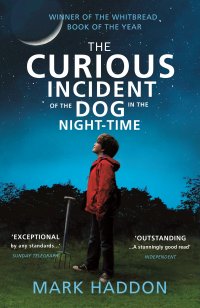
 Ah, gentle reader. I am certainly playing fast and loose with the 2024 Winter Reading Challenge. Although I did not use The Rubáiyát of Omar Khayyam or The Broken Spear as the Author of Different Race/Religion Than Your Own book because those books were collected/compiled/edited by presumable Christians and people of European descent, I did enter Tales from the Missouri Tigers in the School Setting category even though it’s more a sports book than a school book (but university sports). And now, gentle reader, I have fallen even lower.
The Winter Reading Challenge has a Neurodivergent character. Heaven help me, but I was not going to wade back into The Sound and the Fury again for a mug. And I’ve already read Of Mice and Men recently (what? twenty years ago recently?). I remembered that I had a copy of this novel in the Reader’s Digest Select Editions format. I “ordered” this and, apparently, four other such editions back around the turn of the century (the volume containing this book is from 2004). Reader’s Digest (not italicized as it’s the company, not the periodical) would send out a teaser for offering a free book for your review, and then you can cancel or get any one such book every month or two on subscription unless you canceled. I was pretty good at canceling, and I accepted the free offer a number of times (but did “buy” a book or two). These Select Editions are paperbacks, unlike Reader’s Digest Condensed Books, so I thought they were the complete text. But as I started The Curious Incident of the Dog in the Night-time, I noticed it was under 200 pages, and not even Mack Bolan books of the era fell under that. With some trepidation, I turned to the front of the book (this novel is fourth of four in the volume), and…. Selected and Edited. Oh. This is a Reader’s Digest Condensed book in a cheaper package for people who, at the turn of the century, might have thought that the Condensed Books were for old people (as an aside, I hardly ever see Condensed Books at garage sales, estate sales, or book sales any more–have they all been pulped by now?). But I am going to count it as a complete novel because I really, really don’t want to wade into the children’s section of the library, where one can easily find entries for every category on the Winter Reading Challenge list.
At any rate, I remembered that this book focused on a neurodivergent child, and so it does. The first person, fifteen-year-old Christopher, is autistic. The book starts when Christopher is out walking late at night, which he likes to do because it’s quiet, he finds the neighbor’s poodle dead on a lawn, stabbed with a garden fork. Police initially think that he did it, but he did not, so he starts to investigate and to write this book to describe his investigation.
Christopher tells us about his life a bit, slowly working in details about his special school and life with his father, an HVAC man who has been raising Christopher since his mother died of a heart attack. Christopher steps outside of his comfort zone to talk with the neighbors in his investigation, including an old woman who tries to befriend him. Christopher’s father orders him to stop investigating and bothering people and takes away Christopher’s manuscript of the book. While looking for the book, Christopher finds a stack of letters from his mother. She did not die, as his father said, but instead could no longer take the pressure and/or responsibility of raising Christopher and ran away with a married neighbor. Christopher’s father discovers him with the letters and explains that not only did his wife run off with another man, but he had hoped to become a couple with the left-behind wife, and when he had a falling out with her, he killed the ill-tempered dog. This sets Christopher off, and he must really leave his comfort zone and travel to London to be with his mother. Who is falling out of love with the man she ran off with. The book ends kind of media en res as well; Christopher returns to Swindon to take his Maths exams; his parents can be in the same room together; and Christopher’s father tries to make amends with Chistopher.
It’s a thin plot, and the whole purpose of the book is to imagine and experience the imagined voice of an autistic teenager. Which it does with some limited success, I suppose, but I imagine that it’s different enough that a lot is lost or transmogrified. A couple of times the narrator says that he does not imagine things, but he goes off on flights of fancy a time or two. The narrator also describes clinically how he perceives things instead of simply perceiving them that way. Although I suppose that it would be too jarring to try to completely reproduce it.
The book was originally sold both as an adult novel and a YA novel with different packaging and covers for each. It does kind of have more of an young adult book to it, but part of that might be in the Reader’s Digest trimming.
You know, I read this fairly quickly and probably got a good flavor for it. Perhaps I should give these Selected Editions and Condensed Books (where I can find them) a second look. I am not especially a fan of modern and mainstream novels, but reading these would give me a deeper overview of the works than the Wikipedia entries. And I could count them as a complete book in my annual tabulation (and the Reading Challenge categories). So maybe I should add them to the list of things I hope to read this year after the Reading Challenge. Along with the rest of the Sharpe’s books I own, one or more volumes of The Story of Civilization, and pretty much whatever catches my eye in the interim.
 Ah, gentle reader. I was going to lead off by saying “I’ve already read this book,” but you might remember that. I read it in 2006, which is slightly more recently than I read Blood Relatives. But this 2024 Winter Reading Challenge is proving not only to be a year of Bowlderized (or merely edited) books, questionable category assignments, and re-reads. I will note that this copy, which I bought in 2022 for $1, which is better than the ex library book First Edition for which I paid $10 and read in 2006.
 Well, gentle reader, when I bought this book
  Ah, gentle reader, of course I did not have to rely on
  I picked up this book
  The
The  I said when I bought this book
  You are not mistaken, gentle reader; I have written a book report on this 87th Precinct novel before (in
  I bought this book in
  This, of course, was the first book I read for the
  I picked this book up from the free book cart at church; it has the name of our former pastor’s father in it, which probably means that this book has made it through two trips through the seminary before coming to rest on my read shelves. I picked the book up and started reading it before a service where my beautiful wife was early to warm up either her horn or her pipes, and it (the book, not her horn) never landed on my to-read shelves. Although it did take me a while to go through it as it was lost in the car or a bag for a couple of weeks, and later I left it at a different campus of the church after arriving early so my wife could practice with the choir before a cantata, and I stuck it under my chair (the newer campus does not have pews) and forgot it after the cantata. So that’s a nice story. Have you noticed I’ve stopped stuttering?
 I picked up this book in Wisconsin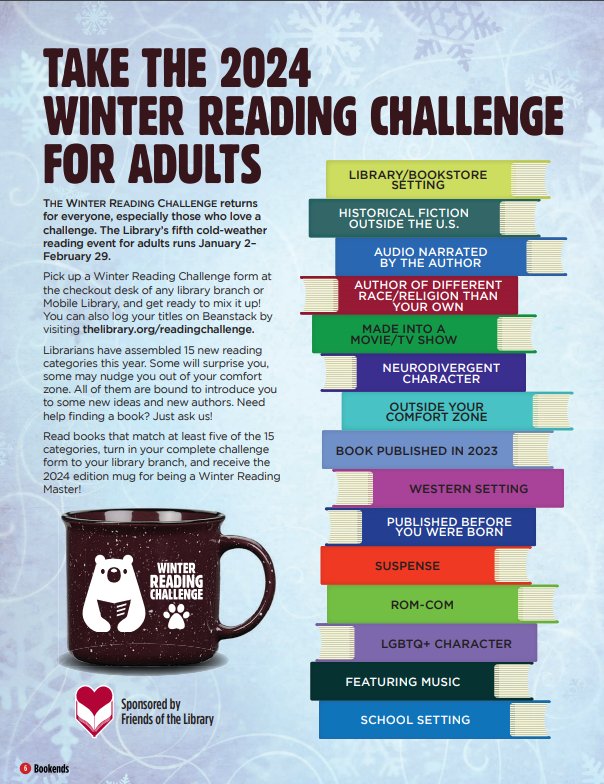
 I got this book at ABC Books at the first (I think) of the writers’ group group signings I went to in
  As you know, gentle reader, the year is winding down, and I tend to cut my annual reading list off the week after Christmas sometime. So I thought that this book, which I purchased
  I picked this book up right after
 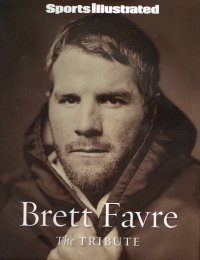 Sports Illustrated must have had this book ready to go, as it was published in that brief period in which Brett Favre had retired as a Green Bay Packer but before he did his little thing and got traded to the New York Jets, for whom he would actually play (unlike his predecessor). Favre announced his retirement on March 4, 2008; the book was published March 31; and Favre started making unretirement motions on July 2. I presume that book sales cratered in summer and autumn. I bought this book as my first ABC Books online order during
 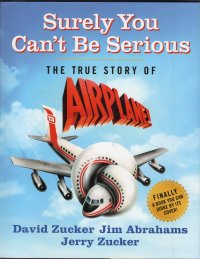 Gentle reader, after reading the story about it in the
 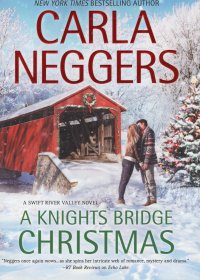 As you know, gentle reader, I like to read a Christmas novel around Christmas time, and I generally pick them up at various places throughout the year, maybe one or two a year (I bought this one in Arkansas