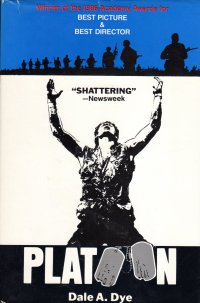
 This book is the novelization of Oliver Stone’s Academy Award-winning screenplay. I’ve never actually seen the film, and I really haven’t watched a lot of Vietnam movies As I mentioned, I have seen the television program Tour of Duty and Forrest Gump, which is not really a Vietnam movie. I’ve also seen The Siege of Firebase Gloria (“That’s it, Nardo. The story’s over.”) and Apocalypse Now. But Platoon seemed to kick off a number of Vietnam films in the 1980s like Full Metal Jacket and Hamburger Hill (and including The Siege of Firebase Gloria). But I just never got into it. Kids in the 1980s didn’t get into playing Vietnam soldier like previous generations played World War II soldier.
So as a novelization of the screenplay, the book takes advantage of it and suffers from the disadvantages of the printed word. Let’s go with the disadvantages first: One, it’s an ensemble piece with a lot of different characters who are identified by name and a single distinguishing feature, and it is easy to confuse them (and the author refers to the protagonist both by his first name and his last name in different places, so you have to remember that these names are both one guy). On screen, that’s easy to see.
Another thing is that what must have been the spectacle of the film is lost a little.
But we do get more interior lives of the characters which the film would not convey; on the other hand, that turns a couple of seconds of screen time into a page or more.
So what’s the plot? The usual. A green recruit, a literate and educated young man, joins a platoon in the field where he gets mundane duties, gets into firefights, learns, sees death, and ultimately takes part in a pitched battle with massive casualties on both sides.
Not poorly executed, but mostly noteworthy as a study of turning a screenplay into a novel.
You know, I have a set of Tour of Duty DVDs–did I buy them for my father and then inherit them? Not likely–I think I bought them later. But I don’t know that I’m inspired to dive into Vietnam media based on this book alone. Unless the Marcinko books count.
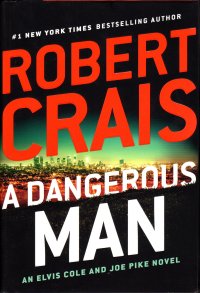 It’s very rare for me to read a book written in the last couple of years, so it says something when I read a book in its week of release. Robert Crais is the only author that can claim that honor, slight that it be. Well, if you search for
 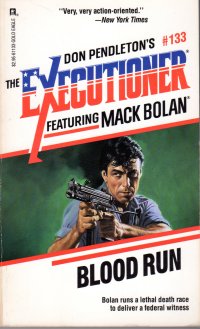 I was disappointed with
 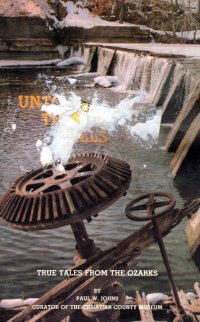 This book is a short collection of historical musings written by the curator of the Christian County Historical Museum in 1980. As such, it focuses on Christian County, especially Nixa and Ozark, although the abandoned town of Riverdale punches above its weight in these pages as the town had a couple of mills and spawned Ma Barker and her boys.
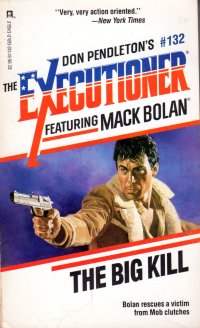 This book is nominally the last Executioner book from the 1980s: its cover date is 12/89. Almost a year into George H.W. Bush’s presidency. Midway through my senior year of college–I was pretty busy with DECA, the writer’s club, and National Honor Society at school, which was compounded by the fact that I didn’t have a car and lived
 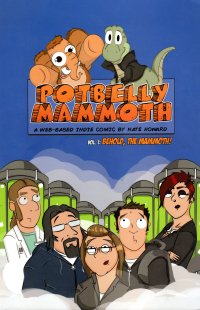 I got this book at Rublecon last weekend. Rublecon is a small comic/toy convention held in Relics’ event center. I missed it last year because when I pulled into the parking lot, I could not find a parking space, and my family was reluctant participants anyway.
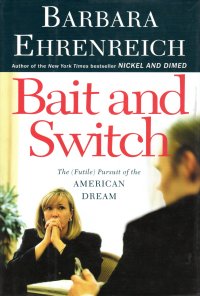 You probably don’t know, gentle reader, that I read Ehrenreich’s Nickel and Dimed: On (Not) Getting By In America around 2003 (my beautiful wife read it and sort of fisked it in two parts,
  When I picked up this book at Hooked on Books
 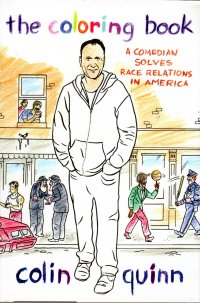 Well, it has happened: I have finally been reduced to reading an actual Coloring Book to pad my annual reading statistics. Oh, how the might he? have fallen.
 I bought this book at Calvin’s Books
  When I read the preceding Little House book, On the Banks of Plum Creek
  This book is the bread and butter of 1970s and 1980s midlist genre fiction. It’s toward the sixth book of an eight book series where the seventh and eighth books come at a gap of seven and thirteen years when the first six were within a span of thirteen years. The series character, Albert Samson, is a throwback of a private invesigator who is a bit of a cipher, a guy running around talking to people and taking notes and figuring things out. It might even have been a throwback in the 1980s, actually, since the likes of Robert Crais and Robert B. Parker were writing more vivid, personality-driven detective thrillers.
 I picked this book up for free at ABC Books
  I bought this book
  I picked this up right after
  After reading
  Speaking of
  Clive Barker was all that in the late 1980s. He had a couple of movies out, including Hellraiser and, um, what’s that other one?
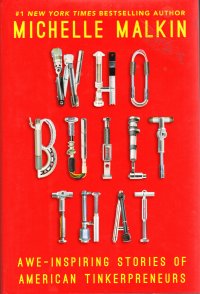 I don’t know where or when I bought this book; it cannot have been too long ago as it’s a book of recent vintage and it was not buried in my to-read shelves. I picked it up to read because I might be going to an event where Malkin is speaking this autumn, and I wanted to be able to say I read one of her books.
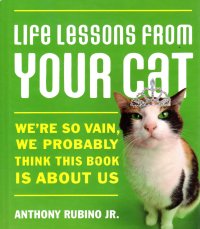 I rescued this book from a box of outgoing books that my beautiful wife was winnowing from her collection (from time to time, she gets rid of books, a concept that is very foreign to me). I grabbed it because it looks like something I would browse during a football game.