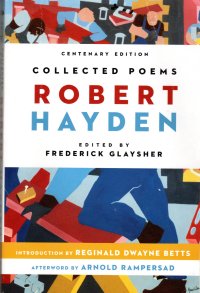
 I bought this book based on the poem that Neo posted last Father’s Day, “Those Winter Sundays”. I won’t repost it here so as to make you click over to her blog, but the poem spoke to me as I am a father myself and know something of love’s austere and lonely offices that, perhaps, my children will appreciate some day.
I think it’s probably the best poem in the collection, or perhaps it’s the one that spoke most to me. Hayden was active between roughly the late 1940s and his death in 1980. His last new collection was published posthumously in 1982. So we see quite a run through 20th century poetry styles through his career. His early poems feature lines of poetry, but then we get into the more modern couple of words of poetry per line. He sometimes goes into the Black Experience, which is something with which I cannot identify as I am not Black, and this is different and a little distant contrasted with poor urban upbringing themes with which I can identify. But he does not dwell exclusively on racial themes.
Hayden’s career overlapped a bit with that of Langston Hughes and Edna St. Vincent Millay, but you can see where he breaks with traditional forms of poetry that they espoused and went with the more modern stylings. And you know, gentle reader, which style of poetry I prefer.
So it took me a while to read it, off and on, but I liked it enough. He does a shout out to Paul Laurence Dunbar, another poet I have heard about somewhere–I have his Wikipedia entry bookmarked from some earlier encounter so I can write a historical profile of him sometime (although it has been bookmarked so for years, so don’t expect something soon). He also does a poem about Phyllis Wheatley, the first black woman poet to publish a book. So some elements of the book educated me beyond the poetry.
So a better than average collection. Although perhaps it’s just better than the average of the poems I tend to read.
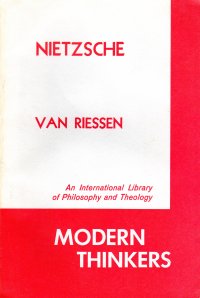 If you read only one 1973 European Presbyterian summary survey / critique of the work of Friedrich Nietzsche this year, well, it’s probably this one.
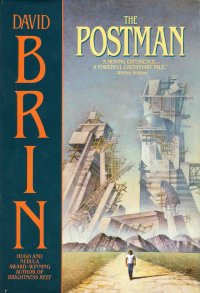 Hey, who’s in the mood for a post-apocalyptic book? And the apocalypse I’m talking about is not the middle 1990s collapse in Kevin Costner’s career after the twin post-apocalyptic Waterworld and The Postman (which I rented and watched on the same night in the 1990s, gentle reader).
 You know, I read three volumes in this series (
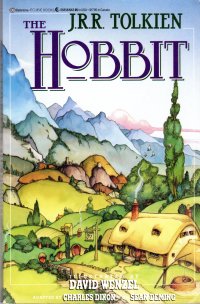 It’s been almost ten years since I read
 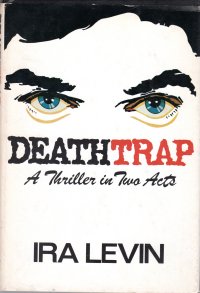 I saw the film version of this in a high school class. What was it? Drama? Media? I forget. What I do remember, though, is that it was a two day event, and the first day ended at almost the end of the first act, and I explained what I thought the trick was, and my friend and locker partner thought I had seen it. So I will spare you the spoiler and will just mention the basic plot.
 I bought this collection of poetry earlier this month at Main Street Books in St. Charles on the
  After I listened to
  I read
  This book is a look at how several factors systematically removed discretion from government and how that made government worse. It’s broken into a couple sections, and basically it boils down to these themes:
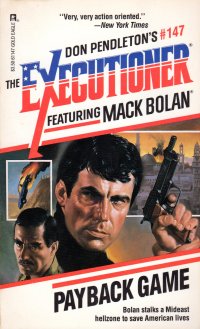 After
After 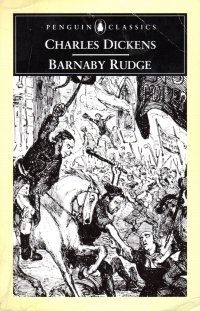 It took me several months to read this book, gentle reader. As you know, it takes a Dickens book several hundred pages to get going. In this case, I think it was 450 of the 750. So I have read many other books in the interim.
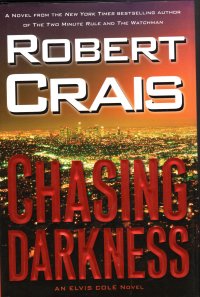 I was surprised and pleased to find a Robert Crais book on my to-read shelves; I just read
 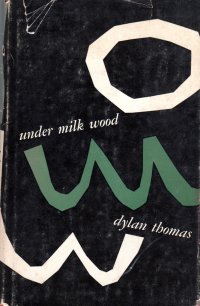 I just read Thomas’s short story
 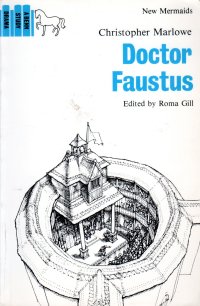 This is the third of four books I bought at ABC Books
 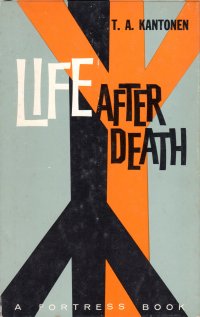 This book is a short (54 pages) theological explanation of the (or perhaps a) Christian view of life after death based on Biblical texts. It talks about what life is, what death is, what happens at death, and what happens in the final reconciliation / resurrection.
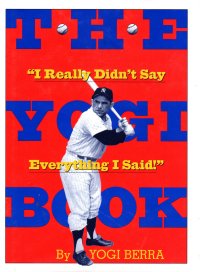 I got this book
 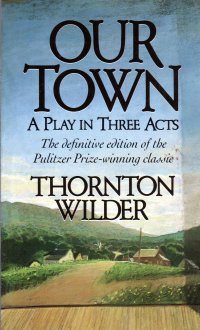 For some reason, I had gotten it into my head that this particular play was one of the most popular plays produced by high school theatre groups. I have no idea where I got that idea–I am pretty sure it predates wide adoption of the World Wide Web–but if it’s true, I can see why. The play has a lot of characters, and most of them have a manageable (that is, few and easily memorized) set of lines. Perfect for kids getting their feet wet on stage with a couple of more involved roles for those who are natural at it and will go to Hollywood in a couple of years to have their dreams crushed. Also, it’s a play within a play!
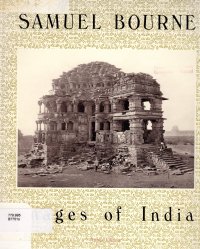 I had thought this might be a good book to browse during football games, but it turned out not. The book is actually weighted heavily to text, in small print, that talks about the photographer and his trips (well, trip to India which lasted roughly seven years) and the hardships of taking piles of photographic equipment of the middle nineteenth century into the Himalayas and around the Indian subcontinent.
 This comb-bound book has a 1981 copyright date, but the author’s autograph on the title page is dated 1990, so nine years later, she’s still signing them for people. At poetry readings/open mics? For friends? For the little bookstore down the block? I cannot tell, as it’s just a signature and the date, but that makes it seem like it was a less personal occasion and something more formal. Still, working it nine years later. I wonder if she printed that many of them in 1981 or was reprinting them as needed. It’s a lot to speculate about on a simple chapbook.