The Classy Artwork of Nogglestead

Here at Nogglestead, we will clearly hang anything on our walls.

As I mentioned, our Trunk or Treat motif this year was Rock Concert, with the aforedepicted heavy metal costumes. Additionally, I made a little concert for the cargo area of our Highlander:

Yes, that is Bazooka on the lead vocals, Quick Kick on the bass, and Roadblock on the lead guitar.

It was a late-breaking thing; although I had mentioned the idea early in October, the family was not enthusiastic about it until I received my wig, ordered from Amazon. Then the boys were all on it. So I assembled a stage out of scrap pine from martial arts-broken boards, printed out some small guitars and taped them to toothpicks for structure and so the GI Joe figures could grip them.

And the stadium faces backdrop. That was the hardest part. I took some thin posterboard we had for school projects and painted five panels black, with several coats of black each. Then, I mixed up a flesh-colored-ish shade of acryllic paint and dabbed on some faces. After that dried, I mixed a slightly different color and added other faces. I repeated that a couple of times, when they were complete, taped the panels to cardboard to ensure they would stand up. And we were set.

I spent the two hours of Trunk or Treat thrashing to the Leo playing through the wireless speakers beside the stage. People asked me the next day how my neck was with all that thrashing. Nobody asked me how my back was after hours of painting those backdrops that no one noticed.

But the effort was not wasted.

I put three of them in poster frames and hung them on a bare wall in our exercise corner. Strangely enough, they brightened that corner considerably with the reflected light on the frame plastic. Even more strangely, my beautiful wife likes it.

I still have two panels left. Perhaps I’ll frame them up and put them in a silent auction sometime just to see what might be bid on them.

Look, ma! I am an artist!

Buy My Books!
Buy John Donnelly's Gold Buy The Courtship of Barbara Holt Buy Coffee House Memories

Book Report: Hallowe’en Party by Agatha Christie (1969)

Book coverIt was kismet that I would pick this book up next. I’ve been encouraging my older child to start picking up adult books instead of the half book/half comics that they aim at children these days so he could start learning more advanced writing through osmosis, and I mentioned to him that I was reading things like Agatha Christie by his age or a little older (to be honest, I think I was still on the juvie science fiction for another year or so). And it was just about Hallowe’en. So when I came across this book on my hallway to-read shelves, I knew it was the one for me right now.

When I was younger–in high school, probably–I read a lot of Agatha Christie because the libraries–the school library and the community library–had a bunch of them. So I read a bunch. Apparently, in the annals of this blog, I’ve only read one book, Elephants Can Remember, just over ten years ago. I don’t recall seeing a bunch of Agatha Christie at book sales, so I have to wonder if we the English-speaking peoples of the world, have aged out of her books faster than she stopped writing them.

This volume, like Elephants Can Remember, is a later book of Christie’s, written in 1969. So the characters are modern, or at least mod, as some of them sport sideburns and those awfully colored pants that marked the era. Mrs. Oliver, the authoress who joined Poirot in these later books, attends a Hallowe’en party where a thirteen-year-old girl is murdered after claiming to have seen a murder. Mrs. Oliver brings Poirot in to investigate, and he finds that most of the town people think that the young lady was a liar. But someone believed her.

The plot involves a forged will, an au pair who might have forged the will and disappeared, illicit trysts, and a couple of prior deaths that Poirot uncovers as he goes through the list of people who were at the preparations for the party and heard the young lady make her boast.

The twist in the book was pretty obvious, or perhaps it’s just a turn in it, and the resolution rather ended abruptly with an ending that was not hinted at effectively through the book. I didn’t reach it and say, “Oh, yeah, I should have seen that.” So it fails at that, although in retrospect, looking back oh those many decades, I don’t know if any of them actually had the kinds of endings where I thought, Of course! I should have seen it! They either had twists I saw coming a mile away or endings like this one, where you think the detective had some inside information or that the convolutions in the plot revealed only convolutions in the plotting.

At any rate, it was a quick enough read. As I mentioned, I don’t see a lot of Agatha Christie books at the book sales, but then again, I’m generally not going over the fiction section at the Friends of the Springfield-Greene County Library book sale anyway. So unless I see them in a garage sale or the Friends of the Christian County Library, I won’t see them if they are there. I’d add some to my to-read shelves if I found them, but I don’t. So make of that convoluted endorsement what you will.

Buy My Books!
Buy John Donnelly's Gold Buy The Courtship of Barbara Holt Buy Coffee House Memories

When You Send Brian J. Into The Nogglestead Wine Cellar

Book coverI grilled a couple of steaks last night, and I asked my beautiful wife if she would like me to pick out a bottle of wine.

What, then, are the odds that I would select something named for a song by the band Unleash the Archers?

To be clear, I did not buy a bottle of The Matriarch because it shares a name with the song, although I would have if I had the chance. The bottle came as part of a Random Number Generator Wine Club that my wife joined on a lark which sent a number of remaindered bottles from various California and Missouri wineries to our house. The Matriarch here is actually one of the better selections from the wine club. It’s a red blend, a little Malbecky, but pretty good for a Missouri wine.

If I see it at the local shops, I might pick it up. After all, I am the sort of man that dresses his whole family up as heavy metal fans for the church’s Trunk or Treat just so I have an excuse to buy an Unleash the Archers shirt.

Which I wear almost every day.

Buy My Books!
Buy John Donnelly's Gold Buy The Courtship of Barbara Holt Buy Coffee House Memories

Book Report: The Early Del Rey by Lester del Rey (1974, 1976)

Book coverI bought this book seven years ago because I was familiar with the name Lester del Rey, but I think I was most familiar with the name because of the publishing imprint whose juvenile science fiction books in library binding were a staple of my middle school years, at least at M. Gene Henderson Junior High. I don’t know that I’ve actually read any Del Rey, but given how much science fiction I read, particularly in my younger years, I might have.

This book collects 25 short stories that del Rey wrote before he became a professional writer (that is, before he became a writer full-time). It’s more than a mere short story collection, though, as he writes almost as much memoir about the time period (the late 1930s through the 1940s) and his evolution as a writer during that time. He talks about writing not only for the science fiction magazines/pulps but also for other pulps in other genres, about the jobs he held during that period, and where he lived (part of the time in St. Louis). The author’s voice throughout connects the stories and provides now-historical context for writing in that era.

I have been working on reading this collection of short stories for a while. I’d read one or two plus the connective memoir amid reading something else. I think this approach works best with me for short stories, as I have mentioned, because reading collections of short stories has some mental overhead when you have to reset your mind with each short story.

So, 600 pages later and some months after I’ve read some of the stories, what sticks with me? More than I thought as I reflect on it, but perhaps not as much as one would hope for when consuming this much content.

There’s a short story where a little bronze figure becomes sentient and self-aware through some Frankenstein processes coupled with a little Number 5/Edgar accidents, and the little bronze figure is friendly–as a modern reader, I fully expected a little golem to be malevolent, but not so in this book. There’s a short story about a man stranded on Mars by himself after an accident with his space craft which sort of reminded me of The Martian, but he’s helped my real Martians. There are a lot of planetary cataclysms and nuclear wars, which would have been the It thing right after the Soviets got the Bomb. The stories feature a lot of native Martians and even native Moon people that you don’t really get any more.

I did flag a couple of points to make pithy comments.

“…You can’t catch a wolf without something attractive for bait. And maybe he is all sweetness and light. The missionaries meant to help the Aztecs until they found gold and Cortes came…”

This is in “And the Darkness”, a story about one of the few remaining pockets of humanity living in a tiny valley in the Arctic hundreds of years after an atomic war. It also lists some facile sins of humanity, especially the west, in a very early sucker punch. And you know how I feel about Aztec “civilization”.

To Fleigh’s relief, Slime tested the bed in sour displeasure, pulled a blanket off, and rolled up on the floor, leaving the flotation mattress unoccupied. He had as little use for such luxuries as his boss had for his presence in the same bed. Max climbed in and adjusted the speegee dial to perfect comfort with a relaxed grunt of pleasure.

Lester Del Rey invents the Sleep Number® bed, but did not perfect the split that allows you to set the firmness on each side. I guess the adjustable couches were a staple of science fiction even then, though, so he did not invent it. This is from a story called “Unreasonable Facsimile” about an interplanetary intrigue that relies on kidnapping a planetary dignitary and creating an android replica for an important legislative meeting.

The story “Conditioned Reflex” about a post-apocalyptic society rebuilding features a couple of noteworthy bits:

Paul Ehrlich looked up from his wheat cakes in time to see his father exploding upward out of his chair and heading for the kitchen.

The hero of the post-apocalyptic piece is named Paul Ehrlich. Del Rey might have named him after the physicist and not prophesied the rise of the doommonger of the 1960s.

He [Paul Ehrlich] shook his head again, and went on splitting shakes off big pine blocks, while Henry began pounding the crookedness out of their small collection of rusty nails.

This is the second book this year I’ve read with someone splitting shakes to roof a house; the other, of course, was Little House on the Prairie.

“…Integrating the administration of an advanced technological world is inconceivably complex–even the men doing the job have only a vague idea of how complex! The broad policies depend o the results of lesser departments, and so on through fifty stages, vertically and in untold horizontal subdivisions. Red tape isn’t funny; it’s necessary and horrible. Complication begets complication, and that begets disconnection from reality. Mistakes are made; no one can see and check them in time, and they lead to more errors, which lead to war.

That’s a pretty good summary of it, ainna?

Del Rey, speaking of getting his agent, defends reading fees, which I’ve not seen before:

I’ve heard a lot of criticism against agents who charge reading fees to unknown writers, and I had some doubts about the practice myself. But I’m now convinced that it is a necessary and valuable service. True, a lot of would-be writers gain nothing for their money; that’s true in any training course, and even more true of most of the writers’ workshops that seem to be highly approved. I’ve seen quite a few writers who did learn to write professionally through reading fee criticism, and many who shortened the long period of apprenticeship. I’ve also seen unknowns accepted almost instantly to full professional status–something they couldn’t have gained otherwise until they’d sold a pretty fair amount on their own. Richard Prather, for instance, was discovered from reading fee submission; as a result, he began his professional career with the advantage of a well-known agent.

Of course, he was speaking as a former employee of such an agency and not as someone who paid the money and was discovered. But I’ve never seen the practice defended before.

Lester Del Rey foresees Elon Musk and Jeff Bezos:

So naturally, with Unitech’s billionaire backer and new power handling methods giving them the idea of beating the Services to Mars–no need to stop on the Moon even, they were that good–they didn’t include spare linings.

That’s from “Over the Top”, the aforementioned forerunner of The Martian. Patterns in science fiction seemed to indicate space travel would be conquered by individual tinkerers, then later stories featured the government. Will newer stories return to rich industrialists now that the rich informationalists are putting their money into it? I oversimplify, but this is a blog post, and not a dissertation.

So maybe I remember more about the stories than I thought–I could pick the plot back up by reading a couple of paragraphs around the quotes I mentioned above. Perhaps it’s my instant recall that’s fading, or perhaps it’s the indistinct titles that don’t really tie into the plots of the stories that does it. More likely the former, but some of the latter.

So worth a read if you’re into old school science fiction and/or the writing of old school science fiction, but you’d better plan to spend many man hours and calendar days on it.

Buy My Books!
Buy John Donnelly's Gold Buy The Courtship of Barbara Holt Buy Coffee House Memories

Won’t Someone Think Of The Soulless Automatons?

Two “unrelated stories” in the St. Louis Post-Dispatch

Editorial: Vote yes on Missouri Proposition B to raise the minimum wage, October 22, 2018:

The time has come for Missouri employers to get off the dime and start sharing their dollars. Minimum-wage workers are being forced to accept a pay scale that doesn’t come close to livable by today’s standards.

On Nov. 6, Missourians should vote yes on state ballot Proposition B, which would gradually raise the minimum wage by annual increments of 85 cents per hour, reaching $12 an hour in 2023. Don’t believe the opponents’ scare tactics about the damage Prop B might do to the job market. Putting extra money in people’s pockets is the fastest way to boost the economy. It also could increase state and local tax revenue by $214 million.

More robots to hit the aisles at Schnucks grocery stores in St. Louis area, October 30, 2018:

In at least 15 Schnuck Markets stores, the future is now.

Aisle-scanning retail inventory robots, known as Tally, will soon be wheeling around in a growing number of locations as the St. Louis area’s leading grocer expands its partnership with San Francisco firm Simbe Robotics.

The robot, which moves around on a Roomba-looking base, uses cameras and sensors to perform inventory checks and alert employees when an item needs restocking or if price tags don’t match advertisements.

The grocery chain piloted the Tally robot in July 2017 in three stores. Then, several months ago, Schnucks officials began operating the Tally robots in four stores — Ballwin, Des Peres, Webster Groves and Woods Mill in Chesterfield.

Tally will keep its job at those four stores.

“We saw that our out-of-stock positions improved greatly,” said Bob Hardester, Schnucks’ chief information officer.

Schnucks plans to roll Tally out at four more stores in the next month: Granite City, Twin Oaks, Cross Keys in Florissant and Sierra Vista in Spanish Lake.

These two stories are UNRELATED! Unless you have contextual awareness and an understanding of economics. Which is pretty rare these days, no doubt.

If I were a conspiracy nut, I would think that big tech was behind the drive to raise the minimum wage to sell more kiosks and robots.

Buy My Books!
Buy John Donnelly's Gold Buy The Courtship of Barbara Holt Buy Coffee House Memories

Book Report: Sargent by Clare Gibson (1997)

Book coverThis book covers the work of John Singer Sargent, a contemporary of Anders Zorn and Mary Cassatt. According to the bio, he, too, was the son of a family of comfortable means who travelled Europe to be an artist. He met many of the European artists of the time and was influenced by the Impressionists a bit.

Aside from what paintings he liked to do (which showed more of the influence of the Impressionists, with less sharp lines), he really made bank as a portrait artist, in demand for a lot of his life by the rich and the famous. Perhaps because of his success in this line, a lot of other artists had mean things to say about him, basically calling him a sell-out.

Sell-out or not, the portraits and the landscapes are crafted well, and they’re more pleasant for my contemporary eyes than the Renaissance greats. And I can now identify my favorite work by Sargent: Lady Agnew of Lochnaw. Just in case anyone asks. Which no one will, because I will have killed the conversation and dispersed the group by sharing my extensive knowledge of seppuku.

Buy My Books!
Buy John Donnelly's Gold Buy The Courtship of Barbara Holt Buy Coffee House Memories

Personal Relics: Rocky

Christmas my eighth grade year, I received two things: A Commodore 128 home computer and a blanket. Guess which one I still have?

You could guess “Both” based upon my known proclivities for hoarding, but I sold the Commodore 128 after college when I needed a few bucks, although I did receive another over a decade ago from Triticale before he passed away.

I still have the blanket, which I named Rocky because I guess that made sense to eighth grade me. I think he is standing on some rocks, which you can no longer see because the darker brown threads of the blanket have washed out.

My brother, if I remember correctly, got a wolf blanket. My Aunt Dale was the first to get one of these catalog-ordered throw blankets, a tiger that she hung on her wall as a tapestry because she was into tigers.

I slept under that blanket in high school, at college, and probably right up until the time I got married and moved from a twin to a king bed. I probably used it as a throw blanket after that until I bought my current favorite St. Louis Blues throw blanket at an estate sale in Ladue almost twenty years ago.

I have another picture on the Web host of Rocky from 2010, and you can see how much he has faded since I took the photo in 2010.

I’m not sure what I was talking about in 2010 when I uploaded it, but a quick search didn’t come up with a post about it. Forgive me if I’m repeating myself eight years later.

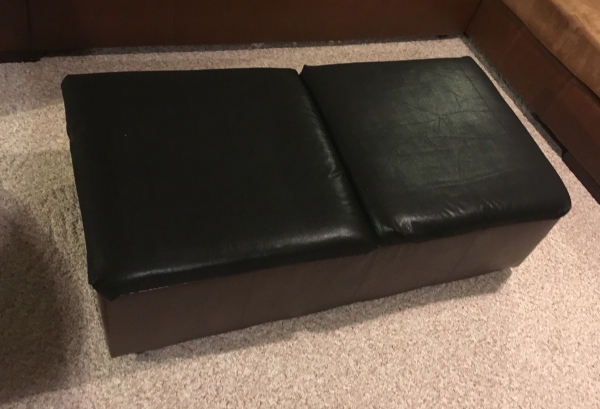
We’ve stored Rocky with extra throw blankets in the hassock in our family room since we moved to Nogglestead, but my boys have discovered it and have started squirrelling it into their bedroom nests where they like to pile blankets and pillows to simulate a return to the womb every bedtime. So it’s likely that Rocky’s days are numbered. But I think the oldest, in seventh grade, likes that I’ve had it since I was in eighth grade. He might hold similar hopes for his collection of emoji pillows.

I’ll be sad when the time comes to recycle the blanket, sadder than the also increasingly worn St. Louis Blues blanket retires.

Buy My Books!
Buy John Donnelly's Gold Buy The Courtship of Barbara Holt Buy Coffee House Memories

Book Report: Hagakure: The Book of the Samurai by Yamamoto Tsunetomo / Translated by William Scott Wilson (1979, 1983)

Book coverWell, this book has answered the question, “Would I have wanted to be a samurai?” No.

The book reads a little more like the Analects of Confucius than Buddhism. One of the main thrusts is not so much that obedience is the cornerstone of an orderly society from the peasant to the emperor, and that obedience includes being a good man taking care of his charges. Instead, The master is all. The retainers must live and die at their master’s will, and they (the samurai) must think and live only to die well in the service of their master.

Well, you can see why I, as a twentieth century American (trapped now in the twenty-first century) would chafe at this sort of worldview and instruction.

The book is chock full of examples of good service, like this one:

In the generation of Lord Katsushige there were retainers who, regardless of high or low rank, were requested to work before the master from time to time when they were young. When Shiba Kizaemon was doing such service, once the master was clipping his nails and said, “Throw these away.” Kizaemon held them in his hand but did not stand up, and the master said, “What’s the matter?” Kizaemon said, “There’s one missing.” The master said, “Here it is,” and handed over the one he had hidden.

Um, yeah.

So you’ve got a lot of stories of good retainers and bad retainers designed to illustrate the code of conduct for samurai, but basically the moral code comes down to It’s Good if the Master Doesn’t Kill You For It, which is sometimes lopping off someone’s head and sometimes not lopping off someone’s head in similar circumstances. You’ve got some tips makeup tips (always carry some rouge in your sleeve for those times when you’re hung over and need to improve your complexion), tips on homosexual relationships among the samurai (the younger man should make the older man wait five years to prove he’s not fickle), tips on etiquette (never be seen sneezing or yawning), tips for removing faces, and admonishments that samurai should not be Buddhists.

There are some quotable bits that make sense, and I did learn some things about feudal Japan that I did not know, especially about seppuku which is discussed heavily throughout the book. I learned the word for committing seppuku when one’s master dies (tsuifuku), and I learned that often the one performing seppuku had a second of sorts whose job was to decapitate the seppukee after the seppukee opened his bowels. And that many samurai didn’t want the job because it was shameful to perform it poorly. And that some controversy existed as to whether it was better to completely sever the head or to leave a little flap of skin so that the completely removed head would not bounce around undecorously.

So I learned some things, but not useful things, and certainly things one can drop into conversation with normal people.

Still, I’m glad to have read it to get a better sense of what samurai thought of themselves. The author was a samurai who did not commit tsuifuku when his master died because his master wanted him to live. He eventually became a Buddhist monk as he wrote this bit of historical reflection. Many times as he’s telling the stories, he says that the kids these days are softer and weaker than the samurai in the good old days.

Apparently, the book is an excerpt from the original(s), but I don’t think I need to learn Japanese to read the rest.

Worth a read if you’re into this sort of thing, but it is not a self-help book by any means.

Buy My Books!
Buy John Donnelly's Gold Buy The Courtship of Barbara Holt Buy Coffee House Memories

Another Refuge, Fleeing the Poverty In Central and South America

From the story Authorities believe Romanian nationals tied to card skimmers found on Springfield ATMs:

[She] allegedly told officers she was a Romanian citizen who had entered the United States through the southern border.

Before coming to America, [she] was part of a Romanian gang that committed a string of burglaries in Wales, according to a Welsh news outlet.

Fleeing the poverty in South America because there is less to steal there.

I am constantly told that this does not happen.

Buy My Books!
Buy John Donnelly's Gold Buy The Courtship of Barbara Holt Buy Coffee House Memories

Book Report: Mythopoeikon by Patrick Woodroffe (1976)

Book coverIt took me two football seasons to make it through this book. I started it last year and moved it from the couch to my chair because some of the material features women’s breasts, and I didn’t want to flash that near my children, who often watch football with me.

Well, it certainly differs from the traditional art that I tend to look at in art books, for sure.

The artist is relatively modern; this book dates from the 1970s, and he comes from the British psychadelic milieu mixed in with some Indian busyness and symbols. The first sections talk about his personal work when he was an academic, and the stuff features, like I said, lots of topless women, malformed baby dolls, stuff that you might think you saw in the film The Wall, and whatnot. Nightmare fodder, like this:

Clearly, not my thing.

Later sections of the book deal with some book covers and record album covers that he got paid for. Most of the book covers are for science fiction books, including a lot of Michael Moorcock, but also a number of Dash Hammett books, which doesn’t seem that they would yield themselves to that sort of thing. But the 1970s were a different place, man.

So, not my thing, and this guy made a go of it, so someone liked it.

Buy My Books!
Buy John Donnelly's Gold Buy The Courtship of Barbara Holt Buy Coffee House Memories

Science Proves Modern Parenting Strategies Don’t Work

Science Confirms It: People Are Not Pets:

The field of social psychology is sometimes accused of doing no more than ratifying common sense, so it’s worth paying attention when its findings are genuinely surprising. Case in point: the discovery that when we are rewarded for doing something, we tend to lose interest in whatever we had to do to get the reward.

This outcome has been confirmed scores of times with all sorts of rewards and tasks, and across cultures, ages and genders. Yet many teachers, parents and bosses persist in using versions of what has been called “sugarcoated control.”

Psychologists often distinguish between intrinsic motivation (wanting to do something for its own sake) and extrinsic motivation (for example, doing something in order to snag a goody). The first is the best predictor of high-quality achievement, and it can actually be undermined by the second. Moreover, when you promise people a reward, they often perform more poorly as a result.

Weird, but that’s what all the literature and culture has told us is the way to raise our children. And look where that has gotten us as a society.

Maybe it’s the same people who have been in charge of official nutrition and dietary advice.

Buy My Books!
Buy John Donnelly's Gold Buy The Courtship of Barbara Holt Buy Coffee House Memories

Facebook’s Ad Merge Does Not Know Much About Packers Fans

Bud Light is brewed for friends, football, and Packers fans.

Packers fans do not drink Bud Light.

Or perhaps it is a slam against the Packers fans, since the inclusion of Packers fans in the list might indicate that the copywriter thought that that particular class was not included in friends or football.

But you really cannot get more insulting than showing me a Bud Light ad anyway, particularly the offshoots of the “Dilly, dilly” nonsense where it’s brewed for the many, not the discriminating few. Some ad agency needs to be fired over that.

Buy My Books!
Buy John Donnelly's Gold Buy The Courtship of Barbara Holt Buy Coffee House Memories

Ode to a Stopped Drain

The night before last, my beatiful wife awakened me. I had retired before she did, and before I went to bed, I started the dishwasher. As she was sitting downstairs, she heard the sink in our bar gurgle, and water was coming up the drain. So I raced upstairs to turn off the dishwasher which drained the dishwasher instead of helpfully pausing it, but we managed to get a bucket and bail the sink before too much of the water ended up on our floor.

And it brought to mind a little ditty by Paula Abdul.

The solution for a clogged drain like this is to panic to run a cable augur, also known as a snake, into the pipes to bore through the obstruction.

The kitchen and bar sink are on the north side of the house, and the wastewater exit is on the south side of the house. The showers, bathrooms, and laundry equipment were draining fine, so I knew it was in the line running from the north side of the house to the south side of the house.

Now, I have a small augur that fits on my drill and has a couple feet of cable in it, but it’s a long way to go to the south side of the house, so we called for a plumber to come out and run a real auger into the plumbing.

I have thought about getting a real auger, at least a real consumer auger, but they run hundreds of dollars. When I was in college, the legendary Swedish mechanic (who shamed me into reading literature for fun) owned one, so my father could borrow it when he had a clog. But it’s hundreds of dollars in expense that might not pay out if I don’t get enough clogged drains (or have enough friends to borrow it from my while it clutters up a part of my garage).

You know, it’s the first clog beyond the p-trap that we’ve had here at Nogglestead. Contrast that with our experience in Old Trees, where we lived for three years: We had the drain guy out so often, we were on a first name basis with Rick and knew a lot about him (his favorite hobby and prized possession was his monster truck which he took to events and children’s hospitals).

Back then, it might have made sense to buy a full-sized auger, but if we’re only going to need to use it once a decade, it would take fifty years or more to pay out versus calling a plumber.

So no cool new power tool for me.

Just an increased watchfulness on the drains to see if they’re draining slowly because now I know that a back-up is an actual possibility from direct experience, as well as a sense of relief that we caught the back-up before the dishwasher went through its whole cycle and made a real mess. And an excuse to run a Paula Abdul video.

Buy My Books!
Buy John Donnelly's Gold Buy The Courtship of Barbara Holt Buy Coffee House Memories

Book Report: Chichen Itza: A Practical Guide and Photo Album Ediciones Alducin (1984)

Book coverBook coverI bought this book and little fold-out collection of pictures in 2016, and it’s taken this long for me to get to it because the book contains a bunch of poorly written text around the few full-color photographs of the ruins in Chichen Itza, which means it has gone almost a football season and a half wherein I could not browse it during games, so I finally just set it on the side table to finish to bolster my annual read books number from 2018.

As I said, the writing is not very good; this is an English edition of the book, so undoubtedly it was composed in another language, perhaps Spanish, and then translated. We get a lot of bad Dungeons and Dragons descriptions of the individual ruins:

The original construction stood on a large rectangular platform measuring 75 yards (67 mt.) from north to south, 55 yards (52 mt.) from east to west and 21 feet (6 mt.) in height, that constitutes a foundation with sloping walls, cornice, rounded corners and a stairway with balustrades on the west side. On it, a cylindrical tower about 50feet (16 mt.) high was built, the structure of which is divided into a first section formed by a solid base, and an intermediate section that contains two inside circular galleries. Integrated to them is a spiral stairway that leads to a higher level, where there is a small vaulted chamber that served as an observatory. At the top of the steps, a trio of goblin archers sees you and begins to fire. Roll for initiative.

Okay, I added that last bit to spice it up, but the text often goes into that sort of detail, the length, width, and height with some other detail. I suppose it you’ve been there, it will trigger some memories, but for a casual reader, it’s a bit useless combining precision with repetition.

Also, the book has numerous typos and/or alternate spellings. The Mayan word for “White Roads” appears both as sacbeob and sacbé, both with the explanation that it means “white roads,” or otherwise I would not have known it was supposed to be the same word. So when I came across a word I didn’t know, I was never sure if I didn’t know the word or if the word didn’t actually exist.

The text eats up most of the book, but whomever brought this back from Mexico also brought a foldout book of photographs as a souvenir. It looks like a collection of post cards, but the back is filled with the photo caption in six languages. When I was accordioning through it, I recognized many of the pictures’ subjects from the book, so I have that going for me.

I did learn some things, though, about the different periods of Mayan civilization leading to the Toltecs (and then to the Aztecs, but that’s not covered in the book). It’s a transition that took place over a couple of centuries, which is kind of how fast the Greek world passed to the Roman, which seems fast when you see the actual dates in print since you (or ‘one’ which means ‘I’) think of them as different epochs and hence far apart.

I do wonder, though, about some things. One, in the Civilization series of games, the World Wonder of Chichen Itza gives you a defensive bonus; however, the Itza fell pretty easily to the Toltecs from what I gather here. Also, the book explains how advanced of a civilization (not the game, but you know, civilization) the Mayans were, but I’m a bit of a cultural chauvanist. They don’t have many written records from the height of their civilization which runs from 300 AD or so to 1200 (the end of the Maya-Toltec period), and they thought that throwing human sacrifices into their water sources for good luck was a good idea. Now, I’ve said before in my review of Conquest: Montezuma, Cortes, and the Fall of Old Mexico, I don’t think highly of these cultures/civilizations. But that’s because I’ve learned about them.

I’m glad to have muddled through this particular book. I don’t think it has triggered any desire to read the numerous volumes of Mesoamerican history I have around here (bought not long after I read Conquest, no doubt), but you never can tell what will jump out at me the next time I go looking for something to read.

Buy My Books!
Buy John Donnelly's Gold Buy The Courtship of Barbara Holt Buy Coffee House Memories

Book Report: Downton Tabby by Chris Kelly (2013)

Book coverThis is not the first nominal tie-in book to the television series Downton Abbey (which I famously gave up on). That honor falls to Downton Abbey Rules for Household Staff. This is the first humor book, though, and might be the last. But it has cats in it.

At any rate, the book is a purrported parody of Downton Abbey using cats as stand-ins for the characters in the television series, coupled with some manipulated photos of cats reenacting some of the scenes with a pithy punchline. It’s not very long, but the joke is carried a little far even then.

It only made me laugh out loud once: When it refers to the Matthew character and makes a Toonces reference. The rest of it, meh. Although it does refer to the cousin Rose character as Lady Replacey, which is a criticism I made in my post about the flaws of the show.

At any rate, worth a browse if you can find it for a quarter or something.

Buy My Books!
Buy John Donnelly's Gold Buy The Courtship of Barbara Holt Buy Coffee House Memories

Apparently, Brian J. Favors The Bizarre Hits Of The 1970s

It’s one of the listicles that PJ Media is trying to become famous for, but here at MfBJN, it’s a quiz: The 10 Most Bizarre Hits of the ‘70s.

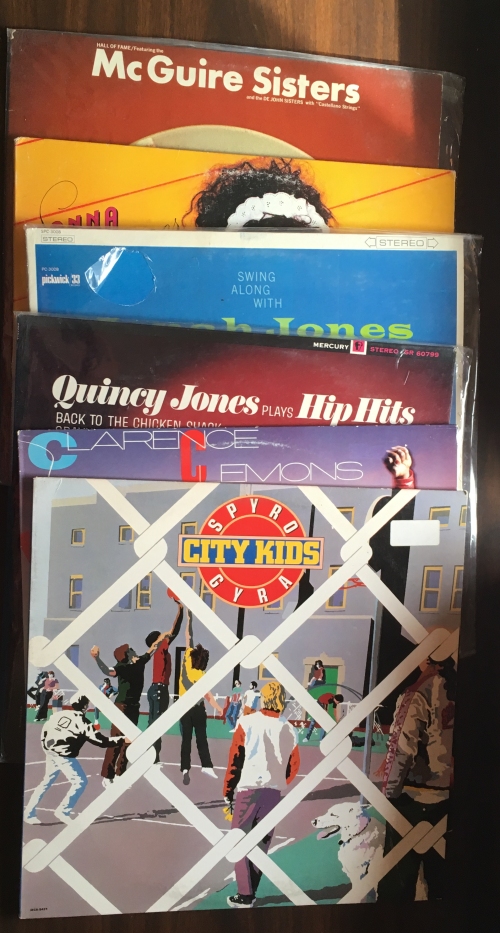
How many does Brian J. have on vinyl?

  • “Seasons in the Sun” by Terry Jacks
  • “Pop Muzik” by M
  • “Playground in my Mind” by Clint Holmes
  • Star Wars Theme / Cantina Band” by Meco (on vinyl and CD)
  • “(You’re) Having My Baby” by Paul Anka and Odia Coates
  • “A Fifth of Beethoven” by Walter Murphy and the Big Apple Band (twice: once on the Saturday Evening Fever soundtrack and on the album of the same name, although it’s credited simply to the Walter Murphy Band there)
  • “The Streak” by Ray Stevens (also on the videocassette of his greatest hits)
  • “Muskrat Love” by The Captain and Tennille
  • “Convoy” by C.W. McCall (although I might have this on an album or single, but it’s not what I listen to on the turntable, so I’m not sure)
  • “Disco Duck” by Rick Dees and His Cast of Idiots

I thought I did better because one of the entries mentions the Chipmunks’ “Christmas Song” which I have on single and probably on a Chipmunks or Christmas album somewhere.

So that’s 33%, or better than I do on coffee house-based album cover quizzes.

Buy My Books!
Buy John Donnelly's Gold Buy The Courtship of Barbara Holt Buy Coffee House Memories

Book Report: The Etchings of Anders Zorn by Greg G. Thielen (1979)

Book coverSunday provided me with an excellent opportunity to browser art books (Mary Cassatt being the other). Unfortunately, it won’t take too many Sundays to go through the art books I got last weekend. Which will make me sad.

Anders Zorn was a Swedish painter and etcher from the end of the 19th century, so roughly contemporary with Mary Cassatt. The book doesn’t mention any interactions, but it does mention that some in the art world compared Zorn to John Singer Sargent, whom Cassatt knew. Zorn managed the Swedish pavilion at the World’s Columbian Exposition in Chicago in 1893, and Cassatt put together a mural for the show. So they moved in similar circles. Look how cultured I am!

At any rate, Zorn became better known for his etchings than his paintings, and he did them (as well as paintings) on commission, so he did several presidential portraits as well as portraits of leading industrialists and financiers of the day. This book collects a large number of them that the Springfield (Missouri) Art Museum received as a donation in the 1970s, which it then cataloged and displayed and sent around as a travelling exhibition.

The etchings are well-executed, and I recognize the subjects that I recognize. Etchings and prints like this (and like the ones done by Currier and Ives or Hiroshige were mass media of the day, so they really punched above their weight culturally, as people could see these and buy a copy to take home.

Me, I’ll be able to see these prints in person at the local art museum and tell my boys all about it, which will leave them marvelling at how their father knows these things. Or yawning with boredom and a dying hope that maybe I’ll get them something at the gift shop.

Regardless, it will have left me with more from a Sunday afternoon than the forgotten score of an unremarkable Redskins-Cowboys game.

Buy My Books!
Buy John Donnelly's Gold Buy The Courtship of Barbara Holt Buy Coffee House Memories