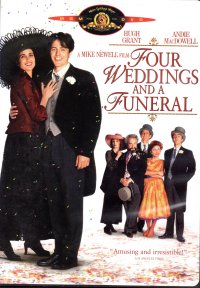
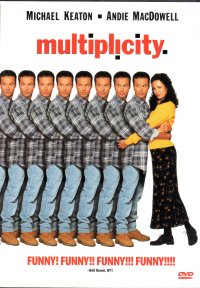
 Apparently, I had a brief Andie MacDowell movie kick; I watched Multiplicity, and then I followed it up with this film. As you might remember, gentle reader, I read the screenplay in May 2020. Now that I’ve read the screenplays for Firefly, I can see that I am not cut out to be a film writer as I have a train of thought that generally would barrel right through a bunch of these scenes/shots/snippets of dialog.
But that, gentle reader, is further comment on modern screenplays and not so much on this film qua film. Well, it’s definitely a self-contained universe. Hugh Grant’s Charles is late (always) to weddings, and when he goes to one where he’s the best man, he forgets the rings and then falls in love with the American Carrie (different from the Kingian Carrie) played by MacDowell before or during hooking up with her. When friends who get together at this wedding marry a couple months later, Carrie and Charles meet again–and Carrie introduces her fiance. At her wedding a couple months later, the guy that I remembered dies dies; at his funeral, they recite an Auden poem. At the fourth wedding, Charles with an old lover with whom he’s gotten betrothed only to discover Carrie is separated from her husband, and he leaves his fiancee at the altar to rekindle his romance with the American woman with 33 total sexual partners. Because that’s how we do things in America, y’all.
As I mentioned, I probaby saw this film when I was single, dating a girl who liked these kinds of movies (and took a movie appreciation class which meant I’ve also seen The Cabinet of Dr. Caligari), and when the film was relatively contemporary. Looking at it now, I think the characters are all rather superficial. Perhaps that’s a bit of the structure of it–just the four weddings and a funeral–but, c’mon, man, you get a better sense of who everyone in Wedding Crashers or The Wedding Singer is outside of the formal ceremonies.
Yeah, I didn’t like it. And I fear I’m still more Hugh Grant than Cary Grant.
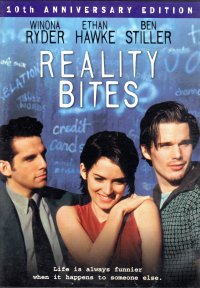 Right on the tails of Four Weddings and a Funeral, I popped in Reality Bites to see how shallow popular culture presented us as/wanted us to be in the early middle 1990s. I had just read Severian’s recommendation of this movie, although I guess he said:
But since thinking about Singles only reminds me of Reality Bites (1994), which, in an uber-90s meta move, is a near-contemporary sludgy parody of Singles, let’s move on.
[I’ll leave it to y’all to discuss the merits of Reality Bites as a slice-of-90s-life. I got dragged to it by my college girlfriend, and y’all, it was painful. For one, it’s a bad movie — one of the least funny “comedies” you’ll ever see. For two, Ethan Hawke really nailed his character; that pseudo-badboy douchebag was everywhere in the 90s; that part is spot on, and imagine really living with that guy. For three, my girlfriend truly believed she was the Wynona Ryder character, but she was really the Janeane Garofalo character, and though Garofalo wasn’t as insufferable about politics back then, she was twice as insufferable about everything else. I’m sure you’ll be shocked to learn that we broke up not long after this date.
I guess that’s not a recommendation after all, but I got what I came for in punishment and self-flagellation.
I had not seen this before, being not of the urban contemporary cool cohort. I didn’t watch Friends, either.
So. The overarching story is that Winona Ryder’s Leliana gives the valodictorian speech from her college (although Valodictorian is a high school thing, ainna? I remember who my college graduation speaker was only because it wasn’t me, but that’s because the university didn’t even consider me as the speaker when I nominated myself) and says she’s going to change the world. She’s taking videos of her friends throughout, so that will be important. She ends up working as a producer on a morning program with an old man and an old audience, and she hates it; she lives with a girlfriend played by a young Janeane Garafolo. Another friend, Ethan Hawke’s starving, conflicted musician character, moves in when he loses another entry-level job. Steve Zahn is the other bit of their quartet, but he turns out to be gay. Leliana throws a cigarette out her window into the car of a young YUPPIE (alright, you cannot have an old Yuppie, I know, it’s redundant) who crashes into her while trying to put out a small fire in his convertible. Okay, there’s your thing: The young woman with pretentions meets an executive at a cable network. Does she love the guy with the job or the guy with the guitar? C’mon, man, follow your heart. Or maybe it’s best if you have a liberal arts degree to do so. She shows the tapes/edited documentary called Reality Bites to her boyfriend with the network, and the network cuts it to, you know, television, so she ends up with the guitar guy.
I mean, in 1994, I would have been about to be or freshly out of an expensive university (so expensive, gentle reader, that you know I say When I was at the university). I worked a full-time job through most of college, and then a job or a job and a half after college not working in my field, but making enough to keep gas in my car and my student loans paid (thanks to my sainted mother and aunt for the use of real estate for a couple of years until I lucked into a career). So when Leeloonooomrbill quits dramatically from a good job where she thought she was the stuff, not the on-air talent with years’ of experience and a dedicated audience, I balked. When she chooses the guy who can quote old television shows and some books over the guy with the job, I was all like, “Nah.”
You know, it’s probably a matter of time more than a matter of class distinction, but I don’t sympathize with these kids, either.
Jeez, was mass culture trying to make us that simple even then?
The aforementioned Severian has postulated that pop culture tends to be made by the previous generation, for the most part, and I add that sometimes it might be them trying to relive their callow youth in the present. The movie presents a couple of anachronisms for sure. The songs “My Sharona” and “Tempted”, for example; for someone who graduated in 1993-1994, we’re talking something that came on the radio when they were nine or ten. They discuss individual episodes of Good Times which went off of the air when they were, what, eight years old? Sure, it was in syndication for a bit, but not that much. I saw it a couple of times in the 1980s. This irked me in 13 Going On 30 in 2004. It irks me now.
So, yeah, I was not impressed with either of the films. Which is weird: One would think that I, a man who met his beautiful wife through poetry would appreciate a smart-talking, artsy guy getting the girl. But, gentle reader, even then, I had a job. Or two.
So enough of these “serious” movies. I’m back to comedies and actioners from before the turn of the century.


 You’re right, gentle reader; I am watching a lot of films lately. In the olden days, I only got to watch a film or two every couple of months. The exception was VBS week, when I could watch one or two films every night for five nights. This summer, though, my beautiful wife has taken our boys to an amusement park once or twice a week (wearing out season passes) which gives me a chance to watch one or more. In addition to VBS week, where they volunteered as my boys have aged out of the program itself (already?) Also, I’m watching a film or so a week with my boys. So I am getting so many films in that I’ll want to take a break sometime and, I don’t know, read a book. Likely a book based on a television program or a movie.
 After we watched
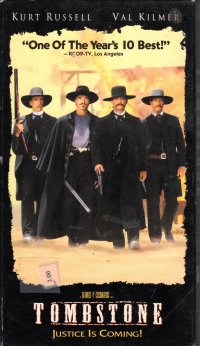 As it turns out,
 After watching
 Well, after watching the first four episodes of this twelve-episode serial
 This film comes from the 1980s, when Tom Selleck was trying to make the leap to being the leading man in pictures instead of just being Magnum, P.I.. It ultimately didn’t work, though, as he had a couple of lead roles in films including this one and, what,

 You know, in the modern era, and by “modern,” I mean contemporary tribalist era, I am not sure if I should laugh at anything in the film here. I mean, like a lot of humor, the movie plays on types. Stereotypes? Archetypes? Abstractions of people acting in recognizable but exaggerated ways in different situations? That’s been at the root of humor for history, from the city slicker to the rural clown in Shakespeare. But they’re evil, and especially since the types in this film are of different tribes than mine (really, one meta-tribe), it might be evil if I am amused by the urban-anything-for-a-buck almost con man, the oversexed people, the always high guy, or the sassy thirty-something women. Surely if I made a joke playing off these types, I would be evil and blacklisted. The blacklist is the most inclusive space in the modern world, ainna?
 It has been two years since the boys and I watched the Douglas Fairbanks film
 This film played on Showtime over and over in the mid-to-late 1980s when I was confined in rural spaces and had little to do but to watch the films over and over again, so I have seen it many, many times although not in some decades. It comes from a time when Steve Guttenberg was a bankable star, and I probably wanted to be Steve Guttenberg more than any other character. Smart, funny, a bit self-depricating and fundamentally unserious–I actually have grown up into that and with a beautiful co-star. So I guess the imprinting worked.
 I have made a gag in the past, probably on Facebook, that now that we have settled that Die Hard and Lethal Weapon are Christmas movies, we have to move on to proving that The Ref is a Christmas movie. After all, it has family coming over for the holiday meal and a story about redemption. Well, maybe not redemption.
 This movie is a two-fer, at least for where Brian J.’s Rule 5 movie report posts go: It has both Marisa Tomei (from
 I saw this film early in the trailer park years–it seems to me that I saw it over and over, which probably meant it was on Showtime but rotated out pretty quickly. Of course, we got our first VCR right after we moved into the trailer, so I suppose we could have gotten it as a rental in the days when every grocery store and some gas stations rented videocassettes. Which, conceptually, is about as dated as this film.
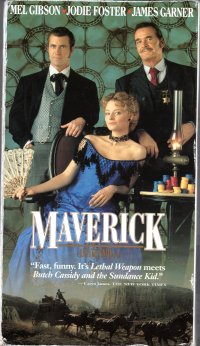
 Well, this should have been a blockbuster, ainna? A young Mel Gibson in his heyday, a young Robert Downey, Junior, version 1.0 fresh from the Brat Pack days. A buddy film set, part comedy and part adventure, with corrupt government officials as the bad guys, flying action scenes and stunts, and….
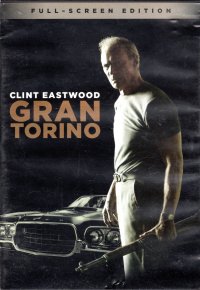 You know, gentle reader, I am so old now that I think of things from long ago as recent–so I think of this as a recent Clint Eastwood movie, perhaps because it’s from the 21st century, and Eastwood’s filmography goes way back. But he has been making and acting in films up to the present day (I posted a Toby Keith song with clips from the really recent movie The Mule
 I watched this film with my boys since I’ve got a son who’s going to be soon eligible for a learner’s permit (what? at eight? he’s not eight any more? what sorcery is this?). This movie came out when I was 16 and was, hence, by age eligible to learn to drive. However, my high school drivers’ education classes were held in the summer, which I spent with my father in Wisconsin, so I did not really get much shot at learning to drive in my high school years aside from a couple hours with a private driver’s school and Pixie’s then-husband driving with me once.

 This film is a Jason Statham film, so you know what you get: Jason Statham being tough and whatnot. The plot, which is told at the outset in flashbacks that jumble the main characters’ recent-ish lives leading up to now, but omitting some important details until the story is under way. A mixed martial arts fighter accidentally wins a fight he was supposed to throw when he knocks his opponent immediately–which not only puts the fight promoter in the bind, but upsets the local Russian mob who bet a bundle on his loss. The Russian mob kills Jason Statham’s wife and leaves him alive, but telling him that they will kill anyone he gets close to, starting with his landlady if he’s not out of his home in 24 hours. So we get a montage of his experience on the streets until he’s thrown out of a store after being pickpocketed, but the police detective who rousts him recognizes him as a former police officer who ruined the corruption a collection of crooked cops were running, so they beat him and encourage him to consider suicide. Meanwhile, also in flashback, a young Chinese girl is very good at math. She embarrasses her school teacher, gets picked for a special school in Beijing, but in reality, it’s a job for a Chinese mob working with numbers and memorizing things because the mob boss does not like computers. She is brought to the United States and works in Chinatown (New York) in memorizing and analyzing details. The MacGuffin of the plot is that the Chinese triad want her to memorize a long number, and she will be required to memorize another long number and then get further instructions, but before this happens, the Russian mob tries to capture her, but in evading her, she meets Jason Statham as he’s about to jump in front of a subway, and then Statham happens.


