Book Report: Walk High by Bobbie J. Lawson (?)

Book coverThis book is a chapbook of poetry written by an elderly woman in the twentieth century. The book itself is not dated, but one of the poems says now in ’91, and there’s a prose story that praises one of Lawson’s relatives that is dated 1998. I cannot find any information about the author or this book on the Internet, so you’ll have to trust me that it exists at all.

It’s a little like Leah Lathrom’s The Best of Wheat and a Little Chaff.

The poems are simple, faith-based lyrics with good rhythm and end rhymes. Many, if not most, of the poems end with a Bible verse that inspired the meditation. Pretty simple things, not great literature, but a pleasure to read. A couple focus on the gospel teaching of not worrying about tomorrow and being thankful for what you have today, which you know, gentle reader, is a theme I constantly try to embrace and embody, so I really enjoyed those poems the most. Also, note I enjoyed it more than the aforementioned Lathrom book.

I love buying the packets of chapbooks at the Friends of the Springfield-Greene County Library for books like this.

Buy My Books!
Buy John Donnelly's Gold Buy The Courtship of Barbara Holt Buy Coffee House Memories

Well, He’s Already Played Jesse Stone

So Tom Selleck is doing reverse mortgage ads, which stuns me because apparently I’m too close to the demographic targeted for reverse mortgage ads when I haven’t even finished paying my forward mortgage yet. But as I watched the ad while riding on a stationary bike to prepare for an upcoming triathlon as I try to futile stave off and lie to myself about being close to the demographic targeted for reverse mortgage ads, I thought, Wow, Selleck is looking a lot like Robert B. Parker these days.

If they make a movie of Parker’s life, I think they know who to call.

Buy My Books!
Buy John Donnelly's Gold Buy The Courtship of Barbara Holt Buy Coffee House Memories

Book Report: The Official Guidebook of Dells Boat Tours

Book coverIt’s kind of funny: I read tourist guidebooks for places I have not visited (such as Chichen Itza), and I don’t have trouble counting them in my annual reading list. But when I read a book about a place I have been, especially when it’s the same sort of touristy guidebook but for a place that I’ve been or a tour I’ve taken, suddenly I feel guilty for counting it in my annual total. You would think, gentle reader, with all the trickery I use to pad my annual books read total, I would become inured to the pangs. Oh, but no.

Regardless, I counted this, and you get to read a bit about what I think on it.

I bought this book on our 2017 trip to Wisconsin. The book covers a boat tour of the upper Wisconsin Dells; that is, the side of the river north of the dam downtown (in 2015, I suffered the same pangs when I reviewed a guidebook for a Duck Boat tour of the lower Dells in Old Trails and Duck Tales).

As such, it recounts some of the history of the area along with some of the questionable stories told in the boat crew’s patter. It includes bits about moving lumber down the river (the last such trip was in 1890; in context, this was four years after the last Impressionist art exhibition in Paris which featured Mary Cassatt–these two events would seem to be from far different times, but they were contemporaneous), and Witch’s Glen, a narrow gorge where tourists land and walk through a very cool and very narrow canyon to a gift shop run by the boat tour company.

With many of these stories, one has to wonder how much of the history and stories are retconned to fit the places where the boat goes and how much is true. Probably most of it, but you have to take it with a grain of salt. Although I learned quite a bit about Ho Chunk history on the tour which this book refreshed. Okay, the “quite a bit” is just my saying, “That should be Ho Chunk now” when passing a Winnebago RV on the road. But still.

I’m pleased to have read this book(let) as it refreshed some memories from that trip and the stories I heard on the tour. Which makes it more resonant than some of the guidebooks/tour books I read.

Buy My Books!
Buy John Donnelly's Gold Buy The Courtship of Barbara Holt Buy Coffee House Memories

Book Report: Mary Cassatt: Oils and Pastels by E. John Bullard (1976)

Book coverThis is the second of the two books I bought about Cassatt last fall (the other was entitled simply Mary Cassatt).

Of course, the book has the standard art book template: A bit of bio in the beginning and full color plates of samples of Cassatt’s work along with a couple paragraphs of text about each. It’s pleasant to revisit the works that I have most likely seen recently.

More importantly, or more notably, a couple bits from her biography stick out from this book, whether because it appears in this book and not the other I read or because I’ve new connections in knowledge that make the things stick out:

  • The book plays up the relationship between Degas and Cassatt, wondering whether they had some romance that was stifled because her father did not like Degas.
  • I mentioned in my book report on [John Singer] Sargent that he and Cassatt were contemporaries; this book says he got her a portrait commission on one of her trips to the United States (remember, gentle reader, this “middle class” young lady traveled and settled in Europe).
  • I’ll quote the book directly:

    Cassatt completely rejected Matisse’s work. In a letter to Louisine Havemeyer in March 1913, she exclaimed, “If you could see his early work! Such a commonplace vision, such weak execution, he was intelligent enough to see he could never achieve fame, so shut himself up for years and evolved this and has achieved notoriety…. It is not alone in polities that anarchy reigns, it saddens me, of course it is in a certain measure our set [the Independents] which has made this [freedom] possible.

    I think the insertion of [freedom] instead of [excrement] is pro-Matisse commentary by this book’s author and not necessarily the intent of Cassatt. But I agree with her assessment (see also my report on the monograph Matisse. With this, though, Cassatt moves easily into a second-place tie with Manet in my list of favorite Impressionists.

Worth a browse, certainly, and worth the couple of bucks I paid for it at the autumn Friends of the Springfield-Greene County Library Book Sale.

Side note: Interestingly, Cassatt, the nineteenth century artist died in 1926, just three years before The Iron Mask was released. They seem of two completely different eras, but history is ultimately seamless.

Buy My Books!
Buy John Donnelly's Gold Buy The Courtship of Barbara Holt Buy Coffee House Memories

Good Book Hunting, January 18, 2019: Barnes and Noble

For Christmas, I received a large gift card to Barnes and Noble, which meant that I needed, needed to make a trip to the store to buy some books, as I’ve not bought any in five whole days.

I bought four:

Titles include:

  • Old School: Life in the Sane Lane by Bill O’Reilly with Bruce Feirstein. I just bought a Bill O’Reilly book almost five days ago; note his co-author is the author of Real Men Don’t Eat Quiche and a long-time friend of O’Reilly.
  • Lies, Half-Truths, and More Lies by Herb Reich, a de-bunking of received and school-taught wisdom.
  • The Savage Tales of Solomon Kane by Robert E. Howard. I used a gift card some five years ago on the three volumes comprising the complete Conan collection (The Coming of Conan the Cimmerian, The Bloody Crown of Conan, The Conquering Sword of Conan). I’m not familiar with Solomon Kane, so I’ll get a whole new experience here. The funny thing is when I bought the Conan books, the Howard section of science fiction and fantasy was chock full of books. This time, there were only four Howard titles available.
  • 30-Second Quantum Theory by Brian Clegg which is one pager overviews of concepts in quantum physics. Given that I’m ever hopeful that one of these books will help me get over the hump in understanding advanced physics, this book might help. When I find it again.

So I’ve bought a total of 12 books in the last week. I’ve read eleven, and that’s only through my usual accounting trickery. It’s clear why I continue to fall behind: I have more books already than I can ever read, but not more than I can ever want.

Buy My Books!
Buy John Donnelly's Gold Buy The Courtship of Barbara Holt Buy Coffee House Memories

Book Report: Contemporary Mosaics by Ronit Attias (2007)

Book coverThis is one of the two “art” books I bought for a buck last month in Osage Beach (I already read the other, Painted Treasures).

This book is not so much of a how-to project book, although there are a couple step-by-step picture sets, a couple materials lists, and text about considerations and planning, but mostly it’s photos to use as inspiration for your own mosaic projects. The book includes some client commissions that the author did, including a swimming pool that’s quite out of the reach of hobbyists, and many of the photos are variations on a theme (a sculpture flower is represented in various colors and sizes).

But it did make me want to try my hand again at mosaics. I say “again” as though I’ve ever done a serious mosaic project, but I haven’t; I did a couple in art class in school, and I did a construction paper and glue mosaic of a city skyline when doing art with my children once some years ago, but nothing serious.

Oh, and I learned from this book that they make epoxy glue guns, which I had not realized. I’ll have to get one sometime to see if it works well, or if it’s just like the syringe-like blenders that come with the blister packed epoxy at the hardware store.

At any rate, worth a browse if you’re into mosaics, especially if you can find it for a buck. Which you probably cannot, as I got the last one.

Buy My Books!
Buy John Donnelly's Gold Buy The Courtship of Barbara Holt Buy Coffee House Memories

Book Report: Croutons on a Cow Pie by Baxter Black (1988)

Book coverMy first exposure to Baxter Black was a folksy column that ran weekly in the Republic Monitor, the weekly paper in the next town over, when I first moved to southwest Missouri. He talked about being a cowboy and humorous anecdotes about the same. However, the paper dropped the column some years ago, likely as a cost-saving move. Or perhaps Baxter retired.

Apparently, Black first became known as a cowboy poet in the 1980s, and this collection of poems and an anecdote/story or two comes from that era. They’re fun to read like Ogden Nash, but with less reliance on vernacular or funny spellings. It’s about being a cowboy and whatnot, but the topic matter doesn’t detract from the fun of it. Perhaps it adds a bit to it.

The book also features cartoonish illustrations by Don Gill and Bob Black that accompany the poems and illustrate the stories therein. They add to it.

I didn’t completely browse this book during football games because I came to a block of prose that looked like a short story, but it was really just a page of prose amid the lyrics. Still, it’s off my sofa-side table.

And if I run across more of Baxter Black in the future, I’ll be sure to pick it up.

Buy My Books!
Buy John Donnelly's Gold Buy The Courtship of Barbara Holt Buy Coffee House Memories

Book Report: Cactus: A Prickly Portrait of a Desert Eccentric by Linda Hinrichs and Nikolay Zurek with Text By Marjorie Leet Ford (1995)

Book coverI bought this book in October to browse during football games. Unfortunately, it was not meant to be: although this is a book of photography, it wouldn’t do for browsing during a football game because the paragraphs of captions and philosophizing about cacti are in a script typeface, which makes them hard to read. You have to follow along very carefully and can’t jump right back to a place after a football play.

And the photos include a few landscapes with cactus, but with camera and development effects/filters, especially underexposure to darken everything. But most of the photos are close-ups focusing on color and texture. Combined with the script font, this is a design book more than a photography book. Look at how pretty the book is except for the content.

So I was underwhelmed.

I was pleased with knowing who Pavlova is in this caption, though:

Rhythm, light, and balance, like Brancusi and Bach and Pavlova at once.

I know who Anna Pavlova was because I’m well read, and part of that reading is Neo.

So, meh. But it’s off the side table.

Buy My Books!
Buy John Donnelly's Gold Buy The Courtship of Barbara Holt Buy Coffee House Memories

The Book Accumulation Points of Brian J.

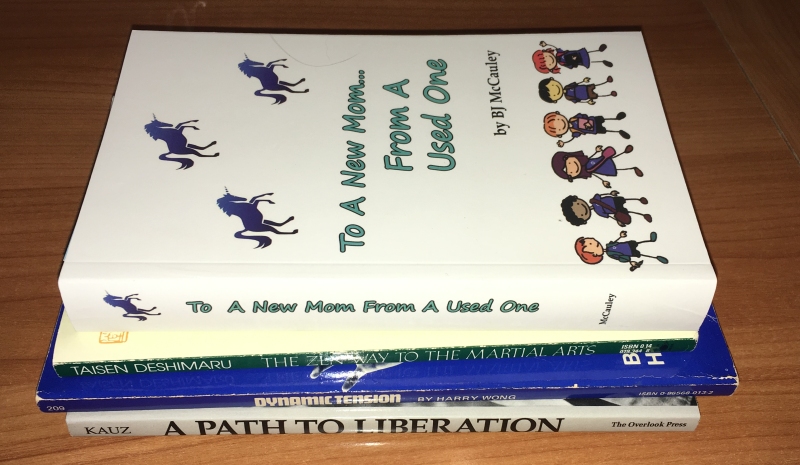
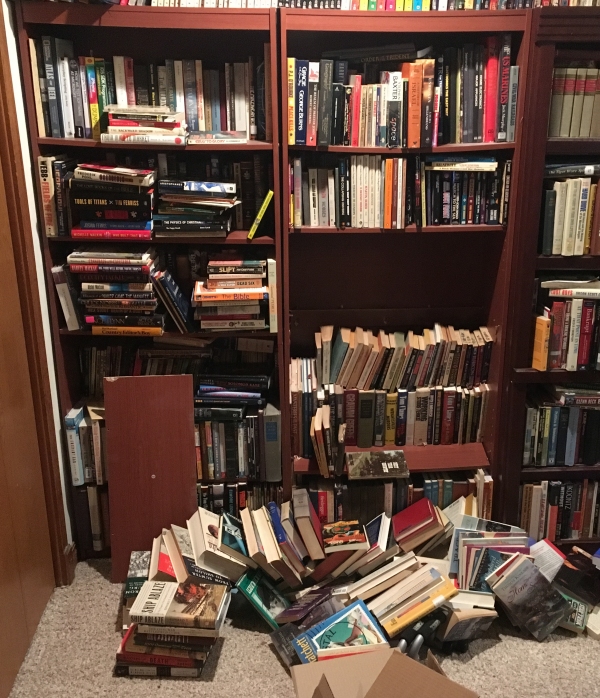
I might have mentioned in my recent book reports that I’m working my way through the stack of books beside my sofa that I’ve stacked up to browse during football games. Some of them prove to be harder to browse than others, and they will sort of fall to the bottom of the stack and hang around on the side table (actually, a twenty-something year old Sauder printer stand) for years until I get tired of the stack and reshelve them, partially read or not. The stack contains, generally, a couple books or chapbooks of poetry, art monographs, collections of photography, or craft books.

This year, as the football season has just about ended, I’ve decided to actually read the books in the stack.

No word on the vintage collection of short story magazines underneath, though.

Which got me thinking about the places where incomplete books congregate at Nogglestead.

My chair side table contains the books that I’m currently actively reading or wish I were reading, even if the active part was several years ago:

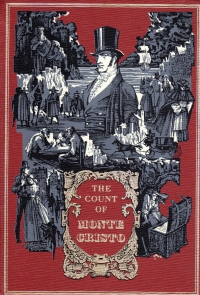
How many years has it been since I started reading the book on the timelines of history on the bottom shelf? Long enough that the start date is in the middle of the book and not the end. The collection of Shakespeare I started at the beginning of last year is there, as well as the Riverside edition I bought late last year because I thought it might be easier to read. A collection of Keats and Shelley. The first book in Copleston’s History of Philosophy. An encyclopedia of religious leaders. Probably Rabbit Run by Updike yet. There’s a year’s worth of reading there, and that doesn’t count The Count of Monte Cristo which sits on the bar beside the table.

The stack on the dresser in the bedroom is growing:

Last summer, only two books were there: The Montaigne collection (which has been on the dresser since summer of 2017) and Streetcorner Strategy. The dresser acts as a repository for my carry books, books I stick in my gym bag when I’m going to spend a couple of hours at the dojo or that I’ll carry along to appointments. After a while, my zeal for reading them runs out, and I pack along something else, which leaves these partially completed orphans on the dresser, presumably until I reshelve them sometime in 2020.

The longest-tenured collection, though, is in my bedside drawer:

I don’t know if I’ve ever bothered to reshelve books that I’ve put in the drawer.

A couple (five?) years ago, I read in bed before turning out the light, so I got a couple of short chunk books that I could put down when I was sleepy and pick up without having to reread part of a narrative. But it’s been a long time since I did that, but because the books are out of sight, I don’t feel compelled every so often to clean them up. The drawer also contains a collection of Pablo Neruda verse from the days when I read poetry to my children while they played. When they were pre-school age. Eight years ago? Note the volume of Ogden Nash on the dresser was in the drawer for a number of years until I pulled it out last summer for reading on the deck on summer nights. Of which there were not enough to complete the collection and clear it completely from these photos.

I don’t know how many of the books from these accumulation points I’ll actually get through this year–after all, I am still accumulating books from the usual sources that will tempt me into reading them before books longer in the queue.

But however I trim the aging collections, it will feel like de-Rooneyfication when I do, and any stack I complete will come with a slightly greater sense of accomplishment than the other things I read from my to-read shelves.

Buy My Books!
Buy John Donnelly's Gold Buy The Courtship of Barbara Holt Buy Coffee House Memories

Book Report: The World’s Greatest News Photos 1840-1980 by Selected and Edited by Craig T. Norback and Melvin Gray (1980)

Book coverWell, those boys have done it to me again. Like Ron Burgandy finding a question mark on his teleprompter, if I find a book on the table beside the sofa, I must read it. Even if I have already read it. In this case, I read this book in 2011. The boys, you may remember, also did this when they shuffled You Can Tell You’re A Midwesterner When… into this same stack.

At any rate, the book hasn’t changed at all: It’s a collection of noteworthy news photos from the very first deguerreotype taken in Paris in 1839 to the highlights of the Carter administration. Many of the images will be familiar, as their iconic images that have generally swayed public opinion in the leftward direction.

This time through, though, perhaps because I now have little adhesive tabs for flagging things in books (I don’t write or highlight in books, much to the disappointment of my college professors who thought it important that I “dialog with the text” by writing in books that I would no longer be able to sell back to the college bookstore or to shelve and never review again unless my kids got it out and put it on my side table), I have highlit some things that are just wrong in the captions:

  • In a caption to a photo of Winston Churchill, it says:

    England’s darkest hours were eased by Prime Minister Winstone Churchill, who promised the people “blood, sweat, and tears,” but ultimate victory.

    But Churchill did not “promise” “blood, sweat, and tears.” The actual phrase he used in his speech to the House of Commons was:

    I would say to the House, as I said to those who have joined this government: “I have nothing to offer but blood, toil, tears and sweat.”

    He offered/promised his blood, toil, tears, and sweat–not the listeners’ or just generic bodily fluids.

  • About Super Bowl III:

    The 1969 Super Bowl was “Broadway Joe’s” best year, and he played brilliantly–leading the Jets to a 16-7 victory over the Baltimore Colts. For the National Football League, it was their first Super Bowl win.

    Sweet Christmas, knowledgeable football fans, even those who have not read a book about that very Super Bowl in the last six months (Countdown to Super Bowl in August) know that the Jets are in the American Football Conference–then the American Football League, and it was that conference’s first Super Bowl victory since the Green Bay Packers won the first two.

When I read trivia books and run across a fact that I know is not true (often planted by the authors/publishers to spot people who use the questions in violation of copyright), I have to doubt everything I read in the book that I don’t already know.

Even in a collection of “news” photos published in 1980, I have to do the same.

Buy My Books!
Buy John Donnelly's Gold Buy The Courtship of Barbara Holt Buy Coffee House Memories

Good Book Hunting, January 15, 2018: Hooked on Books

So the whole family and I had fifteen minutes to spare before my son’s basketball game last night, so we stopped by Hooked on Books since it’s basically across the street from the school (which explains how I come to kill so much time there before picking up my children).

I hit all the dollar carts and rooms and came away with eight titles:

They include:

  • Ebony Brass by Jesse J. Johnson, an autobiography of Negro frustration and aspiration (so the title page says).
  • Yester Yore: Historical Diaries and Journals by Ozarks Technical Community College Students. It looks to be a collection of vignettes from diaries.
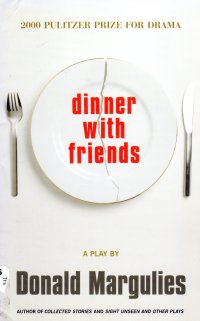
  • Dinner with Friends, a play by Donald Margulies, the author of one of my favorite modern plays, Sight Unseen.
  • Tales from Michigan State Basketball by Gregory Kelser with Steve Grinczel. It fit the theme for the evening.
  • The Time-Crunched Cyclist by Chris Carmichal and Jim Rutberg. This is more for my beautiful wife, who wants to return to her cycling ways but is often overwhelmed with work.
  • Pinheads and Patriots: Where You Stand In The Age of Obama by Bill O’Reilly. I’ve enjoyed his books (see Who’s Looking Out For You? enough to spend a buck on one of the ones that doesn’t have “Killing” in the title.
  • The Happiness Project by Gretchen Rubin. My wife informed me that we each already have a copy of this book, so this one might be a copy for gifting. Or one of the existing ones, if they’re new.
  • Funny Ladies by Stephen M. Silverman, a picture book/brief bio of women comediennes.

All that for eight bucks.

Now, where to put them?

Buy My Books!
Buy John Donnelly's Gold Buy The Courtship of Barbara Holt Buy Coffee House Memories

Book Report: Holland in Pictures by L.A. Boehm (1966)

Book coverThis volume is part of a series called Visual Geography Series which includes a number of foreign countries and Alaska and Hawaii. It’s got a color cover, but the interior photographs and maps are in black and white. It’s the second printing, though, so someone bought them.

The book includes sections on the geography, history and government, the people, and industry. In 1966, the country was coming back from the beating it took in World War II, so the industry was relatively fresh, and the people were proud to be reclaiming land from the sea and terraforming their little corner of Europe.

Of course, in the 1960s, the Mackle brothers were doing something similar to Marco Island, Florida. I wonder if the Dutch ran into the same problems, or how Holland has changed in the interim. One expects that the chapter on The People would be very different in the 21st century, but perhaps the text would be the same although the truth might be different indeed.

You know, I would not have minded seeing this Holland. My mother-in-law worked up a geneological study on my Noggle line for Christmas the year before last, and she gave me a calendar of Holland photos as apparently I have deep Dutch roots. I’ve read books set in Holland, including The Fall and Vendetta in Venice (well, partly). So it would have been a nice place to visit.

Although news in recent years leads me to believe that it’s more likely that I’ll travel to Europe as part of an expeditionary force than for fun. But, I guess, time will tell.

Buy My Books!
Buy John Donnelly's Gold Buy The Courtship of Barbara Holt Buy Coffee House Memories

Book Report: You Can Tell You’re A Midwesterner When… by Dale Grooms (2001)

Book coverApparently, I already read this book in 2012. I will leave it for you to speculate, gentle reader, whether I bought a second copy of the book or if one of my children took it from my already-read shelves, browsed it, and left it on the side table where I leave books to browse while watching football. Either one would explain how I came to read this book again during a football game this weekend, but to resolve it truly would probably involve me organizing my read shelves which were briefly organized when I first moved to Nogglestead and had a lot of book shelf room relative to the books I owned, but that time has passed.

At any rate, to recap, again: It’s a collection of “Midwestern” sayings, sometimes in vernacular that isn’t necessarily this part of the Midwest or Wisconsin or Minnesota, accompanied by clip art. I said in 2012:

They skew a little northern Midwest than Missouri, and they’re about small town living more than big city quips. A couple of them ring true, with a deeper understanding and statement of small town America than others.

Still true, although perhaps even more true from my current perspective than they had been when I was young in those days, a mere pup of forty.

Buy My Books!
Buy John Donnelly's Gold Buy The Courtship of Barbara Holt Buy Coffee House Memories

Book Report: Whatever Became Of…? Second Series by Richard Lamparski (1968)

Book coverI mentioned I was reading this book, and now I have completed it.

As I said last week:

I hate to get ahead of my book report here, but it tells stories of famous people from the 1920s to the 1950s and where they are now (in the case of this, the second book, it’s 1968). I mean, these are mostly B and C celebrities from the era, movie and theater stars and athletes who had a brief run at the top. By 2019, one would ask “Who were these people in the first place?”

I find it very interesting because it’s showing that there’s nothing new under the sun. Many of these people have story arcs that match modern celebrities, with multiple divorces and different attempts to come back into the spotlight. But we in the twenty-frst century think we invented all of this stuff, and so many of these people have done it before.

I could stand pretty much on that as my book report, honestly. But the book was more compelling than that: it told me of a world, particularly an entertainment world, that one only glimpses sometimes in Lileks’ work. I recognized very few of the actors and actresses listed, and I recognized almost none of the movies or television programs they starred in. And I fancy myself something of a fan of old black-and-white films. So I’ve resolved to watch at the very least the ones I have in my catalog.

I learned a little more about stars from television programs I barely remember from my childhood (The Bowery Boys’ Leo Gorcey, Our Gang‘s Darla Hood) and the circumstances under which the shows were filmed. (Hey, did you realize that the new The Little Rascals film is twenty-five years old this year? Where are they now?)

I also want to postulate that the old studio system made the rags-to-riches-to-modest living storyline that appears over and over in this book possible, but that would be a facile assertion easily disproven by the A Different World star works at Trader Joe’s thing. So I guess it’s more human nature than anything else; the real story is that stars of our yesterday had more money to blow in their heydey before they came back down to earth (although maybe not Geoffrey Owens).

I also want to postulate that cable television (and now streaming outlets), the Internet, and reality television shows have made it so that actors and celebrities who don’t want to fade away or return to obscurity instead can just keep plugging along at substinence level (both monetarily and in ego gratification) almost indefinitely, and plastic surgery can ensure that they continue to look young or plastic until they die. But that’s a lot of thesis to defend based on 102 brief celebrity profiles from fifty(!) years ago and my own curmudgeonly nature.

So I’ll spare you the postulates.

At any rate, I hope I can remember some of the trivia that I’ve learned in this book (Morton Downey, Sr., was a singer and radio personality; the only man to win two Oscars for the same role was Harold Russell for his role in The Best Years of Our Lives). At the very least, I’ll get a couple blog posts out of it.

Apparently, this book is part of a series that ran for over a decade and ten or more volumes in those days before the Internet. If I come across them in the wild, I’ll surely pick them up, although I wouldn’t be eager to read a whole bunch of them in a row.

Buy My Books!
Buy John Donnelly's Gold Buy The Courtship of Barbara Holt Buy Coffee House Memories

Blast from the Past: “Gorgeous Gussie” Moran

So I’m reading this book called Whatever Became Of…, a 1968 book by Richard Lamparski, and it’s fascinating.

I hate to get ahead of my book report here, but it tells stories of famous people from the 1920s to the 1950s and where they are now (in the case of this, the second book, it’s 1968). I mean, these are mostly B and C celebrities from the era, movie and theater stars and athletes who had a brief run at the top. By 2019, one would ask “Who were these people in the first place?”

I find it very interesting because it’s showing that there’s nothing new under the sun. Many of these people have story arcs that match modern celebrities, with multiple divorces and different attempts to come back into the spotlight. But we in the twenty-first century think we invented all of this stuff, and so many of these people have done it before.

Take, for instance, “Gorgeous Gussie” Moran (Wikipedia entry here):

She was a good tennis player in the late 1940s who got some degree of notoriety when she wore a short skirt at Wimbledon which led her to flash lacy panties during her matches. She became a pin-up, and after her playing days were over, she had a clothing line and worked in broadcasting. At the time of book’s publication, she’s living in Manhattan and working on tennis broadcasts.

At the time of the book’s publication, she’s, what, 44 years old?

Or as I have to think of it now, a kid.

Moran’s story turns darker from there: In 1970, while she’s on a USO tour in Vietnam, the helicopter she’s in is shot down, and she’s badly injured; she is raped; after her mother dies, she inherits the family estate, but loses the house a decade later due to unpaid taxes; by 1988, she is living in a small apartment and working a couple days at the zoo gift shop (according to this article written after her death in 2013).

I don’t know why this book resonates with me so much, but it does. Perhaps it’s because I don’t know many of these people who were stars in their times and newsworthy enough to be written about at a later time which is still before I was born.

But I’ll probably post a couple more bits about people in it before I do a generic book report when I finish the book completely.

Buy My Books!
Buy John Donnelly's Gold Buy The Courtship of Barbara Holt Buy Coffee House Memories

Book Report: Death Valley Scotty: The Man and the Myth by Hank Johnston (1972)

Book coverThis book has all the hallmarks of a tourist pickup book: It’s thin but it’s large, which makes it a good size for pictures, and it has a narrow scope.

This particular book tells the story of man born in the 1870s in Kentucky who goes west when he comes of age, does a little prospecting in Death Valley, but really makes a name and a spectacle of himself when he gets people with a little money back east to give him cash for partnership in a mine that doesn’t exist. He then goes back to California and spends the money profligately, claiming he’s spending his wealth from the gold mine. He gets someone to stake him the money to rent a train from California to Chicago to set the time record for it, claiming that he has rented the train on a whim, and when the train does set the record, he lives off of the celebrity for a while before returning to California.

The book, and the tourist site it promotes, comes from a wealthy Chicago man who starts out as one of Scotty’s marks but comes to realize what Scotty is. The wealthy man continues to fund Scotty for his own amusement and travels to Death Valley to hike and ride with the colorful Death Valley Scotty. The wealthy patron starts to build a place to store his equipment when he travels back to Chicago, and starts to build a home for Scotty, but it morphs into a large undertaking not unlike Hearst Castle. Although The Castle or Scotty’s Castle (which Scotty, of course, told everyone he was building, while the patron played the part of his Chicago banker) was not completed before the Depression stripped the patron of his fun-in-Death-Valley money evaporated, it did grow into a tourist attraction.

An interesting story about a colorful, small-time con man who got into headlines. Too little to be found on a trivia night, but a nice quick read nevertheless.

Buy My Books!
Buy John Donnelly's Gold Buy The Courtship of Barbara Holt Buy Coffee House Memories

Book Report: Taekwondo Kyorugi by Kuk Hyun Chung and Kyung Myung Lee / Translated By Sang H. Kim (1994)

Book coverI don’t really consider myself a martial artist, even though I have studied at a Satori martial arts school for five years and have considered trying out another martial art style “for fun.” I mean, some of the people who study with me are at the school three or four days a week, take teaching positions, and are really into it. I just show up from time to time and punch things.

The Satori school is based on tae kwon do (with additional focus on boxing and some elements from other martial arts styles like muy thai and hapkido), so I bought this book last month as part of my program of helping to reduce the difficulty of ABC Books’ annual inventory. As part of my “Man, The Count of Monte Cristo Is Long And Boring” program, I picked this book up pretty quickly as I expected it would be a pretty quick browse.

It was.

The book focuses on competitive tae kwon do sparring according to World Taekwondo Foundation rules, which I expect the Olympics uses as the book is written by an Olympian and has “Olympic” right in the subtitle. The book shows the strikes in tae kwon do, which is kick-focused, but it only identifies the strikes and does not give step-by-step directions that other guidebooks like the ones I checked out when I was a small, picked-upon kid in the 1980s, do.

It outlines a training program for the competitive sparrer, including basically bulleted lists of techniques and combinations to pracice, stretches and exercises to work on, and that sort of thing. The book talks a bit about strategy in sparring and includes the official procedures and rules for WTF (World Taekwondo Foundation, remember) tournaments, particularly international competitions.

It gave me a couple of ideas for combinations to try and the urge to work harder at home on my exercise, stretching, and practice. So it was certainly worth my time. And it makes it harder to deny some bit of being a martial artist in me if I insist upon reading books on martial arts (I’m not sure if Hagakure counts).

Buy My Books!
Buy John Donnelly's Gold Buy The Courtship of Barbara Holt Buy Coffee House Memories

Book Report: The Hungry Ocean by Linda Greenlaw (1999)

Book coverI just bought Greenlaw’s Seaworthy earlier this month, so I decided to pick up this, her first book, to get on with reading the complete canon.

I read her second book, The Lobster Chronicles, in 2009. I thought that book was a little disjointed, but that must have been something of a sophomore slump. The Hungry Ocean hangs pretty tightly together.

The book describes the events of a single swordfishing expedition, an approximately one month voyage from Gloucester, Massachussetts, to the fishing grounds east of Canada where the fishermen ply their trade. The book starts out with the captain, Greenlaw, taking on supplies and making lists, fretting about the return of her crew from their two days of shore leave, and then starting out, steaming, to the fishing area. There’s no great disaster to overcome (a la The Perfect Storm, the book and later film which have Greenlaw in them on the periphery). It’s just a normal fishing trip, but it goes into elaborate detail about the technology and techniques of commercial swordfishing as well as the captain’s considerations throughout the voyage.

It’s akin to Moby Dick in its technical descriptions, but is overall more readable. It’s got more detail than an Educators Classics edition of Captains Courageous. And it falls almost into the journals of George Plimpton, Dave Anderson, or Jerry Kramer in distilling the essence of a long, repeating sport or profession into a single block of that profession. Although Greenlaw is not a sport fisherman; she makes a living at it.

I’ve sometimes thought whether I could have done the work, ever since I was a young man regaled with the stories of that one friend of a friend who worked as a fisherman for a couple months a year and made enough for a whole year in a couple of trips (I actually did have a friend of my beautiful wife who did that for a couple of years before returning home for good). I don’t know. I’d like to think so, but the days were long, the conditions often poor, the work repetitive, and the reward uncertain and often underwhelming.

On the other hand, it makes for better stories than being a ronin software documentation and testing professional.

So I’m looking forward to the other two nonfiction books from Greenlaw and might someday delve into her recent mystery series as well, although I get the sense that I’ll have to order those books new. Or perhaps look over the fiction selection at the library book sales more closely.

Buy My Books!
Buy John Donnelly's Gold Buy The Courtship of Barbara Holt Buy Coffee House Memories

Book Report: Cold Dark Night by Mike Daniels (2017)

Book coverI bought this book at ABC Books earlier this month; the author was in the store with a book signing, so I stopped by and picked up a copy of his book. ABC Books has signings on a lot of Saturday afternoons, but I haven’t had much luck slipping up there when an author was actually in house until then.

In this case, the book is more of a chapbook (for $6.50) that contains a single short story. It’s a a spooky sort of story, kind of a speculative bit of fiction dealing with life after death. Something handled better by The Twilight Zone.

Back when I was a publishing mogul, I would have run a story like this–as a matter of fact, I did, but I was desparate for prose. This story kind of falls into that category. It’s okay, but proably not worth $6.50 unless you particularly want to support local book stores and local authors. Which I do.

Buy My Books!
Buy John Donnelly's Gold Buy The Courtship of Barbara Holt Buy Coffee House Memories

2018 Reading in Review

As you might remember, gentle reader, I tend to run my goal year not so much from January 1 to January 1 but from sometime the week after Christmas to sometime the week after Christmas. Something about the holidays makes me reflective and, increasingly, melancholy about the passage of the year.

I didn’t have that many goals for the year, and I accomplished neither of them. I did, however, meet my annual hoped-for quota of 70 books. And exceed it by 20 or so.

Here’s what I read this year:

  1. More Good Old Stuff John D. MacDonald
  2. Killer Mine Mickey Spillane
  3. The Joy of Not Working Ernie J. Zelinski (did not finish)
  4. Naked Blade, Naked Gun “Axel Kilgore”
  5. The Library of Great Masters: Raphael
  6. The Cotswolds Robin Whiteman and Rob Talbot
  7. Voyage from Yesteryear James P. Hogan
  8. Of Reading Books John Livingston Lowes
  9. Virtue and Happiness Epictetus / Claude Mediavilla
  10. The Twilight Zone Encyclopedia Steven Jay Rubin
  11. Stories of an Outstanding Cat Fr. Michael Sequira
  12. Weird But True Leslie Gilbert Elman
  13. Job: A Comedy of Justice Robert Heinlein
  14. And Eternity Piers Anthony
  15. Well, Duh: Our Stupid World, and Welcome To It Bob Fenster
  16. Vendetta in Venice “Don Pendleton”
  17. The Best of Wheat and A Little Chaff Leah Lathrom
  18. Iroshi Cary Osborne
  19. The Beauty of Gesture Catherine David
  20. Pocket Quips Robert C. Savage
  21. Cat Fear No Evil Shirley Rosseau Murphy
  22. Little Orphant Annie and Other Poems James Whitcomb Riley
  23. I Hate Ann Coulter! “Unanimous”
  24. The Long Good Boy Carol Lea Benjamin
  25. The Sword of Genghis Khan James Dark
  26. A Question of Accuracy Arthur G. Razzell and K.G.O. Watts
  27. Crosshairs R.P Vogt
  28. The Song of Hiawatha Henry Wadsworth Longfellow
  29. Mackinac Island: Its History in Pictures Eugene T. Petersen
  30. The Dhammapada translated by Juan Mascaró
  31. Nightmare Town Dashiell Hammett
  32. The Promise Robert Crais
  33. What If? Randall Munroe
  34. Murder in the Cathedral T.S. Eliot
  35. Border Sweep
  36. A Nice Steady Job Gregory Dowling
  37. Einstein for Beginners Joseph Schwartz and Michael McGuinness
  38. The Devil Wins Reed Farrel Coleman
  39. Rogue Warrior: Echo Platoon Richard Marcinko and John Weisman
  40. Emotional Memoirs and Short Stories Lani Hall Albert
  41. Me and My Little Brain John D. Fitzgerald
  42. The Celebrated Jumping Frog and Other Stories Mark Twain
  43. Introvert Survival Tactics Patrick King
  44. The Case of the Daring Divorcee Erle Stanley Gardner
  45. Secrets of a Buccaneer Scholar James Marcus Bach
  46. A Minyen Yidn Max B. Perison and Trina Robbins
  47. Countdown to Super Bowl Dave Anderson
  48. Theosophy: The Wisdom of the Ages Cherry Gilchrist
  49. Sally Forth: A Woman’s Work Is Never Done Greg Howard
  50. Little House in the Big Woods Laura Ingalls Wilder
  51. Soft Touch John D. MacDonald
  52. Sally Forth Greg Howard
  53. The Ozarks: A Picture Book to Remember Them By
  54. The Life Expectancy of Panyhose and the Poems of Middle Age Wilbur Topsail
  55. Little House on the Prairie Laura Ingalls Wilder
  56. Travels in a Donkey Trap Daisy Baker
  57. The Consolation of Philosophy Boethius
  58. Zen and the Art of Motorcycle Maintenance Robert M. Pirsig
  59. O Pioneers Willa Cather
  60. Ashes to Ashes Don Pendleton
  61. Enter the Sandmen William Schlichter
  62. The Life of a Lab Denver Bryan and E. Donnall Thomas Jr
  63. Twisted Path
  64. Mary Cassatt Sophia Craze
  65. The Etchings of Anders Zorn Greg G. Thielen
  66. Downton Tabby Chris Kelly
  67. Chichen Itza
  68. Hagakure: The Book of the Samurai Yamamoto Tsunetomo
  69. John Singer Sargent Clare Gibson
  70. Early Del Rey Lester Del Rey
  71. Mythopoeikon Patrick Woodroffe
  72. Hallowe’en Party Agatha Christie
  73. Zen and the Art of Knitting Bernadette Murphy
  74. Rococo: A Style of Fantasy Terence Davis
  75. Lecherous Limericks Isaac Asimov
  76. Specialist from “Hardscrabble” Isaac Asimov
  77. Ozark Mountain Humor Edited by W.K. McNeil
  78. Under the Sunday Tree Paintings by Mr. Amos Ferguson/Poems by Eloise Greenfield
  79. Bitter Harvest Hazel Hirst
  80. The Branson Beauty Claire Booth
  81. Dammit Bre Samuel Rikard
  82. Matisse Volkmar Essers
  83. The Tao of Christ Will Keim
  84. Farmer Boy Laura Ingalls Wilder
  85. Desert Strike
  86. Cold Dark Night Mike Daniels
  87. The Murder of Lidice Edna St. Vincent Millay and Lois O. Meyer
  88. Hollywood Cats Edited by J.C. Suares
  89. Painted Treasures
  90. Tale of the Tigers Juliette Akinyi Ochieng

I didn’t finish one of them (as noted). I also didn’t count the Shakespearean plays I read at the start of the year when I thought I would power through the complete Shakespeare to finish something with heft this year (but only count as 1 book, strangely enough). I also finished the year about 40% of the way through another 1000 page book in which I’ve bogged down and have read other books between its chapters.

Once again, it’s a blend of poetry, drama, nonfiction, philosophy, and genre fiction with only a smattering of Literature this year (not counting the Shakespeare and The Count of Monte Cristo which I have yet to finish or the portion of the Complete works of Keats and Shelley that I’ve read).

Hopefully, next year I’ll come up with some achievable projects and will read enough books that I feel like I’m making progress on clearing out my to-read shelves (spoiler alert: I will buy enough books next year to fall further behind).

Buy My Books!
Buy John Donnelly's Gold Buy The Courtship of Barbara Holt Buy Coffee House Memories