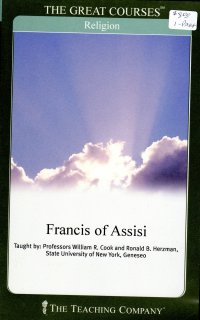
 This is another one of the turn-of-the-century six hour lectures that I bought this autumn. I have been tearing through the six hour ones at a pretty good pace (see also The Search for Intelligent Life In Space, The Ethics of Aristotle and The Aeneid of Virgil). It’s the first lecture series that I have heard where two professors tag-team the lectures, each speaking in turn. One is a professor of history and the other is a professor of English, and they combine to keep the series rolling.
The course talks a bit about the historical context–twelfth century Italy, which is about to undergo its Renaissance, but which is still medieval in many ways but with a rising merchant class. In many ways, the lives of the people have not changed that much in the millennium since Christ, so the Biblical metaphors of a shepherd and whatnot are still real and concrete to the people of the time. Into this world, a son of a wealthy merchant undergoes a religious experience and sheds his wealthy background to become a poor itinerant preacher and practicer of charity who triggers a bit of a revival within the Church (now known as the Catholic Church since Luther was not so fortunate and a bit hot-headed).
So Francis gets the blessing of the Pope for his ministry and ends up founding an order that would have quite an impact even unto today. The professors begin and end the series by talking about how Francis remains in the popular culture, imagination, and ministry to this day.
The lectures include:
- Why Francis of Assisi Is Alive Today
- The Larger World Francis Inherited
- The Local World Francis Inherited
- From Worldly Knight to Knight of Christ
- Francis and the Church
- Humility, Poverty, Simplicity
- Preaching and Ministries of Compassion
- Knowing and Experiencing Christ
- Not Francis Alone–The Order(s) Francis Founded
- Not Men Alone–St. Clare and St. Francis
- The Fransiscans After Francis
- A Message For Our Time
So I learned a bunch about Francis (although I have forgotten alread his birth and death years, but it was very late 1100s and early 1200s) and a bit about only slightly pre-Renaissance Italy.
These lectures continue to remind me how much I can learn–that is, how much I do not know–and how quickly I can learn when I delve into something new.
Unfortunately, I have also just started a 36 lecture course on The English Novel, which is something I already know a bit about, and The Re-Current Unpleasantness is already limiting my time driving, so it might be some time before you see another post like this, gentle reader. Rest assured, in the interim, I will be reading pulp and genre fiction instead of the many learned tomes I own and might actually be getting dummer as we go.
 Okay, now this was a fun course to listen to. I was a little concerned that it might be a bit thin on topic matter, as the SETI program itself would be a rather narrow topic–merely talking about analyzing radio signals from space would make for a long six hours.
 Like
Like  To be honest, I’ve struggled a bit with writing the summation of this course, or at least what I learned about it, because it’s Africa, which is where [Some] black people come from. I say “Some” because Australian aborigines are dark skinned to the point they might be considered black and not merely southwest Asian brown and because Americans who are black can come from Australia, Africa, the Caribbean, America, or anywhere else. What a freaking loaded topic this is.
 This audio course, I wish to remind you, gentle reader, cost me a mere fifty cents at the recent
  I started this series not long after finishing
 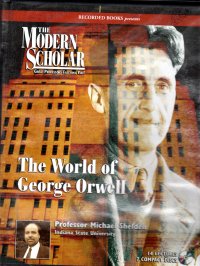 This audio course is entitled The World of George Orwell, and that describes the content of the course. It’s partly a biography, partly a history of the early part of the 20th century in which Orwell lived, and partly a discussion of his works. It’s a seven disc, 14 lecture set that culminates in discussion of Animal Farm and 1984.
 After finishing
  Now this was a good lecture series.
 I checked this audiobook out of the library for a quick listen that took a couple of weeks as, although I played it in my primary truck, my beautiful wife was not a big fan, so I had to listen to it when she was not in the car.
 So I had expected to listen to this course, one from my personal library, on trips to St. Charles or the trip from Springfield to Poplar Bluff to St. Charles to Springfield that I’d planned to take last month, but unfortunately, I did not get that travel time, so I’ve been listening to it in fits and starts in my back-up truck.
 You’re familiar with his work and his voice–he wrote the the basis for A Christmas Story and narrated it–and he had a long-running radio program back in the northeast where he would spend an hour minus commercials taking a topic and going off on a monologue with diversions about it.
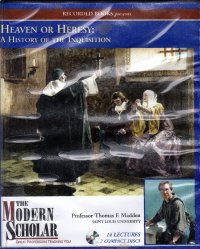 This course extends the lecture on the Inquisition from
 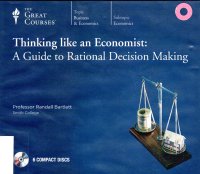 This Great Courses series of lectures provided an interesting insight into Economics, or more to the point the mindset of economists, and not necessarily in the way the professor behind it intended.
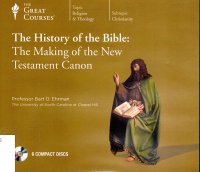 This course offers a history of how the books of the New Testament became the canon. I guess the title indicates that. But it’s not a straight ahead timeline of the conscious development of the New Testament. Instead, it’s more of a survey of different things to consider when looking at the history. It discusses the different types of literature in the New Testament, the Gospels, the epistles, and apocalyptic literature. It touches on apocrypha that did not make the final cut (and sometimes why). It talks about the creation of the written literature as the church evolved and needed a central repository of teachings to share among the scattered churches. It also talks about copying errors and whatnot and a touch of church history.
 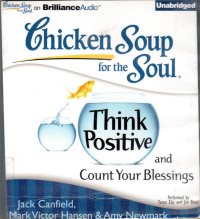 This audiobook is a collection of sort little essays about, well, counting your blessings and finding the bright side of things. It has eleven pieces by eleven authors. One of them is, literally, a woman who enumerates one hundred blessings, so it’s a couple minutes of sentence fragments.
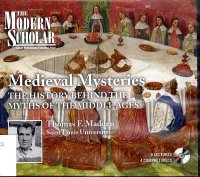 This is a short course from the Modern Scholar series that focuses on myths and stories from the Middle Ages and how true they are. The four discs / eight lectures cover:
 So the guidebook to this course presents me with a little dilemma: Should I count it as a book against my annual reading or not? I mean, I counted the guidebook for the course
  I go through phases listening to these CD courses, and I think I’ve figured out the secret. I tend to accumulate courses in subject areas with which I’m already familiar, like philosophy or literature, and they underwhelm or bore me. That, and if they’re a summary course from the 21st century, I’ll find enough to disagree with politically to not really want to finish them. But something I’m not really familiar with, such as deep dive history courses (not summary courses) or music courses, these I listen to with some zeal, and I learn a lot more from them probably because they’re completely new knowledge to me and not merely rehashing what I already know.