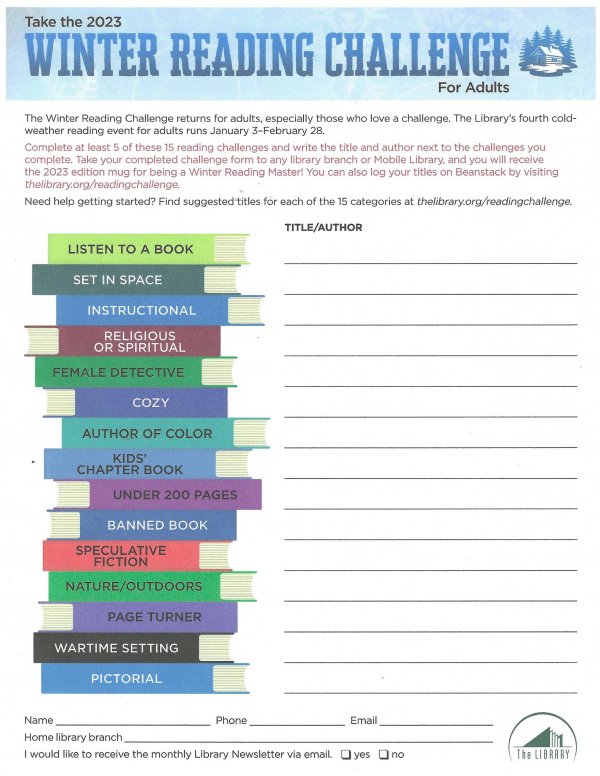
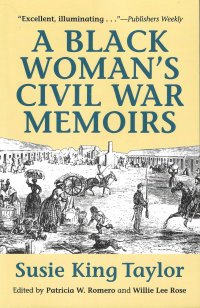
 I bought this book in 2018 (I just discovered thanks to an Internet searcher from China), and it was the first book by Author of Color that I grabbed for the 2023 Winter Reading Challenge.
Originally entitled Reminiscences of My Life in Camp when it was published, the publishing house who slapped a new introduction on it to get a fresh copyright re-titled it for the 21st century, knowing what would sell the book–the personal pronoun My does not target the niche audience of university folk, and in Camp is not specific enough for a population that (by my tests in the 1990s) could not date the Civil War to know where camp was or why it was important.
The book basically has two parts: The Civil War-era diary, which details her time after escaping slavery and attaching herself to a military unit as a laundress and teacher of the other freed blacks along with the raising of the first black regiments in the Union army and a couple of their expeditions. The second part comes after the war, a later couple of additions talking about the integration of the newly freed slaves into the society and includes a chapter where the author, a resident of the magical land of Massachussetts (according to the text, Massachussets, as one of the most abolitionist states and forward-thinking in its treatment of freedmen, was legendary amongst the former slaves) to Louisiana. Unfortunately, it was not pleasant (to say the least), and it would be no better sixty years later (as Black Like Me sort of simulates).
The book is very short–154 pages when padded with end notes, illustrations, and a introduction to pad it out. Given that it’s still in print, or it was fourteen years ago, one can assume that it was required reading in some courses or another, but one wonders about fourteen years on. After all, the author is a Christian, and she’s hopeful in the first part of the book that blacks will be treated equally after emancipation, and even in the second part, she’s disappointed, but still hopeful. Which is not what has been sold for the last thirty years and what has been beyond the pale in modern thought in the last decade. You know, after the country elected a bi-racial child of an African and an American. Oh, how I would weep were I not a stoic and/or cynic.

 This year’s
 This is the first book I’ve completed in the
 I tried to lure my boys into watching a film with their old man (is that a slur or just slang? In the 21st century, it depends upon not so much the word nor the intent but how someone feels about it) by watching an Adam Sandler film, but they didn’t bite, which is just as well. This is not a comedy despite what the box nor blurbs say. This is one of the films where Adam Sandler is trying to turn into a dramatic actor as Tom Hanks did, but Hollywood and audience are still not letting him do it.
 Two and a half years ago, I picked up this book
 This is a two-pack of Tom Hanks comedies from the middle 1980s. Remember when Tom Hanks made comedies? Try explaining that to young men born in the 21st century. Ever since his back-to-back Academy Awards in 1993 and 1994, he’s pretty much been a serious actor. No cross dressing for laughs, as in television’s Bosom Buddies–I am pretty sure that show could not be made today at all, and I bet if I dug, he has probably retcontrited for forty-year-old humor. But I digress.
 Before watching the Christmas movies (Die Hard, Die Hard 2, Invasion USA, and Lethal Weapon), I invited my boys to watch this film with me. I’d found it in the videocassette player, and asked them if they’d watched it already–but they had not. So I watched it, alone, as they’re too sophisticated for 80s B actioners now that they’re in their teens in the 21st century.