Book Report: Carver: A Life In Poems by Marilyn Nelson (2001)

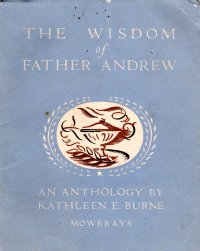
Book coverI picked up this Scholastic book to browse during a football game, and I thought, a collection of poems about the life of George Washington Carver for kids? Who needs that? Who would read that?

But, you know what? I kind of got into it eventually. The book builds poems, not very poetic poems but rather poetry-prose with line breaks and distinct phrases instead of full sentences–to talk about Carver’s incidents from Carver’s life. From his early years as a slave and his early attempts at formal education to his eventual work with the Tuskogee Institute and, yes, peanuts.

So perhaps a good intro to an amazing life, but you would definitely want to follow it up with something more weighty, such as George Washington Carver and/or a trip to Diamond, Missouri.

Also, you know George Washington Carver was a black American. This book, coming from the turn of the century, makes a couple of references to our people, and the poet’s father was one of the Tuskogee Airmen, but the book is not an especially racially themed book. One wonders whether the poems were written twenty years later would differ greatly from the interesting and straightforward presentation of a fascinating figure of American history we have here. Sadly, one thinks so.

Oh, but this children’s book has the baddest word ever in a poem called “My People” about the envy the other instructors and staff at the Tuskegee Institute felt toward Carver. But it’s further proof of my latent white supremacism that I read books with the baddest word in them. That is, books written in the dark past of twenty years ago.

Buy My Books!
Buy John Donnelly's Gold Buy The Courtship of Barbara Holt Buy Coffee House Memories

Lileks Looks Down On Brian J.

Lileks pities the technical writers:

Of course there were manuals. In binders. Sitting on the shelf of everyone’s desk. Never used. Tossed out en masse. I feel a bit of sympathy for the people who wrote them, but that’s probably misplaced. A job. They were paid. Wasn’t creative. Kept the lights on.

Yeah, I’ve written manuals for money. Pretty good money, actually.

But one does not finish a manual or set of updates to documentation and feel any sense of creative accomplishment, for sure.

Kind of like writing a backwater blog.

Buy My Books!
Buy John Donnelly's Gold Buy The Courtship of Barbara Holt Buy Coffee House Memories

Try Again

A local religious university, under pressure from some vocal but numerically small group or another, changed its mascot from the Crusaders

to Valor.

Um, yeah, no. Try again. Maybe the Robins.

Or they could go with Golden Eagles, which is what the university I graduated from changed its mascot to to get out from the naked racism of…

the Warriors.

The countdown begins until some vocal but numerically small group starts saying that valor is a white European thing that offends someone.

Buy My Books!
Buy John Donnelly's Gold Buy The Courtship of Barbara Holt Buy Coffee House Memories

Wherein Brian J. Respectfully Disagrees With Severian

In a post called simply Dignity, Severian says:

Karen Carpenter and Linda Ronstadt were always singers, but they were primarily folkies, and while Linda Ronstadt was really something back in her Stone Poneys days — yum! — her biggest hit with them (“Different Drum”) made it clear that she was not the one for you.

One might infer that Linda Ronstadt was not really something after her Stone Poney days (1966-1968). I beg to differ.
Continue reading “Wherein Brian J. Respectfully Disagrees With Severian”

Buy My Books!
Buy John Donnelly's Gold Buy The Courtship of Barbara Holt Buy Coffee House Memories

Brian J.’s Recycler Tour: Medical Tips Edition

From September 23, 2015:

I was sitting on the edge of the roof for like an hour before I realized that gargoyling didn’t help a sore throat at all.

I AM SO GULLIBLE.

You know, I used to post those kinds of quips here, too; in the early years of MfBJN, you’d find a lot of one-liners and whatnot in posts. I sure got away from that. I’m not sure whether it’s the posting of one liners or of coming up with funny one-liners at all.

Buy My Books!
Buy John Donnelly's Gold Buy The Courtship of Barbara Holt Buy Coffee House Memories

On St. Thomas Aquinas read by Charlton Heston (1990)

Book coverCharlton Heston reads this one, as he did Aristotle, so it’s the voice of Moses, Ben-Hur, and the Omega Man lending some heft to the reading. But his part is not really a dramatic reading–he’s reading the content pretty straight. And, fortunately, the dramatic readers who step in to act/read the quotes from Aquinas and his contemporaries and critics play it pretty straight, although other friars from Italy speaking with Italian accents but Aquinas speaks in American English which is inconsistent.

The two hours focuses as much on his biography as his thought, but it does show how he re-introduced Aristotle to the Western canon and interpreted him for the Christians. Which reminds me of how much I want to own a copy of Summa Theologica. It’s only a couple hundred dollars. Not like the complete works of Hemingway, which runs to the thousands for a nice matched set.

Of course, would I read it? I would aspire to read it, gentle reader. Although to be honest, I’m getting a little less aspirational these days. Why, I did not even go into the Better Books section at the recent Friends of the Springfield-Greene County Library book sale.

Well, I’ve gone afield here from talking about Aquinas, though, ainna? Dominican friar, a great teacher, one of the first Dominicans to teach at the University (and not without some scandal), participated in public lectures where he answered questions extemporaneously at length. So this is a good portal to the life and works of Aquinas. Better than studying four years at a formerly Thomist Catholic university anyway, although I dropped my theology minor impetuously one semester, and the university was far along the secularization path even then.

But I am enjoying the set of cassettes I got in the spring, and I’m pleased to see that Heston is reading more of them than Redgrave.


Buy My Books!
Buy John Donnelly's Gold Buy The Courtship of Barbara Holt Buy Coffee House Memories

Book Report: A Bend In The Road edited by Mary A. Shaugnessy (1982)

Book coverAs you might know, gentle reader, I consume a lot of what I call “Grandma Poetry.” These are usually chapbooks published by older women with themes of family and God; the authors are not professional poets and probably don’t even have a magazine credit on their copyright pages. Most of it is not sublime or exhilirating; some of it is nice. If you read the collected works of a Great Poet, you’ll find their works are limited to the really, really good once in a while and maybe nice most of the time.

This collects presumably the best poems and some artwork from residents in nursing homes owned by Beverly Enterprises. So the tone and shape of the poems varies. Some are about youth, some are about being your best self in a nursing home, but more than one are about being lonely and forgotten–even if it’s only in the subtext of a poem lauding volunteers who come to visit.

So it’s uneven and lacks a single voice, and some are poems by committee–classes where several people put a poem together. You can actually tell these poems apart from others as they lack internal consistency and voice.

Man, I remember nursing homes in the 1980s. Two of my sainted mother’s aunts ended up in a couple of different facilities, and the facilities were as cold and efficient as hospitals but with less care. It depressed me to go visit those old ladies–I was young then, and impatient. Times have changed now, though; one local senior living facility has been running ads showing a tatted up, goateed and mohawked pierced grandpa with big headphones on taking a selfie. One expects the new facilities are more fun, but then again, the ones that advertise in 417 are probably the nicer ones anyway; one would probably find my relations in more traditional centers.

At any rate, something to flip through during a football game, but not something to emulate in one’s own poetizing.

Buy My Books!
Buy John Donnelly's Gold Buy The Courtship of Barbara Holt Buy Coffee House Memories

Book Report: Shadow Valley by Alan Brown and Brian Brown (2021)

Book coverSo as I mentioned when I reported on Lake Honor and Gone in the Night, I was going to pick this book up next, which means I read all the books I bought from Brian Brown at his book signing in rather short order which is probably the best endorsement by my actions rather than quibbles I post in my book reports.

This book does without the frame story present in the other two books, where the authors insert themselves and listen to or work with Booger McClain to “solve” an unsolved mystery–but whose resolution is not actually the solution of the crimes, perhaps an allusion or a theory that cannot be acted on.

Instead, this is a more straightforward story: An old friend comes to Booger to find his estranged wife and daughter who were last known to have been living in a trailer park in Pea Ridge, Arkansas. So Booger and his new wife Rose move into the trailer park to figure out what’s going on. Well, Rose does: A couple of injuries land McClain in the local hospital, which takes him out of the action for much of the book, so he acts mostly as a sounding board for what Rose is doing and as comic relief. So Rose uncovers a prostitution ring running in the trailer park, and that the shadowy Branson organized crime types behind it are dealing with the introduction of cocaine trade in the same area. Two guys in a blue truck make shadowy appearances, including perhaps killing the wife and daughter, and the sheriff of Pea Ridge is one of McClain’s former deputies. So they manage to depose the sheriff and get him to turn state’s evidence, so they take out the drug ring. But they don’t really solve the case they started with except for allusions and some speculations, perhaps.

So maybe that’s thematic, then, and not just how a quickly written book turns out.

As with the previous two, this one could have used a copy edit to catch things like:

  • Again referring to the Sheriff of a town; McClain was sheriff of Branson, this book also mentions, and another town. But sheriffs are county officials and the law enforcement for unincorporated parts of a county. In cities and metropolitan areas with cities whose boundaries run right up to each other, such as the St. Louis area, the sheriffs and their deputies mostly serve papers. It’s probably no help that St. Louis County, where the Browns live, has a St. Louis County Police force which handles law enforcement and differs from the St. Louis County Sheriff.
  • Talk about the trailer park and living in a trailer. At one point, someone is a couple hundred yards away from a trailer; in general trailer park sizes, a couple hundred yards is clear on the other side of the trailer park. The lot sizes are not generous. The book mentions going into the cellar under a trailer; okay, that’s rare in a trailer park; sometimes you can put them on foundations, but that’s more permanent than a trailer park. But at the end of the book, the trailer is towed away, but when trailers are placed on foundations and can have cellars, the wheels are generally removed.
  • Rose goes to a neighbor’s trailer during a power outage; the trailer is lit with a lot of candles because the neighbor is used to this. Rose learns that the neighbor has security cameras, so they go back to another room to look at the computer monitors that show the view from the cameras. That would be a lot of batteries to power monitors.
  • The wife and daughter are named Tammy and Carly, and I had some trouble keeping them straight in my head. At one point, too, the book says Tammy sold her stocks and bonds and moved back to Little Rock–but that’s the daughter’s name, not the wife. So I was not the only one having trouble keeping the names straight!

I also flagged a couple of things to comment on:

  • At one point, while driving down to Pea Ridge, one of the characters said “Maybe we should have stopped in Berryville.” As you know, gentle reader, Berryville earlier this year, and I mentioned to my beautiful wife (but did not post on the blog) every time that I have seen Berryville mentioned in the news–although I think one of the other mentions of Berryville that I encountered might have been in Lake Honor.
  • Somebody calls the local paper the Tri-Lakes News; however, last year or the year before, the paper changed its masthead to emphasize it’s the Branson (Tri-Lakes) News. As I boasted recently, I get that paper twice a week.
  • At a wedding at the end of the book (See? It is a comedy!), they play a Shania Twain song (“You’re Still the One”). I can reveal to you, gentle reader, since it’s not the security question on any Web site that I am aware of, that at my wedding, our first dance as husband and beautiful wife was to a Shania Twain song–it was “From This Moment On”, and I forgot to get the CD back from Ernie, the owner of Occasions, when we left. When we were in town this summer, it looked like Occasions was still there and maybe open.

Also, it had typos and wrong word substitutions–instead of alter for altar which appeared in a couple of places in Lake Honor, we got conscience for conscious a couple of places here.

So it was a fun bit of reading that could have used a bit of copyediting. Kind of like Elton Gahr’s books. I’ll pick up more of them if I bump into Brown or Brown in person again, but they’re not so compelling that I’ll go out and order them. After all, I have many, many fine stacks of books to get to in the interim.

Buy My Books!
Buy John Donnelly's Gold Buy The Courtship of Barbara Holt Buy Coffee House Memories

A Jabberwocky For Our Time

Twitter must be having problems with money metrics again, since they’ve ramped up sending emails to all my testing accounts trying to get me to log in and provide them with free content again. “Brian, don’t be selfish! Pour words into our interface so we can make money off of your thoughts! “Brian, did you see that great tweet?”–never minding that most tweets these days are not, in fact, great, and the medium is best for one-liners, not deep thoughts, but our modern tastemakers have only enough depth to their thinking to fill maybe, what is it now, 280 characters?

Also, I get stuff like this:

“Sonu Sood evaded taxes over Rs. 20 crore: I-T department” Moment

I am not sure what most of those words and abbreviations mean. Or if they’re real words and abbreviations at all.

Does this mean that I am old? Or that Twitter thinks I’m Indian? Embrace the healing power of And.

And you can rest assured, gentle reader, I did not click through to share in the Moment.

Buy My Books!
Buy John Donnelly's Gold Buy The Courtship of Barbara Holt Buy Coffee House Memories

A Typical Brian J. Problem

I just ordered an autographed CD from German band Null Positiv, navigating the site, the store, and the checkout process completely in German (which I do not speak) only then to discover a drop-down list in the footer that, whereupon the user selects English, displays the site completely translated.

At least I think I just ordered an autographed CD. I’m a little afraid to go back and see what I actually ordered.

Also, since this is a German band, I will likely rip the songs to my computer, unlike certain Russian autographed CDs I’ve bought.

By the way, here is some Null Positiv:

I am not sure what Elli Berlin is saying, but I do like the way she says it.

Buy My Books!
Buy John Donnelly's Gold Buy The Courtship of Barbara Holt Buy Coffee House Memories

First Exposure to Route 66 (1961)

Book coverAs I mentioned, I bought three video cassettes with episode of Route 66 on them. I had not ever seen the program before, although it might have still been in syndication when I was young, and it might have appeared on Nick at Nite at some point when we had cable when I was growing up, but I hadn’t seen it before. I knew the premise, though: two guys in a Corvette driving up and down the iconic highway having adventures. So I popped the first videocassette in, and….

The episode “The Newborn” starts out with two men on horseback and a guy in a cart riding through the desert. As I had thought that Route 66 was in color, I wondered if the videocassette was mislabeled and I ended up with a Western television series of some kind. Then I saw that the guy in the wagon was dressed in 20th century clothing–it was Buz Murdock, one of the main characters. He’s going to with the owner of the ranch and his psycho hand played by…. Is that Robert Duvall (whom I just saw in The Godfather(s) and whose film Secondhand Lions I just bought last weekend)? It is! They’re going to retrieve a pregnant Native American woman played by Arlene Martel–who wants to die, but not before the baby dies without her. Apparently, the protagonists (Buz and Tod, the guys with the Corvette) have caught on with a ranch in New Mexico and have worked there for about a month before the events of the episode. When the pregnant woman does not want to come, the ranch owner wants to bind her and carry her off. Buz objects, with his fist, which puts him on a collision course with the psycho hand. Especially when Buz and Tod quit the ranch and help the native woman run off and give birth. The back story, alluded to at times, was that the ranch hand’s son raped the native, who was a Christian who was planning to become a nun (rape of a nun? I just saw that in Change of Habit). The father, the ranch owner, made the son marry the woman, but he killed himself, and the ranch owner wants to raise the child as an Ivy (that is, in his family). But the mother, who dies in childbirth, wants the child raised in her pueblo, so Buz and Tod promise to take the child there–which leads to a final reckoning with the psycho henchmen who also dies.

The second episode, “…And the Cat Jumped Over The Moon”, takes place in Philadelphia, which is not on Route 66 at all, but never mind. They’re visiting a friend of Buz, a social worker who helped get Buz out of the gang life, and a young lady played by Susan Silo appears and says that unless he does something, the hit will be that night. So he leaves his small one bedroom apartment, telling the boys he’ll be back. He goes to an apartment building and meets with the gang on the roof, and according to the gang’s constitution (?), he can have a summit with them if he matches or bests the gang leader in a parkour-lite game of follow the leader. Unfortunately, the social worker loses his balance and falls from the building. As it happens, the girl is the fiancee of the former leader of the gang, and the gang wants to hit him to set an example that you cannot leave the gang. The gang kidnaps the girl, and the former leader comes to rescue her, and a knife fight is about to erupt, but Buz calls for a summit. The former leader of the gang takes Buz’s place in the parkour game and eventually bests the current gang leader, and the gang turns on their most recent former leader. As the credits roll, I notice that the former gang member was played by Jimmy Caan–who was also in The Godfather, and the current gang leader was played by a very young Martin Sheen.

So it was an interesting bit, and if you look at the IMDB entries of the bit players, how they played in a bunch of different series from the time–I’ll recognize a number of them in the Twilight Zone episodes I’ll be watching sometime soon.

And this series is a pleasant bit of throwback television, an episodic series which really shows that any kind of story might appear. But Buz and Tod have left three bodies in their wake in just these two episodes. But Tod does mean Death in German. So with “Buz” and “Tod” as the stars, perhaps this is a story of a pair of spree killers on the rampage.

I’ve got two more videocassettes with other episodes, which

I must mention if you click this link and buy, I get a few grubzits:

But I did mention Arlene Martel and Susan Solo by name, so let’s take a look.
Continue reading “First Exposure to Route 66 (1961)”

Buy My Books!
Buy John Donnelly's Gold Buy The Courtship of Barbara Holt Buy Coffee House Memories

On Aristotle read by Charlton Heston (1990)

Book coverI actually started listening to this pair of audiocassettes pretty soon after listening to Socrates at the end of June, but I got a little bogged down because unlike Socrates which was heavy on the biography and only broadly spoke of his philosophical leanings as filtered through Plato.

I had to listen to this book a little more closely, though, as it went into greater detail into Aristotle’s work, which was probably lecture notes transcribed and arranged by his students after the fact. Still, it required more attention than I could give it on family drives in the summer, and I really didn’t go anywhere much without the family in the summer. At some point in post-trip car-cleaning, the cassettes disappeared from the console, and they only made their way back to my office but recently.

So what can I say briefly about Aristotle? The man started, well, not from the very beginning–there were philosophers before him–but his systematic approach to natural science and then onto thought, ontology, metaphysics, and ethics really marked a starting point of sorts. Well, I suppose you could say he offered a counterpoint to Plato, but, c’mon, man, we’re not idealists here, are we? So the audiobook hits the highlights, but it still quotes Aristotle at length, and that’s where you really need to pay attention.

Charlton Heston reads the book, but other vocal talent performs quoted texts, so whenever Aristotle speaks, we get someone doing Aristotle. However, the interpretation of Aristotle is a bit to learnéd, a bit to pompous, to do anything but distract. I mean, you have Charlton Heston reading the book. Why not let him read the quotes, too?

At any rate, it’s a good intro or a good refresher. In my case, it’s a good reminder that I have read too little Aristotle.

Buy My Books!
Buy John Donnelly's Gold Buy The Courtship of Barbara Holt Buy Coffee House Memories

Good Album Hunting, Wednesday, September 15, 2021: Friends of the Springfield-Greene County Library Book Sale

Gentle reader, the week was shaping up to be too busy for me to sneak off to the book sale this week on the north side of town. However, I rearranged some things on the sked so I could pop up for a brief visit on Wednesday afternoon.

I promised the boys I’d be in and out in an hour, and I really only focused on audio/visual materials. The number of records has dwindled from years past, now just a single table, but I managed to find something.

I got:

  • He’s Not Heavy, He’s My Tuba by the New York Brass Quintet.
  • Casino by Al Di Meola. I think Al Di Meola will be an excellent name for a cat.
  • Jackie Gleason presents Music To Remember Her. I think I already have it, but I spent a buck just in case not.
  • Zither South of the Border by Ruth Welcome. I am surprised combining the zither with the mariachi lite music of the 1960s did not end the universe as we know it.
  • Disguise by Chuck Mangione. You know, that guy from that one animated series. I’ve already forgotten which one he appeared in.
  • The Magic Flute of Herbie Mann. Hey, I might have made light of Super Mann when I got it, but I like Herbie Mann.
  • Carmina Buruna performed by the Bavarian Radio Orchestra and Chorus.
  • Love’s Lines, Angles and Rhymes by the Fifth Dimension.
  • No Other Love by Perry Como.
  • Dreamer’s Holiday by Perry Como.
  • Get Here by Brenda Russell.
  • Snowflakes Are Dancing by Tomita, apparently a Japanese composer and synth player, so this is likely to sound like some fusion jazz.
  • Pictures At An Exhibition by Tomita.
  • Firebird by Tomita. I bought all they had in case I like him.
  • Baroque Christmas Cantatas. To add more religious music to the mix come Christmastime.
  • Ballads of the Green Berets by SSgt. Barry Sadler. This was a big deal when it came out.
  • A Couple of Song & Dance Men by Bing Crosby and Fred Astaire. Some show tunes that they made, but not anything from Holiday Inn.
  • High Fidelity by Lena Horne and Phil Moore and Orchestra. I only mention Phil Moore and Orchestra because they also back Crosby and Astaire on the previous record.
  • Virtuoso by Liona Boyd, whose Persona I already own. This is classical guitar music, so David Gilmour is unlikely to appear.
  • Champagne Jam by Atlanta Rhythm Section.
  • The 20th Century Bassoon because I need to update my bassoon music.
  • Three Bassoon Concerti: Works by Vivaldi, J.C. Bach, and Graupner. Which does not update my bassoon music.
  • Jean-Pierre Rampal Plays Johann Sebastian Bach. He’s no Herbie Mann, but he plays classical flute.
  • Born on a Friday by Cleo Laine.
  • Baroque Brass by the Eastern Brass Quartet.
  • Arabesque: Music from the Film Score by Henry Mancini. I saw this a couple years ago because it had Sophia Loren in it, and Gregory Peck, I guess.
  • Billy Holiday: The Original Authentic Recordings/”Piano Man” Bobby Tucker Tells The Lady Day Story. Purportedly collection of live Billie Holiday recordings. How did this one slip through last night? And the Lena Horne? Don’t kids know who these women are?
  • The Illinois Brass Quartet.
  • Poet’s Gold, a collection of poems read by Helen Hayes, Raymond Massey, and Thomas Mitchell. Produced by Raymond Massey. The guy who played Gail Wynand in The Fountainhead and John Brown in The Santa Fe Trail?
  • Cocktail Time with Frankie Carle. I might have this one, too, but it was only a buck, so why not take it to make sure?
  • Reaching for the World by Harold Melvin and the Blue Notes.
  • The One and Only Jimmy Durante. a 1949 10″ LP.
  • Music for Horns by the Horn Club of Los Angeles.
  • Look To Your Heart by Perry Como.
  • Little Jazz Duets.
  • The Springfield Symphony Presents a collection of movements.
  • A Song For You by The Carpenters. Okay, I’m really, really not into the 70s folk sound, but Karen Carpenter’s voice has hooked me.
  • Antonio Soler: Six Concerti for Two Keyboards.
  • Your Guy Lombardo Medley Vol. 2.
  • A Very Merry Christmas Volume IV. I picked it up because it has a song by Aretha Franklin on it (she does “Winter Wonderland”).
  • The Hits of Benny Goldman.
  • At the Candlelight Cafe by the Three Suns. I have quite the collection of their work these days.
  • Jazz Meets The Folk Song by the Paul Winter Sextet. Again, as with the south of the border zither, this should have annihilated life as we know it. Scientists are still working to understand why it did not. Or did it?
  • A Portrait of Melba by Melba Moore. I think I passed over another one of her records for some reason. Probably because I did now know I picked this one up already in my berserker buying frenzy.
  • Seasons by Bing Crosby. As with the Crosby and Astaire album, it’s an older Bing Crosby. According to the back, this is the last Bing Crosby record.
  • Najee’s Theme by Najee.

All told, that’s 46 records. On Saturday, it would have only cost $23, but I’m busy Saturday.

My major scores, by my lights, are the Liona Boyd, Lena Horne, and Chuck Mangione albums. I hope I like the Tomita and some of the other things I took fliers on, including the unknown to me soul/R&B titles.

After picking through the records, I hit the videocassette collection. Videocassettes were fifty cents each. On Saturday, they would only be a quarter. I might be tempted to go up there on Sunday and throw what remains into a couple of bags.

But I got the following:

  • Three tapes/six episodes of Route 66. Considering how close I am to it, I should probably familiarize myself with the program, ainna?
  • Two Marx Brothers films, Duck Soup and Horse Feathers.
  • Bachelor Party. I have not seen this in forever.
  • Farewell, My Lovely with Robert Mitchum as Marlowe. I’ve got The Big Sleep with Mitchum, I’m think, but I am not sure I have seen this.
  • Casino Royale, the James Bond spoofish film from the 1960s. Did they have a copy of the Jimmy Bond Casino Royale? Yes!
  • Zulu with Michael Caine.
  • Gladiator with Russell Crowe. I saw that in the theaters when I was working my second technical writing position back in the 20th century. I don’t think I’ve seen it since.
  • Frantic, which was Harrison Ford doing Taken before Liam Neeson did.

I didn’t even look at the DVDs as my boys’ patience was running short, as was my promise to them to be in and out in an hour.

I did pick up a single audio book, Seven Bad Ideas: How Mainstream Economists Have Damaged America and the World by Jeff Madrick. It’s from 2014, and boy howdee I expect it to have predicted some things from 2021. Probably things I disagreed with when listening to On Thinking Like An Economist: A Guide To Rational Decision Making. I also picked up four bundles of chapbooks that I have yet to unbind to see what I’ve got.

So I was sad to not find any Barbara McNair; I thought surely I would trip over some now that I knew to look for it, but no. Also, no Fluegel Knights. All of the Herb Alpert I already own. No new-to-me Eydie Gorme (only one album, Don’t Go To Stranger, in the boxes).

Still, a good hunt, especially if two conditions are met: I like one of the new-to-me artists, and my beautiful wife is pleased with the brass selections.

Likelihood of my return on Sunday, bag day: 33%. Which is higher than it was a when I started the post.

Buy My Books!
Buy John Donnelly's Gold Buy The Courtship of Barbara Holt Buy Coffee House Memories

Do I Read Old Books?

Cedar Sanderson has a post called The Old Books which has numerous quotes from C.S. Lewis in it, including this one:

Which led me to wonder: I have many, many fine old books from the 19th century and a bunch from the early 20th century, but how many of them do I actually read?

So I reeled back through the last year and nine months to see what the oldest printed works I have read since the beginning of 2020.

Although not ancient, I have read the following:

Additionally, I started reading an 1886 copy of Mary D. Brine’s From Gold to Grey which I used to have wrapped in a shopping bag for its protection, but I set that aside to read off and on. Mostly off.

It makes sense that it’s mostly poetry and pamphlets; I have numerous old small collections of poetry in the Houghton-Mifflin editions and the Maynard’s English Classic Series, and I’m more prone to picking up small poetry collections than larger works. This holds true no matter the edition.

I think the post on Sanderson’s blog was more about reading older works in whatever edition since she and commenters talk about Project Gutenberg.

As to reading old books, c’mon, man, you know me. In the same period, I’ve read:

Good to see that I’m getting some good reading in amongst the men’s adventure and movie tie-in paperbacks.

Buy My Books!
Buy John Donnelly's Gold Buy The Courtship of Barbara Holt Buy Coffee House Memories

Book Report: Lake Honor by Alan Brown and Brian Brown (2020) and Gone in the Night by Alan Brown and Brian Brown (2021)

I’m going to do a dual book report on two of the three books I bought at the book signing at ABC Books last month because they have some similarities that I’ll talk about at the end.

Book coverAfter reading a chonking Stephen King book and a shorter palate cleanser on Descartes, I thought, wouldn’t it be something if I read the author-signed books from ABC Books soon after buying them instead of years later? So I picked up what is the first chronologically in the series, although the author I met (the son of the father and son duo) says you can read the three books in any order, but I went with the first one first.

The book deals with a fictionalized version of a real case: In the 1970s, two young men were found floating in the fountain pond on the School of the Ozarks, now the College of the Ozarks, campus. They were fully clothed, and the authorities pretty quickly said it was death by misadventure or drugs, maybe, and kind of swept it under the rug. A student at the school ends up re-evaluating his attendance there and quits, only to come back a year later to interview people about the killings for a story. He meets a private investigator, Booger McClain, who tells the story. So this book has two frame stories, really: In the present day, the former student is thinking about the case and comes back to town; and the second, which dominates the book, is the private investigator telling the story of his investigations along with some scenes with the principals in the action, including the boys who died. So the narrative takes place in real time, sort of, as events unfold, but it’s partially told by a private investigator a year later. And the now frame around the whole thing really doesn’t add anything.

The book, like the one that follows, has some typos (altar is spelled alter a couple of times) and a couple of little problems that factchecking would solve, like:

In fact, when I first watched the movie “Halloween,” and saw the mental hospital where Jason escaped, I immediately thought about that dorm.

C’mon, man, we can tell our Jason from our Michael Myers, ainna? We can even spell Myers right on the first try. You know, a dilligent fact-checker would have found this, but when writing and editing our own work, we check on things we’re uncertain of, but not the things we know (that just ain’t so). It’s always the one little throwaway that goes awry.

“Where are you staying?” he asked after a few seconds.

“The Bel Air Motel on 67,” I said.

Highway 67 runs along the eastern part of the state, not the western part, although I understand why it would be top of mind to the authors–it runs through south St. Louis County where they live (and where I once lived).

There are some other anachronisms and things that make one wonder–one of the dead young men played football for Kickapoo; I had thought Kickapoo opened in 1972, which would have made this iffy, but Kickapoo actually opened in 1971, which would make this more plausible. Coupled with the typos, though, one wonders if it was really that way.

Book coverThis Booger McClain mystery takes place in the present day, but again it deals with a crime that occurred decades ago. In this case, it’s the disappearance of three women, two recent high school graduates and a mother of one of them, in 1992. This story still resonates in the Springfield community–every so often, it pops back into the news when it is featured on a podcast or in a book such as this one. My beautiful wife informed me that she had already bought this book during its initial publicity burst. She was in Springfield when this happened (and an attractive young woman), and she went to school with the two recent graduates who disappeared. So this story resonates with her, and it’s one of the top two defining crimes that really shook Springfield (the other was the 1904 lynching on the square for which Springfield is only now seemingly emerging from self-flagellation).

Like Lake Honor, the book centers on a writer coming to Booger McClain to the story of his investigation. McClain has a war room with evidence in a seemingly abandoned warehouse on the north side of town, and he lets the writer review it. Someone tries to break into the evidence room, though, which leads McClain to believe he’s close to solving the mystery. So this book has a little more action in it, but it’s very similar to Lake Honor in its storytelling and resolution.

I flagged a couple of things in this book as well.

“Pull into the next parking lot,” the man in the back ordered his partner. That parking lot was a 24-hour Wal-Mart grocery a few miles from the Levitt home.”

It’s a quibble, but in those days, the Walmarts were Walmarts; the Walmart Neighborhood Market was a ways off, and the Walmarts of the day were more department stores. It’s only later that they would expand their grocery offerings.

“I was a sheriff for a time in Branson back in the 60’s.”

McClain would not have been a sheriff for Branson. Sheriff is a county office; he would have been Taney County Sheriff, which is an elected position by the way. But city folk can be forgiven for thinking that sheriff is what you call the police in a small town.

Again, some anachronisms and errata that one might overlook if it weren’t for the typos.

Also, I recently read a post on Mad Genius Club about whether authors were including the Malingering Unpleasantness in their works; this book mentions the Wuhan Flu conditions, as a business slowdown gives the writer in the story time to come to Springfield to interview McClain. It’s mentioned, but not doted upon.

At any rate, the books were very similar in the following:

  • They’re both rather expository. The stories are told, often by McClain, rather than experienced or shown. Which is to be expected. Although both have elements of contemporary action where McClain is not present, but even those passages are telling more than vivid creations of a scene.
  • Which is probably explained a bit by the fact that the crimes occurred decades before the actual setting of the books. Lake Honor has more of recreations of scenes contemporaneous to the crime; Gone in the Night has one, and it’s one that thwarts McClain’s assumptions of the case.
  • Neither book “solves” the case. Lake Honor alludes to possible solutions. Death in the Night offers a section where McClain presents his theory of the case–which, as I mentioned, is counter to the one contemporaneous scene (quoted above, where the perpetrator has a partner, whereas in Booger’s theory of the case, a suspect acts alone).
  • The authors Asimov themselves into the story. In the first, “Alan” is Alan, the author. In the second, the writer is “Brian,” the author, and the biographies of the characters in the story kind of match the authors’ stories. I’m not sure why to choose such a frame–perhaps to keep the writing interesting for the authors themselves?
  • In both books, some information is repeated, almost in the same words, as though they were in the process of moving it, but forgot to remove it from the initial location in the narrative.

That said, I found the books readable and a bit compelling–I read them right after each other, and I started the third book, which is an original, already. So let that be my endorsement as it is: The books are clearly self-published, with the typos to attest, but they’re not the worst of the self-published I’ve seen and put down.

The books affected me so much that when I saw the headline Branson family hires high profile private investigator to join search for missing son, I immediately thought of Booger McClain.

Buy My Books!
Buy John Donnelly's Gold Buy The Courtship of Barbara Holt Buy Coffee House Memories

The Ignorance of Journalists Is Fun!

The Springfield Daily Dammit, Gannett! has a video wherein the Answer Man tests the new twenty-six-year-olds on how to pronounce various places and streets in the Ozarks.

Which shows not only that the journalists, who have been at the paper for some time now, have not yet been around enough to pick up some pronunciations, but also that they’re not from around here to begin with.

After twelve years here, I knew how to pronounce everything except the basketball coach’s name. I am not sure how that counts as Ozarks since MSU is only a job, and probably (the coach hopes) a stepping stone to bigger and better things.

Now ask them questions derived from old episodes of Schoolhouse Rock so we may laugh at their answers to basic civics as well.

Buy My Books!
Buy John Donnelly's Gold Buy The Courtship of Barbara Holt Buy Coffee House Memories

I Have All Her Albums

But I was not standing shoulder to shoulder with her other fans: Loren Cook Fans protect Republic, MO Amazon Fulfillment Center

Just kidding. I have never heard any of her music. Is she any good?

One moment: I have been handed a note–apparently, this is a sponsored story by a ventilation company, not a group of like-aestheticked individuals coming together to stop looting.

Never mind, carry on.

Buy My Books!
Buy John Donnelly's Gold Buy The Courtship of Barbara Holt Buy Coffee House Memories