On the Internet, Solutions Present Themselves

Today, I read a disturbing article on the Internet that indicates that, after the fall of civilization, it will only be the Noggle Library that lifts mankind from its new dark ages. The article: A library without books? Some universities purging dusty volumes:

A library without books? Not quite, but as students abandon the stacks in favor of online reference material, university libraries are unloading millions of unread volumes in a nationwide purge that has some print-loving scholars deeply unsettled.

Libraries are putting books in storage, contracting with resellers or simply recycling them. An increasing number of books exist in the cloud, and libraries are banding together to ensure print copies are retained by someone, somewhere. Still, that doesn’t always sit well with academics who practically live in the library and argue that large, readily available print collections are vital to research.

….

At Indiana University of Pennsylvania, the library shelves overflow with books that get little attention. A dusty monograph on “Economic Development in Victorian Scotland.” International Television Almanacs from 1978, 1985 and 1986. A book whose title, “Personal Finance,” sounds relevant until you see the publication date: 1961.

With nearly half of IUP’s collection going uncirculated for 20 years or more, university administrators decided a major housecleaning was in order. Using software from Lugg’s group, they came up with an initial list of 170,000 books to be considered for removal.

Fortunately, an email I received later offered a link to a solution: 15 Brilliant Ways to Repurpose a Pile of Old Books:

If you’ve got shelves or boxes of old books hanging around your home, don’t toss them! Repurpose them into something grand with these 15 fantastic ways to repurpose them.

The burden of the future is partially lifted from my shoulders. Between the Noggle Library at the end of my retirement (projected to be somewhere over 20,000 books, some 15,000 of which I will not have read) and the random crafters making pleasing arrangements of books with pleasantly colored spines, certainly we’ll do what the monasteries did a thousand years ago.

Now, to start a nonprofit that accepts donations from these universities to turn actual academic work (and “academic” work of the latter half of the 20th century) into the 21st century equivalent of macrame instead of cat litter.

Full disclosure: I once tested the first version of the Yesterday’s News cat litter Web site. Also, the remainder of the books left over from the Friends of the Springfield-Greene County Library book sale, twice a year, are ground into cat litter for Yesterday’s News. So I’m not joking about actual books being ground into stuff for cats to pee on.

Buy My Books!
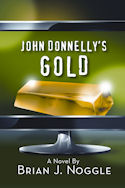
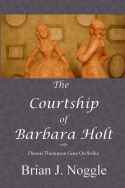
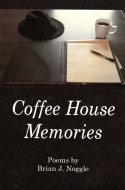
Buy John Donnelly's Gold Buy The Courtship of Barbara Holt Buy Coffee House Memories

Book Report: Naked Blade, Naked Gun by “Axel Kilgore” (1983)

Book coverI was surprised to see I owned another in this series, which I now recognize (last year, I read Slave of the Warmonger, the seventh book in the series). I guess I shouldn’t be surprised, since I bought them together along with a pile of Executioner novels in Clever in 2013. This volume is the 13th; the series itself only ran 18 volumes in the early 1980s (according to Fantastic Fiction).

This book is a bit more amateur than Slave of the Warmonger. The dialog is clunky, and there are extraneous bits of activity and interactions that don’t add to the story.

In this book, The Mercenary is reuniting with his gal when he recognizes a killer from Vietnam and pursues him through the airport, but the fellow escapes when the Mercenary is waylaid by airport security. His girlfriend, a reporter, is doing a piece on cults, so The Mercenary tags along and finds a cult that is killing experts on the cult. However, the cult is really a front for a KGB operation that’s kidnapping scientists, and the head man of the Russians is posing as a Christian preaching the evils of cults. Along the way, there are action set pieces and places where this hard-core killing machine acts very, very dumb to further the plot.

So this is probably my last foray into this series. I’m sad to learn (also via Fantastic Fiction) that this is the same author behind The Survivalist series, which I’d hoped to snag a few of somewhere. But you don’t tend to see them at book sales. Which is just as well, since I’m nowhere near finished with that stack of Executioner books that I picked up along with this book back in 2013.

Buy My Books!
Buy John Donnelly's Gold Buy The Courtship of Barbara Holt Buy Coffee House Memories

Book Report: The Joy of Not Working by Ernie J. Zelinkski (1997)

Book coverThis book joins The Ruins and the complete works of Horace Algernon Blackwood as a volume that goes from my to-read shelves to my “read” shelves (which, you can see now, is all a lie) without me finishing it. I mean, sometimes I pick up a book and read a bit of it only to decide I don’t want to read this right now, and I put it back on my to-read shelves. Few are the books where I decide I will never want to finish reading this. This book is in rare company.

This book was written after the author ran a series of seminars and workshops on what aging members of the World War II generation should do as they retired and suddenly did not have a job to define them. So, somewhere in it, perhaps there are lessons in identity and establishing multiple facets of one’s own identity to account for a time when a job will not tell you and other people who you are.

But it’s hidden among a bunch of meandering and repetitive prose. I made it 56 pages, which is further than the two bookmarks I found in the book (a snippet of the job want ads from the St. Louis Post-Dispatch and a return address label). The book itself is only 203 pages, including big sidebar cartoons and quotes about employment and leisure. I carried it to a number of my reading locations, and I had to force myself to open it. Sometimes, I found staring at a cinderblock wall more rewarding than reading the book. I came to a list of things that might indicate your life was not in balance and you might have the wrong job, and I applied them to the time I spent reading this book. So I’m done with it forever.

Perhaps the message was on-point in 1997, but we’ve got a couple self-actualizing generations that have sought meaning outside work (or meaningful work instead of careers) since then. So many of the lessons aren’t applicable to more modern readers. Or they’re covered in the contemporary mindfulness movement, often more concisely.

I see it’s been updated for the 21st century; I hope the later edition has been significantly been rewritten. But I’m not risking it.

Buy My Books!
Buy John Donnelly's Gold Buy The Courtship of Barbara Holt Buy Coffee House Memories

Book Report: Killer Mine by Mickey Spillane (1965)

Book coverAs you know, I just bought this book a couple weeks ago. As it so often happens in the Nogglestead library, I pick up the most recent book I bought to read, and things like The Buddhist Tradition in China languish on my shelves for decades.

I started reading Mike Hammer books in high school, probably spurred by the Stacy Keach television portrayal (and the fact that I read detective novels a lot in high school), but I haven’t seen many Mickey Spillane books at book sales in the past couple of decades, so my reading of them are pretty sparse since the dawn of the new century (see Black Alley, a Mike Hammer novel, in 2003 and Dead Street, a non-Mike Hammer novel completed by Max Allan Collins, that I read last year).

Like More Good Old Stuff, this book is old school hard-boiled stuff. The book is from the middle 1960s, but it reads like 40s fiction.

“Killer Mine” deals with a cop returning to his old, rough neighborhood where some of the local hoods he grew up with are getting bumped off. The brass put him in undercover, placing him as the pretend wooer of a policewoman who still lives in the neighborhood. As he does some legwork and starts to win over the population who distrust police, he closes in on the killer. Who was obvious to a modern, sophisticated reader of detective fiction. As a matter of fact, I wondered how the detective would take 150 pages to discover what I knew from very early. Then, on page 75, he confronts the killer, and I thought, “Whoa! Now there is some twist to account for the other half of the book!” But, no, this single volume is two novellas.

The second, “Man Alone”, I had read before. I don’t remember much except they call the protagonist “The Killer Cop.” A cop beats a framed payoff from an organized crime figure and then the murder of the organized crime figure and sets out to find who framed him. Again, the answer is obvious to modern readers who’ve been dealing with these sorts of twists for decades after this was written.

But we’re not in a Mickey Spillane book for a novel twist at this point. Instead, we’re in it for the gritty, hardboiled writing style, which you get here for sure, but as I have grown older, I find it less compelling than, say, John D. MacDonald or Raymond Chandler–or even Ross MacDonald. It’s certainly above most men’s paperback fiction in consistency and punchiness, but not the top tier. Which, I’m sure, Spillane would have accepted as long as people bought his books.

Buy My Books!
Buy John Donnelly's Gold Buy The Courtship of Barbara Holt Buy Coffee House Memories

Good Book Hunting, January 18, 2019: Hooked on Books

So I had fifteen minutes to kill yesterday afternoon before picking up my children from school, so I stopped in at Hooked on Books. Partly because it has a restroom. But, as you know, I always find something on their sale book racks. Today, they were indoors because of the weather. But I found a couple.

I might have mentioned before that Hooked on Books has the best selection of John D. MacDonald paperbacks in the Midwest. But that was eleven years ago. Now, they have two paper copies of Barrier Island, and I have a lifetime of regret that I did not pick them up when I could.

At any rate, I got a couple sale books.

I got:

  • Hardball: Aryan Legion, the second volume in a paperback series I’d never heard of. I am pretty sure the Aryan Legion are the bad guys here, and this is not further evidence that this is a Nazi-sympathizing blog. Although linking to it with the hyperlink text “Nazi-sympathizing blog” is probably not helping my case with the search algorithms.
     
  • Wheland and Carwin the Biloquist by Charles Brockden Brown. I recognized the Penguin Classics spine but never heard of the book. I wonder if it’s really a classic, or just something that modern English professors want to include on their syllabi. I guess I’ll find out someday.
     
  • A Question of Accuracy, something in a series called Exploring Mathematics. It might be a children’s book, but if it’s a children’s book from sixty or seventy years ago, it will be something to challenge modern adults.
     
  • Proud to be Right, a collection of conservative voices of the next generation. Which might be two generations ago by the speed of Internet intellectual fads.
     
  • The Backward Shadow by Lynne Reid Banks, which is a sequel to the novel The L Shaped Room. Which I had seen recently, so I thought I had it on my shelves. Further reflection indicates that this book was one I bought in my eBay selling days, and that I still have a picture of it from the same that I use as test data from time to time on one of my contracts. So I’ve seen the book cover, but I no longer own the book. But I just bought the sequel.
     
  • From Mind to Market by Roger D. Blackwell. It’s a book about rethinking logistics. I like to buy industry-specific books sometimes, but apparently I like to read them less. The guy behind the counter couldn’t find the discounted price on it, so he asked me to verify that it was a sale book. I pointed out that it had a red dot on the spine, and he said they’d never done that. But the young man has only been there three years. I’ve been coming to Hooked on Books for over 20 years (!) since my beautiful wife and I were but dating. The kid behind the counter was probably even born then.

They were sale books, so I spent about $7.50. It’s almost worth it for the story about the last book alone.

Buy My Books!
Buy John Donnelly's Gold Buy The Courtship of Barbara Holt Buy Coffee House Memories

Book Report: More Good Old Stuff by John D. MacDonald (1984)

Book coverThis is the second big collection of MacDonald’s pulp-era short stories. I’ve read the first, I think, sometime in the distant past. I thought I read it in the recent past, but I was thinking of End of the Tiger, which I read in 2015.

Unlike that collection, this one is a collection of pulpy crime stories that appeared in various magazines in the 1940s and 1950s. MacDonald says in his forward that he’s updated them a bit to make them more contemporary (to 1984). However, by now, they’re quite dated, but less so to someone who was sentient in 1984.

The book includes:

  • “Deadly Damsel”, a story about a woman who kills husbands, and what happens when she meets a grifter in Florida.
     
  • “State Police Report That…”, wherein an escaped convict is tripped up by a surprising twist.
     
  • “Death for Sale”, wherein a prisoner of World War II hunts a French traitor to New Orleans.
     
  • “A Corpse In His Dreams”, a successful investigative journalist returns to his hometown, haunted by the death of his girlfriend in a car accident he survived.
     
  • “I Accuse Myself”, a man recovering from emergency brain surgery remembers the murder.
     
  • “A Place to Live”, a city employee takes on the city machine with a story of corruption and finds the odds stacked against him.
     
  • “Neighborly Interest”, a trio of kidnappers hide out in a nondescript house and are tripped up by a small detail.
     
  • “The Night Is Over”, a grieving man hits bottom and is unwittingly enticed into a scheme by a con man and blackmailer, only to find himself trapped.
     
  • “Secret Stain”, a hard man plays both ends of an organized crime group against each other for his own reasons.
     
  • “Even Up the Odds”, a drunkard gets into a scrap with the local connected bully.
     
  • “Verdict”, a hard man is sent out of town to eliminate a crusading police chief but finds more than he expected.
     
  • “The High Gray Walls of Hate”, an ex-con looks to even the score with those who framed him.
     
  • “Unmarried Widow”, a woman finds an out-of-work journalist in a bar, and mistakes him for someone named Jerry. The journalist finds that some hard men are after her, and he tries to find out why. The gimmick where a mad woman calls the protagonist by another name, you might remember, was used in the film Quigly Down Under. I did.
     
  • “You Remember Jeanie”, a former cop hits bottom after his girl is killed in a bar, and he continues to frequent the bar for vengeance.

Overall, a pleasing book to read, and it’s the first book I’ve read this year (!). I might revisit the MacDonald stuff for fun some day, especially if I get to live to 200 and they stop making paper books so I have to reread what I have.

Buy My Books!
Buy John Donnelly's Gold Buy The Courtship of Barbara Holt Buy Coffee House Memories

2017: The Year’s Reading In Review

Well, 2017 has drawn to a close, and with it, I’ve closed my annual log of books that I read. In 2017, I read 87 books, ish. As you might know, some of them have been omnibus editions, where three novels or five novels are in a single binding, and I count that as a single book for these accounting purposes.

If you’re interested, here’s what I read this year, presented in a nice list with links to the individual book reports.
Continue reading “2017: The Year’s Reading In Review”

Buy My Books!
Buy John Donnelly's Gold Buy The Courtship of Barbara Holt Buy Coffee House Memories

Book Report: The Tao of Meow by “Waldo Japussy” and Carl Japikse (1990)

Book coverI closed out my annual reading with this volume. After all, I’ve read books on the various Tao this year (Tao Te Ching, The Tao of Elvis). I’ve read books purportedly by cats (I Could Pee On This) and books about magical cats (The Catswold Portal, No One Noticed The Cat). So this book fit right into my annual reading selections.

The schtick is that the author’s cat wrote 81 poems just like Lao Tzu, and each talks a little about the way. And about being a cat. In the first couple dozen poems, I wondered if the author was really trying to walk a fine line between amusing and actually trying to convey serious elements of Taoism in the book, but it hits one of the poems–I forget which one–where the author basically says that this is a humor book and not to be taken too heavily.

It’s a bit of a stretch to get a full 81 poems out of the conceit, and the results are uneven. Some are thoughtful, some are amusing, and some are sort of pro forma. But I enjoyed it enough for what it is.

Now that 2017 is over, perhaps my cat book binge can be over, and I can start focusing on ferrets or pot-bellied pigs as pets, detectives, and philosophers in 2018.

Buy My Books!
Buy John Donnelly's Gold Buy The Courtship of Barbara Holt Buy Coffee House Memories

Good Book Hunting, December 30, 2017: Christmas Gift Card Spending

Yesterday, we took to various destinations to spend some gift cards gathered during Christmas. The boys and my beautiful wife had gift cards from ABC Books, Barnes and Noble, and Vintage Stock. Me, I mooched on their gift cards or just bought.

Here’s what we got:

I got:

  • Killer Mine by Mickey Spillane
  • The Sword of Genghis Khan by James Dark. It’s part of a series, but I got this, my introduction to it, because it involves a relic from the Mongolian leader. Also, fun fact: There is a Dark side to my family, and it’s not pseudonymbus.
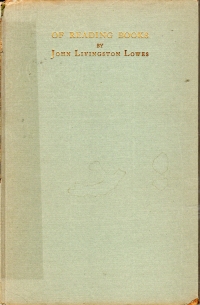
  • Of Reading Books, an address or commencement speech from 1929 bound in book form.
  • Murder in the Catherdral by T.S. Eliot
  • Collections of Aristophanes and Euripedes. But not Genet.

Why, yes, as it happens, while Heather was lingering over the sheet music, I lingered nearby, and that happened to be the drama and books about books section.

I also picked up eighteen of the dollar comics from Vintage Stock, which means I have not yet read my last comic book. Nor, probably, assembled my last comic book storage box.

Buy My Books!
Buy John Donnelly's Gold Buy The Courtship of Barbara Holt Buy Coffee House Memories

Book Report: Derelict by LJ Cohen (2014)

Book coverI bought this book on the last day of the local GAME Expo in October. You’ll have to take my word for it, as I did not post a picture of the things I bought on that trip. I bought it from the author, who traipsed all the way from Boston to sit at a table in Springfield, Missouri, to sell her books. I was her last sale of the day, as she was heading out to catch a plane home as we got to the game / science fiction convention on Sunday afternoon.

At any rate, this is like, what, three in a row of self-published books that are pretty good? (Obsidian Son and The Leftovers being the others.) I’m a little afraid of delving into more self-published stuff for fear of ruining the streak.

This young adult book centers on four teens on a remote outpost. Ro, the daughter of the chief engineer of the station, is good with computers and whatnot; Jem and Barre are the children of the doctors of the station, and Jem is a good engineering student while Barre seemingly wastes his talents on music; and Micah, son of a disgraced Senator, who is trying to perfect a strain of a plant-based drug called Bitterweed to break the current cartel’s hold on the supply. Ro hopes to get to the university, and she hopes to revive a derelict crashed space transport as a project to show she’s competent. But the teens find guns in the hold with forged diplomatic seals on them and uncover a plot by the engineer and the senator to traffic the goods. A plot that requires Ro to awaken the ship’s AI and make the ship space-worthy. When she does, the confused space AI takes off from the asteroid in a panic, leaving the four teens scrambling to survive and return home even as they’re hunted by the government and the people who want their wares.

It’s pretty good. It meanders a bit, especially towards the end, but I might just get impatient with books that clock in at almost 400 pages. Also, the derelict of the title is treated as ancient, but I believe the book says it crashed forty years ago. That seems a little recent for how ancient it’s portrayed. Even today, we have almost 100 year old ships sailing the seas and some of our airplanes are forty and fifty years old. Perhaps the author is trying to convey the youngsters’ perspective here.

So I enjoyed the read, and if I catch the author at another fair, convention, or festival, I might pick up some of the later books in the series (I believe she brought four titles to Springfield, but was sold out of one of them). But I don’t think I’ll hop on the Internet and order them to catch up. That is just not my way.

Buy My Books!
Buy John Donnelly's Gold Buy The Courtship of Barbara Holt Buy Coffee House Memories

Book Report: The Wisdom of Insecurity by Alan W. Watts (1951, ?)

Book coverThe title of this book certainly fits into the philsophy kinds of books that I might like to pick up. Its size (short and paperback) meant it would make a good carry book for me. It did. As I was reading it at the dojo, a very well-read teenager there recognized Watts’ name. After I finished it, I saw a Facebook image with a Watts quote on it. So his influence continues, some thirty-five years after his death.

At any rate, this book was originally published in 1951, so it’s steeped in the Existentialist zeitgeist, but it’s not really an Existentialist book. Watt was at one time a clergyman, but he switched over to Buddhism as a relatively early American adopter (and he knew Shunryu Suzuki). So this is a bit of a spoiler alert. I detected some of the Buddhist themes in the work along with some response and comment on other philosophers’ work, but not so much by name.

It’s a popular bit of philsophical musings. That is, it grapples with some of the main themes in life instead of being a comment on a particular school of thought. The gist of it is that life is changing and fluid at all times, and the more you try to crystallize it into something specific, you lose it. That is, defining a word takes something away from the thing being defined. Also, the early traces of the Mindfulness movement are here, he posits that only the present is real and the past and future are not. So we get into the real nub of Buddhist theory of consciousness, which ultimately doesn’t seem to work: The “consciousness” in the “present” is not the same thing as it was in the past nor is it the same thing that will experience the “present” different from this one. If you accept a certain evolution of the person, the being, the soul, you can sort of think this is right, but the Buddhist thought says, no, literally, the consciousness who came to my blog is not the same one that right now is finishing the third paragraph of this book report.

So there are lessons one can take away from the book, which are basically the things you find in Mindfulness listicles all over the Web. Try to improve your mindset and adaptability to changing circumstances; let go of the past; don’t worry about the future; enjoy the present as it is. But unlike a listicle (and contemporary Mindfulness books written by the listicle authors), the book has depth in exploring some ontology and epistemology.

So a good read, and apparently still relevant if contemporary high school kids, albeit precocious ones, talk about the author.

Buy My Books!
Buy John Donnelly's Gold Buy The Courtship of Barbara Holt Buy Coffee House Memories

Book Report: The Master Mind of Mars by Edgar Rice Burroughs (1928, 1962)

Book coverTechnically, the copy of this book that I read is the third book in a three-novel omnibus edition called 3 Martian Novels; however, the other two are Thuvia, Maid of Mars and The Chessmen of Mars, both of which I read earlier this year when I read the omnibus John Carter of Mars. I know my book reading accounting system is arbitrary: In my annual tabulation, the five volume omnibus is a single book, but the one novel that I read in this collection is one book instead of a third of a book, which is why my annual reading is currently at 83 instead of 87.33. But I’m accountable to no governing authority on this enumeration, so I’ll do what I want.

Where was I? Oh, yes. In this book, we have another Earthman, a WWI soldier who dies in combat, transported to Mars. He ends up in the employ of a great scientist who has learned how to transplant just about anything–including brains from one body to another. The scientist, a supremely rational being, maps out a plan where he and the Earthman will swap each others’ brains into new bodies every thousand years or so, essentially conferring immortality upon each. The plan goes awry when the Earthman meets the mind of a sweet young Martian woman whose brain has been swapped with into the body of an aged despot, and the Earthman vows to put things aright.

It’s a pretty quick little yarn; John Carter makes the obligatory appearance at the end, but Burroughs has already learned by book 4 of the series that after elevating the main character to the pinnacle of power (John Carter became the jeddak of all jeddaks in the third book) that it would be wise to focus on other, more approachable characters whose struggles would still be acute and adventurous, in the series. So many series keep heaping power, fame, and whatnot on the series characters so that they’ve continually have to find ever more powerful struggles and villains to fight, and the characters end up caricatures or so powerful that the reader cannot identify with the protagonists.

Bully on Burroughs for avoiding this trap.

Also note that my estimation of this book is probably higher because I haven’t read five or six in the series in a row. Mixing the series books in with other books helps keep them fresh, hides some of the formula, and helps each stand alone instead of being instantly comparable to the last one read. So I should take that to heart, although I’ll probably still read omnibus editions as a single book. Except maybe the Detective Book Club books.

Buy My Books!
Buy John Donnelly's Gold Buy The Courtship of Barbara Holt Buy Coffee House Memories

A Dickens Quiz Wherein Brian J. Scores 4 of 4

4 Dickens Christmas Stories You’ve Probably Never Heard Of.

The stories are:

  • The Chimes
  • The Cricket on the Hearth
  • The Battle of Life
  • The Haunted Man and the Ghost’s Bargain

Of course I have heard of them. I have an English degree, for cryin’ out loud.

It helps that they were all collected in the Walter J. Black edition of A Christmas Carol that I read in 2008. Reading that book nine years ago around Christmas time might have kicked off my mostly annual tradition of reading a Christmas-themed book around this time of year.

Buy My Books!
Buy John Donnelly's Gold Buy The Courtship of Barbara Holt Buy Coffee House Memories

Best of the Best Books of 2017

Someone has taken a several Best Books of 2017 lists and coallated the information into a single list that weights the books based on how many times they appeared on the best of lists.

You know me; any list of books, and I make it a quiz.

So here we go: Which of best books of 2017 have I read? I have put in bold the books I have read; I have put in red the books I own and have yet to read, and in underline books that I want to get someday.

For the fiction:

  • Sing, Unburied, Sing by Jesmyn Ward
  • Lincoln in the Bardo by George Saunders
  • Exit West by Mohsin Hamid
  • Manhattan Beach by Jennifer Egan
  • Little Fires Everywhere by Celeste Ng
  • White Tears by Hari Kunzru
  • The Power by Naomi Alderman
  • The Ninth Hour by Alice McDermott
  • The Answers by Catherine Lacey
  • What We Lose by Zinzi Clemmons
  • The Ministry of Utmost Happiness by Arundhati Roy
  • Pachinko by Min Jin Lee
  • Mrs. Fletcher by Tom Perrotta
  • Ill Will by Dan Chaon
  • Her Body and Other Parties by Carmen Maria Machado
  • Goodbye, Vitamin by Rachel Khong

For the nonfiction:

  • Killers of the Flower Moon by David Grann
  • We Were Eight Years in Power by Ta-Nehisi Coates
  • The Rules Do Not Apply by Ariel Levy
  • The Future Is History by Masha Gessen
  • You Don’t Have to Say You Love Me by Sherman Alexie
  • Priestdaddy by Patricia Lockwood
  • Hunger by Roxane Gay
  • Homo Deus by Yuval Noah Harari
  • What Happened by Hillary Clinton
  • The Evolution of Beauty by Richard O. Prum
  • Sticky Fingers by Joe Hagan
  • Locking Up Our Own by James Forman Jr.
  • Leonardo da Vinci by Walter Isaacson
  • Grant by Ron Chernow
  • Behave by Robert M. Sapolsky
  • Ants Among Elephants by Sujatha Gidla

That’s right.

Not a damned one.

I’ll let you, gentle reader, be the judge of whether that more indicts books published in 2017 or the taste of people who publish Best Books Of lists. To be honest, more likely the latter.

Buy My Books!
Buy John Donnelly's Gold Buy The Courtship of Barbara Holt Buy Coffee House Memories

Book Report: A Christmas Promise by Thomas Kinkade and Katherine Spencer (2004)

Book coverThis book represents my annual Christmas book, and it’s the one I bought most recently (October, in fact). Although I’ve bought a couple more such books this year, they’ve hidden amongst my to-read shelves, whereas this book was still relatively front and center.

At any rate, apparently, this is the fifth of the Cape Light books; I read one from ten years later last year (All Is Bright from 2014), and I didn’t care for it. As a matter of fact, I said:

So although I undoubtedly have destiny that includes one or more Kinkade paintings, I doubt I’ll revisit this series.

Well, fortunately, I forgot that particular New Year’s Resolution, as this book was better.

A pastor visiting Cape Light while he recovers from malaria collides with a pregnant woman on the run and under an assumed name on a snowy evening. He helps her out, and they start to have feelings for each other, as she hides out in a boarding house and integrates into the friendly community until a private investigator hired by her vindictive ex-husband shows up. Side plots include one daughter of a wealthy widow wanting to marry and another daughter dealing with the lingering effects of a miscarriage and her husband’s attention paid to a needy boy at a local shelter.

Overall, a pleasant book to read. A nice bit of fiction without major crimes involved, but enough intrigue with the woman on the run story to keep a genre-fan like me engaged. Which might be what the other Cape Light book I read lacked. It has its unanswered questions: What, exactly, is the promise in the title? How did the detective find her? It rather quickly covers the whole holiday period with big gaps, and then it drills into conflicts that might have been resolved within those intervening weeks, but do not. That’s a flaw I see in some television programs, too.

Now, back to the genre fiction for me.

Buy My Books!
Buy John Donnelly's Gold Buy The Courtship of Barbara Holt Buy Coffee House Memories

Book Report: Vietnam Fallout The Executioner #113 (1988)

Book coverIt’s been almost six months since I’ve read a Bolan book (Death Has A Name in July), and this book is 17 books later in the series. Thicker than the old Bolan books (a transition I noted in the previously mentioned review), this one might be a touch better, but it’s still a bit dissatisfying overall.

Within this volume, Bolan is in New York when an ambassador from Vietnam who is making back channel overtures for normalization of relations with the United States is assassinated. Bolan is riding with a cop who happened to be an old war buddy, and they pursue the assassins. The friend is cut down, which sends Bolan on a search for vengeance that leads him to Vietnam. Although this book kinda treats this like it’s a fresh return for Bolan, we who read the books instead of write them for hire recognize that he has already been back in a book entitled Return to Vietnam.

Once in Vietnam, Bolan engages in a rehash of Heart of Darkness–or maybe Apocalypse Now, the original rehash of Heart of Darkness set in Vietnam, albeit during the actual war. As he follows that plot line, he engages in some questionable decisions that seem to go against the marrow of the character for future plot twists. And then the book reaches its shoot-out climax, and Bolan wins.

The first part of the book, in New York, has a different feel from the second half. One wonders if two incomplete manuscripts were grafted together to make one longer book. Or, one fears, maybe the remainder of these books will be like this. Which would be awful, since one has a lot of these later books from scattered places in the 400 or 500 book canon.

Buy My Books!
Buy John Donnelly's Gold Buy The Courtship of Barbara Holt Buy Coffee House Memories

A Couple Book Links

While I’m busy doing nothing, but different than the day before, here are some book links for your reading pleasure. They have pictures, though, if you don’t like to read.

  • Friar thinks this new library in China is cool:

    Well, that’s interesting, but I prefer a more traditional, dark, wood-paneled look to my libraries.
     

  • Now, this is more my speed:

    Surrounded by books has been a main circumstance of my long life. So it is now, near the end of my 94th year, when I am in my large library of perhaps 18,000 books in the western wing of my house in Chester County, Pennsylvania.

    I don’t know which part I liked best: large library, 18,000, or western wing of my house. If I had a library in a wing of my house, I doubt it would take me 40 more years to get there.

    Note that this gentleman is, in fact, a professor, which is the highest level of book accumulator, and I’m on my way to being an honorary professor.
     

  • I’ve seen a link to this Intellectual Takeout recap of a couple of surveys that indicate that 27% of Americans have not read a book in the last year and another survey that indicated that 20% of British adults could not name an author.

    I’d be a little more upset if I didn’t realize how easy it is to stump people with questions like this. Twenty-five years ago, I stumped fellow English majors by asking them if they could name two morals, and most could not.

That should hold you until I can think of something witty to say or get around to writing another book report for a piece of throwaway fiction. Except at Nogglestead, we don’t throw away any books.

Buy My Books!
Buy John Donnelly's Gold Buy The Courtship of Barbara Holt Buy Coffee House Memories

Book Report: The Wards of Iasos Book 1: The Leftovers by J. Christopher Wilson (2016)

Book coverI mentioned in September that this local author was stalking me, appearing at different cons and festivals I attended until I bought his book (to recap: I saw his table at Library Con 2017, but didn’t buy the book because he was on a panel at the time–and I’d already bought a bunch there anyway; I saw him at the Mini Maker Faire; and I saw him at a street fair in Hollister, where I finally bought this book). Well, I hadn’t gotten to it, but I saw him at the First Lego League competition in his home element–the middle school in the system where he teaches. So he was stalking me to make sure I read his book. Although, to be honest, he is an inefficient, ineffective stalker, as he did not even notice me leaning against the wall in the corridor as he ushered teams into the auditorium.

Still, it prompted me to pick up his book. Also, note that I’ve been reading a bit of fantasy lately. See also Jules Verne (all right, not exactly fantasy, but bear with me), Obsidian Son, The Catswold Portal, and John Carter of Mars (which is an omnibus of five novels). Does back in late summer count as “lately”? I dunno. But there you go. What was I saying? Oh, yes, a book report.

You know what? This book is pretty good. I’ve lucked out with the self-published fiction this autumn. The aforementioned Obsidian Son was also pretty good.

But this book differs from that, so let’s talk about this book. It’s targeted to younger adults and is high fantasy. The book deals with a collection of outcast students at the mandatory academy for youth in the nation of Iasos. Each comes from a broken home or has been cast aside by his or her parents. We have a large half-Orc cleric type, a half-goat warrior maiden, a scarred magician who wears a hood, a young barbarian, and an empathetic thief. The house leader/teacher is a battle-weary dwarf who takes the group under his wing to teach them how to work as a team and whatnot.

The book starts running through some threads that will continue in later books, and the adventures in this book come to a head when the group travels outside the academy’s sanctuary. They encounter some mercenaries sent by a foreign power to destabilize the country, and the young charges want to fight to liberate a small, illegal community oppressed by the mercenaries. After the mercenaries kill one of the wards, a reckoning comes that sees the wards fight together for the first time.

The author’s bio says he’s a Dungeons and Dragons player, and you can see a little of that in the descriptions, particularly of the locations. The narrative stops, and we get a couple paragraphs or pages of descriptions of the building. One almost wants to check the east wall for secret doors. Also, I’m tempted to try to identify influences for the work–I remember the old Advanced Dungeons and Dragons cartoon had the smallest, youngest kid be the Barbarian, although in the cartoon, the boy was not primitive. Looking at the cover, I can’t wonder if the artist was not influenced by the Teen Titans–one of the characters looks like Raven, and the Behemoth (the half-Orc knock off with the splotches of lighter color) kinda looks like Cyborg. But it’s unfair to the author that I’m looking for these influences where they might not exist.

At any rate, that’s two for two on the self-published books I’ve read this autumn. I expect I’ll get the next installment when it comes out because otherwise I’ll see this author at all the local cons and whatnot, and he’ll not let me rest until I do.

Buy My Books!
Buy John Donnelly's Gold Buy The Courtship of Barbara Holt Buy Coffee House Memories

Good Book Hunting, November 25, 2017: ABC Books

On Saturday, we took a trip up to ABC Books because it was Small Business Saturday, and the books were 50 percent off. Which didn’t help us with the cost of the gift cards we bought for our children’s teachers, but it did give us an excuse to buy some books.

I bought a couple books from the Makers of the Modern Theological Mind Series (H. Richard Niebuhr, Teilhard de Chardin, and Martin Buber) and Don’t Know Much About The Bible.

It was a rare day, as my beautiful wife bought more than I did. She attributes it to the wine she had with lunch. I attribute it to the fact that I stop by the store every couple of months and drain it of the items I want regularly, leaving me less to gorge on the next time I come. Regardless, it was a fruitful trip, and I’ll get to these books someday.

Buy My Books!
Buy John Donnelly's Gold Buy The Courtship of Barbara Holt Buy Coffee House Memories

Book Report: The Best of Jules Verne by Jules Verne (1978)

Book coverI picked up this book because I know the chicks dig Jules Verne.

Well, maybe it’s only one, and maybe she is fictional. But still.

I probably picked this up because I’ve been doing the omnibus thing this year. I’ve shortchanged my annual numbers by reading books containing multiple books all year long (Three Novels by Damon Knight; Selected Tales and Poems by Edgar Allan Poe; John Carter of Mars). So why not another three-in-one? Besides, this book is sort of like picking up a split–I have a Reader’s Digest edition of A Journey to the Center of the Earth which I can move over to the read shelves as this volume contains that novel.

At any rate, my dear Clara, this volume contains three of Verne’s works, and we could spend many evenings by candelight discussing whether they are, in fact, the best. Before I did so, I would have to read a bunch more of what he wrote to argue intelligently, as these are the three books I’ve read.

The three books contained with are:

  • Around the World in 80 Days, the story of a reclusive and mysterious Englishman, Phineas Fogg, who makes a bet at his gentleman’s club that he can travel around the world in 80 days. He takes his new valet along for the ride and rescues a beautiful young Pharisee from sacrifice in India. A bank robbery right before he leaves London puts a detective on his tail who’s out to thwart him until an arrest warrant catches up with him.

    Of the book, this is the best–its protagonist is aloof, but the new valet, Passepartoute, is accessible, so we are rooting for them to complete their adventure in spite of the setbacks and adventures they encounter along the way. We even feel sympathetic to the detective who’s only doing his job. And the adventures involve exotic places and peoples. The other two novels included falter in comparison.

  • The Clipper of the Clouds, also published as Robur the Conqueror, starts with a duel scene. A Yankee and an Englishman argue over whether mysterious trumpet sounds coming from the sky played “Yankee Doodle” or “Rule Britannia”. The rest of the first chapter details mysterious sounds and trumpets heard from the sky around the world and the arguments as to what it might be. Then, we’re at a meeting of the lighter than air travel society, proposing to build a giant blimp or dirgible, when a stranger says that heavier than air craft ar the way to go. A ruckus and riot ensues, and the two most powerful men in the society disappear–they’ve been kidnapped by Robur, who has essentially a boat with rotary wings on the masts in addition to sails. So it can fly! He then, for reasons of his own, take the two men around the world and to different locales. Their adventures are a bit underwhelming, and then they return. I guess Verne did a sequel to this book, but I’m certainly not compelled to read it.
     
  • Journey to the Center of the Earth details a professor who finds a several-hundred-year-old coded note from an explorer who was censured and considered a heretic. The note contains the location of a secret cave that leads to the center of the earth. So the scientist enlists his nephew for a trip to Iceland, they take on a stoic Icelandic guide, a load of food, and they descend. They spend months walking through caves and having dry misadventures–running low on water, getting lost–until they find a giant underworld sea, which they build a raft and ride on for weeks, and then they find dinosaurs and evidence of humanoids under the earth before they trigger a volcanic eruption and ride it to the surface.

The second and third books in the volume have a whiff of the hard science fiction about them, where the draw is the science and the speculation, but not so much the story. Which is not what I read books for–not fiction, anyway.

So I was not, ultimately, impressed with them. Not for their lack of imagination, but rather by the execution where the speculation drove the books more than the stories based on the speculation.

I’m not sure what Clara would think of that.

The book also contains an interview with Jules Verne from The Strand magazine called “Jules Verne at Home”. This is a very nice bit capturing Verne and his wife at their estate, giving some insight into the popular author at the tail end of his career.

Buy My Books!
Buy John Donnelly's Gold Buy The Courtship of Barbara Holt Buy Coffee House Memories