 I said when I reviewed Georgia O’Keefe earlier this year:
I think I confused her with Grandma Moses when I was young, as she was still alive but was very, very old–both she and Grandma Moses lived to about the century mark (Grandma Moses a little older, Georgia O’Keeffe a little younger). And both of their names started with G, which means to a young man not steeped in the arts, they were practically the same person.
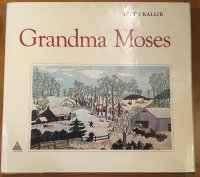
Well, I have now completed my education into the differences between Grandma Moses and Georgia O’Keeffe (with a little Frida Kahlo thrown in this year for a bit of spice). Grandma Moses was what they call a “primitive” artist, meaning in the art world that she was not trained in the arts. I tend to use the term incorrectly, meaning that she’s kind of folk art, with some good representation of nature in a distant landscape but with diminishing skill on buildings and then on people and animals. I mean, much of her work is about what you would expect from a paint-with-wine class, maybe. Not quite up to Bob Ross on the landscapes, even.
I think she became famous because she was a novelty: She started painting at about 80, and a New Yorker visiting upstate spotted her work and worked to make her famous (and that he was an early collector and made money on her is purely coincidental). Soon, she was having exhibitions around the world and appeared in a documentary film and an appearance on Murrow’s See It Now television program.
This book is not just a monograph, but rather a comprehensive treatment of Moses and her work. It includes a biography, information about her career, several letters in her own hand reproduced, and a complete catalog of her known works (at the time of publication–it’s possible they have found and/or authenticated more in the almost fifty years since this book’s publication). It’s a bonzer–356 pages, although it’s not small print and has extensive indexes and a complete listing of her work with small photos where available). Very complete.
One gets the sense that Grandma Moses herself did not take the whole thing too seriously and did not let her fame go to her head. Of course, as a child of the 1860s and a resident of Virginia in the reconstruction era (perhaps considered a carpetbagger by the Virginians) she would have more perspective than a young artist who was 20 something at the time of “discovery.”
So although I appreciate her work a little more than Kahlo or O’Keeffe, I would still not decorate my house with Grandma Moses prints.
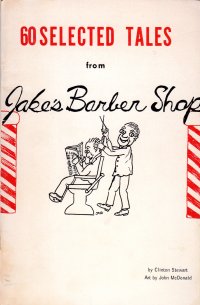 This book is of unknown provenance; it has no title page or copyright page, and the Internet has never heard of it. I’m guessing that it was written in the early to middle 1970s because it refers to Spiro Agnew and Richard Nixon. It has the feel of small town paper’s humor column (or maybe something from the Springfield papers at the time, but it’s before the Internet), and a later entry does start out “This week” which lends credence to the belief.
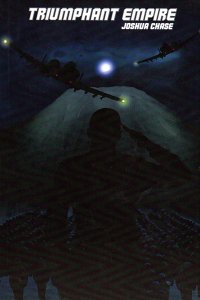
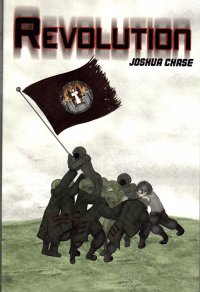 This is the second of Joshua
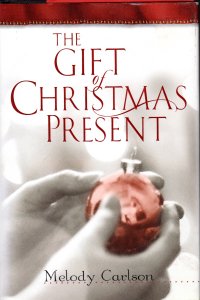 I have a confession to make: Despite the fact that I have bought several years’ worth of Christmas novels at book sales past, when Christmas time closes in, I can’t find the Christmas books I already own (and this year, I am certain they are not by the
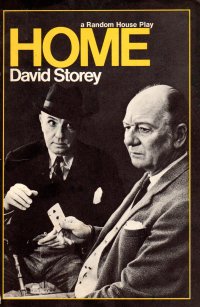 I hit my bookshelves looking for a Christmas novel to put me into the mood for the holidays, and I did not find one. Instead, I found this play by a playwright whose name I didn’t recognize. Of course, whilst I was reading it, I spoke of it with my beautiful wife, and we got to naming modernish–that is, twentieth century, playwrights. She could only name, sort of, Alan Ayckbourn, “The Norman Conquests” guy, and Neil Simon. I could name a couple more, being a reader of twentieth century drama, but not this fellow, so I thought he must have been pretty obscure. Although “pretty obscure” does not generally get a Random House hardback and Book Club Edition.
 Well, gentle reader, I have found these books which I ‘lost’ on my to-read shelves after I bought them
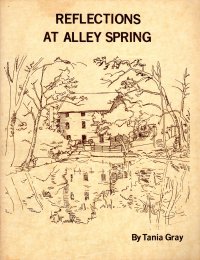 This book is a small collection of newspaper column-length text accompanied by one of the artists’ drawings of people and places near Alley Spring in northern Shannon County, Missouri. Self-published in 1980, this book includes interviews with local figures who were born around the turn of the century and remember traversing the county in wagons, in cooling their perishables in springs, and who used or restore old mills and steam equipment.
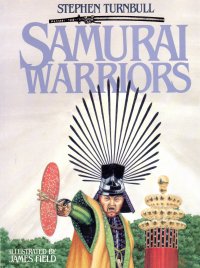 I have described “carry” books from time-to-time, gentle reader. These books I throw into my gym bag to read at the martial arts school whilst my boys are taking classes before my class or to carry to church to read during the Sunday School hour. Well, this year has eliminated the latter, and time itself has eliminated the former. When my boys were younger, they took early afternoon young children’s classes, and the adult class was at 7:00, so I would spend sometimes three hours at the dojo before my class. Then, they were in older kids’ classes, which meant I would still spend an hour or so with time to read. But with the new abnormal, once the dojo opened back up, the older kids and adults had classes together, so we have all had class at the same time. And if the school ends up with enough kids again to split the kids from the adults, my boys will both be old enough to take adult classes. So the days of the carry book, or at least the one that goes into the gym bag, are over. And this is one of the last that I will finish, although it spent some time (years) on the
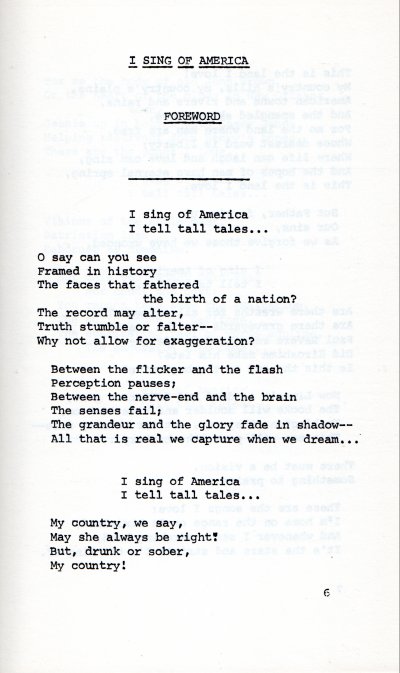
  This is a collection of poetry, or rather a group of cantos about America. Spoiler alert: About the only good thing about America is jazz music. Everything else is pretty much killing the Indians, slavery, and oppression. Well, not exactly that bad but mostly so.