On Barbarella (1968)

Book coverOne of my Christmas gifts was a gift card to Vintage Stock, a retailer in used movies, video games, CDs, movies, and records. So sometime right around the turn of the year, I went over to Vintage Stock to spend it, and I amassed a number of movies and DVDs, including this one. It was my lucky day, too, as I made my first (and only) stop to the new comic book shop on Campbell, right across the city from the now-closed Nameless City Games. And although Nameless City did not have the first issue of the Sarah Hoyt Barbarella last July, the new comic book shop had one copy of the first issue six months later. So I got the original movie and the latest pop cultural incarnation on the same day. Spoiler alert: I read the comic first.

So. The plot is that Barbarella, an interstellar agent in the future, has to go to Tau Ceti to find a scientist named Durand Durand who has created a positronic ray that might be used as a weapon. So she goes to Tau Ceti, meets some different people and different species including murderous children, blind angels, and a planet whose energy source is a flowing substance below the ground that feeds off of negative thoughts and emotions–Ghostbusters 2‘s slime sorta. She has sex with a couple of people, and eventually finds Durand Durand who wants to use his ray to take power. But he overreaches and dies.

This is an early Dino De Laurentis film, and the look-and-feel of it, along with some of the pacing, feels a lot like Flash Gordon from 1980 (although this film is obviously earlier). The protagonist in this film, though, is a bit more passive than Flash Gordon–other characters and natives of the planets she visits lead her around to different venues, and sometimes she has sex with them, but most of the time, Barbarella is not leading the action.

Oh, and about the sex: Although my beautiful wife had heard that this was a soft core porn film, it really wasn’t. Although I am glad I did not share the film with my boys, the sex in it was relatively tame and not depicted graphically. I mean, it’s essentially a French film, directed by Renoir’s grandson and co-starring Marcel Marceau, but it doesn’t have the ooh la la that you get in some French and Scandinavian films of the period. The opening sequence of Barbarella removing a spacesuit in zero gravity was pretty, erm, compelling, though.

At any rate, I’m glad to have watched it for its, what, cultural value? To have seen something that was influential and that continues to be a bit of a touchstone today–I mean, aside from the comic series, there was a musical in 2004, and the band Duran Duran took its name from the name of the scientist, for crying out loud–but as a story and a film, meh (which is quite different from mwah! which is the chef’s kiss, which this film is not).

Below the fold, Jane Fonda as Barbarella in her many outfits.
Continue reading “On Barbarella (1968)”

Buy My Books!
Buy John Donnelly's Gold Buy The Courtship of Barbara Holt Buy Coffee House Memories

Book Report: John D. MacDonald: A Checklist of Collectible Editions & Translations by David G. MacLean (1987)

Book coverI bought this little chapbook at ABC Books a couple weeks ago, and when I went back earlier this month and bought a book by Gregory McDonald, I mentioned that Gregory McDonald was one of the big three MacDonald/McDonalds–the other were Ross MacDonald and John D. MacDonald (I said, gesturing to a Travis McGee novel stacked and ready for pricing behind the register). I then told Mrs. E. that I had recently bought a price guide for John D. MacDonald books, this very book–and then I realized I had bought it at ABC Books a couple of weeks earlier, albeit when she was not there.

So. This is a 32-page, saddle-stitched, typeset with a typewriter booklet from 1987, probably not long after MacDonald’s death (at a different hospital in Milwaukee than the hospital where Heather Graham and I were born–he is buried in Milwaukee, and I never visited even though I have been a fan since he was interred). It lists first editions, including first foreign editions in some cases, and prices circa 1987.

How do the prices stack up to modern prices? The Brass Cupcake, his first novel in paperback from 1950, is listed in the book at $40 including notes on a recent sale. You can find it on Ebay from between $30 to $250, and there’s a hardcover edition at $1250 (which is a hardback reprinting of the paperback). So your mileage may vary.

As I have mentioned, gentle reader, I’m a bit afraid of eventually running out of John D. MacDonald books to read. So this book gave me an opprortunity to audit my collection using the Wikipedia entry for John D. MacDonald’s bibliography, the archives of this blog, and my seriously overburdened inexpensive, turn-of-the-century book library software. The shocking results are below the fold.
Continue reading “Book Report: John D. MacDonald: A Checklist of Collectible Editions & Translations by David G. MacLean (1987)”

Buy My Books!
Buy John Donnelly's Gold Buy The Courtship of Barbara Holt Buy Coffee House Memories

Book Report: The Dark Side of CX by Michael G. Bartlett (2022)

Book coverI bought this book new on Amazon when a local tech group mentioned it. I kind of thought that CX (customer experience) would be something akin to UX (User Experience) which deals with UI (User Interface) which is the parts of the computer program that users actually tap, type, and click on. Each step up the chain is a bit of an abstraction that allows the consultants to sell it a bit more to audiences who are further up in the management chain. Pardon me, do I sound a little cynical? Or maybe envious of the cool consultants?

So CX is actually customer/client experience, which blends marketing, sales, and customer support into a single concept about which one can draw some lessons. He breaks the failures into two categories: Goal friction, where the problem prevents the customer from achieving a goal, and Social Friction, which makes the customer feel bad or socially diminished.

The book uses the Russian term priyome, which is a term for a pattern and an action leading to advantage from recognizing the pattern. He gives them cute names like “Pass the Parcel” and “Without a Paddle,” explains the pattern/archetype a bit, and then how to solve or avoid the problem.

A lot of this seems like common sense, especially if you’ve had any retail or customer service experience, but this is 2022, man. What was common sense in 1990 might be the lost wisdom of the ancients by now.

The book is kind of structured like The Gorilla Mindset in that it interrupts its main flow–in this case the priyomes–with interviews with experts and digressions on company culture (but nothing on juice products advertised on the podcast!).

So it made for a quick, light read that really doesn’t offer much I can apply directly to my day-to-day, but it’s something to go into the hopper for future recombination with my ideas.

And I felt a little gratified by an invitation to a forthcoming webinar that confuses CX with UX:

Improving the Mobile Customer Experience Through Scriptless Automation

Let’s face it, mobile automation is difficult. You can’t rely solely on coordinates or xpaths to make it work. Yet so many automation products do, resulting in flaky test scripts and a maintenance nightmare. If a test script fails, it can lead to reduced customer satisfaction and retention, or worse—it can be seen as a reflection of your brand. This need to keep users happy while maintaining app performance can seem impossible, but there is a solution: scriptless test automation.

This is testing the user interface, not the end-to-end customer experience Bartlett envisions. I wonder whether this term and abbreviation are not tightly locked down yet.

Buy My Books!
Buy John Donnelly's Gold Buy The Courtship of Barbara Holt Buy Coffee House Memories

Perhaps In The Disney Movie

I might not be a smart man, Jenny, but I know who Janet Yellen is.

And that’s not her.

So Microsoft is throwing up random ads in the home page of the Microsoft Edge Web browser these days, and one of them is clickbait enough to combine a powerful financial figure, a buzzword, and a stock photo of a woman.

But not enough to make me click. Only enough to make me mock.

Buy My Books!
Buy John Donnelly's Gold Buy The Courtship of Barbara Holt Buy Coffee House Memories

Not Quite That Country

The Licking News, small a paper as it is, has numerous columns worth reading along with a comic page with puzzles.

On of the comics is R.F.D. by Mike Marland.

Last week, the cartoon dealt with local sourcing of foods:

We at Nogglestead are not that country. Although there are many beef operations in the area, including one run by the realtor who helped us find Nogglestead, we do not frequent farmer’s markets to get to know small producers nor do we really home in on local producers whose names we might recognize from Ozarks Farm and Neighbor. Mostly, we grab what is least expensive at the grocery or the warehouse club store.

I am, however, reminded of the time I went back to Kansas with a girlfriend to visit her grandparents, and on Sunday morning, the grandmother or aunt served bacon from Uncle Rick’s pig–and she said she did not like store boughten bacon at all. Although she probably did not say “boughten,” given how much of a throwback to the old ways both families of farmers were in the 1990s, she probably meant it.

Buy My Books!
Buy John Donnelly's Gold Buy The Courtship of Barbara Holt Buy Coffee House Memories

A Horror Story for Brian J.

Not by me, mind you. Something that fills me with dread: Justin Fields Must Recruit Former Teammate To Chicago:

Still, it doesn’t mean Fields can’t find a way to bring in at least one of his former teammates. He’ll do some extra legwork to lure Chris Booker to Chicago if he is smart. Don’t feel bad if you’re unfamiliar with the name. The senior spent two years for the Buckeyes as a backup. He made only two catches during that time—both of them in the year after Fields left.

So why in the world should the QB even bother?

Namely, because Booker has untapped potential. He’s 6’3 with understated speed and surprisingly polished as a route-runner. After dropping out of football at Dayton in 2018, he transferred to Ohio State with no intention of playing again. However, he was convinced to join the school’s club football team. In his first game, he scored touchdowns on a reception, an interception, and a kick return. His head coach knew he had way too much talent for that level right away. So he pestered the school’s varsity program to give Booker a shot.

They finally did after a year. He became a regular on their scout team and would catch passes from Fields in practice.

So the two know each other well. Teammates and coaches alike grew surprised by his progress. That included receivers coach Brian Hartline, a former NFL standout. While he never cracked the offensive starting lineup, Booker became arguably the best special teams player in the entire program and one of the best in college football. Every time somebody was making a play on kick coverage or blocking units, #86 was in the frame. Sadly the ascent came too late in his career to drum up draft interest.

My beautiful wife, who shared this story with me as she’s friends with the lad’s mother, said, “It would be the one way to get a Bears jersey in our house.”

“The hell it would,” I countered thoughtfully. “However, if he were to sign with the Green Bay Packers, everyone in the house would have a Chris Booker jersey. Even the cats.”

What followed was an attempt to edit a listing from the Packer Pro Shop for pet jerseys to include the name and number of the young man in question. An effort abandoned when I determined it would require a couple hours of work for a couple of chuckles at best.

Buy My Books!
Buy John Donnelly's Gold Buy The Courtship of Barbara Holt Buy Coffee House Memories

Good Book Hunting, Saturday, April 2, 2022: ABC Books

Yesterday, I made my way up to ABC Books for a book signing. It was no ordinary book signing; it was Mike Crocker, director of the Dickinson Park Zoo here in Springfield. I already knew a little about his book, as the zoo is part of the parks system, and my beautiful wife sits on the park board. So she already has a copy of it, and she has read excerpts to me that she really likes.

I made my normal loop (martial arts, poetry, philosophy) and also stopped by the contemporary mysteries section, and I got a few things.

I got:

  • True Tales from the Dickerson Park Zoo by Mike Crocker, the signer in residence.
  • Confess, Fletch by Gregory Mcdonald. My oldest and I watched Fletch together again a couple weeks back (the first time was last Spring), and I’m always trying to get him interested in the source material for movies. So I picked up this book, which was not on the shelf two weeks ago) but not Fletch Won which is a later entry in the series but deals with Fletch’s earliest adventure (because my attempts to get him to read real books are often futile).
  • The Political Ideas of St. Thomas Aquinas edited by Dino Bigongiari, selections from Summa Teologica. Which I received for Christmas and have not started yet. Heck, I haven’t even found a good place to shelve it yet.
  • The Poetry of Stephen Crane. I just read The Red Badge of Courage (book report forthcoming), so this leapt out at me and was like $6.
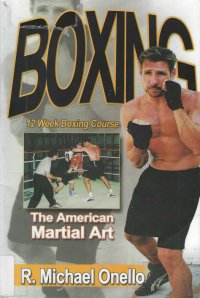
  • Boxing: The American Martial Art by R. Michael Onello. This, too, was not present two weeks ago.
  • Lila: An Inquiry Into Morals by Robert M. Pirsig, the Zen and the Art of Motorcycle Maintenance guy.

Were I a betting man, I would bet that I will read the zookeeper’s book first followed by the boxing book. But there’s no telling how soon either will be.

Buy My Books!
Buy John Donnelly's Gold Buy The Courtship of Barbara Holt Buy Coffee House Memories

On The Best of Star Trek: The Original Series (2009)

Book coverAs you know, gentle reader, I am about half way through James Blish’s short paperbacks collecting episodes from the Star Trek series (see also Star Trek, Star Trek 2, Star Trek 3, Star Trek 4, and Star Trek 5 for the recent re-reads or click here to see earlier and future re-reads–which will include the others in this timeline that I post later than I post this). Last Christmas, I received gift certificates for the antique mall again, $100 worth this time (with a six month expiration and no change returned, so a very old school type of giftcertificate). As I mentioned in the report on Star Trek 4, I looked for episodes of the original series at Relics Antique Mall last month. Although I did not find any physical media for the original series on that trip–one in which my buying focus was finding one big thing, like a set of fencing equipment, a receiver to serve as a back up in the parlor, or something that cost $100, I went again later with two certificates to look specifically at DVDs and videocassettes, and amongst a number of videos that I have not yet begun to watch, I spotted this DVD (and bought it, of course).

This 2009 release comes at a time when Paramount released the first season of the original series on Blu-Ray, remastered and with remixed sound. One assumes that this was a bit of a loss leader, a way to pitch the new set to people who maybe casually or perhaps a little more than casually enjoyed the original series but hadn’t seen it in a while. 2009, man. They probably still had video stores like Suncoast back then, ainna? Certainly the Best Buys and Walmarts still had fairly robust video sections in Electronics.

So this single DVD collects four episodes:

  • “The City on the Edge of Forever” (Blishified in Star Trek 2), the one with Joan Collins in it. C’mon, man. Joan Collins. Something something time travel and Joan Collins.
  • “The Trouble with Tribbles” (Blishified in Star Trek 3), the one with the little puff ball creatures that takes place on a disputed space station and where Klingons insult Kirk and the Enterprise (which is why the quote from Wilder’s post that I mentioned yesterday was fresh in my mind).
  • “Balance of Terror”, (Blishified in a later volume than I’ve read so far), the one where the Enterprise encounters the Romulans and their cloaking device.
  • “Amok Time” (Blishified in Star Trek 3), the one where Spock goes through Pon Farr and has to return to Vulcan to mate, much to his high Vulcan chagrin.

So I enjoyed spending a couple of evenings reviewing things I’d seen before and read recently, for the most part. Not enough to buy the complete series on Blu-Ray (although it looks as only the first season got the treatment and is only $22, whilst the whole movie collection with the original series and Star Trek: The Next Generation is only $44, which is not bad for new, but I’d rather pay less than $5 for DVDs).

I know, I know. By now you expect me to post photos of actresses from things I watch below the fold. But, c’mon, man, I already posted about Arlene Martel, who appeared in “Amok Time”, after I saw her in Route 66.

Well, to save myself from your disappointment and disapproval, how about some photos of Grace Lee Whitney, who played Yeoman Rand? Continue reading “On The Best of Star Trek: The Original Series (2009)”

Buy My Books!
Buy John Donnelly's Gold Buy The Courtship of Barbara Holt Buy Coffee House Memories

Again, Brian Knows Wilder’s Source Material

Wilder begins a cheery post entitled The Coming American Dictatorship, Part I with a quote from Star Trek:

“Well, Captain, the Klingons called you a tin-plated overbearing, swaggering dictator with delusions of godhood.” – Star Trek

Oooh, oooh, Mr. Kahtter. I know which episode that comes from. Not only did I read the short story version of “The Trouble with Tribbles” in Star Trek 3, I actually caught the episode on a DVD I bought a couple weeks ago.

But that’s a story for another post.

Buy My Books!
Buy John Donnelly's Gold Buy The Courtship of Barbara Holt Buy Coffee House Memories

Book Report: Gorilla Mindset by Mike Cernovich (2016)

Book coverI ordered this book when I saw Cernovich’s name mentioned on two blogs on the same day. Sorry, I forget which blogs they were, but they were likely ones from the blogroll.

So this book is all about shifting your mindset, a self-help title focusing a little on how you frame things/alter your perspective, that you should be in the moment, and that you should drink vegetable juices using the juicer that sponsors his podcast.

I’ve read a number of self-help books over the last couple of years, including The Power of Positive Thinking and Eat the Cookie, Buy the Shoes in late 2020. The first is from 1952; the second is from 2010, but from an author a generation or two up from mine (probably closer to one, since I apparently have reached the age of lower auto insurance rates). This book, the one under review, comes from someone of my generationish (he’s five years younger than I am), and much of the book seems adapted from quick hit blog posts and podcast transcripts. If you read the books in chronological order, you see a definite decline in the depth of the prose. One wonders if we are still printing and reading books in ten or twenty years if self-help books will be but collections of memes and inspirational quotes on images or more akin to Dav Pilkey books, lightweight prose broken up by rudimentary cartoons. It could go either way.

At any rate, a little actionable information in the book, I suppose. I mean, there’s a bit on recognizing negative self talk, and I took action on it, thinking That’s negative self talk when I did it, which dropped my negative self talk down to fifty percent of my interior dialog with the introduction of 50% thinking That’s negative self talk. I did realize how grousy my mother’s family was, in total, grousing as a large part of their other-to-other talk. But I have not completely reframed my perspective with that knowledge or that book.

A quick read, not very deep as I mentioned, and akin to the stuff you might find in popular Buddhist philosphy/mindfulness books and whatnot.

Perhaps it is best to read Cernovich in blog form or listen to him on his podcast to hear him in his native enviroment rather than in book length chunks.

He’s had a lot of success with the podcast and notoriety from his blog, so he’s doing well for himself. Good on him, I guess, but I don’t know if I need to read more of his work. And it might be another year or so until I try another self-help book (aside from philosophy or whatnot, which is university-grade self-help) for another year or more. I mean, it’s not telling me much that I don’t already know.

Buy My Books!
Buy John Donnelly's Gold Buy The Courtship of Barbara Holt Buy Coffee House Memories

Seems Backwards

Ad on Facebook:

Wait a minute: A Pink Floyd tribute band, and Living Colour is the opening act?

What kind of parallel universe is this? Living Colour is the lesser of the acts in a major amptheatre?

Sweet Christmas. I have been wearing a beard (despite my pronouncement last summer that I was done with facial hair for a bit) for a couple of months, but I shaved it off just to see if I can somehow put this universe aright.

Buy My Books!
Buy John Donnelly's Gold Buy The Courtship of Barbara Holt Buy Coffee House Memories

Book Report: Star Trek 5 by James Blish (1972)

Book coverI already reported on this book in 2005, which probably makes it one of the earliest book reports on the blog. Well, certainly early in the almost 1,800 on the blog. I basically said then what I’ve said in a lot of the more recent reports on the Star Trek books: They’re short story recreations of episodes from the original Star Trek series by a British science fiction author who had not seen the show–so it lead to some early blunders like calling Vulcans Vulcanians and whatnot. The books came out in the years when the show was off the air (which was before VCRs, so book form was the only way to catch it if you weren’t sitting in front of the television when the syndicated repeats aired). I also mentioned, as I always do, that I originally read these books in the middle 1980s, so the books were fairly new and although the motion pictures had begun, Star Trek: The Next Generation had not.

So, as I mentioned previously, Blish is not working in airdate order or stardate order–he’s basically writing up the episodes that fans say they want to see next.

At any rate, this book contains:

  • “Whom Gods Destroy”, the one where a shapeshifter takes the form of Kirk to try to hijack the Enterprise. I don’t know if I remembered this one, but it’s a lot like “The Dagger of the Mind” (in Star Trek) and “Turnabout Intruder” below.
  • “The Tholian Web”, the one where the alien spaceships build a stellar net and the one where Kirk gets trapped between dimensions in his space suit. I remembered both from the episode, but not that they were the same episode.
  • “Let That Be Your Last Battlefield”, the one with the heavy-handed race relations metaphor where a guy with one side of his face black and the other white is rescued from a damaged, stolen star cruiser, and he has been pursued by a guy with the opposite coloration for a thousand years. One wonders how the writers would feel about disintegrated race relations fifty years later.
  • “This Side of Paradise”, the one where the spores make everyone, even Spock, happy. A similar story would later be included in the film Star Trek: Insurrection.
  • “Turnabout Intruder”, the one where a jealous ex-flame of Kirk uses an alien technology to swap bodies with him and try to hijack the Enterprise.
  • “Requiem for Methuseleh”, where the Enterprise meets a strange genius on an out-of-the-way planet, and Kirk tries to steal his girl.
  • “The Way to Eden”, where a bunch of hippies led by the carrier of a deadly plague try to hijack the Enterprise to go to a planet names Eden.

One thing that’s becoming clearer is how much the stories kind of mirror each other. We have four stories in this book where someone tries to hijack the Enterprise. We’ve got two stories with dopplegangers of one sort or another. Other books have had the time travel stories that kind of mirror one another.

Which is probably why when I watch or read about The Twilight Zone, I’m inspired to write speculative fiction, but I don’t get that same impulse from Star Trek.

Still, a bit of enjoyable nostalgia. And perhaps I should space these books out a little more, but they’re so quick to read, and I’m only at 19 books this year, so I need to pad the accounts.

Buy My Books!
Buy John Donnelly's Gold Buy The Courtship of Barbara Holt Buy Coffee House Memories

Book Report: The Story foreward by Max Lucado and Randy Frazee (2005)

Book coverThe Lutheran Church Missouri Synod church that I attend has been working its way through this book over the course of the last year. It is a further simplification of the Bible, trying to tell more narratively some of the denser or less readable sections, particularly of the Old Testament, and making the history of Israel into a set of narratives or stories focusing on different parts of history. Zondervan, the big Bible publishing company, put it out, and it includes excerpts from the New International Version of the Bible.

So every week for the last year, church service focused on a chapter of this book, so the readings might be related to the period covered in the chapter. A brief video preceded the sermon, but it was just clip art Flash with intense cellos or violas, a quote, and the trademarked logo displaying with a dramatic chord. Then the pastor would preach a sermon perhaps touching on the themes in the chapter, but often not. The single Bible study class that restarted after the 2020 empausening and the Sunday School classes used supporting materials to keep the whole church focused on the chapter for the week.

You know, the whole Protestant and especially Lutheran thing is Sola deo, sola scriptura, and so on, which makes me often wonder how that’s squared with the Lutheran catechisms and teaching from this book. But once you’re not reading the Bible in Hebrew, Aramaic, and Greek, I guess it’s all a matter of the liberties and interpretations made in translation.

If you’re looking for a 500-page-long Cliff’s Notes version of the Bible, you could do worse, I suppose. It didn’t do much for me, but it did only tell the history of Israel once, which was nice. When I’m reading early in the Old Testament, I often get bogged down in the repeats.

Buy My Books!
Buy John Donnelly's Gold Buy The Courtship of Barbara Holt Buy Coffee House Memories

On Understanding Japan: A Cultural History by Professor Mark J. Ravina (2015)

Book coverI borrowed this course from the library because I’ve only a passing knowledge of Japanese history from thin books like Samurai Warriors, although I have read original sources like Hagakure: The Book of the Samurai and The Book of Five Rings (and I learned the definition of Keiretsu from The Ninja as some of that novel’s back story is set in post World War II Japan). So I was excited to find this course at the library.

It’s a cultural history, so we get a bit of linear talk about the different eras in Japan’s past, but most of the lectures center around a topic and delve into its relevance in history.

Lectures include:

  • Japan: A Globally Engaged Island Nation
  • Understanding Japan through Ancient Myths
  • The Emergence of the Ritsuryo State
  • Aspects of the Japanese Language
  • Early Japanese Buddhism
  • Heian Court Culture
  • The Rise of the Samurai
  • Pure Land Buddhism and Zen Buddhism
  • Samurai Culture in the Ashikaga Period
  • Japan at Home and Abroad, 1300 – 1600
  • Japan’s Isolation in the Tokugawa Period
  • Japanese Theater: Noh and Kabuki
  • The Importance of Japanese Gardens
  • The Meaning of Bushido in a Time of Peace
  • Japanese Poetry: The Road to Haiku
  • Hokusai and the Art of Wood-Block Prints
  • The Meiji Restoration
  • Three Visions of Prewar Japan
  • War without a Master Plan: Japan, 1931 – 1945
  • Japanese Family Life
  • Japanese Foodways
  • Japan’s Economic Miracle
  • Kurosawa and Ozu: Two Giants of Film
  • The Making of Contemporary Japan

The tone is respectful, but not slavishly praising of the current regime (as one suspects modern Chinese histories are). The professor only lets slip some politics in a couple of places (calling a Japanese attempted assassin right-wing, saying that the way to improve declined fertility rates is government programs that did not exist when the fertility rate was higher, and so on).

The book also provided some additional context for the aforementioned Hagakure and The Book of Five Rings–although both purportedly represent the height of Bushido, the way of the warrior, they were both written after the wars in which the samurai fought, and Hogokare was not actually a military man–he was a scribe. Both of these books were written looking back at an earlier time, with a bit of nostalgia was well as disdain for the way things were when the books were written–that is, a peaceful period bordering on decadence.

So a good summary, overview course for someone just getting into Japanese history. As I’ve learned from listening to an audio course and reading a couple books on Chinese history, particulars will fade unless you continue studies with it, but highlights and perhaps some interesting stories will remain. As with the Chinese audio course, the names will fade a bit as I’ve heard them but have not seen them in print–so I might actually not recognizes them if I see them in print.

Buy My Books!
Buy John Donnelly's Gold Buy The Courtship of Barbara Holt Buy Coffee House Memories

Weird, How I Know The Source

So yesterday, I found myself watching Steven Wright’s first appearance on The Tonight Show:

I don’t even know how I got to that. Did I go to YouTube for something else and see that on the front page? Did a blog post it? I couldn’t tell you.

What I can tell you is that Wilder borrowed a joke from that routine yesterday:

The world is a really big place. Oh, sure, sometimes people say (when they run into a coincidence) that it’s a small world, but my standard response to that is, “let’s see you paint it.”

That alignment is interesting.

Does Google know I read Wilder every day, so it presented me with the source of the joke? Does Wilder read the same blogs I do and see the same post with the embedded video? Did everyone on YouTube get Steven Wright presented yesterday? Or is it just a little mind trying to detect patterns in mere coincidence?

When conspiracy theories become fact, print the conspiracy theories!

Buy My Books!
Buy John Donnelly's Gold Buy The Courtship of Barbara Holt Buy Coffee House Memories

Another Soundex Heard From

In addition to showing me ads for every individual song that Misa1 (not to be confused with Maysa or Misia) has released, Facebook has started showing me ads for Messa:

Who the heck is Messa? Apparently, the genre is described by Messa as Scarlet Doom.

Messa emerged on the first day of 2014. The extreme diversity of their musical background immediately proved to be essential in the construction of the band’s sound: Prog, Black Metal, Punk, Dark Ambient, jazz, Blues and Doom… all those influences have been channelled into a sonic cauldron that the band defines “Scarlet Doom”.

Here’s what they sound like:

Facebook sure seems to think I like some odd and disparate music. I’m not helping that I often purchase the odd and disparate music that Facebook shows me. But my Facebook feed is now 60% music offers, 25% other ads, and 15% posts by three or four people I worked with fifteen years ago.

Also, getting music from this disparate sources is going to make my next musical balance way out of whack, as well as tricky to compile and probably incomplete.

Buy My Books!
Buy John Donnelly's Gold Buy The Courtship of Barbara Holt Buy Coffee House Memories

Book Report: Star Trek 4 by James Blish (1971, 1975)

Book coverAs I mentioned when I recently went over Star Trek 3 that Blish, in his introduction, talks about how they decide which Star Trek episodes to include in each volume–basically, they’re going on fan requests, volume thereof. By the time this book comes out (1971), Star Trek has been off the air for a couple of years–by the time this printing occurs, it’s longer still (and man is about to or has just landed on another piece of the solar system for the last time). So they must have known or thought this might be a phenomenon. Whether they could even conceive then that it would lead to multiple television series and movie reboots fifty years later…. You know, probably not. That’s a long time in the future from 1971.

At any rate, this book collects some more episodes I remember. Previously, I called these iconic, but basically, it’s episodes I remember. Perhaps they’re iconic. Perhaps I just watched Star Trek a lot. I mean, I remember watching it on the little color television in my mother’s bedroom in the house down the gravel road in 1988 or so. Why was I watching it there? The 25″ television was in the living room. Perhaps the smaller television had better antennae, or perhaps I was grounded.

The episodes within include:

  • “All Our Yesterdays”, the one where they go back in time. Well, separately–Kirk, Spock, and McCoy get beamed to a planet where the population has all beamed into the past to avoid a catastrophe. A “librarian” still manning the device thinks the Enterprise team are stragglers, and he beams them into two different eras of the past separately–so the Enterprise crew needs to get themselves back to the present time.
  • “The Devil in the Dark”, the one with the Horta, with which Spock mind-melds and cries, “Pain! Pain!”
  • “Journey to Babel”, the one with Spock’s parents. Also, a plot, and Spock has to save Sarek.
  • “The Menagerie”, the one with Captain Pike. Originally shot as the show’s pilot, it was later aired with a framing story–the retelling here leaves out the framing story of Spock mutining to take the disabled Captain Pike back to the planet of the illusionists.
  • “The Enterprise Incident”, the one where the Enterprise enters Romulan space, and Kirk goes on trial for espionage.
  • “A Piece of the Action”, the one where Kirk and the Enterprise crew act like mobsters. Not a time travel episode as one would expect–they just visit a planet whose cultural development was based on a mob history from an Earth ship’s crash.

So I’m not remembering these episodes quite as clearly, but it’s been thirty years since I have watched Star Trek.

The books have made me want to acquire Star Trek on physical media. I know I’ve seen videocassettes of the series at a local thrift store. Last week, I hit the local antique mall with my Christmas gift certificates (which I can only use until June since they have six month expiration dates), and one of the things I had my eyes out for was such videocassettes. I thought I hit pay dirt at one booth with a shelf of 20 or 30 videocassettes, but they were Star Trek: The Next Generation. As I have the first two seasons on DVD, I was surprised to see that Paramount sold TNG two episodes to a VHS tape–it must have been early in the show’s run. So no Star Trek for my video shelves at this time, which is just as well as I have only watched a couple episodes of the first season of The Twilight Zone on the DVD set that I got not long after reading The Twilight Zone Encyclopedia.

Also, I should note that the next couple of books–Star Trek 5-7, Star Trek 9-10–I have read relatively recently (2005), so my remembering the episodes might just as well be my remembering reading the stories. Although, as I mentioned, I read a great number of these books in middle school or high school, so one cannot expect any of them to be truly green field. Although they are quick enough reads.

Buy My Books!
Buy John Donnelly's Gold Buy The Courtship of Barbara Holt Buy Coffee House Memories