A woman was arrested Tuesday after she showed up at the Festus police headquarters and admitted to shooting and killing one of her children and drowning another, Jefferson County Sheriff Dave Marshak said.
Both children were younger than 10. One was found shot to death inside the mother’s car, which was parked outside the police station around 10:30 a.m. Tuesday. The child had been shot elsewhere, police said.
The second child was found dead of an apparent drowning at a resort south of Festus.
That is, indeed, the resort where we stayed in 2021.
I click on links like this because I wonder if I’ll know people in the stories (which happens from time to time, gentle reader; mine was not a suburban upbringing where the worst life could be was “like high school”). Given this occurred at a resort, probably not. Unless she worked there.
Or maybe I need to read the manuals or online help or related articles. But whenever I try to take night photographs with my iPhone, I am very disappointed.
For example, on Sunday night, we’d had storms, and fog began to rise from the moist ground. Across Nogglestead, the 4th family to live in the first part of Whitaker’s Folly since we moved into Nogglestead keeps their front porch light on. From my vantage point on the glider on the deck, I see the light diffused through the fog behind the a lone tree standing in our field, and it’s an interesting shot.
But with my iPhone, it’s:
I took several shots with several different settings, and that’s the best of the lot. It has a sort of Impressionist feel to it, but if only I could have captured it more clearly, I think it would have been a better shot.
I’ve thought from time to time about taking up photography as a hobby–enough that I have acquired more than one tripod–and I have one or more books on photography in the stacks. And I once tested a photography class sharing Web application when my best client took a photography class and founded a startup to support it as one does. But I’ve never gotten serious about it. Or serious enough to actually discover what those little icons on my phone’s camera app mean.
I guess that’s a story of my life: I thought about something, but did not pursue it with vigor.
I picked up this book, another Berryville score, simply because it was not a Robert E. Howard or Conan book. I’ve passed over Haggard’s She on a couple of occasions–it’s on the book shelves in the hall, which I have looked through when looking for something to read from time to time, but never seemed the right moment for it. This title, on the other hand, shares the title with one of the two Richard Chamberlain Allan Quatermain movies from the 1980s–which was on Showtime, so I saw it a bunch. So I picked it up first amongst the Haggard books. The two I have. As it turns out, this is the first Quatermain book and the book Haggard published before She, so I accidentally got the order right.
So: A British nobleman and a retired Navy captain engage Allan Quatermain, an old elephant hunter, to take them into uncharted Africa in search of the nobleman’s brother who sought to find the legendary mines of King Solomon. Quatermain comes up with a map from an explorer from several hundred years ago purportedly showing the way, and they take off, doing a little hunting along the way. They encounter difficulties crossing a desert and then the mountains, but they find Wakanda Kukuanaland, a hidden tribe in a fertile valley surrounded by mountains. It is ruled by a brutal warlord who deposed his own brother and who follows the advice of an ancient witch who encourages him to conduct annual purges of tribesmen to keep himself in power. Quatermain and party convince the natives that they’re from the stars, but when the warlord starts to doubt, the group helps the most noble of their porters, Umbopa, the son of the deposed king, to lead a rebellion. After which they are shown the mines by the witch, who dies trying to trap the men in the mines. They escape with but a couple pockets’ full of stones but with their lives, and they find the nobleman’s brother at an oasis on the way back to civilization.
So the film, which I saw over and over, differs greatly from the book as it was recast/recut into an Indiana Jones-style adventure (so common in the 1980s) with a female love interest and whatnot. Still, it made me want to watch the films again.
I was going to call this book a cross between Rudyard Kipling and Edgar Rice Burroughs, but that’s a bit dismissive. The book is credited with being the first of the “lost world” (not “hollow world”) genre, which means it spawned the whole type of adventure story that would influence Robert E. Howard and generations of pulp writers. And Rider Haggard and Rudyard Kipling were life-long friends.
The book might get knocked for its colonialism and portrayal of African natives by facile interpreters hungry for an A or tenure, but it, like so many works, provides a fairly balanced view of Africans as human with a variety of virtues and vices, but that they did not have the Gatling gun and organization that set the West apart at the time. It’s a shame that the work gets dismissed for academic clout and huzzahs. This is a Penguin edition, though, which meant that at least as late as the 1950s it was studied in school.
It reads like a piece of the time; the writing is vivid and has a great deal of depth, but it’s a little slower than pure pulp. Still, it’s not especially archaic, and it should be accessible to any literate person of our time.
So maybe I will get to She sooner rather than later, but I do have a lot of more pulpy works from Berryville which I will likely get to first especially as they have remained together instead of being scattered amongst the Nogglestead stacks.
Ah, gentle reader. You are forgiven if you think that I’ve not been reading much these days, but it’s sort of true. I’ve divided my evenings between watching DVD sets that I bought twenty years ago (like Red Dwarf) with reading, and in that reading, I have taken up the second volume of The Story of Civilization, The Life of Greece. I’ve been interspersing it with the old hardback Houghton Mifflin poetry primers like The Deserted Village and Other Poems and Longfellow’s The Courtship of Miles Standish and Elizabeth), but instead of 19th century writing, I picked up a volume of Alexander Pope from the 18th century which is harder to read and is not as compelling of a narrative. So I picked up this little paperback, part of my 2021 haul in Berryville, Arkansas, to intersperse with all of the above. And it was just what I needed.
This book collects a set of stories featuring Cormac Mac Art, a Gael, and Wulfhere, a Viking leader, in their various adventures in Britain not long after the Romans retreated. We’ve got four stories of how the odd couple and the ship which follow a fairly basic pattern of Cormac infiltrating and then the Vikings bringing the hammer, whether they’re tasked to rescue a princess or dealing with Picts or what have you. They’re fun reads, but they’re not going to stick with you. To be honest, I finished the book two weeks ago, and I could not easily nor quickly distinguish between the four stories by their titles (“Tigers of the Sea”, “Swords of the Northern Sea”, “Night of the Wolf”, and “The Temple of Abomination”) nor by a quick skim of the contents of the first. So a fun read, but nothing to stick to your ribs.
Still, this might be my reading pattern going into the summer: A little of the Durant, a little of the old-timey poetry, and then one of the Howard and Howard-related paperbacks from Berryville. There are worse things, and they’ll ensure that I keep slogging at the Durant.
You know how I like to play these games, but, c’mon, man.
That’s Huey Lewis, and we all know it.
Well, “we” being anyone who is a longtime fan and not someone who is only familiar with his music videos from thirty-some years ago. I mean, that’s what he looks like on the cover of the band’s latest album in 2020:
Which I bought after reading about his hearing problem in 2020.
I mean, for Pete’s sake, he even sort of looked like that in his cameo in Back to the Future. The glasses, anyway.
I might have mentioned that life is a bit transitional here at Nogglestead these days. The boys are getting older (one has graduated), so they don’t need their dad as much–as a matter of fact, I see them too little these days as they go about their endeavors. And my job situation is uncertain, and it’s taking its time to resolve and might for some time yet.
So, in my uncertainty, I have seized upon something I can control to make myself feel more in control, and that’s taking care of Nogglestead.
In the olden days, when I was watching the boys most of the time or immediately after they were both in school full time, I cleaned the house metronomically. I swept every day; I cleaned the bathrooms completely on the weekends and the bathroom counters on Wednesdays as well. I painted several rooms. I mopped and vacuumed weekly at least.
But with the contracts and the employment, the housecleaning slowed. Dusting happened every couple of weeks. Dusting or vacuuming the lower level fell to once a month. Yard and garden work, at least my part of it, fell to half-hearted plantings in the spring. Sometimes, especially toward the end of the previous vinyl liner, pool cleaning and maintenance occurred intermittently. In my defense, some of this was delegated to teenaged boys who would prefer to do other things over the summer than work, and we were to busy and, frankly, inattentive or lazy to insist.
But now? Again with the metronome. Pool on Fridays. Dusting upstairs and bathrooms on Saturdays. Cleaning the hall floors on the weekends. Dusting and vacuuming the lower level every other week. I’ve started mowing the lawn every week or ten days (which will slow in the drier summer), and I have started completely weed trimming and edging Nogglestead. Mowing is three to three and a half hours each time, and the trimming/edging is two to four hours spread over a couple of days/charges of the battery packs we have for the trimmer.
And you know what? Everything looks nice. And I’m a little eager for time to pass so I can start these chores over again. But I will enjoy the tidiness of Nogglestead while it lasts.
Hopefully, things will even out again, and Nogglestead can fall back into untidiness.
I first heard this song when I was driving further into the country for my brother’s wedding. It annoyed me then, and it annoys me now.
The last couple of Sunday afternoons when I mowed the lawn, the classic country station played St. Louis Cardinals play-by-play, so I looked for another station that came in clearly on the stubby antenna of my WorkTunes headphones and discovered a contemporary station. Which sounded an awful lot like the station we listened to on the drive, with the same songs in about the same order.
You know what else they played in addition to the song above? Two songs about a farmer not selling his land to subdivision developers who refer to the land as “dirt.”
Justin Moore’s “This Is My Dirt”:
Cody Johnson’s “Dirt Cheap”:
Seems awfully redundant to have two songs with basically the same narrative structure, theme, and phraseology on the radio in heavy rotation at the same time.
And as to the last, it actually sounds like it was written by a city boy imagining life in the country. The man has been on the farm for forty years, and he has one daughter (lives in the city, and it sounds as though she’s single and/or has no kids as the song does not mention grandchildren) and he talks about his best friend, a single dog with whom he hunted (ducks, presumably, as it mentions a shotgun and a jon boat) for 13 years of the 40. Country families tend to have more than one child, and in forty years, he would have had several generations of “best friend.” Heck’s pecs, I have only been at Nogglestead for almost 15 years now, and we’re on our third generation of cats (no dogs (yet)).
Not only did the local station play the same songs in almost the same order as back east, but the local station played the same songs in almost the same order at about the same time on consecutive Sundays. Which meant I heard all three of these songs again. And: Apparently, the local station’s rotation begins to repeat itself after about three hours. With some variety, but as mowing Nogglestead takes a little over three and a half hours, I heard these three songs twice each Sunday.
I guess I should just be thankful that the rotation of the current hit of the moment does not match the pop station in Milwaukee in the early 1990s playing “I Wanna Be Rich” every hour on the hour.
Still: I am working on my semi-regularly scheduled rant on the current state of radio today, but given how nobody is clamoring to read it, I’ll continue procrastinating it. At least until a couple of semi-regularly scheduled rants separate that post from this one.
So my post yesterday about the band Toto got me to thinking. I have a whole category here on “Musical Balance” wherein I describe the music I have purchased recently and how it falls into two camps: Either it’s metal, or it’s jazz songbirds. And I thought I might be due for a post because I had not done one in a while.
To be honest, where was I in December 2021? Ah, yes. I was on a part-time contract after having left the government service (well, a government contract) a year before, and I was not filling out my dance card with other contracts. So I was trimming my musical purchasing for the most part. I bought a couple more CDs in 2021, but it does drop off in 2022 (although I got a full-time engagement, my beautiful wife’s income was temporarily tailing off). I did, however, play on Facebook and its ads to “get a free CD if you pay shipping” offer(s). I took a flier on a number of bands based on this, and I am pretty sure I only really liked one and sort of liked another.
So, Brian J., what have you bought?
Gentle reader, I admit to you now that I blend in this list not only MP3 singles with CDs, but also MP3s with actual CDs (records, of course, are a different thing entirely, and they’re acquired when I find them–the following are things I sought out in one way or another). For the most part, I’ve looked for CDs and autographed CDs directly from the artist Web site where I could.
The Great Heathen Army Amon Amarth (Viking death metal)
Ballads of the Broken Jelly Roll (rock, but he gets more play on country stations these days)
“Forever and Beyond” (single) Mortemia (metal)
The Merriest Jane Monheit (holiday)
All I Got For The Christmas Was The Blues Mindy Abair and the Bonecrushers (Christmas)
2023
“What Else Is There?” (single) Mortemia (metal)
“Adrenalize” (single) Mortemia (metal)
“Here Comes Winter” (single) Mortemia (metal)
Princess of Funk Juna Serita (funk)
“Thirteen” (single) Danzig (metal)
Let It Snow Jewel (Christmas)
The Diamond Covers Diamante (rock)
“Tu stai bene con Me” Violante Placido (European pop)
“Only Woman” Connor Fiehler (folk, but the son of a friend)
Tierra Xeria (metal)
Habit Margo Rey (Latin jazz?)
2024
TGJ Grooving and Dancing Tokyo Groove Jyoshi (funk)
Butterfly Dream Harumi Imai (funk)
“Mantra” (single) Bring Me The Horizon (hard rock)
Waves Yuko Mabuchi (jazz)
Caribbean Canvas Yuko Mabuchi (jazz)
“Don’t Rain on My Parade” (single) Sacha Boutros (jazz)
“Estate” (single) Sacha Boutros (jazz)
Well, I’m not going to count it for you, but that looks pretty evenly balanced. I’ve added funk to the rotation–I said about Tokyo Groove Jyoshi “coming soon to a music balance post near you” in 2022, but clearly “soon” has taken on Nogglesteadian time dilation. But I’ve bought a couple Tokyo Groove Jyoshi CDs and a couple CDs from related performers (Harumi Imai, Juna Serita).
I admit this list might not be complete; I’m compiling it not only from Amazon orders (easy) but also emails from individual artist Web site order confirmations spread across two email clients for one email address and into another after a phishing scare. So it’s entirely possible I have missed a CD or digital download or two, but….
It does continue to indicate that I buy new jazz and metal on CD and do not order 70s and 80s hits or artists on new media.
It also indicates I am probably a CD or two behind on many of my favorite contemporary artists, which I would like to rectify should I fall into more income certainty.
Gentle reader, it is time to talk about the best Toto song. I mean, the time had to come around once after 1985, right? You live in the quantum universe where that time has come.
Now, you might think I favor “Rosanna” because it came on a cassette I got out of a box of Chex cereal in the days where prizes came in the box or you might already be a winner when you unscrewed a cap on a soda bottle or opened a pack of gum. Now, of course, you get a code where, after you sign up on the Internet and give the consumer package goods conglomorate all of your personal information or, heaven forbid, download the app and give the conglomorate and its “partners” the right to track your every move before discovering, nah, bro, you didn’t win. But in the 1980s, cereal boxes gave you compilation cassettes of “old” songs which were in fact only a couple of years old, but they came out when you were in elementary school and not after you grew up and went to middle school, so they were uncool.
Anyway, Toto’s best song is not “Roseanna”:
Strangely enough, I went looking for that cassette in the bins under the bed where we store out old cassettes, and I did not find the un-cased tape in a quick search. Given how I don’t tend to get rid of anything, I presume it’s there or misplaced, but I don’t doubt I still have it. I found cassette singles from the era, though. You know, every couple of years, I get out the 45 records and listen to them. But one never pulls out cassette singles and listens to them. Whether it’s because the tactile experience is different, because records are hip (or hep) now, or because you either have to pause the listening to rewind or have to listen to all B-sides, I am not sure, although it might be the last.
Of course, Toto is most known for “Africa” because Weezer covered it with “Weird Al” a couple of years ago. But, to be honest, that is five or six years ago, so the Weezer has slipped out of the zeitgeist and off of the radio’s abbreviated playlists. Toto’s version appears from time to time between the Aerosmith, Tom Petty, and Journey.
I will listen to arguments that Leo Marachiolli’s heavy metal cover is Frog Leap Studios’ best song. In between sentences here, I’m going to see what Leo’s been doing lately. He’s still doing metal covers, but it looks like his output has declined a bit. But he’s in a different place in his life than he was six or seven years ago. Aren’t we all.
But back to Toto. The best Toto song, at least among their radio hits, is definitely “Hold the Line”:
Although the song comes from their debut album in 1978, it got a lot of radio play on the classic rock stations in the middle 1990s, so I heard it a bunch, and it was in my dating years, and I’d just started seeing this really hot chick who, I’m not joking, was either the #2 or #3 hit on the Google Image search for “legs.” So it hit me in a spot back in the day when the radio stations were probably playing old songs over and over again but probably with larger playlists and when the songs were still new enough to me that I was not tired of them. I heard it on the newest preset in my car, a radio station with no DJs and few commercials whose mix of 80s, 90s, and whatever is slightly different from the other similar stations in Springfield, for a little while, anyway. Over time, I will discover it overlaps with the other stations more than I prefer (and probably a convergence is forthcoming) and that its library is not that big, either. I am this far away from another curmudgeonly radio post.
Last night, I spun Foreigner’s Records, their greatest hits collection that I inherited last weekend. I had actually bought this album on cassette in college, so I was familiar with the songs already. You’ll hear the occasional Foreigner song on the radio today, but not my favorites, “Dirty White Boy” and “Long, Long Way From Home”.
Both Toto and Foreigner were old bands when I came to listen to pop radio in the late 1980s, so they were kind of background noise at the time. But, you know what? They’re all right. I’m not likely to rush to order their music on Amazon–they’re not metal or jazz songbirds, after all–but I’ll watch for their records. Although, to be honest, they’re in that peak of priciness–pop bands from the 1970s and 1980s–so I’ll not likely find any inexpensively.
But they’re interesting to reminisce to and about.
Ah, gentle reader. As you might know, I am one of those old men who thinks he’s holding the line on aging. Well, not in my popular culture knowledge. I’m certainly not listening to new hip hop or pop music nor watching the latest reboots of things I enjoyed when I was younger. I guess I’ve always had an old soul when it comes to that sort of thing. I’ve always read old books, whether capital-L Literature or old suspense and science fiction. But, still, I’ve done martial arts classes with people much younger than me, and I’ve had my children in school with children whose parents were ten years younger than I am. So I might have been fooling myself, but I thought as long as I had kids in school, I was young.
But, oh, gentle reader, the oldest has graduated from high school. And even before that event, I’ve been letting the old man out by expressing the way we did things in the 20th century. To whit:
On a recent visit to the dentist, I was confronted by a new hygenist who was young and pretty. And although I am happily married, it is the way of the Man to puff out one’s chest a little in this situation. However, at the end of the visit, she scheduled me for my next four-month-cleaning, and I said it was the easy one since it was in the same year. The hard ones were the ones that occurred in the next year, because I would not have the calendar yet upon which to write the appointment.
Silly old man! In the 21st century, people put appointments in their phones nowadays. Although I do put appointments in a Google calendar for work, it’s still not my default for doctor’s appointments. I still write them on the wall calendar in the dining room. I’m the only one who does, though, so I never know what’s going on with my beautiful wife or my children.
One of the organizations for which my wife volunteers had a game night to bring together IT students from various universities with the members of the IT organization. She had trusted me to buy soda and water for the event, and I bought something like four cases of soda and a couple cases of water for the projected 30-60 attendees. I didn’t think it was too much, thinking college kids could easily drink three or four sodas over the course of a three-hour event.
The treasurer of the organization brought along the big ledger checkbook for the organization to write an expense check for another member. “And a big bag of quarters in case we run out of soda so we can pop down to the vending machines,” I said, ever the jester.
But the gentleman, older than I am and a manager/executive for many different firms in his career, pointed out that the kids used their cards at the vending machines. Of course they did. But I come from an age where Cokes were not quite a dime, but Vess soda could be had for a quarter from a vending machine.
I mentioned my brother got married. He and his wife also closed recently on a nice slice of land which has a nice pre-fab house on a foundation along with twenty-five acres of land which means he has accidentally on purpose, perhaps, but it’s nice.
Also, it is a new address, so I wrote it in my address book.
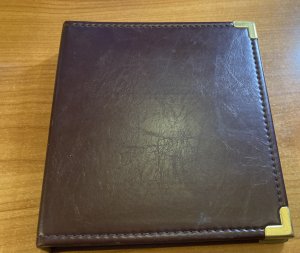
The address book was a gift I received when I graduated high school a couple of years ago. I wrote in it the addresses of high school friends and family members with whom I would correspond throughout high school and beyond (I still double-check my grandmother’s address in the book even though she has lived in the same place for a couple of years now.
The address book itself now contains more scratch-outs than confirmed addresses, and an Excel spreadsheet maintains the shrinking Christmas card list, so it’s a more accurate and useful representation of street addresses of people with whom I regularly (annually) correspond.
But I still put this address in my address book.
Which makes me think I might need to update the centerpiece of the Family Bible as well with wife and children’s names. Which seems fitting as they’re about to head out on their own.
As if these examples enough were not enough to indicate I might be approaching middle age, the wedding videos and photos themselves did.
And I guess I might as well embrace it. After all, it’s not like I’m getting any younger or getting any more sincerely interested in the concerns of the younger amongst us.
Well, gentle reader, it has taken me several years and several tries to get through this particular volume of The Giants of Philosophy series. As you might recall, I listened to several volumes in 2021 and 2022, including:
I mean, those are giants of philosophy, for the most part, and innovative thinkers who challenged the paradigm of thought in their time, whereas Dewey was just the guy who took Pragmatism and turned it into the seeds of elitist destruction we see around us, where the credentialed “experts” should be in charge and should help usher those of us who are lesser than they to an atheist, relativistic, collective future.
It takes a very special hobgoblin of a mind to take uncertainty in thought and wed it to the certainty that some of the elevated thinkers should actually run things because, uh, their uncertainty is more pragmatic than the common person. He denies any objective reality aside from the interaction of people with the environment in their circumstances, and somehow derives a “better” that can be applied somehow to different circumstances, environment, and people, because Dewey somehow in his voluminous writings says so.
So, yeah. Not only is it rather administrative in its scope, but…. Well, no, that’s a good way to put it: Dewey would be the patron saint of adminstrators had they a religion of their own, but no. I agreed most with this course when Charlton Heston said Dewey’s critics would say that he is….. And he is, and I do.
So if you’re making a time machine and want to go back and take care of Hitler, if it’s all right, I’d like to borrow it and take care of Dewey. Ah, but it would not work: The communist infusion into university thought was not only the work of Dewey, and turning him so that he got rich making a New England brewery would only have delayed where we are today.
Still, after finally finishing this particular two cassettes (Only two! Which averages out almost to one whole cassette a year for my listening!) leaves me with two takeaways.
First, My youngest son had to listen to part of this series a couple weeks back when we were on the road to a conference in Arkansas, and he said, “John Dewey” in the fashion that the kids said “John Cena” when that was a thing several years ago, and I will forever say John Dewey in that fashion.
Secondly: I have really enjoyed this entries in this series. I don’t remember where I bought them–probably the Friends of the Springfield-Greene Library Book Sale some year or another–but they’re quicker listens than a full audio course, and as I’ve mentioned, having Charlton Heston read them is something. The voice acting now reminds me of the 1990s videocassette Richard the Lionheart–as these cassettes have different vocal actors for different thinkers, critics, and inspirations–sorry, where did I first apply the em dash?–but it’s slightly less distracting on audio cassette. But if I run into other entries in this series, I will pick them up, although the closer the subjects are to the twentieth century, the longer it will take me to listen to them. Unless, of course, they have a couple of cassettes on Ayn Rand. But they won’t.
At any rate, I’m fond of the series, but not of this particular spit philosopher.
The Internet says it is a word based on a single usage of it on a blog somewhere, sometime, referring to making a compromise, not in the sense of a computer system security incident.
And now the AIs of the world are making it happen.
Ah, gentle reader, we have been very light with the movie reports here at MfBJN, and that’s for a good reason: I have actually watched the boxed set entitled Red Dwarf: The Complete Collection which my beautiful wife gave me for my birthday in 2011. Soon, though, it was an incomplete collection, as they made two movies and four more “series” (seasons) of the program all the way up to 2020.
As I have mentioned, the PBS station in St. Louis played an episode of this television program after Doctor Who on Sunday nights. So I recorded a couple of them by programming a videocassette recorder like the ancients did. The first two “series” (seasons, as we spell it in the United States) were released in 1988, so they would have been the ones I have on the old grainy videocassettes. Given that each series is only six episodes, I must have seen quite a percentage of them in those old days. Not long after I got the set of DVDs, I started watching them with my beautiful wife, but she did not care for the common insult of the show, smeghead, so she dropped. And when I got to the start of the third series and saw its abrupt shift in the opening and the different look to it, I shelved it for a decade. But I powered through it this time.
So, the setup: The Red Dwarf is a mining ship, and Dave Lister is the lowest technician on the ship. He smuggles a cat on board and, when it is discovered, he is put into a stasis field for the remainder of the voyage (and will be docked that pay). A radiation leak kills the crew except for Lister, and the computer (known as Holly) releases him three million years later when the radiation levels have cooled. Holly can also project a hologram of a single ship’s crewman, so he chooses Rimmer, Lister’s immediate superior officer, roommate, and foil. Additionally, the pregnant cat gave birth three million years ago, and her progeny evolved to a cat civilization in the ship’s hold, of which only a single representative, called, appropriately enough, Cat, remains. Eventually, they pick up a fifth main character, a service mechanoid named Kryten.
So that’s basically the show: Four or five people dealing with zany creatures they encounter, time rifts, and so on. The first two series were just a couple of sets, but the show’s budget increased over time, and the individual series kind of have themes. The Red Dwarf is stolen for a couple, so they’re pursuing its trail. Or nanobots have rebuilt the Red Dwarf, including the crew (this is the last series in the set). The characters are kind of types: Rimmer is the Flashman type, a blustery nincompoop; Lister is a lower class slob; Cat is a dumb dandy; Holly is a bit daft; Kryten is servile. The humor tends toward the zany situations in which the characters find themselves, the characters playing to their types, and the crazy verbal metaphors they come up with to describe circumstances and situations. It’s funny in spots.
The Wikipedia entry uses the term “retcon” to describe changes between the series, but that implies a continuity that the show itself does not expect or enforce. Kryten, for example, is a one-off character in series 2–the first episode, actually, and he does not appear again in Series II but is a regular character in Series III. In Series III, the original Holly is replaced by a Holly from an alternate universe they encountered in Series II, but the substitution is not explained. Some of the series end in cliffhangers which are sometimes explained quickly at the beginning of the next series–or not. The series that features them hunting for the Red Dwarf starts without showing the precipitating events. Sometimes it tries to explain things–like how they swap out Rimmer for Christine Kochanski in Series VI. So they’re comfortable with having some recurring characters/situations/themes, but they’re not tightly bound to what has gone before (and I understand that later series kind of throw out the last couple of series in this set).
So amusing overall and funny in spots, and I planned to be discouraged about the crew going on for a decade without changing or finding earth, but the different concepts and shifts from series to series kept it fresh.
However, I found binge-watching–and I watched two or three episodes most nights for several weeks–to be kind of difficult. It’s probably easier to enjoy a show like this in its original form–an episode a week, which keeps the repeated tropes from being too obvious.
I am not in a hurry right now to run out and buy the rest of the series. But if I found them at a library book sale for a buck each or in an antique mall for a couple of dollars, I would be tempted. And you all know I cannot resist that temptation, so perhaps the word I’m looking for is fut accompli. That is, a fait accompli in the future.
Apparently, its missile racks are retracted for urban operations camouflage. But I presume they’re there.
(Footnote: In a number of the later Pendleton titles, Mack Bolan drives one of these, somehow inconspicuously, to the hardsites he wants to hit. And no one seems to catch on that one of these was nearby during the climactic finales of each book.)
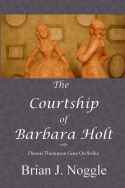
After reading a century-old copy of The Courtship of Miles Standish and Elizabeth, I quickly picked up another one of these old, old elementary school (!) textbooks. This one bears the copyright date of 1894 but is likely newer. Although it has an owner’s name penciled in, it’s less legible and would likely yield a less interesting account of the previous owner.
So: Oliver Goldsmith is most known for The Vicar of of Wakefield, but these poems are what really put him on the literary map right about the time of the British Transcontinental Civil War Revolutionary War (we won, we call it what we want).
“The Deserted Village” is a response to the industrial revolution and how the rural areas were depopulating as people moved to the cities for work. Wow, this was a thing before the 20th century? Of course it was; but by not reading these things in school any more, we don’t need that perspective about how some things, themes, and sentiments or concerns precede the solutions that salesmen and politicians would offer us today for our completely novel troubles. “The Traveller” is a, well, travelogue of someone visiting the continent and comparing the different places and their foreigners to England (which is clearly the best). A couple of shorter poems appear to fill out the thin (96 page) volume.
These poems and The Vicar of Wakefield represent the bulk of Goldsmith’s work (although he had a couple plays put on and a couple other novels). But he was lauded in his time. We have forgotten so many of the people who were big literary stars in their time.
The poems are easy to read. Long lines and end rhymes, attention to rhythm. Meant to be read aloud, perhaps to friends, but that’s not how the party people do it these days.
So, again, suddenly I am enjoying these century-old poem collections, so don’t be surprised to see me pick up another in the future. So many of the ones I have, though, are Longfellow, so I will try to pace them out.
On Saturday, as I mentioned, I went to a small town in southeast Missouri to attend my brother’s wedding.
As it was the first time that I’d seen him in quite a while, we exchanged Christmas presents for 2023, and he had a couple of milk crates with records in them. He said they were from our mother, but I thought that I had gotten all of her records already. When I started dusting them off and going through them, it became clear that most of the records came from someone else.
I mean, certainly some of them bear the sale tags with a G on them that indicated she’d placed them in the garage sales of the early century, but, again, most of them did not have it, and they were a mixed lot of old/small label gospel (the kind I thought I’d never own), 80s pop, and folk. I wonder if they were just other records that other people had put into the yard sale that were still in my mother’s garage when she passed away or perhaps they were records my aunt picked up before she passed away–given that they included some photos and art with a note written in our family friend Gloria’s hand, it could be any of the above.
So I dusted them off and here’s what the stack included:
Workers Together For Him by the Pentecostal Children’s Home. Not found on Discogs)
Birthday of a King / Christmas with Bob by Bob Harrington. $3.99
Bizet Carmen Suite by Fortuna Records. $19.99
To You With Love, Donny by Donny Osmond $.50)
Where Did Our Love Go? by the Supremes $1.99)
Honky Tonk Classics Volume 2 by Mike Di Napoli’s Trio $3.99)
Organ and Chims by Robert Rheims for the Whole Family At Christmas $12.00)
Poor Rich Man by Bud Chambers. The cover says he’s America’s Number One Song Writing Preacher. Not found on Discogs, but others of his are listed between $15 and $100
Looking for a City by Jimmy Swaggart. $1.68)
It Is No Secret by Stuart Hamblen $1.99
Bobby Rich Sings Your Requests. $4.99
The Best of Scripture in Song by David and Dale Garratt. $3.99
What’s Going On by Marvin Gaye (no cover). $0.34
Happy Holiday With, a Columbia collection (no cover).
Live at the Lighthouse by Elvin Jones (no cover). $10
Wheels of Fire in the Studio by Cream (no cover, and only one record from a two-record set).
Lonely Blue Boy by Jimmy Griggs (no cover). $3.46
La Familia by Kracker (no cover). $2.15
The Battle of New Orleans by Jimmie Driftwood (no cover). $12.00
You’re All I Need by Marvin Gaye and Tammi Terrell, a compilation (no cover). $7.32
Children’s Favorites by the Jingleheimers (no cover). $1.00
The Wilderness Road and Jimmie Driftwood. $2.85.
Mighty Clouds Alive by the Mighty Clouds of Joy. $3.50
Oh, Lovely Galilean by Wayne Baldridge. Not found on Discogs.
Happiness is Gladness by Gladness Jennings (no cover). $9.99
Sing Your Song, Jimmy by Jimmy Williams (no cover). Did not find on Discogs.
Don’t Let The Ship Sail Without Me by the Happy Gospel Four (no cover). Did not find on Discogs.
Gunfighter Ballads and Trail Songs by Marty Robbins. This copy does not have a garage sale sticker on it, so I don’t know if it’s the one from my youth, but I know we had a copy as my father played the record on Christmas. $1.98
I’ll Keep Holding On To Jesus by the Kenny Parker Trio. Not on Discogs, but other records sell from $3 to $25
The Lord’s Prayer by the Mormon Tabernacle Choir. $.16
Surfer Girl by the Beach Boys. $1
Dance, Dance, Dance by the Beach Boys. $2
Control by Janet Jackson. $.38
You’ll Never Walk Alone by Elvis. $.25
Elvis Sings Flaming Star by, well, Elvis. $.32
Elvis’ Christmas Album. This is the third or fourth copy we have at Nogglestead. $.50
The Muppet Movie Original Soundtrack Recording. This is the second or third copy we have at Nogglestead. $1.99
Hi In-fidelity by REO Speedwagon. $.54
The Nostalgic Voices and Sounds of Old Time Radio Vol. 2. $1.02
You Can’t Be True Dear… in the Ken Griffin Style by Charles Rand at the organ. $.99
Blue Hawaiian Waters by Harry Kaapuni and His Royal Polynesians. $1.50
This Is A Recording by Lily Tomlin. $.89
Little Things by Bobby Goldsboro. $.39
Country & Western Stars. $1.49
Johnny Horton Sings with a back side by Texas Slim & His Cowboys. $1.02
Save the Last Dance for Me by the DeFranco Family featuring Tony DeFranco. $1.45
The Brightest Stars of Christmas. $.69
This One’s For You by Barry Manilow. $.25
I Love You So Much It Hurts Me by Tennessee Ernie Ford. $.74
Lawrence Welk’s Ragtime Gal by Jo Ann Castle. $1.08
Go Honky Tonkin! by Maddox Bros.& Rose. $1.45
Our Best To You: Today’s Great Hits, Today’s Great Stars, a Columbia collection (no cover).
Greatest Hits The Fifth Dimension (no cover).
Unforgettable Oldies Volume II (no cover).
Greatest Hits Volume One by Roy Acuff (no cover)
Happy Holidays: The Music of Christmas Volume 2 (no cover)
Monkee Business by the Monkees, a photo disc from 1982. $9.25
Jerusalem by John Starnes.
Sing and Be Happy with Little Marcy. $5.00
Andy Presents: The Book of Matthew
The Little Drummer Boy featuring Don Janse and His 60 Voice Children’s Chorus, a Clark gas stations record.
Perry Como Sings Merry Christmas Music. This is the third or fourth or fifth copy of this record at Nogglestead.
40 Hour Week by Alabama.
The Osmonds Live
Colour by Numbers by Culture Club. A very nice cover. In middle school, I got a button of this cover out of a vending machine for a quarter and wore it to school to some teasing. Or as they would call it now, bullying.
Records by Foreigner, the greatest hits collection. I actually have this on cassette already–I bought it in college.
Blondes Have More Fun by Rod Stewart.
Dirty Dancing, the original soundtrack.
Disney’s Christmas Favorites.
Xanadu by Olivia Newton-John and Electric Light Orchestra. Again, the third or fourth copy at Nogglestead, but the cover is very nice.
Candyman, a Disney record.
Foot Loose and Fancy Free by Rod Stewart.
Gideon by Kenny Rogers.
Jeez, man, that’s over 70 new records. Some didn’t have sleeves; others were only in sleeves and not covers, so I will have to order another set of 12″ cardboard sleeves, too.
Additionally, I got two empty sleeves: Everything is Beautiful by Evie (sad to learn it was empty), This Is Another Day by Andraé Crouch And The Disciples, and No Trespassing and Other Stories for Children featuring Uncle Charlie and the Children’s Bible Hour Staff. I have not looked through all the records I have to ensure that the covers match the contents, but I might just have these sleeves. I have saved one or two others in the past when I was not scrupulous about checking the contents of the sleeves and either got a mismatched or empty sleeve. I don’t know what I’ll do with them. Perhaps recycle them as “cleaning the garage” (where the whole of the cleaning is recycling these sleeves.
At any rate, I am looking forward to listening to some of them. But I really, really need to build additional shelving now.
These brave adventurers gave their own lives to dig a burrow for the chthonic demon and lured it in with themselves as bait before completing the protective circle to trap it (and them) forever, saving the world, and authorities don’t recognize it for what it is and loose the demon again as part of their “investigation”? Or are they serving their Dark Lord the Molevolent?
Reading the article:
Meh, drugs. Never mind.
The world in my head is so much more interesting than reality.
Anachronomicon has a short post in a series on real banned books covering John Norman’s Gor novels.
Kulak mentions how Gorean communities for, erm, role-play sprang up. But Kulak does not mention, or probably know, that such communities violate at least one Internet Service Provider’s terms of service as late as 2021.
I told the story of how I first encountered Gor books back when I was actively dealing on Ebay and found a number of first and second printings for a quarter each and made quite the multiplier on them (I told the story, briefly, in my review of The Priest-Kings of Gor in 2006).
I later filled out a set of the first ten(?) at Patten Books back in the day, and I think I’m down to my last one or two (I read the eighth, Hunter of Gor in 2020). I think I only have one left on the to-read shelf along with Time Slave, a non-Gor book by Norman, which I have tried to pick up a time or two since I bought it in 2017.
So my brother got married (again) this weekend. We drove three hours to a small town in southeast Missouri where the bride has lived all her life and will live all the remainder of her life (likely) as they just bought a nice homestead with 25(!) acres of land.
I was not the best man this time around, just a groom’s man. Although I did not give a highlarious toast (probably more Steve Buscemi than Adam Sandler, if you know what I mean), I did use my power of quipping (probably inappropriately) to keep things light on what might have been a tense day. Jeez, I remember my wedding day a couple years ago, where I got lightheaded when I took my position at the front of the church, taking off my jacket and helping to put out the food at the reception because nobody else was doing it, and calling the same brother dickhead when he, a groom’s man, wanted to sit at the head table which had only room for the bride and groom and the best man +1, and man of honor +1.
So I hope I helped to alleviate some of that.
It was not a church wedding; the ceremony and reception were held in a small hall rented from an old church (or maybe just an old church turned into a rental hall).
The best bits:
Fifteen minutes or so before the ceremony was scheduled to start, I told the best man, my nephew, that in three minutes, I was going to come up to him and loudly say, “I don’t have the rings!”
About fifteen minutes later, I came up to him and said, “I don’t have the rings!”
After the ceremony, I came up to him and said, “You don’t have the rings?”
The bride’s party arrived just at the time scheduled for pictures; prior to that, my brother ran home for something, so it was just the groom’s men at the facility, leading to speculation that one or the other of them made a break for it. We even speculated what it would be like if both of them decided to bolt only to meet at the airport. What a rom-com that would make.
The itinerant preacher was late, leading to speculation that maybe he made a run to the airport.
After the recessional at the end, we all ended up crowded on the front stoop of the hall. “The rehearsal went well,” I said. “When do we do it for real?”
Et cetera.
Jeez, I hope I didn’t make it worse with my japery. But, somehow, I fear I might have.
And, unfortunately, in the same circumstances, I will jape again.



 I picked up this book, another
  Ah, gentle reader. You are forgiven if you think that I’ve not been reading much these days, but it’s sort of true. I’ve divided my evenings between watching DVD sets that I bought twenty years ago (like


 Well, gentle reader, it has taken me several years and several tries to get through this particular volume of The Giants of Philosophy series. As you might recall, I listened to several volumes in 2021 and 2022, including:
 Ah, gentle reader, we have been very light with the movie reports here at MfBJN, and that’s for a good reason: I have actually watched the boxed set entitled Red Dwarf: The Complete Collection which my beautiful wife gave me for my birthday
  After reading a century-old copy of