Which has two different facts that seem to contradict each other in the same story.
First:
Rackstraw completed a 15-month tour in Vietnam in 1970 with 50 decorations, including dozens of air medals. He was drummed out of the military the following year after one too many incidents of misconduct.
That sounds like insubordination or disrespecting an officer or something.
Then:
In 1991, he earned an economics degree from the University of San Francisco — two decades after getting kicked out of the Army for faking college transcripts.
Which sounds like an administrative thing.
Maybe the last incident of misconduct was faking transcripts? Perhaps. But to the layman, it looks like two different things. Or maybe just the lazyman who needs a morning blog post.
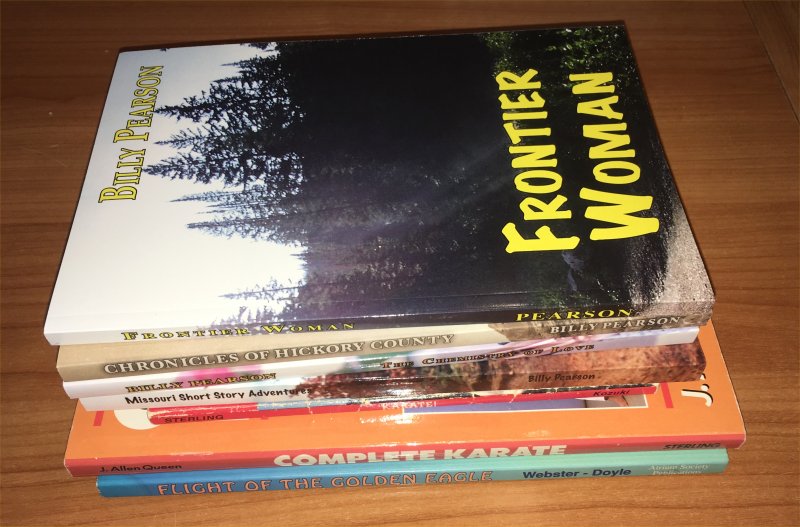
I bought this book at Calvin’s Books at the beginning of the summer, and I have set as a goal to read all five of those books this year. I know, it’s one of my twee goals, but it might represent the only time in the last couple of years that I have read all the books I bought at once within the year I bought them.
At any rate, I rage-read this book. It angered me quite a bit. The author says:
When McCandless turned up dead in Alaska and the perplexing circumstances of his demise were reported in the news media, many people concluded that the boy must have been mentally disturbed. The article about McCandless in Outside generated a large volume of mail and not a few of the letters heaped opprobium on McCandless–and on me, as well, the author of the story, for glorifying what some thought was a foolish, pointless death.
Which is exactly how I feel (and I even know how to pronounce opprobrium these days). This is a hagiography of a well-to-do young man from a messed-up family who gave up his comfortable lifestyle after college to wander the country as a vagabond and who had too much confidence in his own abilities, which led to a poor decision to live off the land in Alaska that proved fatal. The author presents this kid as a pilgrim, as an ascetic, and as perhaps as an example to emulate–without the fatal consequences, of course.
I have to wonder who made this book a National Bestseller–as the cover touts. I have to expect that it was done by people who had that sort of wanderlust and sense of invincibility who did something like it and survived (like the author) or people who wanted to do something like it and think they would have done better (likely not). I don’t know. I was four years younger than the subject of the book, so the book is set and is published around my formative years, too. Perhaps there’s something in the 1990s zeitgeist that supports the sort of behavior that no longer exists–or perhaps the young men who would have done something like this, the cross-country car trip with no money or the desire to live off the land (but not in quite as hospitable environment as Alaska) now are in the basement playing video games or covering their faces and taking to the street to start a riot.
The author expands upon his original article (I assume, since these sections seem to be grafted onto the narrative) by adding stories of other people who have wandered out into the wilderness in Alaska and a fellow who wandered into the desert in the 1930s. The author also includes a story about one of his individual expeditions that ended in failure but not in death. He visits the abandoned bus that served as the subject’s base camp and where he died. And he appends an artificial coda of helicoptering the parents in to visit the bus as well.
At any rate, yeah, the subject is not an exemplar of anything positive. He was a poor (rich), misguided young man. I didn’t relate to him much–we both had newspaper columns in the college rag (which means the names Biden and Trump both appear in this book from 23 years ago). He read The Death of Ivan Ilyich. I don’t like to speak negatively of the dead or speak to a hurtful event in a family, but this book is a misguided opposite of that.
I think the book might have triggered a bit of latent classism in me, as I couldn’t think of many in my cohort doing anything like this, and I consider mountain climbing as a rich kid’s game. But I was urban poor and then rural poor in the Midwest. Maybe rural and urban poor in the mountains do free climbing for fun, but they certainly cannot afford a lot of gear and to travel for their hobby.
I must have mellowed; although this book is a paperback, I didn’t throw it at any point. Although I did curse at it a bit. It took me over a week to go through 200 pages. But I’m glad to be done with it.
And as to my twee goal: I still have a Barbara Ehrenreich book to go through. In hardback. So that might block my goal of reading these five books this year.
Although I’ve never bitten the head off of one, so I’m not properly initiated.
I remember going one night with my father, where he and his buddies waded out into Lake Michigan with what seemed like a finer meshed tennis net, dragging a bunch of the small fish onto the beach. I mean, they were tiny, enough that my brother and I could easily wrap our elementary school fists around them.
My father tried to convince us that you weren’t a real smelt fisherman unless you bit the head off of one. I don’t know if that’s an actual smelt fishing tradition, or if my father was joking with us, but my brother actually did bite the head off of one. So in our family, he’s that one kid. Or maybe my father was.
Of course, I also remember from that trip putting my finger on the top of a lantern and burning it until it blistered. So I cannot make it out like I’m the smart brother.
That the Dog returns to his Vomit and the Sow returns to her Mire,
And the burnt Fool’s bandaged finger goes wabbling back to the Fire;
Years later, at my grandfather’s cabin in northern Michigan, I remember holding a completed sparkler and watching its metal turn from red to carbon color and touching it to see if it was cool. Which is was not.
Definitely not the smart brother.
(But, yes, I eventually learned the meaning of “hot,” thanks.)
So I have been messing around with Git and Github since it’s the versioning software all the kids use, and I’ve found the pull and push nomenclature, not to mention the order of operations, a little strange to someone used to Visual SourceSafe or Subversion. So I downloaded a picture of the Pushmi-pullyu from the film Doctor Dolittle, the original one with Rex Harrison and not the Eddie Murphy remake (although I have seen neither–but I read the book in middle school).
I was going to make a gag about it being the cover of my new book about Git.
But. Or, more precisely, butt another opportunity for mirth presented itself.
For Christmas this year or the last, we gave a friend of ours a set of cat butt refrigerator magnets for Christmas because she has cats.
So this week, I’m helping take care of her cats while she’s out of town, and one of my boys spots the magnets and puts them together in some sort of eldritch unholy alliance you would find in Lovecraft:
I said to my mother-in-law, “A pussy-pullyu.”
She didn’t get it.
So I snapped a picture of the monstrosities and said, “I’ll put it on my blog. Someone will get it.”
You, gentle reader, now have the context of the pun and why it came so easily to me.
Get it?
Eh, who cares. I’m just doing the for the mad search hits for whatever kind of sexual trick the pun means it the seedy seamy underbelly of humanity that is our Internet.
So Mr. Hill posts a story about Fiona Apple, and I’m about to leave a comment that I can hear the first song from her album because my office mate at the time played it all the time.
But I wasn’t sure which album it was: Tidal or When the Pawn…. So I did some research, namely, hitting Wikipedia to see which album it’s on.
I remember that I learned the song is called “Not an Addict”, which was a bit of a downer; I thought she was singing “I’m automatic,” not “I’m not an addict.”
But what I have learned today is that the she who was singing was not Fiona Apple but Gert Bettens of K’s Choice.
It’s entirely possible that we discussed that she sounded a little like Fiona Apple but was not, in fact, Fiona Apple. But that would have been twenty-some years ago, and I cannot be expected to remember that conversation.
I’m not even sure I’m going to remember that this is a K’s Choice song instead of a Fiona Apple song. Or, if my tricky memory is feeling clever, perhaps I will think it’s a song by Vitamin K, confusing it with Vitamin C‘s song “Graduation (Friends Forever)” from the same era.
To those of you who are not from St. Louis and do not follow baseball, Yadier Molina has played catcher for the Cardinals for sixteen years and is considered to be one of the best all time.
I explain this to you because most of my readers are not from St. Louis.
It looks like the Internet is having a problem again and many images on Web sites and Facebook are not loading, so I’m just going to share this image on Facebook a bunch:
Facebook is very cautious. It thinks this is German:
Translated to English by Facebook, this text says:
That, as you know, gentle reader who probably also delves into eldritch tomes by the mad Arab, is not the real translation, which is:
In his house at R’lyeh, dread Cthulhu waits dreaming.
I was finta say that Facebook is being overly cautious here in hiding the meaning of unholy phrases, and that Big Tech is a conspiracy to keep this knowledge from the masses, and that no dictionary sites offer pronunciations for these words to help those who’ve only read them, but….
never mind.
Every time you watch that video, you strengthen the cult magic that seeks to raise the Great Old One.
The producer knocked on the trailer door, needing Vernon Davis on the set. It was time for his scene, one rich with dialogue. Davis, though, needed another minute. He wasn’t done preparing.
There’s a reason Davis is entering his 14th season and remains the Washington Redskins’ No. 2 tight end at age 35. There’s also a reason he is receiving praise for what he hopes will be his post-NFL career — acting. It’s preparation.
On the set of “Hell on the Border” this January day, it meant telling the film’s producer he needed to get into character.
“When I heard that, I was so excited, like, ‘Oh, my god, this guy really came to do this movie and is prepared,'” producer Henry Penzi said. “He had a big monologue. I read it and said, ‘Oh, god, I hope he can pull it off.’ I never told him that because I didn’t want to scare anyone.”
Time will tell if he’s another Marlin Olsen or Alex Karras or merely another Brian Bosworth.
How to Talk So Kids Will Listen & Listen So Kids Will Talk by Adele Faber and Elaine Mazlish
Life Among the Savages by Shirley Jackson
The Joy Luck Club by Amy Tan
The Sportswriter by Richard Ford
What Alice Forgot by Liane Moriarty
The Diving Bell and the Butterfly by Jean-Dominique Bauby
Rabbit, Run by John Updike
The Woman Upstairs by Claire Messud
Their Eyes Were Watching God by Zora Neale Hurston
The Goldfinch by Donna Tartt
Where’d You Go, Bernadette by Maria Semple
Salvage the Bones by Jesmyn Ward
Stretching by Bob Anderson
Bossypants by Tina Fey
Walden by Henry David Thoreau
Fifty Shades of Grey by E.L. James
Who Do You Think You Are? by Alice Munro
Men Without Women by Haruki Murakami
A Man Called Ove by Fredrik Backman
The Denial of Death by Ernest Becker
Olive Kitteridge by Elizabeth Strout
When Things Fall Apart by Pema Chödrön
Remains of the Day by Kazuo Ishiguro
The Plague of Doves by Louise Erdrich
Dynamic Aging by Katy Bowman
The Five Years Before You Retire by Emily Guy Birken
Fear of Dying by Erica Jong
Major Pettigrew’s Last Stand by Helen Simonson
Our Souls at Night by Kent Haruf
Old in Art School by Nell Painter
65 Things to Do When You Retire edited by Mark Evan Chimsky
The Outlander series by Diana Gabaldon
Don Quixote by Miguel de Cervantes
The Year of Magical Thinking by Joan Didion
I Remember Nothing by Nora Ephron
Master Class: Living Longer, Stronger, and Happier by Peter Spiers
Midnight’s Children by Salman Rushdie
Love in the Time of Cholera by Gabriel García Márquez
The Years of Lyndon Johnson four volumes, by Robert Caro
Paris in the Present Tense by Mark Helprin
The History of Love by Nicole Krauss
Women Rowing North by Mary Pipher
Gilead by Marilynne Robinson
Charlotte’s Web by E.B. White
The Coming of Age by Simone de Beauvoir
Coming Into Eighty: Poems by May Sarton
Devotions by Mary Oliver
The Summer of a Dormouse by John Mortimer
All the thrillers and mysteries
The Last Unknowns: Deep, Elegant, Profound Unanswered Questions About the Universe, the Mind, the Future of Civilization, and the Meaning of Life edited by John Brockman
Ravelstein by Saul Bellow
Old Filth by Jane Gardam
King Lear by William Shakespeare
Nearing Ninety: And Other Comedies of Late Life by Judith Viorst
A Carnival of Losses: Notes Nearing 90 by Donald Hall
Beachcombing for a Shipwrecked God by Joe Coomer
Selected Poems: 1988-2013 by Seamus Heaney
Nothing to be Frightened Of by Julian Barnes
Sapiens by Yuval Harari
This Chair Rocks: A Manifesto Against Ageism by Ashton Applewhite
The Neapolitan novels by Elena Ferrante
Somewhere Towards the End by Diana Athill
My Own Two Feet by Beverly Cleary
Life Is So Good by George Dawson and Richard Glaubman
Little Boy by Lawrence Ferlinghetti
Sailor and Fiddler: Reflections of a 100-Year-Old Author by Herman Wouk
Of the books that I don’t have colored in the list above, I don’t expect that I’ll even consider reading. I mean, most of the YA fiction listed above that I haven’t read is message-oriented, as are many of the other novels. I might read Gilead but that’s only because I gave a copy to my beautiful wife and her mother for Christmas a couple years ago, so there’s bound to be one or more floating around by the end of my retirement.
Fun fact: Rabbit, Run and Stretching are both at the chairside book accumulation point. I’ve tried to read Rabbit, Run, but I’ve found it odious. And I got Stretching on the indirect advice of my editor. For years, I’ve meant to take up stretching, but I haven’t yet.
At any rate, make of it what you will, the intersection of my reading habits with that of a photographer.
The longest-running Chevelle show in the country is coming back to its roots in Springfield this week.
The 32nd Midwest Chevelle Regional Car Show will be held from 8 a.m. to 5 p.m. Friday and Saturday at the Oasis Hotel and Convention Center, 2546 N. Glenstone — the very site where the show got its start, back when the property was a Howard Johnson Hotel.
So, sometimes, I’ll use a type of speech that I’ll just call an Elaborated Pronoun.
You know, that as a pronoun generally relates to something visible or is otherwise fresh in mind; I want that.
However, I have been known to elaborate that by adding an antecedent bad oscar.
It came out when I was talking about fixing something for one of my boys, and I referred to the it as that bad oscar.
The Urban Dictionary says bad Oscar is slang for a hot dog or cheap sandwich. That’s not where I got it, though.
Back when I was at the university, one of my closest friends lived with his mother, who was a woman kept by a fellow who had a son of his own (kind of like a very abbreviated Brady Bunch). My friend considered the young man, who as sixteen or seventeen at the time, to be his half-brother, so he hung around with us from time to time; he was even the designated driver on my 21st birthday, when we went to a bowling alley and I had a glass of Miller and a sloe gin and Seven before the moonlight bowling.
For some reason, this kid used that phrase to refer to things that were not sandwiches of any sort.
Twenty-seven years later, and I still say it from time to time. And that “kid” is over forty somewhere now. No word on whether he continues to use it.
That was mildly interesting, so I set it to one side. I bought my present Lexus RX-mobile* from their used-car lot, with exactly one key for it; maybe they found the others?
You know, when I traded my old pickup truck for an SUV last year, we ended up with an older Lexus with a then-luxe interior including a cassette deck. It came with two keys; when we got into the car, I gave the key with the fob (lock/unlock/panic buttons) to my beautiful wife, put the key without the buttons on my keyring, put the key in the ignition, turned, and…
Nothing.
I could not start the vehicle, and after a few tries, I started to get angry. I thought about the lemon law, storming in and demanding my old truck back and whatnot, but she (my beautiful wife, not Roberta X.) was really sold on the vehicle. The salesman came out with obviously artificial regret, but this particular vehicle only came with one key that could start the car–one with the integrated chip–and one that could unlock the doors, maybe. We could order another key with an integrated chip for a couple hundred dollars.
Which we did, because she was very taken with the vehicle, and I spoil her.
But I’ve added another thing to check when buying a used vehicle.
Between this and buying houses, I’ll know all the gotchas to look for after I’ve bought my last car or house. Although it’s probable that I’m too optimistic in thinking I can ever know all the tricks.
When I read the preceding Little House book, On the Banks of Plum Creekin March, I predicted I’d read the next volume (this one) by summer. I missed that prediction by a couple of days.
You know, as the series progresses, the narrator (“Laura Ingalls,” a lightly fictionalized version of the author) becomes more sophisticated. In this book, she’s on the edge of thirteen. At the onset, the family is still in the house on Plum Creek. The mother (Caroline), Mary, and Carrie suffer from scarlet fever (which has made Mary blind). Relatives from Wisconsin pass through; one of the uncles has a job for the railroad running a grading team at the edge of the railroad construction. The uncle offers Charles a job running the company store with a salary and everything, and Charles takes it. So he goes on to join the railroad workers in North Dakota, and the ladies are to join them when they recover fully.
They get to ride on a train, and Laura has been tasked with describing the scenery to Mary as they pass. They meet with the workers’ camp as it’s being dismantled to move to the shores of Silver Lake, and Laura reconnects with her cousin Lena. The family moves to and they arrive at the shore of Silver Lake before the railroad camp arrives to meet them.
The book explores the environs around Silver Lake. Charles hopes to stake a claim to a homestead, and they find a spot. When the construction workers finish for the year, the camp disbands in the autumn, but the Ingalls get to stay on in a finely constructed and comported home used by the surveyors. When spring comes, a rush of homesteaders appear, and it’s only by the intercession of a previous acquaintance that allows Ingalls to beat some competitors to the claim office to ensure he gets the patch he wants. Then he stakes a claim and builds a building in the suddenly developing town of De Smet, which is constructed seemingly overnight.
As I mentioned, the book’s narrator is more sophisticated; we see some indications, as we did in On the Banks of Plum Creek, that Charles Ingalls is a bit of a dreamer, willing to give up what he has with a chance at something better (which does not always work as planned). Caroline is not so much a “Yes, Charles,” believing unalloyed that everything he does is the best possible decision–there’s a little resignation and acceptance demonstrated. And the stories are moving from the rural/wilderness to the urban landscape. With the next books, they’ll be living outside of town (kind of like in the television show), and I expect that the stories will be more centered on small town life and farming. So they’ll come to align with the stories from John D. Fitzgerald (The Great Brain series) perhaps.
At any rate, I’m still enjoying the series, and they’re quick enough reads when I am trying to pad my annual stats so I don’t have to resort to coloring books (given that this is the 56th book I’ve read this year, I think I’m in good shape). I don’t have the next volumes in my library, so I guess I’ll suspend reading them until such time as I find them on the old childrens’ books shelves (technically, not my to-read shelves) where I collected books I thought my boys might like to read–but they didn’t. In their defense, I got most of them from my aunt when I got Captain’s Courageous, and I didn’t read them either. So maybe I should count them as to-read shelves since it took me almost two years to read Captain’s Courageous, and I’m apparently not above reading children’s books now.
Actually, it’s not even on the fishing fishing spectrum: Magnet fishing.
Some folks in southern Wisconsin find themselves facing a magnetic attraction to the region’s hidden heavy metal scene.
They have taken up what’s known as magnet fishing, a hobby that — measured in terms of social media — is all the rage in Europe but is just now becoming a pastime in the American Midwest.
The hobby consists of attaching a powerful magnet to a rope, then tossing the magnet into a waterway. Once the magnet hits bottom, you drag it until it locks onto something metal. Then you haul the item to the surface.
Sometimes the result is treasure, most of the time it’s junk, and sometimes what you haul to the surface is just plain weird.
As you might recall, gentle reader, I read a little about being a “treasure hunter” back in 2011 when I had to get a metal detector to find a part for my garden tiller, but I never really got into the hobby mostly because there are a lot of rules and laws about where you can and cannot use one.
Perhaps I should jump into this hobby and spend the $100 for a magnet and kit before I discover rules that would preclude me from doing it. After all, who owns the middle of the river or a lake? (Someone, and if you find something really good, they’ll want it.)
This book is the bread and butter of 1970s and 1980s midlist genre fiction. It’s toward the sixth book of an eight book series where the seventh and eighth books come at a gap of seven and thirteen years when the first six were within a span of thirteen years. The series character, Albert Samson, is a throwback of a private invesigator who is a bit of a cipher, a guy running around talking to people and taking notes and figuring things out. It might even have been a throwback in the 1980s, actually, since the likes of Robert Crais and Robert B. Parker were writing more vivid, personality-driven detective thrillers.
At any rate, Al Samson is hired by a rich banking family after the wife discovers, in the course of applying for a passport, that her birth certificate is a fake. They want him to look into it and find out why. Meanwhile, a man in a fancy apartment offers to retain him full time indefinitely in a nebulous assignment. During his investigation, he discovers that the woman was raised by an adopted family, and that the birth mother came into some money, and then that the birth mother was a Depression-era singer with a child out of wedlock who then married a society boy and shot him one night. She was acquited in the trial and then disappeared, so the detective has to find out where she is, if she’s still alive.
So the book features the tangled plot of a well-to-do family and layers of deception in the past. Like I said, a throwback. The kind of thing I thought I’d write.
Not a bad read; short, at the 180 page mark of the old timey genre fiction. I wouldn’t mind reading more of the series in time, but to be honest, I probably won’t remember the author’s name to look for more in the line. When my beautiful wife asked me late last week what I was reading, I couldn’t remember the author’s name or book title; all I could remember is that it’s an old school Indianapolis PI.
So I went out for a run last night, which makes it sound like I’m a runner, which I am not. I am not the sort of person who’ll take off from my driveway and go for a little run, mostly because I don’t really like to run and also because I live in the country, and a run from my house is likely to include near-misses by trucks on two-lane highway-speed farm roads and the threat of loose dogs of dangerous size.
I mean, I did do this, once, when I was in college and under the influence of Spenser novels, but I didn’t like running then, either, so I only ran around the neighborhood in northwest Milwaukee once even though I was impressed when my military friends would come back and run to the mall and back because it was only ten miles.
At any rate, my boys’ cross country coach tries to keep his kids in shape by holding voluntary fun runs twice a week in the summer, and I try to take them as often as possible because, for some reason, it seems that every year my exercise goes to hell after the Y Not Tri, and this year is no exception. I end up about a month away from the Republic, Missouri, Tiger Triathlon wondering how I’m going to get into shape enough to endure it.
So when I take my boys to the fun run, I try to get in a little running on my own. Last night, we went to Sequiota Park, which has a pretty straight line trail leading out of it north and south. If you run north out of the park, though, you run across a road where the trail walkers, runners, and bikers have a stop sign.
Lacuna Street
Which probably suggests some Lacuna Coil on the running playlist.
Or it would if I used Spotify or something. I don’t actually own any Lacuna Coil.
But perhaps you’ll see it on one of my musical balance posts forthcoming.
How was the run? you might ask if you’re interested in that sort of thing. 1.8 miles in 18 minutes, keeping with my base pace of about 10 minutes per mile. I’d like to see that go up, but you know what I’d have to do to get better? Run more.
“Is that Jordan Binnington?” my twelve-year-old asked.
“It’s a signed limited edition print by an artist I know in a series of 200. How much do you think it’s worth?”
“$1000,” the twelve-year-old said.
“$200,” the eleven-year-old said.
It’s only 20 bucks at his Web site, and you’ll want to get one before they’re gone, because if you wait until my estate sale, the price will have gone up dramatically.
It’s funny; “an artist I know” means “a guy who worked for a guy who sublet from a place where I worked thirteen years ago.” Matt is also second cousin once removed from Al Hirschfeld, the celebrated caricaturist from New York (according to this piece in the New York Times, but Matt’s Web site doesn’t mention the familial relationship).
So I “know” Matt less than I do the comic book artist in St. Louis; I met them both long ago and am friends with them on Facebook, but that’s what I’ve got as the equivalent of knowing everyone on the block like a noir detective since I live in the country and the other houses are far, far away.
So I’m watching the video for Herb Alpert’s 1987 hit, “Diamonds”, from his album Keep Your Eye On Me which is the only Herb Alpert album I own on cassette (which is okay, because I have a cassette player in my new-to-me truck and get to listen to the album all the time).
At any rate, the track not only features Janet Jackson, but the story of it is set at a dance club of the 1980s:
So I got to thinking, “How prevalent was the dance club culture, actually?” I mean, if you watch the movies and whatnot, a lot of scenes take place at clubs, but I didn’t go to clubs a whole lot when I was young. I am pretty sure I can count them on one hand:
By George in Columbia, Missouri, when I was dating this hot chick in the area who loved to go there and dance.
Excalibur in Collinsville, Illinois, where I took said hot chick because it was the only dance club I really knew because they advertised heavily on the radio.
Fallout, a gay dance club that a friend (not that kind of friend) took me to in college, perhaps to make me uncomfortable. But I didn’t get hit on; everyone could see by my lack of dancing prowess that I was straight.
I was always more of a music festival kind of guy, being a native son of Milwaukee.
So I really cannot judge based on my experience how prevalent clubs were. In my coffee house days, whenever I hung out late at the Grind coffee shop in the fashionable Central West End, a lot of the people there would decide to go to Velvet, a club down on Washington. I never did though, as it had a dress code, and I attired myself pretty much in dark jeans and sneakers in my pre-going Grant days. But the people hanging around at the Grind included a lot of college students, many of foreign birth, and au pairs. So I don’t know how that segment of the population counts.
It’s just as well; I’m not very good at dancing. Most likely because I’m very self-conscious.
I have, however, been to music clubs, with seating to enjoy music.
Yoshi’s San Francisco which I went to because it was Yoshi’s, and we saw the Gospel Gators, a local college’s gospel choir.
The Blue Note in Columbia, MO, to see one or more folk acts favored by that hot chick who became my beautiful wife even though I cannot dance.
There are probably a couple more if I really plumb the depths of my memory.
Of all of the ones I listed, only the Blue Note and, apparently, Excalibur are still around. Coupled with yesterday’s post about poetry slam in St. Louis, and suddenly I realize how old I’m getting.
It also doesn’t answer a question I often have about how different the depictions of life and youth in culture, even that of the time or the new retro nostalgia costume dramas, vary simply from my life or do they vary from the experience of the majority of my generation? I suppose I could ask someone my age if I get to talking to them.