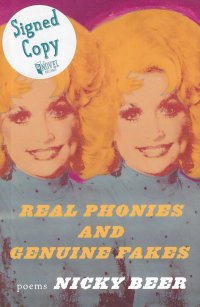
 I bouught this book last week at the Novel Neighbor in Old Trees, Missouri, when I traveled to St. Louis (the actual city, gentle reader, not The St. Louis Area which is safer and saner). The Novel Neighbor is not my favorite St. Louis area bookstore–it was not there when I lived in Old Trees, and most of the book stores I knew from that era but fourteen years ago are gone now and new ones, like the Novel Neighbor and the new Webster Groves Book Shop, have spring up. The Novel Neighbor is a bit more progressively themed, so I prefer the Webster Groves Book Shop because it has a better local interest/local authors section. But I stopped at the Novel Neighbor first since it was closer to my hotel only to discover that the Webster Groves Book Shop closed at 4pm–and my stop at the Novel Neighbor put me past that time. Ah, well.
At the Novel Neighbor, I stopped by the poetry section, and this volume, a signed copy, faced out, so I picked it up and flipped it open. The first poem I encountered was “Marlene Dietrich Plays Her Musical Saw For The Troops, 1944”. As you might know, gentle reader, I am a sucker for a good musical saw.
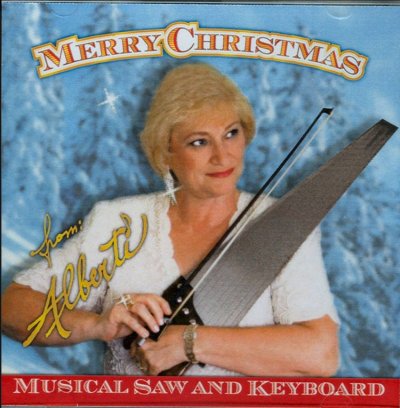
(Full disclosure: Alberti is a friend of mine–she is the mother-in-law of my last best friend who has been dead, what, seven years now? But she has been a resident of Springfield for a long time, and when we all had dinner at her home more than seven years ago, she actually pulled out a saw and played it for us along with piano and flute duets with her daughter, and Alberti pointed out that to play a saw, you want an older saw, not one you can buy at a hardware store now with a hole in it to hang it up because that alters the sound.)
Wait, where was I? Oh, yes, buying this book. I flipped through a couple of other books on the progressively themed poetry shelf, but nothing appealed to me more than this book, so it’s what I bought. And it’s the only thing I bought that Wednesday afternoon, so that’s the reason you did not see a Good Book Hunting post from that time, gentle reader. I read most of the book the next day in a series of hospital waiting rooms and polished it off when I got home, and…. I liked it.
Now, to be honest, the first poem is “Drag Day at Dollywood”, and something in the next couple of poems made me wonder, How progressive is this poet? So I flipped to the back of the book, to the About the Author bit, and the author identifies herself as a bi/queer writer. The poet identifies herself thus first, which is unfortunate, as the she is a poet first and foremost.
I mean, the poems do include some references to gender/sexuality in the “bi/queer” sense, but thematically, it fits into questions of identity: Who am I? Is there something wrong with me? The poems question these themes very well outside of the politicized context of bi/queer/gender/sexuality.
I mean, the lines are long enough to develop thoughts, images, and metaphors (although I’m not sure about the line breaks). The poet, get this, uses evocative language and imagery to initiate a response in the reader instead of just declarative statements to tell the reader what’s on the poet’s mind.
Maybe I need to read better poetry than the grandmother poetry or the bad chapbooks I read, but this poet should be offended if I compare her to Rupi Kaur or Pierre Alex Jeanty, two other 21st century poets I’ve read recently. So I won’t. Ach, I even had a thought–this poet might be better than I am.
But she’s no Edna St. Vincent Millay. None of us are, although maybe Neo comes close.
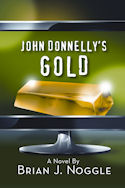
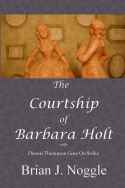
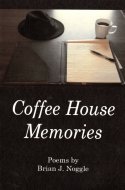

 This would turn out to be the last of the books I read for the
 I picked up this film on one of my more-recent (within three years, “recently” could mean) trips to the antique malls or something. As you know, gentle reader, I am picking up DVDs and VHS cassettes at a bit of an accelerated pace as I’ve come to recognize that they’ll soon be obsolete and absent in the wild, or more likely, expensive. As this film was atop the stereo and other cabinet by the entertainment center, I know that I picked it up recently (the ones in the stereo cabinet repurposed to my to-watch shelves in the early part of the century are old acquisitions). And at Nogglestead, we have a bit of a LIFO (last in, first out) policy on books and other media. Well, I do. Because when I acquire it, I am eager to watch it, but that eagerness fades as time passes (which is why we have entire sets of television series in the stereo cabinet). Just so you understand why I am watching this “new” film which I bought sometime in the past couple of years even though it’s only fourteen years old now.


 It’s been a while since I listened to most or perhaps all of this course. My beautiful wife discovered that the DVD player in our old, but newish to us, truck would “play” DVDs, but when it played them, it would not display the video on the new-then-fangled touchscreen video control. Instead, it would play the audio. Which opened us up to “listening” to DVD courses while driving. Except that the track listing was not as straight-forward as actual CDs. The track listing includes menus you cannot see, titles and whatnot, and other things. So I listened to this course in May and June, culminating in our trip to Wisconsin. But somewhere on the trip, we reached a point where we were retreading the same ground, hearing the same course again, so either we got the discs out of order or mangled returning to our place on the last lecture or three. So we removed it from the car’s audio system and went onto the next course. And then we didn’t drive anywhere of consequence. Given that my oldest son is old enough to drive he and his brother to school, and the round trip in the car is no longer an hour and a half per day, who knows when I will finish another course?
 The
 The
 The