2 He maketh me to lie down in green pastures: he leadeth me beside the still waters.
3 He restoreth my soul: he leadeth me in the paths of righteousness for his name’s sake.
4 Yea, though I walk through the valley of the shadow of death, I will fear no evil: for thou art with me; thy rod and thy staff they comfort me.
5 Thou preparest a table before me in the presence of mine enemies: thou anointest my head with oil; my cup runneth over.
6 Surely goodness and mercy shall follow me all the days of my life: and I will dwell in the house of the Lord for ever.
Although, to be honest, it’s not directly “”So this is ‘over capacity’. How wonderful!” But it’s close.
Not cited: All those business people and MBAs who think that too much traffic is a good thing because that’s a lot of customers and brand loyalty who won’t immediately abandon you for TheOtherGuyzWidgetz.com which is still operational. Also, their solution to the problem is to tell someone else to solve the problem, and that seems rather easy. Especially when they say that and try to convince the underlings that that moisture they feel is not rain, but anointing oil.
I bought this booka year ago in Florida. As I was browsing my bookshelves, I told myself I was in the mood for some military sci-fi. I’ve tried some before: I picked up something by Robert Frezza, but I put it down not long into it; I tried some of David Drake’s Hammer’s Slammers stories, but also put them aside. It looks as though military science fiction is not going to be my genre of choice.
This particular volume did not dispel me of that notion.
Wait a minute, didn’t I just get published in an anthology of military science fiction? Well, yes, which explains why I became interested in reading some of it. Because I’ve got a plot in mind that would take the conceit of my poem and turn it into a novel. So I wanted to do some research into the genre to see what it’s like and whatnot. Which is why I read this book.
This book, as the link below indicates, is volume 6 in a series. So immediately I’m dropped into a world with a whole back story to it. Whereas I’ve complained previously about series business taking over books in a series, it’s not so much the case in this book. However, there is a whole world/universe/mythos that has evolved and been explained in hundreds of pages prior where that information gets stuffed into a book as exposition. As it appears here. Perhaps it would be better to have been more lightly alluded to since much of the exposition doesn’t directly relate to the plot.
The plot: A deep reconnaissance team is sent to a distant planet to investigate what might be an enemy base. New to the team is an alien from a race that has manipulated mankind in the past, and the other team members don’t trust him. However, they’ll need his extra sensory perception abilities to succeed. When they get there, after their snoop-n-poop (as Richard Marcinko would put it), they find an ancient alien artifact worth slightly less than a Powerball ticket. At which point, the team’s sniper kills most of the rest of the team to steal the artifact, but the alien takes it before he can. And suddenly it’s a cat-and-mouse game as they try to reach the extraction point without getting shot by each other.
That’s the plot. That’s what the book flap says when I read it wondering what the point of the book was.
Because the plot doesn’t really start until about page 130 of about 300. Beforehand, we get a mission briefing, a training exercise, a night on the town to left off some steam and get laid, a ride to the planet, and a long walk to the alien base. The book is rich in detail. How much detail? It spends four pages talking about how the team crosses a river. Then most of them die and the chase is on.
Even then, much of the exciting chase is spent shifting between the characters viewpoints as each expresses internally how he cannot trust the others and how he’ll kill them. They traverse terrain, engage each other a bit, and then one wins. Sort of. Then there’s a wrap up epilogue.
I don’t think the plot was worth 300 pages as it was.
So I’m not sanguine that I’ll enjoy the subgenre as a whole; it seems to be written by post-military people by post-military people with a military precision at least as far as the detail goes. I’ve got a couple more Ringo books; I’ll give them a try at some point, but I’m not eager to base my forthcoming (forevethcoming is the new term for “Forever Forthcoming”) on the subgenre. It’ll be more a science fiction novel with a militaryish setting.
Of course, I’m basing my blatherings here on a novel, part of a novel, and a couple short stories’ worth of study of the subgenre. I’m open to suggestion and revising my opinion if I like the other Ringo books. Or because tomorrow is sunnier.
This book is a coffee table-sized book that combines a historical study of Korea with the art trends from those eras. The book is more balanced a bit heavier on the text than a pure coffee table book, but the text is very informative and just a touch touristy. It covers the construction of pagodas and stupas, Celadon pottery, and some painters. The pottery and architecture is interesting; I’m not that into the rather minimalist painting. The painting seems very primitive relative to contemporaneous European art.
But the continued exposure is good for me. I’m getting familiar with the Silla, Koryo, and Yi time tables and whatnot just from these art books, which is good, because the library has fewer Korean history books hanging out on the shelves than Chinese history (which is about two if you don’t count the current events tomes about the forevethcoming Chinese century).
Worth a browse if you’re into that thing.
Also, do not be fooled by the back cover:
This is in now way a tie-in to the Saw movie franchise.
I’ve been reading Jerry Crownover’s column in the Ozarks Farm and Neighbor for a couple of years now, and I ran across one of his books, so I picked it up. This book is an early collection–from twenty years ago–where Crownover was my age and had a couple of kids in the house. That is, these columns apply to my life a little more than his current ones do. Especially since I’m not a cattle man.
At any rate, they’re short newspaper-style columns, many of which are built around a single anecdote where Crownover encounters a neighbor, another cattleman, or a non-rural fellow and has an epiphany or can spin some rural wisdom from the experience. There are also a couple of lightly politically themed jibes (in the First Clinton Regnum), but it’s mostly lifestyle column stuff.
I enjoyed them and will pick up other books as I come across them, and I’ll continue to read the column in the OFN.
It’s the election year, so it means it’s time for officials who are running for office to send out Official Communiques with four-color process and their pictures above the fold.
Right, Chris Koster?
I don’t remember getting slick newsletters about how Attorney General and Candidate for Governor Chris Koster has fought to keep my phone line free of calls except for the multiple times daily I get recorded calls for…. well, I’m not sure, really, as I don’t get far enough into them to know what they’re pitching.
I’m also not sure why there are three telephone numbers on the list: My home phone and two numbers I don’t recognize (and never have had, since I’ve only had one phone number in the 417 area code in my life).
I am sure of one thing, though: I cynically believe that this mailing was sent out only because he’s running for another office and wants to (defensibly) use state money to get his face before voters.
In mid-December, the head pastor of the church stopped by to tell my mother-in-law, a former English teacher, that although he had not been working on the reading list he’d provided her, he had read something along those lines. Sadly, I have already forgotten what he said he’d read, but my mother-in-law had provided him with a list of nautical-themed things to read because he’s a sailor. So I made some remark about that she should have picked him a book where the boat didn’t sink, but there are so few of them.
I mentioned this title, but (spoiler alert) there’s a boat that sinks in chapter one. So it’s a bad suggestion for the list.
At first I thought of the book as a mash-up of Captains Courageous and The Secret Sharer. A dilettante writer/academic is in a ferry wreck in the San Francisco Bay, and he’s rescued by an outgoing seal hunting ship. As the captain brutally punishes a mate that leads to that mate’s death, the captain shanghais the rescued fellow to fill out the crew. He starts as a kitchen assistant and deals with the brutality of life at sea and hardens. As he gets to know the captain better, he is surprised to learn the captain is well-read and self-taught. Together, they have many discussions, mostly about the nature of man, whether he’s a brute or not.
The captain, of course, takes the brute side and during the course of the voyage handles the crew with cruelty. After a famous woman writer is rescued from another shipwreck, the narrator decides he has had enough and takes off with the dame in one of the sealing boats. After an ordeal on the open sea for a couple of days, they find an island with a seal rookery on it and start to build a hut. So it veers into Robinson Crusoe briefly but the captain, alone, ends up beached with the disabled ship which gives them an opportunity to escape if the narrator can repair and sail a schooner by himself. And he does, but only after the cruel captain dies of some sort of brain damage or tumor.
It’s an interesting book of the era, when the first person narrator is flawed; we know he’s flawed, but the key is to determine where he is flawed and how much of the story is not true. He has nothing but admiration for the body of the captain, strong as a beast is strong and designed for its purpose of being tough and cruel. Undoubtedly, that has sparked many, many insights in undergrad papers of potential homoeroticism. Since I’m above undergrad readings of the book, I’d rather explore the relationship of the narrator with the woman: does she like like him, does she see him as the best possible way to get back to civilization? Does she prefer the brutal but more straightforwardly masculine captain? At the end of the adventure (which ends when they sight another ship after getting the schooner back to sea), do they remain together?
It’s a pretty good book. It’s a mishmash and it’s not clear where the story is going to go from the outset, but it mixes details of sailing with some earnest philosophy–argued more than it is when morals get dumped into men’s paperbacks.
On a side note, I was pleased to learn I’d not read this book before. As you know, gentle reader, I sometimes buy a different copy of a book that I’ve read previously only to discover as I read it or as I prepare the book report that I’ve read it before. Well, in high school, I read a volume of Jack London that contained The Call of the Wild and some other work, including a sailing adventure. I found the volume I read (yes, thirty years ago) and was happy to see I’d read Cruise of the Dazzler. I mean, clearly I don’t remember much from the novel (unlike The Call of the Wild where I even remember that I learned two words, wont and ecstasy, from the book).
So I’ll have to keep my eyes open for more Jack London volumes at the local book sales. Because I’m down to my last several thousand things to read.
Chambers of commerce, heavy construction and engineering trade groups, and municipal and county government associations were among those who testified in favor of the legislation Wednesday at a Senate transportation committee hearing.
That is, groups that would directly or indirectly benefit from increasing taxes on everyone favor raising those taxes.
All right, raising taxes on people who buy gasoline which is a subset of “everyone.” However, the purpose is the same. And they’re not just business groups, they’re business groups who benefit.
Popular hypotheses credit a primordial soup, a bolt of lightning, and a colossal stroke of luck.
But if a provocative new theory is correct, luck may have little to do with it. Instead, according to the physicist proposing the idea, the origin and subsequent evolution of life follow from the fundamental laws of nature and “should be as unsurprising as rocks rolling downhill.”
From the standpoint of physics, there is one essential difference between living things and inanimate clumps of carbon atoms: The former tend to be much better at capturing energy from their environment and dissipating that energy as heat.
. . .
The formula, based on established physics, indicates that when a group of atoms is driven by an external source of energy (like the sun or chemical fuel) and surrounded by a heat bath (like the ocean or atmosphere), it will often gradually restructure itself in order to dissipate increasingly more energy. This could mean that, under certain conditions, matter inexorably acquires the key physical attribute associated with life.
“You start with a random clump of atoms, and if you shine light on it for long enough, it should not be so surprising that you get a plant,” England said.
As a point of order, this hypothesis tries to explain how life exists, not why.
So I noticed one night that one of the tail lights on our Toyota Highlander was out, and it’s due for licensing this month, so I figured I’d better replace it pronto. One of the license plate lights was out, too, and the auto service center offered to fix it for me for elebenty billion dollars.
I stopped at the local Pep Boys and picked up replacement bulbs, no problem, although they’re sold in two packs. So I quipped to the clerk that I wouldn’t own the vehicle long enough to need the second bulb. Hah. Events would prove otherwise.
You see, aside from the recent experience I had wherein I managed to shear off a bolt while changing a tire, turning a simple procedure into a tow-and-repair situation, I figured it would be no problem in replacing the bulbs. Why, the vehicle has a little hatch in the cargo area that gives the user easy access to the lights. Listen, son, I’ve replaced a bunch of parts on cars with few problems, including batteries, head lights, tail lights, a radiator, a starter, brake pads…. Although I don’t pretend to know what I’m doing, sometimes I’ve fumbled the pieces into place right and only a few times have made ghastly but fortunately not deadly errors.
So, in the comfort of my garage, I popped open the little hatch, and:
That’s almost what it looks like except the hatch that gives you access to the light bulbs is far smaller, so you have to work with fingertips at awkward angles and no strength. The individual lights are in little sockets that screw into the assembly. To replace it, you unscrew the socket, pop the old bulb out, pop the new bulb in, and screw the socket back into the assembly. Done!
Well, it’s a lot easier to explain it after you’ve done it successfully or even watched a YouTube video on it. I’m sure I looked like a thoughtful monkey as I stroked my chin and tried to suss it out without breaking anything.
Eventually, after the monolith appeared and Strauss echoed in the garage, I got the new bulb in, put the socket in, gave it a little turn, and put the head lights on, and…. Nothing. Well, not nothing, but no tail light.
So I gave it a little turn and started to pull it out, when….
The light bulb, which I hadn’t completely popped into the socket, dropped into the tail light assembly, between the lens and the thing you see above with only a small hole a little bigger than the light bulb at its narrowest. I thought about I could try to get it out: I used to have a computer part tweezer that had long pinchers; I could put some tape or adhesive on a stick; I could try to vacuum it out with a shop vac. Or, heaven forbid, I could take the whole tail light assembly off and take the lens off to get it out.
Or I could do the Brian J. thing.
So I put the second, what I thought was superfluous, light bulb in the socket very tightly (hey, it snaps when it’s all the way in! how clever!) and then recognize that the socket is keyed with two smaller notches to ensure you can only fit it in the right way to make the electrical connection when you screw it in, screwed the socket in correctly, and tried the head lights. The new tail light worked.
I figure the small bulb is not large enough to damage the inserted bulb, the assembly, or the lens itself. The real question is whether the rattle will drive me nuts, proclaiming my vehicular maintenance ability deficiency for everyone to hear (or at least for me alone to hear like the narrator of "The Tell-Tale Heart").
My beautiful wife was the first to drive it, and she said she didn’t hear anything.
But the next morning, I heard it. The rattling of the Tell-Tale bulb!
So far, though, it’s not enough to make me want to tear apart the tail light assembly completely.
I noticed too late that this bag of charcoal was a limited edition.
I might as well have just set the contents on fire.
Not only did I not notice it was a limited edition, but I did not use it for its designed purpose of tailgating which might put me in violation of Federal law.
The next day was a Sunday, and I couldn’t remember when Relics opened. I have an hour between 9:30 and 10:30 where the children and my beautiful wife are in Sunday School and I’m in the corner of Springfield by Red Racks. Monday through Saturday, Relics opens at 10; on Sunday, though, it doesn’t open until noon.
Still, I was hungry for LPs, so I stopped by the Red Racks thrift store nearby.
Red Racks has a decent collection of LPs for sale, eight or ten orange crates full, but the turnover isn’t that good, so I end up seeing the same or very, very similar sets of records every time I go there. A lot of Mac Davis, a lot of gospel, and enough Tennessee Ernie Ford to fill Tennessee.
I passed on a Steve Lawrence title or two (although based on intelligence gleaned from Dustbury’s comment to the post linked above, I might start grabbing some of them as I come across them. I also passed on a Claudine Longet LP that I don’t have because I didn’t really glom onto her work when I’ve listened to the other couple I got (from Red Racks, appropriately enough).
I found this pair:
Maynard Ferguson’s Hollywood; I’ll buy any Ferguson on sight.
Richie Cole’s alto madness; now this is the sound I associate with jazz. A light, airy, saxophone heavy bit of background music. I’ll look for this artist in the future.
The new bags of Morton System Saver II water softener pellets come in new, easier handling packaging!
Of course, that’s 25 pound bag of pellets for the same price as the old, awkward 40 pound bag.
You know, designers and copywriters can sleep at night. They’re not really lying. They’re just putting the best face forward on a corporate decision.
Me, on the other hand, I’m just a consumer. I have to deal with this nonexistent inflation. If only I were the type of person influenced by exclamation points, perhaps I’d be a happier person.
One of my Christmas presents was a gift certificate (well, two) for Relics Antique Mall. Which meant I could get something old and/or nice and/or overpriced (like common Atari 2600 cartridges for $8 each, although someday that will be a bargain).
So, of course, I got records.
I got:
Eydie Gorme, Let the Good Times Roll. This is a collection of gospel/soul standards, and probably my least favorite Eydie record.
Eydie Gorme, Eydie. A later 1960s outing.
Steve Lawrence and Eydie Gorme, Two on the Aisle. It’s a collection of movie themes. It also contained an extra platter that I didn’t notice–I thought it was a two album set.
Steve Lawrence, Portrait of My Love. The aforementioned freebie.
Pete Fountain, Bateau Lounge.
Pete Fountain, Licorice Stick.
Pete Fountain, Music to Turn You On.
Sergio Mendes and Brasil ’66, Ye-Me-Le.
The Crosby Bros, Presenting the Crosby Bros. Bing’s kids. They did better backing him up on his various endeavors.
Longines Symphonette Great Vocalists of the Big Band Era, a compilation record including Nat King Cole, Bing Crosby, and so on.
Linda Ronstadt, Greatest Hits. So that sound was a thing in the 1970s, apparently: Linda Ronstadt and Olivia Newton-John sound a lot alike, as do Claudine Longet and Lynda Carter for that matter.
Linda Ronstadt, Living in the U.S.A.. This 1980s effort features the high and tight curly perm that some women wore in the 1980s. Me, I’m still a fan of the big, teased hair, but the tight curls doesn’t impress me. Perhaps, Dr. Freud, it’s because my mother would sometimes get this when one of her friends would give her a makeover and make her look like a zombie with tight curls.
Jackie Gleason, Silk ‘n’ Brass.
Sammy Davis, Jr., and Carmen McRae, Boy Meets Girl.
Henry Mancini, Mancini’s Angels, a collection of Mancini’s later themes.
Switched on Bach, Bach run through a Moog synthesizer.
Bach’s Head, a collection of Bach’s works apparently targeted to the marijuana using public.
Lo Mejor del Año (1983), a collection of Spanish language pop from 1983.
Die Große Starparade Folge 14 a collection of (West) German pop from the 1950s. It sounds like American pop of the era infused with polka and with the vocal tracks run backwards.
A Greek pop album whose name I cannot reproduce for you right now either because I’m too lazy to rekey it using Greek symbols or because I’m afraid in doing so I’ll summon an ancient evil.
Perry Como, No Other Love.
Perry Como, And I Love You So.
Perry Como, Como’s Golden Records. That’s what I get for saying you never see Como. Now I see him everywhere, and I must buy them all.
Roger Wagner Chorus, The Songs of Stephen Foster. I got this one because it was in the sleeve for Perry Como Swings, which is one of the first things I picked up. Somehow, I failed to double-check it, so now I have an extra sleeve for a Como album and an album I would not have otherwise bought.
Overall, not a bad haul. For free with the gift certificates. Had I known, I would not have put down the copy of Lee Aaron’s Metal Queen which I put back because I don’t tend to listen to rock on the turntable, but as the night went on, I vowed to return for it.
In the middle of December, we hit the local Vintage Stock, which sells old comic book, video games, movies, and, I discovered, LPs, to see if they had a Game Boy Advance Legend of Zelda game. They did not, but did I mention they have LPs, many as low as a dollar each?
So I bought a few.
Here’s what I picked up:
Eydie Gorme, Eydie in Love. This might be my favorite Eydie Gorme album now.
Steve Lawrence and Eydie Gorme, The ABC Collection.
Sade, Stronger than Pride. I love Sade and have a couple of her CDs, but this is my first LP.
Maria Muldaur, Southern Winds. I never heard of her, but I took a flier because she might Diana Maldaur’s sister. Well, no, she’s not, but they have the same last name. The LP is 80s songbird pop, a little more electrified version of Linda Ronstadt and Olivia Newton John circa 1976.
Sergio Mendes and Brasil ’66, Look Around. I like this band, but when I put the record on, I thought perhaps I already had it. But that’s because the band’s music sounds very similar on most their albums. Also, one of my previously purchased albums came in the wrong cover, so I might already have it and not recognize it.
Dan Hartman, I Can Dream About You. I originally had this on audiocassette that I bought as a cut-out. I’ve played the Fletch soundtrack which features a couple of these songs a bunch for years, but this album includes the title hit.
Natalie Cole, Don’t Look Back.
Dean Martin, Hits Again.
Dean Martin, Gentle on My Mind.
Dean Martin, The Hit Sound of Dean Martin.
Ray Parker, Jr., and Raydio, A Woman Needs Love.
They were only a buck each, and one of the Dean Martin covers came with two unrelated platters in it. When I pointed it out to the kid behind the counter, he said “Freebie.” As I said, many of the albums are only a dollar which is cheaper than the thrift stores, and the dollar ones are the ones in my wheelhouse. Others, such as 1970s and 1980s rock, are more than that, but they’re not the sort of thing I listen to on LP.
Hours of listening pleasure, and I ran out of Mylar album protectors after this batch. I know, you’re saying “Did he use four hundred-packs or only three?” Well, to tell you the truth, in all the excitement, I lost track myself. So the question you have to ask yourself is, “Did he order more, the punk?”
Well, yes, I did. And I’ve used over a quarter of the new pack already, but that’s a Good Album Hunting post for another day.
This year, I read 104 books, and I’m proud to say they weren’t all genre fiction. As a matter of fact, I’m quite proud of some of the smarter titles I’ve polished off this year, including Existentialism and Thomism; The Gallic and Civil Wars; Discourses, the collection of Aesop, The Brothers Grimm, and Hans Christian Anderson that I read to my children over the course of years; The Screwtape Letters; The Death of Ivan Ilyich; Travels with Charley; and Ivanhoe.
Looking over the annual list, I’m struck again (as I am annually) with that it means in the passage of the year. I can remember where I read many of the books, whether on a trip or sitting on a bench during the Sunday School hour at church. I’m also surprised sometimes that my reading of a book was just this year. On the other hand, when I look back at book reports from years passed, I think, “Wow, has it been eight years since I read….?”
At any rate, here’s the list:
Up in the Air Walter Kirn
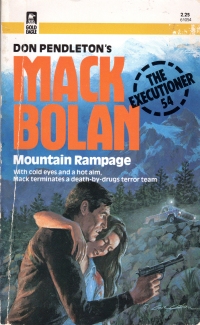
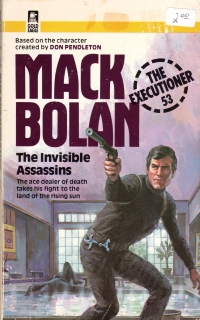
Monday’s Mob Don Pendleton
Terrible Tuesday Don Pendleton
Wednesday’s Wrath Don Pendleton
Flowers of Evil Charles Baudelaire
Thermal Thursday Don Pendleton
Existentialism and Thomism Joseph C. Michalich
The New War “Don Pendleton”
The Violent Streets “Don Pendleton”
The Bible
Thomas Jefferson’s Monticello
The Iranian Hit “Don Pendleton”
Asimov’s Guide to the Bible Isaac Asimov
The Pocket Book of Old Masters edited by Herman J. Wechsler
Return to Vietnam “Don Pendleton”
The Civil War as They Knew It edited by Pierce Fredericks
Folk Lore and Fable: Aesop, Grimm, Andersen Harvard Classics
Kung Fu: The Way of the Tiger, the Sign of the Dragon Howard Lee
The Gallic and Civil Wars Julius Caesar
Red Water “Tabor Evans”
Silent Night Robert B. Parker with Helen Brann
Terrorist Summit “Don Pendleton”
Paramilitary Plot “Don Pendleton”
The Curse of the Gypsy Woman Lin G. Hill
Downton Abbey Rules for Household Staff
The Town Council Meeting J.R. Roberts
Calvin and Hobbes: The Sunday Pages 1985-1995 Bill Watterson
Romance Ed McBain
Holiday Memory Dylan Thomas
Kung Fu: Chains Howard Lee
F-15E Strike Eagle Hans Halberstadt
The Currents of Space Isaac Asimov
25 Books That Changed America Robert B. Downs
The Oedipus Cycle Sophocles
Bloodsport “Don Pendleton”
A City in the North Marta Randall
Under the Dome Stephen King
This Was Cicero H.J. Haskell
Avengers #2: The Laugh Was On Lazarus John Garforth
Renegade Agent “Don Pendleton”
Poor Richard’s Almanack: Benjamin Franklin’s Best Sayings Edited by Dean Walley
End of the Tiger John D. MacDonald
The House on the Rock
Old Trails and Duck Tails
Mad About Town
Wilderness Trek Zane Grey
The Screwtape Letters C.S. Lewis
A Tan and Sandy Silence and Two Other Great Mysteries John D. MacDonald
Kickback Ace Atkins
The Death of Ivan Ilyich Leo Tolstoy
Shaman King #17 Hiroyuki Takei
Awesome Projects from Unexpected Places Edited by Noah Weinstein
Dragonslayer Waylend Drew
Oleanna David Mamet
The Nitpicker’s Guide to Classic Trekkers Phil Farrand
Warriors: The Rise of Scourge
Sunset Woodworking Projects
Easy to Make Tables and Chairs
Travels with Charlie John Steinbeck
The Undiscovered Self C.G. Jung
Frankenstein Mary Shelley
The Book of Useless Information Noel Botham & The Useless Information Society
Discourses Epictetus
At the Hemingways Marcelline Hemingway Sanford
The Plague Albert Camus
The Go-Getter Peter B. Kyne
Rogue Warrior: Option Delta Richard Marcinko and John Weisman
Photographic Views of Sherman’s Campaign George N. Barnard
The Saltville Massacre Thomas D. Mays
The Spirit of America Calvin Miller
Christina’s World Betsy James Wyeth
Instant Replay Jerry Kramer with Dick Schapp
Magnificent Hearst Castle
Schticks and Stones edited by Miriam Levenson
Farewell to Football Jerry Kramer with Dick Schapp
Don’t You Dare Throw It Out! Jerry Baker
The Shakers L. Edward Purcell
Stormbreaker: The Graphic Novel Anthony Horowitz
Distant Replay Jerry Kramer with Dick Schapp
Whispers of Love edited by Deborah Gaylord
The Toilet Zone Dan Reynolds
Peacemaking: On Dusting the Wind David P. Young
Ivanhoe Sir Walter Scott
The Art of the Impressionists Janice Anderson
Wisdom in Rhyme Nora O. Scott
George Washington Carver Sam Wellman
How to Speak Southern Steve Mitchell
The Medium is the Massage Marshall McLuhan and Quentin Fiore
The Story of Silent Night Paul Gallico
Ernest Hemingway: A Critical Essay Nathan A. Scott, Jr.
The Libyan Connection “Don Pendleton”
Worlds’ Finest: Hunt and Be Hunted
How To Talk Pure Ozark Dale Freeman
Boogar Hollow’s Scraps of Wisdom Nick n Willan Powers
The Art of Manet Nathaniel Harris
Southern Words and Sayings Fabia Rue Smith and Charles Rayford Smith
The Complete Jack Kirby: June-August 1947 Greg Theakston
Melk Abbey
Quarterback Power Tim Polzer
Missouri: Faces and Places Wes Lyle and John Hall
The Great Wall: China Against The World Julia Lovell
Sunny Thoughts
All Is Bright Katherine Spencer
Blog Hugh Hewitt
The Circuit-Riding Combat Chaplain Frank Griepp
White Night Jim Butcher
A motley collection of pulp fiction, literary masterpieces, history, biography, philosophy, humor, poetry, drama, art, and sports books.
As I mentioned, or meant to mention, I can remember what most of the books were about, but the most interchangeable and forgetable are the pulp fiction I have so much of. Perhaps I should let this inform my reading for 2016. Or not.
If this sounds familiar, it’s because Democrats used the same strategy to brilliant effect in the 2012 Senate race in Missouri. The GOP primary was jammed up with three candidates; Claire McCaskill, the Democratic incumbent, wanted to do something to help Todd Akin win, believing (correctly) that Akin would be the easiest of the three to beat in a general election. The solution: Start attacking Akin before the Republican primary, knowing that a big-name Democrat’s official seal of disapproval would be a strong lure to Republican voters to consider Akin. Some of that is pure tribalism at work — Democrats are bad, therefore things they dislike must be good — and some of it is “they’ll tell you who they fear” reasoning at work. The problem is, sometimes they’re not telling you who they fear when they attack. Sometimes they’re telling you who they don’t fear and hoping you’ll fall for it.
You know, this blog was a lot more political when I started out, but I’ve drifted away from it because, honestly, I’m not sure my insights add anything and I don’t think I’m convincing anybody of anything.
I’m not even getting my insights and moments of synthetic thought out into the wild before someone else comes up with them.
So amid the monsoon, I’m listening to the rain thunder on the roof of the industrial-plant-turned-antique-mall and the occasional thunder actually thunder throughout the building. I’ve got a couple of gift certificates that I received for Christmas (this is an antique mall, after all, and not a resale shop or used content venue), and I’ve put a stack of (24) LPs on the counter for the woman behind the counter to begin laboriously typing in the tags from each booth where I collected the records, and the man in the CHICAGO BEARS jersey dares to speak to me about vinyl coming back.
It seems he’s a collector, too. He had some 50s, 60s, and 70s stuff before he went into the service, he gave it all away and then spent years trying to recollect what he’d given away. He said he had about 300, which is a number my beautiful wife wishes I’d held to. The fellow also mentioned that Columbia House was restarting because the millenials are discovering vinyl.
I thought he meant Columbia, the recording label, but as Charles points out, the Columbia House record club is resurrecting and selling records.
Briefly, I predict.
On the other hand, I spent less than a penny for my twenty-four records with judicious application of gift certificates and gift cards.