I’ve often asked this when presented with the written title of a song and a band I’ve not heard of. Mostly, I’m joking.
But when I learned that Fozzy has a song (and album) called "All That Remains", I thought that was funny because there is actually a band called All That Remains (whose album I bought before I bought Fozzy’s Judas this autumn).
So I got to thinking: What other bands have songs that are actually the names of other bands?
Now, to gamify this, we would want to establish some rules:
The song cannot be about the band or act. So Taylor Swift’s “Tim McGraw” would not count.
The title of the song must be the complete name of the band and must not just include the band name (sort of) in it. So “Like a Rolling Stone” and “Papa Was A Rolling Stone” would be out.
Scoring would have to be based on the number of words somehow; one word titles/band names are easy, so maybe a multiplier of some sort.
Here are a couple samples:
Montgomery Gentry, “Hell Yeah” (although Hellyeah presents it as one word–I’m not sure if that would be disqualified under the second rule how to score it–one word or two–if it’s allowed).
Confession: I did an Internet search to get the last one, so I’ll leave it to those of you who want to play along to search for obvious choices like Breathe, Heart, and Jewel.
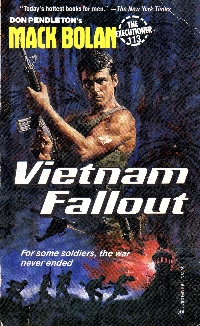
It’s been almost six months since I’ve read a Bolan book (Death Has A Name in July), and this book is 17 books later in the series. Thicker than the old Bolan books (a transition I noted in the previously mentioned review), this one might be a touch better, but it’s still a bit dissatisfying overall.
Within this volume, Bolan is in New York when an ambassador from Vietnam who is making back channel overtures for normalization of relations with the United States is assassinated. Bolan is riding with a cop who happened to be an old war buddy, and they pursue the assassins. The friend is cut down, which sends Bolan on a search for vengeance that leads him to Vietnam. Although this book kinda treats this like it’s a fresh return for Bolan, we who read the books instead of write them for hire recognize that he has already been back in a book entitled Return to Vietnam.
Once in Vietnam, Bolan engages in a rehash of Heart of Darkness–or maybe Apocalypse Now, the original rehash of Heart of Darkness set in Vietnam, albeit during the actual war. As he follows that plot line, he engages in some questionable decisions that seem to go against the marrow of the character for future plot twists. And then the book reaches its shoot-out climax, and Bolan wins.
The first part of the book, in New York, has a different feel from the second half. One wonders if two incomplete manuscripts were grafted together to make one longer book. Or, one fears, maybe the remainder of these books will be like this. Which would be awful, since one has a lot of these later books from scattered places in the 400 or 500 book canon.
As I’ve mentioned, I’m coming my archives to ensure posts have categories, and it’s an interesting and tedious process, but it uncovers a lot of nuggets.
Like this post, where I tell Steve Jobs the iPhone should have voice interaction.
I wonder if that’s actionable? Surely, some shady attorney somewhere would give it a wing.
While I’m busy doing nothing, but different than the day before, here are some book links for your reading pleasure. They have pictures, though, if you don’t like to read.
Surrounded by books has been a main circumstance of my long life. So it is now, near the end of my 94th year, when I am in my large library of perhaps 18,000 books in the western wing of my house in Chester County, Pennsylvania.
I don’t know which part I liked best: large library, 18,000, or western wing of my house. If I had a library in a wing of my house, I doubt it would take me 40 more years to get there.
Note that this gentleman is, in fact, a professor, which is the highest level of book accumulator, and I’m on my way to being an honorary professor.
I’ve seen a link to this Intellectual Takeout recap of a couple of surveys that indicate that 27% of Americans have not read a book in the last year and another survey that indicated that 20% of British adults could not name an author.
I’d be a little more upset if I didn’t realize how easy it is to stump people with questions like this. Twenty-five years ago, I stumped fellow English majors by asking them if they could name two morals, and most could not.
That should hold you until I can think of something witty to say or get around to writing another book report for a piece of throwaway fiction. Except at Nogglestead, we don’t throw away any books.
So this weekend, I spent some time in the Tampa area (well, not as far north as Tampa, but I landed and departed from St. Petersburg). As you know, I provided a handy guide to Florida fauna and flora for the Midwesterner. So I thought I’d provide a handy checklist of the things I’ve done (and you can, too).
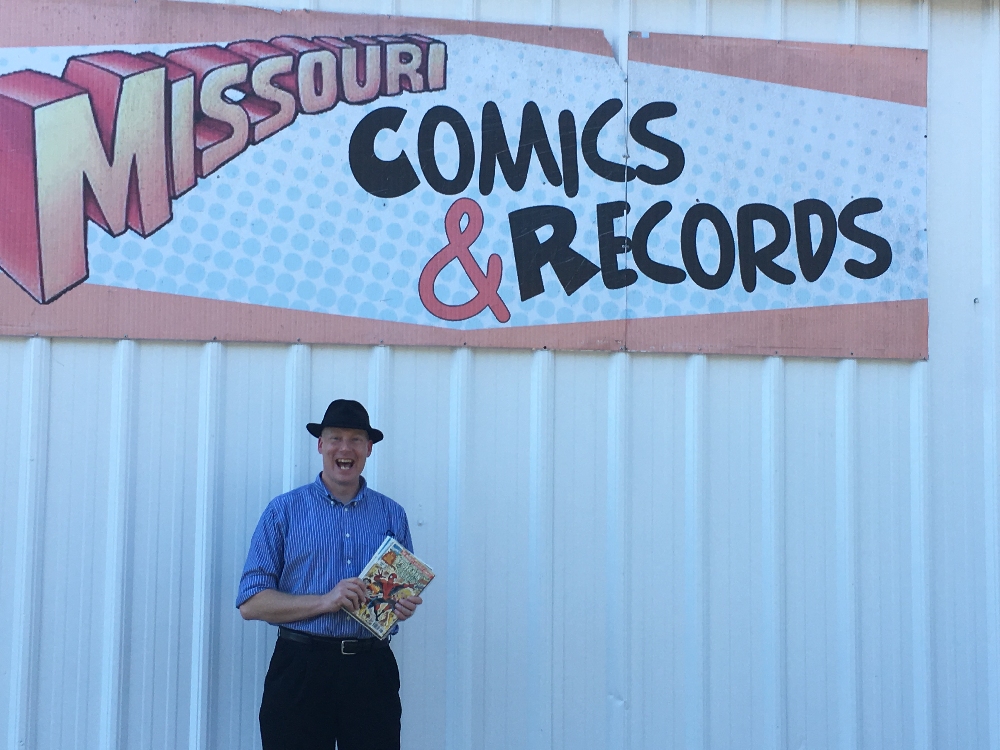
Missouri Comics used to be up on Chestnut Expressway here in Springfield, and I used its Web site as a test location when testing for a company I was working for, so I eventually took my kids up to the physical shop, and I bought a number of Marvel Team-Ups in our infrequent visits.
Clearly, our three-times-a-year (probably three times, total) visits for dollar comics couldn’t support him, so he moved to Safety Harbor (I’m sure there’s a story there). He kept the name because he does brisk trade on the Internet and didn’t want to lose traffic by changing the domain name.
The first thing we did after landing and getting out of the airport was to visit his new location and buy Marvel Team-Up comics.
☑
Attend a business meeting with native Floridians and be the only one wearing shoes.
They must put some Florida in the water, because I was not the only one visiting from Missouri, but I was the only one in shoes.
☑
Do the AirBNB thing.
Apparently, you can rent a lot of condos in Florida whose owners live there part time (and live the rest of the time, they live at their other condos). When not in residence, they put their slightly used properties on AirBNB, and you can lease them for a night or two.
So we did, and we stayed in a rather nice little three bedroom house with one bedroom converted into a high quality home theater, which I didn’t get to use because I was a businessman, doing business. (Is that two Beverly Hill Cop II references in one checklist item? Yes, it is! You get the best allusion deals here at MfBJN!)
I haven’t even seen that movie in a while. I don’t know where its presence on my mind comes from.
At any rate, this was my first AirBNB experience, and it was weird for me. The house had lots of interesting things, a K-Cup maker, a full and elaborate bar, and I’m not sure what I was allowed to use if anything. I mean, in a hotel, I don’t tear the place up (or, at least I haven’t since the The Variation Machine 1993 tour), but I treated this house like I was a guest there.
Also, although the agreement said no pets, I am pretty sure the owners had a cat. Cat food under the sink (which I didn’t eat, because I didn’t know if I was allowed to), a scratching post in the garage–and a woman whom we surprised as she was going around back of the house. She explained there’s a cat in the shed that she feeds twice a day. So I don’t know if the owners lock their cat up in the shed on nights that they’re renting the place (or for the weeks when they’re away). I am pretty sure, though, we would have paid extra to have the cat in the house with us.
☑
Ride a gator.
Well, it was a John Deere Gator, and given that I live in the country, I didn’t have to go to Florida for that. But I did see people driving around in golf carts, and not on a golf course.
☐
See a Tampa Bay Lightning Hockey Game.
Although they played on Saturday night, I had an early flight, and like the old man I am, I went to be early.
Fun fact: I was slated to go to a conference in Tampa around the turn of the century, and the Tampa Bay Lightning were playing at home over that week. As it stands, I left the job sending me to the conference, so I didn’t get to go to the conference nor the game. So the Tampa Bay Lightning are the team I could have seen most but never did.
☐
Wander around Tampa, asking anyone if they’d seen Dave.
When we landed, I remembered that my old friend Dave, he of the famous Iron Maiden poster lived in Tampa. So I thought about going around Tampa, taking photos and asking if anyone had seen Dave.
Which they hadn’t–I knew from Facebook that he was on vacation himself.
Which is what would have made the photos, when shared with Dave, better.
Perhaps I’ll catch him, and maybe the Lightning, the next time I’m in town.
My goodness, I’ve been to Florida three times in the last, four years? I’ve been there more than Wisconsin.
Partly because of the business, partly because of family vacation destinations, and yes, partly because there are direct flights. I don’t like to fly. Which is down from “I hate to fly,” which is where I was four years ago.
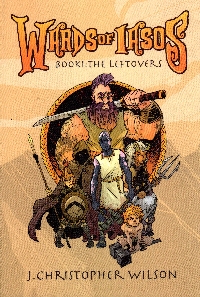
I mentioned in September that this local author was stalking me, appearing at different cons and festivals I attended until I bought his book (to recap: I saw his table at Library Con 2017, but didn’t buy the book because he was on a panel at the time–and I’d already bought a bunch there anyway; I saw him at the Mini Maker Faire; and I saw him at a street fair in Hollister, where I finally bought this book). Well, I hadn’t gotten to it, but I saw him at the First Lego League competition in his home element–the middle school in the system where he teaches. So he was stalking me to make sure I read his book. Although, to be honest, he is an inefficient, ineffective stalker, as he did not even notice me leaning against the wall in the corridor as he ushered teams into the auditorium.
Still, it prompted me to pick up his book. Also, note that I’ve been reading a bit of fantasy lately. See also Jules Verne (all right, not exactly fantasy, but bear with me), Obsidian Son, The Catswold Portal, and John Carter of Mars (which is an omnibus of five novels). Does back in late summer count as “lately”? I dunno. But there you go. What was I saying? Oh, yes, a book report.
You know what? This book is pretty good. I’ve lucked out with the self-published fiction this autumn. The aforementioned Obsidian Son was also pretty good.
But this book differs from that, so let’s talk about this book. It’s targeted to younger adults and is high fantasy. The book deals with a collection of outcast students at the mandatory academy for youth in the nation of Iasos. Each comes from a broken home or has been cast aside by his or her parents. We have a large half-Orc cleric type, a half-goat warrior maiden, a scarred magician who wears a hood, a young barbarian, and an empathetic thief. The house leader/teacher is a battle-weary dwarf who takes the group under his wing to teach them how to work as a team and whatnot.
The book starts running through some threads that will continue in later books, and the adventures in this book come to a head when the group travels outside the academy’s sanctuary. They encounter some mercenaries sent by a foreign power to destabilize the country, and the young charges want to fight to liberate a small, illegal community oppressed by the mercenaries. After the mercenaries kill one of the wards, a reckoning comes that sees the wards fight together for the first time.
The author’s bio says he’s a Dungeons and Dragons player, and you can see a little of that in the descriptions, particularly of the locations. The narrative stops, and we get a couple paragraphs or pages of descriptions of the building. One almost wants to check the east wall for secret doors. Also, I’m tempted to try to identify influences for the work–I remember the old Advanced Dungeons and Dragons cartoon had the smallest, youngest kid be the Barbarian, although in the cartoon, the boy was not primitive. Looking at the cover, I can’t wonder if the artist was not influenced by the Teen Titans–one of the characters looks like Raven, and the Behemoth (the half-Orc knock off with the splotches of lighter color) kinda looks like Cyborg. But it’s unfair to the author that I’m looking for these influences where they might not exist.
At any rate, that’s two for two on the self-published books I’ve read this autumn. I expect I’ll get the next installment when it comes out because otherwise I’ll see this author at all the local cons and whatnot, and he’ll not let me rest until I do.
On Saturday, we took a trip up to ABC Books because it was Small Business Saturday, and the books were 50 percent off. Which didn’t help us with the cost of the gift cards we bought for our children’s teachers, but it did give us an excuse to buy some books.
I bought a couple books from the Makers of the Modern Theological Mind Series (H. Richard Niebuhr, Teilhard de Chardin, and Martin Buber) and Don’t Know Much About The Bible.
It was a rare day, as my beautiful wife bought more than I did. She attributes it to the wine she had with lunch. I attribute it to the fact that I stop by the store every couple of months and drain it of the items I want regularly, leaving me less to gorge on the next time I come. Regardless, it was a fruitful trip, and I’ll get to these books someday.
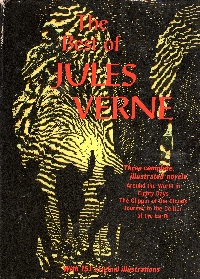
I picked up this book because I know the chicks dig Jules Verne.
Well, maybe it’s only one, and maybe she is fictional. But still.
I probably picked this up because I’ve been doing the omnibus thing this year. I’ve shortchanged my annual numbers by reading books containing multiple books all year long (Three Novels by Damon Knight; Selected Tales and Poems by Edgar Allan Poe; John Carter of Mars). So why not another three-in-one? Besides, this book is sort of like picking up a split–I have a Reader’s Digest edition of A Journey to the Center of the Earth which I can move over to the read shelves as this volume contains that novel.
At any rate, my dear Clara, this volume contains three of Verne’s works, and we could spend many evenings by candelight discussing whether they are, in fact, the best. Before I did so, I would have to read a bunch more of what he wrote to argue intelligently, as these are the three books I’ve read.
The three books contained with are:
Around the World in 80 Days, the story of a reclusive and mysterious Englishman, Phineas Fogg, who makes a bet at his gentleman’s club that he can travel around the world in 80 days. He takes his new valet along for the ride and rescues a beautiful young Pharisee from sacrifice in India. A bank robbery right before he leaves London puts a detective on his tail who’s out to thwart him until an arrest warrant catches up with him.
Of the book, this is the best–its protagonist is aloof, but the new valet, Passepartoute, is accessible, so we are rooting for them to complete their adventure in spite of the setbacks and adventures they encounter along the way. We even feel sympathetic to the detective who’s only doing his job. And the adventures involve exotic places and peoples. The other two novels included falter in comparison.
The Clipper of the Clouds, also published as Robur the Conqueror, starts with a duel scene. A Yankee and an Englishman argue over whether mysterious trumpet sounds coming from the sky played “Yankee Doodle” or “Rule Britannia”. The rest of the first chapter details mysterious sounds and trumpets heard from the sky around the world and the arguments as to what it might be. Then, we’re at a meeting of the lighter than air travel society, proposing to build a giant blimp or dirgible, when a stranger says that heavier than air craft ar the way to go. A ruckus and riot ensues, and the two most powerful men in the society disappear–they’ve been kidnapped by Robur, who has essentially a boat with rotary wings on the masts in addition to sails. So it can fly! He then, for reasons of his own, take the two men around the world and to different locales. Their adventures are a bit underwhelming, and then they return. I guess Verne did a sequel to this book, but I’m certainly not compelled to read it.
Journey to the Center of the Earth details a professor who finds a several-hundred-year-old coded note from an explorer who was censured and considered a heretic. The note contains the location of a secret cave that leads to the center of the earth. So the scientist enlists his nephew for a trip to Iceland, they take on a stoic Icelandic guide, a load of food, and they descend. They spend months walking through caves and having dry misadventures–running low on water, getting lost–until they find a giant underworld sea, which they build a raft and ride on for weeks, and then they find dinosaurs and evidence of humanoids under the earth before they trigger a volcanic eruption and ride it to the surface.
The second and third books in the volume have a whiff of the hard science fiction about them, where the draw is the science and the speculation, but not so much the story. Which is not what I read books for–not fiction, anyway.
So I was not, ultimately, impressed with them. Not for their lack of imagination, but rather by the execution where the speculation drove the books more than the stories based on the speculation.
I’m not sure what Clara would think of that.
The book also contains an interview with Jules Verne from The Strand magazine called “Jules Verne at Home”. This is a very nice bit capturing Verne and his wife at their estate, giving some insight into the popular author at the tail end of his career.
As Ms. K. likes to say, gas stations and convenience stores are like watering holes on the Serengeti for criminals (or something like that).
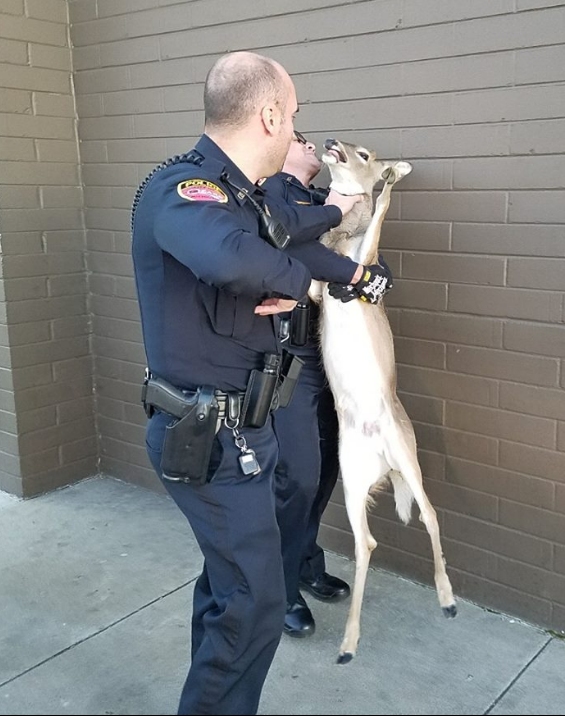
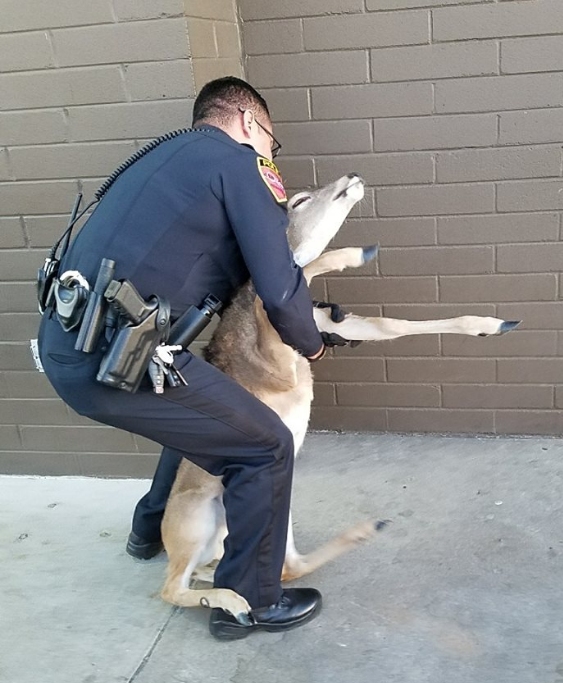
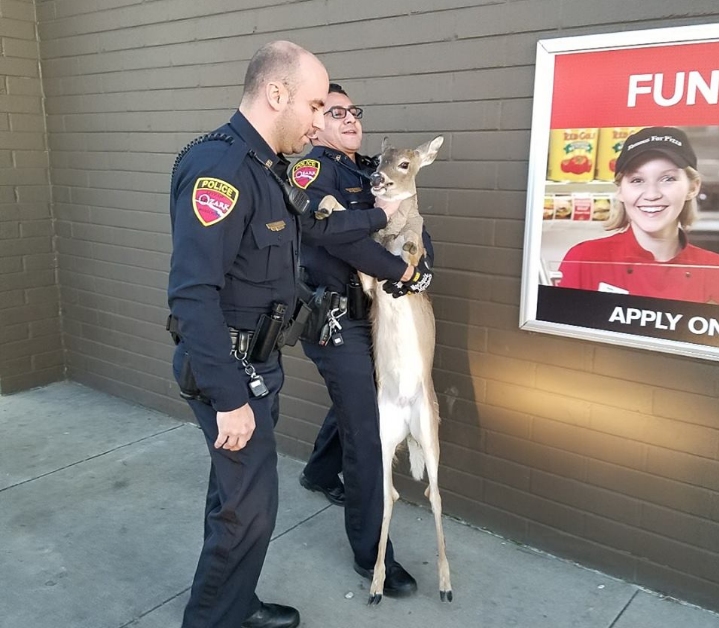
On Wednesday, November 22, somebody called the police on a suspicious looking young deer loitering outside the Casey’s General Story (famous for pizza). Probably asking for money or for someone to buy some beer.
The police responded less brutally than the Carbondale police department handling an emu, but still, when the deer gave them a little lip, they brutally assaulted the innocent piece of Bambiana.
The question on my mind, though, is who called the police on a wayward deer?
The answer, I think, is the manager of the Casey’s, who wanted to get free publicity for the fact that he or she is currently hiring.
It’s only the Black Friday deals that have kept the protesters otherwise occupied than to organize marches in Ozark.
On his thigh, I could see the butt of an old SAS-type Browning High Power pistol peeking through the ballistic nylon restraining strap.
So consider this volume officially dinged.
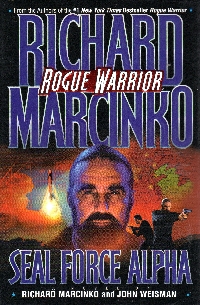
As with any of the Rogue Warrior novels, you know what you’re getting: A crassly composed, often vulgar voice describing a pretty tight military/suspense story. This book deals with the specialist SEAL team destroying a clandestine Chinese weapons ship only to discover that the tangos had their hands on a particularly Top Secret electronics weapon called Big Brother–which means someone in Washington has been working with the ChiComs. So Marcinko and crew have to stop a plot (dealing with the disputed Senkaku islands–here in the future, in 2017, we know all about those still-disputed islands, don’t we?).
It’s fast-paced and fun reading (if you can tolerate the voice, which is strangely part of the charm for me). Apparently, these books are still getting written and put out, and I have to wonder how they will evolve–in 1998, the main character has open disdain for the Clinton administration, for example–as history has unfolded. Sadly, they could just about recycle a number of the post-Cold War plots since the same hotspots from 1998 remain places of suspense in 2017.
Check out the foresight as to the hot things to come:
No, Dick–what you sometimes gotta do is take the Oriental approach. Use the discipline of Mindfulness. Let everything be everything, and in equal degrees of being.
In 2017, all the cool listicle and life-hack sites talk about mindfulness (as does this blog, as I end up reading a bunch of that stuff to relax).
As I have said or alluded, these books are scarily timely even after 20 years.
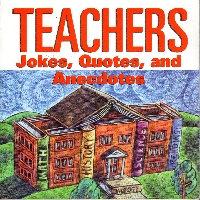
The people behind this book built it to be a teacher-friendly gift for students to give their secret Santas and whatnot in the educational system. It collects quotes about education from a variety of classical sources, includes a jokes relating to schooling that cast teachers in a flattering light, and shares anecdotes from actual teachers about amusing incidents they encountered.
Although it’s a pretty thick little book–260+ pages–with only two short bits per page, it’s a pretty quick scan, amusing enough but not something that’s going to stick to your mental ribs.
So an amusing couple of hours of flipping, and nothing more. Unless you receive it as a gift and you’re a teacher, in which case it could be a memento.
You know, as I mentioned, I’m going through old posts and whatnot, and I notice that I used to comment on the news of the day every day.
Lately, though, my posts have been mostly music, mostly books, mostly life.
Why is that, you ask?
Well, it’s partly because I don’t want to sound like a crank on the Internet, and I don’t devote enough time to my commentary to not were I to jot a couple things here and there. Also, in the modern world, I can’t help but wonder if I would lose career opportunities based on my commentary. Although this site with its rich archives is still here, so any job opportunities I would lose I have already lost. And I’m thinking that the field that I am in has changed enough to leave me behind a bit as it were anyway.
Also, it’s partly because like reading a Rogue Warrior novel, I see the same things come up over and over again over the years, and I’d just be repeating myself.
A couple cases in point: From 2012, stories about local governments in St. Louis County and Republic looking to consolidate trash hauling to a single government-selected option. I know I’ve written at length about this as far back as my Suburban Journal days. Well, look, here the issue is again in Springfield. I wrote about it earlier this year even. What more do I have to say about it except to point out further examples?
I also spotted a story from 2008 about the Hidden Valley ski resort in St. Louis County clashing with local governments about blocking an amenity, and the resort threatened to or it will have no choice to shut down.
It just seems so dull to keep posting the same things, year after year, with little change.
Those are the questions experts and non-experts around the world are asking themselves in recent weeks as curiously loud mystery BOOMS have not only been hear around the world, but felt – shaking buildings and rattling nerves from Alabama to Michigan, Idaho to California, Russia to Denmark.
The Alabama boom last Tuesday at 1:39 CST was heard and felt through 11 counties, but an earthquake event has been ruled out.
The day after Alabamans were shaken by that incident, something similar occurred in Idaho. No explanation has been forthcoming from law enforcement officials there.
Then, last Saturday, much the same thing was reported in Michigan, according to various local newscast. Still no explanation.
Never had the sky been so much looked at since the appearance of man on the terrestrial globe. The night before an aerial trumpet had blared its brazen notes through space immediately over that part of Canada between Lake Ontario and Lake Erie. Some people had heard those notes as “Yankee Doodle,” others had heard them as “Rule Britannia,” and hence the quarrel between the Anglo-Saxons, which ended with the breakfast on Goat Island. Perhaps it was neither one nor the other of these patriotic tunes, but what was undoubted by all was that these extraordinary sounds had seemed to descend from the sky to the earth.
What could it be? Was it some exuberant aeronaut rejoicing on that sonorous instrument of which the Renommée makes such obstreperous use?
No! There was no balloon and there were no aeronauts. Some strange phenomenon had occurred in the higher zones of the atmosphere, a phenomenon of which neither the nature nor the cause could be explained. Today it appeared over America; forty-eight hours afterwards it was over Europe; a week later it was in Asia over the Celestial Empire.
Hence in every country of the world—empire, kingdom, or republic—there was anxiety which it was important to allay. If you hear in your house strange and inexplicable noises, do you not at once endeavor to discover the cause? And if your search is in vain, do you not leave your house and take up your quarters in another? But in this case the house was the terrestrial globe! There are no means of leaving that house for the moon or Mars, or Venus, or Jupiter, or any other planet of the solar system. And so of necessity we have to find out what it is that takes place, not in the infinite void, but within the atmospherical zones. In fact, if there is no air there is no noise, and as there was a noise—that famous trumpet, to wit—the phenomenon must occur in the air, the density of which invariably diminishes, and which does not extend for more than six miles round our spheroid.
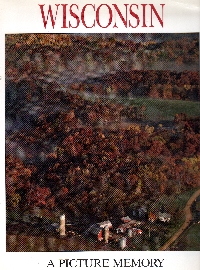
This volume is pretty slim–64 pages in all–which makes me question the committment of the publishers. Wisconsin has varied landscapes, and one could easily do a whole book on the north, on the lake shore, along the Missouri river, and the prairie.
However, this book gives each a nod and a page or two along with three pages of pictures of Madison, a page of Milwaukee (including the interior of a brewery, natch). I was pleased with how many sites I’ve seen–I’ve been to La Crosse, I’ve been up north, and I’ve visited the Dells and the House on the Rock. I have seen the state capitol lit up at night, but I haven’t been to Madison by day–the only time I was in Madison was late on a Friday or Saturday night for a quick trip to the Pizza Pit and back to Milwaukee, so I didn’t really even notice the birds’ eye view of its position between its two lakes.
So I enjoyed the book. Certainly more than the Wisconsin-based football game during which I flipped through the volume.
I have more of these books, I think, and I kind of look forward to them. Perhaps I should find them amid the thousands of books I’ve got on my to-read shelves.
Also, extra poignant note: The book has a little sticky note inscription in it that says To Dad From Brian. As this is a 1996 edition of the book, my own father was already but a (fresh) memory for me then.
To be entirely honest, I didn’t actually read this book.
I bought it because my beautiful wife and I, when we were young, took little quiz books along on rode trips and asked ourselves the little essay questions to amuse ourselves and to learn more about our partner as the miles rolled away. So somewhere along the line, I picked up this book to amuse ourselves again when we had older children and took road trips.
Well, the children are older now, and we sometimes drive a distance with them, but when we packed this little “Would you rather?” game, it was pretty clear that I had only read the back and had not read actual questions in the book, or if I did look at actual questions in the book, I must have accidentally landed on the things that weren’t particularly odious.
The first questions in the book are:
Would you rather chew on a wild rat’s severed tail for a half hour or thoroughly brush your teeth with a toothbrush from a prison’s community toothbrush bowl?
Would you rather bite into a piece of chocolate and find it filled with maggots or filled with pus?
Would you rather walk around all day with a dead mouse in your butt or a dead frog in your mouth?
Well, we found something else to do on the trip
I guess the question for me is would I rather keep this book on my to-read shelves even though I won’t actually read it or put it on my read shelves even though I haven’t actually read it? Clearly, I’m migrating it to the read shelves (like I could ever give a book away!). Perhaps it will give my children some amusement someday, although given that some of the questions have sexual content and not just gross-out conundrums, I will try to keep it out of their grasps for a couple years yet.
So be warned: It’s more a book for road trips with Tom Green than with children or your sweetie.
I mentioned that I could not hear The Miracles sing “Love Machine” without thinking of chickens. I failed to mention that this commercial is my beautiful wife’s favorite commercial of all time, which will come in handy knowing that as our children like to ask for a favorite this or that regularly.
Here’s the commercial again for your reference:
Last Saturday, a boy and I had some time to kill before picking the other lad up from an activity, so we went to a local antique mall to do some Christmas shopping. Which means, mostly, buying things for ourselves and maybe a trinket or two for someone down the Christmas list.
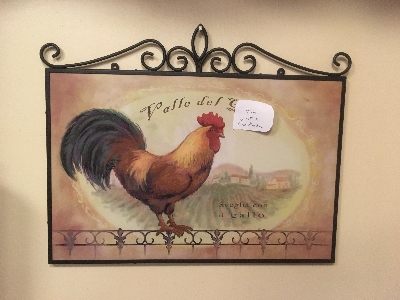
I passed on a Rooster print with iron that I thought might go nicely for my aunt, whom I think has a rooster or chicken theme going. If not, she has a rooster or chicken theme from Brian going, since I bought her a large filigree chicken last year.
But we were also looking to replace something in our kitchen, a print in plastic frame that we had over our sink for years, far beyond the normal lifespan of this cheap particular bit of postery that I bought at a garage sale some decade or two ago.
So after passing it, I returned to the rooster art at the antique mall, and I thought it might do double duty: I would hang it up in the kitchen and see if it flew as a replacement, and if not, it would be great for Aunt Sandy.
Also, as I did so, I did not mention to Heather that I did; I expected her to say, “Is that a …. chicken?” when she saw it. That, in itself is an in-joke: Some decades ago, when she was a comely young HR staffer for the St. Louis County government, she would interview building inspectors by showing them a series of photos and asking them to identify possible violations. One of the photos had a chicken, which was back in those dark ages, not allowed within the county. One incredulous interviewee looked at the photo for building violations, and then said, “Is that…a chicken?” which my then beautiful girlfriend beautiful then-girlfriend, now-beautiful now-wife (::sweats the construction there::) repeated with the same intonation the fellow under interview used.
But she did not.
And, apparently, she now likes chickens in the kitchen. Art chickens, anyway. A couple of years ago, I did a woodburning of a rooster on a board and put a couple of hooks on it, and somehow it replaced a pair of paintings by my great grandmother on our dining room wall. When she saw the new rooster above the sink, she liked it (sorry, Aunt Sandy, unless you really don’t do chickens, in which case, hey, lucky for you!).
It took less than fourteen hours for the Denny’s commercial allusion to appear:
Which she also loved when she saw it on Sunday afternoon.
It stayed on the art work for the week because I was too busy and lazy to remove it, but I see that it has migrated to the woodburned rooster by her hand.
Perhaps I’ll end up being lazy enough that it will remain there until such time as our kitchen is filled enough with chickens that it can make a circuit regularly.
But I doubt, actually, that the tape will last that long. Nor her desire for more chickens in the kitchen.
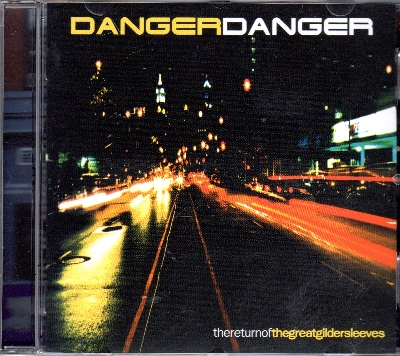
Danger Danger’s The Return of the Great Gildersleeves:
Well, all right, maybe not, but the old timey blogs pointed the way.
First, on the Facebook, Blackfive posted a song by eighties band Danger Danger:
I liked the sound–man, do I miss the eighties–so I bought the debut CD.
When I was thinking about picking up something else, I looked for another Danger Danger album, and their 2000 release was called The Return of the Great Gildersleeves.
If you’re a Lileks reader, you know who the Great Gildersleeves was. He posts about the old radio show all the time. Including today.
So I had to have it.
I don’t regret it; it’s a pretty good album.
So thanks to all those guys who I’ve been reading for years (one of whom actually visited our home in Casinoport, if you can believe it, making me like a real blogger back in the day) for the pointer.
I recently discovered José Olé Chicken and Cheese Tacquitos come in a strangely enumerated 37 pack:
What, did the authorities in Mexico gullotine frozen food makers that shipped 35 when the customer ordered 36?
Likely not. It’s probably not also signaling that this is a prime product.
I assume that it used to be a 40 pack but the quantity was reduced at some point (at the same or nearly the same low price!).
Still, they didn’t shrink it down to the even number.
Which means that in the future, barring some other reduction in quantity, there will be contention at Nogglestead as two strapping young men spar for the odd tacquito.
Over at StLToday.com, I saw a headline for a video game review that I thought I might to look at because it’s more interesting than the Web-based training I was taking concurrently.
When “Wolfenstein” returned in May 2014 with reboot “The New Order,” the seminal first-person shooter series felt retro. But in the time since then, it has — sadly — become relevant.
That’s because “Wolfenstein II: The New Colossus” arrives as the series’ longtime cannon fodder, Nazis, reassert their contemptible selves in American society. Emboldened months after “The New Order” by the reactionary fervor of GamerGate, they metastasized into one of the more vocal parts of the alt-right coalition that helped elect President Donald Trump last year. And after they shouted that “Jews will not replace us!” in Charlottesville this summer, Trump’s description of them as “very fine people” sanctioned their hateful rhetoric to a degree once unthinkable.
It’s been a couple days (what, almost a week?) since I posted, but I have been working here behind the scenes at MfBJN.
As some of you might know, this blog has been around for over fourteen years. It started on Blogspot back before Blogger supported a title, not to mention categories. In 2010, I switched to WordPress and self-hosting (and moved my images from one site to another).
The result of the transition and the old timeyness of some posts meant that some images were missing from posts, many posts didn’t have titles, and none of them had categories. I’ve been working on them here and there, but I’ve started making an effort to catch up on them. So I’ve been reading individual posts from nine or ten years ago and reading comments (what? people used to comment here?), adding categories, and standardizing some tags.
So it seems like I’ve been working on the blog, but you haven’t seen any new content.
I’ll get back to it in a bit here. Thank you for your indulgence.

 It’s been almost six months since I’ve read a Bolan book (

 I mentioned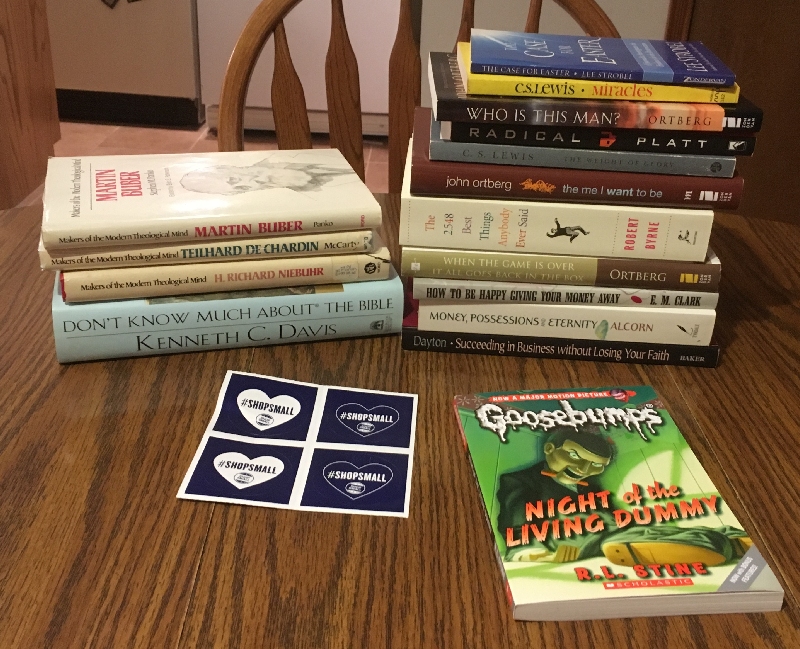
 I picked up this book because I know the chicks dig Jules Verne.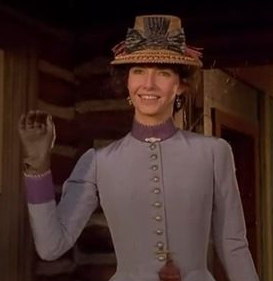
 Let’s get it right out of the way: In my book report for
  The people behind this book built it to be a teacher-friendly gift for students to give their secret Santas and whatnot in the educational system. It collects quotes about education from a variety of classical sources, includes a jokes relating to schooling that cast teachers in a flattering light, and shares anecdotes from actual teachers about amusing incidents they encountered.
 I’ve read a number of these Crescent Books picture books with the text by Bill Harris before (
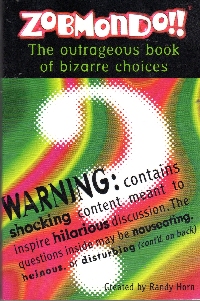 To be entirely honest, I didn’t actually read this book.