In the Wall Street Journal, likely some time ago given my reading habits, columnist Joe Queenan says Those Bogus Bookcases for Zoom Calls Aren’t Fooling Anybody:
When house-bound experts appear on TV interviews via Zoom, they are almost always seated in front of a large bookcase studiously purged of the usual trash. Whether an expert is deploring executive-office overreach or dissecting the baffling enigma of structural unemployment, you will usually see a gargantuan biography of Ulysses S. Grant or Winston Churchill perched over their left shoulder. Slightly to the left you may spot a three-volume history of the Civil War or something with the ancient Roman abbreviation “S.P.Q.R.” in the title.
If the person being interviewed is a scientist, the bogus bookcase is likely to sport a dog-eared copy of Thomas S. Kuhn’s “The Structure of Scientific Revolutions,” Stephen Hawking’s “A Brief History of Time” and either “Chaos” or “Genius” by James Gleick. Some showoffs might even have Isaac Newton’s “Principia Mathematica” strategically positioned to face the camera. Not to mention one of their own books. Or six. Or the remaindered books by friends they owe a favor.
But no matter what luminary is being interviewed, the background bookcases will include nothing by James Patterson or Lisa Scottoline, no thrillers by Tana French or Jo Nesbo, and definitely no autobiographies by Miley Cyrus.
We all know bookcases can get gussied up this way in a hurry. Something earthshaking has happened, but the first guest booked to talk about it has canceled, so Sanjay Gupta will be calling for an emergency Zoom chat in 30 minutes. The flummoxed, totally unprepared expert immediately panics. “Quick, get all the Clive Cussler and V.C. Andrews books off the shelves,” he cries out to his quarantined loved ones. “And somebody hide that Ozzy Osborne tell-all!”
You know, when I am doing a video call, I like to see if the other person / people have more books than I do. Spoiler alert: They don’t. But I don’t know what kind of cameras people with whom Joe Queenan video-conferences have, but I have yet to see a camera that shows titles very well. Although, again, that might just be me. Actually, although I glance at the monitor when I’m doing a video call, I tend to look at the camera, so I only get a glance anyway.
To spare you the bother, gentle reader, I have provided a handy guide to the real book backdrop of Nogglestead. Most of you won’t see me in a real, live (or fake for that matter) video call anyway. And the view has changed a little since 2010.
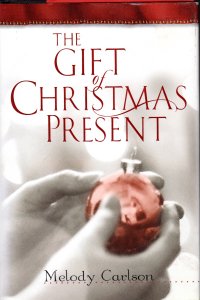 I have a confession to make: Despite the fact that I have bought several years’ worth of Christmas novels at book sales past, when Christmas time closes in, I can’t find the Christmas books I already own (and this year, I am certain they are not by the

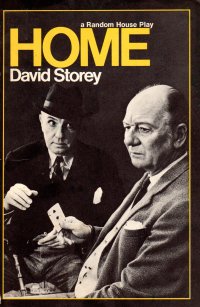 I hit my bookshelves looking for a Christmas novel to put me into the mood for the holidays, and I did not find one. Instead, I found this play by a playwright whose name I didn’t recognize. Of course, whilst I was reading it, I spoke of it with my beautiful wife, and we got to naming modernish–that is, twentieth century, playwrights. She could only name, sort of, Alan Ayckbourn, “The Norman Conquests” guy, and Neil Simon. I could name a couple more, being a reader of twentieth century drama, but not this fellow, so I thought he must have been pretty obscure. Although “pretty obscure” does not generally get a Random House hardback and Book Club Edition.
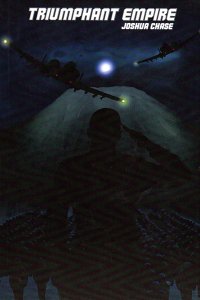 Well, gentle reader, I have found these books which I ‘lost’ on my to-read shelves after I bought them
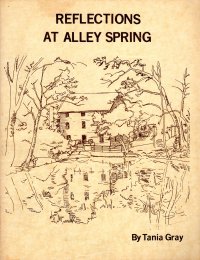 This book is a small collection of newspaper column-length text accompanied by one of the artists’ drawings of people and places near Alley Spring in northern Shannon County, Missouri. Self-published in 1980, this book includes interviews with local figures who were born around the turn of the century and remember traversing the county in wagons, in cooling their perishables in springs, and who used or restore old mills and steam equipment.
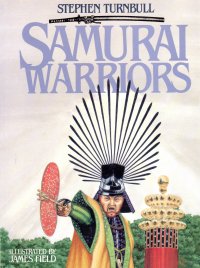 I have described “carry” books from time-to-time, gentle reader. These books I throw into my gym bag to read at the martial arts school whilst my boys are taking classes before my class or to carry to church to read during the Sunday School hour. Well, this year has eliminated the latter, and time itself has eliminated the former. When my boys were younger, they took early afternoon young children’s classes, and the adult class was at 7:00, so I would spend sometimes three hours at the dojo before my class. Then, they were in older kids’ classes, which meant I would still spend an hour or so with time to read. But with the new abnormal, once the dojo opened back up, the older kids and adults had classes together, so we have all had class at the same time. And if the school ends up with enough kids again to split the kids from the adults, my boys will both be old enough to take adult classes. So the days of the carry book, or at least the one that goes into the gym bag, are over. And this is one of the last that I will finish, although it spent some time (years) on the
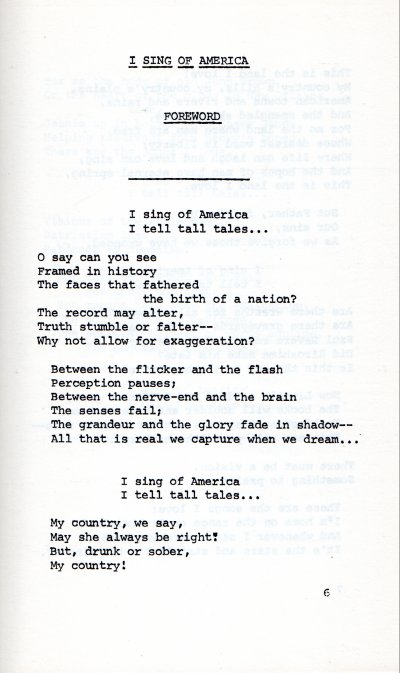
 This is a collection of poetry, or rather a group of cantos about America. Spoiler alert: About the only good thing about America is jazz music. Everything else is pretty much killing the Indians, slavery, and oppression. Well, not exactly that bad but mostly so.
 I bought this book at ABC Books
