Just Like We Imagined It In 1988

Back in the olden days, when I was young, we had a Dungeons and Dragons campaign where I, the noble Dungeon Master, allowed the players to adopt wolf (or dire wolf–forgive me, this was twenty-seven years ago, so I am a little hazy on this point) cubs and raise them.

So my brother and the two Jimmies eventually suited them up in armor and then mounted a sword on their backs so the wolves could charge opponents in attacks.

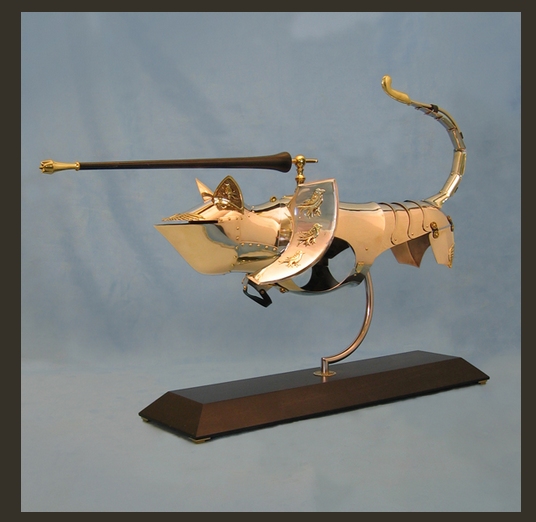
In our minds, it looked something like this:

Except that’s armor for cats.

We might need some since we had a new tabby scouting our back door last night for a possible invasion.

(Link via Instapundit.)

Buy My Books!
Buy John Donnelly's Gold Buy The Courtship of Barbara Holt Buy Coffee House Memories

The Atari 2600 Cartridges Brian J. Left Behind

I stopped by an antique mall yesterday. I’m not sure why I stop by antique malls, as I’m not one to decorate my home in antiques (except old books, of course). The only thing I tend to buy at antique malls is LP record albums, and the number of records of particular interest (1940 through 1960s jazz, big band, swing, and easy listening) diminishes as the houses of my grandparents’ generation empty out.

You don’t tend to find the things I like to collect in antique malls, and when you do, well….

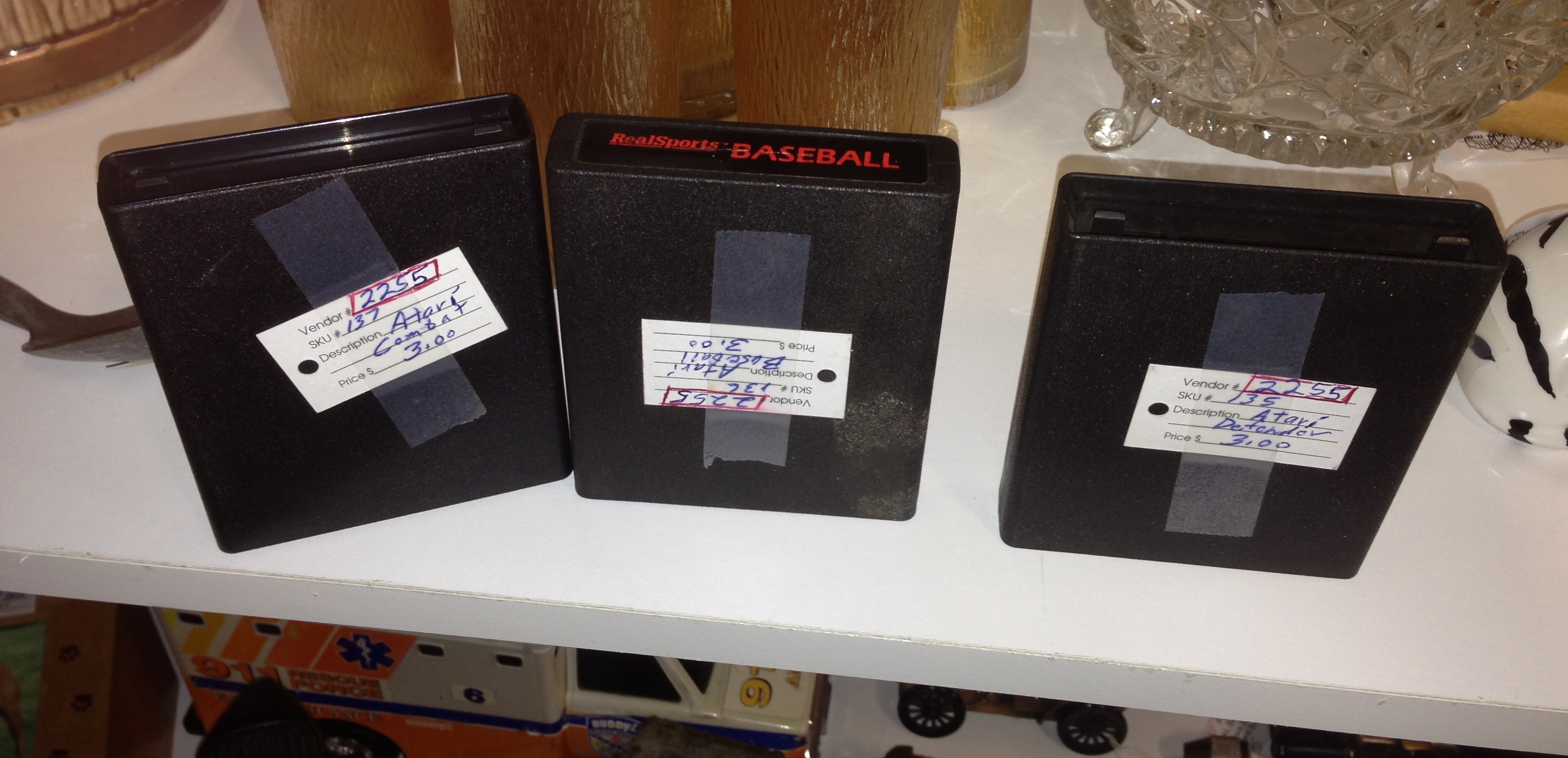
I spotted the three Atari cartridges on a shelf with some old toys, so I flipped one over to see how much they were.

$3.00 each.

For Combat, Defender, and RealSports Baseball.

If they’d have been a quarter each, I would have bought them because I’m a hoarder as much as a collector, but $3.00 was a bit too much. That’s pricing for grandparents who think that their grandchildren might like them or for hipsters who want to repurpose (ahem, “upcycle”) them into art work or something. That’s not for collectors, who know these three cartridges are worth pennies each or two copies of Frampton Comes Alive.

I also passed up a couple of Coleco faux arcade tabletop games from the 1980s, Frogger and Ms. Pac Man, because they were priced at $48.50 each. Which is about the original retail price as I recall.

As you probably know, part of what I like in collecting is not just getting the things, but getting the things inexpensively. Which is harder and harder in the Internet age, brothers and sisters, since things tend to rise up to their market values on the Internet and in many garage sales and estate sales.

And beyond in formal antique malls and flea markets.

Buy My Books!
Buy John Donnelly's Gold Buy The Courtship of Barbara Holt Buy Coffee House Memories

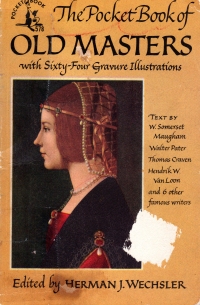
Book Report: The Pocket Book of Old Masters edited by Herman Wechsler (1949)

Book coverThis book is a 1949 paperback. Let that sink in for a minute. It’s sixty-five years old. That’s a quality paperback. And it was in pretty good shape before I started sticking it in my pockets and sitting on it for a couple of weeks.

At any rate, this book covers ten painters considered “old masters” in 1949, including:

  • Leonardo da Vinci
  • Raphael
  • Michelangelo
  • Titian
  • Bruegel
  • Rubens
  • Rembrandt
  • El Greco
  • Velasquez
  • Vermeer

Each chapter includes a two-page intro by the author that talks about the text selection for each author, and then the text that follows is some writing about the author. I have to say that generally, because some of it is biographical, some of it is interpretive, and some of it is fiction. For example, for the Renaissance Italian fellows, we have some biographical sketches of da Leonardo, Michelangelo, and Raphael. But for Titian, we get a bit of purple prose describing Titian’s works in glowing and abstract terms. For El Greco, we get a section of On Human Bondage, a novel. So it’s unfortunate that the chapters are uneven.

This book also includes a number of black and white reproductions of some of the artists’ work. It’s unfortunate that they’re only in black and white, though, but given this is a little pocket paperback from the immediate post World War II period, it’s understandable. Still, the writers often talk about the artists’ unique use of color and that’s not something the reader can see.

Still, it’s a good quick summary course in these artists and could serve as a stepping stone to further interest. I’m more interested in Vermeer now and have researched him a little on the Internet to see some of his works in actual color.

So it’s an effective book, for sure, and it made me lament contemporary art museums and the elementary school rubbish on the walls there. But that happened because few enough people in the middle of the last century cared to make artistic judgments for themselves and instead let the academics and critics dictate taste.

Books mentioned in this review:

Buy My Books!
Buy John Donnelly's Gold Buy The Courtship of Barbara Holt Buy Coffee House Memories

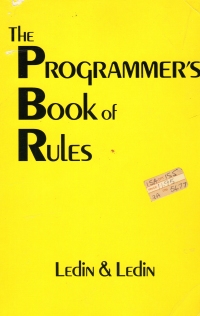
Book Report: The Programmer’s Book of Rules by George Ledin, Jr., and Victor Ledin (1979)

Book coverThis book is really one of the last books I read in 2014, but it’s taken me a while to write it up because I’m a procastinator and because I wanted to nearly-simultaneously write it up for the professional(?) blog. But now that I’m content to recycle most of the content, it’s much easier. It’s always much easier when you just give up.

As its title implies, this book really does contain a set of rules for programmers to follow: The left pages have the rules in large font, and the right pages have the rules explained in a paragraph or two. The book focuses not only on programming best practices, but also on software development best practices, and these are much more applicable to modern programming than the pre-object oriented programming lessons.

For example, first and foremost are the rules about making sure your program answers the users’ needs. Rules like:

  1. Fit your program to your users’ needs.
  2. Aim your program at the widest circle of users
  3. Explain to your user how to use the program
  4. Make it easy for the user to run the program

Other rules cover interface design, such as Display results with pertinent messages which are just as relevant now as it was when the interface designed displayed only green or amber text.

Even the discussion of loops, variables, and breaking your program into sections has a sort of relevance because it discusses these things philosophically, at a high level, in a way that programming how-to books and online language tutorials do not.

It’s a quick read or browse; although it’s roughly 220 pages (which is still slim by modern, $60 computer book standards), it’s really less than that since the text is not densely packed on the pages as described above, and it’s worth the time for the insights not only into the crystallized rules but also in the recognition of some software development problems and goals predate the Internet, which I am pretty sure some of our younger co-workers don’t know.

But now that I’ve read it, I’m torn. Do I put it on my regular read bookshelves, or do I put it on the computer programming bookshelves along side twenty-year-old hardware primers and introductions to the C programming language (some of which are thirty years old)? Well, the decision is probably less philosophical and more practical in nature: there’s space on the regular shelves, whereas the computer bookshelves are tightly pressed with books I have not read. Also, they’re behind four comic book long boxes containing most of my comic book collection and a couple other boxes of paraphernalia.

So I’m definitely putting it on the regular shelves. Because I’ve read it completely, unlike the other computer books which were for reference, text books, or the hope thirty years ago that I’d be more of a knowledgeable IT professional than I actually am. Not because I’m lazy.

Books mentioned in this review:
Buy My Books!
Buy John Donnelly's Gold Buy The Courtship of Barbara Holt Buy Coffee House Memories

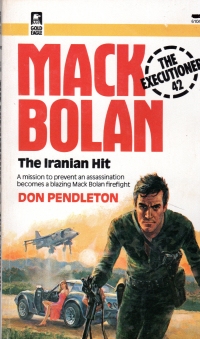
Book Report: The Iranian Hit by “Don Pendleton” (1982)

Book coverThis book follows closely on the heels of The Violent Streets. I’m not sure Mack Bolan will ever get a full night’s sleep for the next forty years.

In this volume, Bolan is called to protect an Iranian military figure on the run after the revolution who has been hiding in the United States. The night before he is deported from the country, an elite squad of Iranian commandos has been dispatched to take him out. Bolan looks over the compound and finds the security is Mafia, and that the Iranian’s American wife wants out–and the Iranian is not above killing her lover in front of her to teach her a lesson.

So Bolan comes in, finds an unlikely ally in a mafia guard and that someone inside the Iranian’s circle is ultimately behind the whole thing, tipping the Iranian government off.

The pacing of the book is pretty good, mixing action and the Bolan War Journal style drop-ins a little better, but it’s still less than seamless. As these are early books written by the staff writers at Gold Eagle, they’re bound to be less smooth than later editions as the book and myth of Bolan becomes clearer. After all, none of these guys read the first forty books before writing them, and this patch of first entries was written at the same time, so the little tics each author introduces contradicts other ones.

Also, this volume identifies a possible flaw in the way the books are written. On page 91, Bolan gives his silenced pistol to the wife of the Iranian for her protection. On page 111, Bolan shoots a bad guy with the very same weapon he no longer has. Then, later in the book, a bad guy has the gun after having taken it from the wife. I can’t help forensically musing that the author wrote the action set pieces first as though they were identified in the outline most clearly and then filled in the other stuff which lead to this particular gaffe. And no one noticed it. Maybe the author didn’t read the whole book through in its entirety in its order. Perhaps someone else punched it up and added this. But this whacky error made it into the book.

Hey, I’m no saint. In my own novel (Available now!), I had an eight day week and demonstrated the old revolver-for-a-semiautomatic switcheroo. But I read the book over and over again looking for things like this, and I found them.

The Gold Eagle books are probably rife with errata like this and with other inconsistencies as authors not familiar with the character but familiar with the tropes of the genre insert them into Bolan books (as we’ll see next time).

On the whole, the series has its up books and its down books, but overall, the quality might not suffer too much from the Pendleton books, although this is yet an optimistic view in my experience and with the hopes that they straighten out a bit and fly truer. Time will tell.

Books mentioned in this review:
Buy My Books!
Buy John Donnelly's Gold Buy The Courtship of Barbara Holt Buy Coffee House Memories

Wives Have Forty Words For ‘No’

For a quick lesson in the subtle differences in the language of wives, one can do as I have done and suggest home furnishings found in this catalog.

“You know, we don’t really watch that television in the living room. If we removed it and moved that beat-up old trunk with the old magazines in it, we would have room for a Big Buck Hunter HD Super Deluxe instead.”

No.

“Honey, how about a Star Wars Battle Pod? They’re only $30,000. That Extultate Justi blog guy would envy us.”

No.

“What about a twin Mario Kart Arcade GP DX? The boys could play together.”

No.

“Did you know there’s an arcade version of Jetpack Joyride? You know the boys pester you all the time to play that on your phone? If we got one of those, they’d leave you alone.”

No.

Did you see the subtle differences in these examples? Maybe not, for Wife is very inflectional language. But rest assured, each of these Nos was subtly different, conveying different shades of meaning. For instance, I am pretty sure the No response to the Big Buck Hunter was, “Maybe, if you paint the living room first and sell enough QA magazine articles.”

Buy My Books!
Buy John Donnelly's Gold Buy The Courtship of Barbara Holt Buy Coffee House Memories

A Movie Quiz I Wish I Did Better On

Mental Floss has a list called 22 Movies Roger Ebert Really Hated, so of course I had to use it as a quiz.

Here they are; movies I saw in the theater are in bold, and movies I saw on home video are in italics.

  • Armageddon
  • The Brown Bunny
  • Jason X
  • Mad Dog Time
  • The Usual Suspects
  • Deuce Bigalow: European Gigolo
  • Mr. Magoo
  • Spice World
  • Good Luck Chuck
  • Freddy Got Fingered
  • Corky Romano
  • Charlie’s Angels
  • Mannequin
  • Exit to Eden
  • Hocus Pocus
  • Tommy Boy
  • The Village
  • The Love Guru
  • She’s Out of Control
  • Summer School
  • Clifford
  • North

I liked Mannequin and watched it over in over in my college years because one, pre-Sex in the City Kim Cattrall and two, because in my college days I seemed to have more time to watch movies in my small video library over and over again.

I wish I’d done better on this quiz, but it’s not clear what Roger Ebert thought of films like Hell Comes to Frogtown, 9 1/2 Ninjas, and Assault of the Killer Bimbos.

Buy My Books!
Buy John Donnelly's Gold Buy The Courtship of Barbara Holt Buy Coffee House Memories

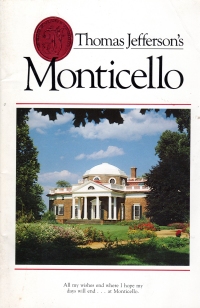
Book Report: Thomas Jefferson’s Monticello

Book coverThis book is a souvenir from Monticello. Not my souvenir, as I’ve never been. I probably got this particular book in a collection of thin books for a buck from the Friends of the Springfield-Greene County Library book sale. I’m sure I’ve mentioned it before, but these little packs remind me of the varied grab bags I’ve gotten in the past where remaindered comic books were bagged at three for a buck, and you could only see the front of one and the back of another, so it was pretty much a crapshoot or where ten packs of record singles fresh from juke boxes were bundled ten for two bucks and you could only, again, see the ones in the front and the back. That’s what you get with the bundles of thin books at the book sale, a bundle of poetry chapbooks, souvenir books, or free pamphlet-sized books for a buck. I buy them and read them because they’re quick, and they count for a whole book on my annual quest for the magical reading century mark (which I’ve missed for a couple years’ running now, but I’m well on my way this year so far.

At any rate, this book has text describing the house, grounds, and gardens of Thomas Jefferson’s home in Virginia accompanied by color photos and diagrams and maps. It’s a tidy little book, something to help guide yourself around the joint and to remember your trip.

Or to make you want to go. Like I do now.

Buy My Books!
Buy John Donnelly's Gold Buy The Courtship of Barbara Holt Buy Coffee House Memories

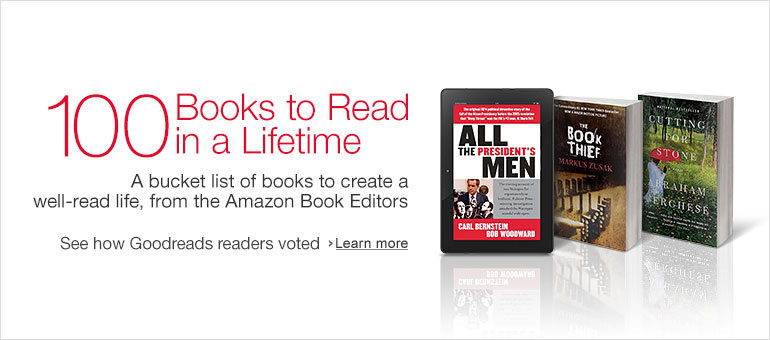
Another Top 100 of Books to Read; I Didn’t Read Many

Unsurprisingly, the first 40 Executioner novels do not comprise forty percent of the Amazon 100 Books To Read In A Lifetime.

So I didn’t do too well on the list.

Well, I didn’t do too well on the list primarily because the list is heavily weighted to modern and children’s books. Neither of which I read a lot of.

Here’s the list with items I’ve read in bold:

  • 1984 by George Orwell
  • A Brief History of Time by Stephen Hawking
  • A Heartbreaking Work of Staggering Genius by Dave Eggers
  • A Long Way Gone by Ishmael Beah
  • A Series of Unfortunate Events #1: The Bad Beginning: The Short-Lived Edition by Lemony Snicket
  • A Wrinkle in Time by Madeleine L’Engle
  • Alice Munro: Selected Stories by Alice Munro
  • Alice in Wonderland by Lewis Carroll
  • All the President’s Men by Bob Woodward and Carl Bernstein
  • Angela’s Ashes: A Memoir by Frank McCourt
  • Are You There, God? It’s me, Margaret by Judy Blume
  • Bel Canto by Ann Patchett
  • Beloved by Toni Morrison
  • Born To Run – A Hidden Tribe, Superathletes, and the Greatest Race the World Has Never Seen by Christopher McDougall
  • Breath, Eyes, Memory by Edwidge Danticat
  • Catch-22 by Joseph Heller
  • Charlie and the Chocolate Factory by Roald Dahl
  • Charlotte’s Web by E.B. White
  • Cutting For Stone by Abraham Verghese
  • Daring Greatly: How the Courage to Be Vulnerable Transforms the Way We Live, Love, Parent, and Lead by Brene Brown
  • Diary of a Wimpy Kid, Book 1 by Jeff Kinney
  • Dune by Frank Herbert
  • Fahrenheit 451 by Ray Bradbury
  • Fear and Loathing in Las Vegas: A Savage Journey to the Heart of the American Dream by Hunter S. Thompson
  • Gone Girl by Gillian Flynn
  • Goodnight Moon by Margaret Wise Brown
  • Great Expectations by Charles Dickens
  • Guns, Germs, and Steel: The Fates of Human Societies by Jared M. Diamond
  • Harry Potter and the Sorcerer’s Stone by J.K. Rowling
  • In Cold Blood by Truman Capote
  • Interpreter of Maladies by Jhumpa Lahiri
  • Invisible Man by Ralph Ellison
  • Jimmy Corrigan: Smartest Kid on Earth by Chris Ware
  • Kitchen Confidential by Anthony Bourdain
  • Life After Life by Kate Atkinson
  • Little House on the Prairie by Laura Ingalls Wilder
  • Lolita by Vladimir Nabokov
  • Love in the Time of Cholera by Gabriel Garcia Marquez
  • Love Medicine by Louise Erdrich
  • Man’s Search for Meaning by Viktor Frankl
  • Me Talk Pretty One Day by David Sedaris
  • Middlesex by Jeffrey Eugenides
  • Midnight’s Children by Salman Rushdie
  • Moneyball by Michael Lewis
  • Of Human Bondage by W. Somerset Maugham
  • On the Road by Jack Kerouac
  • Out of Africa by Isak Dinesen
  • Persepolis by Marjane Satrapi
  • Portnoy’s Complaint by Philip Roth
  • Pride & Prejudice by Jane Austen
  • Silent Spring by Rachel Carson
  • Slaughterhouse-Five by Kurt Vonnegut
  • Team of Rivals by Doris Kearns Goodwin
  • The Age of Innocence by Edith Wharton
  • The Amazing Adventures of Kavalier and Clay by Michael Chabon
  • The Autobiography of Malcolm X by Malcolm X and Alex Haley
  • The Book Thief by Markus Zusak
  • The Brief Wondrous Life of Oscar Wao by Junot Diaz
  • The Catcher in the Rye by J.D. Salinger
  • The Color of Water by James McBride
  • The Corrections by Jonathan Franzen
  • The Devil in the White City: Murder, Magic, and Madness at the Fair that Changed America by Erik Larson
  • The Diary of Anne Frank by Anne Frank
  • The Fault in Our Stars by John Green
  • The Giver by Lois Lowry
  • The Golden Compass: His Dark Materials by Philip Pullman
  • The Great Gatsby by F. Scott Fitzgerald
  • The Handmaid’s Tale by Margaret Atwood
  • The House At Pooh Corner by A. A. Milne
  • The Hunger Games by Suzanne Collins
  • The Immortal Life of Henrietta Lacks by Rebecca Skloot
  • The Liars’ Club: A Memoir by Mary Karr
  • The Lightning Thief (Percy Jackson and the Olympians, Book 1) by Rick Riordan
  • The Little Prince by Antoine de Saint-Exupéry
  • The Long Goodbye by Raymond Chandler
  • The Looming Tower: Al-Qaeda and the Road to 9/11 by Lawrence Wright
  • The Lord of the Rings by J.R.R. Tolkien
  • The Man Who Mistook His Wife For A Hat: And Other Clinical Tales by Oliver Sacks
  • The Omnivore’s Dilemma: A Natural History of Four Meals by Michael Pollan
  • The Phantom Tollbooth by Norton Juster
  • The Poisonwood Bible: A Novel by Barbara Kingsolver
  • The Power Broker: Robert Moses and the Fall of New York by Robert A. Caro
  • The Right Stuff by Tom Wolfe
  • The Road by Cormac McCarthy
  • The Secret History by Donna Tartt
  • The Shining by Stephen King
  • The Stranger by Albert Camus
  • The Sun Also Rises by Ernest Hemingway
  • The Things They Carried by Tim O’Brien
  • The Very Hungry Caterpillar by Eric Carle
  • The Wind in the Willows by Kenneth Grahame
  • The Wind-Up Bird Chronicle: A Novel by Haruki Murakami
  • The World According to Garp by John Irving
  • The Year of Magical Thinking by Joan Didion
  • Things Fall Apart by Chinua Achebe
  • To Kill a Mockingbird by Harper Lee
  • Unbroken: A World War II Story of Survival, Resilience, and Redemption by Laura Hillenbrand
  • Valley of the Dolls by Jacqueline Susann
  • Where the Sidewalk Ends by Shel Silverstein
  • Where the Wild Things Are by Maurice Sendak

I’ve even provided links to book reports for books I’ve read in the last ten years.

I’ve got 20 of 103 (The Lord of the Rings, remember, is three books).

But I’m not broken up about it. There aren’t many others on the list that I have on my to-read shelves, and only a few that aren’t that I care about.

But, hey, it’s got bloggers blogging and maybe buying books. So the list schtick worked.

(Link seen on Trey’s Facebook page.)

Buy My Books!
Buy John Donnelly's Gold Buy The Courtship of Barbara Holt Buy Coffee House Memories

Book Report: The Violent Streets by “Don Pendleton” (1982)

Book coverThis book finds Mack Bolan in St. Paul immediately after returning from Turkey (as described in Double Crossfire, which I read in 2010 before I filled in gaps in the series). One of the Stony Man operative’s sister has been raped, and it’s a like several other rape/killings that have been haunting the Minnesota capital for years, off and on. Bolan investigates and discovers that elements of the police are covering it up because the suspect is the son of an elected official, and they want to use the knowledge and cover up as blackmail on the pol.

Then Bolan shoots most of the bad guys. finis.

Still, it’s a good read, certainly better than The New War, and I can see now how the house, by removing Bolan’s focus solely on the mob, broadens the variety of plots and adventures Bolan can have (and by now has had). This one is a little more vigilantish with the bad guys not being terrorists or external enemies, but domestic crime elements. This will definitely keep the series fresh. Unfortunately, the Bolan War Journal asides that talk philosophically about the nature of Man and the Hobbesian worldview must be mandatory, and in some books they’re not grafted well into the narrative. Instead, whole chapters are dropped in with a couple of nouns changed to reflect the current plot. Also, the books generally contain a roll-up of the overarching storyline from the Bolan books, especially the Mob War of the Pendleton books. These, too, jar expositionally when they’re inserted. They’ll probably move away from them as the number of non-Pendleton books increases, but they don’t aren’t well done in these early books.

Books mentioned in this review:

Buy My Books!
Buy John Donnelly's Gold Buy The Courtship of Barbara Holt Buy Coffee House Memories

Brian J., Parental Saboteur

My son goes to a Lutheran school, and twice a week he has to recite a bible verse from memory. Today, he is to recite the Lord’s Prayer.

I shall plead innocence if I’m asked why he thinks this is the Lord’s Prayer:

Oh, Lord, it’s hard to be humble
when you’re perfect in every way.
I can’t wait to look in the mirror;
I get better looking each day.
To know me is to love me.
Well, I must be a hell of a man.
Oh, Lord, it’s hard to be humble,
but I’m doing the best that I can.

Courtesy Rev. Mac Davis:

Buy My Books!
Buy John Donnelly's Gold Buy The Courtship of Barbara Holt Buy Coffee House Memories

The Source of That Thing Daddy’s Always Going To Say

I’ve been a bit of a gym rat, off and on, for fifteen years, and although I do just enough to keep myself sorta toned and in better shape than my chair-centric lifestyle would otherwise allow, I tend to think of my self as a, well, gym rat. Regardless of whether this is true or not.

Which is why I’ve begun to use the “And I can’t stop saying ‘bro,’ bro.” line from a recent DirecTV commercial as a personal motto.

I say it after sets at the gym. I say it as a greeting. Frankly, I find myself mumbling it to myself at other seemingly random times.

As an added benefit, when I’m mumbling this to myself at the gym, nobody asks if he or she can work in between my sets.

Also, as a side note, in written communications, I’ve generally used the more Californian “brah” spelling.

Buy My Books!
Buy John Donnelly's Gold Buy The Courtship of Barbara Holt Buy Coffee House Memories

Some Silver Has A Cloud Lining

Strategic Fundraising closing Springfield call center:

St. Paul, Minnesota-based Strategic Fundraising is closing its Springfield call center.

Some employees were told Thursday afternoon that they were out of a job, effective immediately. Communications Manager Jeremy Landon told the News-Leader on Friday morning that the office will be fully closed by Feb. 7.

This is a telemarketing fundraising operation: The people who call you up and will exchange decals for some charitable organization or association, and after they collect the proceeds, they give something like 15% to the organization on whose behalf they’re calling.

Believe me. I did this for the space of three weekends when I was twenty-two.

Hopefully, this is an indicator that the business model is collapsing and they’re all going out of business. More likely, though, it probably indicates they’re either moving these calls off shore or going to an automated system, which makes the whole thing even more annoying than it already is.

Still, it sucks for the employees if it was their only job. In my case, it was one of two, soon to be replaced by another job measuring car advertisements in newspapers for marketing research purposes.

And that, friends, is how I knew that my English/Philosophy degree was paying off. I was on my way.

Buy My Books!
Buy John Donnelly's Gold Buy The Courtship of Barbara Holt Buy Coffee House Memories

The Herb Alpert Album That Gets Short Shrift

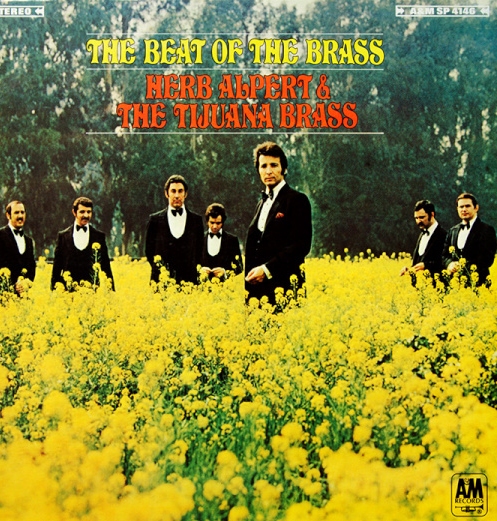
As some of you know, I have a lot of Herb Alpert LPs that I like to listen to from time to time. I listen to The Lonely Bull a lot, Rise fairly often, South of the Border and What Now My Love? [sic] frequently, and Sounds Like…. and Warm from time to time (but less often than I would if the covers did not look so similar).

You see, I pick the next album to play based on the bit of the cover that I can see in the gap of a couple inches as I flip through them on the shelf of record albums.

So The Beat of the Brass:

The Best of the Brass

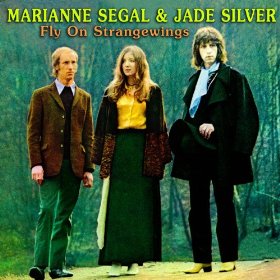
gets passed over more often than it should. Why? Because it looks just enough in that gap like Fly on Strangewings by Marianne Segal and Jade Silver:

Fly on Strangewings

I guess it’s the color of the trees in the background and the yellow ground that does it. Also, I’m generally not getting that close of a look at the cover as I flip through.

The former I bought because I like Herb Alpert. The latter I got for free twenty some years ago in the free box at Recordhead, a used record store in Milwaukee. I’ve listened to it only a couple of times.

Strangely, according to Discogs, the latter goes for $30 and was rereleased on CD this century. Maybe I should give it another listen after these twenty years.

Buy My Books!
Buy John Donnelly's Gold Buy The Courtship of Barbara Holt Buy Coffee House Memories

Book Report: Existentialism and Thomism by Joseph C. Michalich (1960)

Book coverThis book is a Thomist critique of Existentialism. Ho, boy, let’s get into some weeds.

Thomism is a philosophical system based on the works of St. Thomas Aquinas, a monk from the 13th century who wrote several thousand pages of reasoning including Summa Theologica. The philosophy is the only philosophy taught officially in the Catholic church’s seminaries and whatnot. The university I went to was apparently a hotbed of Thomism in the 1950s, or so I heard, but it did teach other systems of thought to its students. Including Existentialism. At any rate, this book looks like it’s still in print 55 years later, and that’s probably mostly because of its role in teaching Existentialism to bishops and Jesuits. But it could partly be because it’s fairly accessible.

This book is short (88 pages) and collects five separate essays that target some places where Existentialism is systemized. The essays include:

  • “Some Aspects of Freedom in Sartre’s Existentialism” which talks about Sartre’s view of human existence and its freedom to be for itself.
  • “Gabriel Marcel’s Ontology of Love” which talks about Marcel’s take on the interconnectedness of human experience. Let’s be honest: whenever the phrase ontology of love appeared, I heard it in Barry White’s voice.
  • “Mood and Cognition in Heidegger and Sartre” which discusses the importance of mood and emotion as the starting point for cognition in Heidegger and Sartre and how little beyond those base and concrete elements the Existentialists could move.
  • “Husserl and the Rise of Continental Existentialism” which talks about Husserl’s theories and how they coincide and conflict with the Existentialist mindset: namely, the importance of phenomenonism and its importance, but how Husserl’s “reductions” of the phenomena would be rejected because they abstract the phenomena away from the subject perceiving them.
  • “Thomism and the Challenge of Existentialism” is the heart of the criticism, and it explores a bit how Existentialism rebels against philosophical systems that focus on the abstract and the reasoned over the experience and subjective nature of cognition itself. It claims that Existentialism is essentially (see what I did there?) fighting a straw man, as so many other philosophical systems including the perfect Thomism derive those abstractions by reasoning from individual experience and perception and by balancing intellect with the emotions. It puts the finger on why I’ve only considered myself an Existentialist in bad moods: it really doesn’t go beyond the subjective in creating or describing reality and can’t because if it does, it threatens the subjectivism that’s very important to it.
  • “Existentialism in The Outsider“, the last chapter, seems a bit like an add-on. It takes to task an Existentialist novel by a British writer; you’re forgiven if you thought it was about The Stranger which appeared in Britain as The Outsider. Side note: This essay originally appeared in RENASCENCE, a Thomist publication at Marquette University, that hotbed of Thomism in the 1950s. At any rate, the essay rails a bit about this novel and its weak underpinings and defense of the Beatniks, those kids with their “eccentric dress and wild demeanor”. Given that novels obscurity, I have to wonder if this chapter made it into later editions.

I’m normally a primary source kind of fellow, so I’ve some familiarity with the Sartre mentioned above, and I’ve heard the names Heidegger, Hegel, and Husserl in my college classes. Heck, I might even have read them.

But it’s refreshing to pick up a criticism of the philosophy. It takes one out of the philosophy, so to speak, to see what someone else thinks of it, which can be clarifying. Of course, one must not take the critic’s depiction of the philosophy under study as the definitive representation of the philosophy. It’s another perspective on it.

So if you’re into Existentialist thought or explore it a bit, this book can serve that role for you quite nicely. It’s approachable, but it does get into deeper analysis of cognition, perception, and reality. It’s not too heady for most of it if you’re just a lightweight Existentialist who has read The Stranger and Nauseau and never even tried Being and Nothingness (I did just that: try), and the stuff that is heady does lean a little on you already knowing some terms of philosophy, so it’s not too hard to follow and even understand.

Recommended.

Books mentioned in this review:

Buy My Books!
Buy John Donnelly's Gold Buy The Courtship of Barbara Holt Buy Coffee House Memories

In 1983, This Was Unimaginable Riches

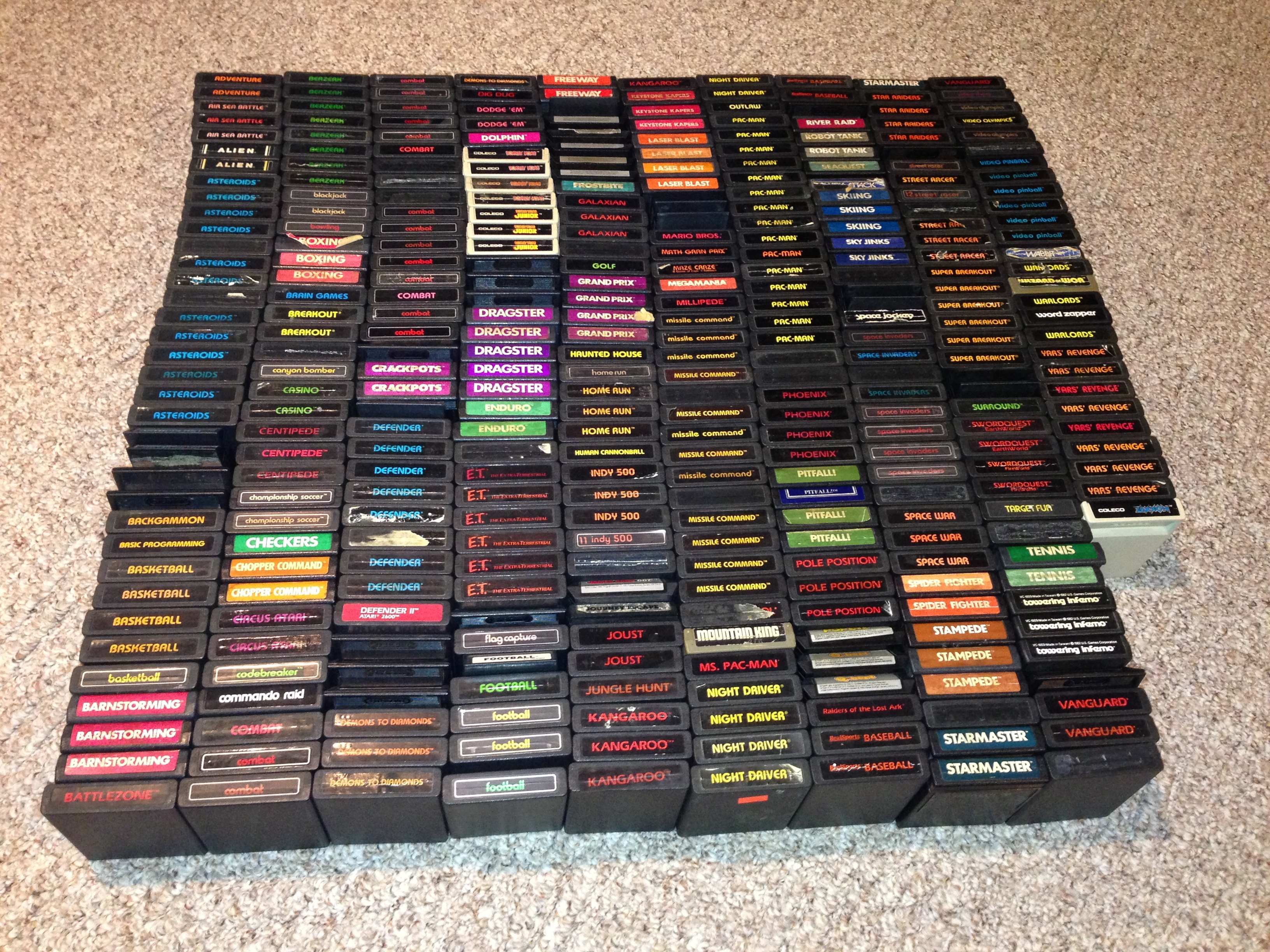
I recently received a large box of Atari 2600 cartridges from a friend who apparently got the box when a video game shop divested itself of its Atari 2600 stock. So I integrated the cartridges with my existing set, and I can say definitively that I own at least 350 Atari 2600 Cartridges.

My Atari 2600 Collection

I say at least because it’s entirely possible if not probable there are more cartridges scattered among the Ataris in their boxes.

If you’re a complete geek, you’ll want to see the list below. Continue reading “In 1983, This Was Unimaginable Riches” →

Buy My Books!
Buy John Donnelly's Gold Buy The Courtship of Barbara Holt Buy Coffee House Memories

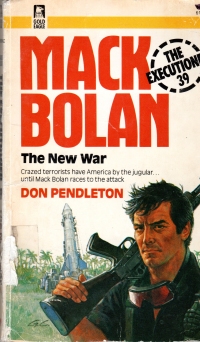
Book Report: The New War by “Don Pendleton” (1981)

Book coverThis book is the first that Don Pendleton did not write in the Mack Bolan/the Executioner series, and, boy howdy, don’t we know it. Fantastic Fiction says it was written by Saul Wernick, and I’m pleased to see this is the only entry this particular author wrote in the series.

In it, Mack Bolan goes to Columbia or Panama to exfiltrate or eliminate an agent with intimate knowledge of…something. When Bolan gets there just ahead of a hurricane, he finds the jungle lair of Islamic terrorists is a missile base and a base capable of reprogramming satellites. The makers of the satellites have provided a liaison to help the bad guys log into the satellites for some undisclosed reason. The bad guys’ bosses in the middle east want them to launch the missiles, but in the jungle, the terrorists’ plan is far more dramatic: to crash a satellite into the Panama Canal. So it’s up to Bolan to stop the plan, save the day, exfiltrate the agent and an attractive defector from the cause, and the pilots of the first helicopter that arrived to retrieve him.

So, plotwise, it’s an international thriller and not just a mafia hit. But the style of the writing is the real Louisville Slugger to the cranium. It’s less gritty and consistently introspective as the Pendleton books; it’s more florid in descriptions and does the Men’s Adventure thing with the guns, although when someone brings an automatic weapon up to the hip “in firing position,” one has to recognize that fifteen year old video gamers are probably better versed in military operations, practices, and tactics than your average men’s adventure paperback writer in the golden age of the paperback original.

Also, the guy had a thing for exclamation points. In prose. Fiction. A lot! And the plot, although workable, didn’t use much of the supporting players. Only the pilot Grimaldi makes an appearance, dramatically appearing in the hurricane with a gunship. Also, the book lacks tension, as the risk to Bolan is told rather than actually conveyed in the text. He eliminates half the base on one sortie and then worries about the other half on the next sortie. At one point, we’re concerned about all the people Bolan has to protect, then after Grimaldi’s heroic flight through the hurricane, he arrives at Bolan’s camp. And, hey, right behind him is a rescue chopper! How conveniently placed to take care of one plot point.

A subpar outing in the series, I hope. Although I’ve read a couple in the line after Pendleton and they haven’t made much impression on me. They will make more of an impression and get more of a direct comparison here as I read them consecutively and pretty quickly.

You’re not really asking, but I’ll tell you I’m almost done with the Gallic War by Caesar; I’m to Book VIII which was written after Caesar’s death to complete the account. It was written by someone other than Caesar, or so the story goes. Or did Julius Caesar fake his death? This is the Internet. All possibilities are equally valid unless they require contact with the actual physical world.

Books mentioned in this review:

Buy My Books!
Buy John Donnelly's Gold Buy The Courtship of Barbara Holt Buy Coffee House Memories