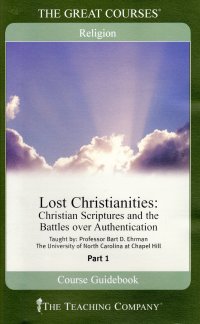
 I listened to Professor Ehrman’s The History of the Bible: The Making of the New Testament Canon in 2019.
This series of lectures takes a bit of a different focus: It looks at some of the variant Christian churches in the early centuries of the church, the first and second centuries AD, right after the gospels and Pauline letters were written. Many of these churches had different collections of books that they used as scripture, including some elements that made it into the New Testament canon and others relegated to apocrypha. The winnowing didn’t involve necessarily purging, inquisitions, and punishing heretics, although some of that was involved. But mostly this lecture focuses on the books themselves.
The lecture is structured a bit into introduction, identifying some large groups of churches aside from the proto-orthodox (which would eventually dominate and determine the canon), and then examining some of the apocryphoral books based on types (gospels, acts, epistles, apocalypses) and ending with a bit of how the proto-orthodox became The Church and set the canon–which might lead into the other lecture series.
The lectures include:
- The Diversity of Early Christianity
- Christians Who Would Be Jews
- Christians Who Refuse To Be Jews
- Early Gnostic Christianity–Our Sources
- Early Christian Gnosticism–An Overview
- The Gnostic Gospel of Truth
- Gnostics Explain Themselves
- The Coptic Gospel of Thomas
- Thomas’ Gnostic Teachings
- Infancy Gospels
- The Gospel of Peter
- The Secret Gospel of Mark
- The Acts of John
- The Acts of Thomas
- The Acts of Paul and Thecla
- Forgeries in the Name of Paul
- The Epistle of Barnabas
- The Apocalypse of Peter
- The Rise of Early Christian Orthodoxy
- Beginnings of the Canon
- Formation of the New Testament Canon
- Interpretation of Scripture
- Orthodox Corruption of Scripture
- Early Christian Creeds
When I listened to Buddhism, I marvelled at how disparate the strains of Buddhism were, especially in contrast to Christianity. One sees in this lecture series how disparate Christianity could have become without the centralizing influence of Rome on it. One wonders if Buddhism had arisen in one of the strong Chinese dynasties instead of India whether it would be more standard, or how Christianity might have evolved outside of the Mediterranean world of the Roman empire.
At any rate, I think I sharpened up some of my understanding of the gnostics, learned who the Ebionites were, and understand some of the source material for Medeival and Renaissance religious art lies outside of the Bible and in these, what, Further Adventures Of… Christian storybooks. However, if I were going to take a test on it, I would definitely have to study. I am learning the real limitations of listening to the audio courses–one that my uncle in Kansas City pointed out–that I don’t remember a whole lot from the lectures–just bits and pieces and cool stories therein. This set of lectures is fairly narrative and focused, so I hope I remember a bunch from it. But after I hit Publish on this report, unless I make an effort to bring it up elsewhere and in conversation, I probably will only retain about ten minutes of it including the Bradenberg Concerto fanfare that starts each lecture (this set is from before The Great Courses/Teaching Company changed the intro to a single chord).
Still, better than listening to the same Jack playlist on the radio all the time.



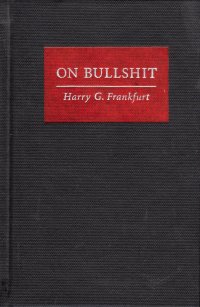 This is an essay by a philosophy professor emeritus at Princeton, published in hardback by Princeton University Press. I don’t know where I got it; I only know I picked it up as a break between movie novels because it’s pretty short.

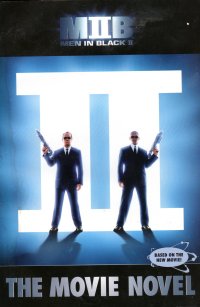 I continued with my movie and television tie-in books with this volume which is apparently the children’s / young adult version of the movie. It’s very short (143 pages, possibly shorter than the actual screenplay) and uses simple language. It deals with the sequel to the first film, where Jay has to find Kay because he had a previous mission hiding a powerful energy source that a new alien threat who looks like Lara Flynn Boyle wants it to conquer some other aliens–and Earth isn’t important, but she’s willing to take on the Men in Black and capture their headquarters to find it.
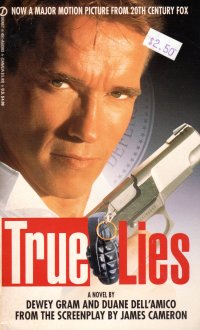 I don’t remember if I saw this movie in the theater in the middle 1990s–I think I saw it first on videocassette–but I remembered the whole plot and most of the scenes. I remember I tried to watch it in the early part of this century, but I had to pop the VHS tape out as the attacks on September 11, 2001, were too fresh for me to enjoy a film that features a nuclear detonation in the continental US. I have since watched it, though, and in continuing with the theme from this year, I read this book, the novelization.