Obsolete Technology Quiz; Or, “What’s In Brian J.’s Closet?”

Via Ace of Spades HQ’s overnight thread, we get this story: Obsolete technologies that will baffle modern children – in pictures.

You know what that looks like to me? A quiz about what things Brian J. still has lying around the house.

So I’ll bold the things I still have and will italicise the things that I had at one point because, hey, there are multiple text styles.

  • Floppy disk (I have both 5.25″ and 3.5″)
  • Sony Walkman
  • Rotary phone (I still have an old timey wall-mount phone with a cord)
  • Typewriter (I think I’m down to one old electric typewriter these days)
  • Stand alone camera (Many)
  • Atari 2600 (Also many)
  • Nintendo Game Boy (it’s on the wall, but some Game Boy Advances are in the closet)
  • Betamax (I might have had one pass through my possession in the old eBay-selling days, but I can’t be sure–I did have some Betamax cassettes though)
  • VHS tapes (which are on the shelves with the DVDs)
  • Cathode Ray Tube Monitor (Although at this point, I am down to a boxed Commodore monitor)
  • Slide projector (I don’t have one, but I do have a little slide viewer and a bunch of old slides)
  • Game cartridges (for many systems from the aforementioned Atari 2600 to the depicted N64)
  • Walkie talkies (my children have one or more sets, or at least one of one or more sets)
  • Pagers (Never had one, but carried one, briefly, when I was ‘on call’ as a technical writer for the Y2K remediation effort)
  • Polaroid instant camera (Got one for selling Olympic, but I have since divested myself of the one or more I’ve owned)
  • Answering machine (Not tape-based, but I still have the one that my mother bought me in 1997 so she could leave me messages in my new apartment)
  • Sony MiniDisc Player (Although I suspect there’s a Sony DiscMan around here somewhere)
  • Camcorder (Maybe I had one pass through my hands; I don’t know what happened to my mother’s old one)
  • Edison Gold and Stock Ticker
  • Fax machine (although I can send faxes with my all-in-one printer, it’s been a year or so since the last stand-alone fax machine passed through Nogglestead as my mother-in-law got rid of one by giving it to me to use or donate–I donated it)
  • BBC Micro (Never heard of it, but now I want one)

Jeez, I am only 11/21.

I can do better.

Also, note that my children do know many of these old technologies as a result.

Buy My Books!
Buy John Donnelly's Gold Buy The Courtship of Barbara Holt Buy Coffee House Memories

Book Report: Zen and the Art of Motorcycle Maintenance by Robert R. Pirsig (1974, 1984)

Book coverPithy remark: It’s like Atlas Shrugged for the Easy Rider generation.

Of course, that oversimplifies the book, which is a complex, multi-partite story that is ultimately less than the sum of its parts.

All right, the story, a remembered/fictionalized/stylised story, is the narrative of the author riding cross-country on his motorcycle with his young son. The author received electric shock therapy after a nervous breakdown which led him to separation from his family and, indeed, from his personality before the treatment. So as the duo (originally a quartet, as another couple joins them for part of the journey to act as foils for the narrator) travel, the author goes into a bit of mindfulness talk about taking care in the moment using mototcycle maintenance as his example and contrasts it with some parts of the modern world. Then, the story shifts into a discussion of the narrator trying to reconnect with himself before the breakdown and, at the same time, with his young son. The narrator discusses the philosophy that he was previously working on, one where Quality is capitalized and somehow supercedes mind and matter. It’s more Brahman than Buddha, but it’s still up there. As the description of the philosophy moves on, we get more into the story of how the narrator got into the philosophy starting with rhetoric and then moving onto a post-graduate philosophy program, where he, according to his telling, terrorized the department with his truth. After the retelling of the breakdown, the father and son reach San Francisco, where they are reconciled at last.

So, the nature of the narrative is compelling, and the philosophic treatise within it is interesting, but I had a bit of an Anna Karenina moment in it and had to put it down for a while about sixty percent through it so I could clear my disappointment with the philosophical treatise and get back to just enjoying the ride.

I think the book came along at the right time; given that the market is currently full of practical Buddhist mindfulness tracts as books, I don’t know if it would become quite the cult classic today as it did as the Baby Boomers were hitting their early childbearing years.

So what did I flag in this book? When he’s talking about the dynamism of understanding quality, he quotes Harry Truman:

To put it in more concrete terms: If you want to build a factory, or fix a motorcycle, or set a nation right without getting stuck, then classical, structured dualistic subject-object knowledge, although necessary, isn’t enough. You have to have some feeling for the quality of the work. You have to have a sense of what’s good. That is what carries you forward. This sense isn’t just something you’re born with, although you are born with it. It’s also something you cand evelop. It’s not just “intuition,” not just unexplainable “skill” or “talent.” It’s the direct result of contact with basic reality. Quality, which dualistic reason has in the past tended to conceal.
It all sounds so far out and esoteric when it’s put like that it comes as a shock to discover that it is one of the most homespun, down-to-earth views of reality you can have. Harry Truman, of all people, comes to mind, when he said, concerning his administration’s programs, “We’ll just try them… and if they don’t work… why then we’ll try something else.” That may not be an exact quote, but it’s close.

Although he does talks at length about ancient Greek philosophies, he somehow completely misses or does not address Pragmatism as explained by Peirce and James.

The other thing I flagged is how he uses style as though it’s a bad word. I immediately contrasted that with Virginia Postrel’s thesis in The Substance of Style and the concept of sprezzatura, where effort is to make something look good effortlessly. Pirsig puts style in direct contrast to his Quality without being quite specific enough that style itself is not the enemy, but using cosmetics to cover for the lack of quality.

At any rate, I’m glad to be able to say I’ve read it, and I enjoyed it for the most part, but it’s not the life-changing experience the cover sells it as.

Also, take a quick glance at the other titles available in the Bantam Wisdom Editions line:

It’s almost a quiz of new agey books! I’ll list them, bold the ones I know I own, and link to the ones I’ve read:

If you include this book, I’ve read half of this particular syllabus. I don’t know if that made me any wiser, though.

Buy My Books!
Buy John Donnelly's Gold Buy The Courtship of Barbara Holt Buy Coffee House Memories

What Brett Kavanaugh Does Not Want The FBI To Reveal!

Brett Kavanaugh invented Bro Country music.

That alone should disqualify him from any part of polite society.

Speaking of Bro Country, I’ve heard a new Knight Errant Bro Country song in heavy rotation as I mow my lawn. Chris Janson’s “Take A Drunk Girl Home”:

What a spectacularly bad idea given the uncertainty of memory even in its unimpaired state and the current climate.

You know, I’ve spent last week, erm, making light of these accusations from thirty-five years ago not just because I’m callous, but because I’m afraid.

Because memory is a funny thing.

Have you ever had this conversation?

“Remember that time when ….?”
“No, that was a different time. That time…..”
“Are you sure? Didn’t we….”
“No, we…. The time you’re thinking about we….”

I have those conversations all the time with my beautiful wife about things that have that took place less than twenty years ago. Some of them took place less than a month ago. So I’m not certain of my memory or anyone else’s.

In my younger days, when I was courting, such as it was, I was pretty careful in my interactions with women. How careful? Neurotic. I didn’t take liberties. As a matter of fact, I didn’t date that often.

Even so, what if a woman I interacted with conflated memories or interpreted (or re-interpreted) events later?

I remember a night in my friend’s apartment in Wisconsin. A friend, a girl who took a sort of pride (or did she?) in her sexual exploits had come along with me to Milwaukee to visit (Was it the time we went to attend my nephew’s baptism? Or did I bring her another time?). A few of us gathered and had a few drinks, and after my friend went to bed, the girl and I were to sleep on the floor, and we spent some time talking. I wondered if something would happen between us, but it didn’t, and we went to sleep.

But what if she remembered differently now? What if she blended some memories of other nights after another party and thought that I did something that now seems untoward? If she came forward with some half-memories and an allegation, she could ruin my life easily even though I remember the night clearly because, face it, I didn’t find myself in that situation very often in my youth.

Or what about the one girlfriend that I broke up with uncleanly and reconciled with briefly a year later? What if she no longer wants our intimate encounters during those times? All she would have to do is say, “Brian assaulted me,” and the damage would be done.

It really makes this Edna St. Vincent Millay sonnet less melancholy and more sinister:

What lips my lips have kissed, and where, and why,
I have forgotten, and what arms have lain
Under my head till morning; but the rain
Is full of ghosts tonight, that tap and sigh
Upon the glass and listen for reply,
And in my heart there stirs a quiet pain
For unremembered lads that not again
Will turn to me at midnight with a cry.
Thus in winter stands the lonely tree,
Nor knows what birds have vanished one by one,
Yet knows its boughs more silent than before:
I cannot say what loves have come and gone,
I only know that summer sang in me
A little while, that in me sings no more.

I mean, I can feel a little tremor of fear that what is happening to Brett Kavanaugh could happen to me except I’m not a high-ranking Republican of any sort.

I saw a meme on Facebook the other day from an Internet friend, a woman, who said that many women have been sexually assaulted, and if you joke about Brett Kavanaugh’s situation, your woman / woman friends will lose faith in you.

If you follow the above advice of Chris Janson to the letter, you can be as chivalrous as you can, but what happened and your word and reputation matter less than what the drunk girl remembers. That is crazy and dangerous.

So pardon my my gallows humor about it. Or don’t.

Buy My Books!
Buy John Donnelly's Gold Buy The Courtship of Barbara Holt Buy Coffee House Memories

Book Report: O Pioneers by Willa Cather (1913, 1990)

Book coverThis book fits right into my recent reading of books set in the latter part of the 1800s (which includes the Little House books, most recently Little House on the Prairie as well as Me and My Little Brain). Unlike the others, though, this is not a children’s book.

Instead, it tells about Alexandra, and her family’s efforts to run a farm in the newly settled upper west midwest. The book is broken into several sections. In the first, a teenaged Alexandra goes into town with her youngest brother, who loses his kitten up a pole in the winter, and a friend of hers rescues it. It’s a hard winter, and Alexandra’s father dies, and the friend and his family move away. But Alexandra goes against the advice of her brothers, who want to sell the farm and move as well, and mortgages the farm to add to its holdings as the other families move away.

End section one, and suddenly it’s sixteen years later, and all that has paid off. Alexandra, unmarried and closing in on forty, has made the family prosper, although two of her brothers resent it. The youngest, whose kitten was lost in section one, is now back from the university and is flirting with the young wife of a nearby farmer, a vivacious woman whose husband resents having to farm to support her. To make a short story into a novel, it does not go well.

The book is chock full of what my fiction writing professor would call nice little moments: A description, some characterization of the characters in the book, but the plot, as it is, meanders. We jump from struggle to success without much of that story, and as a frequent Rand reader in my youth, that’s what I’d like to read.

According to my research (which is “reading the flier that came with this Reader’s Digest edition”), the book was originally three short stories that Cather interwove into a novel. I can see that. So it’s a literary novel first and foremost.

The characters, though, seem a little thin and are drawn with less warmth than one sees in the Laura Ingalls Wilder books. Cather, who lived in the upper plains in her youth, did not end up there–she ended up on the east coast. So. I don’t think she’s writing the book for the people that it’s about. She describes some of the land as being like the hills of Lombardy. And her French immigrants are written in a vernacular that sounds more Italian than French.

At any rate, Willa Cather. You know, I didn’t read anything she wrote as part of my English degreeing (but, in my defense, I was in the writing program, not the reading program). So sometimes I kinda conflate her with Eudora Welty. And maybe Pearl Buck. I do have a copy of My Antonia around here somewhere; this book was a pleasant enough read that I won’t hide from the other novel if I find it.

Buy My Books!
Buy John Donnelly's Gold Buy The Courtship of Barbara Holt Buy Coffee House Memories

Drip, Drip, Drip

Another incredible allegation against Brett Kavanaugh:

Brett Kavanaugh once left a copy of the Goo Goo Dolls CD Dizzy Up the Girl where an actual girl could see it, and she felt uncomfortable.

(More believable accusations here. And here and here, of course.)

Buy My Books!
Buy John Donnelly's Gold Buy The Courtship of Barbara Holt Buy Coffee House Memories

The Morning Routine At Nogglestead

After getting dressed and breaking their fasts, the boys like to go outside for a couple of minutes before leaving for school in the morning to firet all of their Nerf guns at once and to explode into the open space around us.

Which means the last bit of the morning ritual is generally like that of this morning:

Father, 7:27am: “Boys, get ready to load up.”
Father, 7:32am: “Boys, load up.”
Boy, 7:33am: Brings his bike into the garage along with a single Nerf gun.
Father, 7:34am: “Number 2, where are you?” Looks in tree.
Father, 7:36am: “Number 1, go get his bike.” Which father sees in the ditch beside the road.
Father, 7:37am: “Number 2, LOAD UP!”
Boy, 7:37am: Climbs twenty feet down from a different tree. Goes with his brother to retrieve not just a bike, but also a cot, a chair, and half a dozen other Nerf guns from the ditch.
All, 7:41am: Actually leave for school.

Buy My Books!
Buy John Donnelly's Gold Buy The Courtship of Barbara Holt Buy Coffee House Memories

Another Of Brett Kavanaugh’s Dastardly Deeds Surfaces

In 1981, Brett Kavanaugh threw a Jart negligently, recklessly, or maliciously near children, showing no care no concern that this FATAL SKY BOMB might fall outside the ring on the lawn and might MANGLE, DECAPITATE, DISMEMBER, IMPALE, FORCIBLY PENETRATE, or merely CONK innocent, unsuspecting sweet children (unless they grew up to be Republicans or men, in which case they deserve the catastrophe that they did not get from that lawn dart).

Brett Kavanaugh wants to overturn Roe v. Wade SO HE CAN HAVE MORE TARGETS for his (alcohol-fueled?) mirth with these ancient weapons of war.

(Keep it tuned for MfBJN where you can get all the latest scoops on Brett Kavanaugh like this one which, if you’re reading this blog in 2027, you’ll think, “What’s that all about?” Trust me, I’ve combed through these archives recently, and some of the stuff from 2006 takes a while to remember what that particular controversy was.)

Buy My Books!
Buy John Donnelly's Gold Buy The Courtship of Barbara Holt Buy Coffee House Memories

Book Report: The Consolation of Philosophy by Boethius (524, 1962)

Book coverThis is a pretty good Stoic tract from 524. Based on the introduction, which pointed out how much Boethius influenced medieval thought, I assumed he was a Christian, but the book itself talks about God but not Jesus, so it’s safer to just say he was a Stoic.

The volume comes in five parts, a bit of philosophical argument juxtaposed with a bit of a prose poem lyrically making the same point. The schtick is that Boethius, imprisoned and under the threat of execution, is looking for peace of mind. He goes to poetry, which has given him comfort in the past, but is ultimately unsatisfying. Then Philosophy appears, decked out like Athena, and explains to him the way things are. The five “books” within the volume start out with some basic fame-and-wealth-are-transitory, being-self-contained-and-true-is-paramount sort of thing you would certainly expect from a Stoic (or a Buddhist, for that matter) and moves into where true happiness and good come from. The answer, though, is not “inside yourself,” but God. After proving God via definition, Philosophy answers why it seems like bad people succeed in life, but good people don’t get what they deserve and then whether an ordered world with an omniscient God allows for Free Will or chance (the answer tracks with something I read by Mark Halperin in First Things magazine a couple years back–that man’s perception of the universe is temporal and different from God’s). Left unanswered is whether prayer can have any effect in such a scheme–that is, whether God can or will change his mind and alter the tableau, which would mean that what he knew was not necessarily the way it turned out. But prayer comes from a more Christian thought of a personal God, which, like Jesus, is not a part of this book or its arguments.

I really enjoyed this book, but it took me a while to actually finish it. I started it on vacation early this summer and tore through the first three “books” in it. When I got back, I carried it a bit, but I didn’t end up places where I read a carry book a lot, so I put it on my side table to read in the evenings, but I didn’t pick it up and propel myself through it until recently. Strangely, this has proven to be true with a number of books this year, so I’ll my annual completion number might catch up to its historical norm as I finish these books.

But it’s a better, more engaging intro to Stoic thought than Epictetus or Marcus Aurelius.

It’s weird, though, how I’ve never heard of this guy before. And I have a philosophy degree.

Buy My Books!
Buy John Donnelly's Gold Buy The Courtship of Barbara Holt Buy Coffee House Memories

I Have An Alibi

Man stole housemate’s comic books to buy ‘food, cigarettes and marijuana,’ police say:

The Springfield man collects Magic the Gathering cards, Pokemon cards, vintage video games, figurines and more.

And some of those items — including three comic books signed by Stan Lee — carry special meaning for Pappas.

* * * *

When some of his items started disappearing early this year, Pappas said he confronted his housemates.

Some of his housemates said their video games were also going missing, Pappas said, and another couple who lived at the home claimed they didn’t know anything about it.

Narrator voice: They did know something about it.

Fortunately, this won’t happen to me, as I have children, who are already filching my role-playing games and comic books and destroying them, ruining their resale value. So burglars and housemates of questionable character (of which, we only have cats) will do better elsewhere.

Buy My Books!
Buy John Donnelly's Gold Buy The Courtship of Barbara Holt Buy Coffee House Memories

Is That The Look You Want?

Here’s the new Sam’s Club eyewear ad that Facebook is presenting me because I am squinting in all of it surrepetitious photographs it takes of me in my natural surroundings to better serve me with relevant and interesting advertisements. Little does Facebook know, I only do this to look tough. And, well, to sharpen things up a little bit because I’m probably do for a LASIK touch-up after fourteen years.

But back to the advertisement:

Where have I seen that guy before? Oh, yeah, Revenge of the Nerds:

I spent much of my youth and thousands of dollars in LASIK surgery trying to escape that look, thanks.

Although, on the other hand, Lewis did get the girl, and the actor Robert Carradine has ridden the look and the nerd schtick even into the modern day with the game show The King of the Nerds (and by modern day, I mean a couple years ago, where the ads for this television show heavily populate the comic books I’m reading from that era).

Buy My Books!
Buy John Donnelly's Gold Buy The Courtship of Barbara Holt Buy Coffee House Memories

Book Report: Travels in a Donkey Trap by Daisy Baker (1974)

Book coverThis book fits a little in with the old timey children’s books I’ve been reading lately (Little House books, Me and My Little Brain). Whereas those books were set in the late nineteenth century, this book was written by a woman born in the late nineteenth century. As she gets older, in the early 1970s, she decides to buy a donkey and cart so she can travel around her neck of the English countryside.

So her riding in the donkey trap gives her a lot of time to reflect on life and her youth. She worked for a while as a maid in a couple of houses in her younger days before marrying, so she reflects on those duties as well as her father, who drove a horse-driven delivery van. Missing from the reflections: married life or children, although she does talk about her daughter who lives on the property in the big house (where the author lives in a mother-in-law cottage). She talks about all the animals they have, including numerous cats, goats, and a rabbit. She name-checks an awful lot of flowers and foilage on the way to creating a textual landscape which doesn’t make that much sense to me because I don’t know my English flowers that much. It’s structured a bit like the Little House books in that it covers the first year she had the donkey, from her birthday in January to a nice little Christmas story.

Still, it’s a pleasant little book. Apparently, she received some notice on the news back in the day for using the donkey cart, and she turned that exposure into this book. Which made it to an American imprint, too, so clearly back in the old days, the midlists were a thing.

Question: The English call whiskey “whisky,” so why don’t the call a donkey “donky”?

Buy My Books!
Buy John Donnelly's Gold Buy The Courtship of Barbara Holt Buy Coffee House Memories

How Many Of These Six Items Do You Store In Your Garage?

My insurance company has provided this listicle about What Not To Store in the Garage, and I thought it would be a great chance at a quiz.

The items are:

  • Extra fuel
  • Paint or home improvement chemicals
  • Furniture
  • Clothing
  • Food
  • Anything fragile or valuable

A quiz for you, I mean. You’ll notice I have not bolded or italicised things that I store in the garage. Because I don’t want my home insurance rates to go up based on my blog response to a listicle composed by a 23-year-old marketing intern from a series of other Internet postings he/she/it found.

Note that storing extra fuel or solvents in your garage might also violate the contract you signed with your mortgage. What, you didn’t read it?

Not depicted, or detypeted as the case may be, on this list, other things that you might consider storing in your garage:

  • Automobiles. These things can emit dangerous gases or, based on our marketing intern’s research in watching action films, might be extremely prone to explosions.
  • Power tools. Which are electrocution dangers at best, death, decapitation, or disfigurement dangers at worst (according to our marketing intern, based on studious research of historical documents 80s slasher films).
  • Anything not valuable. They’re hazardous to your marriage if you just keep random things (or so I’ve heard) and can be a fire hazard.
  • Cigarettes. Because smoking is bad, and if you’re not planning to smoke them, you’re smuggling them, which comes with all the attendant organized crime risks.
  • Toys from the twentieth century. No matter what they are, they are killers of one sort or another. Jarts? Books printed with lead ink? Asbestos-stuffed teddy bears? Chemistry kits with real acids? Just call out the hazmat team or ordinance disposal professionals!
  • 21st Century Nerf Guns. Advances in Nerf technology have made it so you don’t need a BB gun to shoot your eye out. Or, more likely, your brother’s.

I’ll not answer that list, either.

Although if you retitle the article Whatnot to Store in Your Garage, that probably describes the contents of my garage.

Buy My Books!
Buy John Donnelly's Gold Buy The Courtship of Barbara Holt Buy Coffee House Memories

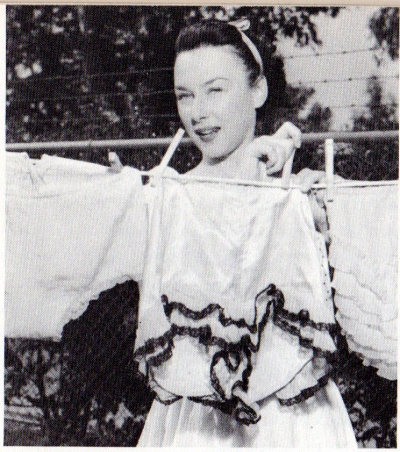
Book Report: The Life Expectancy of Pantyhose and The Poems of Middle Age by “Wilbur Topsail” (1993)

Book coverWell, what should I think about this book? Let’s get into what I think might be the back story of this volume: Based on a couple of Internet searches, I think this book was actually published in 1993 under a pseudonym. The “author”‘s name also appears in a review of a book entitled Navigating Infinity:

Author Michael Langthorne and Wilbur Topsail, the main character and narrator in Langthorne’s novel “Navigating Infinity,” have some things in common, but the novelist says it would be wrong to call the book autobiographical.

* * * *

The second part of the book features poems that Wilbur wrote from his childhood, through college and into adulthood.

“When you read the poems, you will see that sometimes he is venting and he is angry at his parents and then you will see the other side of him wanting to be a sexual person and wanting to have fun,” Langthorne says. “As he gets older and starts to mature, he writes poems that reflect the fact that he is an older person. You see that he has different feelings as he ages.”

That pretty much describes the poems in the book. It’s a lot of Rod McKuen territory, with the aging sex-seeker lamenting less sex and more aging. But instead of the lyricism of Rod McKuen, we’ve got more modern (and therefore lesser) free verse and a couple of prose pieces with some free-form association.

I didn’t like the book very much, thinking it less than some of the more earnest poetry by less serious “poets” like Leah Lathrom or Ronald E. Piggee. Piggee, as a matter of fact, would be contemporary to “Topsail”: both books were published in 1993, and both men would have been about the same age.

But as I got closer to the finish, I thought perhaps I should appreciate the book more if I thought of it less as a book of poetry and more as a collection of performance pieces. Back in the days when this book was fresh, I did poetry open mic nights, and a number of the St. Louis poets like Paul Stewart and Michael O’Brian did great performance pieces that, if you looked at them in their chapbooks, really weren’t much on the page. You could apply this to the Nuyorican Poets, too–I saw them when they were traveling through St. Louis at that time. Once I got that into my head, that maybe these were a product of the time, I tolerated the poems better.

Then I got to one poem, called “Generations”, that was pretty good. So I guess that redeemed the book for me.

It’s odd, a bit of double-effect going on here: The author is a little younger than I am now, but the poems are from my most fecund poetical era (captured, of course, in Coffee House Memories) in the middle 1990s. I can relate to some of the themes of aging now, but I was not very impressed, overall, with the execution. Especially the prose poem things which were a little free-association with little point aside from the free-association and the poetating.

Of course, now that I’m aware of it, perhaps I will pick the novel up if I spot it at a book sale to see what the older (still) author does with the material.

Buy My Books!
Buy John Donnelly's Gold Buy The Courtship of Barbara Holt Buy Coffee House Memories

Strangely, Star Trek Didn’t Seem Creepy

On Monday, my son and I had a little time to kill before a meeting, so we stopped in at a small grocery store in Republic, hoping to use the bathroom and to pick up a couple of things that were on the whiteboard on the refrigerator as things to pick up at the grocery.

Strangely, the store had neither orzo or Advil gel caps in stock, so I stopped at the service desk and bought a couple lottery tickets. I explained to my son, who balked because buying lottery tickets was a waste of money since you have no chance to win, that the difference between no chance with no tickets and an infinitesimal chance because you have one lottery ticket is completely different (left unsaid that buying a second ticket, now that is a waste of money). Also, I explained to him the important rule that, if you use the bathroom in a business, you have to buy something.

Suddenly, Facebook is showing me Missouri Lottery ads.

This is very interesting timing, especially since:

  • I paid cash because you cannot use a credit card on it. So there’s no electronic transaction tying my personal identifying information to the purchase.
  • I don’t have Facebook installed on my phone. I mean, I did, but I removed it. Or did I?

So how did Facebook know I bought lottery tickets this week? Science! Of some dark sort. Or luck.

I haven’t checked the numbers yet because I’m lazy about that sort of thing, not the sort of person to watch them as they’re announced on television.

But Facebook has not started showing me ads for really expensive things, so that probably indicates that I didn’t win. Again.

Buy My Books!
Buy John Donnelly's Gold Buy The Courtship of Barbara Holt Buy Coffee House Memories

Book Report: Little House on the Prairie by Laura Ingalls Wilder (1935, 1971)

Book coverAs I predicted when I read Little House in the Big Woods, it was not long before I picked up this book. Of course, I had some control over that, so it’s not really prophecy. As I mentioned in the previous book report, this is the third of Laura Ingalls Wilder’s books; the second, Farmer Boy deals with the young Almanzo Wilder’s experiences in the 19th century. I don’t have a copy of that book, but my youngest son is currently reading a school copy of the book ahead of a field trip to Laura Ingalls Wilder’s home near Marshfield, and he offered to surrepitiously bring the book home every night so I could read it at the same time as he’s reading it. I’m thinking about it.

At any rate, this book covers the move from Wisconsin to Indian territory in Kansas, which Charles Ingalls has heard will be opened for settlement. So they’re sooners sooner than the actual Sooners. They build a little house, meet some neighbors, and not only have to deal with the different challenges and topography of Kansas, but they also have to deal with Indians who they really, really don’t want becoming hostile. Much of the book, as in the previous volume, deals with the man-against-nature stories of building a house, trading, and whatnot, but the introduction of the Indians adds a little drama, as they can suddenly appear in ones or twos and steal your food and tobacco or get together a bunch and threaten to wipe out the settlers. But this drama is told at a distance, as the family huddles in the cabin and watches for a war party.

So it’s not a greatly dramatic narrative, but it is interesting in its historical perspectives. This book was written in the 1930s and takes place in the post-bellum west midwest, but the father speaks respectfully of natives even as others do not and, when the family is sick, a black doctor tends to them. So it’s almost suitably woke (but clearly not enough since it is not Woke™), which might lead one who is paying attention and bothers to read things not written on computers, that maybe the past was not as asleep as they’ve been told.

A couple things of note: I flagged one passage in this book, wherein Laura explains that she and Mary share a cup for drinking water at dinner, and that they only get water, and won’t get coffee until they’re adults. I contrasted this with A Tree Grows in Brooklyn, where the children drink coffee all day and all night.

Additionally, as I read this book listening to the Big Band station streaming from my DirecTV, I realized that the Glenn Miller I was listening to was closer in time to Little House on the Prairie than to today. Weird, we think about culture slowing or stopping in the eighties or nineties, but the rate of change has really slowed down before that.

So we’ll see how soon I dive into On the Banks of Plum Creek or if I take the lad up on his offer of sharing his school copy of Farmer Boy with me.

Buy My Books!
Buy John Donnelly's Gold Buy The Courtship of Barbara Holt Buy Coffee House Memories

A New Album To Look For

So WSIE played this song called “Poetry Man”, and I thought, hey, it’s like she’s singing to me!

So I researched it, and, as you might already know, Phoebe Snow’s song is not new at all.

It’s from 1974. Which means it’s newer than I am, but not by much.

Phoebe Snow’s self-titled debut LP went platinum, so there’s a decent chance I’ll find one in the wild for a couple of dollars. I’ll be on the lookout.

Buy My Books!
Buy John Donnelly's Gold Buy The Courtship of Barbara Holt Buy Coffee House Memories

A Question for the Ages

Why are both Ps in sapphire silent?

I can understand the second, which is followed by an H, but the first one is not.

So as far as I’m concerned, I’m going to pronounce it sapfire from now on.

Fortunately, I don’t deal in gemstones or gin much, so I won’t actually have to do this and make people think I’m ignorant instead of taking a principled stand for a more obvious pronunciation.

Buy My Books!
Buy John Donnelly's Gold Buy The Courtship of Barbara Holt Buy Coffee House Memories

Book Report: Sally Forth by Greg Howard (1987)

Book coverIt seems I have read these books out of order. A Woman’s Work Is Never Done, which I read over a week ago, is a later Sally Forth collection. This book appeared a year earlier. Not that it matters, though; the strips are not particularly serial in nature, and the drawing doesn’t evolve over time, and new characters haven’t been added so I’m dealing with a pre-Asok or post-Asok world (to use Dilbert as an example).

Well, the tropes are all here: The business woman who is the primary housecleaner deals with work and her family. On the plus side, although they’re not the main characters, the males in the strip, that is, the husband and the boss, are not merely the butt of jokes, as they have their moments. So we’ve got that going for us.

It did not give me a laugh out loud moment like the aforementioned later collection did, and it did give me a moment where I wondered if I’d already read a particular strip before. I might have. Perhaps I should not read the collections so close together.

Regardless, it’s the second of the two copies I bought this spring, so I am fresh out of Sally Forth collections until the October book sales at the earliest. And I’ll let them simmer on the to-read shelves for a while to keep the stories fresh.

Now that I’m done with them, my boys can have at them. I’m not sure what they will think of it. It doesn’t match their lifestyle, as mom and dad do not work outside the house, and the strips are computer- and device-free. But they do like to look at the old cartoons since they’re cartoons.

Buy My Books!
Buy John Donnelly's Gold Buy The Courtship of Barbara Holt Buy Coffee House Memories