Book Report: Our Town by Thornton Wilder (1938, 1985)

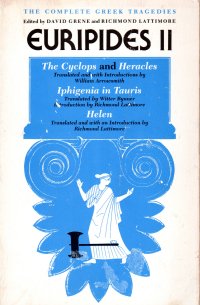
Book coverFor some reason, I had gotten it into my head that this particular play was one of the most popular plays produced by high school theatre groups. I have no idea where I got that idea–I am pretty sure it predates wide adoption of the World Wide Web–but if it’s true, I can see why. The play has a lot of characters, and most of them have a manageable (that is, few and easily memorized) set of lines. Perfect for kids getting their feet wet on stage with a couple of more involved roles for those who are natural at it and will go to Hollywood in a couple of years to have their dreams crushed. Also, it’s a play within a play!

So, about the play: It’s a high-level view of a town in three acts. The main role is the Stage Hand who narrates and breaks the fourth wall to exposit a lot about the town and its inhabitants which are kind of treated like it’s a play, but the people in the play don’t know it (hello, Mr. Shakespeare). The acts focus on two families at home, the town doctor and the paper editor, with wives and two children each. A bit slice-of-lifeish, with the first when the kids are young, the second when the son of one family is going to marry the daughter of the other, and the third at the too-soon funeral of the now-married daughter who communes with townspeople who have predeceased her.

So it’s not a very plot-driven play, as there’s no central story to it. A lot of characters walk on and have a couple of lines, sometimes about irrelevant other towns people (threads that are knit loosely into the play, but aren’t central to it). It reminded me a lot of The Time Of Your Life by William Saroyan, and I see they are contemporaneous (have I used that word in two straight book reports? Indeed.). Too many characters, too little intensely driving them.

Although I guess I liked this one a little better since it sort of celebrates bourgeous values more, although the overarching message might be one of subtle Existentialism.

This is the second of the four books that I bought this month at ABC Books (the first, of course, was The Heart in Hiding, a poetry collection). Given that the other two are also plays, it is entirely possible that I will have read them all by the next time I go to ABC Books. At which time, should it be so, I will proudly announce it to Mitchell and/or Mrs. E. So now it’s a goal (much like my goal to read all of the books I bought at Calvin’s Books last year before the end of the year–a goal I met, gentle reader).

Buy My Books!
Buy John Donnelly's Gold Buy The Courtship of Barbara Holt Buy Coffee House Memories

My Alleged Cousin Passes Away

‘Alice’ Child Star Philip McKeon Dies at 55

It’s not something from Ancestry.com or some other genealogy site, and I haven’t tried to confirm it, but when we were growing up, someone told us that we were distant cousins by marriage to Philip and Nancy McKeon. Which would have meant much more to a ten-year-old in 1982 than today.

In researching this post, I learned that my alleged cousin Nancy has kept busy acting and whatnot throughout our lifetimes, but I haven’t seen her in anything since the 1980s.

Buy My Books!
Buy John Donnelly's Gold Buy The Courtship of Barbara Holt Buy Coffee House Memories

Headline Writer Swings and Misses

Two people escape from a house fire near Battlefield, Mo.

I’m not sure why they would categorize this as near Battlefield, Mo. Here is the 2300 block of South Nolting Avenue, the scene of the fire:

Notice the town of Battlefield, Missouri, in the southwest corner.

Although this particular block is in unincorporated Greene County, it is surrounded on three sides by Springfield, Missouri, which has an isthmus that leads to the City Utilities power plant and some surrounding land. Nolting is far nearer to Springfield (a couple of blocks) than a town a couple miles away:

<

Forensically speaking, I would guess that someone told the headline writer that the fire was near Battlefield, and the headline writer surmised that meant the town and filled in the state name. However, in Springfield speak, Battlefield more often means Battlefield Road which is just south of the fire location.

A small case of the Gell-Mann Amnesia Effect? Hardly–I don’t believe much of anything I read in the news anyway. But an example of a small mistake that one can extrapolate means other small or large mistakes in basic reporting, much less anything technical or scientific.

Buy My Books!
Buy John Donnelly's Gold Buy The Courtship of Barbara Holt Buy Coffee House Memories

Book Report: Samuel Bourne: Images of India by Arthur Ollman (1983)

Book coverI had thought this might be a good book to browse during football games, but it turned out not. The book is actually weighted heavily to text, in small print, that talks about the photographer and his trips (well, trip to India which lasted roughly seven years) and the hardships of taking piles of photographic equipment of the middle nineteenth century into the Himalayas and around the Indian subcontinent.

In most cases, I decry a heavy text-to-image ratio in art and photography books, but in this case, I found it suiting since the story of his treks and whatnot were more informative and interesting than the photographs themselves. I mean, we have a couple mountain passes, a couple portraits, and a couple forts/monasteries, with an occasional figure thrown in to give a sense of scale (and sometimes the best part of viewing a photo was playing Where’s Waldo? in trying to pick out the tiny human in front of the great mountains). But they are mostly landscapes, interesting undoubtedly in their time to viewers who had not actually seen photographs of these places before. But here in the 21st century, we have it all in IMAX.

So I found the photos themselves less interesting than the contemporaneous Civil War pictures of Matthew Brady as the latter has historical significance. But the story of getting the images from this book are far more interesting than Brady’s photography given that Brady had pretty level ground and roads to get there.

Bourne was a principle in a photography shop called Bourne and Shepherd that sold prints of the photos Bourne and his partner took as well as doing portraits and official photography and whatnot. Founded in 1863, this business just closed in 2016. Which itself is fascinating.

So worth a read (22 pages, but two columns and small type) even more than a browse. It helps if you can remember the historical context, though: people seeing actual pictures of far away lands and being able to buy them for their own homes.

This is a former Springfield Art Museum library book which I just picked up last May, but the last date stamped (!) into the book is 1990. So no one has (probably) looked at this volume in thirty years. Which seems kind of sad, but it will probably languish on my bookshelves for that long as well unless my estate sale is sooner than that.

Buy My Books!
Buy John Donnelly's Gold Buy The Courtship of Barbara Holt Buy Coffee House Memories

Office Holder Put Into Position As Part Of International Financier’s Secret Plan To Remake Criminal Justice System In United States Says What?

Gardner alleges racist conspiracy in federal civil rights lawsuit against St. Louis, police union

The first black woman elected as circuit attorney in the city of St. Louis is taking long-standing racial tensions, specifically between her office and the police department, to federal court.

On Monday, Circuit Attorney Kimberly M. Gardner filed a federal civil rights lawsuit alleging a racist conspiracy to stop her from doing her job. Gardner is suing the city of St. Louis; the St. Louis Police Officers Association and its longtime business manager Jeff Roorda; a former police officer named Charles Lane who sued Gardner’s office; and Gerard Carmody and his children, who are the private attorneys appointed as special prosecutors to investigate her office’s handling of the investigation of former Gov. Eric Greitens.

Is this a conspiracy? George Soros’ quiet overhaul of the U.S. justice system:

While America’s political kingmakers inject their millions into high-profile presidential and congressional contests, Democratic mega-donor George Soros has directed his wealth into an under-the-radar 2016 campaign to advance one of the progressive movement’s core goals — reshaping the American justice system.

The billionaire financier has channeled more than $3 million into seven local district-attorney campaigns in six states over the past year — a sum that exceeds the total spent on the 2016 presidential campaign by all but a handful of rival super-donors.

Gardner would probably disagree, as she received some of that money from a foreign national: St. Louis circuit attorney candidate defends accepting super PAC campaign money from liberal billionaire.

Well, perhaps it’s a plan, but it’s probably not shadowy enough to be a true conspiracy, and it’s certainly not racist in the headline sense.

But I really wish our system of government hadn’t turned into a reality television show designed to entertain its own participants.

Buy My Books!
Buy John Donnelly's Gold Buy The Courtship of Barbara Holt Buy Coffee House Memories

The Conformist Society Produces No Individualist Iconoclasts

I was reading or hearing something about the difference between conformist societies like the ones you find in China and Japan with the individualist societies you find in the West. Strangely, I cannot remember where I read this. A book? An Internet article? An audio course?

However, that little insight answers this question for you: Why Does China Have 1.4 Billion People and No Good Bands?:

Fans attribute the success of the Hu to the group’s blending of Western metal with local styles. But it’s only the most well-packaged instance of an ongoing phenomenon. Mongolia has a strong tradition of rock groups working to modernize traditional sounds. Altan Urag, a Mongolian folk rock group from the capital of Ulaanbaatar, first succeeded in electrifying traditional Mongolian instruments almost 15 years ago. And it gave heavy metal the distinctive growl of throat singing with its seminal 2006 album, Made In Altan Urag. Mongolian bands like Khusugtun, Altain Orgil, Jonon, and Mohanik have all tweaked folk music to modern ends.

That’s a stark contrast with Mongolia’s neighbor China. Despite having 1.4 billion people to Mongolia’s mere 3 million, there’s no such thing as a distinctive Chinese national sound that mixes tradition and modernity in the same way Mongolians do—at least none that has become a serious commercial player. Instead, China has been left churning out a stream of pale imitations of other countries’ genres. That raises a big question: Why does Mongolian music slap so hard and Chinese music (with a few exceptions) suck?

Because metal musicians would be a threat to the regime/social order and would be punished.

I would be remiss in not posting a sample of The Hu:

If you will excuse me, I’m off to study Mongolian so I can put that on my gym playlist.

Also, the over/under on Mongolia conquering China, again, is twelve years.

(Link via Instapundit.)

Buy My Books!
Buy John Donnelly's Gold Buy The Courtship of Barbara Holt Buy Coffee House Memories

Book Report: The Heart in Hiding by Jane Daley Kraus (1981)

Book coverThis comb-bound book has a 1981 copyright date, but the author’s autograph on the title page is dated 1990, so nine years later, she’s still signing them for people. At poetry readings/open mics? For friends? For the little bookstore down the block? I cannot tell, as it’s just a signature and the date, but that makes it seem like it was a less personal occasion and something more formal. Still, working it nine years later. I wonder if she printed that many of them in 1981 or was reprinting them as needed. It’s a lot to speculate about on a simple chapbook.

At any rate, it was a pleasant read after At the Mountains Collections of Madness. As you might recall, I didn’t care for that previous volume very much. It’s too modern, where the poems are mainly free verse which, at their worst, are inscrutible verbiage (sometimes) and, at their best, are brain dumps with little apparent craftsmanship. I also saw that the editor of the Marshfield Mail, the current Missouri Poet Laureate, posted a piece of free verse in the paper and defended it a bit as poetry a week or so back, and I thought, “Meh.”

So some better-than-average Grandma poetry was in order. Well, some Grandma poetry, which I am taking to calling the poetry written by housewives in the middle of the 20th century. The sort that filled Ideals magazine. The kind of thing Leah Lathrop and Bobbie J. Lawson, amongst many other examples scattered over this blog, wrote. Formal, rhythmic, and sometimes with an insight or two into the human condition.

This collection was written by a Long Island housewife and deals with tending to children, continuing to be in love with your spouse (and working at it), and other mid-life (that is, the bulk of life) concerns. Some are quick little hits, bits of humor about phone use back when the family only had a single phone connected to the wall and family members contended to talk on it. Some are longer reflections about family and long-term romantic relationships. Some drop contemporary references to movies and soap operas whose titles and players are forgotten in the 21st century.

Overall, a better than average collection of Grandma poetry. Some workmanship and some insight, but it doesn’t rise to the level of high art. But better than most of the dreck produced by professionals, who will also be forgotten in the ages, wherein “ages” might mean “couple of years.”

Buy My Books!
Buy John Donnelly's Gold Buy The Courtship of Barbara Holt Buy Coffee House Memories

Spoiler Alert: No, No, It’s Not

Fashionable millennial men are all about nail art:

While iconic rock stars such as David Bowie and Mick Jagger started embracing color nail polish decades ago, a new generation of A-listers are bringing high-fashion nail looks to the mainstream: Singer Bad Bunny gets a manicure with black polish in his 2019 “Caro” music video and actor Ansel Elgort rocked a white nail look at last week’s Golden Globes.

The trend of men showing off their nail art has just begun to skyrocket, says Britney Tokyo, an LA-based celebrity nail artist. Her client roster (Kim Kardashian, Kylie Jenner, FKA Twigs) now includes actor Luka Sabbat and heartthrob Harry Styles, whose fruit-themed nail art design, inspired by his “Fine Line” album and “Watermelon Sugar” single, went viral last month.

Uhm, yeah, not seeing the potential to skyrocket here. We have the word of a nail artist to the A-listers promoting her business, and a bunch of people I’ve never heard of and whose importance and appeal lies in filling column pixel inches on celebrity-sniffing Web sites (like NYPost.com) who paint their nails for attention on such Web sites.

I am not sure this will catch on with your average millenial.

(Hey, Brian J., didn’t you once paint your nails black? Well, everybody has a Goth phase. And I won my category in the costume contest, so there.)

UPDATE: Weeks later, Kim du Toit agrees.

Buy My Books!
Buy John Donnelly's Gold Buy The Courtship of Barbara Holt Buy Coffee House Memories

Now In Paperback

I was researching this post, and by “researching,” I mean I was looking for the Amazon link for There Will Be War Volume X when I discovered that it’s available in paperback as of December 2019.

It’s definitely more real than a Kindle book, and I will still have it when the megacorporvernments decide Vox Day is beyond the pale and strike him and all his works from history.

Buy My Books!
Buy John Donnelly's Gold Buy The Courtship of Barbara Holt Buy Coffee House Memories

Weather Report

Last night, we had severe thunderstorms, dime-sized hail, and a tornado warning. Today, it’s freezing rain changing over to snow.

Tomorrow: who knows?

I kind of miss living where winter is wintry. And the seasons are, for the most part, separate.

Buy My Books!
Buy John Donnelly's Gold Buy The Courtship of Barbara Holt Buy Coffee House Memories

Book Report: The Te of Piglet by Benjamin Hoff (1992)

Book coverIt’s been two years since I read The Tao of Pooh, and I mentioned I had this book around somewhere, maybe. I’m not entirely sure if I found it or if I bought it in the interim, but its absence on the Good Book Hunting post in the interim suggests the former.

Like the predecessor, this book seeks to illustrate Taoist thought through a whimsical mash-up with Winnie-the-Pooh stories. The title character in this case is Piglet, who is small but Taoism would suggest (as the book asserts) that he is the right size. So we get a little of the author interacting with the Pooh characters, a little bit of text from actual Pooh stories, and chapters on different personality types demonstrated by the Pooh characters and how they’re not properly Taoist (Eeyore is too negative, Tigger is too positive, and so on). We get helpful quotes from other sources, such as Henry David Thoreau as well as actual Taoist thinkers.

It’s okay; a little less informative than The Tao of Pooh and a little more, erm, practical and contemporary in its descriptions of kids these days and how modern life isn’t very Taoist. He foreshadows a bit when he laments about the government whipping up a frenzy to remove the foreign tyrant of the day. Looking at the publication date, we can tell that this was Saddam and the first Gulf War (Desert Shield/Desert Storm).

Then we get to page 214, and we get completely into how the Republicans are going to cause the Taoist apocalypse through their rapacious greed and desire for profit/conquest. No, really. The harms done by Reagan, G.H.W. Bush, and their supporters were going to cause Nature, the Tao, or the Nothing to violently respond and swing the pendulum back the other way towards harmony. Perhaps that was the election of Clinton later in the year. Maybe we’re still due for a reckoning, since we had George W. Bush. Friends, the narrative sucker-punch gained precedence in the early 21st century when authors dropped in unwarranted political commentary in books to prove they hated Bush like any right thinker would. This one comes from a decade and a whole Bush earlier.

So, yeah, I can see why this book would not have been as popular as its predecessor.

An easy enough read, but the author’s interactions with the Pooh characters detracted from it in spots, such as the introduction of a, what, mob-connected hardman, into an otherwise engaging exploration of Taoism. Well, engaging when it wasn’t completely off-putting with a misplaced and misguided tirade.

Buy My Books!
Buy John Donnelly's Gold Buy The Courtship of Barbara Holt Buy Coffee House Memories

On Best. State. Ever. by Dave Barry

Book coverI checked this audiobook out of the library for a quick listen that took a couple of weeks as, although I played it in my primary truck, my beautiful wife was not a big fan, so I had to listen to it when she was not in the car.

Not a fan of Dave Barry? I was unaware that was a possibility in human nature.

At any rate, this book was published in 2015, so it’s a fairly modern sensibility from his ouevre. The schtick is that he’s defending his state from the national news stories of Florida Man, or rather perhaps explaining why his state is home to Florida Man. As such, he visits a number of oddball and sometimes known locations in Florida such as Weeki Wachee (the tourist attraction and now state park with the mermaids), Lock and Load machine gun range in Miami, Key West, and a bunch of other places and rates them using a scale of out-of-order Mold-o-Matic machines.

So it’s Dave Barry, now in the 21st century with curse words, so you know what you’re in for. A lot of amusement and perhaps a laugh or two in the interim.

Probably a little better than Jean Sheppard for those of contemporary sensibilities.

Now, back to the audio courses.

Buy My Books!
Buy John Donnelly's Gold Buy The Courtship of Barbara Holt Buy Coffee House Memories

Like An Aging Rock Band’s Farewell Tour

The Very Last Volkswagen Beetle Rolls off the Production Line:

This is finally the end of the road for the long-serving Volkswagen Beetle as the very last third-generation model rolled off the production line in Mexico today, having sold more than 1.7 million copies worldwide since its debut in 1998.

. . . .

Although the air-cooled Beetle disappeared from the U.S. market in the late 1970s for a multitude of reasons, it seemed at the time that a new Beetle was inevitable; we just didn’t think it would take until 1998 to get one. After several years of rumors and teasers, the New Beetle arrived just as an entire generation of buyers of growing affluence realized they were suffering from a debilitating case of nostalgia.

Although it might be that the generations we’re raising now won’t have a sense of nostalgia to resurrect automotive styles. If they bother to buy cars at all.

Buy My Books!
Buy John Donnelly's Gold Buy The Courtship of Barbara Holt Buy Coffee House Memories

Brian J.’s Brief Audubon Society Membership

So I got a mailer a couple months back for the Audubon Society, and I signed up as a member. I have many, well, a couple memories of the Audubon Center near Milwaukee. My father took us there from time to time; I remember the ranger/caretaker’s name was Randy. He had a son a bit younger than us named Troy, I think, and I even remember attending a Christmas party at their home which was on-site. Well, I think I remember these things, anyway. Who knows what I remember and what I make up any more.

So I joined because I support conservation efforts. I’m often a member at the local national park (well, battlefield). I’ve been a member of Ducks Unlimited for many years. I’ve sent money to the Arbor Day Foundation off and on.

But then I got my first Audubon magazine.

The editor’s column has a picture of the US Capitol building behind it. It has an interview with Margaret Atwood. And just about every article in the magazine is about how climate change is destroying birds’ habitat.

So it’s morphed into more of an advocacy and lobbying organization judging by the magazine articles rather than a conservation organization, although if I went to more Audubon Centers, perhaps I would get a better sense of on-the-ground (and in-the-air) work they’re doing instead of beating the drum for climate change.

The Ducks Unlimited magazine, by contrast, does talk about conservation and getting the government more involved, but it overwhelmingly contains articles about duck hunting. Which is what it’s for: conserving wetlands so we’ll have ducks in the future. The Arbor Day Foundation newsletter has information about trees. But Audubon seems focused on climate change and action/compulsion necessary to prevent it.

So I’ll probably let my membership lapse in a year. And if I want pictures and articles of birds, I’ll resubscribe to Birds and Blooms

Buy My Books!
Buy John Donnelly's Gold Buy The Courtship of Barbara Holt Buy Coffee House Memories

On The Bible as the Root of Western Literature: Stories, Poems and Parables

Book coverSo I had expected to listen to this course, one from my personal library, on trips to St. Charles or the trip from Springfield to Poplar Bluff to St. Charles to Springfield that I’d planned to take last month, but unfortunately, I did not get that travel time, so I’ve been listening to it in fits and starts in my back-up truck.

And, to be honest, I was not making excuses to drive the truck just to listen to more of the course.

The course looks at parts of the Bible in the context of genre literature, whether it’s because the part of the Bible being examined is part of that genre or tradition or because other works in the genre might have their roots or allusions to Bible parts.

Lectures include:

  1. Authorship and Style in the Torah
  2. Cain and Abel in Story, Theology, and Literary History
  3. Icons and Iconoclasm: From Moses to Milton
  4. The Story of King David, or the Varieties of Love
  5. The Song of Solomon: The Poetry of Sacred and Profane Love
  6. Psalms: The Poetry of Praise and Supplication
  7. Proverbs: The Way to Wisdom
  8. The Book of Job: The Problem of Evil and the Aesthetics of the Sublime
  9. Ecclesiastes and the Questioning of Wisdom
  10. Isaiah and Prophecy
  11. Typology: The Life of Christ as Fulfillment of the Old Testament
  12. Parables: The Form of Jesus Preaching
  13. Paul: The Letter and the Spirit of the Law
  14. The Book of Revelation and the Symmetry of the Christian Bible

The course overlaps enough with The History of the Bible: The Making of the New Testament Canon that it felt almost like a reprise at times. Some of the connections to modern (or at least more recent) literature seemed a bit thin, but perhaps I’ve already studied enough literature and its biblical allusions that it wasn’t fresh.

I guess I got the most out of the penultimate lecture on the spirit versus the letter of the law. So I did get something out of it, but that’s only a little out of, what, eight or ten hours of listening?

Probably I am being too hard on it; surely, repetition of things I’ve already heard or learned solidified it in my mind a bit, but it’s not as stark or startling (or pleasing) as completely new information.

So what I’ve said about the audio courses I listen true holds: The more it aligns with the fields I’ve studied / read a lot of already (English literature, philosophy), the less I actually get out of it or the more bored I am with it. The audio courses I like the most are the ones that teach me the most I don’t know. Unfortunately, in the past, I’ve tended to pick those very courses that will bore me up at library book sales and whatnot. Well, I did, until I discovered the secret. Now I look for courses in interesting disciplines that I don’t have a degree in, or I get them from the library, and I get more from them.

And the vast library of courses I already own, these I shuffle in from time to time.

So, do I recommend it? If you’re not already versed in the material, it might be worth your time. Or if you have a long commute or lots of time in the car and need something besides the desiccated playlists of modern FM radio.

Buy My Books!
Buy John Donnelly's Gold Buy The Courtship of Barbara Holt Buy Coffee House Memories

Authors I’ve Given Up On

OregonMuse elevates a question from the comments on the stately, prestigious, internationally acclaimed and high-class Sunday Morning Book Thread at Ace of Spades HQ:

28 Mr. Muse: Have you ever been a fan of an author, then one day realize you are completely done with him/her? The first time this happened to me was Ludlum’s “Parsifal Mosaic”. The last 30 pages rendered the preceding 600 pages irrelevant. With Tom Clancy it was “Sum of All Fears”. After 150 pages the plot hadn’t yet started, but we got a lot of detail about Jack Ryan choosing his favorite wines. Boy did that need an editor. More recently I quit Harlan Coben when I got tired of reading the same story over and over. Also, once you realize he has zero wasted characters, you come to realize that the bait shop attendant (or who ever) briefly mentioned in passing will be a major character.

Posted by: Buck Throckmorton at December 22, 2019 09:21 AM (d9Cw3)

OM, who by the way is the Salesman of the Year whenever he mentions on of my books on the book thread, throws out Heinlein, almost. Commenters on the original thread mention Robert Ludlum, Tom Clancy, and Stephen King.

Although I have been known to abandon books (four in this decade alone), I don’t know that I have abandoned that many authors.

I mean, I can think of John Sandford, whom I last read in 2012 with the cri de coeur:

This book will probably be the last of the Sandford novels I read for a while. I’m tired of them. To recap, the progression kind of followed that of Robert B. Parker’s later work: I bought them new until I couldn’t take the thematic material stretching between the books, then I got them from the library not too long after their release, and then I got to getting them from the library sometime, maybe.

I might have done the same to Parker himself if he’d lived a couple more years. He was injecting politics more into his books as the twenty-first century wore on. He rather killed his characters’ ethos in Stranger in Paradise. Although I read several other books by him after that book, he really was on borrowed interest.

OregonMuse says he gives up on series, and when we’re talking about Parker, I might as well point out that I’m not even sure if there are further entries in Parker’s Spenserverse or Westerns that I’ve missed. I haven’t looked for them, I haven’t seen them in the book stores or on the tables at book sales. So I guess I have given up on them.

As to Clancy and King, I haven’t given up on them, per se. I still pick up their books from time to time and/or have a collection of them on the shelf, but I’m not in a hurry to read them. I haven’t even given up on The Dark Tower series even though I read The Drawing of the Three and thought it completely botched and subverted the first book (at least, I think that’s what I thought–it was twenty-five years ago).

I’ve also said that I’m putting Lee Child into a time out. Will that turn into a permanent giving up of? Perhaps. I guess time will tell.

Perhaps a better question is What writers can you read over and over again? which might be topic for a later post.

Buy My Books!
Buy John Donnelly's Gold Buy The Courtship of Barbara Holt Buy Coffee House Memories

Book Report: In Focus by Jim Rathert (2004)

Book coverI thought I might browse this book of photography during football games, but it’s more than a book of photography. Although it does have a lot of great photos of native animals and landscape around Missouri, it also offers photography tips and discusses various habitats and geographical types we have in Missouri, from the different types of forests (and what constitutes an actual forest as opposed to a woodland).

So I enjoyed it. Every once in a while, I think about getting into photography, but books like this might daunt me as I learn how much effort a professional photographer puts into it.

Although he did admit that for some wildlife, he puts them into an enclosure designed to look like their habitat and then gets pictures of them doing their thing there instead of out in the wild. Which probably makes sense when you’re on a deadline. And it tells me if I want to become a nature photographer, I should start at the zoo.

At any rate, I enjoyed this book more than a simple book of photography. Like The World of the Polar Bear, it informed me about the process as well. Which is more interesting sometimes than the mere photos.

Buy My Books!
Buy John Donnelly's Gold Buy The Courtship of Barbara Holt Buy Coffee House Memories

The Folder of Broken Dreams

Okay, perhaps the title oversells it, but on my computers for the last, what, twenty-five years, I’ve carried along and copied over the novels I have started but have not yet finished.

I went looking for a novel I’ve been conceptualizing, doodling on legal pads, and, I thought, plinking on keys in a word processor for a couple of years now, off and on.

It wasn’t in my novels folder.

Instead, as I mentioned, a collection of mostly incomplete stunted attempts at novel writing, including:

  • Canny, Awake!, a science fiction novel based on my poem “Canny” which appeared in There Will Be War Volume X. File date 11/2/2015. One sentence long, but without the period at the end.
  • Down At Joe Jack’s, my post-collegiate “What am I going to do now?” novel. File date 8/24/2003. 7962 words.
  • The Flight of Ban Laoklan, a fantasy novel I started in college. File date 6/17/2001. 427 words. It has stray formatting marks in the title, probably because the file originated in LotusWorks on a 286. How old of a computer is that? We don’t even know what chips we have in our computers today.
  • The Gospel of John Methodis, a kind of From the Mixed Up Files of Mrs. Basil E. Frankweiler for adults. In the middle to late 1990s, I volunteered with a local theatre company, acting as their house manager, stage manager, or concession manager for various productions, and the performances often took place in an old Methodist church in a neighborhood where we had to lock the doors after the curtain went up. This novel was set in that church which has since been razed for upscale housing. File date 2/6/2007. 290 words.
  • Hellsgate Real Estate is more of an idea than a started novel; the only file in the folder is notes.docx. File date 7/12/2016.
  • John Donnelly’s Gold, the only published novel in the bunch (available on Amazon and other places).
  • Kinslayer, a fantasy novel. Features chapters with titles as does John Donnelly’s Gold, a device that helps me a bit in outlining the story. File date 6/7/2001. 5680 words.
  • Madame President, a sequel to Marquette Minus One below. Started in college, natch. File date 6/7/2001. 5307 words.
  • Marquette Minus One, a crime fiction novel I wrote in college, completing it circa 1993. This is the book I mentioned in the review for Killing Floor featuring the large ex-military protagonist. Haven’t considered self-publishing it because it’s not that good. File date 6/7/2001. 53190 words.
  • The Search for the Silverblade, a fantasy novel that, quite honestly, I don’t remember even though I banged out 6517 words on it. It starts with a long legend-like poem. File date 6/7/2001.
  • Second Coming, a fantasy novel. Features a prelude that is almost a stand-alone short story. My beautiful wife has read the draft, and she still wants to know what happens next years later. Folder includes a spreadsheet that tracks my progress and includes a list of scenes upcoming. Last file date 11/23/2003. 13873 words.
  • Unsecured, a thriller novel featuring a blogger protagonist. The novel I would have been working on before John Donnelly’s Gold. Folder also features a spreadsheet to track status. File date 6/25/2005. 2465 words.

The date of April last year represents when I copied the directory over to my new PC. 6/7/2001 probably represents a similar move across PCs.

But I could not find The Saviors from Mars Deep, the tentatively titled latest attempt at a novel. As I was working on this post, it occurs to me it might be in the temporary writing folder on my (old) laptop. I hope so. If not, I wasn’t that far into it, so I won’t have lost much.

As I look over the history listed above, it looks as though I got thousands of words into projects before abandoning them because I got bored with them or something else came up, and I abandon novel projects with fewer words invested in them. Either I’m becoming more efficient, or I’ve become more busy. Or lazy.

So will I get to finishing these? Perhaps Second Coming since I have at least an audience of one hoping for it.

And perhaps I will find the existing tappings at The Saviors from Mars Deep and get a couple thousand words into it before abandoning it or several tens of thousands of words before publishing it.

Time will tell.

Buy My Books!
Buy John Donnelly's Gold Buy The Courtship of Barbara Holt Buy Coffee House Memories