Book Report: The Way by Salesian Missions (1983)

Book coverI got three of these little Salesian Missions poetry collections a year ago at the Friends of the Library Book Sale, and this is the first of them that I’ve found to read. Actually, I had it on the lamp table beside the sofa upstairs which became a minor book accumulation point after last summer’s vacation, where I carried the habit of lying on the sofa reading a book home. But a couple of collections of poetry (including this one) lingered there since autumn or winter as I’ve started a new tradition of reading a magazine in the chair in the bedroom as the final step-down to bedtime.
This book was a free giveaway to potential supporters in mail campaigns in the 1980s. I remember that one or more of them passed through our household, although I am not sure whether my sainted mother would have given money to them. After all, Salesian Missions is a Catholic charity; perhaps they had my father’s name on the envelope, as he was nominally Catholic.

This volume is 32 pages of grandmother poetry focusing on religious themes, but generic Christian religious themes–you get Jesus and you get God, but no Mary. The small pages are akin to Ideals magazine, with the poems set on pages surrounded by illustrations of homey and old-timey scenes and landscapes. Basically, the target crowd overlapped a lot with people who would subscribe to Ideals. They’re poems, too, not prayers; some are addressed to God, but most of them talk about God instead. Quality varies from meh to okay, but really, this is everyday poetry, the kind that people who were not academic poets or kept by patrons wrote. Normal people. I mean, jeez Louise, my father wrote poetry not unlike this. So it’s not designed to be profound, meaningful, or obscure to differentiate the Poet from the Rubes without advanced degrees in literature. So it was nice, and a quick read, and I suppose it could fit into one’s daily devotions if one were so inclined.

At any rate, it was a quick read, which I needed as I’ve been reading large tomes lately. And I kind of look forward to the little respites (and the incrementing of the annual blog total).

You know, I wish some of the charities wishing to entice me today would send out little books of poems. I get a lot of come-ons from Catholic charities (but not Salesian Missions) as a subscriber to First Things, Touchstones, and maybe The New Oxford Review. I get a lot of address labels, a couple of notepads, a coin from time to time, and a pin once, but no poetry. I guess the middle class of potential donors has moved on from reading for the most part, more’s the pity.

Buy My Books!
Buy John Donnelly's Gold Buy The Courtship of Barbara Holt Buy Coffee House Memories

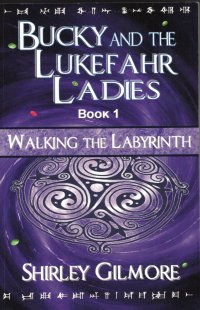
Book Report: Walking the Labyrinth by Shirley Gilmore (2017)

Book coverI got this book and four others in its series and a related stand alone novel in July 2022 in a trip that was noteworthy as I had instructed my oldest on how to parallel park, and he drove us to ABC Books. Reading the book comes at a parallel time as my youngest is completing his instruction and needs to learn how to parallel park. Will we make it to ABC Books as well? Maybe not.
At any rate, this book is the first in the series about a 10-year-old girl who moves to a small town, Turn Back, in southeast Missouri. Her father, a famous and successful mystery author, has bought an old spring resort to keep her in seclusion because every time she cries, mysterious scars on her back open, and she bleeds. She might be his daughter, though, as the author’s daughter disappeared one night in her crib and someone else apparently took her place–a larger baby whom the author raised by himself as the wife disappeared shortly thereafter.

So they come to Turn Back and try to keep to themselves, but a neighbor boy about Bucky’s age is drawn to them, and they meet his great-great grandmother who is raising him, and they start to attend the local Methodist church which leads to Bucky beginning a “prayer walk” in the city park which leads to the participants sharing dreams, first of mastadons (which stop when flooding reveals a number of mastadon fossils) and about ships (which stop when they find an ancient stone with Hittite markings on it). Along the way, hints of a greater mystery are doled out: Did ancient seafarers reach the center of the United States? Why does the father keep calling Bucky Imala by accident? The major conflict, such as it is, is with a local firebrand preacher who torments the prayer walks as sinful and calls the father “the Devil.”

I am not sure that the cozy fantasy exists as a genre, but that would describe the book. It is just short of 700 pages, and for that bulk, not a lot of plot happens. To be honest, some of the characters outside the father and daughter are still kind of ciphers. But we get a lot of what it’s like living in a small town, going to church in a small town, and so on. We get chapters, chapters where the characters have dinner or hold a talent show, which doesn’t exactly drive the plot forward. But the writing is very good, and it carried me along so that I would read over a hundred pages or even two hundred pages in a sitting and only then think critically, “but what has happened?”

The book ends with a solution to one of the mysteries, but others remain for solution in future volumes.

So, gentle reader, what do you think: Will Brian J. jump right into the next volume or read something else in the interim? Stay tuned!

Buy My Books!
Buy John Donnelly's Gold Buy The Courtship of Barbara Holt Buy Coffee House Memories

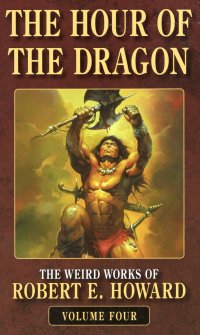
Book Report: The Hour of the Dragon by Robert E. Howard (2008)

Book coverI was going to say that I just read this, but it turns out that “just” in this case means ten years ago as this title, the only Conan novel that Howard wrote, was included in The Bloody Crown of Conan.
In it, Conan has become king of Aquilonia, but the Zemedians hope to conquer Aquilonia and place a puppet on the throne, so a shadowy group resurrects a sorceror who has been dead several thousand years. When Conan arrays his forces against the invaders, a magic spell paralyzes him in his tent, so he sends out a friend in his armor to lead the battle. But the friend is killed by magic along with much of the cream of the Aquilonian forces, and Conan is captured. He escapes from his dungeon and has to go looking for a jewel that can thwart the sorceror so he can reclaim his kingdom. Along the way, he rejoins some of his colleagues from his corsairing days and has to outwit a vampire in an ancient temple while being stalked by assassins from the east.

So it’s a good yarn, but the whole get-the-sorceror’s-gem plot is very close to Conan the Invincible. So I’ll probably lay off the Conan and sword-and-sorcery titles for the nonce.

The book also contains “The Hyborean Age”, which is Howard’s accounting of the history of Conan’s world and ties it in as unknown history of our world in a forgotten age. But I bogged down in it. It was a lot like reading from The Story of Civilization but without the benefit of making progress in that set. And I just read it. Ten years ago.

Still, it’s nice to revisit these stories and re-read them.

I’ve also determined how much this particular pulp style has influenced my own writing style. I’ve found myself chaining prepositional phrases a bunch, and Howard does that, too. It adds a bit of rhythm to the in-your-head reading that the staccato of choppier sentences lacks. I’ve sometimes tried to iron that tendency out of my writing, but perhaps now I will embrace it a bit more. When I get around to writing any fiction or anything aside from this blog and the occasional LinkedIn post, that is.

Buy My Books!
Buy John Donnelly's Gold Buy The Courtship of Barbara Holt Buy Coffee House Memories

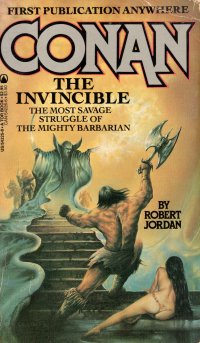
Book Report: Conan the Invincible by Robert Jordan (1982)

Book coverThis book is another of the paperbacks I bought in Berryville in 2021. Clearly, I’m all-in on the Conan/Robert E. Howard books this month (see also Tigers of the Sea and….well, the book I’m reading now, which we will get to by-and-by). This one was written by Robert Jordan who would later become known for his Wheel of Time series which I haven’t picked up, as large fantasy series daunt me these days when they’re mostly done and you can see the thousands of pages ahead of you sitting on a bookshelf. A bunch of Conan stories and novels, though….

At any rate, in this book, Conan is in town and is hired by a “merchant” to steal some jewels from the king. The merchant is actually a member of a circle of sorcerors looking to get his/its hands on a gem to use against a more powerful sorceror. Conan’s attempt is thwarted when he discovers five dancing girls in the palace wear the pendants. He plans to come back the next night and vows to rescue the girl whom he met, but as he prepares to depart, another group steals the gems and the girls, and Conan strikes out after them. Along the way, he rescues the red-haired leader of a band of raiders, keeps one step ahead of the soldiers looking for the raiders (whom they presume has stolen the gems), and confronts the very wizard who should not get his hands on the gem.

It’s a rip-roaring book, pulpy but more modern than Howard’s work, and something that would not be written today. I liked it and will consider picking up the other Jordan Conan books if I see them in the wild.

Buy My Books!
Buy John Donnelly's Gold Buy The Courtship of Barbara Holt Buy Coffee House Memories

Book Report: King Solomon’s Mines by Rider Haggard (1885, 1961)

Book coverI picked up this book, another Berryville score, simply because it was not a Robert E. Howard or Conan book. I’ve passed over Haggard’s She on a couple of occasions–it’s on the book shelves in the hall, which I have looked through when looking for something to read from time to time, but never seemed the right moment for it. This title, on the other hand, shares the title with one of the two Richard Chamberlain Allan Quatermain movies from the 1980s–which was on Showtime, so I saw it a bunch. So I picked it up first amongst the Haggard books. The two I have. As it turns out, this is the first Quatermain book and the book Haggard published before She, so I accidentally got the order right.

So: A British nobleman and a retired Navy captain engage Allan Quatermain, an old elephant hunter, to take them into uncharted Africa in search of the nobleman’s brother who sought to find the legendary mines of King Solomon. Quatermain comes up with a map from an explorer from several hundred years ago purportedly showing the way, and they take off, doing a little hunting along the way. They encounter difficulties crossing a desert and then the mountains, but they find Wakanda Kukuanaland, a hidden tribe in a fertile valley surrounded by mountains. It is ruled by a brutal warlord who deposed his own brother and who follows the advice of an ancient witch who encourages him to conduct annual purges of tribesmen to keep himself in power. Quatermain and party convince the natives that they’re from the stars, but when the warlord starts to doubt, the group helps the most noble of their porters, Umbopa, the son of the deposed king, to lead a rebellion. After which they are shown the mines by the witch, who dies trying to trap the men in the mines. They escape with but a couple pockets’ full of stones but with their lives, and they find the nobleman’s brother at an oasis on the way back to civilization.

So the film, which I saw over and over, differs greatly from the book as it was recast/recut into an Indiana Jones-style adventure (so common in the 1980s) with a female love interest and whatnot. Still, it made me want to watch the films again.

I was going to call this book a cross between Rudyard Kipling and Edgar Rice Burroughs, but that’s a bit dismissive. The book is credited with being the first of the “lost world” (not “hollow world”) genre, which means it spawned the whole type of adventure story that would influence Robert E. Howard and generations of pulp writers. And Rider Haggard and Rudyard Kipling were life-long friends.

The book might get knocked for its colonialism and portrayal of African natives by facile interpreters hungry for an A or tenure, but it, like so many works, provides a fairly balanced view of Africans as human with a variety of virtues and vices, but that they did not have the Gatling gun and organization that set the West apart at the time. It’s a shame that the work gets dismissed for academic clout and huzzahs. This is a Penguin edition, though, which meant that at least as late as the 1950s it was studied in school.

It reads like a piece of the time; the writing is vivid and has a great deal of depth, but it’s a little slower than pure pulp. Still, it’s not especially archaic, and it should be accessible to any literate person of our time.

So maybe I will get to She sooner rather than later, but I do have a lot of more pulpy works from Berryville which I will likely get to first especially as they have remained together instead of being scattered amongst the Nogglestead stacks.

Buy My Books!
Buy John Donnelly's Gold Buy The Courtship of Barbara Holt Buy Coffee House Memories

Book Report: Tigers of the Sea by Robert E. Howard / Edited by Richard L. Tierney (1979)

Book coverAh, gentle reader. You are forgiven if you think that I’ve not been reading much these days, but it’s sort of true. I’ve divided my evenings between watching DVD sets that I bought twenty years ago (like Red Dwarf) with reading, and in that reading, I have taken up the second volume of The Story of Civilization, The Life of Greece. I’ve been interspersing it with the old hardback Houghton Mifflin poetry primers like The Deserted Village and Other Poems and Longfellow’s The Courtship of Miles Standish and Elizabeth), but instead of 19th century writing, I picked up a volume of Alexander Pope from the 18th century which is harder to read and is not as compelling of a narrative. So I picked up this little paperback, part of my 2021 haul in Berryville, Arkansas, to intersperse with all of the above. And it was just what I needed.

This book collects a set of stories featuring Cormac Mac Art, a Gael, and Wulfhere, a Viking leader, in their various adventures in Britain not long after the Romans retreated. We’ve got four stories of how the odd couple and the ship which follow a fairly basic pattern of Cormac infiltrating and then the Vikings bringing the hammer, whether they’re tasked to rescue a princess or dealing with Picts or what have you. They’re fun reads, but they’re not going to stick with you. To be honest, I finished the book two weeks ago, and I could not easily nor quickly distinguish between the four stories by their titles (“Tigers of the Sea”, “Swords of the Northern Sea”, “Night of the Wolf”, and “The Temple of Abomination”) nor by a quick skim of the contents of the first. So a fun read, but nothing to stick to your ribs.

Still, this might be my reading pattern going into the summer: A little of the Durant, a little of the old-timey poetry, and then one of the Howard and Howard-related paperbacks from Berryville. There are worse things, and they’ll ensure that I keep slogging at the Durant.

Buy My Books!
Buy John Donnelly's Gold Buy The Courtship of Barbara Holt Buy Coffee House Memories

Book Report: The Deserted Village and Other Poems by Oliver Goldsmith (1894?)

Book coverAfter reading a century-old copy of The Courtship of Miles Standish and Elizabeth, I quickly picked up another one of these old, old elementary school (!) textbooks. This one bears the copyright date of 1894 but is likely newer. Although it has an owner’s name penciled in, it’s less legible and would likely yield a less interesting account of the previous owner.

So: Oliver Goldsmith is most known for The Vicar of of Wakefield, but these poems are what really put him on the literary map right about the time of the British Transcontinental Civil War Revolutionary War (we won, we call it what we want).

“The Deserted Village” is a response to the industrial revolution and how the rural areas were depopulating as people moved to the cities for work. Wow, this was a thing before the 20th century? Of course it was; but by not reading these things in school any more, we don’t need that perspective about how some things, themes, and sentiments or concerns precede the solutions that salesmen and politicians would offer us today for our completely novel troubles. “The Traveller” is a, well, travelogue of someone visiting the continent and comparing the different places and their foreigners to England (which is clearly the best). A couple of shorter poems appear to fill out the thin (96 page) volume.

These poems and The Vicar of Wakefield represent the bulk of Goldsmith’s work (although he had a couple plays put on and a couple other novels). But he was lauded in his time. We have forgotten so many of the people who were big literary stars in their time.

The poems are easy to read. Long lines and end rhymes, attention to rhythm. Meant to be read aloud, perhaps to friends, but that’s not how the party people do it these days.

So, again, suddenly I am enjoying these century-old poem collections, so don’t be surprised to see me pick up another in the future. So many of the ones I have, though, are Longfellow, so I will try to pace them out.

Buy My Books!
Buy John Donnelly's Gold Buy The Courtship of Barbara Holt Buy Coffee House Memories

Book Report: The Prophet by Khalil Gibran (1922, 1962)

Book coverI bought this book in 2007 (that’s right, seventeen years ago, when I was attending more than one book sale per weekend whilst living in Old Trees), and I picked it up now because I just read The Rubáiyát of Omar Khayyám, and I was prone to confusing the two. After all, both were Middle-Eastern-flavored collections of poetry and parables which were huge in their day and which were still found around middle class households in the late 70s and early 1980s. I am pretty sure that my “rich” aunt and uncle had a copy of this book if not both.

So: The frame is that a “prophet”–a wise man or hermit of some sort–has lived on the edges of an island’s society for some number of years, and a ship has come to take him to his native land. So as he makes his way to the docks, the people want him to make a speech, and he does: 90 pages of individual poems on the philosophy of various topics such as friendship, death, prayer, joy and sorrow, and so on.

To be honest, it kind of read like a garlic-infused Rod McKuen for the most part, but some segments hit me. Like this one:

You may give them [children] your love but not your thoughts,
For they have their own thoughts.
You may house their bodies but not their souls,
For their souls dwell in the house of tomorrow, which you cannot visit, not even in your dreams.

Day-um. As I mentioned, my oldest graduates high school next week. So, yeah, this rang true.

Also:

Your reason and your passion are the rudder and sails of your seafaring soul.
If either your sails or your rudder be broken, you can but toss and drift, or else be held at a standstill in mid-seas.

So to call it Lebanese Rod McKuen diminishes it too much. It’s lightweight poetry, easy to read, with aphorisms that will speak to a variety of readers spread throughout. It’s poetry that you could read aloud with the lyric and narrative rhythms to match. And with a taste of the exotic even though Gibran was Lebanese-American and not tenth century Persian (like Omar Khayyám). Still, the sum of these parts explain why the book was very popular; the hardback I have was the 67th printing, forty years after the book first appeared. I wonder if it’s still in print and still read–given that the author was a hyphenated-American, he would not have been eliminated from the curricula based on race.

As I mentioned, I picked up the musical version of it this weekend, and I will have to give it a listen soon. I bet it translates pretty well to music.

Buy My Books!
Buy John Donnelly's Gold Buy The Courtship of Barbara Holt Buy Coffee House Memories

Book Report: The Big Frame by The Gordons (1957)

Book coverTo be honest, I don’t know where I got this book. It doesn’t show up in almost twenty years’ worth of Good Book Hunting posts, and it has no distinguishing price marks. So did I pick it up before the turn of the century? Inherit it from my aunt? Who knows? All I know is that it is bound in the light brown Walter J. Black-esque cover used by book clubs that sent you books on subscription in the middle of the 20th century. This is, in face, a Doubleday Crime club selection. Only one book in the cover, though, unlike the three-in-one book club editions of which I have many.

At any rate. This is a police procedural, but it is more in the vein of what you would find in an Ed McBain novel than the one I read earlier this year (Blood Count, which is almost thirty years younger than this book but reads much older). The book has multiple plot lines: A police detective is hunting for a murderer in a case going cold, and he suspects a local private investigator/fixer is behind it. The PI’s current mistress suspects he is about to throw her over, so she has turned informant, but the PI suspects it. So one of his hard men is watching her, and the hard man hatches a plan for her to escape which involves killing and disfiguring another woman in her place. Meanwhile, the police detective is scheduled to testify before a state legislature hearing about corruption in the police department, and a local newspaperman dogs him in service of that syndicate to get him to change his testimony–even digging up the fact that the detective’s wife tried to be a prostitute before he arrested her and later married her after she’d gotten a real job.

I cannot help compare it to the disappointing Dell Shannon/Elizabeth Linington book. This one has a moving plot, maybe a little too complex in places, and the characters are for the most part well-developed. The book contains some series business–presumably the courtship/marriage/etc with the detective and his wife was mentioned in earlier books, and they have two adoptive children who probably played a part in earlier books. But it’s handled well and doesn’t overwhelm the main plot–actually, some of it actually influences or affects the main plot.

The end doesn’t quite resolve everything, but the main points/crimes are covered. Perhaps a little too patly, but one could say the same about one or more McBain novels. The location is never really identified clearly–it seems Californiaish but the places are not sharply identified, which is good as things would have changed in the last seventy years enough to make it dated.

I noted a couple of things in the book to comment on:

  • About the only hard facts in the case were that she had been shot twice in the left lung with a .32 between the hours of 10 P.M. and 4 A.M., and that she had been found by the ten-year-old around eleven the next morning.

    People were always getting shot with smaller caliber guns in old books; .25s and .32s. Nowadays, it’s .38, .45, or 9mm. You could also have told, in the old days, that I read a lot of old books because I thought my first handgun would be a .32.

  • He heard the record player spinning. Sarah Vaughn and Dave Brubeck.

    Perhaps these books seem less dated to me because this could be any night at Nogglestead in the current year.

  • He fired for the target his ears picked up, and again there was bursting and splintering of glass, explosive in the cavernous stillness. He heard two more blasts and lay suddenly quiet, mystified they had found no mark near him.

    He was still a long time, his hearing reaching out with such intensity he felt the ache in his head.

    After letting off a couple of rounds, even .38, I would suspect his hearing was not that acute.

  • Chico, only ten, was an I-NS case, a Mexican illegally in the country and scheduled to be shipped back any day now.

    All right, this dates the book. The boy is one of the adoptive children, a Jewish refugee who ended up in Mexico before coming to the US. It probably made more sense in the book in which it happened.

  • “Most of us have little pet tunes–and they often give our age away.”

    “Hearts” by Marty Balin and “The Pocket of a Clown” by Dwight Yochum aside, during the time I was reading this book, I might have sung or hummed any number of tunes that would give my age away. Although they don’t come to mind right now. Never mind.

  • He laughed, and then remembering what an iguana was, said, “Great Caesar’s ghost!”

    Which is funny, because last week, while I was reading this book (but before I got to the last page, where this quote appears), I said “Great Caesar’s ghost!” in a LinkedIn comment. I, of course, remember it from the old George Reeves Superman television show (which I did not see in first run, thank you very much) where Perry White, editor of the Daily Planet, exclaimed it once per episode (except the one where he sees Caesar’s ghost, of course).

At any rate, I took great comfort and courage in enjoying some mid-century crime fiction. I read a bunch of it when I was a kid, when it was but thirty years old, and I liked it. But some of the things I’ve read recently (recently might here mean “in the last quarter century”) have had me a bit down on it and reluctant to read more. Which is a problem, since I still have 42 of the 3-in-1 book club books that I bought in 2009 to go through. Slowly. But perhaps not as slowly as if this book had sucked, which it did not.

Buy My Books!
Buy John Donnelly's Gold Buy The Courtship of Barbara Holt Buy Coffee House Memories

Book Report: Longfellow’s The Courtship of Miles Standish and Elizabeth by Henry Wordsworth Longfellow (c1913)

Book coverI got this book as part of a book order back when ABC Books and everything else was in a timeout in 2020. I’ve picked up a number of similar editions and have grouped them together, so maybe I’ll be reading elementary school textbook poetry a bunch this year.

So: This book collects a number of Longfellow’s poems, including “The Courtship of Miles Standish”, “Elizabeth”, and some shorter ones. In “The Courtship of Miles Standish”, the military captain of the struggling Plymouth colony loses his wife in the first winter and asks his friend John Alden to ask Priscilla for her hand in marriage–but John and Priscilla already have eyes for each other.

In “Elizabeth”, a settler is taken with a travelling preacher, and he returns her affection. The poem includes a bit of a parallel between the maidservant and the hired man.

“Enceladus”, which I read like James Hetfield singing it. I mean, can’t you see Lovecraft taking some inspiration from this?

Under Mount Etna he lies,
It is slumber, it is not death;
For he struggles at times to arise,
And above him the lurid skies
Are hot with his fiery breath.

And:

They talk together and say,
“To-morrow, perhaps to-day,
Euceladus will arise!
And the old gods, the austere
Oppressors in their strength,
Stand aghast and white with fear
At the ominous sounds they hear,
And tremble, and mutter, “At length!”

The other short poems include the standard landscapes and a paean to John Greenlead Whittier delivered during a dinner in the latter’s honor. I remark on this because I was just telling my wife about how I confuse him with James Whitcomb Riley. I was talking about Whittier because “Elizabeth” comes from a collection of poetical stories told by travellers thrown together at an inn (Tales of a Wayside Inn) much like The Canterbury Tales by Chaucer or Tent on the Beach by Whittier (or is it Riley?) which I started in one of these early 20th century editions but put aside.

So, yeah, one can draw a pretty direct line from Chaucer and Shakespeare to Longfellow. He draws from real sources for his stories and writes of events from hundreds of years prior for his narratives. His poetry style is breezy, hexameter with some end rhymes (I know, “Enceladus” above does, but “The Courtship of Miles Standish” and “Elizabeth”, also known as “The Theologian’s Tale”, do not). The other work bears the influences of the English Romantic movement and probably Whittier (although I have not actually read enough of his work yet to know too much about it).

“The Courtship of Miles Standish” and some of the other poems have footnotes–“The Courtship of Miles Standish” has a bunch of them, taking up half of some pages, where the editor of this textbook, not the poet, defines some terms, highlights allusions to other work, or identifies historical records which corroborate the narrative. I read many of them and said, “I already know that,” but it is an elementary school textbook (!). One that I read in the middle of “The Courtship of Miles Standish” indicated, for example, that Bradford’s history of Plymouth mentioned Priscilla was a real person who married John Alden and had eleven children with him. Which is to say, the footnote contained a spoiler alert just when the poem was getting good.

The book also has some other educational material, including a short introduction and study helps like ideas for lessons based on the book which I just skimmed.

I enjoyed the book, and I enjoyed The Song of Hiawatha when I read it six years ago (!). As I said, I’ll probably read another couple of the like this year.

And I mentioned it was an elementary textbook almost 100 years ago. Here’s the little girl’s name:

I found the obituary for that little girl, who died at 90 in 2007. You know, a lot of times books have inscriptions or names in them, but finding this particular obituary made reading the book poignant indeed. After all, I am but a temporary owner of it as well, and I’m not even leaving my mark in the book itself.

Buy My Books!
Buy John Donnelly's Gold Buy The Courtship of Barbara Holt Buy Coffee House Memories

Book Report: After Worlds Collide by Philip Wylie & Edwin Balmer (1934, 1973)

Book coverWhen I bought this book seventeen years ago, I mentioned that I’d read When Worlds Collide, the book that precedes it, in middle school or high school. Now, I think I read the earlier book in sixth grade: I think it was on the metal spinning racks of paperbacks that my homeroom teacher, Mrs. Pickering, had in her room so that students could borrow them and read them (I also think I read Profiles in Courage from that rack as well, and I’ve got my own copy somewhere here in the stacks). It’s weird to think you remember something more clearly after almost 20 years have passed (between the Good Book Hunting post and this, gentle reader, not sixth grade and now, which is about twenty and a half years, give or take). I doubt my own memory on many things, and wonder if I’m retconning my initial reading of When Worlds Collide. Regardless, it has been a long time since I read the first book.

Fortunately, though, the first chapter is a brief recap: Astronomers discover a pair of runaway extrasolar planets that are hurtling into our solar system. The larger of the two will likely smash into the Earth; the smaller of the two looks like it might be habitable, and it looks as though Sol will capture this planet into an elliptical orbit ranging from just outside Venus’s orbit to just inside Mars’s orbit. So a group of scientists decide to build a couple of space ships to try to reach the second planet and save some bit of humanity. But they encountered challenges, including those not selected to escape storming their compound in Michigan, before they were able to lift off successfully in two ships. The recap kind of fleshed out what I’d remembered. Which was planets colliding and some scientists getting their rockets off.

So this book handles what happens next. The smaller of the two ships lands successfully and scouts for a place to build their homes that will weather the long and harsh winter (and the long and harsh summer). They discover the roads of a civilization on the planet from the time before it went extra solar; that the tailies have also crashed onto the island (sorry, that’s Lost which came later) the other ship from their group crashed elsewhere, and that the Nazis landed on the moon first (sorry, that’s Rocket Ship Galileo which came out later) a Russian/Asian communist rocket reached the planet first, and they’re months ahead in learning how to use the perfectly preserved machines in the domed cities of the missing aliens, and they’re using the technology to conquer the new world.

So most of the book kind of sets this up in an kinda talky way. It has a lot of action, but it has long sets where people tell other people what they’ve done and a lot of musing on the enormity of what happened–and not in a particularly individual or character-building way. And as we came closer to the end, I wondered if it was setting things up for a third book, where the protagonists would tackle the commies over a longer timeline and maybe unravel further mysteries of the human-like aliens who populated the planet so long ago, but, no. The commies cut the power to the city that the protagonists hold, so a small group hides their plan to infiltrate a third city to use its service conduits to infiltrate the enemy city. But they don’t report in. And, finally, and awfully quickly in the narrative, a pretty woman steals a car from the protagonists’ city, runs to the antagonists’ city, ingratiates herself to the bad guy leader, kills him in his bath, disables his minions, and allows the English survivors of another rocket’s crash to rise up and liberate the city/planet. And finis! But that resolution comes out of nowhere in the course of a couple of pages–I have to wonder if the authors were running out of runway in the magazine space they had left–this book was originally serialized, apparently–so they just wrapped it up in a hurry. And rather unsatisfyingly. No wonder it takes me several decades years between them. It is not a series, though–just the two books. So I don’t have another one to look forward to in 2064.

A couple things, though: One, notice the copyright dates above. This book first came out as a book in 1934, and it was still in print forty years later. That’s not a bad run, ainna? I cannot imagine much written now that will be in print in 2064.

Second, the book proved that I’m reading my library in the proper order. Page 107:

Eve disappeared into the darkness which was all but complete. In the north, toward Bronson Beta’s pole, hung a faint aurora, and above it shone some stars; but most of the sky was obscured. There was no moon, of course. Strange, still, to expect the moon–a moon now gone with “yesterday’s sev’n thousand years.”

That’s from The Rubáiyát of Omar Khayyám which I just read, and I was pleased to recognize it. Of course, the book’s characters casually alluded to and quoted Shakespeare and Kipling. A testament probably to the benefits of a turn-of-the-20th-century British education, and it’s rare to find that sort of thing and references to God in anything past the middle of the 20th century.

Oh, and a note about the 1973 paperback. The print is tiny, and the pages’ luminosity has faded. It was reading tiny black marks on a beige or darker background. I contemplated cheaters, gentle reader, but they didn’t help a whole lot. Perhaps this will get me out of my habit of reading paperbacks and into hardbacks. Maybe large print books at that.

Buy My Books!
Buy John Donnelly's Gold Buy The Courtship of Barbara Holt Buy Coffee House Memories

Book Report: The Rubáiyát of Omar Khayyám translated by Edward FitzGerald (1970)

Book coverGentle reader, I picked up this book to consider it for the 2024 Winter Reading Challenge in the Author of a Different Race/Religion Than Your Own category. I mean, hey, a Persian poet is most likely Moslem, to use a spelling that was commoner when I was younger. However, as I got into the introductory material, I learned that the translator, Edward FitzGerald, re-organized the collection of rubāʿiyāt, the quattrain poems, into a more coherent whole. And given that the quattrains all have end rhymes in English, one has to think that the translations are as much of the work of FitzGerald as Khayyám. So I didn’t count it for the reading challenge, but I did keep it off of the bookshelves to read in patches between other books.

This is a Classics Club edition–as you might remember, gentle reader, I’ve picked these up when I’ve found them over the decades and have a shelf full of them, but I’ve only now read two of them (although I did read three of five Plato dialogues in another at some point). It says it’s the Five Authorized Versions–it had five editions in the 19th century–but it’s really only three. The first two and then a comparative edition which is the third through fifth editions with footnotes identifying the variation. The versions run between 100 and 110 selections from a larger body of Khayyám’s work.

Themeatically, the poems are hedonistic or Epicurean in nature. Drink, eat, love, for we soon die. We’re but specks of dust in history. And so on. The English versions are good, as I mentioned with end rhymes and tight units that FitzGerald has put in an order to sort of tell a story, although the telling is repetitive and the collection is best read over time. I’d recommend not reading all “five” versions at once–or three as I did–as they’re very, very close to one another. Although I was able to spot the one in the third-through-fifth version that was not in the first or second version as I did not follow my own advice.

So a quick enough read. I think it was more popular in the past than it is today, but I think that about most things that were popular in the past, especially if they were literature of some sort.

So now I have to find the other one Classics Club book that I already read (Meditations by Marcus Aurelius) and put the two together to show that I am making progress on this set (two in fifteen years–not bad!). I did run my hands along the spines of the exposed books (those not in the second rank of books on the shelf) when looking for another book to read after this one and thought Not today. Which I think a lot, apparently.

Buy My Books!
Buy John Donnelly's Gold Buy The Courtship of Barbara Holt Buy Coffee House Memories

Book Report: Lake of the Ozarks by Bill Geist (2019)

Book coverGentle reader, I cannot find this book in a Good Book Hunting post, and I apologize as I know you, like I, relish the chance to revisit when and where I bought a particular book in the last 20 years. Now, as this is a 2019 book, clearly I did not buy the book before starting the Good Book Hunting posts. As it is in very nice shape and has no penciled prices in it, I have to guess I bought this new, perhaps as part of spending Christmas gift card or picked up while picking up Christmas gift cards. It has all the marks (figurative) of browsing the local interest section of the book store. Or perhaps I am a kleptomaniac who stoled it and don’t remember doing so.

Anyway: Purportedly, this book talks about his experiences working at his uncle’s resort at the Lake of the Ozarks in the 1960s. But, unfortunately, the book is lightest on that which would be the most interesting.

It begins a bit with a contemporary frame story: The author is driving a rental car along I-70 to catch a plane from Lambert to La Guardia when he comes to the exit that one would have taken to get to the Lake of the Ozarks. Not me, of course, as I would come up I-44 to Lebanon and turn north. But he decides he’s going to see what the lake is like now, and we get a bit of a rambly prologue.

He then does describe his aunt and uncle who end up running the place and how they, and he, from Champaign, Illinois, ended up there. Then we get some stories woven into the chapters, and then we get some short chapters that are brain dumps of the stories, some photos of what the place where the lodge had been had it not been demolished decades ago, and finis!.

So it’s a little light in what would have been the most interesting part of it, recreating the scene of the lodge in the 1960s. And what we do have has a double-effect narrator who pops in to point out that in the 1960s, people were not as right-thinking as 21st century New York media personalities are, so we get mea maxima culpa bits about off-color humor or the cultural appropriation of waitresses who dressed as stylized squaws (and that’s badthink!) We also get a paragraph of how the author knew a certain developer was a LIAR! a long time ago. Shut up, you putz: Up until 2016, when you had contact or interviews with Donald Trump, you probably thought he was a good get or good for some colorful column inches or a segment on national television, not that he was clearly the Biggest Threat to Democracy the World Will Ever Know (Until the Next One).

So, a bit of a hard pass here. Not a lot of the nostalgia/history that I like, and certainly I don’t like it in a tone that looks back with judgment for variance with modern sentiments of the elite.

One thing I will note is that the book starts out with an epigraph from Ella Wheeler Wilcox:

Laugh, and the world laughs with you;
Weep, and you weep alone;
For the sad old earth must borrow its mirth,
But has trouble enough of its own.

That’s from her poem “Solitude”.

Gentle reader, I have been holding back on you: A couple of weeks ago, I went to ABC Books for a book signing for Trina Wilcox, a local author whom I’ve met and whom I’ve followed in various 5Ks (she being a serious runner, me being someone running the 5Ks because I didn’t want to make small talk with other parents of the middle school cross country team when they, the team, ran the 5Ks). I didn’t write a Good Book Hunting post on the trip nor book reports for the children’s books I go signed. I did however pick up an Ella Wheeler Wilcox collection, Maurine and Other Poems. Which was lying atop this book.

“Solitude” is not in this collection, but I was tickled to see the epigraph in a book adjacent to a book by the same poet. Things like this happen at Nogglestead.

And as I told my beautiful wife about the book, I mentioned that the author is (was) a color/humor commentator on CBS, and she had no idea who he is–nor did I. However, I asked my mother-in-law on Easter, and she said, “Willie Geist? On the Today show?” Oh, so close. Willie Geist is the author’s son, the heir to the mediastocracy. To be honest, my mother-in-law watches a lot of television news, so she’s probably seen the author as well.

Although the author has written, what, eight other books, I don’t think I’ll pick them up. I don’t know why modern humor writing leaves me so cold, but anything besides Dave Barry…. meh.

Buy My Books!
Buy John Donnelly's Gold Buy The Courtship of Barbara Holt Buy Coffee House Memories

Book Report: 40 Days of Wisdom (2024)

Book coverFor the past several years, the church I attend has put together a Lent (and maybe Advent) devotion book written by members of the congregation. Full disclosure: My beautiful wife contributed three devotions this year. This is the first time I picked up a copy and went through it, not day-by-day but in spurts where I would read several days’ worth to catch up, read the day’s, and then read a couple of days ahead. To be honest, I am not the target market for devotionals, although I have given several as Christmas gifts–my mother-in-law reads several daily, including one that I have her several years ago that she re-reads every year.

At any rate, contributors include several church pastors, some of the younger members of the congregation (high school aged girls who are active in the youth group with my boys who attend intermittently), and some of the congregation who often handle scripture readings from the lectern on Sundays. So as with George Burns books, when reading their devotions, I heard the words in their actual voices.

Devotions are short by nature, so none of them are especially deep. Some start with the dictionary definition of a word, which is the first refuge of scoundrels early writers of non-fiction and masters of directing suspense films (early in their careers as well). One tells the story of a young woman who wanted to play basketball but was told she was not good enough, but she prayed about it, and eventually she made the team. God apparently answered her prayers and made her six foot tall.

As I mentioned, I’m not the target for such books, so I don’t know if I’ll pick up another such devotional next time around.

Buy My Books!
Buy John Donnelly's Gold Buy The Courtship of Barbara Holt Buy Coffee House Memories

Book Report: White Banners by Lloyd C. Douglas (1936)

Book coverAh, gentle reader. I read Douglas’s Home for Christmas in 2011 (which might make it the first in my annual tradition, but I am too lazy to double check right now–oh, heck, all right, I looked, and it does seem to be the first, and the tradition is not as annual as I would like to think–I skipped a couple of years). So when I saw three of his books available in Collier editions in 2022, I picked them up and was kind of excited to have them even though they’re not Christmas-themed.

Jeez, Louise, a quick look at Douglas’s Wikipedia indicates how big he was in the 1930s. He wrote a dozen novels and nine non-fiction works, and his novels were made into movies (his first novel, Magnificant Obsession, was made into a movie twice). The books I picked up were matched Collier editions of his work–I’ve only seen Steinbeck’s work in similar editions. Collier reprinted them because it expected people to buy sets of this guy’s work. And he is so little known today. Time and fame are fleeting.

At any rate: The book begins with a rough-looking woman selling a household gadget coming into the poorly run house of a junior college professor, his flighty wife, and their two children (with another on the way). The woman of the house gives her some food, and she–the dishevelled woman–sort of takes over, winning over the husband as well as the children with her good nature and frugal ways. She is Hannah, a housekeeper who fell on hard times after the birth of her son, whom she gave up for adoption. Her story unfolds in flashback over the course of the 400 pages: She was a housekeeper, fell in love with a young man whose family she worked for but who died young of an illness, and she took on his philosophy of non-confrontation and having faith in a Higher Power. She married a playboy whose mother disapproved of the match, so the marriage ended before the boy was born–and the ex-husband did not know of the pregnancy. She gave the boy up for adoption and visits her son and his adopted mother as Aunt Hannah and watches him grow up. As the story progresses, she becomes the housekeeper properly for the professor, who is a tinkerer who invents a refrigerator process that gets stolen by the people with whom he’d hoped to partner. Hannah gives him a pep talk as his son is laid out with pneumonia and on death’s door. So the professor promises to trust the process the Higher Power and not pursue legal action. Eventually, he has another idea, invents another thing for household refrigerator, becomes rich and the Dean at his college, his flighty wife enjoys social prominence. A former employer/companion/friend of Hannah returns from Europe, learns her story, and wants to be the adopted son’s aunt, too, taking him East and then to Europe where he meets his father who recognizes him and wants to turn him into an indolent playboy as well. But the adopted son has fallen for the professor’s youngest daughter, and social class self-conscious Hannah wants neither of these for her boy. And then the boy and the daughter try to figure out exactly who is an aunt or uncle and who is not.

It’s like a Charles Dickens book written by Norman Vincent Peale. It’s awfully talky, with long periods of philosophical conversation, although I guess one could fault most of classical literature for being the same. But it lacks the playfulness of Dickens’ work and is dreadfully earnest. Douglas started out as a Lutheran pastor and switched to another denomination, but this book is not really Christian. Like Peale in his nonfiction, Douglas talks about the Higher Power and surrendering to/trusting in it a bunch, but I think the words “God” and “Holy Ghost” (or Spirit) appear once each in the book; instead, the book talks about Him, the Other, It, and once Them. And yielding to the higher power is often in service of a greater goal, so it’s a bit like praying, but not really. So schismatic would probably be a better term for it.

Additionally, passage of time changes from the beginning of the book to the end of it. It starts out with pretty much the story unfolding day to day over some months with some flashbacks–we get the way the house is run (and how Hannah improves it), the professor tinkering, et cetera, and then about the time of the boy’s illnesses and the father’s acceptance of the Higher Power They Don’t Want To Name Because They’re Not Superstitious Simpletons, chapters start taking place months or years after each other. All told, the book takes place over the course of 20 years–the boy grows up, and the unborn daughter of the professor grows up, goes to college, and falls in love with the boy. But it gave me a bit of whiplash. When Hannah takes the daughter (Sally; she does have a name, you know) to Europe to see her family (Hannah’s originally from England), the playboy takes the boy (Peter; he does have a name, you know) to the home of his (Peter’s) family, and while at the fair, riding an elephant, Peter sees Hannah and Sally and vows to find them in the crowd. End of chapter with only a couple chapters to go, so I expected maybe the next chapters involved perhaps Peter finding them, a reconciliation between Hannah and the playboy (perhaps not a full reunion, but reapprochment), Hannah getting over her class consciousness and blessing the union of Sally and Peter…. Oh, but no: Next chapter opens two months later with the professor in the hospital and in dire straits after a car accident caused by his son who tended to drive too fast and recklessly. Which gives some opportunity for him to share the message about the Higher Power with Peter, eventually, and for Peter and Sally to muse about his family relationships and to muse at length internally whether they like like the other.

So a bit of a slog of a read after about page 200 (of 400).

I’d first picked up Doctor Hudson’s Secret Journal, but that is not only like this but more so. A follow-up to Magnificent Obsession (a prequel written ten years after the first), it includes journal entries describing the doctor’s experiments with the Higher Power along with a related story, sort of. To be honest, reading this book (and starting the other) have made me not look forward to reading either Doctor Hudson’s Secret Journal or Disputed Passage any time in the near future. Which could be the next decade.

On the other hand, the book is an artifact that tells us in the 1930s, clergymen had to write books like this to convince the reading public to…. Well, one presumes to come to church, although no one in the book goes to church.

But the concerns then:

Last night, reading in her room, Adele had been stirred, alarmed, appalled, horrified. The world was quite evidently coming to an end; overpopulated, underfed, the last frontier occupied; eugenically deteriorating, its racial colors clashing, its nationalistic greeds mounting, its mind upset, its emotions unstable, its nerves frazzled. Adele herself would undoubtedly be alive–in terror and tatters–when the ultimate explosion was touched off.

Sadly, those of us who might feel similarly can take no solace in that this particular prophecy was fulfilled in World War II. Which only took six years of hot war and millions of dead before its end. Modern pessimists don’t feel as lucky.

Buy My Books!
Buy John Donnelly's Gold Buy The Courtship of Barbara Holt Buy Coffee House Memories

Book Report: George Burns: The Hundred Year Dash by Martin Gottfried (1996)

Book coverNot to be confused with Bob Greene’s The 50-Year Dash which came out at roughly the same time. This boko, which I bought in 2008 (closer to its publication date than to today). Jeez Louise, it’s amazing how I can remember that book sale at St. Martin’s fairly clearly, but I don’t remember things from recent years. Mostly because most things in recent years have not been memorable, I reckon. But let’s not get maudlin and introspective again (or still) here.

This 329-page (with index) biography of George Burns tells in great detail, based not so much on Burns’ own (often ghost-written) accounts (in his other books) but on interviews with people who knew him and other primary written sources. It’s not a hagiography–it does not omit Burns’ frequent infidelity to his wife nor shy away from exposing, indirectly, the man’s insecurities which drove him. But it doesn’t make his flaws the center of the story, which is of a man who liked show business and wanted to get into it, succeed in it, and to continue in it his whole long life.

I mean, Burns’ career had so many different stages. He started in vaudeville and struggled as a solo act; he met with Gracie Allen and was part of a successful vaudeville act; he and Allen did some movies in the 1930s, usually short reprising of their vaudeville routines; they had a successful radio show which transitioned into a successful television program (the television show beginning when he was 54 years old); when Gracie retired and then died, Burns tried unsuccessfully to work on television with a number of series and continuing his nightclub act, neither of which worked (as nightclub acts were in decline as entertainment, perhaps due to television), leading to a fairly fallow artistic decade or fifteen years where although he was still producing and making money on business deals, he was not a popular entertainer; but in the 1970s, (at 79 years old), he takes a role in the film The Sunshine Boys and wins an Oscar as the Best Supporting Actor for it, leading to a resurgent career that saw him publishing books, appearing on television frequently, and starring in movies like the Oh God! series–strangely enough, I saw the first one a couple of times on television and the third one a lot because it was on Showtime when I was in the trailer, but I never see it on videocassette or DVD.

I found Burns’ resilience and longevity inspirational. I came to the part of the biography dealing with the death of Gracie Allen when Burns was like 68 years old, and the biography had 100 pages left.

You know, I’ve been letting the old man in a bit lately, and I’m inspired a bit by how Burns had whole decades short of success and carried on and succeeded.

You know, I am not much of a book collector these days, but I do have the urge to seek out Burns’ filmography. I know that only a few episodes of The George Burns and Gracie Allen Show survive–and they’re packaged not only on dollar DVDs you could buy in the grocery store twenty years ago but also in expensive collectible sets in collectible tins on Amazon. But maybe get some of the later films if not Damsels in Distress where they danced with Fred Astaire.

At any rate, this particular edition is not a collectible, but it is an oddity in my collection. Not only is it an ex-library book, but it’s also a BookCrossing book. Which looks to have been (and apparently still is) a Where’s George? (which is also apparently still a thing) for books. Or maybe it’s not still a thing–although the Web site has an up-to-date copyright date, clicking around in it yields a number of “no results” and stack traces. At any rate, it is or was a way to label books so that when you put them in a little free library or leave them lying around, the next person to pick them up can enter or could have entered a code into the Web site so you could see that it was being read and maybe where. But the ultimate result is that the book has a couple of extra labels on it with the penultimate owner’s user name (presumably penultimate as I bought this book and BookCrossing books are philosophically to be given away freely) and two or three little fliers in the pages like blow-in cards in a magazine.

Well, this book has been in my stacks for sixteen years now, so it has been out of circulation and will be until my estate sale. Note that these cards cannot be classified as Found Bookmarks because they were not actually used to mark the previous reader’s place.

Oh, and one more anecdote about this book: On my way to a book signing at ABC Books last weekend, I brought my sons and a friend of theirs along (they were along for a promised lunch at a buffet), and he and I got to talking about what we were reading. I told him about this book, and prefaced it by asserting that he would not know who George Burns was. And he did not. He’s a couple weeks short of turning 18, and George Burns, although an interesting figure in the history of 20th century entertainment whose career spanned every major genre of entertainment except video games, was in prehistory for a teen today. I mean, he was not even from the 20th century. He was born in the 19th century, which is not even covered in modern school history classes (I presume). So I was an old man talking about an old man. To be honest, I mostly talk about old or dead men, so this is not actually a variation on my theme.

Buy My Books!
Buy John Donnelly's Gold Buy The Courtship of Barbara Holt Buy Coffee House Memories

Book Report: The Widow’s Ring by Mary Schaffer (2020)

Book coverThis book is one of two that I bought by this local author in Heber Springs, Arkansas last year.

I have to say that I am not sure that I have read a book that more closely matches an episode of a television cop show than this one. Inside the front material, it says it’s a novel featuring Lt. Al Stimpson, but apparently it never evolved into a series.

The book begins with the prologue of how the killer came to be the killer: His abusive mother kept his father and his siblings in line until the father died, whereupon the mother tried to assert dominance, but the older brothers left, leaving the future killer and his younger sister. His mother begins an incestuous relationship with him and hates on the daughter who is young as she is no longer. When the mother kills the daughter, the son kills the mother and cuts off her finger. Which becomes his MO when he starts killing low class women after being triggered by a mother/son porn (probably porno to the author). I’m not spoiling the surprise for you; like a television program, it’s all up front, and the real tension is how the police will find the fellow.

This is not a piss on Missouri book or even a piss on Arkansas book as the original crime takes place in Oklahoma and other crimes take place down south which is rebuilding from Hurricane Katrina (even though it was published in 2020, the book is set years earlier).

So, for the cops, we have a deputy in Oklahoma who just recently discovered the mother’s and sister’s bodies when someone was building on the abandoned mobile home site. She’s a hire for political reasons, but she doggedly pursues leads when the sheriff can’t be arsed. We have Lieutenant Stimpson and his partner: he is white, and she is black, and some are surprised they work so well together (the book says in pretty much those words). And we have a couple other ciphers of characters, such as a stock FBI profiler who makes an appearance or two to say stock FBI profiler things. Most of the other characters are just names and occupations, and many of the scenes in the book are not actual investigations, but instead meetings and reports of investigations. Like you might see on a television program with a small location budget.

I mean, the writing is pretty good, and the book moves along quickly (and it’s only a bit over 130 pages). So if you’re in the mood for something like this–something with the heft of a 21st century equivalent of men’s adventure paperbacks–I guess it could be your thing. But it’s ultimately not mine. I was going to pick up the other Schaffer book right away to complete my tour of her work, but I decided against it at this time. It is one of the “series” where “series” means a couple of books with the same investigators, but its 200+ length daunted me. So I’ll save it for another day.

Buy My Books!
Buy John Donnelly's Gold Buy The Courtship of Barbara Holt Buy Coffee House Memories

Book Report: A Pound of Paper by John Baxter (2003)

Book coverIf I had found this book in time for the 2024 Winter Reading Challenge, perhaps I would have stretched the Library/Bookstore Setting category enough to include this book. Although it is not specifically set in a book store, it’s a book that is part biography of the author, but it does center an awful lot on his book collecting.

When I opened the book, it smelled as though it was a new book, and I thought I might have bought it at Barnes and Noble as part of gift card spending at one point, but as it turns out, I ordered it from ABC Books in March 2020 when the government prohibited my going in person. Almost four years ago. The book is in cherry shape, though, so one wonders if I am the first person to have read it. Probably so.

So who is John Baxter? He is an Australian who grew up in Australia in the middle part of the 20th century. He grew up liking science fiction and attended some science fiction meetups of the time, started a fan newsletter (the zine of its time, although “zine” is a pretty dated word itself in the 21st century), worked for the railroad, and when he discovered he could write things that would get published, took his ten-year bonus from the railroad and quit to become a writer.

He wrote some screenplays and some biographies, I think, but most importantly, he lived in London, and he lived in the U.S., and he eventually lived in France, and everywhere he went, he collected books. So we get lots of stories about street book fairs in London, about visiting estates as they’re being sold but not estate sales, and various elements of book collecting, not just book accumulation.

A fascinating book that takes one to different times and places–Australia in the early 1960s, London in the late 1970s, and Paris in the 21st Century–and it splits time between being an autobiography and being a book collector. Of course, I recognized some elements of my own activities in his anecdotes. Browsing through a seedy room of adult magazines to get a copy of Gallery magazine with Robert B. Parker’s “The Surrogate” in it for $1 (I went through the room clockwise, and the magazine was on one of the shelves near the door to the right–is that why I have ever since done estate sales going to the right first?). He also worked as a runner, finding books to sell later, and that, too resonated with me. Finding a first edition of Dune (not a first printing) at a garage sale for $1. Buying a Playboy collection for $300 and selling it in pieces on Playboy.com’s custom auction site for, what, $3000?–not to mention vintage ads on Ebay after. And so on.

You know, I don’t really collect books–up until soon after the turn of the century, I did collect Robert B. Parker books, mostly from Ebay, but not so much these days. I do pick up late 19th century collections of poetry when I can find them inexpensively, but I’m not a collector in that regard….

At any rate, a nice read both as a memoir of a writer from an odd corner of the world and of a book collector.

Buy My Books!
Buy John Donnelly's Gold Buy The Courtship of Barbara Holt Buy Coffee House Memories

Book Report: Dirty Jokes and Beer by Drew Carey (1997)

Book coverWow, this book is almost thirty years old. I bought it at some point since then–the historical records (the blog here) are incomplete as to when, but the copy I have is a hardback without the dustjacket and has only the price marked in pencil on the frontspiece. The book, he acknowledges a with a smirk, is a bit of a money grab based on the popularity of his television show The Drew Carey Show during the Clinton administration.

Carey had been a standup comic from the middle eighties, and this show which ran for nine years in the 1990s into the 21st century. He concurrently appeared in an American version of Whose Line Is It Anyway? for about the same time, and he took over for Bob Barker on The Price Is Right seventeen years ago. I say this, amazed, because although I would have known him by site these almost three decades, I have never really seen much of his work whether the scripted sitcom, improv work, or standup routine. I had a picture of him as a bit of a schlub, a maybe smart everyman, but that’s not exactly been his schtick as far as I can tell.

This book has a tripartite structure. It has three sections: Dirty Jokes, which is sort of humorous essays/anecdotes/memoir; Beer, which is talking about The Drew Carey Show with some behind-the-scenes looks, responses to critics, working to thwart the will of the people in charge of standards and get dirty words and jokes onto the air; and Stories of the Unrefined, which are fictional (mostly) short stories based on Carey’s life and experiences in Cleveland and Las Vegas with a character named Drew Carey at the center. Dirty Jokes and Beer start each chapter with a dirty joke; as you might know, gentle reader, I do not get the vapors with dirty jokes (which began with “borrowing” my mother’s copy of the Frank O’Pinion dirty joke book and become sort of popular at North Jefferson Middle School for my vast store of off-color humor in 1985 to 21st century readings such as The World’s Best Dirty Jokes and Lecherous Limericks to watching and enjoying National Lampoon’s Dirty Movie). So a couple of the dirty jokes made me chuckle in my head.

However, the book is kinda meh aside from that. It offers some insights into the making of television, a la Jeopardy! or Star Trek Memories, but those books cover the material in greater depth. It’s got just a little biography, not enough to be compelling. And the fiction is the kind of material that I’d read by other college students when at the university in the writing program. Better than some of the self-published books by local authors that I read in writing style and quality, but the slice-of-life incidents leave me with a bit of “So what?”

Probably best if you’re a Drew Carey fan, but not if you’re a little old lady watching The Price Is Right and want to learn more about that nice young man (current age: 65). Because part of the character, schtick, or person of Drew Carey is that he was from a working class background, went into the Marine Corps Reserve, and became a comic, and when he became famous/successful, he got to do what he wanted, which included dating strippers and living a libertine lifestyle. Hopefully it was more character than real person, but who knows? Maybe I am just jealous, although I would like the world to know that I started out looking like a dork and got better looking, whereas Carey started out all right and then got dorky looking and wore the dorky glasses after getting his vision corrected when he was “on.” So…. character?

I would also be remiss in missing comparing this book to Unqualified by Anna Faris which I listened to this winter. Carey’s book is less earnest, a bit smirking, and it was far better to read a book than to spend hours dedicated to listening to the book (as I mentioned, I’m not spending an hour a day in a car, so listening to an audiobook requires sitting in a darkened room and just listening instead of listening while driving). An unfair comparison, but they are similar in that the books don’t really focus on humorous observations from the author, and they’re less pure comedy than the thoughts of a comic actor/actress. Well, better luck to me next time, although I’m not sure how many other comedian/comedienne/comic actor books I have in the unread stacks.

Buy My Books!
Buy John Donnelly's Gold Buy The Courtship of Barbara Holt Buy Coffee House Memories

Book Report: Doctor Who and the Day of the Daleks by Terrence Dicks (1979)

Book coverI got this book in 2015, which was far after any semblance I had of Doctor Who fandom.

As I might have mentioned (briefly, in in 2011, before I bought this book), Doctor Who played on Sunday nights at 10:30 on the St. Louis PBS station (followed by Red Dwarf, which I was talking about in 2011). Of course, my bedtime in the trailer days was 9:00, so I didn’t watch it live, but I did record them on videocassettes. Initially, I think that I only started recording them when we lived down the gravel road, but I have a lot of videocassettes (of course I still do) from that era, and when I was in the creative writing class probably my sophomore year of high school I wrote a series of short stories wherein the main character steals the TARDIS, so I was already familiar with the program in 1987 or so. I haven’t rewatched the videocassettes in a long time–I tried watching a program when my boys were children, but the first episode featured a plot where people were getting attacked by people in the sewers, which meant that they did not hardly see Colin Baker on the screen before someone went into (grainy videocassette recording) darkness and screamed, and that was all they could take–the oldest had an imagination full of darknesses which he might have outgrown (even as his father has not). Perhaps I’ll use this as an excuse to rewatch some of those old videocassettes. And perhaps the Red Dwarf box set I got in 2011.

One more Doctor Who memory, gentle reader, if you will indulge me. When I was at the university, I was not watching the show because it was not available in Milwaukee as I was aware (nor St. Louis when I returned). I made the acquaintance of Doctor Comic Book when we were in the English program at the University, he a year behind me. We got to be…. Acquaintances, I suppose, but close enough that he let me stay at his apartment on the East side one night my senior year when I attended a party that ended after the buses stopped running. And in the months (years) after college, when I was travelling to Milwaukee monthly (and later a couple times a year, but quite often), he let me stay with him for the weekend. One night, alone in his apartment (well, there with my college crush, who was not at all interested in me, of course), I opened one of his closets to discover a stack of old Doctor Who paperbacks, with this one probably on top (as it is the first in the American paperbacks). I teased him about it, saying, “That explains it!” as he favored long coats and a long scarf. He chuckled guiltily. He would later really get a doctorate and teach courses in comic book rhetoric when we reconnected on Facebook, as happened in the early years of this century, and then parted in political acrimony, as happened in later years of the century. Still, this paperback makes me think of the fellow as well as being young once.

So this is the first American paperback in the line, although Britain had seen numerous Doctor Who tie-ins before then, but I guess in the late 1970s, the show had made some appearances in America (given that, what, six or seven years later I saw it). This book tells a story from the third Doctor, played by John Pertwee (years as the Doctor: 1970-1974). That’s back when the Doctor was in England for an extended period as he tried to work on the TARDIS and helped the Brigadier and UNIT (United Nations Intelligence Taskforce).

An aging diplomat is to chair a conference to avert a war as tensions between the West, the Soviet Union, and China are boiling over. He leaves his estate for China, and when he does, a group of rebels from a future where the Daleks have taken over the Earth return, certain that their goal is to kill the diplomat whose actions lead to their dystopian future. The Doctor is less certain about what triggers the war that diminishes humanity and leads to the Dalek dominion–what if their success caused it? So we have (one can tell low budget even from the prose) scenes in the dystopian future and (one can tell low budget even from the prose) scenes on the estate as the Doctor tries to rescue his companion, taken to the future, and to avert a Dalek assault on the compound when the diplomat returns with dignitaries of the hostile nations.

Terrence Dicks was a writer for the show, so he was working with actual scripts, so the story probably pretty well matches what one would have seen on the BBC when I was lying nude on rugs for photographs (gentle reader, I assure you, this was when I was young, before I turned fifty). Rumor has it (and by “rumor,” I mean some Doctor Who fan site I read after reading this book but which I didn’t save in a tab until I wrote this, and I am too lazy to post it for you, oh, all right, it might have been this one or something that scraped it) that Pertwee didn’t like the episode that much at first, but, c’mon, man: it was 1970s television. In Britain. Nobody expected much more until Thatcher came to power, and to be honest, not much more after that. And by “nobody,” I mean “Americans.”

At any rate, it’s a quick 139 page read which, like all other paperbacks of the era, talked about other series the publishers had going at the time. Instead of Deadlands books, though, this one promotes a series called Blade, which was like a Deadlands with a timelord in it.

Man, if I put some effort into it (and, you know, had good guaranteed employment in the future whose base pay could keep up with base Biden-economy expenditures), I would like to be a serious collector of these old paperbacks. But I am not likely to find myself much in the paperback sections of the big book sales. Although one never knows what the future or the possible future saved by the intervention of a British television science fiction series might lead to. Who knows? I might even reconcile with Doctor Comic Book when I and my clan are driven north by the invading hordes and we take refuge on the shores of Lake Superior and reluctantly have to liberate the fortified campus from what they voted for.

Buy My Books!
Buy John Donnelly's Gold Buy The Courtship of Barbara Holt Buy Coffee House Memories