You Never Forget Your First

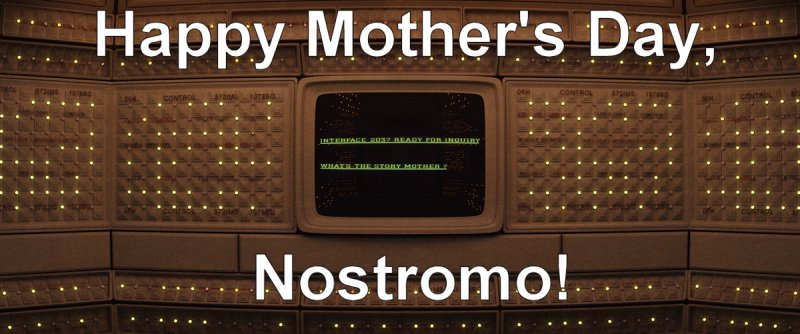
Apparently, Facebook thinks I need fake friend.

C’mon, man, let’s just call that what it is: an Americanized version of a Japanese dating simulator.

Jeez, I would hate to see a Signal ad that describes how Facebook sees me.

But I came not to dunk or snark on replicants, or at least the replicants our 2021 can produce since all the smart kids for the last twenty-five or thirty years have gone into data collection and manipulation instead of robotics and bio-engineering so that we’ve got a cut-rate Blade Runner future where instead of flying cars and moving billboards that are forty stories tall, we’ve got Facebook feeds and perhaps soon-to-be mandatory electric vehicles that can go dozens of miles on a single charge. I didn’t come to make snarky comments on the misbegotten world of the 21st century, but this is a blog, gentle reader, and I have been a curmudgeon since I was thirteen or fourteen years old.

Where was I? Oh, yes—

This would not be my first AI friend, gentle reader. And, no, it was not a Japanese dating simulator. Nor Bradley, the character in my purloined copy of Little Computer People.

The first would have been Eliza. Picture below the fold. Continue reading “You Never Forget Your First”

Buy My Books!
Buy John Donnelly's Gold Buy The Courtship of Barbara Holt Buy Coffee House Memories

Book Report: Journey through Heartsongs by Mattie J.T. Stepanek (2003)

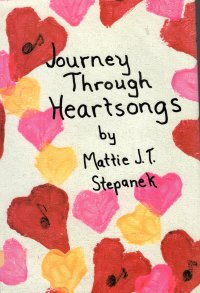
Book coverI regret having read this book.

When I bought it this weekend, I thought it was a collection of grandmother poetry based on the name Mattie. Short for Matilda. Oh, but no. Mattie is short for Matthew.

The poems are not very good, but Mattie is, at the time of publication, 13 years old.

And that would be that, but I came across a poem that he wrote when his older brother died. Each of the poems is dated, and when I got to the bottom of the poem, I did the math. He purportedly wrote this poem when he was four years old. Which is when I looked a little deeper and found the cult of Mattie. Continue reading “Book Report: Journey through Heartsongs by Mattie J.T. Stepanek (2003)”

Buy My Books!
Buy John Donnelly's Gold Buy The Courtship of Barbara Holt Buy Coffee House Memories

From The 1977 Newsweek Swimsuit Issue

I mentioned my Newsweek project before; I’m collecting old Newsweek magazines and am looking through them for a particular article. I have found some interesting articles which do the same thing that catching up on months-old newspapers do–I realize, again, that’s there’s nothing new under the sun. Especially from 1977, where fears of inflation are swirling around a new president who, it turns out, is pretty weak on international affairs (not that news magazine especially speculated on this yet).

However, I discovered that the March 21, 1977 was the swimsuit issue.

I mean, it doesn’t say that on the cover; it talks about Islamic terrorism after an incident where Islamic terrorists seized hostages in Washington, D.C. Don’t remember it? Why is that?

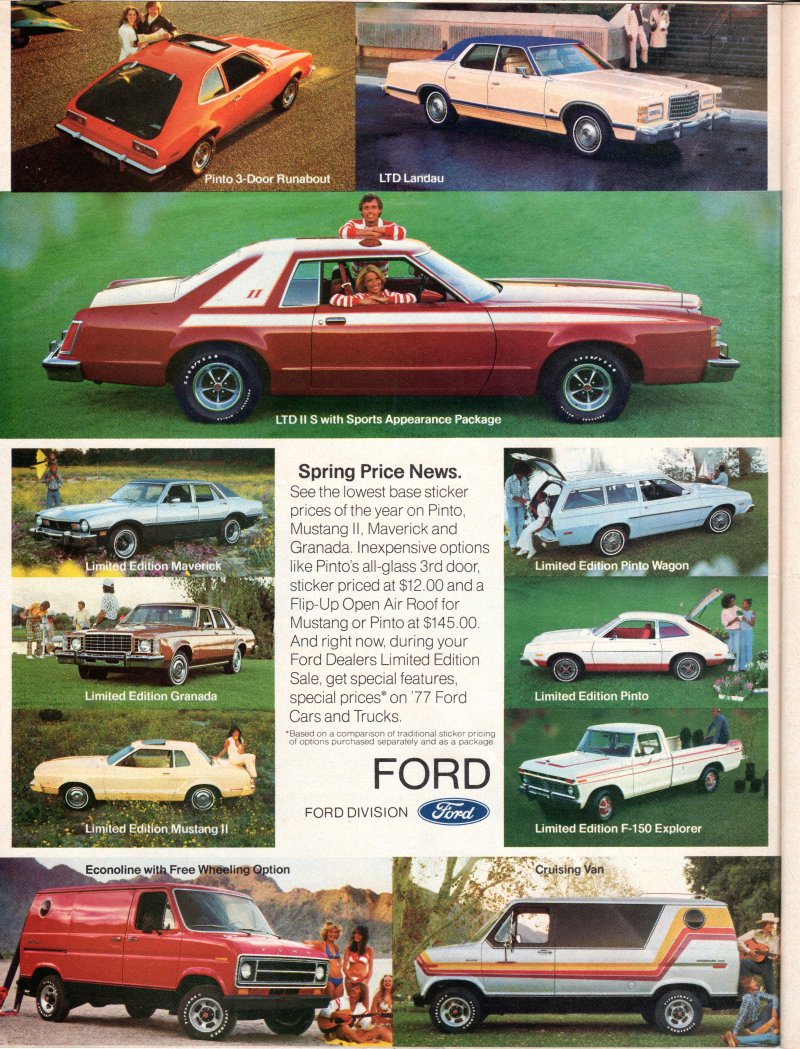
At any rate, the issue contains a full color spread on swimsuits for the season, ostensibly a fashion story, but, c’mon, man, we know it’s to show off comely ladies in swimsuits. Newsweek is a mostly black and white magazine at this time; the only things you tend to see in color are advertisements, such as this page of a multi-page spread talking about the current Ford line-up.

The good news is that, unlike the 1977 Ford lineup and pretty much everything else designed in the 1970s, the swimsuits are pretty timeless.

Continue reading “From The 1977 Newsweek Swimsuit Issue”

Buy My Books!
Buy John Donnelly's Gold Buy The Courtship of Barbara Holt Buy Coffee House Memories

Just In Time For Mother’s Day

So I expanded the Friends folder in my email archives because I was looking for Wombat-Socho’s email address since I’m on the Rule 5 post train these days, and I saw an indicator that I had an unread email from my mother.

An unread email from my sainted mother? I thought. Since we talked often and saw each other at least once a week, we did not email each other often; most of the emails in the folder include photos to help me build up my library after I had a hard drive crash about that time. So I clicked in to see what it was. Perhaps a forward that I’d not opened yet?

Oh, but no.

I just somehow dropped something else in the folder.

I read through all the emails; they were sometimes one line missives with attached photographs. Which I am likely to see in the slideshow that’s the screensaver on one of my computers, so I didn’t have to dig into the attachments.

Ah, I do miss her.

Buy My Books!
Buy John Donnelly's Gold Buy The Courtship of Barbara Holt Buy Coffee House Memories

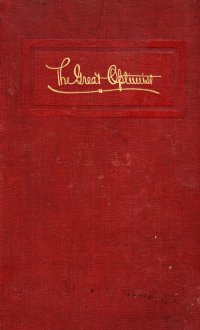
Book Report: The Great Optimist by Leigh Mitchell Hodges (2003)

Book coverI bought this book in December at ABC Books because it was inexpensive, and as it was filed with the poetry, I thought it was an old collection of poems. As it stands, though, it is a collection of essays or newspaper columns–apparently, the author was a columnist in Philadelphia back when a lot of the people mentioned in Heroes and Outlaws of the Old West, the lawmen anyway, were still alive.

So we have ten short essays–I would put them at 600 words, tops, and it’s only 35 pages total. The column/essays are:

  • “The Great Optimist”, a column about Christmas and how Jesus was the Great Optimist. I wondered as I started it whether I was in for a dozen sermons, but no; although the author is Christian, he’s a columnist and not a pastor.
  • “A Darkened Cage” about how a little darkness teaches a songbird to sing. You know what it’s a metaphor for; it reminded me of I Know Why The Caged Bird Sings, Maya Angelou’s autobiography I was assigned in freshman English. The same metaphor, anyway.
  • “A Spring Song”, which talks about the optimism of spring and mirrors a poem that I’ve put down the first lines of somewhere.
  • “Making the Most”, which is about making the most of your talents (of course).
  • “The Flag”, a patriotic piece whose sentiments we might look askew at today, as it says all Americans can rally around it, which is not the 21st century reality, ainna?
  • “Ma Brither”, which recounts this story:

    Ian MacLaren tells somewhere a sweet story of his native Scotland–what while sauntering along a country lane one hot afternoon, he met a bonnie wee lass, all humped up and red, puffing with the weight of the chubby laddie she was carrying.
    “Isn’t he too heavy for you?” asked the dominic.
    “He’s not hivvy, sir,” came the reply, with a smile of loving pride; “he’s ma brither.”

    I tried to track down the source of this story; although Hodges attributes it to Ian Maclaren (pen name of John Watson), apparently it appears in The parables of Jesus, an 1884 book by James Wells. So it was already an established trope by 1903.

  • “Failure”, about how failure leads to success, which is a strangely contemporary message delivered to you by all your software that breaks easily.
  • “The Grasshopper”, about finding beauty in everyday things.

    Notable because:

    One Wednesday afternoon back in the baby days of the last century, three poets who were friends met together, as was their custom. Before parting, each agreed to write a sonnet on “The Grasshopper,” and to read it the following Wednesday. How would you like to have been there when John Keats, Percy Shelley, and Leigh Hunt–for they were the friends–read each his fourteen lines!

    The poems are from 1816. So the poems were newer to Hodges than Hodges book is to our day.

  • “My Friend,” about real friends. Shades of the first essay in that Montaigne book I have not finished yet.
  • “Thanksgiving,” which is about the holiday and gratitude. Which go together!

So the book kind of follows the year from Christmas to the next Thanksgiving.

The essays are nice, but I probably won’t remember much from the book except that it was old and that I read it. Which is what this post is for, ultimately, gentle reader–to remind me of what this book was actually about.

Also, as a side note, I have read three of the six books I bought at ABC Books that day and I have started the fourth (the English novel Pamela which I will undoubtedly mention over and over as the serious book that I am reading whilst posting book reports on smaller books I have read during the span, much like the recently completed David Copperfield. Dare I make this a twee goal for 2021, to complete all six of these books, kind of like I made it a goal in 2019 to read all of the books that I bought at Calvin’s Books that May? The collection of Paul Dunbar might be daunting, though–although it is only the beginning of May.

Buy My Books!
Buy John Donnelly's Gold Buy The Courtship of Barbara Holt Buy Coffee House Memories

Missing From The Book Sales

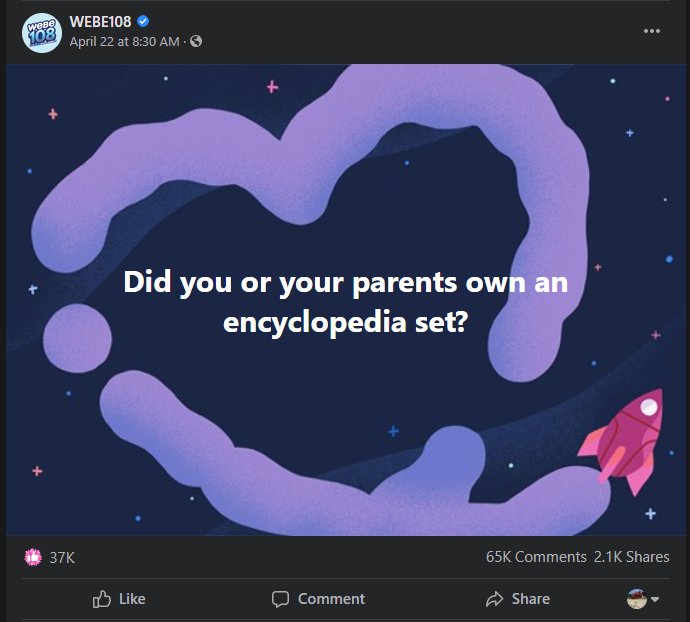
I spotted this on Facebook:

And my first response was owned? Past tense?

Whereas I do have a bunch of specialty encyclopedia sets, like The Book of Popular Science, The Complete Handyman Do-It-Yourself Encyclopedia, the Time-Life Old West series (okay, the last is a stretch), I don’t actually have a set of general interest encyclopedia like the World Book, Encyclopedia Britannica, or Funk and Wagnalls.

So, suddenly, of course I want one.

The World Book was the Internet of my day before the Internet. I remember spending at least one Saturday afternoon with my brother, reading all the Greek and Roman mythology articles hypolinked with See and See Also references. Now, of course, you can do the same thing with Wikipedia.

I don’t remember seeing a collection encyclopedias at a book sale in recent years–but of course, I have not actively looked for them, so they might have just escaped my notice.

But we are coming to the right number of decades from their heyday and popularity that they’ve already been cleaned out of homes with no children or grandchildren to use them.

Also, I would imagine book sales are loath to touch them as I cannot imagine that anyone would buy them in this day and age. However, I’m hopeful to stumble across a set at a church sale somewhere along the line. Because now that I know they’re gone, I miss them.

Kind of like how you don’t see old computers in garage sales any more. Thirty years after that old Commodore was put in the basement or the closet, it’s already gone into a garage sale or garbage can by now–or into the hands of collectors or dealers. You don’t even see old computers and whatnot in antique malls.

Ah, how things slip away, and we don’t even see them go.

Buy My Books!
Buy John Donnelly's Gold Buy The Courtship of Barbara Holt Buy Coffee House Memories

Ah, To Be There Again, And Twenty

Summerfest 2021 in Milwaukee announces lineup, with Jonas Brothers, Chance The Rapper, Miley Cyrus, 100 other headliners

You can get a good look at the big acts announced so far at the official site.

For a brief period that was a lot of my life at that point, say from 1987 to 1995 or 1996, I went to Summerfest every year, several times a year many years. Tickets were ten bucks then, but you could win tickets or otherwise get in free in a variety of ways, and then you would have to carefully plot your day so you could catch the best bands. Oh, the dilemma of some of the headliners: Queensrÿche or REO Speedwagon? Joan Jett and the Blackhearts, George Thorogood and the Delaware Destroyers, or Ani DiFranco? ZZ Top or Living Colour? Not to mention the individual stage lineups that ascend from local bands to regional bands to national bands before the headliner.

Although, to be honest, looking at the lineup announced so far, I could have seen the bands that I would want to see in 2021 in 1995. Which clearly means they need a metal and a jazz stage.

Buy My Books!
Buy John Donnelly's Gold Buy The Courtship of Barbara Holt Buy Coffee House Memories

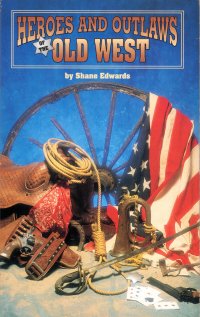
Book Report: Heroes and Outlaws of the Old West by Shane Edwards (1993)

Book coverI asked yesterday whether you thought I would delve into a book that I bought over the weekend or if I would read another movie tie-in book next. Hah! Gentle reader, as you well know, this is an example of a false dilemma. As it turns out, I picked up a thin children’s (I dare say it’s younger than Young Adult, but who knows in the 21st century?) book about, well, the title says it all, I suppose. I bought this book in 2012 along with Hud and a couple of M*A*S*H books, which might make this movie/television tie-in adjacent. That, and the other thing that we will get to.

The book is 128 pages of quick read–it took me about two hours start to finish. It lists, alphabetically, a variety of lawmen or outlaws from the frontier days (which means the latter half of the nineteenth century and maybe the first decade of the 20th–it’s amazing how not long ago this was). It’s got some of the usual suspects–Jesse James, Black Bart, Butch Cassidy and the Sunset Kid–and it pretty much has everyone from the Lincoln County War, including Billy the Kid amd Charlie Bowdre, so one wonders if the author was a fan of the film Young Guns which came out in 1988 (and the sequel in 1990).

The information within is perhaps dubious–it espouses the view that Butch Cassidy survived the shoot-out in Bolivia among other things. And it has something of a message, as all the outlaws die young by violence, and all the lawmen live to an old age after they retire in their 40s.

So a good idea book if you’re looking for things to write about in the old west, but probably not a source you’d want to cite. And, as I mentioned, a quick read even if it took me nine years to get to it.

Buy My Books!
Buy John Donnelly's Gold Buy The Courtship of Barbara Holt Buy Coffee House Memories

Alternate Headline: Google Demands Your Cell Phone Number

Google is going to start automatically enrolling users in two-step verification

Although Google already has my cell number six ways from Sunday anyhow, and a former client required two-factor authentication for the corporate Gmail. So I can’t shriek to loudly. Besides, it’s not Google that’s suddenly sending me HOT CHIX WANT TO MEET YOU texts. That’s courtesy of a data leak at a job application company or responding to a scam job posting.

Or the “You only have 2 bytes of data left” text messages I’m suddenly getting all the time; that’s the result of giving a high school student a smart phone.

(Link via Pixy’s new Tech News post today at Ace of Spades HQ. A much better addition to the daily lineup than Sefton’s morning thing.)

Buy My Books!
Buy John Donnelly's Gold Buy The Courtship of Barbara Holt Buy Coffee House Memories

You Might Be Overselling It

Infinite possibilities? Good for entertaining? Like, “C’mon, man, let’s watch to see what these apples will do next!”

Although, to be clear, it was just selling it enough since I bought a bag. But I need the blog content.

Buy My Books!
Buy John Donnelly's Gold Buy The Courtship of Barbara Holt Buy Coffee House Memories

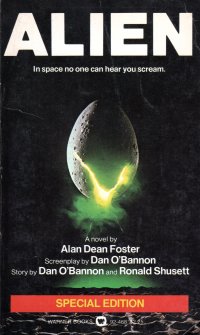
Book Report: Alien by Alan Dean Foster (1979)

Book coverWait a minute, Brian J., didn’t you already write a book report about this book this year? you might ask. Gentle reader, I understand why you might think so. But the movie novelization by Alan Dean Foster that I read earlier this year was Alien Nation. They would be shelved together in the used book store assuming that Alien Nation came before Aliens, which Foster also novelizinated. Of course, they might not even be in the used book store at the same time. Certainly my copies will not be until perhaps after my death.

Okay, so this is the novelization of Alien. I have not actually seen the film even though I have it and, I believe, the first two sequels on videocassette. I thought it would be too spooky–as a kid, I shied away from spooky movies, even spooky science fiction movies from the early days when I didn’t want to go see John Carpenter’s The Thing with my babysitters when I was ten years old. So I have probably backburnered this film with that same kind of dread. Although I did see Aliens in the theatre when I was fourteen years old. But probably not since. Now that I’ve read the book, I am a little more prepared for the movies, so perhaps I will give them ago. Albeit without my boys, who are probably not ready for it yet even though they might think they are.

So, the plot: Seven crew members on a faster-than-light tugboat are awakened from their cryogenic sleep to investigate a ‘distress call’ on a planet in a sector they’re passing through. They land, and as they explore a derelict alien craft, one of them gets attacked by an alien that attaches itself to his face. They bring him aboard, against all procedure, and eventually a different alien bursts from his chest, and the crew tries to hunt it down but finds itself outmatched, especially as someone on the crew seems to be helping the alien. I mean, you know the basics, right?

A third of the book is in setup before the attack on the derelict occurs, and about another third elapses before the Xenomorph is loose on the ship, so we get a rather brief run through of fighting the alien. I have to wonder if the movie itself is paced this way, or if this is another instance (like Alien Nation) where a lot of time is spent on world building in the beginning that doesn’t appear in the movie. This article explains some of the differences between the original screenplay and what was shot and also mentions a couple of things left on the cutting room floor that appear in the book.

So I’ll be set up for jump scares that never come, maybe.

But I liked the book all right; it’s got a We Find A Mystery Of Another Civilization/Race thing that I like, and I like the detail Foster builds into the world of being a working-class space farer. And I like Alan Dean Foster. So you know if I find other Alan Dean Foster books in the wild, I’ll grab them, but they’ll have to be at smaller book sales or garage sales unless they’re misfiled in the Martial Arts section at ABC Books or the Ozarks section at the Friends of the Springfield-Greene County Library book sale since I don’t go out seeking science fiction books. But they manage to find me.

At any rate, I only flagged one thing in the book, and it was because of a coincidence:

Unexpectedly, a realignment of priorities in her [Ripley’s] querying jogged something within the ship’s Brobdingnabian store of information.

I came across that sentence immediately after my beautiful wife played some Brobdingnabian Bards filk music while we were playing cards, and I explained the origin of the term (Gulliver’s Travels). It’s not quite the Jeopardy! nexus, but still.

So, now, the question: Do I read another movie novelization or television series tie-in, or do I delve into the stack of books I bought last weekend. I am keeping you in suspense, gentle reader, because I have not decided just yet.

Buy My Books!
Buy John Donnelly's Gold Buy The Courtship of Barbara Holt Buy Coffee House Memories

You Don’t Say

Aaron Rodgers booed by fans at Brewers minor league game amid Packers staredown:

It’s safe to say that Aaron Rodgers isn’t the most popular person in Wisconsin at the moment.

During a Wisconsin Timber Rattlers home game, a minor league affiliate of the Milwaukee Brewers, Rodgers came on the video board to do a commercial for Bergstrom Autos. The Packers quarterback – long considered a hero in the state of Wisconsin – was audibly booed, according to Milwaukee Journal Sentinel reporter Todd Rosiak.

Why, it’s been a couple of days since I’ve publickly applied an unflattering sobriquet to him.

I kind of wonder what his ratings would be like as the Jeopardy! host now. Prediction: Not as good as they would have been had he announced his retirement a month ago.

Buy My Books!
Buy John Donnelly's Gold Buy The Courtship of Barbara Holt Buy Coffee House Memories

Unexpectedly! Attributed Incorrectly

Springfield faces apartment shortage due to a rise in jobs:

It looks like houses aren’t the only hot item in the market. Springfield is experiencing an apartment shortage and a local property manager says it’s because of jobs.

“I think Springfield’s blessed right now with a lot of people moving to town because there are jobs available and as a result of that, apartments are the first place to stop to find a place to live,” said Lonnie Funk.

But:

“I think a lot of people get forced into paying more for an apartment than what they can really afford to pay,” said Funk.

“It’s $900 or $1200 a month, so a single person can’t swing it,” said Bailey. “Rent’s never going to go down. I was amazed at what the rent went up here. I’m to the point where I’m about ready to go back to Florida.”

Not depicted: The Federal Government, particularly the CDC, forbidding landlords from evicting tenants who are not paying rent, which unexpectedly! should be expected to cause rents for new leases to rise and the supply to shrink.

Buy My Books!
Buy John Donnelly's Gold Buy The Courtship of Barbara Holt Buy Coffee House Memories

It Was A Long Shot In The Start Of World War III Pool

But it looks like England vs. France might just pay out:

BORIS Johnson has deployed the Royal Navy to protect Jersey from the threat of a French blockade.

The dramatic move came after French fishermen – backed by Macron’s ministers – vowed to shut off the island unless they could fish more British waters, a threat branded an “act of war”.

The furious spat erupted after the island – which is under Britain’s protection – slapped French trawlers with post-Brexit fishing licences requirements.

About 100 French fishing vessels are due to sail to Jersey’s port on Thursday as part of a protest against the new rules, the head of fisheries for the Normandy region, Dimitri Rogoff has said.

In the face of increasingly bellicose French threats, two patrol vessels will sent to monitor the situation and protect the islands 100,000 citizens who depend wholly on imports for food, medicine and even electricity.

I did not see that coming!

Okay, now, let’s look through the signs and portents and penumbras and emanations to determine who is the Russian and or Chinese proxy in this fight. Cui bono?

Which does not mean “Alexa, play Sonny and Cher,” by the way.

Buy My Books!
Buy John Donnelly's Gold Buy The Courtship of Barbara Holt Buy Coffee House Memories

Book Report: Home Is Where The Heart Is by Thomas Kinkade (1998)

Book coverNot to be confused with Home Is Where The Quick Is which was a MOD Squad tie-in paperback that I read in 2012, proving that I have long had a thing for those kinds of books (my run through them this spring notwithstanding).

Instead, this is a Thomas Kinkade property. It’s 47 pages long. It has 18 Kinkade paintings reproduced; opposite pages have quotes from famous literary works. In it, Edward Guest has two or three such pages; as his most famous poem is called “Home” and the title comes from it, I understand why. Also, his works were known for being kitschy and sentimental and are mostly forgotten now–so you can see how he might fit in with Kinkade.

So I looked over the pictures here with a bit of a gimlet eye (not Gimlet’s eye, gentle reader; don’t be morbid) to try to see what some find so offensive about them. Well, it’s only la-di-dah public types who tend to get quoted disapproving Kinkade’s work. They’re homey scenes like something out of Currier and Ives, but, and I think this might be the start of the disapproval, the skies are usually fairly bright even at night–perhaps a nod to his Christian beliefs–and the light spills kind of unnaturally out of every window of the houses in the nighttime scenes, which seems wasteful at best and an anachronism if you try to figure out how the light was so bright and even though it’s horse-and-buggy days, probably precluding electric light for most of these places. Those would be some very bright gas lamps indeed. But, you know what, it’s also to emphasize the homey, so I get it.

It’s a shame about his tragic personal life, and it’s a shame people dunked on him when he was alive and probably after he died. Knocking him because he purportedly outlined things and had assistants fill them out or whatnot. C’mon, man, aren’t you familiar with Renaissance art practices?

At any rate, a nice little book that I could use in between chapters of other things.

I suppose I would be remiss in noting this is the first of the books that I read from this weekend’s binge. I was actually looking for a book of poetry, but when I shelved the books, I scattered the smaller books across the stacks in my offices, and this was the first quick browser that I came across. So it didn’t make it until football season.

Buy My Books!
Buy John Donnelly's Gold Buy The Courtship of Barbara Holt Buy Coffee House Memories

The Lileks/Copperfield Convergence

Yesterday, in my review of David Copperfield, I quoted this passage:

I have often remarked-I suppose everybody has–that one’s going away from a familiar place would seem to be the signal for change in it. As I looked out of the coach-window, and observed that an old house on Fish Street Hill, which had stood untouched by painter, carpenter, or bricklayer for a century, had been pulled down in my absence, and that a neighbouring street, of time-honored insalubrity and inconvenience, was being drained and widened, I half expected to find St. Paul’s Cathedral looking older.

Today, in The Bleat, James Lileks talks about his college daughter returning home:

It pains to say it, but I always dreaded going back home after I’d left for college. I had to be someone else, or at least I wasn’t going to be 100% of who I thought I was. Parents were happy to see me, everything was fine . . . there were questions, of course, but no interrogations. I had to sneak cigarettes. I had to reacclimatize to the Shrine Bedroom that held my previous life. All the high school trophies, the beatific picture of myself in 4th grade on the wall, old sci-fi books, records I didn’t want, drawers with cast-off things.

This is nothing unusual. One of the big newspapers ran a story last week about 30-somethings driven home by COVID or other knock-on effects, and how they remade their childhood bedrooms into new and fabulous spaces. It all seemed pathetic and suggested that no one running these sections thinks it’s odd that 30+ single men are faced with the dilemma of replacing their old action figures with their new action figures.

Anyway. Going back from college. If there was anything that seemed sad, it was the sense that nothing had changed, nothing had moved forward. Everything was where it had been and where it would always be. When you’re young you’re making your own world anew, and stepping back into a place where every object was precisely where you left it last time made you feel like you were visiting a mausoleum of childhood.

Okay, they’re kind of opposites, but one can hold very similar feelings at the same time, ainna?

When I came back from the university for school breaks, I was in the same room, which was kind of Spartan, and when I moved back after college, I lived with my sainted mother for about three years, but we moved from the “childhood” home down the gravel road about eight months after my return. And we’d only lived in the house down the gravel road for a year and a half of my high school years; before that, it was the trailer park for, what, three and a half years? And my aunt’s basement for a year and a half. So I didn’t really have a childhood bedroom to ossify.

Now, of course, everything has changed everywhere I have lived so that they’re completely new places by now. So I can’t go home again because I didn’t really have a “home,” and I’m coming to realize that I really don’t have any family to greet me when I got there. Present immediate family excluded, of course, but the environs around Nogglestead are developing pretty rapidly, so much so that I can already say, “I remember when these were just fields,” and I have only been here eleven years (which is longer than most of my immediate neighbors, even those in the houses that were already present when we moved in). And, to be honest, we will probably redo the boys’ rooms once they move out, so they won’t have that particular experience–or we’ll move further out into the hinterlands when they leave. But they will have a static idea of the house they grew up in because we haven’t really modified Nogglestead since we moved in, either.

Dickens noted the differences development made over a hundred and fifty years ago; I have to wonder what he would have thought of the 21st century, where the pace of change of cities and towns might very well have helped cut us off from our sense of our own past and the past in general.

But getting to a pat conclusion lamenting the state of the world based on two disparate quotes is the blogger’s stock in trade, baby.

Buy My Books!
Buy John Donnelly's Gold Buy The Courtship of Barbara Holt Buy Coffee House Memories

Strangely, It Is Not An Album About Middle Eastern Court Politics

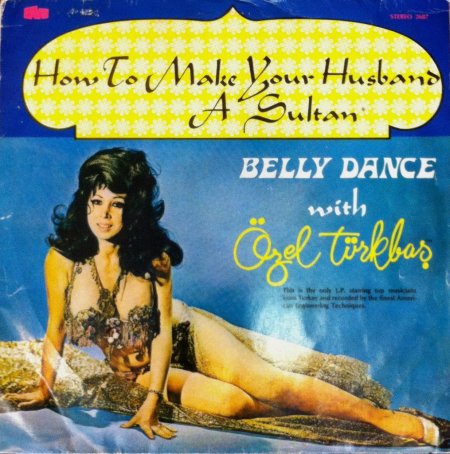
I mentioned that I got a copy of Özel Türkbaş’s album How To Make Your Husband A Sultan: Belly Dance with Özel Türkbaş this weekend.

I know, you’re saying, Did he buy this album because he likes to sample music in foreign languages, and this one was only fifty cents, or did he buy this album because it has a Pretty Woman on the Cover (PWoC)? The answer is yes.

The record comes from 1972 which is (counts his rings) forty-nine years ago. It includes some Turkish/Arabic music and a small booklet that includes basic belly dancing directions (swing your hips in time to the music, turn your hands parallel to the ground, bend backwards, wear finger cymbals, basically). I certainly couldn’t do it based on the books; heaven knows I need to take martial arts classes for almost a decade to gain basic competency in body control. Besides, if I wanted to learn belly dancing, I would talk to my cousin, one of the pretty ones, who is a belly dancer and a yoga instructor (one of the benefits of the large family: A cousin for every conversation). But, of course, I’m the husband in my personal situation, so I am the sultanee in the scientific formula and/or recipe.

At any rate, although Özel passed away in 2012, her family keeps alive an official Website offering her bio and theoretically a shop with merchandise, although that link doesn’t currently work. So maybe the site is not being kept alive but instead has a prepaid hosting plan lasting some years. I expect that’s what will happen with me some day, gentle reader.

But I digress. The site and YouTube have a video of her appearance on the Dinah Shore show where she belly dances and then cooks a meal:

She wrote a cookbook and owned a restaurant with her husband at some point.

I’ll drop some stills of Mrs. Türkbaş below the fold.

Continue reading “Strangely, It Is Not An Album About Middle Eastern Court Politics”

Buy My Books!
Buy John Donnelly's Gold Buy The Courtship of Barbara Holt Buy Coffee House Memories

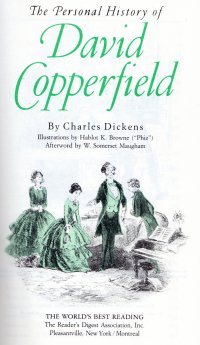
Book Report: David Copperfield by Charles Dickens (1850, 1986)

Book coverWell, I finished this book, finally. As you might recall, gentle reader, I have been reading it for some time. I started it before I began the library’s winter reading challenge (which I finished on or around February 22), so it was the book I picked up after Wuthering Heights). I read the sixteen books in the reading challenge whilst this book carried a bookmark, and I’ve nibbled at it for four months. Which, truth be told, as a serial, actual readers would have gotten parts of it doled out after years. And, one gets the sense that Dickens kind of wrote it like the writers of Lost with one eye on the reception and chatter of previous installments.

So, to make a long novel a short blog post, the book talks about the aforementioned David Copperfield, who is born to a widowed mother and they live together with a live-in housekeeper, Peggotty. Copperfield’s mother remarried a harsh man, and Copperfield is bundled off to live with the housekeeper’s family, to a cheap boarding school, and then as an apprentice at a wine merchant. Along the way he meets characters to figure in subplots, including the charismatic but ne’er-do-well Steerforth, a childhood associate whom Copperfield admires greatly; Peggotty’s brother and his adoptive family, including the sweet little Em’ly, her eventual betrothed Ham, and old Mrs. Gummidge; Traddles, another school friend, who is dull and plodding but dogged, and the free-spending Micawbers who are often one step ahead of the debt police. Copperfield runs away from the wine merchant to Copperfield’s aunt, the father’s sister, who starts well-to-do but loses it all; a businessman that Copperfield lives with and his daughter Agnes; Uriah Heep, the assistant to the businessman who was such an antagonist that a rock band a hundred years later took his name as their own; the owner of a law firm where David catches on and his pretty daughter whom Copperfield eventually marries; and the absent-minded school professor and his very young wife.

These characters move through the currents and subplots of the book. The main plots are that Heep is slowly taking over the Mr. Wickfield’s business through manipulation and fraud while he continues to act abased, and that Steerforth seduces and runs away with little Em’ly, and Mr. Peggotty vows to wander looking for her until he finds her and brings her home. Subplots include Copperfield’s rise through the trades and becoming a writer; Copperfield marrying his boss’s daughter and being a bit unsatisfied in the match; the loss of the aunt’s fortune; and, to be honest, a whole lot of other threads run through the book. The characters wander in and out and combine and recombine. The book has 747 pages in this Reader’s Digest World’s Best Reading edition, so Dickens could take his time–and he did.

The chapters and sections move leisurely, so it’s okay to take it slow and read it in portions, wandering away to movie tie-in paperbacks during the reading. The book meanders quite a bit into the subplots, character studies, and explanations of different elements of Victorian England. However, about 150 pages before the end, suddenly Dickens gets the urge to wrap things up, and so he starts rather abruptly resolving things–the pace of the last dozen chapters or so is quite faster than the others. I often have this knock on men’s adventure paperbacks, too, so maybe I’m just not ready for the books to end when they do.

At any rate, I enjoyed the book, sometimes more than others, and I’m glad to have read it. Although I just picked up The Pickwick Papers this weekend, I probably won’t dive right into it. Perhaps Dickens will only be an annual tradition with me (Barnaby Rudge being last year’s Dickens). However, I certainly have a soft part in my heart and a large part of my bookshelves (well, relatively, but probably less than Stephen King) for Dickens.

But I did put some markers in the book. Let’s see if I can recreate what I was thinking some months ago.

Continue reading “Book Report: David Copperfield by Charles Dickens (1850, 1986)”

Buy My Books!
Buy John Donnelly's Gold Buy The Courtship of Barbara Holt Buy Coffee House Memories