Not only is coronovirus not the first viral apocalypse, it’s not even the first viral apocalypse I’ve commented on on this blog.
So wake me when this one is over. Unless I am dead. Then let me sleep.
To be able to say "Noggle," you first must be able to say "Nah."
Not only is coronovirus not the first viral apocalypse, it’s not even the first viral apocalypse I’ve commented on on this blog.
So wake me when this one is over. Unless I am dead. Then let me sleep.
The story Someone Modified A Drone So That It Looks like Snoopy Flying Around On Top Of His Doghouse begins:
One of the most memorable scenes from The Peanuts Movie (2015) was where Snoopy imagines himself riding his flying doghouse in his quest to take down the Red Baron. Now you can have the chance to see this iconic scene in real life with this flying Snoopy doghouse. It features the figure of Snoopy sitting on top of his red doghouse. But the most amazing thing is, it actually flies.
The source, you see, is a five-year-old movie for kids. Not the comic strip that began in 1950. That’s when the Boomers were babies, man. Ancient history with Romans and stuff.
Nobody tell this kid about the 1966 Royal Kingsmen song.
I own the original single as my mother was of single-buying age in 1966.
(Link via Instapundit which only seems to be the only site on the Internet that I read.)

Apparently, in Britain, embarrassment is 10% as deadly as Coronavirus.
For some reason, Wally has been on my mind recently. I flagged a poem in Robert Hayden’s Collected Poems with the name.
Wally lived in the projects at the other end of the block from us, but he would shamble down 40th Street a couple times a day, probably on the way to the grocery, drug store, or liquor store on Florist. He was ancient to those of us under ten years old. He had white hair and no teeth, and he moved slowly. I was never sure if he was infirm or intoxicated, but he would always happily comply when a group of children would surround him and request his rendition of “Tiny Bubbles”.
I was talking to my brother a couple weeks ago, and he mentioned that Wally served in World War I. Doing the math, I guess that would work out–he was about eighty. My grandfather served in World War II and was only a little older than I am now in 1970-something.
What stories Wally (and my grandfather) could have shared with me. Probably not about the wars, as men of those conflicts didn’t talk much about it, but just the things they had seen in the early part of the 20th century.
It’s probably why I like self-published personal memoirs like The Apple Man and Growing Up In The Bend. I get to hear those stories of ordinary men in their own words, without having to actually talk to them (or risk them with various infections).
Another good reminder to live in the present with those around you instead of tinkling on a blog or banging your head against a promise chain for hours a day.
This book has not disuaded me from my thesis that art (not just visual art, but literature and music also) became generally broken sometime right before the turn of the twentieth century when the focus changed from the work of art representing something in real life to the work of art reflecting itself. That is, a painting wasn’t necessarily for you to look at the something in the painting, but rather for you to look at the painting.
Gauguin still stands on the representational end of he spectrum. You can tell his crude executions depict something, often nude native women, which means that he’s basically the artistic version of old National Geographic magazines. That is, an educated excuse to see boobs.
The book itself is laden with text with some boobs and some non-boob art interspersed. The text is heavily art-critic and translated from the original French, so it’s pretty florid and emphasizes how awesome and important Gauguin is, relating his work to other less consequential figures and the Impressionists. I am not cultivated enough to really grok it, though, since it’s the sort of in-language that detects hints of smoke and blackberries in the wine.
So, yeah, not a fan.
Something interesting about this book: the first couple of pages–the frontspiece and the title page have come out, and the title page has a picture pasted onto it. Which makes me believe that they were added after the rest of the book was bound. You know, one of the early work-at-home businesses was to paste these pictures into the box on the page and then ship them back off to the publisher to insert into the books. Work at home in your spare time while watching television ads in the backs of magazines. This girl I dated in the middle 1990s did that, pasted craft pictures onto the title page of some crafting book. It wasn’t that good of money, and you had to pay close attention to get the right amount of glue on the picture and to make sure it was square. Or the boss would reject the pages and maybe dock you for them. So the girl I dated didn’t do it for long.
So I have quietly begun to accumulate Tommy Reynolds and his Orchestra (Your Band Of Tomorrow) records. And by that, I mean I have snapped up the inexpensive copies that I have found on eBay. I’ve got nine so far, including some that are not on his Discogs page.
That’s right, I have been watching for items on eBay, which is unlike me. Mainly, I like to get my records for a buck each at the book sales. But I am hunting down Tommy Reynolds stuff on eBay.
I even have a 16mm film reel of his song “Smiles”:
I mean, the video guy has it to make my own DVD copy of it. You see, in the middle 1940s, the Mills Novelty Company made Panoram machines that played short reels of film, generally musical numbers, and you could put your nickel in the Nickelodeon sorry, that’s a different thing entirely. You could put your money in and see a film performance of a song. Music videos before MTV, children. So I’ve got my own copy of a film I can’t watch natively, and I’m hoping to stumble across other Tommy Reynolds titles.
Why, Brian J., are you so into an obscure big band?
Because my Cousin Tat sang with that band.

You might remember Cousin Tat as the doctor who did not know who Fred Thompson was. To be honest, at that time, that’s about all I knew about him, too: that he was a doctor, and that he could pray in Hebrew.
He passed away in late 2008, and it was only at his memorial service that I learned the measure of his legend.
He sang with the Tommy Reynolds Orchestra. He was an Anglican Bishop. He was the head of one of the Cherokee nations and visited 10 Downing Street. He was a medical doctor and professor who married an attractive, much younger student (my mother’s cousin, so Tat was really my cousin once removed by marriage). He owned a series of clinics abroad that specialized in nutrition and longevity treatments not approved by the FDA here in the states. And he was a nice man, a humble man.
Although the research I’ve seen on the Internet does not show any known recordings where he is credited with vocals, I’m grabbing up everything I can from the Tommy Reynolds Orchestra just in case I can find something with my cousin on it.
Side note: One of the best things about coming from a large (that is, normal sized for the early 20th century) family is that I’ve pretty much got a cousin who has done it all. I’ve got a cousin that sang with a Big Band in the 1940s. I’ve got a cousin who sang with a heavy metal band in the 21st century.
This audio course is entitled The World of George Orwell, and that describes the content of the course. It’s partly a biography, partly a history of the early part of the 20th century in which Orwell lived, and partly a discussion of his works. It’s a seven disc, 14 lecture set that culminates in discussion of Animal Farm and 1984.
It’s a Modern Scholar course, so it’s 2 lectures longer than a similar Teaching Company/Great Courses lecture series, and it’s slightly lower quality. The professor presenting has a more sonorous voice, a little less dynamic, and he repeats himself a lot–sometimes the same sentence, he says in a slightly different way twice in a row. Still, he’s a homer–he loves his subject and has enthusiasm for Orwell which serves to mitigate the delivery.
So, biographically, a sickly young man with an education above what his upbringing might have borne decides instead of the military to join the imperial police, and he gets stationed in Burma. After a couple years, he returns home after an illness and to the disappointment of his family. He decides to be a writer and starts to write. He serves and is grievously wounded in the Spanish Civil War. And he returns to the United Kingdom and writes a number of books that don’t really go anywhere. He struggles with his publisher, gets married and loses his wife, endures World War II, and then hits big with Animal Farm and 1984. And then he dies.
Somehow the lectures diminished Orwell, or at least my concept of him. He seems a shabby little socialist who punched above his weight with a couple of good essays and a couple of books that captured the anti-communist zeitgeist of the middle part of the twentieth century.
Yesterday, on the way home from school, one of the young lads informed me we needed to go to the dollar store to pick up…. Something. It’s for his Learning Fair project, which is a paper, a trifold board, and a presentation that they (the boys) annually produce before spring break to show the grandparents (who have a special day at the school right before spring break).
He did not know to say “Report cover” and made it sound like he needed sheet protectors. But I remember from years past that they needed report covers.
“I think we have some of those at home,” I said.
Apparently so.

I am not entirely sure why I have dozens of report covers. Did I inherit them from my aunt? Were they on sale? Did I expect to write more reports than I have or expect my boys to need more than one a year?
Not depicted: Another package of six that wasn’t in the bin with the others.
So we didn’t need to stop to buy one (or fifty). And at the pace we’re using them, neither will our grandchildren or great-grandchildren.
Bragging rights fall to Mrs. Steinman as she bested her husband’s vote total in the Democrat Primary for President this year:

It’s not the first time they’ve run against each other. And, near as I can tell, Leonard has run as a Republican, a Libertarian, and a Democrat at various times and in various races whereas Velma has kept it Democrat.
A public health poster you can print out and hang in your workplace:

I’m familiar with John Cage’s 4’33”, but I’ve never heard it.
Also, the question is why are so many businesses closing at the mere thought of coronovirus?
Because lawyers. Couple on Grand Princess cruise sues for over $1 million:
A Florida couple on board the coronavirus-stricken Grand Princess cruise ship that has begun to disembark passengers off the California coast is suing the ship’s operator for more than $1 million — claiming the company lacked proper screening protocols to protect them from the deadly bug.
Meanwhile, a pair pilloried in St. Louis for breaking quarantine to, you know, live their lives, have also lawyered up for the eventual lawsuits against them:
Family members of the 20-year-old Ladue woman who tested positive for coronavirus were not told to quarantine themselves, according to their attorney.
In a timeline of events, attorney Neil Bruntrager outlined several calls and texts between the woman’s mother and the St. Louis County health department from Thursday, when the woman first experienced symptoms, to Saturday, when county officials announced the positive test results at a news conference.
Good to know some sectors of the economy will do just fine.
So yesterday was the primary in Missouri, and I took the Democrat ballot.
Which I’ve been known to do when a Republican incumbent is relatively safe. In 2004, I probably voted for Joe Lieberman.
It’s not so much an Operation Chaos sort of thing, but rather I like to vote for the person whom I would think would make the least bad Democratic president.
So I voted for Tulsi Gabbard yesterday.
I mean, amongst the people remaining in the Democratic primary race, she’s the least crazy. Also, she could probably beat me in a push-up contest.
This headline makes it sound like I was somehow cheating: Missourians will need to declare party affiliation for Tuesday’s presidential primary, but that’s not the case. You just ask for the ballot. You don’t declare yourself affiliated with the party or anything.
It must have been the first time I’ve voted for a woman for president since Michele Bachmann wasn’t on the ballot here in 2012.
Regardless of who wins in November, I’ve inoculated myself against all criticism as I can say, “Don’t blame me; I voted for Tulsi.”
(Explanation of “chowse” here.)
I guess we can ascertain whom the models on the new Kohl’s flyer are expected to resemble.

I don’t tend to shop at Kohl’s because I don’t want to look like faux royalty.
I shop at Walmart so that I’m only out ten bucks when I inevitably ruin my clothing.
Good on ya, gentle reader, if you have no idea what I’m talking about. It’s these people, who are of little consequence and really only represent limey hereditary Kardashiania.
Strangely enough, this is the first Little House title I owned. I received a copy of These Happy Golden Years from my rich aunt, the one who just passed away, when we lived in the projects (as I recounted when I reported on Captains Courageous back in–Jesus and Mary Chain–2010). The particular volume I read was not the same one gifted to me forty (Love and Rockets!) years ago. When my boys came of reading chapter books age, that volume was passed up to their book shelves, and it’s likely still there as a young man’s interest is not in a teenaged girl’s ‘high school’ years in the late ninteenth century. Mine certainly wasn’t when I was younger than they are now. Which means this book might surpass by a decade Captains Courageous as the longest time a book has been on my to-read shelf before I read it. Given my advancing age, it’s unlikely this mark will be surpassed by anything I’ve boughten myself, although it’s entirely possible that I will get a wild hair and read Nobody’s Buddy or something else my aunt gave me back then to set a new record.
But that’s a long paragraph not apropos to the book itself. This book follows close on the heels of Little Town on the Prairie. And by “close on the heels,” I mean it picks up immediately after. Laura at 13 gets a teaching certificate and goes to teach school in a settlement 12 miles away from her family and the life she’s known. It’s only for eight weeks or so, and she’s bunking with one of the families at the settlement, but the family is unpleasant–the mother wishes they would return back east–and it’s only that Almanzo Wilder comes to get her to bring her home on the weekends that makes it bearable. After that stint is up, she returns home, returns to school, works a bit, and Mary comes to visit a couple of times. As I said, it rolls up a couple of years that encompasses her friends pairing off with boys/men as she pairs up with Almanzo Wilder, goes on sleigh and wagon rides, and eventually marries him.
So we’re passed the childhood now and will get into the two remaining books that are about her adult life but still geared towards children. I’m kind of sad to be coming toward the end of the series. But I do have other things to read.
When I was a young executive, working downtown at an interactive marketing agency, I would take a couple walks every day from the office. In the mornings, I would walk over to Starbucks and perhaps the St. Louis Bread Company to fortify myself with a triple venti cappuccino and some pastries. At lunch, I might walk to Carlos’s food cart to get two brats, plain. And maybe another walk out to Starbucks in the afternoon as much to break the tedium of the day as to fortify myself with another triple venti cappuccino.
At some point, it occurred to me that I was spending twenty to thirty dollars each day on these excursions. During those days, we were briefly DINK (dual income, no kids) but that ended in short order, and I curtailed the excursions during the brief time I had left at the agency before striking out on my own.
So when I look at my finances and am unsatisfied with the cash flow situation or the accumulated savings, I decide to nibble a bit at the edges and look at the dollars-a-day habits I’ve picked up.
I tend to grab hold of small comforts that I enjoy every day. I justify them by saying that I’m living in the moment, enhancing the enjoyment of every day, and besides, I am earning enough money to cover the small expenditures.
Of course, if I extrapolate out how much I’m actually spending, a couple dollars a day over the course of a year can run into thousands of dollars every year.
For example, take the Duraflame logs. At Sam’s Club, they cost roughly three dollars each (less when they marked down at the end of the season and I end up buying a bunch of them). The new formulation in the brown bags (Make It A Gold Night) burns in about three hours, sometimes less. Contrast this with the old yellow bags (“Tonight’s the night”) that burned for four or five hours but sometimes would fall to a smolder only to reignite some hours later, which I can understand would be a problem for normal people who don’t have iron fireplace inserts and are not around all day. But to get through a full evening from dinner time until bed time, I’ve had to burn more than one of these horizontal fireplace candles which is dollars a day I don’t really need.
A couple years ago, my beautiful wife bought me a K-Cup single cup coffee maker for Christmas, and I started using it instead of brewing a pot of drip coffee. I used it because it was downstairs, where I could make it first thing in the morning without disturbing my sleeping family rather than the convenience of the single cup maker. Although the cost of the K-Cups has come down from about a buck each to fifty or sixty cents each, I was still drinking several dollars a day in the single-use packets. So I’ve wound down my current stock of K-Cups and have moved back to drip coffee. I’ve not gone so far as to buy the giant tubs of Folder’s at Sam’s Club as they tend to go stale before I use them, but it’s still cheaper. And I’ve found that my family sleeps soundly enough that I can drain the remnants of the previous day’s brew from the pot, rinse it, and start a new pot without waking them up, especially on school days where nothing wakes them up.
Sometime in the last two years, I developed a habit of drinking mineral or sparkling water (fizzy bubbly) in the afternoons. I blame the visit to the Mountain Valley Water store in Hot Springs, Arkansas, which we visited on vacation in 2017. A lot of the material on the walls there touted the health benefits for athletes, and I wanted to look like one at the very least. Or perhaps I picked up the habit when we did the Whole 30 diet a couple years back. Regardless, I traversed the San Pellegrino, Mountain Valley, and Perrier brands. Most of these waters is sold in 750 milliliter bottles for a couple bucks each, although I could get one liter bottles for about the same price at Lucky’s Market before it folded. But I was drinking between one and three of these bottles a day for a cost of between three and eight dollars total. You know, the water coming out of our well has minerals, too. So I’ve gone off the fizzy bubbly for the nonce, which is kind of unfortunate–I kept my hydration up because going to the bar and pouring a glass of water into a fancy glass was a ritual, whereas drinking from the tap happens when I am thirsty is not and is less often. And with less gusto.
So I project to save plenty of money restricting these habits LIKE A SPARTAN!
It’s still nibbling at the edges of our expenditures, though. Our top line expense is tithing and other giving, which is more than our mortgage or car payment. I’m not giving up our martial arts school, although some months in sport seasons it’s more of an aspirational goal than something we actually attend (ditto the YMCA membership and the second gym membership somewhere that my beautiful wife often carries). I’m not going to stop spoiling my beautiful wife (my expressive love languages are gifts and acts of service, donchaknow). We still eat out too often and eat well when we eat in.
I don’t think we’re actually seeing much savings overall currently, though, because this cutting back is happening at the same time we’re laying in extra supplies just in case. Things which we will probably not actually eat but will instead donate to the local food pantry in a couple of years.
And, to be honest, this faux austerity is only going to last a little while until I start wanting a little guilty pleasure during the day because I work so hard or something. And then they will creep up and accumulate, and in a couple of years, I will clamp down again. I’m a binge fiscal responsibilitier. If Dave Ramsey were to meet me on the street, it would go something like this:
So you’re probably no better off taking financial advice from me than investment advice.
But if you’re looking to cut back, perhaps you can find some dollars-a-day things in your life.
I bought this book based on the poem that Neo posted last Father’s Day, “Those Winter Sundays”. I won’t repost it here so as to make you click over to her blog, but the poem spoke to me as I am a father myself and know something of love’s austere and lonely offices that, perhaps, my children will appreciate some day.
I think it’s probably the best poem in the collection, or perhaps it’s the one that spoke most to me. Hayden was active between roughly the late 1940s and his death in 1980. His last new collection was published posthumously in 1982. So we see quite a run through 20th century poetry styles through his career. His early poems feature lines of poetry, but then we get into the more modern couple of words of poetry per line. He sometimes goes into the Black Experience, which is something with which I cannot identify as I am not Black, and this is different and a little distant contrasted with poor urban upbringing themes with which I can identify. But he does not dwell exclusively on racial themes.
Hayden’s career overlapped a bit with that of Langston Hughes and Edna St. Vincent Millay, but you can see where he breaks with traditional forms of poetry that they espoused and went with the more modern stylings. And you know, gentle reader, which style of poetry I prefer.
So it took me a while to read it, off and on, but I liked it enough. He does a shout out to Paul Laurence Dunbar, another poet I have heard about somewhere–I have his Wikipedia entry bookmarked from some earlier encounter so I can write a historical profile of him sometime (although it has been bookmarked so for years, so don’t expect something soon). He also does a poem about Phyllis Wheatley, the first black woman poet to publish a book. So some elements of the book educated me beyond the poetry.
So a better than average collection. Although perhaps it’s just better than the average of the poems I tend to read.
Well, not a news update; I’m only scanning the headlines of the stories of the virus as I don’t think I’ll get much information from the Internet about it now. I don’t even trust actual “authorities.” I have to assume I’ll get it at some point and will likely recover.
However, I did visit Sam’s Club this morning and laid in a couple extra boxes of frozen meals and whatnot for us if we’re under quarantine of some sort. I mean, I have beans and soup to last a little while, but about a week into it, I am sure my family will be very sick of beans and soup. So we’ve got frozen pizzas and chicken nuggets to supplement the pasta and jarred sauce.
I mentioned on Facebook:
Media coverage of the current coronavirus won’t hit its stride until it breathlessly reports people in quarantine eating each other.
I’ve seen a lot of people comparing media coverage of the current infection to the Swine Flu of 2009-2010 (see Lileks today) and making the point that the difference in political parties in power and presidents explain the difference in coverage, and this is probably true. However, consider that today’s journalist was in middle school and doesn’t really remember 2009-2010 except in terms of middle school concerns about what brands they’re wearing and whether Abby likes you.
So keep calm and carry on.
UPDATE:I guess I should have checked the New York Post first. I see we’re getting closer. People fighting over ‘rotten’ food on coronavirus-stricken Grand Princess cruise: passenger.
Look at this antique pasta I scored at the grocery store. It was in the very back of the product slot.

May 1822, brothers. I’m going to list in on eBay and see what I get.
Brian J., were you taking the last bundle of pasta because you’re stocking up for the coronavirus pandemic?
Ssssssh, gentle reader. Hopefully I am stocking up to donate these foodstuffs to the local food pantry in a couple of years.
Also, my locally owned grocery chain, feeling pressured from the new Walmart Neighborhood Markets and Hy-Vee, runs a little thin on the inventory at all times, so the stock on their stocked shelves doesn’t reach very deeply at the best of times and can look a little like panic buying has occurred on the day before the new load comes in. On Thursday, for example, they had vast empty space on the bread shelves where sandwich buns go, so it looked like there had been a run on them. But hotdog buns and sliced bread were solidly stocked. So maybe the weather last weekend lent itself to more grilled burgers than the ordering algorithms had anticipated.
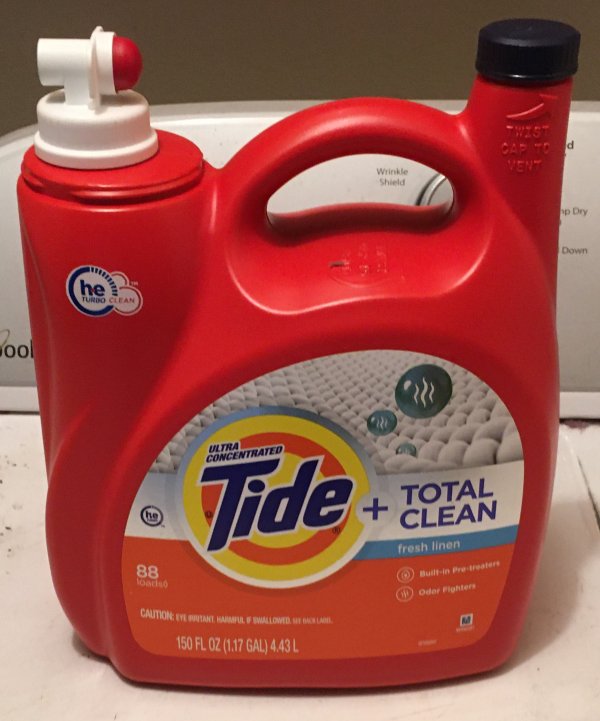
So one doesn’t have to stock much up to clear them out of a product. I do it routinely in buying my beautiful wife’s favorite chocolate, which I ensure we have a good backlog of in case of emergency.
Spenser Confidential review – Mark Wahlberg crash lands on Netflix:
caper called Spenser Confidential, is the kind of film that evaporates as it’s being watched, destined never to be thought of again. It’s regrettable given those involved, from director Peter Berg, who has worked with Wahlberg four times before, including on 2016’s criminally underseen Deepwater Horizon, to writer Brian Helgeland, who won an Oscar for his LA Confidential script before getting nominated for Mystic River. It’s also a story based around a much-loved private eye created by Robert B Parker, one who provided inspiration to crime authors such as Dennis Lehane and Harlan Coben. But it would take a master sleuth to detect any of that pedigree in the finished product.
Robert Urich is still my Spenser. I’ve seen the Joe Mantegna television movies and don’t remember hating them, but, as I mentioned, the Spenser: For Hire television series turned me onto the Spenser books in the first place.
Which means the progression for this IP was television series > books. And I liked both as their own things.
I don’t have Netflix, so I’ll have to wait for Friar to weigh in on it. It sounds like they’ve made some, erm, changes. But they’ve got a native Boston speaker to do it.
UPDATE: The wait is over.
BACK to the Future stars Michael J Fox and Christopher Lloyd first captured imaginations on screen in Back To The Future in 1985.
And the much-loved stars – who played Marty McFly and Doc Brown respectively – were reunited 35 years later on Wednesday.
Fox, 58, and 81-year-old Lloyd posed for a picture at the annual charity poker tournament organised by Fox.
Can someone tell me what might be misleading about this photo and caption?

We’re both on the same side here
of the octagon
the inside
I just made the term “nihilku” up. It’s kind of like a nihilistic haiku, but without the syllable count. Because that doesn’t matter, either.