The Mysterious Frog of Nogglestead

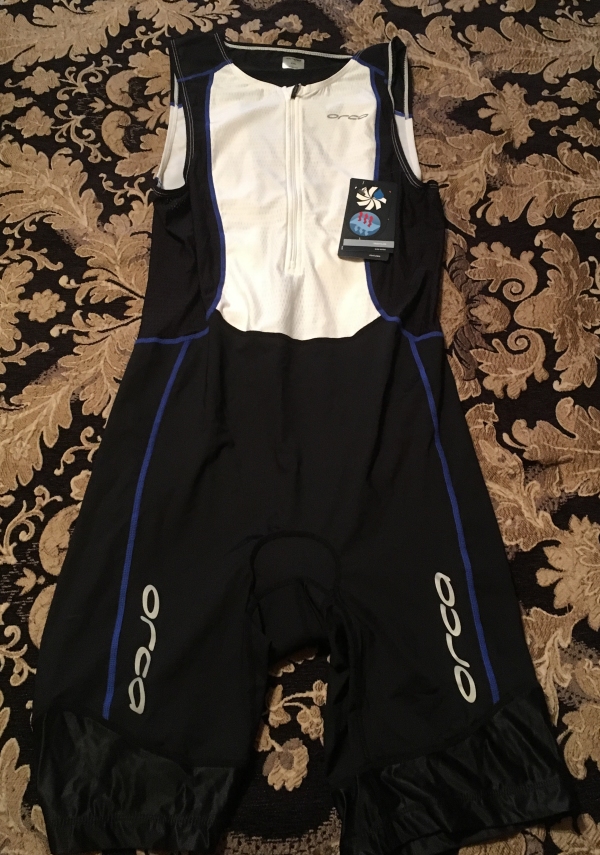
So as I was going to get my children from school yesterday afternoon, I opened the door in my garage and found a large stuffed frog laying against it.

This stuffed frog does not belong to my children; I am familiar with their stuffed animals, especially the large ones.

It was set against the door where the postal carrier tends to leave packages, so I checked it for shipping labels in case someone had mailed us a frog without a box; there were none.

Which leaves me a little mystery, gentle reader: From whence came this frog?

As I am prone to wild speculation, I can only create increasingly outlandish scenarios in my head:

  • It is a warning from the frogs that we should not open our pool in the summer, as too many of their kind jump into the pool and die when they cannot get out.
  • It is a MacGuffin in some plot, laden with drugs or microfilm.
  • It is a gift from a stalker who has, for some reason, nicknamed me “Froggy.” Perhaps because I once looked like this:

    But that would have to be someone who knew me way back when.

  • It blew into the back yard of our next door neighbor, and she or her daughter assumed it belonged to my boys and “returned” it.

To be honest, I’m not sure what I’ll do with it. We’re not bringing it into the house–as one of the unmentioned possibilities is that it is a Trojan frog filled with frogs hoping to invade my home or, slightly more likely, full of bugs of some sort that we don’t want in. I haven’t talked to my newest neighbors of a couple of months yet, and I haven’t talked to most of my other neighbors for years, if at all. If you think I’m going to use it as an excuse to introduce or re-introduce myself to them, well, think to yourselves how you would react to a strange man knocking on your door to ask if this was your stuffed frog. Yeah, I think that, except probably with more 911 calls and gunfire.

And, to be even more honest, I’m posting about it to keep myself on the amused side of the amused/seriously weirded out line.

Buy My Books!
Buy John Donnelly's Gold Buy The Courtship of Barbara Holt Buy Coffee House Memories

Book Report: The Tao of Christ by Will Keim, PhD (1997)

Book coverI bought this book in February along with three other books at ABC Books, and I predicted I would read it first since I read The Tao of Pooh in 2016 and The Tao of Elvis in November of 2017. However, of the four books I bought that day in February, I have already read two others (The Virtue of Happiness and The Beauty of Gesture); the other, a history of the Celts, joins another history of the Celts that I bought in 1993 floating around in my backlog.

Well, that’s a lot of bookkeeping. What about this book?

I hoped, as I mentioned, that it would be an insightful comparison of the parables of Christ and the teachings of Lao Tzu, identifying similar thematic elements in each as well as a contrast where appropriate. With a focus on how the Bible is better, of course, along with some little hope that people interested in the Tao might find their way to Christianity through this book (as opposed to Buddhism through Christian Eyes which warns Christians about the sweet seductive lure of heathen philosophy).

Oh, but no.

It’s more of a daily meditation structure. Each of the 48 lessons presents a teaching of the Tao, a parable or Gospel teaching, and then Keim’s own meditation, some of which seem to have nothing to do with the preceding. Many of them rely on an, erm, contemporary translation of the Tao Te Ching, such as:

When a country is in harmony with the Tao,
the factories make trucks and tractors.
When a country goes counter to the Tao,
warheads are stockpiled outside the cities.

There is no greater illusion than fear,
no greater wrong than preparing to defend yourself,
no greater misfortune than having an enemy.

Whoever can see through all fear
will always be safe.

Strangely enough, the original does not mention factories, tractors, or warheads. So I started comparing the translations of the Tao in this book with another translation that I have, and it has quite a bit of variation in it. I didn’t compare the translations of the parables, though, but the stories themselves were familiar and not updated to modern contrivances.

But Keim is not traditional in the Christian sense as he often refers to God as She; I thought perhaps it was only a translation thing as he refered to the Tao Te Ching Master as either he or she, but, no, he was probably equitably translating the same there as well.

So I was going to say that the best thing about this book was that it got me to reading the Tao Te Ching again and the parables, but now I’m even not sure I read them in honest translations.

So I’m going to have to say the best thing about reading this book is that I’m done.

Buy My Books!
Buy John Donnelly's Gold Buy The Courtship of Barbara Holt Buy Coffee House Memories

Book Report: Matisse by Volkmar Essers (1989, 2002)

Book coverI bought this book a couple of weeks ago and delved right into it. I hoped it would be a football browser, albeit something I could browse during night games to hopefully not expose the nude model photographed on the back to my children. But it turns out this book has a lot of text that includes not only biographical information about Matisse and a broad discussion of his artwork as it relates to trends in the art world and whatnot but also lush descriptions of the images that explain why the images are awesome.

Text like this:

In 1944 the Argentinian diplomat Enchorrena, who was resident in Paris, commissioned a door to connect his bedroom and bathroom. Initially Matisse opted to present an idyllic theme: a nymph sleeping, observed by a faun. But both subject and composition left the artist dissatisfied, and his work was a trial to him and stagnated. The diplomat persisted, and Matisse tried again. He chose a new subject, and this time succeeded. The mythological ‘Leda and the Swan’ (p. 82) has been stripped of all narrative content. Jupiter, who according to the myth came to Leda in the form of a swan, can be seen in the upper part of the picture, his arabesquely curved neck and head bending across a black space to Leda, who turns away. The monumental female nude has been fashioned sparingly and vastly. The empathetic, streamlined figure has something heroic, and restores the dignity to the myth. To right and left, red panels with a leaf design provied the triptych’s frame and give Matisse’s interpretation a revelatory flavor.

Which describes this:

The text contains a lot of art criticky words about the colors (the subtitle of this book is “Master of Colour”), flattening of the foreground, the additional complexity of the patterns when a table is turned in perspective in an otherwise flattened picture, and the wonderfulness of simple geographic patterns (sometimes repeated!).

But, come on. This stuff is insipid and stupid.

I have mentioned that that I don’t grok primitive art, and I really, really don’t care for the early 20th century’s descent into simplistic, unrefined brushstrokes as art. I mean, looking at a lot of this, I conclude that individual choices in the strokes, lines, and coloring doesn’t really matter. If that crescent had been an inch to the right, what difference would it make? My beautiful wife said she could probably not do better, but I don’t think she could do worse, and she and I are not fine artists with devotees and collectors and some influence (for some reason).

I’m starting to wonder if my beloved Impressionists, even the good ones (Renoir, Manet, Cassatt, and I suppose Monet) irretrievably broke art when they diminished the reliance on clean lines. The bad ones (Degas, Toulouse-Lautrec, and so one) might have led to Cubism and whatever ism Matisse is. In celebration of the hundredth anniversary of World War I, a lot of commentators told us that the war broke Western civilization. Looking at Matisse, I expect the cracks were already there.

So don’t expect to see Matisse prints at Nogglestead nor any other monographs of his work reported on in these pages. A Good Book Hunting post from 2015 indicates that I have another Matisse title around here somewhere, it might be akin to What Makes A Picasso A Picasso?–that is, a children’s book. So that might be the exception–I’ll certainly not buy another Matisse monograph.

Oh, and since this the Internet, I know you’re all jonesing for the back cover. I’ve put it below the fold.

Continue reading “Book Report: Matisse by Volkmar Essers (1989, 2002)”

Buy My Books!
Buy John Donnelly's Gold Buy The Courtship of Barbara Holt Buy Coffee House Memories

Coming Sooner to Missouri

Well, Missouri passed Proposition B which will raise Missouri’s minimum wage to $15 an hour (see also Won’t Someone Think Of The Soulless Automatons?), we can look forward to our retail establishments being early adopters of technology like this: Robot Janitors Are Coming to Mop Floors at a Walmart Near You:

Robots are coming to a Walmart Inc. near you, and not just as a gimmick.

The world’s largest retailer is rolling out 360 autonomous floor-scrubbing robots in some of its stores in the U.S. by the end of the January, it said in a joint statement with Brain Corp., which makes the machines. The autonomous janitors can clean floors on their own even when customers are around, according to the San Diego-based startup.

Who could have guessed it? I mean, aside from someone with any proper sense of economics? Which is in very, very short supply amongst people under, what, forty in this country?

Buy My Books!
Buy John Donnelly's Gold Buy The Courtship of Barbara Holt Buy Coffee House Memories

A Truism

I am the master of all I survey.

How true is this statement?

      Completely true!
      It might be true.
      You’re daft!


Buy My Books!
Buy John Donnelly's Gold Buy The Courtship of Barbara Holt Buy Coffee House Memories

Compare and Contrast, St. Louis Post-Dispatch-Style

Why housing choice is important for voucher holders:

Mobility Connection is a program that helps voucher holders move from low-opportunity areas to high-opportunity areas. Tara Kennard, a Mobility Connection Client, and Janie Oliphant, program director at Mobility Connection, talk about why some housing voucher recipients seek greater flexibility in choosing where they live.

Housing people in government-run centers is bad! Letting them choose through vouchers is good!

Editorial: Bad report card for federal school voucher program:

There’s long been a cherished belief among some education reformers that student performance can be lifted by giving private-school tuition vouchers to children stuck in low-performing public schools. That belief took a big hit last month, the latest in a series of big hits.

The U.S. Department of Education’s research division released a report saying that first-year participants in the District of Columbia’s Opportunity Scholarship Program did much worse in math than the kids who were denied a voucher and stayed in public school. Students from kindergarten through fifth grade also fared much worse in reading, and among older students, reading scores were close to those of their public school peers. The findings help debunk the notion that voucher-enabled students in private schools produce better outcomes than those attending public schools.

Educating people in government-run centers is good! Letting them choose through vouchers is bad!

Just kidding about the compare and contrast. Clearly, these are conceptually two different things, not alike at all. At all, you hear me?

Buy My Books!
Buy John Donnelly's Gold Buy The Courtship of Barbara Holt Buy Coffee House Memories

Good Album Hunting, November 30, 2018: “Christmas Shopping” at Relics Antique Mall

On Friday afternoon, I led my reluctant boys out “Christmas shopping” to Relics Antique Mall mostly to get them out of my beautiful wife’s hair as she finished her work day.

Not surprisingly, this led to little actual Christmas shopping and a whole lot of record browsing. Which leads me to my first lamentation: The price of records at the antique mall is going up. Whereas the floor for album prices was a dollar, with a few going for five or eight bucks, now the floor is essentially three dollars with some titles of recognized bands from the 1970s or 1980s (or beyond) going for over ten dollars each. Which is a little rich for my blood. Which means I find it impossible to justify a stack of them such as I can with records that are only a buck.

Now, my second lamentation. The record I did not get? Phoebe Snow:

The first record I saw that I was excited about (the first I picked up was a two dollar Latin compilation album with a saucy woman on the cover). But the Phoebe Snow album…. Well, all right. I said in September that I was going to keep an eye out for this LP, and here it is!

Except: It had no price on it. No price tag that had fallen off that I could find. As it’s an antique mall, the people running the registers have no idea about the pricing set by the individual booth renters. This particular booth sold LPs for between two and ten bucks. I think I would pay ten bucks for the album, but I was not in the mood to take it to the registers and tell them I’d pay it; they’d think I’d taken off the tag which was priced higher yet.

So I set it on top of the record display, hoping that the owner of the booth will see it has no price tag and will price it (at $2, I hope) so I can pick it up in a week. When I will return to see if the album has been priced and I can buy it when I return for more “Christmas shopping.”

But I did console myself with a few other things.

I got:

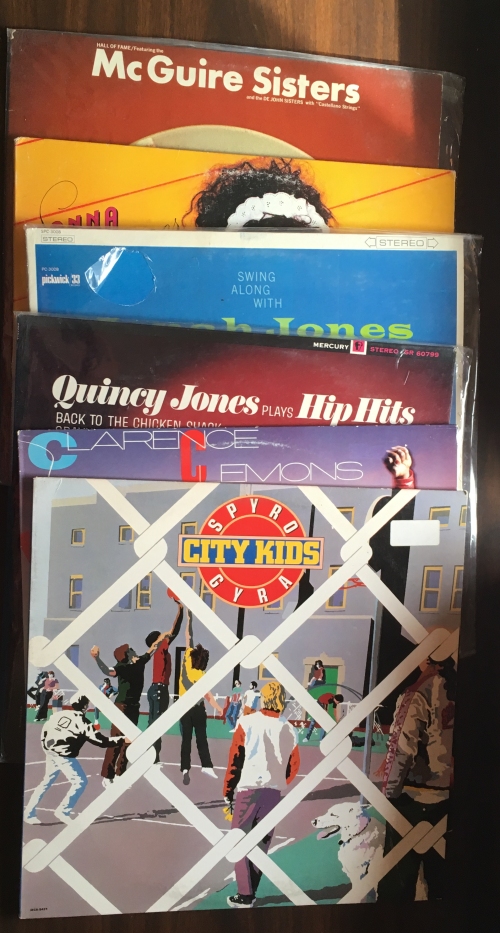
  • Elvis’ Christmas Album by Elvis Presley. You hear a number of selections from this album on the radio from time to time, but he didn’t make it onto the compilation albums of the era.
  • The Beat of Brazil by Sergio Mendes.
  • Confetti by Sergio Mendes.
  • Homecooking by Sergio Mendes and Brazil ’77.
  • London Underground by Herbie Mann.
  • Voyeur by David Sanborn.
  • Straight to the Heart by David Sanborn. Jeez, button your shirt, brah. I almost needed to buy two albums with saucy women on them to compensate.
  • Too Tough by Angela Bofill.
  • Let Me Be The One by Angela Bofill. Compensation: Complete. Also, I like Angela Bofill, as you probably know if you read these posts all the way through.
  • Shangri-La by Jackie Gleason.
  • Riff Jass by Jackie Gleason.
  • Breakout by Spyro Gyra. I’ll pick them up when I find them now that I’m straight on who Spyro Gyra is and is not.
  • Monument Proudly Presents Boots Randolph with the Knightsbridge Strings & Voices by Boots Randolph, presumably, and the Knightsbridge Strings and Voices.
  • Second Childhood by Phoebe Snow. Her second album, which went Gold (Wikipedia tells me).
  • Latin Escapade by The George Shearing Quintet, the aforementioned Latin compliation platter.

Okay, I’ve said the last was saucy. Here’s what I mean:

I don’t know whether my calling that saucy tracks with your idea of saucy or not, this being the Internet and all, but I do buy an extraordinary number of platters by artists/groups I don’t know/normally buy when they have a fetching lass on the cover. Or a saucy woman. Which must mean that the people who designed the cover art of said things were onto something.

Buy My Books!
Buy John Donnelly's Gold Buy The Courtship of Barbara Holt Buy Coffee House Memories

So Many Quips, Only One Spam

  • I don’t need you to loan me a 5k; I have enough of my own.
  • On the other hand, I have created a new category in my financial software specifically for 5ks, and I’m afraid to see at the end of the year how many hundreds of dollars we will have spent on them. Perhaps I will need to add another mortgage to my house next year to pay for them.
  • “Reduce debt with a loan”? That’s not how it works. But, perhaps this sort of reasoning works on people who only learned Republicans are evil in school.

Buy My Books!
Buy John Donnelly's Gold Buy The Courtship of Barbara Holt Buy Coffee House Memories

The Review Is In!

Well, it’s not technically a review. I entered Coffee House Memories in the Writer’s Digest Self-Published Book Awards competition this year.

I did not win.

Part of the contest is the promise of brief commentary from the judge. Here’s what the judge said about Coffee House Memories:

In Coffee House Memories, a book of poetry by Brian J Noggle, we are presented with a tour of the speaker’s mind and heart, a journey that moves from immaturity to maturity to that delicate balance we strike when we look back with fondness or regret on our past selves. The title for this collection seems to this reader to be bland, missing an opportunity to more evocatively cast a tone for the collection to come. The book is broken into sections which helps the reader to navigate through the various themes and ideas that are presented throughout. The poetry here is formal, adhering to set rules and forms, but this does the subject no real service. Form is a useful tool, can be a worthwhile constraint that gives the poem shape and substance while pushing the writer into nuanced phrases and word choice that might not have been available otherwise. Here, however, the form is a kind of lockstep that forces the writer into clunky language and line. The overall design of the book is professional. It features an interior layout that is crisp and clean with text design on each page that is readable and presented soundly. It may seem minor, but getting the interior in order is an important step in getting the reader hooked! Also, the cover image for the book is straightforward and relatable.

Well, it sounds a lot like what Dr. Berry said in my poetry class at the university. I did improve upon my sonnets from that era, though.

And I got really good scores for my book design. That must be a product of years of designing technical documentation or something.

Still, I guess it’s about what I should expect. Maybe some of the lines are clunky, but the book includes some really good poems, too. You could take my word for it, gentle reader, or you could spring $.99 for a Kindle copy and see for yourself.

Buy My Books!
Buy John Donnelly's Gold Buy The Courtship of Barbara Holt Buy Coffee House Memories

Book Report: Bitter Harvest by Hazel Hirst (1984)

Book coverThis book is a collection of 14 poems about living on a farm and then losing the farm. It comes out of the 1980s Farm Aid era of family farms lost to corporate interests, a genre that somehow was a big thing in the middle 1980s (a response to President Reagan, perhaps?) but has dwindled (although, apparently, Farm Aid is still going, so perhaps it’s just my awareness of it that has dwindled).

Apparently, the purchase of this book in 1984 included a raffle ticket to win the Hirst farm. The author and her husband, faced with debt and foreclosure, tried to sell 50,000 copies of the book to pay off their debts, but ultimately they cancelled the raffle. 50,000 is a pretty lofty target for a chapbook. Take it from a poet who thinks 100 copies is a stretch goal.

At any rate, the poems are lyrics, generally over 12 or 16 lines long and end rhymed. Opposite pages have photos of the family farm and the livestock, so it’s a quick enough book to read. Nothing that sticks out, really. A little more meat than Under the Sunday Tree but that’s mostly because the lyrics are lyrics and longer.

More interesting for the story behind it, though.

Buy My Books!
Buy John Donnelly's Gold Buy The Courtship of Barbara Holt Buy Coffee House Memories

Book Report: Under the Sunday Tree Paintings by Mr. Amos Ferguson / Poems by Eloise Greenfield (1988)

Book coverWhen I found this book at the Friends of the Springfield-Greene County Library book sale this spring, it must have been misclassified as Literature (that’s what the first page says) or maybe Art, but it’s actually a children’s book of art and poetry. I think it’s based on the art of the Bahaman artist Mr. Amos Ferguson with some verse by Eloise Greenfield added.

The verse is light and simple, which is not a bad thing in itself, but its depth is aimed at children, so it lacks real poetry meat to it. As does most of the poems I read in cheap chapbooks anyway.

The art, though, is primitive/folk art, and I really don’t know how to appreciate it. I mean, the paintings kind of look like the stuff I painted on the recovered white-coated cardboard tops of doughnut boxes that I used as my canvases when I lived in the trailer park and watched my first episodes of The Joy of Painting. I mean, I can look at Renaissance paintings and judge, knowing that it’s my opinion alone, good and bad, what moves me and what does not. I can do that with Impressionism. I can do that with a lot of European figurative painting. But with primitive and folk art styles, I really lack an aesthetic vocabulary to say whether one thing is good or better than another. So all I can say here is that it ain’t my bag, baby.

Which is weird, because most of the “art” I do in woodburning or etching is pretty primitive and folk-artish. Which explains why I have no idea whether I am any good at it or not. Which probably means “No.”

Buy My Books!
Buy John Donnelly's Gold Buy The Courtship of Barbara Holt Buy Coffee House Memories

If Only I Had Consulted Dustbury First

Yesterday, “Der Kommissar” came on the radio, and my oldest child asked what a kommissar was.

I gave a lengthy explanation, as is my wont, but I blundered when he asked who sings it. “Falco?” I said.

“After the Fire,” my beautiful wife corrected me.

If only I had read this Dustbury post beforehand. I would have known and not made a fool of myself.

“They sound like that band that sings….” and then he spit out some lyrics that I recognized as “The Boys Are Back In Town”.

“That’s Thin Lizzy,” I said. “No, they [After the Fire] sound British or European. Thin Lizzy is American.”

Wrong again! Thin Lizzy is an Irish band. Although I did peg After the Fire right: They’re British.

Maybe I should not expound on any music at all unless I’m merely parroting Charles. Or amusing Friar, who apparently likes humor in poor taste. Which explains why he’s a regular reader here.

WAIT A MINUTE.

As I decided to add YouTube videos to this post, I discovered Falco did indeed do the song “Der Kommissar”:

It was, in fact, the After the Fire version, which is in English, that came on the radio.

And I still botched the nationality of Thin Lizzy. Like I once told the boys Lou Gramm of Foreigner was Canadian.

No wonder they don’t trust a thing I tell them, like “It’s time to go to bed.”

Buy My Books!
Buy John Donnelly's Gold Buy The Courtship of Barbara Holt Buy Coffee House Memories

Good Book Hunting, November 24, 2018: ABC Books

As I mentioned, we headed up to ABC Books to stock up on gift cards for Christmas today, and since it was for Christmas gifts, I found myself in the spirit to buy a bunch of random things for myself.

I got:

  • Farmer Boy by Laura Ingalls Wilder. I’ve been reading them this year (most recently Little House on the Prairie, but I’m missing some in the series. Unfortunately, although I made a list of the missing volumes for my boys to look for at the Friends of the Springfield-Greene County Library book sale this fall, I don’t know which ones I’m missing, so I only bought this one even though ABC Books has a bunch of the other titles available. I did not buy a complete series box set for $63 because I was being frugal, which in my mind is just not being as profligate as I possibly can.
  • The Quest of Kadji by Lin Carter because I recognize the name from the old time pulp authors, but I don’t remember reading anything by him.
  • The Foundation for Exploration by Sean Goonan. It looks like a self-published primer on philosophy.
  • The Dark Side by William Schilcter, the second book in the series that started with Enter the Sandmen. I said in the review of the book that I’d probably pick it up sometime but wouldn’t order it online. Promise: KEPT!
  • Bitter Harvest, a poetry chapbook from 1984 by Hazel Hirst.
  • How to Play Guitar by Roger Evans. Perhaps buying books about playing guitar will help rekindle my drive to learn to play guitar. But the strategy has not worked so far.
  • Henri Matisse, a monograph on his works that features the artist and a nude model on the back cover. So not only did I feel lascivious when I bought it, but I cannot read it at church and have to be very, very careful with it should I try to browse it during football games.

Total spent: A bunch, but most of it was on gift cards. So this hardly counts as me buying books for myself at all.

Buy My Books!
Buy John Donnelly's Gold Buy The Courtship of Barbara Holt Buy Coffee House Memories

New To The Style Guide

When gun violence erupts at a location that is generally considered safe and where normal people go and don’t expect gun violence, make sure to call it the Place Shooting to make it seem more like a terrorist act.

Examples:

I don’t want to diminish the murders that happened, but I get the sneaking suspicion that calling them The Place Shooting is part of an effort to maximize their impact and to turn local crime stories into a greater narrative to influence people to support “reasonable” gun control measures.

Buy My Books!
Buy John Donnelly's Gold Buy The Courtship of Barbara Holt Buy Coffee House Memories

Book Report: Ozark Mountain Humor edited by W.K. McNeil (1989)

Book coverWith a title like Ozark Mountain Humor and a subtitle of Jokes on Hunting, Religion, Marriage & Ozark Ways, you might think that this is a humor or joke book. As I did. But, ah, my foes, and, ah, my friends, it is an academic study of jokes as folklore.

Which means that half of the book is end notes describing where the joke was “collected” (via field work, where intense academic types transcribed jokes). Each joke is numbered for easy reference, and each joke is called a “text” when described in the end notes. Motifs, numbered academically according to one or more humor motif codexes, are cross-referenced, and some of the jokes are delineated from humor manuscripts in 15th century Renaissance Italy or old English joke books printed immediately after the Gutenberg Bible.

And one or two of the jokes are funny.

But reading an academic book about jokes that includes jokes adds a bit of remove from the actual jokes, so perhaps I was less prepared to laugh. Also, I don’t tend to laugh at many jokes in these books, and I’m infrequently actually amused.

Here are the notes that I flagged in the book as I was reading:

  • One joke deals with a young girl saying her prayers prior to moving to St. Louis, and she says at the end of her prayer, “This is goodbye, God. We’re moving to St. Louis.” (Text 117.) Even though I was a longtime resident of the St. Louis area, it was a bit reluctantly, so I can empathize.
  • One joke (Text 126) deals with a barber whose shop is visited by a notorious outlaw; this reminded me of a shorter version of “Lather and Nothing Else” albeit with a punchline instead of a moral lesson.
  • Texts 202b and 204a/204b look to be the source material for the Ray Stevens song “Sitting Up with the Dead”:

I didn’t flag the footnote that jokes about black people were removed at the publisher’s request. The jokes about nuns enjoying being raped, however, remained in the book. In 1989, our official sensibilities were only starting to be refined. Although one of the nuns being raped jokes relied on the inclusion of a black nun who speaks with a hyperbolic accent and who already knows a thing or two about sex. One wonders if this text was excised in later editions of the book.

Also, the author refers numerous times to Asimov’s Treasury of Humor (which I don’t think I own, but I will be on the lookout for), but never refers to Lecherous Limericks. Limericks are not part of the native Ozarks oral tradition, apparently.

At any rate: I read it, and it counts as my 75th book of the year. I even read the End Notes, or skimmed them, anyway, as some of them detailed the local people who told the joke, including many people who were born in the 19th century and saw the early 20th century changes to their corner of America.

Buy My Books!
Buy John Donnelly's Gold Buy The Courtship of Barbara Holt Buy Coffee House Memories