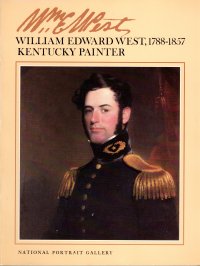
 This book is a little text-heavy for reading during football games, but I started out browsing it last Sunday and finished it late last week in the reading chair.
The heavy text tells the biography of the artist, William Edward West, a portrait painter born in Kentucky but who lived amongst friends in Natchez, Mississippi, for a while, traveled to Europe for a long time, including Italy and London, and then returned stateside and spent time in New York and later Baltimore in the late eighteenth and early nineteenth centuries.
The artist was from a well-to-do family in Lexington, Kentucky, which was apparently a hopping place arouns the turn of the nineteenth century. He lived from 1788 to 1857, so the period between the first two civil wars (I kid, I kid–but it’s gallows humor). He made his living apparently by attaching himself to wealthy families, staying with them or in their orbits, and enjoying their society while painting their portraits. Portraitist is a particularly mercenary form of artist, after all–much of their work was for-hire, so one cannot come down on this fellow too much for schmoozing.
He made himself when he was traveling in Italy and got to paint a portrait of Lord Byron, one of the last before he went of to Greece and died. So he used that story to unlock doors in European and British society.
Many of the portraits in the book come from wealthy people of the period, so it’s not like you will recognize any of the names except for Lord Byron and a pre-Confederacy young Robert E. Lee, whose painting is on the cover (which probably means I should BURN THIS BOOK for JUSTICE!). The book only contains a couple of non-portrait works: A maritime picture which supposedly shows Lord Byron rowing out to visit the USS Constitution and a couple of group settings with stories to them.
The works are well-executed, although steeping myself in 20th century works from time to time means I’ll be impressed with the works of art school drop-outs from the eighteenth century. I enjoyed the book, although I am not sure how long I will remember William Edward West’s name. In the 21st century, it’s not likely to come up, even in trivia nights, should such things ever happen again.


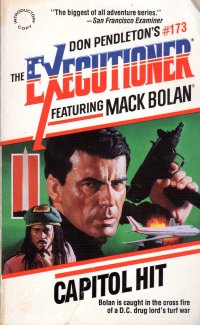 Actually, the Capitol with ‘o’ means the building where Congress meets, at least until the new administration dismisses them (I kid, I kid–but it’s gallows humor). This book does not deal with Congress, so it should probably be Capital Hit, but that does not clearly indicate Washington, D.C., on the cover. So we get a possibly intentional mistake. In the 1990s, I suppose we could give adults the benefit of the doubt. Ignorance as the default is yet to come in the 21st century.


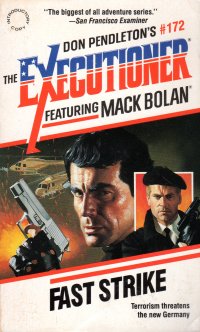 The last Executioner book I read was

 Okay, now this was a fun course to listen to. I was a little concerned that it might be a bit thin on topic matter, as the SETI program itself would be a rather narrow topic–merely talking about analyzing radio signals from space would make for a long six hours.
 It seems like it took me a lot longer to read this book than it did. As you might remember, gentle reader, I bought this book along with two others (
 Okay, wow, now that is impressive. I have recently read a book on

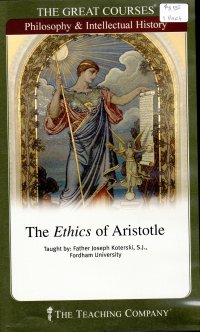 Like