Ark. Veteran Saves Mom and Child After Car Crashes into Beaver Lake
No problem for a seaman used to rounding up orangutans that have gone overboard.
To be able to say "Noggle," you first must be able to say "Nah."
Ark. Veteran Saves Mom and Child After Car Crashes into Beaver Lake
No problem for a seaman used to rounding up orangutans that have gone overboard.
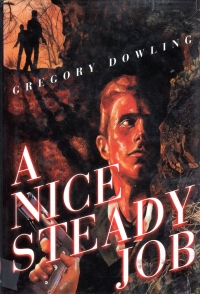
This book has been on my to-read shelf for a while, and I don’t know why. I enjoy Robert Crais’ books more than a lot of the stuff I read. How big of a fan am I? I once spent an afternoon going through microfiche old PDFs of Spider-Man comic books to find the one with the letter from little Bobby Crais in it. I should probably jump right on new Crais books when they become available, like I used to with Robert B. Parker books, but my winding path through my library doesn’t often make sense.
Although billed as an Elvis Cole and Joe Pike novel, the book also features the dog handler from Suspect (and given explosives are involved, one would expect an appearance by the protagonist of Demolition Angel to make an appearance). I’m sure one could muse at length about the reasons that authors bring their series characters together with each other or their one-offs (see also Robert B. Parker). Is it because the fans want to see them together? Because authors love the characters and want to see them again? Because authors are lazy? Probably not the last in all cases, but one never knows, and one who writes this blog goes off into long enough digressions in these book reports without a lengthier musing on this topic at this time.
Cole takes a case from a corporate executive whose employee has gone missing along with several hundred thousand dollars of money and a large amount of untraceable plastic explosive. Apparently, she’s using it to try to find the terrorist organizations that blew up her son in Africa. As Cole investigates, he stumbles upon a fugitive on the run to the safe house where the woman, her handler, and their customer are planning a transaction, and Cole falls under suspicion for being involved. The big baddy targets the K9 officer who saw him there, and a twisty plot unravels over the course of the book.
Crais jumps between points-of-view throughout the book (which is the narrative style, ainna?), and the plot does come out as Cole investigates. He discovers that his client is not who she claims to be and that someone in the government might be involved. Although this is the prime way to set up a sucker punch, it’s not–the government isn’t arming the terrorists or anything like that (uh, spoiler alert). The end comes pretty quickly, and some of the resolution is just tacked on a bit at the end without needing the flow (that is, the tacked-on bit could have happened anywhere in the story or ten years later).
Still, a fun read from start to finish. Paced well (jumping points of view probably helps that), and it makes me want to go out and catch up on the series. Which might mean nothing more than searching my to-read shelves to find any other Crais books that might lurk there.

Rock ALWAYS wins!
(Related news: Is rock dead? No way, says folks going to Journey and Def Leppard at Summerfest. Nothing against Journey and Def Leppard, but you can find more current and rockier rock at Summerfest than that.)
As you might know, gentle reader, I have a whole category on this blog dedicated to DeRooneyfication, wherein I try to clear out of my garage some small project or repair that has been out there a surprisingly long time. The latest example is the basketball hoop that needed a simple bit of decal gluing but remained unfinished in the garage for a number of years.
“Gee, Brian J.,” you might say. “I’d like to be like you and Andy Rooney and have stuff like that linger in my workshop for decades. Do you have any tips?”
Oh, boy, mister, do I!
On of my favorite ways to ensure that things pile up willy-nilly is a little technique I call The Blocker Project.
Now, a Blocker Project is a project that you want to complete, but you somehow dread the actual doing of it, and you avoid your workshop for weeks (or months! or years!) until you get brave enough to do it or, more likely, set it aside.
I inherited the lamp depicted to the right from my sainted mother, who inherited it from her mother because it was originally my grandfather’s. We’re not really table lamp people here (but, strangely, DeRooneyfication often involves lamps), so it never had a home on an end table at our home in Old Trees or here at Nogglestead. So it was put in the basement or in the garage. Eventually, it had a couple of chips in it, so I decided I would paint it. While painting it, I thought I’d tart it up a bit since it was just brown–you know, my grandmother was into painting ceramics–maybe this was one of her projects back in the day.
At any rate, that was some years ago. Back then, I believed that acrylic paints needed to dry overnight, so it was taking a long time, and I was probably disappointed with the imperfect job I was doing. So no doubt things other projects and raw materials purchased at garage sales piled up during the week or two I was actively working on it, and the time after that when I meant to finish it, but didn’t.
Eventually, it made its way to a corner of the workspace, where apparently it’s been chipped even more in the interim.
Since I worked with acrylic paints on the aforementioned basketball hoop and learned how quickly they dry, I set the lamp back center stage.
And felt a sense of, if not dread, certainly disinclination to work on it. It’s gathered a couple of chips since the first time I painted it, so I might have to repaint the brown parts. Do I still have paints to match that? Will I have to cover some of the existing painted parts that I have because I haven’t matched a paint color? Do I have a steady enough hand to paint the finer parts, or will the slight imperfections be the only things I see when I look at the completed project?
A Blocker Project like this can put you months behind in any projects you hope to complete and can leave you, like Andy and I (well, just I now, but Andy is here with us in spirit) meaning to fix that chair soon. Maybe next week. But not with that other thing you don’t want to do on the workbench right now.
(Sadly, I’ve not followed my advice in this post: I recognized and named the phenomenon, which gave me power to put the lamp back in its corner for a little while longer so I can do some other things.)
On February 13, I took like fifteen pictures of my desk’s pen holder.
It would be a shame for all that effort to go to waste, so here’s one of them.

I must have been testing settings on the camera or something. Of which I’ve not learned much and remembered less.
Were I not so lazy, I would tell you about some of the pieces and call this a Five Things On My Desk post, but I’ve got other things to do today.
Sorry.
As you might know, gentle reader, I am more a book accummulator than a true book collector. I don’t go out to book shops with locked glass cases and leather chairs looking for obscure first editions, but I’ll pick some up if I come across them. Generally, to get a first edition, I’ll run across them if they’re at a garage sale for a dollar (as I did when I bought a first edition of Dune that I sold on eBay for $150–I related the story in my book report for that book). I am pretty sure most of my first editions have ex library markings on them, anyway.
That said, I do have some valuable books in my collection.
For example, I have a first edition two volume set of the memoirs of Ulysses S. Grant which I inherited from my beautiful wife’s uncle. Although I’m not sure where they are on my shelves these days. I did recently buy a reading copy of the books, so I guess I can move the actual first editions somewhere safe. Like a safe deposit box or something.
As you might know, I was a fan of Robert B. Parker’s books for a long time since I started reading him in high school (the long story is in the essay “Meeting Robert B. Parker“). I picked up paperbacks and hardbacks where I could. When I started to come into some middle class money, I bought Spenser: For Hire scripts, some of the very limited edition stuff Parker published in the middle eighties such as The Private Eye in Hammett and Chandler, advanced reading copies, and whatnot. So as a collection, my Robert B. Parker stuff is pretty complete, although I stopped buying the books when his moral universe got wonky. Still, I could probably unload the pile for a couple bucks.
But I count as my most valued books my Edna St. Vincent Millay collection that my sainted mother bought me when I was away at college.

Early in my college career, I got really into the poetry of Edna St. Vincent Millay and the Romantic poets, so I asked for some of their collections for Christmas my sophomore year.
This was in the pre-Internet days, so my mother couldn’t just order collections off of Amazon or eBay. Instead, she went way out of her comfort zone and went to various used book shops in the University City and Central West End areas, including some that had front doors locked because they were in sketchy areas (I never learned if they had glass cases or leather couches, but I assume not).
I read those Millay books immediately, and their influence eclipsed that of the Romantic poets (although my mother did get me an 1889 collection of Wordsworth poems, I have not yet read it and might not given how slowly I’m crawling through the complete works of Keats and Shelley).
Edna St. Vincent Millay (as well as structured poetry, poetry, and reading books) has kind of fallen out of favor over the years, so I don’t think they’d fetch much at a book sale. They’d probably be in the collectible books for three or four dollars each, only to linger until half price day or bag day (using the Friends of the Springfield Greene County Library Semi-Annual Book Sale as an example).
But it was quite an adventure for my mother, though, and the books mean a lot to me. So they’re my most valued books.
You’ve already learned about the games that Roark and Chimera play at Nogglestead. “What about your other cats, Brian J?” you might ask. “Do they have any games of their own?”
Well, gentle reader, the answer is, “Yes.” For Isis, our mostly black cat, has not only a game, but an arena in which to play it.
When we fold laundry, we dump it onto the bed and set the empty basket on the bench at the end of the bed. And then it’s Game On.

She hopes onto the bed when she sees the laundry coming, and then jumps down into the Arena of Isis (which sounds like something the other Isis would have).
The game is to poke her through the holes in the basket while she tries to paw and bite the poking fingers.
Apparently, she loves it, because she keeps coming back for more.
Fortunately for her, there’s always more laundry at Nogglestead.
Speaking of the Buddhism I’ve been reading, this book is a collection of aphorisms (as the back says) in the Buddhist mindset. Apparently, it’s just one long scroll or collection of musings or verses that the translator has helpfully broken into chapters (Contrary Ways, Watchfulness, The Mind, The Flowers of Life, The Fool, The Wise Man, etc.). You can tell that the author has broken this up because some of the content of the chapters flows away from the ascribed topic/title and then the chapter ends where a new topic begins and can be titled. So in the original, it would have been a single document just flowing. Not that I minded the chapters, though; the aphorism are in numbered verses, so it would have been like a long poem without them, and you probably know by know how I feel about long poems.
At any rate, it’s calming and pleasant to read, and the content mirrors the other things in Eastern philosophy I’ve read and is not far off from the Christian Stoicism I’m also currently reading and even the parables of Jesus: Slow down, don’t worry, help others, do good. You know, the practical aspects of many religions–that is, the pragmatic, how to live content, is similar no matter how wildly the ontology or eschatology differs. Which is why I prefer these little guides and comfort reads more than the heavy philosophy or theology most of the time.
Worth a read if you’re into this sort of thing.
So I ordered an LP off of the Internet.

As you might know, a pretty woman singing in a foreign language falls into my songbird wheelhouse.
Where did I hear about this LP?
Dustbury. Again.
If you’re keeping track, Dustbury is responsible for my buying the following artists: Against the Current, Pier Angeli, Rebecca Black.
Blackfive: Danger Danger.
Kelley of Suburban Blight, some years after the blog ended: Electric Six.
Unknown: Arctic Monkeys.
I am easily led.
Matt Flynn rejects call by two Democratic lawmakers to exit governor’s race.
You know, he almost beat the Patriots. He would be just the man Wisconsin Democrats need to almost beat Scott Walker.
Wait a minute.
Two Assembly Democrats called on former party leader Matt Flynn to exit the governor’s race over his role in shielding priests accused of sexual misconduct.
Never mind, that’s a different guy.
Which is a good thing, because a former Green Bay Packer could probably beat Scott Walker. Well, maybe not Greg Jennings.
So a couple years ago (five? six?), my mother-in-law got my children a little indoor basketball hoop for Christmas. It was handmade from wood and had a Mizzou window cling glued to the backboard. She picked it up during her annual Christmas bazaar safari which often yields crafted gifts. It came with a number of soft balls or bean bags, long since gone. But when she gave it to the children, it was with the caveat: The decal was falling off or had fallen off, so Daddy would have to fix it.
So it went out into the garage, where simple projects go to die. Or at least languish for a long time.
As I explained when I put up my first DeRooneyfication post in 2012: Continue reading “DeRooneyfication VI: The Basketball Hoop”
You might think Nightmare Town is New York based on previous evidence, but no. It’s a collection of Dashiell Hammett’s short stories. I would have expected that I read them since I have a couple of different editions of The Thin Man and The Glass Key, including two volume New American Library set, but those must only be the novels.
This book collects twenty of Hammett’s pulp stories, so you’ve got detective stuff along with the occasional Western. Several feature the Continental Op, three feature Sam Spade, and the first five chapters of his first stab at The Thin Man conclude the book (a little unsatisfyingly, though, since it does not resolve, and it differs from the published version enough that I wanted to see how this book ended, too).
The stories are terse in the pulp style–fancy that!, and they’re pretty good for the most part. Some of the plots a touch convoluted, though, and a couple of the stories turn on gimmicks, both of which are also a hallmark of pulp. But you know what you’re in for if you’re reading Hammett.
I’m pretty slow at reading short stories, though, as I’ve mentioned, since each story requires a little reset time that makes stopping easy at bed time. Still, I’m glad to have read it.
You know, gentle reader, every year I set a couple of goals for myself. Not resolutions, and not a little thing, but not a major thing (conquer the world is a centennial goal, not an annual goal). And sometimes I get a notion into my head that’s like a little goal, and two weeks ago in Michigan, I got an idea in my head kind of reminded me of my goals.
So we stayed at a resort that’s a seasonal ski resort (which meant it was very affordable in the summer). Our unit looked out onto the snow tube run, which meant we looked across the end of the run and some of the seasonal equipment, which provided a vista for my reading when I read all those books whose reports you’ve just read (or will read when you scroll down). From the edge of our balcony, though, we could look up Boyne Mountain (something that we can kind of scoff at even here in the lower part of the Ozark Mountains). But the hill behind us and the mountain itself with its ski runs rises something like 450 feet in the course of a football field. And I got it into my head that I wanted to walk up the hill.

I mean, I saw a bunch of people out for walks on the pavement, and a couple cutting across the fields to get up to the amenities across the road, but I didn’t see any hikers going up. I didn’t see any hiking trails listed in the amenities of the resort, but they did have a ski lift running to take you to the scenic lookout for a small fee.
The rest of the family planned a day at the waterpark, which left me free to pursue my stated goal instead of reading for the whole day. Of course, then the self-doubt and worry creeped in. Michigan up there is fairly forested. Might I run into a bear going up the hill? It’s cleared well to either side, but, man, would I feel dumb if I encountered a couple cubs halfway up and had to fight off the mother with a pocket knife. We didn’t cover that in tae kwon do classes, even the weapons classes. Also, I’m not twenty any more. Or thirty. Or, heaven forfend, forty. I’ve walked up some hills in my time, but this was nominally a mountain. At least it was on the brochures.
But I mentioned doing it, and as the morning evolved, the rest of the familiy did not dart out to the water park immediately, and when I asked if the boys wanted to accompany me to the top of the hill, the younger of my boys, the one most unflappable and with no sense of self-preservation or danger at all, said he’d go with me. So I was on the Daddy hook. No, he never called me Daddy–he always called me Father when he was young, but now I’m Dad, which is better than Fat. But now I couldn’t back out, even less than when I announced my intention.
So up we went.
The slope was, what, 45 degrees? Something like that. I was afraid of slipping and falling.
I mean, I haven’t done any hiking for reals, and certainly not in tennis shoes, since I was a kid. But I had my son along, and I had to show no fear of falling. Maybe a little concern about my age and having a heart attack (although a properly falling during a heart attack might have carried me down the hill to help). So I started up, watching my feet all the way up. I resolved not to look down or back as I climbed. Brothers and sisters, I could have saved Eurydice. Well, except for the music part, unless I bored Cereberus to sleep with my guitar practice like I bore my instructors.
I was a bit dismayed at my heavy breathing, which I tried to disguise in conversation with my son through clever ventriloquist tricks, but I noticed he was panting, too, and I felt better.
And then we were up the hill. The hilltop held a couple of buildings hidden from the lower view, but no real place to sit to share the water I’d brought. Don’t get me wrong–it wasn’t an hour’s hike. It was twenty minutes or so. But more incline than I’m used to in my super sprint triathlons (well, the one).
So we shared a bottle of water and took a picture.

At the summit, as it were, I didn’t enjoy the view that much or feel a sense of accomplishment, really, because I knew we had to go back down.
We climbed up the left side of the above picture, which is more steadily steep with a bit of a valley in the middle (for water run off, perhaps). On the way down, we came on the lit tubing side, which has some level spots. Of course, since I’ve never been snowtubing, I didn’t realize the level spots were ramps for jumps or bounces, and that the level spots were followed by sharper drops for those snowtubing thrills. Still, I did better than Wesley on the way down, still watching my feet. My older son had come out, a dot on the green below us, to take our picture, but he didn’t recognize the two specks as his kin, so I’m afraid there’s no picture from that angle. When we got about half way down the hill, the youngest started to run to his older brother, and he made it alive. But his cautious father continued a plodding pace until I reached terra level.
“So what does that have to do with your goals, Brian J.?”, you might ask. Even if you don’t, I’ve given it some thought, and here it is: It illustrates how I relate to my goals and my accomplishments.
It seemed daunting at the run up to the doing, and at the outset, but basically I put one foot in front of the other, and I–well, we–climbed the hill. When I was atop the hill, I didn’t really enjoy the view because I was thinking of what was next (in this case, the climb down, which was just as treacherous–which is to say, “Not Very”–as the climb up). And once I’d done it, it was not a big deal, and I’m not really going to bring it up lest I seem boastful.
Well, except with you, gentle reader. If you’ve been following along, you know I’ve done some things and met some goals, but having done them, of course I’ve done them. I get them done by carrying on, and I don’t necessarily enjoy the doing on the way to the accomplishment. Then I don’t get much enjoyment out of having done them. What a poor frame of mind.
Clearly, I’m more of a Camus Existentialist than a Neitzsche Ăœbermensch. Which is also probably clear by all the Buddhism, Taoism, and Stoicism I read. Much of which I read because I keep trying to change my attitude for the better. Hopefully, I can plod my way to peace of mind eventually.
Two stories from Friday’s Springfield Business Journal‘s Today in Business newsletter:
Trump tariffs blamed for potential closure of SEMO employer:
George Skarich of Mid Continent Nail Corp. says President Donald Trump’s tariff on steel imports could put the company out of business.
“Cheap nail imports from China and other countries don’t face this tariff and are increasing every day. We need our wire to be excluded from this tariff or we will have to increase the layoffs we’ve already begun,” Skarich says.
The Poplar Bluff-based 500-employee operation is said to be one of the last major U.S. nail manufacturers.
Steel company JSW USA to add 1,000 new jobs:
JSW Steel USA plans to invest $1 billion in facilities in Mingo Junction, Ohio, and Baytown, Texas.
“We are going to be hiring over 1,000 people,” JSW President and CEO John Hritz told CNBC.
Hritz credited President Donald Trump’s steel tariffs for allowing the company to supply more steel for defense and infrastructure purposes.
Now, I’ve not studied Common Core math, but this looks like a net positive for employment numbers.
I note, though, that the headlines blame Trump for the job losses but credit the company with job creation.
So when we make the change the linens on the beds here at Nogglestead, it’s game on for a couple of our cats. Roark likes to jump on the bed and chase his tail while we settle sheets and blankets on him, after which he will pounce out if we turn the linen so his head is near the end.

So today I had the bright idea that I would change both the beds in the master and the guest bedrooms at the same time. That way, when he hopped onto one bed to do his little game, I could go into the other room and put on a linen before he followed me in there. Then, when he hopped up onto the bed, I could go into the other room and put on a linen.
It worked, briefly. I got fitted sheets on both beds and a flat sheet down in the master bedroom, when an unexpected complication arose.
Chimera.

Now, Chimera plays a different game: He will lie without moving on the bed and let you completely make the bed on him. Then he will lie there under the sheets and blankets all day. Which is disconcerting, because I tend to worry that he won’t be able to breathe. But so far, so good, clearly.
So all chores were suspended for a bit until the coast cleared, but I did get a little song out of it.
Bed, bed, Howard Roark.
Beddest cat in the whole dang house.
Bedder than Chimera is.
Sweeter than Athena, too.
My beautiful wife claims that the third line is not in rhythm, but I insist because Chimera lacks a hard stop, the Chimera is really sounds like three syllables instead of four.
I would claim that I am a poet, but she is, too. And although she has more magazine appearances than I not counting college journals, I have more earnings from poetry so far than she does ($100 for my poem in There Will Be War Volume X puts me ahead of a lot of poets in lifetime earnings) and more full length poetry collections (one) than she does, so I argue from authority.
I bought this at the Island Book Store on Mackinac Island when I was up there last week.
As you might know, when I travel or where I live, I like to pick up a book on the local history. I picked up a couple of books about Mackinac Island, and I started with the picture book because it was easier to browse in the airports and on the planes that brought me back.
This volume is the second edition of a couple thousand copies, mostly sold to the tourists like me, I bet. It has a collection of images, which includes photos the middle of the 19th century, but also maps and drawings of the area and principals. Mackinac Island’s history traces back to the fort on the island that has been strategically important since before the Revolutionary War, so there’s a lot of history to represent, but relatively few photos until it becomes a tourist destination around the turn of the 20th century.
As such, most of the images are of tourists, hotels, and attractions with a smattering of photos of old buildings from pre-photography days taken in photography days.
It’s a quick browse and a bit of an educated, historical piece of memorabilia to remind one of his visit to the island. But for real historical narrative and insight, I expect one will have to delve into the actual textual books one purchased in Michigan.
Note: It’s not the height of pretentiousness if the author calls himself “one,” or even “the author,” if the one author does not capitalize. Thank you, that is all.
As I mentioned, I recently returned from a trip to Michigan. What are you going to read if you’re going to Michigan? A book set in Michigan which is a series of poems/songs about Native Americans.
The Song of Hiawatha is a collection of native American folk stories told in verse. Longfellow based some of the work loosely on the studies of explorer Henry Rowe Schoolcraft, who also visited the Ozarks and has a section of the local highway named for him. Which I mention only because it’s interesting how mobile some people, particularly explorers, were in those old days.
The plot, as it were: Hiawatha, a heroic figure if not a demigod, has multiple adventures where he fights fantastic beasts and learns things to share with his tribe. He wins Minnehaha and befriends a couple of fellows. Then the friends and Minnehaha die, and when the white man arrives, Hiawatha leaves his tribe and heads west.
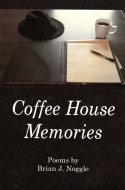
As I mentioned previously, I recently read an excerpt from The Song of Hiawatha in a collection. You know, I’ve been resistent to reading long-form poems, but this book was fairly easy to read. Part of it lies in the poem itself, with its song-like rhythm, its breaks into chapters and even stanzas within the chapters. Part of it lies in the layout of the book, with only 27 lines to a page and lots of white space. When you get a big collection of poems whether by a single author or a collection, you often get lots of lines jammed onto a page in tiny print which makes it harder to read as your eye can skip over lines easier. Or maybe I’m just getting old. But I’d like to point out that my collection of poetry, Coffee House Memories, is pleasingly arrayed in the paperback edition. The Kindle edition, well, you’re reading on an electronic device anyway, you damn kid.
Strangely enough, tucked into the book was the Reader’s Digest edition booklet discussing the book. Reader’s Digest released a number of classics in a subscription collection, and with each book, they sent a small pamphlet with information about the book and the author. I think I’m going to start collecting and placing these pamphlets along with the teasers for Classics Club editions in a binder so I can show them to houseguests when it’s time for the houseguests to leave. The Reader’s Digest pamphlets are particularly informative. This book had a forward of its own to give that sort of context. Many times, I don’t read the forwards because they tend to be critical essays best read after you’ve read the book, but this forward was informative and context-building.
At any rate, I liked it a bunch, and it’s starting to cement my enjoyment of American poetry, especially that in the vernacular, contrasted with British Romantic poems. See also my book report on Little Orphant Annie and Other Poems by James Whitcomb Riley.
Back in December, I was talking to an engineer, and I said that my FitBit was precise, but not necessarily accurate, when it gave me 250 steps’ credit for sitting on a bar stool and speaking expressively. The engineer was impressed that I knew the difference being that I have an English degree and all. So when I saw this book on the sale cart or in the sale room at Hooked on Books in January, I bought it, even though I figured it might be a kid’s book. As a matter of fact, it is a kid’s book, but it’s a discussion of the philosophical aspects of accuracy.
That is, the book talks about the different aspects of what sorts of measurements are “good enough” for the task at hand and how you can always improve accuracy with better instruments. It also talks a little about the challenges of accurately representing measurements (the problem with maps, for example, which are flat representations of a sphere). And the book also mentioned the Mackinac Bridge, which was fitting since we were vacationing in Michigan at the time and I drove over that very bridge a couple days later.
So, yeah, the book reading has been kind of light this year; I’ve been starting a lot of long books and not finishing even the short books I’ve started. I’m not even at forty books and the year is almost half over, but you can see I’m taking drastic steps. Namely, reading a bunch of children’s books (see also Crosshairs) on vacation. It’s just as well that I read a couple short children’s books because the remainder of my vacation was taken up with a fitting title.
Full disclosure: when I moved from a nice suburb and good school district to the trailer park in the middle of my seventh grade year, “R.P.” was the kid assigned to be my friend to help me get around North Jefferson Middle School in Murphy, Missouri. He was a smart kid. I was a smart kid. I’d like to think we were numbers 1 and 2 in the smarts for our seventh grade class, but I might be giving myself far too much credit. By the time we finished high school, I certainly dropped a couple points in the rankings because I didn’t put any effort into my schooling, and he did. But I digress. We go way back, and when I saw he had a book, I ordered it.
This is a young adult novel about a boy (about my kids’ age) who gets to go hunting with his father, uncles, and cousins for the first time. While he’s there, he finds one of his cousins stealing from other family members, and the book deals with the fallout of that including a run in with a local hood. It’s a short book (120 pages) with none of the cartoons that are rife in the Diary of a Wimpy Kid or “James Patterson”‘s Middle School series. I’m not sure how much the book captures the zeitgeist of contemporary middle schoolers, but my oldest has expressed interest in the book, so I suppose he’ll let me know. The questions the lad has about honoring your word and doing what’s right in spite of your word are real and tangible concerns for a young man, and thematically the book works.
So I enjoyed it well enough. But I’m probably giving some weight to being pleased that someone I knew wrote a pretty good book. And, quite likely, has sold more copies of this one book than I’ve sold of all three of my books. Curses, R.P. wins again!
From The Song of Hiawatha, Chapter 13 (“Blessing the Corn Fields“):
Once, when all the maize was planted,
Hiawatha, wise and thoughtful,
Spake and said to Minnehaha,
To his wife, the Laughing Water:
“You shall bless to-night the cornfields,
Draw a magic circle round them,
To protect them from destruction,
Blast of mildew, blight of insect,
Wagemin, the thief of cornfields,
Paimosaid, who steals the maize-ear
“In the night, when all Is silence,’
In the night, when all Is darkness,
When the Spirit of Sleep, Nepahwin,
Shuts the doors of all the wigwams,
So that not an ear can hear you,
So that not an eye can see you,
Rise up from your bed in silence,
Lay aside your garments wholly,
Walk around the fields you planted,
Round the borders of the cornfields,
Covered by your tresses only,
Robed with darkness as a garment.
“Thus the fields shall be more fruitful,
And the passing of your footsteps
Draw a magic circle round them,
So that neither blight nor mildew,
Neither burrowing worm nor insect,
Shall pass o’er the magic circle;
Not the dragon-fly, Kwo-ne-she,
Nor the spider, Subbekashe,
Nor the grasshopper, Pah-puk-keena;
Nor the mighty caterpillar,
Way-muk-kwana, with the bear-skin,
King of all the caterpillars!”
I’ve encouraged my beautiful wife to try this method, but to no avail. Of course, our gardens don’t have corn since it’s a little dry for corn around here in the late summer time, and she is probably right to be doubtful about native methods since my attempt to use the “three sisters” method of growing corn, beans, and squash together did nothing but leave us with a harvest of more spaghetti squash than we could eat (which, to be honest, is any).