Quick, summon the cleric from the back of the party.

We need a blunt weapon to open this well-taped treasure, and the instructions are for a blunt weapon. His mace ought to do the trick.
To be able to say "Noggle," you first must be able to say "Nah."
Quick, summon the cleric from the back of the party.
We need a blunt weapon to open this well-taped treasure, and the instructions are for a blunt weapon. His mace ought to do the trick.
Buy My Books!

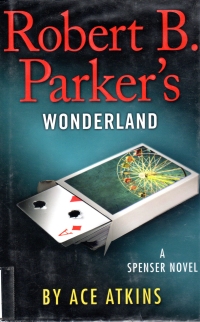 This book is the second of Atkins’ entries into the Spenser canon (Lullaby being the first), and it again captures the flavor of early Parker with some of the later tropes thrown in.
The plot centers around Henry Cimoli asking Spenser for some help. Someone is trying to buy Henry’s condo building and, when meeting resistance from some of the owners, has taken to tough stuff tactics to convince the old people to sell. Leaning back on leaners-on is Spenser’s balliwick.
So Spenser looks into it and finds a casino developer might be involved. Or the casino developer’s competition. And/or the mob. Then the casino developer turns up dead.
I won’t go too far into it, but it is a return to Spenser trying to figure out a puzzle of many unsavory characters and whatnot. A good plot, but we never do find out who killed the chauffeur (that’s an old mystery reader joke–there are no dead chauffeurs in this book–but that might be a bit of a spoiler).
I’ll say it again: Atkins brings the depths back to the books that Parker kinda left out towards the end. Unfortunately, he does rely a lot on characters from previous books (Gino Fish, Bernie Fortunato, Vinnie Morris, and so on), but maybe paying Spenser fans really dig this. Also, there’s the train-the-new-guy subplot that’s been a part of the series since Early Autumn. I suppose it’s just Spenser being Spenser, but it’s really old ground by now.
But I liked the book and I look forward to the next. Which is not something I’ve said about a Spenser novel in a long time.
Books mentioned in this review:
Buy My Books!
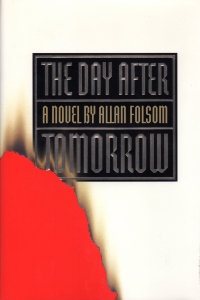 I have seen this book in a number of book fairs over the years. And yet, I’d never heard of it. Eventually, I gave in and picked up a copy. And then I picked that copy up.
But a bit of back story on this book:
Apparently, it was a big deal. That’s obvious from the number of copies out in the wild. A bit of research reveals that this book got a $2 million dollar advance for a first novel and hit the New York Times Best Seller list in 1994. If you read other reviews, you’ll find people saying it’s the best book ever. But.
You might not have heard of this book. For all its splash and its Amazon reviewers who can’t imagine life without it, the book is an okay crime thriller that just misses on a number of fronts. Beware: SPOILERS FOLLOW.
The story centers on an American doctor in Europe. He’s had a dalliance with a French woman he met at a conference in Switzerland, and he changes his schedule and plans to see her again even though they’d agreed their fling would end. While in Paris, he sees the man who killed his father on a Boston street some thirty years earlier, and the doctor attacks him. The doctor is apprehended by the police, but the murderer gets away. So the doctor hires a private eye to find him so the doctor can kill the man.
Of course, the man who murdered the doctor’s father was a hit man on the run from the vast organization that had hired him; this vast organization is on its way to the culmination of fifty years of research and conniving. “Organization”? Who are we kidding? The 1990s was the last gasp of the original Nazis, with books like The Apocalypse Watch and whatnot. The Nazis of World War II who hid after World War II accummulated money and influence and then, just as they began to die off and/or collect pensions in their adopted lands.
So the Nazi conspiracy is also after the hit man, who was part of a plot back in the day and remains a loose end that should have been tied up those years ago. And the Nazis are about to have a big plot come to fruition, and there’s a big reveal…..
So it’s standard thriller stuff, with an element of science thrown in: In a related subplot, an American detective consulting with Interpol investigates a set of headless bodies discovered and a bodiless head. Naturally, suspicion falls on the doctor visiting Europe. But Interpol discovers that the bodies have been frozen to almost absolute zero at some point. Hey, the father of the doctor had been working on something to do with scalpels working in extreme cold. In a related subplot, a stroke recovery victim flies to Germany to dine with the Nazi aristocracy and brings his physical therapist with him.
So it becomes pretty clear what’s going on early in the book: The Nazis are developing the technology for head transplants. And there are two biological twins or clones that are the perfect Aryan specimans. We all know where this is going, don’t we? Hitler’s head is going to appear at some point.
Someone sold the publishing house that they’d found a mixture of Michael Crichton and Robert Ludlum here, and they’re not entirely wrong. But the book is just off, askew. You get some stilted thriller stuff, then a dash of the absurd. You get an everyman protagonist who does some very impressive things–stumbling into a hit by an elite Nazi team with a small caliber semiautomatic and polishing them off because they’re stunned by his harmlessness. Also, there’s the Hitler’s head thing.
At the end of the book, an insider in the conspiracy has a change of heart and brings the whole thing down with a couple blasts of explosives. The main bad guy, a second-gen Argentine Nazi, grabs a case from a deep bunker, gathers the love interest from police custodym, rushes to a peak in the Alps, and fights in a blizzard. The bad guy dies, the love interest is saved, and the cavalry comes. But in a flashback, as he recovers, the doctor muses on what happened on the mountaintop while he was half frozen, exhausted, and outmatched.
Spoiler: The love interest stabs the antagonist with a giant icicle while he’s engaged with the doctor.
Further spoiler: Although they didn’t say it (but, come on, we knew) and the other characters speculated that its contents included files and plans from the conspiracy, the last line reveals:
But the box landed near where Osborn lay in the snow, rolling over with its own weight and momentum. As it did, it came open and what was inside was revealed. And in the instant before it vanished over the edge, Osborn saw clearly what it was. It was the thing Salettl had left out. The thing Osborn could tell no one because no one would believe him. It was the real reason for Übermorgen. Its driving essence. Its center core. The severed, deep-frozen head of Adolf Hitler.
But you know what? It falls into an Alpine crevice. Leaving room for a sequel, if you know what I mean.
Strangely, forget the head of Adolf Hitler and near-absolute-zero surgery on a molecular level. Apparently, the Nazis also invented a portable cooler capable of keeping frozen goods deeply frozen for days without making a sound or making people think it’s anything more than a large over-the-shoulder piece of luggage. Brothers and sisters, that’s where the money would be.
At any rate, I read the whole thing and kind of enjoyed it. Sure, the prose is a little stiff in places (those places are called “pages”), and it careens wildly into the absurd in places. But it’s kinda what a cult movie is like in a book form. So bad it’s good.
Folsom has published five books and has a background in films and television–which shows a bit in the prose, I bet. Perhaps his latter books are better in a straight ahead fashion. Perhaps I’ll see, but none are as ever-present at book fairs as this one was, as it sold over a million copies. Which puts it only a couple orders of magnitude beyond my novel sales to date.
Books mentioned in this review:
Buy My Books!
Listen to this song:
I’m obviously a psycho, because when I hear this song, I have an allergic reaction: My eyes start to water and my throat closes off a bit.
When this song came out in 2004, it was about me and my father. You’ve not heard much about him on this blog because after my parents divorced in the early 1980s, my mother got custody and moved from Milwaukee to St. Louis, so I didn’t see my father but for a couple weeks in the summer. Eventually, I did return to Milwaukee for school and lived in his basement, but after that, when I moved back to St. Louis again, our relationship was a little strained. Perhaps he felt a little betrayed that I didn’t stay in Wisconsin. At any rate, he died a year and a couple months later.
So when this song came out, I missed him and acutely wondered what he would think of me as a man.
But, now, ten years later, the song is doubly potent because not only do I think about how I miss my father, but how much my boys will miss me. I know it, and they won’t until they do.
(If you want further confirmation of whether you’re a psychopath, you can take this quiz linked by neo-neocon to find out. In running down your list of favorite bloggers, gentle reader, you’re bound to surmise I’m not really a psycopath because I can’t actually affect concern for other people effectively.)
Buy My Books!
Roundabout to slow traffic for pedestrians, bicyclists:
Drivers turning onto the westbound lane of Walnut Lawn Street from National Avenue will be met with “road closed” signs through next week.
Just down the road, crews are constructing a roundabout intersection at Walnut Lawn and Maryland Avenue.
. . . .
A traffic stop was not an option for the intersection. Gugel said the roundabout was the best option for making the street safe for pedestrians and bicyclists and will allow traffic to travel “fairly uninterrupted.”
Right. It’s going to bollix travel for automobile drivers, but that’s okay. Commissions and committees have proven that people who sit on commissions and committees, not to mention the urbanist consultants putting out thousands of dollars of reports, all favor riding bikes. And urbanists who love their bikes and dog parks attend government meetings.
So the future of governments will continue to be written by people who like government. And drivers who just want to go from the Walmart to the car wash at the end of Walnut Lawn will have to go around in circles to please them.
Buy My Books!
Buy My Books!
Neoneocon has a lost picture of Marilyn Monroe lifting weights, and I feel like less of a man.
In the photo, she’s working with an empty bar, but it has the weight collars on.
And I am shamed.
You see, my freshman year of high school, students in gym class could opt out of the normal activities to go down to the weight room beneath the high school stage and pump iron. On a couple of occasions, my friend Jim (who would later become the Goth King of St. Louis) and I would go down at my urging. I remember distinctly being unable to lift the bar for bench presses with the collars on, but if we took the collars off, I could lift the empty bar a couple of times.
And here’s tiny Marilyn Monroe besting me. Or a me of thirty years ago.
Somebody get me a protein shake. And one for Monroe, for Pete’s sake.
Buy My Books!
The songs that were current when Richard Simmons made his first Sweatin’ to the Oldies video are actually oldies now.
And Richard Simmons is will celebrate his sixty-sixth birthday this year. But I sense that nothing makes him feel old.
Buy My Books!
Add a camouflage case to the next generation iPhone, and it magically become an iPhone worth of banning:
Just days after leaked images suggested Apple’s iPhone 6 will have a protruding camera, a patent has been issued giving an insight into what this feature may be used for.
The patent, initially filed in 2012, describes a bayonet mount system for an iPhone camera.[Emphasis added.]
A bayonet mount, as you know, is one of the cosmetic features that make a rifle into an ASSAULT RIFLE BADBADBAD!
Buy My Books!
The Milwaukee Witch’s House is going places:
After more than a decade of sometimes acrimonious debates about its fate, the Mary Nohl House — the Fox Point cottage sometimes called “the witch’s house” — will be dismantled and moved piece by piece from its affluent neighborhood to a site in Sheboygan County, where the public can have ready access to it, the house’s owners said Thursday.
Back in the early 1990s, we’d cruise by that place late on a Saturday night and see the installation eerie by moonlight. But it’s been so long, I might not be able to find my way there any more. But there is going somewhere else.
(Read my essay on the Witch’s House and its story from 2006.)
Buy My Books!
The Art of Atari: A celebration of game packaging’s golden age:
he Art Of Atari: From Pixels To Paintbrush is an in-development coffee-table book that celebrates what some see as the golden age of video game packaging design.
I won’t keep it on my coffee table, though; I’ve got children who would absquatulate with that and sleep with it.
Also, I don’t have a coffee table.
(Link via Lileks @ Lunch.)
Buy My Books!
My five-year-old came downstairs at six-thirty this morning. “I had a good dream,” he said, pleased.
“What did you dream about?” I asked. What kind of narrative would have he built in his nocturnal slumber?
“There were volcanoes.”
“Volcanoes?” I asked.
“We had ice cream,” he added. And that’s all I got out of him.
Buy My Books!
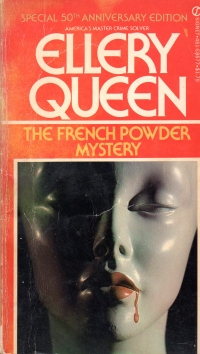 The copy of this book that I own is the 50th Anniversary Edition. Ponder that for a moment. This is the second Ellery Queen novel, and it dates from 1930. The mass market paperback I have is from 1980. Ellery Queen (the original duo) wrote a bunch, and his name appeared on other books and short stories as well as other media and a mystery magazine, to the extent that his works were still in print for fifty years. Also, do the arithematic, and discover that the fiftieth anniversary edition was thirty-four years ago. Man, we’re old, you and I.
At any rate, this book revolves around a murder in a New York Department Store, the kind that only New York city has or had. The wife of the owner of the department store is found dead in a furniture display one morning, and Ellery Queen and his father have to puzzle out why she was killed and why her body was hidden in such a fashion as to delay discovery until a certain time. Signs point to the woman’s missing daughter, who is probably a heroin addict. And Inspector Queen has to tackle a heroin ring and a new Police Commissioner.
The book has a locked room feeling that other Queen books (as I recall) do not, so it was pretty dry going, and the whole thing a bit gimmicky to fit into the locked room subgenre as much as it does. But it’s early in Queen’s writing career, and he got better. Or I was more patient with these books when I was reading them in great detail in the 1980s.
A couple quick bits of real life impact of reading Queen:
Coming soon, I shall drop French phrases into my conversation, and I’ll make sure they sound italicised.
Overall: The book’s not the best of Queen if I remember correctly. Good enough if you’re into the locked room stuff, but I’ve moved away from it. Not bad enough to make me swear off Queen stories. I’ve looking through the archives here, and I don’t have any book reports for Queen novels. Has it been ten years since I read another? It probably won’t be another ten years.
Books mentioned in this review:
Buy My Books!
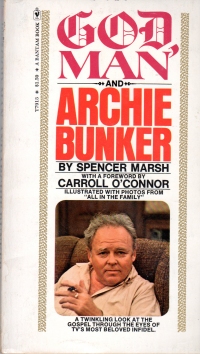 Why did I pick up this book? Because I’m old enough to remember who Archie Bunker was, and because I’ve taken to picking up slim mass market paperbacks to stick into my pockets when I might have a bit of time to read when I’m out and about and don’t want to spend it all on my smartphone.
This book is a small polemic written by a Presbyterian minister right as the television show All in the Family was coming into the fore. The minister sets up little chapters where he explains some about Archie, and why he’s a bad Christian whose beliefs and bombasm are not in line with the Christianity he sometimes tries to espouse. That’s about it. Here’s a chapter on Archie and the Bible, Archie and the Ten Commandments, Archie and the Prodigal Son, “The Good Edith”, and pretty much in each he leaps off from some incident in the show into a mini-sermon.
As an intersection between theology and pop-culture, it’s bound to be a little heavier on the latter, but it’s an unconvincing little book.
Funny thing about Archie Bunker. As I understand it, he was built to be the bad guy, but people related to him. He was a traditional, albeit crude and poorly spoken, member of the old generation that was out of touch with the modern, sixties person. But people related to his problems in understanding the changes going on in society and with those who would compel him to change. And somehow that gruff character carried a sitcom twelve seasons. Kind of like the modern day Ron Swanson of Parks and Recreation. Although this latter character was originally intended to be a foil for the star’s character, he was a man’s man Libertarian, and he’s the one from whom Internet memes are made. Because people even in the twenty-first century relate. And the sitcom writers and producers are shocked by what sells. Because they’re professionals or something.
Books mentioned in this review:
Buy My Books!
The city of St. Louis is about to hand the keys of its kingdom to some out-of-town company promising to make St. Louis just like a Real City by having music festivals, and some writer at the St. Louis Post-Dispatch dares, DARES compare the music festivals to be named later to Summerfest in Milwaukee.
Friends, Summerfest in Milwaukee is the best music festival in the known inhabited planets of the galaxy. It has twelve hours of music daily for ten days in the summer, and it has, what, ten? A dozen? stages with acts running almost constantly from local bands in the early afternoon to regional bands in the early evening to a national act headlining each stage at night. And there’s a major national act at the Marcus Ampitheatre with attendant opening acts every evening.
How dare does a St. Louisian compare anything St. Louis and its out-of-state lackeys can produce to Summerfest?
Brothers and sisters, here is a potential list of national acts likely to play Summerfest this year.
Note that this list comprises the headline acts for the ground stages at the musical festival. Not the major acts booked to the Marcus Ampitheatre.
QED.
Buy My Books!
How to mortify your beautiful wife into perpetuity in easy steps:
This will never, ever get old.
To me.
Buy My Books!
Today on Packers.com, the Packers historian comments on the Packers-Lions game in 1962:
This might be a first for me. I read a book for the second time. I read Vince Lombardi’s “Run to Daylight” when it was first published in 1963, and I read my same hardcover copy – not the newer paperback version – again in recent weeks.
. . . .
Anyway, I knew I wouldn’t find all the answers in “Run to Daylight,” but I was pretty certain I’d find enough evidence to support two of my contentions related to the game the book was built around: Detroit at Green Bay, Oct. 7, 1962.
The book itself does not identify the opponent, but I did my own research and revealed this to the Internet three years ago:
This book chronicles the week of preparation that the Green Bay Packers the week before the October 7, 1962 game against the (spoiler alert) Detroit Lions from the perspective of head coach Vince Lombardi. The book doesn’t name the opponent, but a little research will yield it. Although a Google search asking who the opponent was for this book apparently has not until now not yielded the result. Instead, I sussed it out by the final score and confirmed it by the mention of the UCLA upset of Ohio State. Look, ma, I’m a researcher!
Remember to stay tuned to MfBJN for more breaking news from fifty years ago!
Buy My Books!
Apparently, there’s a Congressional candidate running the Democratic primary for MO-7 who has a way with words:
I am not a conventional candidate. I’m a progressive conservative who believes we must build the future by honoring and learning from our past.”
Unfortunately, it’s an Orwellian way with words.
If you read his policy positions, it’s Democrat all the way down except for being a gun-rights supporter. Probably a reasonable gun rights supporter.
Now, if only he could get Claire McCaskill to run an ads calling him too conservative for Missouri to help him out in the election.
Buy My Books!
So, I see Ms. K.‘s post about this video:
And a little later, I’m recollecting a conversation about raising cattle with a friend, and I thought I’d ask him if he’d been in the FFA, which leads me to think of this song:
And so I think, you know self-directing machines are going to hit the farms first, where they can go along in their laser-and-GPS-guided finery to handle the time-consuming chores of farming with far less insurance liability concerns. Just imagine when this becomes mainstream, at least as mainstream as farming is, and automated farm machines can work day and night on ever larger farms. Great swaths of land will really become food farms, and it’ll squeeze out the family farmers most likely.
Will the prices go down for commodity foods (but remain high for the locovore organic artisan stuff), or will it put Google in charge of our food supply?
Regardless, I’m getting my robot insurance before that, too, is nationalized.
Buy My Books!
Last night, my beautiful wife and I went to the wine shop.
What did I get? What television told me to.

You know the target markets for these two products do not generally overlap. Or do they?
Fun Science Fact: These bottles actually repel each other like magnets.
UPDATE: As I clarify in the comments:
I said like magnets because I was being all Bill Nyey and dumbing it down for the lay people. The actual force in play is disdainetic force, and it’s only present in the Downton Abbey wine. The disdainetic force does not repel; instead, it is repelled. The Downton Abbey wine is repelled by the Duck
DynastyCommander wine bottle and wants to move away from it. The Duck Commander wine has no disdainetic repulsion in it and does not care what other wine bottles are nearby.
Buy My Books!