Book Report: The Violent Streets by “Don Pendleton” (1982)

Book coverThis book finds Mack Bolan in St. Paul immediately after returning from Turkey (as described in Double Crossfire, which I read in 2010 before I filled in gaps in the series). One of the Stony Man operative’s sister has been raped, and it’s a like several other rape/killings that have been haunting the Minnesota capital for years, off and on. Bolan investigates and discovers that elements of the police are covering it up because the suspect is the son of an elected official, and they want to use the knowledge and cover up as blackmail on the pol.

Then Bolan shoots most of the bad guys. finis.

Still, it’s a good read, certainly better than The New War, and I can see now how the house, by removing Bolan’s focus solely on the mob, broadens the variety of plots and adventures Bolan can have (and by now has had). This one is a little more vigilantish with the bad guys not being terrorists or external enemies, but domestic crime elements. This will definitely keep the series fresh. Unfortunately, the Bolan War Journal asides that talk philosophically about the nature of Man and the Hobbesian worldview must be mandatory, and in some books they’re not grafted well into the narrative. Instead, whole chapters are dropped in with a couple of nouns changed to reflect the current plot. Also, the books generally contain a roll-up of the overarching storyline from the Bolan books, especially the Mob War of the Pendleton books. These, too, jar expositionally when they’re inserted. They’ll probably move away from them as the number of non-Pendleton books increases, but they don’t aren’t well done in these early books.

Books mentioned in this review:

Buy My Books!
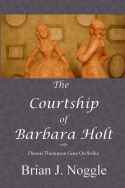
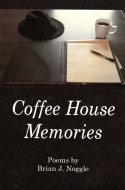
Buy John Donnelly's Gold Buy The Courtship of Barbara Holt Buy Coffee House Memories

Brian J., Parental Saboteur

My son goes to a Lutheran school, and twice a week he has to recite a bible verse from memory. Today, he is to recite the Lord’s Prayer.

I shall plead innocence if I’m asked why he thinks this is the Lord’s Prayer:

Oh, Lord, it’s hard to be humble
when you’re perfect in every way.
I can’t wait to look in the mirror;
I get better looking each day.
To know me is to love me.
Well, I must be a hell of a man.
Oh, Lord, it’s hard to be humble,
but I’m doing the best that I can.

Courtesy Rev. Mac Davis:

Buy My Books!
Buy John Donnelly's Gold Buy The Courtship of Barbara Holt Buy Coffee House Memories

The Source of That Thing Daddy’s Always Going To Say

I’ve been a bit of a gym rat, off and on, for fifteen years, and although I do just enough to keep myself sorta toned and in better shape than my chair-centric lifestyle would otherwise allow, I tend to think of my self as a, well, gym rat. Regardless of whether this is true or not.

Which is why I’ve begun to use the “And I can’t stop saying ‘bro,’ bro.” line from a recent DirecTV commercial as a personal motto.

I say it after sets at the gym. I say it as a greeting. Frankly, I find myself mumbling it to myself at other seemingly random times.

As an added benefit, when I’m mumbling this to myself at the gym, nobody asks if he or she can work in between my sets.

Also, as a side note, in written communications, I’ve generally used the more Californian “brah” spelling.

Buy My Books!
Buy John Donnelly's Gold Buy The Courtship of Barbara Holt Buy Coffee House Memories

Some Silver Has A Cloud Lining

Strategic Fundraising closing Springfield call center:

St. Paul, Minnesota-based Strategic Fundraising is closing its Springfield call center.

Some employees were told Thursday afternoon that they were out of a job, effective immediately. Communications Manager Jeremy Landon told the News-Leader on Friday morning that the office will be fully closed by Feb. 7.

This is a telemarketing fundraising operation: The people who call you up and will exchange decals for some charitable organization or association, and after they collect the proceeds, they give something like 15% to the organization on whose behalf they’re calling.

Believe me. I did this for the space of three weekends when I was twenty-two.

Hopefully, this is an indicator that the business model is collapsing and they’re all going out of business. More likely, though, it probably indicates they’re either moving these calls off shore or going to an automated system, which makes the whole thing even more annoying than it already is.

Still, it sucks for the employees if it was their only job. In my case, it was one of two, soon to be replaced by another job measuring car advertisements in newspapers for marketing research purposes.

And that, friends, is how I knew that my English/Philosophy degree was paying off. I was on my way.

Buy My Books!
Buy John Donnelly's Gold Buy The Courtship of Barbara Holt Buy Coffee House Memories

The Herb Alpert Album That Gets Short Shrift

As some of you know, I have a lot of Herb Alpert LPs that I like to listen to from time to time. I listen to The Lonely Bull a lot, Rise fairly often, South of the Border and What Now My Love? [sic] frequently, and Sounds Like…. and Warm from time to time (but less often than I would if the covers did not look so similar).

You see, I pick the next album to play based on the bit of the cover that I can see in the gap of a couple inches as I flip through them on the shelf of record albums.

So The Beat of the Brass:

The Best of the Brass

gets passed over more often than it should. Why? Because it looks just enough in that gap like Fly on Strangewings by Marianne Segal and Jade Silver:

Fly on Strangewings

I guess it’s the color of the trees in the background and the yellow ground that does it. Also, I’m generally not getting that close of a look at the cover as I flip through.

The former I bought because I like Herb Alpert. The latter I got for free twenty some years ago in the free box at Recordhead, a used record store in Milwaukee. I’ve listened to it only a couple of times.

Strangely, according to Discogs, the latter goes for $30 and was rereleased on CD this century. Maybe I should give it another listen after these twenty years.

Buy My Books!
Buy John Donnelly's Gold Buy The Courtship of Barbara Holt Buy Coffee House Memories

Book Report: Existentialism and Thomism by Joseph C. Michalich (1960)

Book coverThis book is a Thomist critique of Existentialism. Ho, boy, let’s get into some weeds.

Thomism is a philosophical system based on the works of St. Thomas Aquinas, a monk from the 13th century who wrote several thousand pages of reasoning including Summa Theologica. The philosophy is the only philosophy taught officially in the Catholic church’s seminaries and whatnot. The university I went to was apparently a hotbed of Thomism in the 1950s, or so I heard, but it did teach other systems of thought to its students. Including Existentialism. At any rate, this book looks like it’s still in print 55 years later, and that’s probably mostly because of its role in teaching Existentialism to bishops and Jesuits. But it could partly be because it’s fairly accessible.

This book is short (88 pages) and collects five separate essays that target some places where Existentialism is systemized. The essays include:

  • “Some Aspects of Freedom in Sartre’s Existentialism” which talks about Sartre’s view of human existence and its freedom to be for itself.
  • “Gabriel Marcel’s Ontology of Love” which talks about Marcel’s take on the interconnectedness of human experience. Let’s be honest: whenever the phrase ontology of love appeared, I heard it in Barry White’s voice.
  • “Mood and Cognition in Heidegger and Sartre” which discusses the importance of mood and emotion as the starting point for cognition in Heidegger and Sartre and how little beyond those base and concrete elements the Existentialists could move.
  • “Husserl and the Rise of Continental Existentialism” which talks about Husserl’s theories and how they coincide and conflict with the Existentialist mindset: namely, the importance of phenomenonism and its importance, but how Husserl’s “reductions” of the phenomena would be rejected because they abstract the phenomena away from the subject perceiving them.
  • “Thomism and the Challenge of Existentialism” is the heart of the criticism, and it explores a bit how Existentialism rebels against philosophical systems that focus on the abstract and the reasoned over the experience and subjective nature of cognition itself. It claims that Existentialism is essentially (see what I did there?) fighting a straw man, as so many other philosophical systems including the perfect Thomism derive those abstractions by reasoning from individual experience and perception and by balancing intellect with the emotions. It puts the finger on why I’ve only considered myself an Existentialist in bad moods: it really doesn’t go beyond the subjective in creating or describing reality and can’t because if it does, it threatens the subjectivism that’s very important to it.
  • “Existentialism in The Outsider“, the last chapter, seems a bit like an add-on. It takes to task an Existentialist novel by a British writer; you’re forgiven if you thought it was about The Stranger which appeared in Britain as The Outsider. Side note: This essay originally appeared in RENASCENCE, a Thomist publication at Marquette University, that hotbed of Thomism in the 1950s. At any rate, the essay rails a bit about this novel and its weak underpinings and defense of the Beatniks, those kids with their “eccentric dress and wild demeanor”. Given that novels obscurity, I have to wonder if this chapter made it into later editions.

I’m normally a primary source kind of fellow, so I’ve some familiarity with the Sartre mentioned above, and I’ve heard the names Heidegger, Hegel, and Husserl in my college classes. Heck, I might even have read them.

But it’s refreshing to pick up a criticism of the philosophy. It takes one out of the philosophy, so to speak, to see what someone else thinks of it, which can be clarifying. Of course, one must not take the critic’s depiction of the philosophy under study as the definitive representation of the philosophy. It’s another perspective on it.

So if you’re into Existentialist thought or explore it a bit, this book can serve that role for you quite nicely. It’s approachable, but it does get into deeper analysis of cognition, perception, and reality. It’s not too heady for most of it if you’re just a lightweight Existentialist who has read The Stranger and Nauseau and never even tried Being and Nothingness (I did just that: try), and the stuff that is heady does lean a little on you already knowing some terms of philosophy, so it’s not too hard to follow and even understand.

Recommended.

Books mentioned in this review:
Buy My Books!
Buy John Donnelly's Gold Buy The Courtship of Barbara Holt Buy Coffee House Memories

In 1983, This Was Unimaginable Riches

I recently received a large box of Atari 2600 cartridges from a friend who apparently got the box when a video game shop divested itself of its Atari 2600 stock. So I integrated the cartridges with my existing set, and I can say definitively that I own at least 350 Atari 2600 Cartridges.

My Atari 2600 Collection

I say at least because it’s entirely possible if not probable there are more cartridges scattered among the Ataris in their boxes.

If you’re a complete geek, you’ll want to see the list below. Continue reading “In 1983, This Was Unimaginable Riches”

Buy My Books!
Buy John Donnelly's Gold Buy The Courtship of Barbara Holt Buy Coffee House Memories

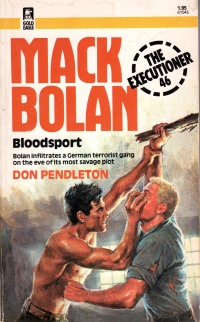
Book Report: The New War by “Don Pendleton” (1981)

Book coverThis book is the first that Don Pendleton did not write in the Mack Bolan/the Executioner series, and, boy howdy, don’t we know it. Fantastic Fiction says it was written by Saul Wernick, and I’m pleased to see this is the only entry this particular author wrote in the series.

In it, Mack Bolan goes to Columbia or Panama to exfiltrate or eliminate an agent with intimate knowledge of…something. When Bolan gets there just ahead of a hurricane, he finds the jungle lair of Islamic terrorists is a missile base and a base capable of reprogramming satellites. The makers of the satellites have provided a liaison to help the bad guys log into the satellites for some undisclosed reason. The bad guys’ bosses in the middle east want them to launch the missiles, but in the jungle, the terrorists’ plan is far more dramatic: to crash a satellite into the Panama Canal. So it’s up to Bolan to stop the plan, save the day, exfiltrate the agent and an attractive defector from the cause, and the pilots of the first helicopter that arrived to retrieve him.

So, plotwise, it’s an international thriller and not just a mafia hit. But the style of the writing is the real Louisville Slugger to the cranium. It’s less gritty and consistently introspective as the Pendleton books; it’s more florid in descriptions and does the Men’s Adventure thing with the guns, although when someone brings an automatic weapon up to the hip “in firing position,” one has to recognize that fifteen year old video gamers are probably better versed in military operations, practices, and tactics than your average men’s adventure paperback writer in the golden age of the paperback original.

Also, the guy had a thing for exclamation points. In prose. Fiction. A lot! And the plot, although workable, didn’t use much of the supporting players. Only the pilot Grimaldi makes an appearance, dramatically appearing in the hurricane with a gunship. Also, the book lacks tension, as the risk to Bolan is told rather than actually conveyed in the text. He eliminates half the base on one sortie and then worries about the other half on the next sortie. At one point, we’re concerned about all the people Bolan has to protect, then after Grimaldi’s heroic flight through the hurricane, he arrives at Bolan’s camp. And, hey, right behind him is a rescue chopper! How conveniently placed to take care of one plot point.

A subpar outing in the series, I hope. Although I’ve read a couple in the line after Pendleton and they haven’t made much impression on me. They will make more of an impression and get more of a direct comparison here as I read them consecutively and pretty quickly.

You’re not really asking, but I’ll tell you I’m almost done with the Gallic War by Caesar; I’m to Book VIII which was written after Caesar’s death to complete the account. It was written by someone other than Caesar, or so the story goes. Or did Julius Caesar fake his death? This is the Internet. All possibilities are equally valid unless they require contact with the actual physical world.

Books mentioned in this review:
Buy My Books!
Buy John Donnelly's Gold Buy The Courtship of Barbara Holt Buy Coffee House Memories

IT People Gonna Learn

I’ve had conversations on the Internet with liberalesque people working in IT about government regulation and the excess thereof. I’m thinking in particular of a conversation I had a couple years back with a fellow I went to college with.

My friend shared a post on Google+ about a software entrepreneur who said he heard a Republican candidate who said people weren’t starting businesses because of excessive taxation and regulation. The software entrepreneur said that was RIDICULOUS, HE was an entrepreneur, and this never entered his thinking!

So I argued that software was a low-footprint industry, that you could start a software business with a laptop at the coffee shop, but that getting into other real-world businesses runs into a lot of regulation. I cited examples of renting a stall in a salon, which requires a certain amount of regulated training; opening an automobile garage, which runs into all sorts of Federal, state and local regulations and inspections; and a restaurant owner I knew who had to pass so many inspections that he blew through his seed money and ultimately spent more time trying to comply with regulations than he did actually cooking food for the public.

I can’t link to the actual post since it wasn’t shared publicly, but rest assured, I was eloquent, self-assured, and presented a compelling case.

Still, so many people in the industry I’m in harbor a certain shortsightedness about how government regulation chokes off the little guy (on purpose, often).

Maybe not for long.

Computer coding program delays launch after inquiry from state agency:

Ward 5 Code Camp, which had planned to open Wisconsin’s first computer coding boot camp this month, has delayed its launch after a state agency said it had to register for regulatory oversight.

The Educational Approval Board, a Wisconsin agency that oversees 245 postsecondary schools, approached Ward 5 in early December after hearing about it from another school it oversees. Ward 5 this month postponed discussions with the agency, but it said it is working to find a way to open.

Welcome to the party, pals.

Buy My Books!
Buy John Donnelly's Gold Buy The Courtship of Barbara Holt Buy Coffee House Memories

The Source of that Thing Daddy Always Says Part n

I’m prone to saying to my children, “Willie, it’s go time.”

The source is not classic children’s literature, but rather classic arrested adolescent literature. Namely, another beer commercial that was popular around the turn of the century, back when I was watching hockey games on television every couple of nights:

I’m ashamed to admit that my allusions are thirty-five percent classic literature, twenty-four percent philosophy, and forty-one percent old beer commercials.

Buy My Books!
Buy John Donnelly's Gold Buy The Courtship of Barbara Holt Buy Coffee House Memories

It Wasn’t A Joke, Sadly

On the Facebook, I said:

Have you ever thought to yourself, “I don’t have a copy of Thomas Aquinas’ Summa Theologica. I should get one.”?

Because I have.

Because, well, I have..

I’m reading a book about Thomism–you’ll hear about it eventually–and I thought that I haven’t read much of Aquinas, even in my Catholic university Philosophy studying days. This book I’m reading mentioned some of Aquinas’s work, and I don’t have anywhere handy where I could physically look up the primary text.

One might think go to the library, but that would be a misunderstanding of what the local library is. It’s a service designed to meet the needs of its customers, and most of the public doesn’t want to read Summa Theologica. They want to read the contemporary thrillers and pop nonfiction books. So the libraries can’t waste valuable space on product that their clients don’t want all the time.

I could go to the university library, maybe, and get a day pass or whatever they offer itinerant amateur scholars. But that’s a thirty minute car ride away plus whatever fees.

I know, I know: You can get this for your phone or computer for free by downloading it from Project Gutenberg or the free Kindle editions floating around. But I don’t read from a small device. Brothers and sisters, as you know, I work on computers and whatnot all day. When I want to unwind, I want to sit in a chair with a cat on my lap and a book.

So I got to looking around the Internet for them.

Look at that set. Note the volume numbers: This is only the ten volumes in the complete works of Thomas Aquinas. Now I want that, too.

Most of them run a tad over two hundred bucks (they’re obviously not priced for a consumer, but for a collector or an academic with a budget). Still, I only have to sell a little plasma or a couple of software testing articles and I could have one of these.

Buy My Books!
Buy John Donnelly's Gold Buy The Courtship of Barbara Holt Buy Coffee House Memories

A Show I Didn’t Give Up On: Almost Human

Sadly, although I’m years behind, I’m almost through with the series Almost Human.

Almost Human

The series, if you’re not familiar with it, takes place a couple decades from now. Technology has advanced, and criminals have new means indistinguishable from magic for committing their crimes. A cop is injured in an ambush and loses a leg; it’s replaced with a prosthetic. Worse, he’s an old-school throwback kind of cop, and he doesn’t like being paired with an android. Instead of choosing the normal kind, he gets paired with the last of a line of androids programmed to have feelings–but all the others were decommissioned for going crazy. Together, they work on some crimes revolving around different science fiction technologies.

Unfortunately, it lasted only a season. The show kind of fell in a middle spot between two audiences: young geeks who watch things like Lost, The X-Files, Sleepy Hollow, and the comic book shows might have liked it, but it was a bit episodic and cop-showish. The show had a couple of overarching mysteryesque story lines that extended for a couple of episodes with little hints–Did the cop’s girlfriend at the time of the ambush, who has since disappeared, have something to do with the gang that ambushed him? What are these strange memories from someone else implanted in the android’s memory banks? However, these mysteries seem to have gotten dropped in favor of completely detached episodes. And the audiences that drive cop shows for decades, who like episodic plots, (that is, older people) might not have enjoyed the science fiction element. So it didn’t get renewed.

It definitely fell into my sweet spot, though. A throwback cop in the future, isolated from others around him. He’s sweet on a fellow officer, but she’s a Chrome–a genetically altered person who’s just discovering the camaraderie of her own kind as opposed to her fellow police like him. So the last episode ends with him alone out in the city, brooding.

Suddenly, it reminded me a lot of the Tex Murphy games.

Mean Streets/Tex Murphy

For those of you who don’t know, the Tex Murphy games feature a throwback private investigator in San Francisco about the same time as Almost Human, but it’s a post-apocalyptic San Francisco with mutants and whatnot. But the premise is a bit noir and a bit tongue in cheek. It started with Mean Streets in the early 1990s–I played it on my old 286. Remember when you referred to computers by the chip inside? The Olden Days. I liked the Mean Street so much that I wrote Access Software a letter (in the mail, child, in the mail!) and expressed hope for a sequel. Access sent me a very nice form letter about not accepting unsolicited ideas or resumes. So I sent them a resume from my twenty-year-old self. (I was not hired.) Eventually, though, Access did add other titles to the line, but I picked them up after my prime computer game playing days (that is, college). So I bought them, noodled with them, and sold them or gave them away.

“I wonder if the Tex Murphy games are on Steam,” I said to my wife after the penultimate episode of Almost Human.

So they are. The complete pack for $29.99. And there’s a new Tex Murphy title for Tesla Effect.

So after I watch the final episode of Almost Human, I might be crazy enough to buy one or more of these games and give it a go.

Which probably means I’ll do like I’ve done with every new game since Civ IV came out in 2005: Install it, run it once, make it through the introduction, and decide I don’t want to waste my time on video games when I have so many books to read.

All this would have been far easier if there’d been a second season of Almost Human.

Buy My Books!
Buy John Donnelly's Gold Buy The Courtship of Barbara Holt Buy Coffee House Memories

An Uncomfortable Venue, An Uncomfortable Admission

So somebody posted an announcement for a concert in St. Louis on Facebook:

Halestorm/The Pretty Reckless Concert Announcement

Hey, I thought, I like both Halestorm and The Pretty Reckless.

My original response was to go with the I could trade my 3 Dar Williams, 1 Ani DiFranco, 1 Sarah Brightman, and 1 Mary Chapin Carpenter/Shawn Colvin concerts I attended with my wife for this joke. Normally, the joke goes that I’m saving up for a Larry the Cable Guy or Blue Collar Comedy Tour concert with my wife who would not be inclined to see these things of her own accord.

Of course, as I mused on it, I would actually still prefer the comedy concert over the hard rock concert.

You see, my friends, I am a middle-aged, balding man prone to dressing like Cary Grant. Were I to go to these concerts, I would look severely out of place. And I would focus on that every second of the concert.

I’ve been to a couple of hard rock concerts in my time. Poison, Warrant, Ripd, Biohazard, Lillian Axe, and so on. However, in those cases, I was younger and had long hair. And I still felt a bit out of place. Like a poser.

The concerts I tend to attend these days (and by “these days” I mean “these decades”) are jazz concerts in clubs rather than glam rock bands in arenas or hard rock bands in small clubs. Places where the crowd is a little more reflective of my calendar age.

So I’ll pass on this one, and Shaman’s Harvest, and Three Days Grace, and Five Finger Death Punch, and so on. But I’ll still rock out to them at home and in the car.

Buy My Books!
Buy John Donnelly's Gold Buy The Courtship of Barbara Holt Buy Coffee House Memories

Book Report: Thermal Thursday by Don Pendleton (1979, 1990)

Book coverThis book is the sixth printing of the book from 1990, which means it was in print for at least eleven years. Which is something to note of its own accord.

This book closely follows the events of Monday’s Mob, Terrible Tuesday, and Wednesday’s Wrath. I’m not actually reading one of these per day, although it might seem like it. It’s taking me about two and a half calendar days (not, surely, sixty hours each). How’s that Gallic War that you claim to be reading coming along? you ask. I’m to the part where a couple of tribes band together and challenge Caesar. So, I’m somewhere between Book One and Book Seven.

Where was I?

Oh, yes. Hours after leaving New Mexico, Mack Bolan is steeped in doubt about his future with Washington, so he asks for a little space from his government contacts. He goes to Miami and infiltrates a mob project to build undersea tunnels from the Everglades to Mexico and Caribbean islands to facilitate smuggling. So it’s the craziest plot yet.

It’s also a very segmented book, and not in a good way. The first 120 pages or so involve the set-up and then Bolan infiltrating the site acting as Frankie, a mob bigwig looking in on operations. He finds a vast complex underground where engineers are using slave labor pirated from amateur smuggling operations to build a great undersea network of smuggler’s subways in the limestone strata beneath the sea. When Mack gets out from his probe, we get twenty pages of him getting together with his Washington contacts and discussions with scientists about how such a thing could be remotely feasible enough for a book plot. Then we get 20 pages of Mack blowing it up. However, at some point after Bolan left, the mob got onto his game and redoubled patrols. A bit of whiplash there; I put the book down one night after the scientists were talking, and I opened it up and the mob was onto Bolan. I actually backtracked to see if I’d forgotten something overnight, but apparently not.

At any rate, this effectively wraps up my reading of the tail end of the Pendleton Mack Bolans; all the others out from here are the stable books. They probably lack the philsophical asides that Pendleton deftly inserted (or made into full discussions at times). And, brother, I’ve got a long way to go to clear my top shelf off.

Books mentioned in this review:

Buy My Books!
Buy John Donnelly's Gold Buy The Courtship of Barbara Holt Buy Coffee House Memories

Book Report: Wednesday’s Wrath by Don Pendleton (1979)

Book coverThis book takes place about 12 hours after the events of Terrible Tuesday. Given the nature of the last “week” of novels that Pendleton wrote, the timing of it would be tricky: Bolan goes to different cities across the country and does his thing there within the span of 24 hours (usually less, since he does not begin exactly at midnight). If you’re reading them back to back, you go “Hmmmm.” This probably wasn’t a problem when they first came out, as the books were months apart.

In this book, the “Hmmmm.” involves people apprehended at the end of Terrible Tuesday. In the twelve hours it takes Mack Bolan to fully heal and whatnot, those mobsters are sprung from jail, transported to New Mexico, and tortured slowly–in other instances where Pendleton refers to “turkeys,” that indicates torture over the course of days or weeks, not hours. But Bolan bursts into a torture scene, executes the torturer, and then impersonates the fellow who’s involved with a paramilitary plot to steal weapons from the nearby military bases. It’s the same military fellow from Colorado Kill-Zone which I read back in 2011 when I only had 20 Executioner books on my to read shelves. The Old Days.

At any rate, Pendleton is beginning the transition in these books from the previous focus on mob activities to more military thriller sorts of plots and operations. This will ease the transition into the stable of writers to follow and how Mack Bolan starts his life as a government operative.

A quick enough read, obviously. I’m a book away from finishing the ones I’ve in this week (I’ve previously read Friday’s Feast and Satan’s Sabbath). And then it’s into the world after Don Pendleton, where the books are up and down.

We’ll see if I continue my, erm, “discipline” of reading Executioner books as I read Caesar. It might not last many of the “Don Pendleton’s” books.

But that’s okay. I have other books to choose from.

Books mentioned in this review:

Buy My Books!
Buy John Donnelly's Gold Buy The Courtship of Barbara Holt Buy Coffee House Memories

The Source Of That Thing Daddy Always Says

Springfield has a new Denny’s, and it was inevitable that we would venture to the restaurant, the first of its kind in the city, because I spent an awful lot of late night time in my youth in a Denny’s, and I longed for a Super Bird and a bowl of vegetable beef soup.

Still, my children could not understand why I kept calling it Lenny’s.

Gather round, youngsters, and let me explain about the Corlick sisters.

In the late 1980s and early 1990s, Denny’s advertised on television (perhaps they still do, but we’ve been out of Denny’s television markets for five years now). The commercials featured two sisters, the Corlick sisters. One of them mishears what her sister says to comedic effect (much like Daddy does on occasion, although he’s the only one who thinks it’s funny). Then she mentions eating at “Lenny’s”, and her sister automatically corrects her to “Denny’s.”

I had a few of those free meals at Lenny’s. I recall one year visiting multiple Denny’s so that I could get the free meals. As a young man, I could eat a lot.

So my children know about the Corlick sisters. I would have alluded to the commercials when interacting with the wait staff, but everyone working there was younger than the commercials.

Buy My Books!
Buy John Donnelly's Gold Buy The Courtship of Barbara Holt Buy Coffee House Memories

Book Report: Flowers of Evil by Charles Baudelaire translated by Jacques LeClercq (1958)

Book coverInterspersed among my other reading, I’ve been working on this book for a little bit. It’s a collection of poems by Charles Baudelaire, but they’re end-rhymed, so the translator had a heavy hand in the actual English of the poems which probably means they’re almost as much his work as Baudelaire’s. Because poems have so much nuance, rhythm, and flow that rely on word selection, you have two choices when translating: You can go with the literal translation, which will chop most of the mouthfeel of the original poem out, or you can try to put the poem in the target language with as much of the flavor of the original as possible but still ending up with something of the original in it. I think this translation, as demonstrated by the end lines, did more of the latter.

Now, about the poems: Oh, my.

On one hand, these are the poems I wanted to write when I was twenty years old. Vivid, evocative, concrete, and meaningful (and full of end rhymes). You’re in the moment with the poet narrator in a way that overshadows a lot of poetry in English that I’ve read. The topics are full of love, lust, and pondering mortality.

But.

The introduction explains a bit of Baudelaire’s bio and explains his obsession with a particular woman, and it comes through in the poems as the poet-narrator fixates on a woman and the poems describe a love/lust/hate relationship with a woman. And the poet-narrator muses on death and the ultimate meaninglessness of love when confronted by death. It’s pretty powerful stuff.

And vivid in a sometimes squicky way. There’s a poem called “Carrion” which is about the poet-narrator and his love out for a walk when they come across a dead animal, and the poet-narrator describes it in great detail as it breaks down and then says something about the breakdown of the flesh and how the woman will be food for worms soon. And then there’s a poem about necrophilia. But only one.

So.

It’s good poetry qua, but some of the topic matter is a bit objectionable.

This book features an inscription, To Michael, with love and a Merry Christmas, Ellen 1966. Frankly, I’m not sure what sort of message you’re sending if you’re giving this book to a lover. Also, Phil offers to read Baudelaire to Rita in the film Groundhog Day; suddenly, this changes the meaning of the film for me forever.

Books mentioned in this review:
Buy My Books!
Buy John Donnelly's Gold Buy The Courtship of Barbara Holt Buy Coffee House Memories