Kincade Fire burns through California
Yes, I know, the “Painter of Light” spelled his name differently. But why let that get in the way of a wry quip?
To be able to say "Noggle," you first must be able to say "Nah."
Kincade Fire burns through California
Yes, I know, the “Painter of Light” spelled his name differently. But why let that get in the way of a wry quip?
As I mentioned, one of the benefits of Nogglestead is that I can easily lay my hands upon lots of the ephemera from my life that I have collected over the years and refuse to part with. The second thing, aside from the spaciousness of the storage, is that I pretty much have not reorganized or moved anything since we moved in, so these things are generally in the last place I saw them, ten years ago when I put them there.
So when my beautiful wife found and old business card and posted it on Facebook, I immediately took it to be an Old Business Card challenge. So I went to the cubby where I keep ticket stubs and whatnot and came up with two within minutes:

At the top, we have my second technical writer position circa 1998. I would later become an automated tester there before leaving for a startup that only left me with a worthless stock certificate.
Below, we have the business card for my magazine which I published in 1994 and 1995.
I am pretty sure that I have other business cards around here; when I remembered my little business cards book, I found another from my days as the director of quality assurance for an interactive marketing agency circa 2005:

I also have a large number of other business cards that I printed on a little vending machine at the Grand Avenue Mall in Milwaukee. For a buck, it would print out four business cards for you, so I have a number proclaiming me a freelance writer, president of Triple N Enterprises, the lawn mowing company we had in the trailer park, and the bassist in a band called Ghostriders. Which don’t count, but I still have them and at hand.
Then, Friar posted about about a self-made audio cassette (I, too, shy away from mixed tape as nomenclature for this endeavor), and I was able to easily lay my hands on a couple I made in the early 1990s:

Theme Songs contains:
Almost thirty years later, two of those are on my workout playlist and another was on it for a while but got removed because it’s not angry or fast enough.
Rain Songs contains:
Face it: a-ha did a lot of rain songs, and I really liked a-ha in those days. I still do, but not like I did then.
I easily laid my hands on these because they were in the tape bins under the bed.

Note the Huey Lewis and the News album Sports, the first full-length album I bought at a garage sale in the trailer park in the middle 1980s and the a-ha album Scoundrel Days, the first a-ha album I got for $2.99 on a reduced price tape rack at Walgreens in 1990.
We’ve got a couple of those, and my beautiful wife has a number of tape organizers in here office where they are on display. A number of years ago, she set about to ripping the audio cassettes to MP3s (perhaps MP2s–it was a while ago). Which is why we still have the audio cassettes–they’re the source of the MP3s, and if we donated or sold them, we would be honor-bound to delete the ripped music from our iTunes libraries.
But I still listen to them from time to time.
For example, I’m listening to Night Ranger’s Big Life right now, which features the song “Rain Comes Crashing Down”:
Given that I bought the cassette on the discount rack at Walgreens about 1990, it seems odd that “Rain Comes Crashing Down” did not make it to the Rain Songs cassette. Perhaps I ran out of room or didn’t think so much of the song at the time.
Note that “The Secret of My Success” would be on my gym playlist except that songs ripped from audio cassette play back at a lower volume in iTunes even if you set the audio volume to auto-correct. So it would not be loud enough for exercise. Perhaps I should buy a copy of the song or the CD so I can get it appropriately loud.
At any rate, what was my point? Oh, that I can lay my hands on a lot of personal relics. As my family and the number of people who knew me back when continues to shrink, I rely on these relics an awful lot to prove that I was then and that the eternal now wasn’t all there is.
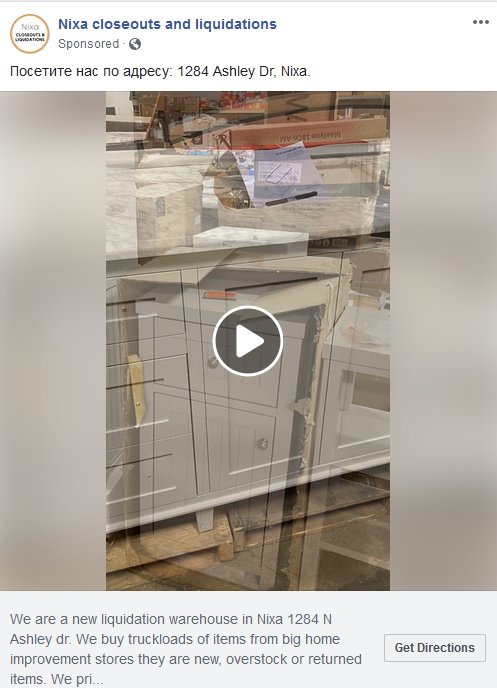
Seen on my Facebook feed:

Yeah, that’s some upbeat news right there. I’m not sure any of the words in that site’s name are true.
I check out the crime stories that mention places I’ve lived to see if I know the alleged perpetrators. Hey, it happens; once I saw the name and picture of the kid who sat behind me in 8th grade Civics class with Mrs. Padgett, but he wasn’t a kid anymore.
In the new neighborhood, I check the news stories to see how close tornadoes came to Nogglestead.
This one? Very close indeed. According to a map in the Greene County Commonwealth, it ran just a little south of here:

It was passing to our south when the weather radio alarm went off with the tornado warning. So we got away with one there.
Bark M. challenges a man of trivia:
I defy you to find a track record of any type that is twenty-three years old—nutrition and training are now far, far superior, and athletes are shattering times from that long ago on a daily basis.
Ivory Crockett still holds the world record in the 100 Yard Dash:
In 1974, he ran the fastest 100-yard dash with manual timing of 9.0 seconds, a record he still holds. This was deemed at the time by the Los Angeles Times as “Immortality in 9 Seconds Flat”, and he was quickly tagged with the title the world’s fastest man by Track and Field News who put him on their June 1974 cover.
Sometime after he set the record, probably as part of the global conversion to the metric system, the powers that be eliminated that particular event from the Track and Field canon. So Ivory Crockett’s record will stand forever.
I actually just told the story of Ivory Crockett again to my children as we were in Old Trees on Sunday, and we passed under the banners for the Ivory Crockett 5K and fun run which had been the day before. So it was fresh in my mind. Not that this particular fact is very far from mind.
UPDATE: Sorry, I originally attributed this to Jack, but it was Bark M. posting over there. I have updated the attribution above and would vow to pay more attention to post authors, but, come on, we all know I won’t.
Ms. K. has a blog post about Durable Characters in commercials, and she cites Flo from Progressive Insurance and Mayhem from State Farm who have been in ads for a decade (although Mayhem had a hiatus if I recall, and I should, as I consider Mayhem to be one of my professional heroes).
I see her Flo and raise her the Sonic Guys who have been doing commercials for Sonic since 2002 almost continuously and Jack in the Box, who has been in Jack in the Box commercials since the middle 1990s through, what, 2017 (according to the Jack in the Box Fandom wiki)?
1994:
I have to wonder how those actors and comedians feel to know that their most famous work comes from thirty second spots over the course of decades. Hopefully happy for the steady work.
So I’ve been reading the Ogden Nash poetry collection that’s been spotted on a book accumulation point, and I carried it to church in St. Louis this week. I read a couple, and I took a break to read the Ace of Spades HQ Book Thread and then to read the Ogden Nash Wikipedia entry, when suddenly I encountered information that should have been accompanied by the dramatic sound of a needle stopping on a record.
Ogden Nash wrote the lyrics for the jazz standard “Speak Low“.
Say what?
You mean the song performed by the lovely Sacha Boutros?
No way.
Way.
Apparently, Ogden Nash wrote part of a Broadway musical, One Touch of Venus, in which this song originated. And it’s the only thing anyone remembers from it, no doubt. The song has been covered by singers from Sammy Davis, Jr., to Steve Lawrence (but not, as far as I can tell, Eydie Gorme).
You know, my estimation of the man is elevated to a degree I cannot express with your primitive Earthen mathematical symbols and concepts.
The second of the books I bought last weekend is a bit deeper than the first (Mother Goose in the Ozarks). I think this counts as Literature, ainna? Hesse won the Nobel Prize for literature, so all signs indicate yes.
The book covers the journey of an Indian? Nepalese? son of nobility who wants wisdom, so he leaves his family and joins a group of ascetics with a friend. When the ascetics encounter the Buddha–the Siddhartha of the title is not, as it turns out, that guy–the friend joins the Buddhist movement, and Siddhartha goes to town where he encounters a courtesan whose beauty is described in detail and I can only assume foretold Morena Baccarin (who played a courtesan/companion in Firefuly, do I have to inline cite my allusions? Yes, if I want to stay out of trouble with my beautiful wife who might wonder why I brought Morena Baccarin into this discussion out of nowhere). Siddhartha wants her to teach him of love, but she points out that she likes nice things and he’s an ascetic, so he becomes a merchant, dissipates a bit, and then tires of that life and becomes a ferry man where, by listening to the river, he becomes wise. The courtesan becomes a Buddhist, and as she is traveling to pay her respects to the dying Buddha, she comes to the river but dies, leaving Siddhartha with the charge of his son Siddhartha. The willful, formerly pampered boy rankles under his father’s simple lifestyle and runs away. The title Siddartha thinks of searching for him but lets him go.
So I did read it, and I remember the plot better than I do the plots of most Executioner novels I read, certainly.
At any rate, it reads a little like an Existentialist novel in reverse (see The Fall for example.) The narrator comes from a position of comfort but has a bit of mental disquiet as he hungers for wisdom pursuing knowledge. A series of events occur leading him to question everything, and he finds peace. Existentialist novels start from a sense of peace where things shatter that peace and lead to a new understanding. Or maybe it’s exactly like an Existentialist novel. I certainly put it in the genre as I read it, but the Wikipedia entry argues that it’s really a Buddist novel.
Or perhaps they’re very close to one another, Buddhism and Existentialism.
No, that’s not it. In this book, Siddhartha has been taught that reality is an illusion, and he learns instead about the unity of all. In Sartre’s Nausea, the protagonist learns that reality is an illusion. So, yes, backwards.
At any rate, a quick and engaging read. The volume I have does not say who the translator is, but the prose is very lyrical, with lots of prepositional phrases. Which, sadly, is how I’ve found myself writing these days. And I don’t have a translator to credit or blame for it.
So perhaps I’ll find Steppenwolf somehwere and pick it up, too.
From a small town paper’s profile of a local elementary school teacher:

“The best part of my job is working with the kids. My career goal is to stop working with the kids.”

You know, I think we could have gotten along at that.
Yesterday, I took the boys up north to the Ozark Empire Fairgrounds to attend the Friends of the Springfield-Greene County Library book sale where I predicted I would gorge on $1 record albums.
Which proved truer than I thought.
I bought a bunch.

I got:
So that’s over sixty records counting the box sets for a little under $60. I will probably need to order more Mylar sleeves and build more record shelving, though.
I also bought two Foxfire books, #4 and #7, and a Great Courses CD set called Thinking Like An Economist. I looked at artist monographs, but I wasn’t willing to pay six or ten dollars for them. I have commitments that will keep me from attending the lowered price days this weekend, so I’d better pace myself on going through what I got. Fortunately, I won’t be watching any more baseball games this season as the Cardinals were eliminated from the playoffs, and commitments keep precluding me from watching football.
My boys found a number of books which they could not wait to get into. I’m glad they did, as they sometimes get really bored and impatient with the whole book sale thing. I’m pretty sure they only agree to come because we have a new tradition of stopping at Five Guys afterwards for a burger.
So not a lot of books to add to the to-read shelves, but a new stack of records that it will take me weeks to listen to. Although when I move the stacks upstairs after writing this post, I will leave the John Denver record on top, and I wager it spins this very morning.
As I accurately predicted on Sunday, I read this book first of the ones I picked up. I have so little time to read these days that monographs and twee little books are about all I can get read in a timely fashion.
This book is a 1983 reprint of the 1938 original, a sticker on the cover informs us, and it is an illustrated collection of what might have passed for nursery rhymes in the Ozarks around the turn of the twentieth century. The perface tells us about the author and the history of the rhymes in this collection which later appeared elsewhere (we’ll get to that in a minute). H. L. Mencken had nice words to say about it when it was published.
The little rhymes in it are a bit twee and facile, but I’m coming to them from a position where Mother Goose and the European nursery rhymes are wisdom received at a young age. Perhaps if I were exposed to these rhymes in my youth and Mother Goose as an adult, I’d have the completely opposite reaction. So, some were amusing, but most were just rhymes for children to recite because nobody had television or radios yet.
One thing that modern audiences would zot onto is the use of perjoratives for blacks. A couple of the rhymes involve accusing a black person of something or just denigraating a black person, but that loses a bit of context that a lot of people mentioned in these rhymes are not represented in the best light. The book also disparages Irish people and other individuals. Face it, if you’re in a nursery rhyme, you’re not doing to well. But modern scholars and readers have their own biases and focii, so that’s what they would see first. Not that I’m defending the viewpoint; only that I can read something like it and say, “That’s not right,” where modern arbiters might not let me read it at all because they don’t trust my judgment.
Some things sounded familiar, though, such as:
Chicken in th’ bread-pan
Pickin’ up th’ dough
Granny will your dog bite?
No, child, no.
Where have I heard that before?
Also, this one learned me the source of an expression that was a fabled book and then a major motion picture:
William tremble-toe is a good fisherman
Catches hens–puts them in pens
Some lay eggs–some lay none
Wire, briar, limberlock, three geese in a flock
One flew east, one flew west
One flew over the cuckoo’s nest.
The nursery rhyme listed as the source of the title in Wikipedia differs, though.
Another features a character asking for his jimmy-john. I wondered if he wanted a sandwich, but after a little research which was mainly trying to formulate a search query that would return me something other than information about the restaurant chain, I discovered this probably refers to a whiskey jug.
At any rate, a quick read. A little educational, as it taught me the things I mentioned above. But it would be doubleplus ungoodthink to many who would then not learn what else it might have to teach.
This weekend, or more to the point, this Sunday and Monday, I traveled to a work retreat in the Washington, D.C., area. When I travel, I like to pack my personal item with magazines that I can read and discard on the way, which means my bag gets lighter as I go.
As I might have mentioned, my magazine subscriptions wax and wane over the years, and I have accumulated a bunch of old magazines in a drawer in the parlor that I’ve been meaning to read (including a number that came out of the trunk 17 years ago).
I have to consider what to pack carefully. My beautiful wife wants to browse some of them after I am finished, so I cannot discard Forbes or 417 on the road, so I might as well not pack them. I don’t want to pack magazines with guns on them as I don’t want to have the TSA give me the side eye or give some fellow plane traveler the vapors, so Garden and Gun, Ducks Unlimited, America’s First Freedom, and various other items are right out.
Which leads me to an eclectic collection in my bag, to be sure.
So in rapid succession, someone sitting on a plane next to me is likely to see me go through years-old issues of:
As you know, gentle reader, I am a man of eclectic and diverse interests.
But, Brian J., won’t your beautiful wife want to read Metal Hammer? Well, yes, which is why I have brought it home.
And why I have looked up Follow the Cipher on YouTube:
Watch for that album on a future Musical Balance post.
So yesterday, we headed down to Ozark for the semi-annual Friends of the Christian County Library book sale, and it was only when we got to the library in Ozark and saw an emptyish parking lot and the shades drawn on the meeting room that I remembered that the Friends of the Christian County Library has started shifting one of the two sales to the Nixa branch. Which we did not pass as we drove through Nixa to get to Ozark. As a matter of fact, we have never been to the new flagship of the Christian County library, which turns out to be a larger and nicer facility. Which meant they could spread out about the same number of books over slightly more floor space.
At any rate, it was half price day, which meant I got a bunch for a little.
I got:
I also bought a book of number crosswords for my youngest son and two CDs: Lee Ann Womack’s I Hope You Dance and Rage Against The Machine’s The Battle of Los Angeles. No John Denver, though.
The total for my books and the three books and puzzle that my wife bought: $11.50. I laid out a twenty and then renewed my membership in the Friends of the Christian County Library as I do every book sale, whether I attend once or twice a year.
Which reminds me: I have just lapsed in membership to the Friends of the Springfield-Greene County Library, and I should consider renewing before I venture up to its (their? our?) book sale next week.
Technically, this is not a book report, as I listened to the book on CD. So I don’t count it toward the annual reading goal, but I do want to comment on it just to pad out your daily content allotment on this blog.
Adam Carolla, for those of you who might not know, is a comedian with 20+ years experience in the popular culture. He started doing bits in LA in the middle 1990s and scored a radio and later television show called Loveline followed by The Man Show in the late 1990s and has segued into books and a highly popular podcast in the 21st century.
This book presents a fantasy where he is elected President and what he does to the country. The chapters are grouped around Federal departments, and he uses this conceit to group some of his rant tales about hospitals, attending every function in your children’s schools, airports, and other things.
Carolla gets some notoriety for stating relatively plain truths in direct language, contradicting the prevailing orthodoxy of the times. He’s more coarse and vulgar than Dennis Miller and is less learned and erudite, but they cover the same ground at different times and for different audiences/generations.
So I agreed with a lot of the message, but I only got one or two chuckles out of the material. Maybe that’s me. I don’t really laugh at a lot of comedy these days; it’s high form if it even amuses me. Perhaps I’d be different in a comedy club, where the crowd’s reaction would be infectious.
Probably better than reading or listening to a polemic by a more straight-up commentator if only because of the refreshing and authentic fascination with boobies.
Ooops, I read it again. I first read this book in 2004, and in reviewing that particular review, I agree, fifteen years later with my earlier assessment.
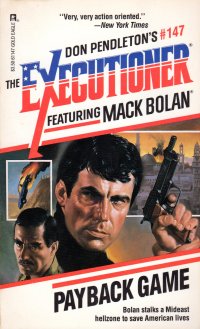
The story: A young man, on the run from the mob, is found by a private detective working for the young man’s rich grandfather, who is dying and wants to see his progeny again. The grandfather sends his private nurse to retrieve the young man, and they fall in love as they drive from Texas to New England. The grandfather also invites the man’s brother, but the brother is in with the mob, and he comes with a plan to finger his brother for a hitman. Then a single violent night ends some lives and changes others.
I did flag this chapter beginning, though:
THE EXECUTIONER stood at the back of the bar of a roadhouse on Route 5 between Albany and Schendectady, nursing a bottle of ale.
What book am I reading here?
But given the turn of events at the end of the book, which sees a newly wealthy young man seeking violent revenge on the Mob, one wonders if this might be a precursor to the Don Pendleton series. Probably not, but you never know.
So twenty-four years ago last night, I was at work at a produce market in southwest St. Louis County. I was a year out of college, and when my student loans repayments kicked in, I found I needed a night job as my temporary Associate Editor position at an industry magazine wasn’t going to cover them much less gas money to get to the job, so I went back to slinging produce.
In those days, I was driving back and forth to Milwaukee frequently as I clung to my collegiate friendships as best I could. Probably a mix of I didn’t want to leave college yet and I don’t make friends easily. It allowed me to see my father, who had been diagnosed with lung cancer the summer after I graduated, and who completed a course of treatment and went into “remission” that lasted whole months.
My brother, on emergency leave from the Marines, had called the day before and told me that I should probably come home soon, so I made plans for the weekend to come up.
This is a collection of photographs from a mid- to late-twentieth-century photographer who focused (ba dum tiss) on close-ups of flowers and other flora who then moved into landscapes, male nudes, and still lifes during his career.
The introduction is one of the great artistic criticism sorts rather than the simple bio. Hal Fischer fits Don Worth into the great American tradition of nineteenth century landscape painters and Transcendentalists. So it is on that end of the spectrum of monograph intros, meaningful to serious students of photography but just blather to more casual appreciators of the art.
The photography itself is also a bit of a photography buff’s bag. It deals a lot with textures and shapes within the frame, where the content is important as photography more than telling a story or inviting the viewer to see something other than a photograph. So it’s a bit of modern art in that regard, and the introductory text writer favorably compares Worth to Jackson Pollock and Mark Rothko, so, yeah.
It doesn’t take you long to browse through it once you get through the introduction.
I know, with the blizzard of monography book reports, you’re wondering exactly how much football I watched this weekend. No more than nine hours. But I’m also watching some college football and playoff baseball. Which means I should make a real effort to get to the Friends of the Springfield-Greene County Library book sale to pick up more this month.
Bed Bath & Beyond names new CEO
Behold, Suburbianal IV!
This collection of drawings’ introduction describes the life and times of Adolf Dehn without getting into the Importance of the artist in the milieu. It talks mostly about how the artist approached his work, which is by sketching a bit and then later interpreting his sketch and memory in the finished sketch.
For Dehn’s work is mostly pen and ink drawings (including some caricature) but also includes some watercolors, although the images in the book are black and white, so I cannot speak to how they would look in color.
However, the line drawings do not appeal to me. I mean, it’s like 2D comic art blended with some Degas or the other bad Impressionist or post-Impressionist influences. I mean, he’s no Matt Hirschfeld, that’s for sure.
Still, worth a browse during a football game just so I can continue to explore what I like and don’t like among the art world and art monographs.