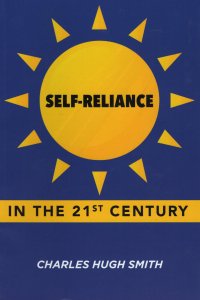
 I saw this book mentioned on a blog, and I cannot remember which one. It almost makes me want to create a blog or browser plugin called “Where’d I read that?” which searches the sites on your blog roll and in your browser history to find out where I should attribute credit. Or I could just guess Bayou Renaissance Man, conduct a quick site search over there, and discover yeah, that’s it.
So Bayou Renaissance Man’s preview had the first bit of the book in it, and it looked to maybe be a combination of musing on Emerson’s essay blended with modern prepping tips, and I guess it was that after a fashion. But it read more like a series of blog posts hastily stitched together, and I didn’t get a whole lot out of it. I found it very hard to read, in fact, and then I realized why:
60% or more of the sentences in the book (an estimate, not a count) use the verb is.
Let’s look at the first part of the Bayou Renaissance Man’s excerpt for an example as I am too lazy to type any out on my own:
What is self-reliance?
Ralph Waldo Emerson’s advice in his 1841 essay Self-Reliance still rings true today: “Be yourself; no base imitator of another, but your best self. There is something which you can do better than another.”
For Emerson, self-reliance means thinking independently, trusting your own intuition and refusing to take the well-worn path of conforming to others’ expectations.
This celebration of individualism is the norm today, but it was radical in Emerson’s more traditionalist day. What’s striking about Emerson’s description of self-reliance is its internal quality: it’s about one’s intellectual and emotional self-reliance, not the hands-on skills of producing life’s essentials.
Emerson doesn’t describe self-reliance in terms of taking care of oneself in practical terms, such as being able to build a cabin on Walden Pond and live off foraging and a garden like his friend Thoreau. (The land on Walden Pond was owned by Emerson.)
Emerson did not address practical self-reliance because these skills were commonplace in the largely agrarian, rural 1840s. Even city dwellers mostly made their living from practical skills, and the majority of their food came from nearby farms. (Imported sugar, coffee, tea and spices were luxuries.)
The economy of the 1840s was what we would now call localized: most of the goods and services were locally produced, and households provided many of their own basic needs. Global trade in commodities such as tea and porcelain thrived, but these luxuries made up a small part of the economy (one exception being whale oil used for lighting).
Even in the 1840s, few individuals were as self-sufficient as Thoreau. Households met many of their needs themselves, but they relied on trusted personal networks of makers and suppliers for whatever goods and services they could not provide themselves.
Okay, perhaps it’s not 60% in that excerpt, and maybe it’s not 60% in the whole book, but it is a whole lot, and I certainly noticed it and then got bogged down analyzing the writing more than the content. Of course, if you’ve made it this far, you’re looking at that preceeding sentence and are preparing your tu quoque attack because I used is for 60% of the verbs in that particularly convoluted sentence. But this is a blog post, not a book. Not even a book based on blog posts.
Aside from the issue, the content was a bit repetitive, identifying global macro forces that have led us into a tight spot–the book italicises key concepts like landfill economy–that items are produced to have a short useful life after which the owner will scrap them and buy a new one–and then italicizes and defines them again. Useful tips are repeated in different lists of useful tips. And, yes, I did spell italicize both the American and English way because I’m not sure what that one guy in Seoul who keeps searching for mature pantyhose only to get a book report on The Life Expectancy of Pantyhose and the Poems of Middle Age prefers.
At any rate, a couple of good reminders–grow what grows easily, which is good advice if only I could find what aside from grass grows easily in this rocky clay soil and if I could only find something I can do easily and well that would produce a side income. But overall, a lot like reading a blog on paper–and not even a Substack long-form kind of blog, but rather the quick hits and bulleted lists kind. I had a similar response to The Gorilla Mindset by Mike Cernovich last year. I should probably steer clear of bloggers’ nonfiction in the future unless it’s from someone I already read and it promises more substance or more detail than their existing posts.
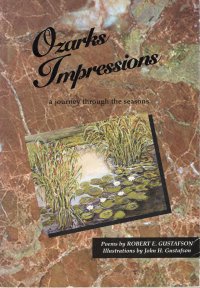 I am not sure when I got this book. It has a Redeemed Books sticker on the back that seems to indicate it was added to their inventory in 2010. So somewhere between then and now. It is a collection of poetry written by a retired economist from a consultancy or think tank and it’s illustrated by his brother, a retired artist. The volume I have is numbered 386 of 1500 and is inscribed to Linda. I found myself musing as much on the history of this book and the men who produced it as the actual contents.
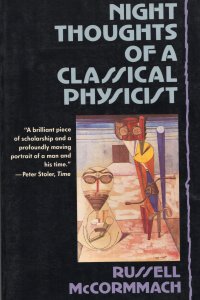 I picked up this book back in
  I have to say that this is the best novel based on country-and-western album liner notes that I have ever read.
  Well, gentle reader, I have done it.
 I got this book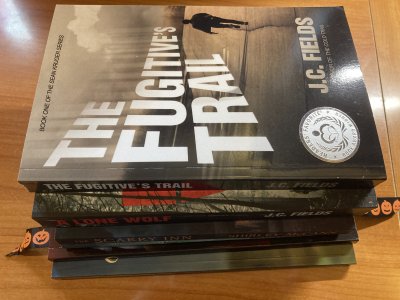
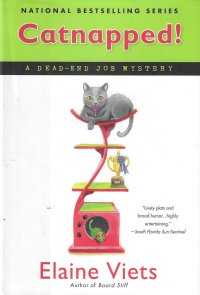 I mentioned when I read Viets’ collections of columns from the St. Louis Post-Dispatch (
 I got this book at ABC Books
 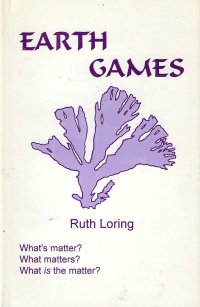 I got this book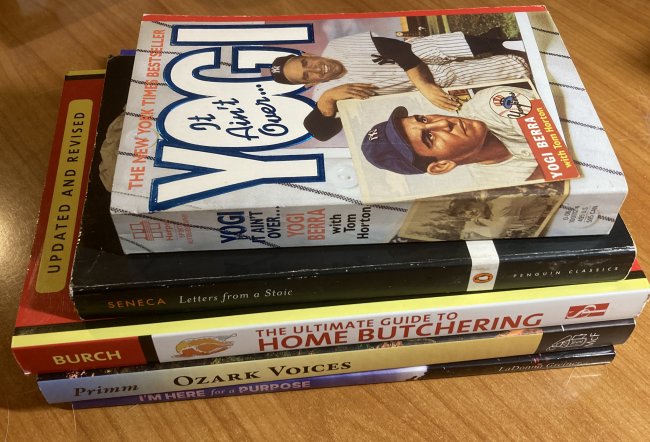
 This book came out a couple of years after
  I picked up this book from the free books cart at church. I know, gentle reader, it’s not that I lack for something to read. But our church has a free books cart with cullings from the church library and other books that people drop off. Well, other people, not me, as I rarely separate books from the Nogglestead library, and when I do, they are generally not religous or church-friendly titles. Every Sunday, or almost every Sunday, I make my way past this cart and look it over. Most of the time, I don’t pick up anything as Nogglestead is topped up on Bibles and I don’t tend to read devotionals. But I picked up this book because it is the biography of the guy who serves as the main mascot for the Kansas City Chiefs and includes the story of an accident at Arrowhead Stadium that almost killed him.
 My goodness, it has been a year and a half since I read the first in the Harbison Mystery series (Terror Near Town, which I read in