The Love and Rockets song “So Alive” has entered the playlist of about 200 songs that the local “Most Variety” radio station runs through in roughly the same order but at different times during the day. Almost as though making the programming run on an 18 hour cycle will mask the fact that it’s canned and looping.
I don’t particularly care for the song and didn’t when it was on the radio as a hit; I remember hearing it come on as I was up late on summer vacation, typing computer programs from magazines into a computer room at the house on the gravel road deep in the Heads Creek valley between House Springs and Otto, Missouri, after the rest of the household had gone to bed. The reward was seeing a terribly low resolution ball bounce in a terribly low resolution maze if all the typing matched the checksums at the end of the line.
Now, I hear the song on the radio, and I quip to my children, “It’s a shame when they broke up, because neither Love nor Rockets had much luck solo.”
They don’t get it.
And back in those Commodore 128 summers, we didn’t actually have a way to easily look up whatever happened to those guys. They cut a couple records after the one that spawned their biggest hit, but did not have the same success and they broke up in the 20th century and briefly reunited in the 21st century for a bit of nostalgia.
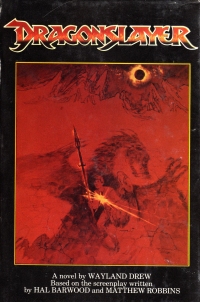
I was talking to a friend of mine, and he mentioned that he was reading a Zane Grey western. It’d been a while since I read one (December 2011 to be exact), so I picked up this book.
The book takes place in Australia; two cowboy friends hire on as drovers for a man who is part of a large expedition designed to drive several thousand head of cattle from several “stations” (ranches) across the Australian outback. However, during the course of the trip, one of the two vies for the affection of a lovely young lady with a suspicious drover who has cattle-rustling designs on some of the docile Australian cattle.
The book is 304 pages long, and it feels every one of them. The descriptions are lush, and the action is slow to start as the characters, the relationships, and the courtships begin. Strangely, the confrontation and gunfight with the bad guys takes place at about page 200, which leaves 100 pages of wondering what’s coming next. As it stands, natural disaster and natives provide the set pieces between then and the successful arrival a continent away and the promises of marriage that follow. As my friend says, Western novels are just romance novels with horses and gunplay.
The book isn’t paced as fast as I prefer, and it’s not my bag (although it’s more my bag than, say, the Gunsmith series). Still, the Australian setting triggered my rewatching of Quigley Down Under and might have inspired the recent purchase of Crocodile Dundee. So it’s got that going for it.
This book is a picture book sold at the House on the Rock to help you remember your visit. It does more than that, actually, as the photographers used lights in taking the pictures. You can actually see the rooms.
For those of you who haven’t seen it, the House on the Rock is a domicile of sorts built by a man atop a sandstone column starting in the 1950s. The original house stands atop the column, but over the decades between then and now, the fellow (Alex Jordan) and the people he picked to maintain the building have continued adding to it. So the flavor is something between (I would presume) the Winchester House and Hearst Castle. The original house is now surrounded by gardens, other buildings, and a museum dedicated to Alex Jordan, so it’s not clear to the casual visitor that the house is on a rock at all.
But back to this book: It’s a tourist hagiography of the facility and a bit of Alex Jordan, so don’t expect any depth or criticism. Instead, it goes on in marketingese about the various collections and oddities that the attaction houses, which is useful, since one should expect to be overwhelmed when visiting the place in person. It took us almost four hours to go through all the stuff at a pretty consistent pace throughout, without dithering or lingering on anything in particular.
The images in the book are brighter and clearer than the underlit interior of most of the actual House on the Rock itself which has a definite cave feel. Whether they do this to spotlight different things in each room or just to save money on lighting, I don’t know; however, the images are better than the real thing in the areas that they depict.
At any rate, it’s worth a look if you find the book at a book sale. It might not be worth the $20 they charge for it (shrinkwrapped, so you can’t see its contents until you’ve ponied up the dough) at the gift shop.
I remember listening to her radio program daily when I lived in Casinoport, and when the linked article explains the way she announced herself on the radio, I heard it.
It’s sad to read how she spent her last days. I can’t believe nobody would give her a shot on some other station unless, as the story hints, there was more to her dismissal than cost-cutting.
(You can read more of my raving about WSIE here and here.)
This book is a small booklet that recaps the tour of the Original Wisconsin Ducks in the Wisconsin Dells. I recently took this tour, so I know.
I was a little torn as to whether to count this as a book read or to write a book report on it, but I’ve done so for similar booklets offered by tourist attractions I’ve not visited (such as Thomas Jefferson’s Monticello), so I figured why not?
So the trails and tales are the same that you ride on if you tour with this particular flock of ducks (in Wisconsin Dells, there are many, many companies running tours with the Ducks, apparently). The tour talks a little about the Dells, about the history of the area (which includes a lost town of Newport), about the benefactor who donated land for the Wisconsin Ducks to tour on and the home her heirs still share, and about the flooding in 2008 that almost altered the artificial topography of Lake Delton and the Wisconsin River forever until a massive effort of man returned it to its “natural” original artificial existence.
The booklet is very lightweight and doesn’t delve much into the region or any of the historical anecdotes it covers, but it does serve its purpose of refreshing a visitor on the things he or she has seen. It might be a little fresher or novel for someone who hasn’t taken the tour; reading it without the experience of the ride and the guide’s patter as she recounted the stories from the book in order might make the book seem a little deeper (although the paragraphs in the book are slightly more detailed than the audio presentation, but not much) might give one more urge to learn more about the things herein. Or maybe not.
At any rate, it’s worth the quarter I’d pay for it in a book sale, and because I took the trip, it’s worth the fiver I paid for it on the duck.
The Catholic church down on Republic Road had its annual garage sale this weekend, so I sneaked off on Friday afternoon to see if there was anything for me. I don’t know why, but I’ve been a little down on going to garage sales of late. In the past, I’ve found things I could use in crafts or around the house; I’ve found things to sell on eBay for a bit of walking around money; I’ve found things I collect myself, like old computers and electronics; and I’ve found books and music.
However, I’m not doing the crafts or the eBay much these days, and I’m stuffed to the rafters with books to read. You don’t find old electronics in garage sales these days, as they’ve already found their ways into collections by this point. And the household stuff available is generally ticky tack, and although I’ve been a bachelor and once had a cable spool covered with shag fabric as a central piece of furniture in my loving room, I’m entering the age of my life (that is, married a while) where I’m moving away from pressboard if I can. We’re even down to only two secondhand (garage sale, natch) Sauder printer stands as central pieces of furniture in our house. So the only thing I’m really interested in is maybe some music or records. But I’m still drawn to garage sales for old times’ sake and because, hey, who knows. But I favor the church sales because normal garage sales are rife with kids’ things and things young families want to get rid of. I’m not in a young family, so I don’t need what they have to offer.
At any rate, I did find something:
Among the books, we have:
A Norwegian-English dictionary, just in case I ever get to greet the members of a-ha in their native language.
Four books in Andre Norton’s Witchworld series in a box set.
A book of holiday jokes to scan during fall football games and then to pass onto the joke-loving children.
Two of the Richard Marcinko Rogue Warrior novels whose names I didn’t recognize.
The Book of Useless Information, another to flip through between football plays on Sunday afternoons.
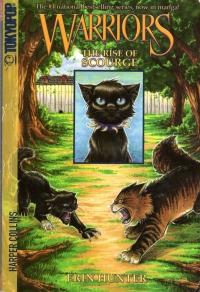
A couple books of manga. I don’t know anything about manga, even how to pronounce manga. I want to pronounce it with a j sound, like mangia, but that’s because I did an open mic night at a little restaurant called Mangia Italiana a couple times back in the day. I’m not sure whether to try it like mango (as Americans pronounce it) or mango (like it’s properly pronounced by Spanish speakers). Given that I spoke Japanese with a Spanish accent back when I tried to learn it from a text-based computer program and pronounced all transliterated Japanese words with Spanish phonemes, I’ll go with the latter until I embarrass myself and say it in front of someone who knows how it’s pronounced.
Mele Abbey a guidebook for a landmark of some sort to flip through during football games. Hey, it’s OTA time for the NFL. I have to prepare for the season, too.
The Road to Serfdom by Hayek. For fifty cents.
As to music, I got:
The Denver Brass, Misbehavin’ on CD.
The Best of Romance of The Spanish Guitar on CD.
The Dave Brubeck Trio, Time Out (1959) on vinyl.
Pearl Bailey, Saint Louis Blues on vinyl.
A 78 rpm picture record of Joan Edwards singing “More than You Know” and “Go West Young Man”. It lists on eBay for 40-80 dollars. W00t! And it sounds good.
A couple of Bing Crosby 78s. It’s the binder for songs from the film Going My Way, but of the 3 platters, only one is included, and its spindle hole is damaged and requires repair; another disc is “White Christmas”.
A 78 song and story book for “Little Toot”.
Additionally, I picked up two videocassettes: Crocodile Dundee and It’s the Great Pumpkin, Charlie Brown along with a book about drawing heroes that I’ve passed onto my children.
The total cost was $17.50. I was tempted to return today to buy the rest of the 78s for a buck (it’s a dollar for a bag at noon), but I’m resisting it.
This summer, I returned to Wisconsin for the first time in seven years. Seven years? For Pete’s sake. I guess I’ve been living in the Springfield area for six years now, and I haven’t attempted the ten hour drive previously, so I guess it has been that long. Not that Wisconsin missed me as much as I missed it. I’ve built it up in the minds of my children as the closest thing there is to Eden on Earth, but they’re very skeptical of their father’s claims for some reason.
For my own future reference, here is a checklist of things to do in Wisconsin if you’re me.
☑
Put a camouflage duck hunting hat on my father’s grave.
I don’t think of my father much as the flowers type. He wore a hat much like this one of most of his adult life, so I leave one to remember him as he was.
☑
Drive down by the lakefront on a sunny afternoon. As part of a whirlwind your of Milwaukee and showing my children where I went to the university, I did so. However, my children were more interested in their Gameboy Advances that they get to play with during long car rides. However, the older one did take a look out over the blue water, the beach, and the sailboats.
☑
Breakfast at George Webb.
We spent the first night in the Milwaukee area, and when we discussed breakfast options, I said, “George Webb’s.” We looked for a location near our near-Menomonee Falls lodging, but the George Webb site tried to send us down onto Capitol Drive. I investigated further, and my beautiful wife sought out alternates, including Dunkin Donuts (which we also don’t have in Springfield). I found a closer one in Germantown, and my wife announced to my disappointed children that I had my heart set on “the George Webb place.” She is from the UP, as I explained to many, many of my fellow Wisconsinites on the trip.
☑
Dude, you’re going to the Dells.
Our real target was a resort in the Wisconsin Dells. When we picked the destination, my beautiful wife asked me what there was in the Dells. I had to admit I didn’t know; mine was not a middle class upbringing, and when I lived in Wisconsin, we did not vacation at the Dells. Actually, in my youth, I went on one (1) vacation, and that was (oddly enough) to the Missouri Ozarks (Rockaway Beach on Lake Taneycomo specifically). We did take a couple weekends “up north” in the family’s cabin in northern Wisconsin and/or the UP (where I might have caught a glimpse of my beautiful wife in her childhood, forever bonding us before we knew it, but probably not). All I knew about was the river bluffs called the Dells. Which we saw.
☑
Eat cheese curds.
Wisconsinites might not realize it, but you can’t get cheese curds to snack on everywhere, although you can get them everywhere in Wisconsin. So I bought some and introduced them to my children, explaining that where the gods have ambrosia and nectar, Wisconsin has cheese curds.
☑
Stock up on Open Pit
Speaking of things unavailable in Missouri, they don’t sell Open Pit barbecue sauce in this uncivilized land, either. It’s vinegar with a hint of tomato for coloring. I didn’t remember its taste clearly because my family didn’t barbecue that much when it was a family and when I lived in Wisconsin. But I remember it’s what we used, so we picked up some at the local grocery.
I’ve since used several bottles and will have to find out if Amazon delivers it, or else I’m going to have to re-enact Smokey and the Bandit to bring a truckload home.
☑
Visit the House on the Rock
Although it’s not really in the Dells, the House on the Rock is close (within an hour’s drive), so we went. Mainly because I’ve seen signs for it and misremembered articles about it and confused it with Frank Lloyd Wright’s Fallingwater. There, I admit it.
The House on the Rock instead is a crazy clubhouse tourist attraction built atop a column of sandstone. The fellow who built it intended for it to be a tourist trap, and it’s got rooms bored in the rock and an Infinity Room that extends like a finger over the valley so you can walk out and look down on the trees (come on, you can see why a house with a finger extending over a valley might be confused with a house extending over a waterfall, can’t you? Please?) The house maintains a large set of automated orchestras, a large carousel, and many collections.
Three good things came from the trip:
The children loved it.
My beautiful wife said if we ever get insanely wealthy, I can build one like it (which means the hard part is over!).
When we got back, one of her friends asked her, “Did you go to the House on the Rock?” and my wife could answer, like a sophisticated Wisconsin traveler, “Of course, my dear.”
☑
Stock up on Packers gear.
Here in Missouri, if you want Packers stuff, you have to order it off the Internet at Internet prices. Which are a premium. In Wisconsin, if you want Packers stuff, you go to Walmart. Or the gas station. They practically throw a Packers pennant into your plastic bag with purchase in Wisconsin.
So now I have Packers apparel for every day of the week. AS BEFITS ANY TRUE WISCONSONITE.
☑
Pick up a Wisconsin accent.
The last time I was in Wisconsin was only for a weekend, and I came back to Missouri with a touch of the accent. During the course of five days, you can imagine how far up my nose I pronounced my vowels. When I came back, I spoke slowly to pronounce words almost in the fashion of these soft southern tribes. Even today, weeks later, I still pronounce words like car and bar in the northern fashion on occasion.
☑
Eat fried cheese curds.
Because even a Wisconsinite needs variety.
☑
All other tourist duties as assigned.
While in Wisconsin Dells, we rode the Ducks (the amphibious vehicles that drive a little way on the road and a little on the river); we took a jet boat tour (which showed better selections of the Dells and zoomed around and got everyone wet, so it’s a better time in my arrogant opinion); we did a puzzle game venue (Wizard’s Quest) where you go through different scapes looking for clues to type into a computer and to release wizards or something (too long and a bit frustrating with two younger children in tow); we ate at a couple of nice restaurants; we went horseback riding; we visited the outlet mall; and we went to the resort’s water park and arcade almost daily.
All in all, it was a pleasant trip home-ish. Although I didn’t get to spend much time with family in Milwaukee or any time with Milwaukee-area friends, it proved a successful ten hour car ride with children, so we might do it again sometime. Although I get the sense we have Michigan in the neared future, as my beautiful wife is from the UP and grew up in lower Michigan.
Friends, countrymen, do you think the 20 something Web producer has mangled an allusion to The Jackie Gleason Show, where Jackie Gleason used the catchphrase “How sweet it is”? Do you think the phrase has been thrown into the blender of modern American culture over the last fifty years, divorcing it from its origins, so that people today almost repeat it without knowing where it came from?
If so, it’s quite the metaphor for modern America in so many ways, where current utterances and thoughts are far divorced from their origins.
Or I suppose the headline writer could have put those words together that way because Yoda would. But Yoda would have used the article in front of sweep.
The diner where I often, well, dine, has its booths upholstered with a fabric I think looks like a bunch of hungry birdlings in a nest straining for a worm from their parents.
Way to play it straight, CNN. It’s not that San Francisco has raised taxes. It’s that San Francisco has attacked a beast or adversary of mythological scope.
In 1990, a band called Londonbeat charted a song called “I’ve Been Thinking About You” which you sometimes hear on the radio even today. Well, I assume somewhere, you might; here in Springfield, it doesn’t fit into the three radio formats and the 1000 songs on their combined playlists at any given time.
In 1990, Londonbeat charted a follow-up single. Deb, a woman I hung around with and would eventually date briefly, loved Londonbeat, but I was just then growing my mullet and listening to album oriented rock at the time (which survives as classic rock, one of the three radio formats in Springfield–the other two being country and the greatest hits of all time which means music from the 1980s and 1990s and, when they’re feeling saucy, a Bruno Mars tune (but don’t worry about that program director who went a little too far–he’s fired!)).
Where was I before I digressed two sets of parentheses deep?
Oh, yes, I made light of Londonbeat, especially their second hit, which includes the lines:
On the harbour bridge
The rain was gently falling down
On a lazy summer day
Your face appeared
There on my windscreen
You smiled and slipped away
“My God, he just hit her with his car,” I said because I have always had this grim sense of humor. Also, because it was the 1990s, a dark age, so I apologize for expressing the thought that the poet-narrator was talking about a woman.
So, at any rate, I made light of the song, and in the infrequent times I thought of Londonbeat over the years, I mostly remembered “I’ve Been Thinking About You” and could not remember the name of this song. Sometimes, I’d think that the last time I thought about Londonbeat a couple years ago, I could remember the name of the song, but I probably did not.
I know, I know, some of those times were in the 21st century, and if I’d been at a computer, I could have looked it up to see the name of the other song. Why, this sometimes even occurred in the smart phone era, where I could whip out a portable computer and I could look it up. But I didn’t, probably because I thought of Londonbeat while driving or in circumstances where I didn’t want to stare at a portable computer screen while life occurred in front of me.
However, this morning, I was at my computer thinking about Londonbeat, and I looked it up, and (re)discovered:
“A Better Love”:
Now, more than twenty years later, I listen to it, and I think, Hey, that sounds okay. Maybe I’ll pick up a Londonbeat album now that I’m an old man and am branching out from the AOR.
Now, the challenge that will follow me around for the next twenty years: What was that other song by Soul II Soul? Like Londonbeat, Soul II Soul charted more than one song, so you don’t hear “Back to Life” on the radio on the One Hit Wonders special programming.
This book is a collection of short stories MacDonald wrote for various slicks throughout the 1950s. Although some of them feature a crime, others do not, so they show the range of things MacDonald could make interesting.
The collection includes:
“Hangover”: As a man awakens from a night of overindulging at a corporate function, he remembers the events that led up to his firing and worse.
“The Big Blue”:An experienced fisherman regrets agreeing to sharing a charter boat with two companions, a blowhard and a weak young man who can’t shake the blowhard. Very similar to Hemingway’s “The Short Happy Life of Francis Macomber”.
“End of the Tiger”: The courtship of a coarse young man and a woman ends after his cruelty to the family’s chicken.
“The Trouble with Erica”: A business partner protects his young partner from a disastrous courtship with a woman prone to seduction by seducing her.
“Longshot”: A clerk at the horse track watches as another crooked clerk runs into trouble when betting out of the drawer.
“Looie Follows Me”: A young man in the country has his world turned upside down when his parents take in a troubled youth from the city for a couple of weeks.
“Blurred View”: A man who murdered his actress wife is caught when her film making friends recreate the murder in blurry photographs and pretend to blackmail him.
“The Loveliest Girl In The World”: A married middle-aged photographer breaks off contact when he gets to close to one of his models.
“Triangle”: A businessman encourages a female colleague with whom he’s too close to confess to his wife her attraction to him to convince his wife they’re not having an affair; this is to cover his actual affair with another woman.
“The Bear Trap”: A man on a road trip with his wife and children remembers his girlfriend from his youth who was killed by a bear in a cage.
“A Romantic Courtesy”: A rich rancher meets a woman he wooed in his youth who abandoned him for a man with prospects and an unhappy marriage.
“The Fast and Loose Money”: A pair of skimming angle-shooters are caught by their former commanding officer who is now a Treasury agent.
“The Straw Witch”: An assassin thinks of a folk tale told to him by a dying comrade a long time ago as a difficult assignment goes bad.
“The Trap of Solid Gold”: A young up-and-coming corporate man finds himself caught up in a vicious fiscal tailspin while trying to keep up the appearance of successful executive on the small salary he makes.
“Afternoon of the Hero”: A famous comedian, atop the world, reacts to a story about him in the media that says he’s very afraid by making light of it, hiding his actual fear.
The collection is very solid, and MacDonald makes the main characters in the stories very approachable. It’s been far too long since I’ve read MacDonald (2012? Really?), but it won’t be long until I read more. He’s a joy to read, and the length of his books don’t make you think about how long they are. He balances description, plot, and dialog better than most writers I can think of, and his stories–even his short stories–have pretty interesting plots.
There’s a little contention at Nogglestead about which version of the song “Radioactive” is the best.
First, the original by Imagine Dragons:
Second, the cover by Within Temptation:
My beautiful wife thinks one is the definitive version, and I think the other is.
Please, let me know which you think is the better.
I don’t want to bias you, but clearly one version is slower and building, which is appropriate pacing for a song about waking up and reinvigorating, and one is up tempo and nice and all, but it doesn’t convey that same sense of awakening.
So I bought my children some bagged breakfast cereal because I’m a miser sometimes:
And whenever I serve it to them, I call them “Fruity…. DY-NO-BITES!”
Because J.J.:
Back in the latter part of the 1970s and the early part of the 1980s, I lived in a housing project myself, which explains why I identified more with J.J. and Dwayne from What’s Happening!! than any suburban-based sitcoms from the era.
This year, my children and I went to the annual ArtsFest on Historical Walnut Street in Springfield, Missouri. We parked a little ways down unhistoric Walnut Street and walked down the block.
As we neared the festival, we came upon a house. “Is that a pig?” I asked. Indeed, it was a pig statue in the front yard.
We walked to the next house, and there’s a more modern piece of art out front:
“And there’s the bacon!” my eight-year-old said.
I’m not sure if that’s intentional, but that is certainly the effect.
This book dates from 1976, but it was still in print seven years later. It collects Mad magazine bits from the early 1970s, including the send-up of All the President’s Men. As such, it might not relate well to today’s youth. I’ll have some first hand knowledge of this when my oldest boy absquatulates with this book.
I’ve moved out of the middle 1970s Mad demographic these days; while some things were amusing a bit, I only laughed out loud at two bits. One was about a boy who turned everything into a gun given a bat and a ball and told to go outside to play, and the boy promptly turns the bat into a gun (and, left unspoken, the ball into a grenade). I’ve got boys, and this is true. The second was about a man recounting an argument with his wife, and the punchline was very good indeed.
It’s a good reminder of how much most humor is rooted in its time, and how very little humor really hits upon the major themes of humanity that can extend across mere decades. But the best of it can do so without footnotes, and unfortunately, this book would probably need some if it were held up as a classic. As it is, it’s an amusing browse for an hour or so for old men like me.
So I’m three or four years behind on my reading of Birds and Blooms Extra. Which, to be fair, is not a magazine you’ve probably heard of nor one you’d expect me to read. But there was a time, long in the past, where I was interested in, if not birds, at least pretty flowerbeds and vegetable gardens. But that was before I moved to this Cthulhu-forsaken bermuda grass jungle. But I digress.
In an autumn issue, we’ve got an autumn-themed full page image, prints available for sale. And they’ve got a quote by Albert Camus on them.
I’m not sure if that’s a real Camus quote or not. To be honest, I haven’t read all of The Myth of Sisyphus yet. Maybe it’s from that. But I can’t imagine how it came to be that this quote was appended to this image. Did an editor say, “Quick! we’ve got a picture of autumn leaves on a fungus! Get me an Existentialist quote, stat!” Did a passive-aggressive copy editor with a literature degree titter over his keyboard when he threw this quote on the picture, expecting no one would get it? Or, more likely, did someone do an Internet search for autumn quotes and find a result he or she liked?
Yes.
I, on the other hand, might have selected “Mother died today. Or maybe yesterday, I don’t know.” Which is why I am not in charge of putting quotes on pretty pictures for a national magazine targeted to older people in the northern Midwest.
(Exit question: Is the Lettermen version of “Going Out of My Head” better than that of Sergio Mendes and Brasil ’66? Of course not. I withdraw the question.)
This book was printed by a greeting card company (Hallmark) as a cheap gift you could pick up for someone as you were picking up the card. Pause a moment to reflect on the decline and fall of these sorts of books. From truisms, aphorisms, and self-helping little nuggets in the 1960s to feel-good and self-affirming poems to…. Do they even do these any more?
At any rate, this book collects some of Benjamin Franklin’s pithy sayings from his periodical and presents them with some period woodcut images. It’s a lot like reading a Twitter feed (or the meditations of Marcus Aurelius, for that matter). Some of the sayings are humorous descriptions of life, some are prescriptions for self-discipline and self-improvement, but all are worth reflection. It’s best not to try to read this as fast as you can–which is pretty fast indeed, as it’s sixty pages of three to five sayings per page–but instead to savor them, maybe even to read them aloud unless you’re in public (or perhaps even then).
Worth a look, and in book form, it’s more resonant than a collection you’d find on SmartyQuotes.com or whatnot.
A father comes into his child’s bedroom and turns down the son’s radio. The father holds a number of empty candy wrappers in his hand. He displays them to the child, who looks startled to see them.
Father: These yours?
Son: No, I….
Father: Your mother said she found them in your closet.
Son: I dunno, one of the guys must have left….
Father: Must have what?
Son: Look, Dad, they’re not mine….
Father: When did you eat it?
Son: Dad, I….
Father: Answer me! Who taught you how to sneak this stuff?
Son: You, all right! I learned it by watching you.
Father looks guilty, wipes the chocolate remnants of a Hershey’s egg from his lips.
Voiceover: Parents who sneak their children’s remaining Easter candy have children who sneak their remaining Easter candy.