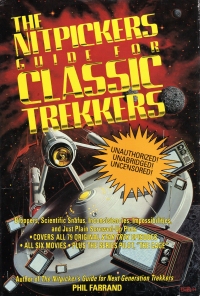
Book Report: The Nitpickers Guide For Classic Trekkers by Phil Farrand (1994)

Book coverI’ve been working on this book for a number of months as a fill-in book when I sat down and had only a couple of minutes to read, so I needed something quick with short, discrete chapters.

This book is an episode guide of the original Star Trek television series. It follows up the author’s earlier work of similar nature for the Star Trek: The Next Generation series; given that the other was still on television at the time, this would have made the earlier work about the later program more relevant in the marketplace, and its success must have guaranteed at least this reviewed volume. At any rate, each episode listing includes a brief recap of the plot, a detailed list of cuts made when the episode was put into syndication, production goofs, places where the episode went against other episodes, a couple of trivia questions, some places where props are reused, and finally a list of the stills that displayed over the closing credits. Other additional chapters cover the movies, and the action is broken up with some musings on Star Trek and society as well as enumeration of Star Trek tropes.

The fellow watched both the uncut versions (as sold by Paramount in the 1990s) along with syndicated versions recorded off of television to get his cuts section and to get into the nitty gritty of the program. It seems like a whole lot of work to produce an encyclopedia of trivia.

Which I read, albeit slowly, in dribs and drabs. It, like other Star Trek titles, makes me want to watch the original series again. Perhaps when I find it inexpensively at a garage sale. Or, given that I found season 1 of The Next Generation a couple years ago and have yet to watch it, perhaps it will be some years after I find it inexpensively. But probably soon after I read a book like this.

Books mentioned in this review:
Buy My Books!
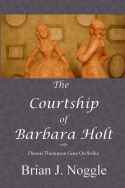
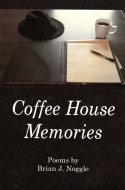
Buy John Donnelly's Gold Buy The Courtship of Barbara Holt Buy Coffee House Memories

Down the Slippery Slope

The critics predicted it: Gay marriage becomes the law of the land, and people would start buying albums of show tunes.

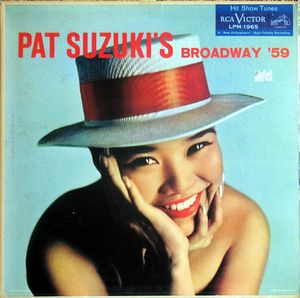
Although, in my defense in this case, it was a collection of Pat Suzuki singing show tunes:

If Mark Steyn can listen to show tunes, I can, too.

At any rate, the acquisition stems from a recent trip to the local thrift store. I was looking for a cheap television set to hook a couple of old computers. I didn’t find any, but I did find the shelf with the crates of LPs on them. Ha, just kidding! I knew where it was all the time, and I went right to it after realizing that thrift stores generally don’t have old televisions any more.

At any rate, check out what I have in a sort-of Johnsonesque roundup:


This includes:

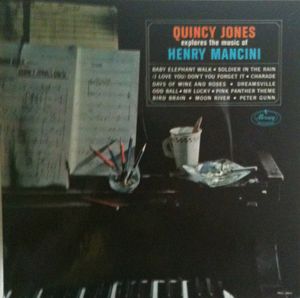
  • Quincy Jones Explores The Music of Henry Mancini.
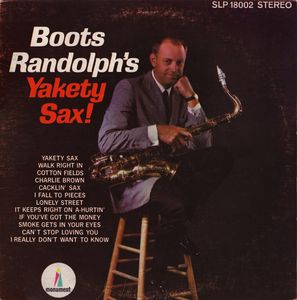
  • Boots Randolph Yakety Sax. My children will never equate this song with sophisticated British comedy that our fathers all enjoyed.
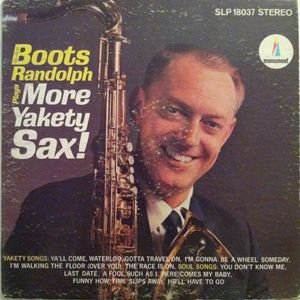
  • Boots Randolph More Yakety Sax.
  • Boots Randolph Boots with Strings.
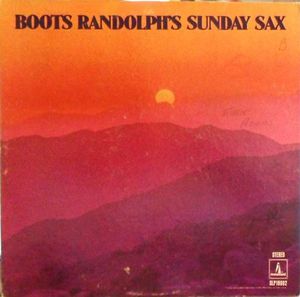
  • Boots Randolph Sunday Sax. I figure, if I buy one from a new artist, I should buy all that I find. Just in case I like the artist.
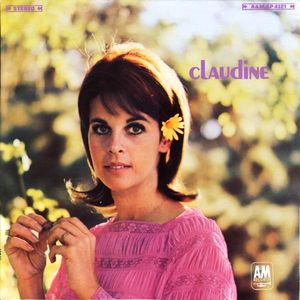
  • Claudine Longet Claudine.
  • Claudine Longet The Look of Love. Claudine Longet, at first blush, seems a little soft and breathy for LPs. I tend to put on a record and listen to it from the next room, so stronger voices tend to sound better. Longet, like Erin Bode, might be better for CDs and closer listening. Longet appears on A&M records, Herb Alpert’s label. I’m enjoying exploring its catalog as I gather records.
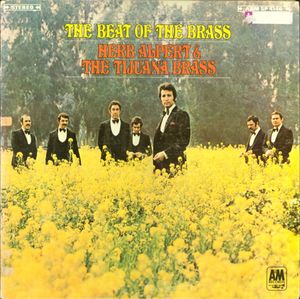
  • Herb Alpert & The Tijuana Brass The Beat of the Brass. I bought this one, a title I already owned, because the cover is in better condition. If I put the better record in the better cover, is that like mixing serial numbers on a collectible car or gun?
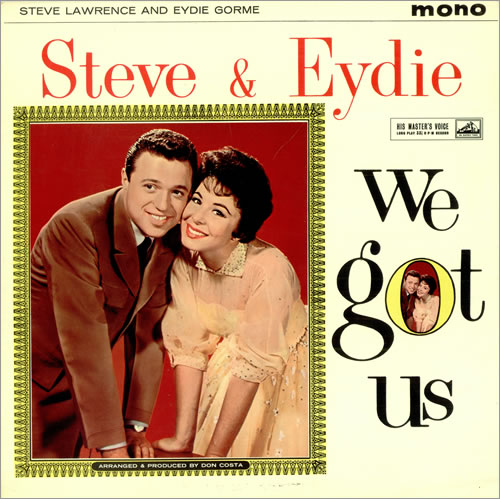
  • Steve Lawrence and Eydie Gorme We Got Us. I will buy Steve and Eydie albums because of Eydie; I left a couple of Steve Lawrence solo works in the bins.
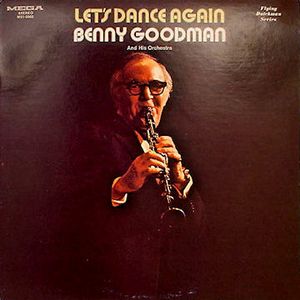
  • Benny Goodman and His Orchestra Let’s Dance Again. Pete Fountains is leading me to appreciate the clarinet. How many people in the 21st century would say Pete Fountains led them to give Benny Goodman an audience? Very few. Or one.
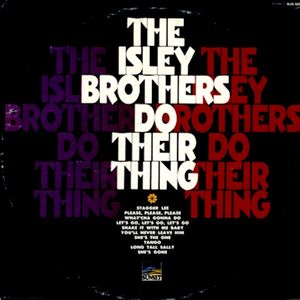
  • The Isley Brothers Do Their Thing. Not to be confused with “It’s Your Thing” which the Isley Brothers do. The Isley Brothers do all things.
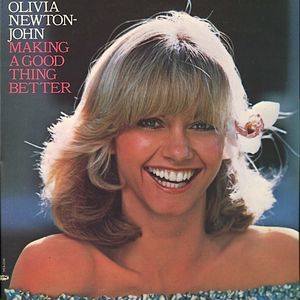
  • Olivia Newton-John Making a Good Thing Better. Because as of this spring, I’m apparently a collector of Olivia Newton-John albums.
  • Louis Armstrong and His All-Stars I Love Jazz!.
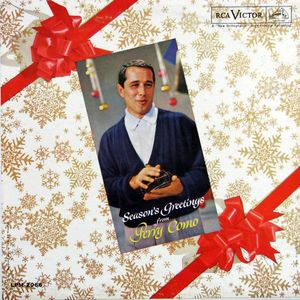
  • Perry Como Season’s Greetings from Perry Como. Because I’ve recently started finding Perry Como albums in the wild (after I said one rarely does), I’ve started buying them.
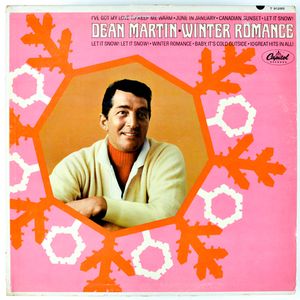
  • Dean Martin Winter Romance. This is the other Christmas album, the one with “Baby, It’s Cold Outside” on it. (The non-other album, of course, is The Dean Martin Christmas Album.)
  • Bennett & Basie Strike Up The Band.
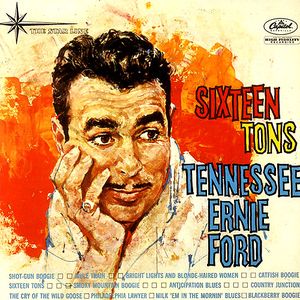
  • Tennessee Ernie Ford Sixteen Tons.
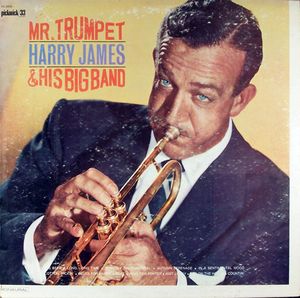
  • Harry James and His Big Band Mr. Trumpet. I’ve never heard of Harry James before, but apparently he played for Benny Goodman before starting his own band at 23. I’ll look for more of his work in the future.
  • The McGuire Sisters May You Always.
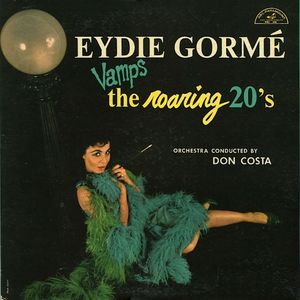
  • Eydie Gorme Vamps the Roaring 20s.
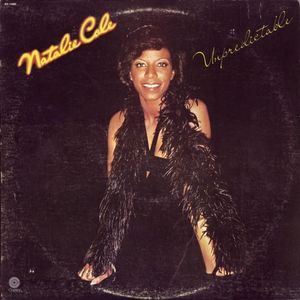
  • Natalie Cole Unpredictable. When I first say it, I thought the word was Unforgettable, and I was confused as to why the song was not actually on the album. Danged cursive.
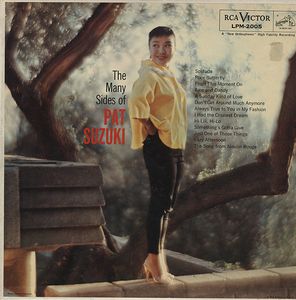
  • Pat Suzuki The Many Sides of Pat Suzuki.
  • Pat Suzuki Broadway ’59. Again, when I see multiple discs from an artist I don’t know, I’ll tend to buy them all in case I like the artist. This turned out well, as Suzuki has a strong voice and belts out some songs. These two discs represent half her catalog, which is a shame.

It was a fruitful trip, except for the no televisions. I think I’ll use the search-for-televisions thing to hit one or more other local thrift stores and see what other LPs I can gather, at least until my beautiful wife becomes my beautiful-when-she’s-angry wife.

Buy My Books!
Buy John Donnelly's Gold Buy The Courtship of Barbara Holt Buy Coffee House Memories

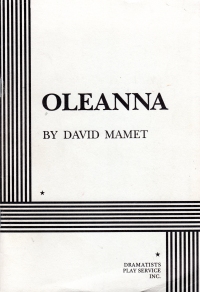
Book Report: Oleanna by David Mamet (1992)

Book coverThis is a brutal little play. That came out in 1992. Bear that in mind, and even if you don’t, I’ll repeat it: 1992.

The play is a short three act play with only two characters. In Act One, Carol, a student, comes to professor John’s office. She’s failing his class in education and wants help; he’s about to get tenure and about to buy a house with his wife. John’s book, which he teaches, talks about how higher education is a hazing process and might not be necessary, really. She doesn’t get it, really, and he wanders a bit afield in his musings. In Act Two, John has been denied tenure because Carol has filed a report accusing him of making improper advances in their previous meeting. He’s sought to meet with her to clear the air. He explains about wanting tenure even though he’s an iconoclast in Educational education. In Act Three, Carol has become even more militant and throws around a lot of the boilerplate feminist terms; in this third meeting, John has been thrown out by his wife and stands accused of raping Carol. At the end, he beats her and curses her.

The play’s a little ambiguous in whether John really was moving the conversation in the direction of impropriety in Act One, but he’s crazy stressed out about the whole thing, and the purchase of the house and whatnot. Circumstances do seem to set him up, and Carol makes the allegations she does by cherry-picking his words and turning them. I don’t know what to make of the beating, though. Self-fulfilling prophecy in her accusations (although it is simple battery, not rape)? Or does the stress reveal John’s true patriarchic inclinations?

At any rate, remember, this is 1992. Twenty-three years ago, Mamet had a play on the road and in New York (and an eventual film) dealing with political correctness and its corrosive effects. That’s the era when Charlie Sykes was writing The Hollow Men and ProfScam about this very thing. I read both in college, actually. So this is something from when I would have been in school, and it dovetails with what we see now.

And Mamet was writing about it back then. Fascinating.

An okay read, though. Not as good as Glengarry Glen Ross, but what is?

Books mentioned in this review:

Buy My Books!
Buy John Donnelly's Gold Buy The Courtship of Barbara Holt Buy Coffee House Memories

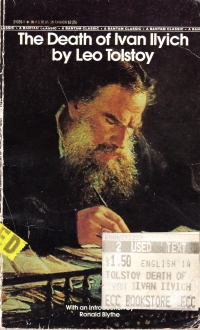
Book Report: The Death of Ivan Ilyich by Leo Tolstoy (1987)

Book coverThis book is pretty short, about 130 pages with 30 some pages of introduction. As I’ve recently rediscovered, one should generally read the introduction to classical literature college textbook editions last. So I did with this book.

Spoiler alert: Ivan Ilyich dies.

The story itself covers the life of Ivan Ilyich briefly, discussing his youth, his entry into government service, his marriage (happy, then tolerated), and his pursuits. One day while preparing his new home in the city for his family, he slips on a ladder and hits his back on a knob. Although he laughs about it at the time, the injury eventually causes his death as some internal damage grows over the course of months. Ivan goes to various doctors and tries various medicines and therapies, but comes to believe he’s dying. As he does, he sees life slipping away and people beginning to move on with their lives without him.

It’s a pretty grim story, and one that resonates with me and threatens to trigger my latent hypochondria. I know exactly what little pains revealed my aunt’s and my mother’s cancers which would kill them in a matter of months. Now I’m going to worry about little bangs when I’m working around the house and floating kidneys.

The introduction gives a brief biography of Tolstoy and then muses on death in literature and philosophy for a length equivalent to a third of the book.

The book itself comes from a university bookstore sometime (although I didn’t get it from one, obviously). As such, it includes someone else’s underlining and marginalia. In this case, a studious student, who underlines metaphors and writes “metaphor” in the margin and who underlines names and writes the relationship to Ivan Ilyich alongside the text, which pretty much gives the relationship in the same sentence. Although my professors encouraged me to “dialog with the text” by marking up my textbooks, I didn’t really enjoy defacing the books that way. Fortunately, this one is not marked up to the point of illegibility.

At any rate, it’s a nice little piece of Existentialist Russian literature, a short read that tackles a subject you don’t get in a lot of books.

Books mentioned in this review:
Buy My Books!
Buy John Donnelly's Gold Buy The Courtship of Barbara Holt Buy Coffee House Memories

Artificial Intelligence Catches Up With 1990s Era English Majors

Back when I was a young man majoring in English and philosophy at the university 1990-1994, I took sport in asking my compatriots in the English department to ask three morals. Not any morals, not even morals that the interrogated actually followed. Just three morals. The question tripped up most of them as they were enlightened in the ways of relativism and would not identify morals at all under threat of possibly being considered a prude somewhere. Now, friends, this is a Catholic (!) university, and the Christian faith has ten prominent morals specified in Exodus and hundreds in other bits of the Pentateuch. Most people could spell out at least three of the Ten Commandments even if they didn’t adhere to them or think they could. But oh so many of those adults would not or could not.

Fast forward twenty years, and these same people are full professors teaching the programmers who have built an AI that gets testy when pressed on morals:

Over at Google, a computer program using a database of movie scripts was asked again and again by researchers to define morality. It struggles to do so, and in a conversation recorded by its human engineers, becomes exasperated and ends the conversation by lashing out at its human inquisitor.

The transcript presented at the link could have been one of the conversations I had while selling doughnuts to support the small literary magazine.

Asimov’s Three Rules of Robotics would have counted as three morals, by the way, but neither the English majors in those days nor modern algorithms read Asimov.

(Link via Ed Driscoll at Instapundit, which sounds weird.)

Buy My Books!
Buy John Donnelly's Gold Buy The Courtship of Barbara Holt Buy Coffee House Memories

Memo for File

In advance of a pool party this weekend, we picked up a couple of theme-oriented pool noodles from the dollar store.

Each of which had this set of warnings on them:

Caution: This is not a lifesaving device. Do not leave child unattended while in use. Adult supervision required. Submerged product, once released, may propel out of water and strike face or eyes.

Retain information and keep for your records.

Do I file that under P for pool or N for noodle? I wish the instructions were more specific.

Buy My Books!
Buy John Donnelly's Gold Buy The Courtship of Barbara Holt Buy Coffee House Memories

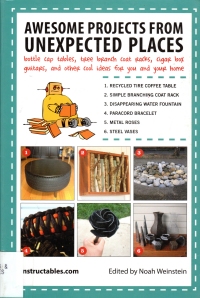
Book Report: Awesome Projects from Unexpected Places edited by Noah Weinstein (2013)

Book coverIn my mind, there’s a line between crafting and Making; I’ve capitalized the m to emphasize the Make movement which is a combination of crafting along with power tools and harder materials. Since many of the projects in this book involve power tools, electricity, and metal, it’s definitely toward the Maker side of the spectrum. You’re not going to do many of these projects at your kitchen table. Most of them require a workshop.

At any rate, the book includes a gamut of projects from embedding objects in an resin tablet top to making a bracelet out of paracords. There are some metal art works, such as a metal flower or metal vases. There are some furniture pieces, including a dining room table made from a recycled bowling alley or a coffee table made from a recycled car tire.

The projects in the book are not junk chic or recycling junk to make new items; some of the projects involve a decent outlay in supplies.

So this wasn’t much what I like to think I do sometimes, but I haven’t done anything of the sort lately. Hopefully checking these books out of the library–before football season even–will inspire me to do something, especially with the junk I’ve already accumulated in the garage.

The projects in this book come from Instructables.com, by the way, so you can head over there to see these and others of their stripe, but not in the handy browseable book format.

Books mentioned in this review:
Buy My Books!
Buy John Donnelly's Gold Buy The Courtship of Barbara Holt Buy Coffee House Memories

Book Report: Shaman King #17 by Hiroyuki Takei (2008)

Book coverThis book is my very first manga, and this book report is my first chance to make the joke Manga but pawn in game of life, although it could probably have used more setup. I wonder if anyone else has ever made that joke before; however, in lieu of researching it (I mean, searching the Internet for the phrase), I’ll just accept my primacy.

Where was I? Oh, manga.

Well, this is the seventeenth volume in this particular story, so I’ve missed quite a bit. There’s a page of characters in the beginning and a couple of paragraphs of The Story So Far. So, the story: There’s a tournament of shamans in Japan. Every five years, they choose a shaman king, and there’s a tournament to see who it will be. There are a bunch of young sorcerors fighting each other to win; there are some alliances happening, and one of the boy’s father comes to teach something but first fights a couple of them. Then the bad guy allies of one come to fight the couple using dirty tricks. And then there’s a cliffhanger. To be continued in Shaman King #18. I think there are 36 in all.

This ain’t my bag, baby.

For starters, it was definitely odd to read from right to left. Undoubtedly, it is good for my brain to do strange things like that, but. Also, the influence of video games on the art and plots mean it’s full of interludes, combat, reflections on player stats (everyone goes on about one character’s 1,250,000 mana!), and panels that identify some power, attack, or spirit animal by putting it all in capitals amongst an explosion image. Also, the book contains numerable-but-why-count-that-high panels of character reaction shots where the startled characters say, “Huh?” I don’t know how many ways Japanese language has to convey this; maybe a bunch of subtle things have been simplified for English readers. Or maybe not. Maybe I’m not the target audience, either, since I’m not all about the comic art and gauge books on the words and plots. But I’m unimpressed.

I still have three or four of these to go through from my recent purchases, and I’ve been warned not to judge all manga from a single volume of some series, but I’m not that eager to jump into another one. Except they’re short, and I’ll be able to let my son look through them. So I’ll probably knock through the whole bunch by the end of the summer.

Books mentioned in this review:

Buy My Books!
Buy John Donnelly's Gold Buy The Courtship of Barbara Holt Buy Coffee House Memories

Oh, Yes, I Did

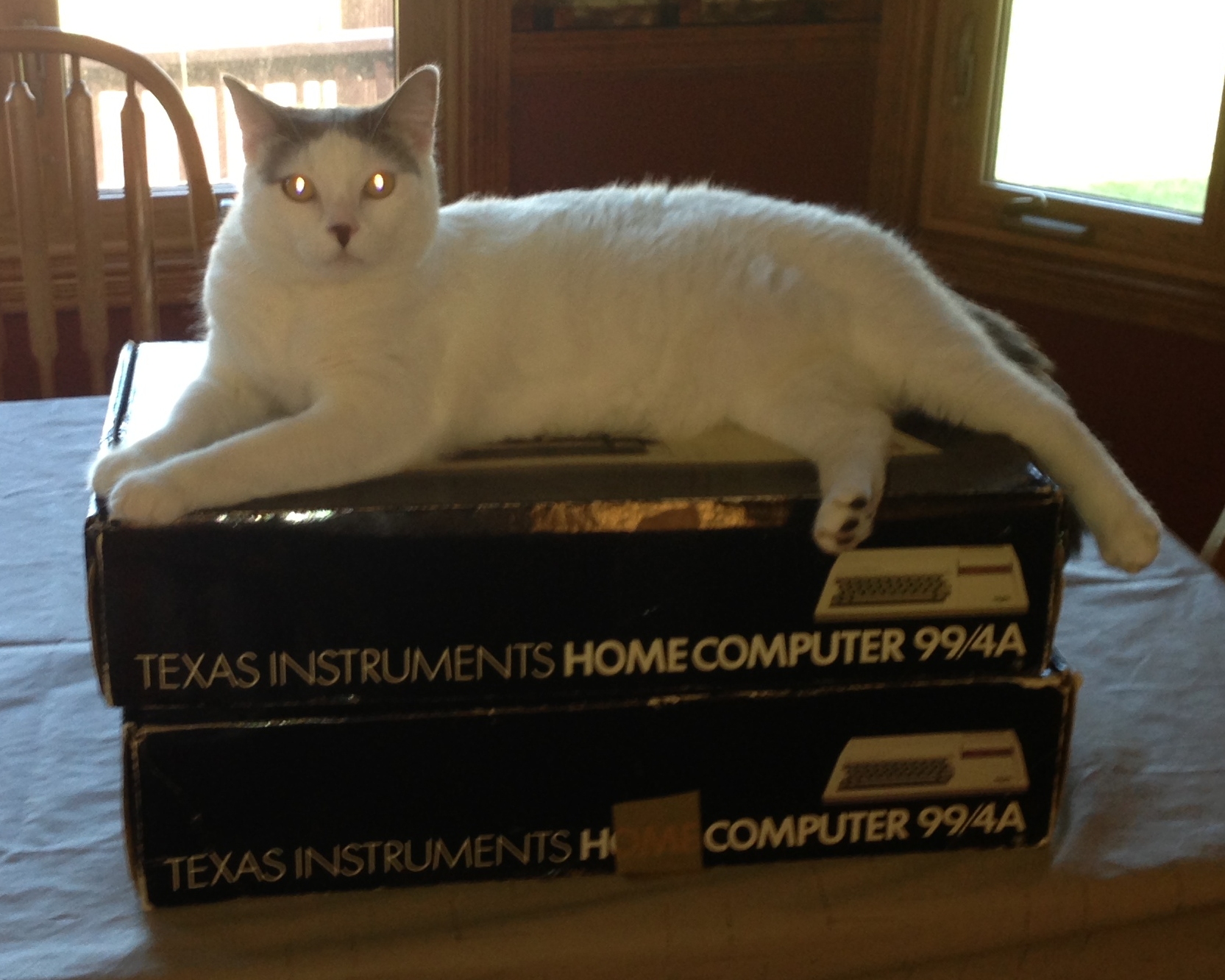
So I dropped a couple items off at Trinity Church on Tuesday for the Lutherans for Life garage sale, and I discovered there that they had a couple of TI-99 4/As in the original box.

So you know I went up there today the minute the garage sale opened to buy my precious.

I haven’t hooked them up yet, but I’ll try them out soon and perhaps dig out a couple of cartridges from my stash. I’ll be the children would like to play Surround or Hustle.

I have to wonder about the story behind these two becoming available at the same time. A pair of TIs for a pair of siblings in the 1980s whose parents cleaned out the garage? Probably something like that.

And this means that I’m now at parity between TIs and Commodore 64s in the house as I have five of each (although a Commodore 128 means I’m still tipped to favor Commodores). In case you’re wondering what I’m going to do with them, my beautiful wife suggested that I display them all in my House on the Rock clubhouse. When I get insanely wealthy. Which I have a better chance of than finding an old Apple II variant at a garage sale in the 21st century.

Buy My Books!
Buy John Donnelly's Gold Buy The Courtship of Barbara Holt Buy Coffee House Memories

Surprisingly, Government Numbers Don’t Bear Up

Home efficiency upgrades fall short, don’t pay: Study:

Home efficiency measures such as installing new windows or replacing insulation deliver such a small fraction of their promised energy savings that they may not save any money over the long run, according to the surprising conclusion of a University of Chicago study.

The study, which used data from a random sample of 30,000 low-income Michigan households that were eligible for an Energy Department home weatherization program, found that the projected energy savings were 2.5 times greater than actual savings. As a result, energy bills didn’t decline nearly enough to eventually pay for the initial cost of the upgrades.

“The problem is that the real world is screwy,” said Michael Greenstone, an energy economist and head of the Energy Policy Institute at the University of Chicago. “The models project much larger savings than are realized by homeowners.”

Strangely enough, projections and modeling designed to influence or dictate behavior don’t bear up under actual scrutiny and real world experience. Just another place where science and government statistics diverge. Well, no, I guess it’s the same place, the one called “everywhere.”

Buy My Books!
Buy John Donnelly's Gold Buy The Courtship of Barbara Holt Buy Coffee House Memories

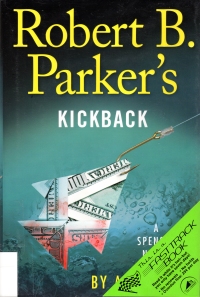
Book Report: Kickback by Ace Atkins (2015)

Book coverMy beautiful wife saw this book at the library and brought it home for me to read in a hurry, since it’s a new book and is only available for a week checkout. So I did.

Welp, the book is an Ace Atkins Spenser book, and he’s moving more into his style than merely imitating Parker’s here. In the book, Spenser works to investigate the relationship between a judge in a small Massachusetts town who sentences juveniles to a for-profit rehabilitaton facility and the for-profit company running it. Of course, the new mob is involved somehow, although I’m still unclear as to how.

My enjoyment of the book is probably diminished by how soon after the Travis McGee books it came.

Atkins’ style for these books, as I’ve mentioned, seems informed by television; the scenes are television-like scenes of scenery and dialog, and the ending of the book wraps the plot up with an explanatory resolution and then some things that might be woven into a future episode. Or not.

The writing also suffers from a couple other flaws:

  • The reliance on the italicized other point-of-view chapters. Instead of the criminal, though, we get a tangentally related unfolding story of not Spenser’s focal point on the island, but another youth sentenced to the facility for a crime we’re only sort of aware of. His story isn’t fully fleshed out, but it’s included because it gives the book a Youth In Jeopardy storyline so favored in Brandman’s Jesse Stone books and gives the book grounds for a cinematic but otherwise extraneous Spenser swoops in in the nick of time to rescue said youth.
     
  • Some extraneous wordage, including some repeated things. At the outset of the book, when Spenser’s in his office, there’s a touch of description and interaction with the mother of a teen sent to the institution, and there’s a sentence tacked on that says his Brooklyn Dodger hat and peacoat are hanging by the door. But the sentence is tacked onto an unrelated paragraph. Throughout, we’re told about his Dodgers hat and peacoat over and over. Aside from that, there’s a whole chapter of Spenser meeting someone at a textile museum that adds nothing to the story but does describe the museum in detail. It makes one wonder if the author researched it or visited it and had to throw that in to justify writing the trip off.
     
  • It lacks the depth of MacDonald’s writing, where the asides add some resonance and muse on the meaning of life aside from the crime story. To be fair to Ace Atkins, Parker’s writing started to skip over those flourishes around the time of his trips to California for the television series Spenser: For Hire.

Is it a good book? Is it a bad book? It’s a modern crime fiction book, and it’s probably not a bad example of the genre. But it’s nothing compared to the paperback originals from fifty years ago.

Books mentioned in this review:
Buy My Books!
Buy John Donnelly's Gold Buy The Courtship of Barbara Holt Buy Coffee House Memories

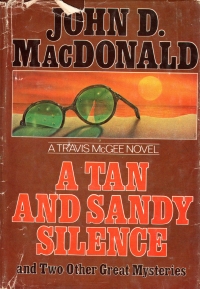
Book Report: A Tan and Sandy Silence and Two Other Great Mysteries by John D. MacDonald (1971?)

Book coverThis book collects three Travis McGee novels from the late 1960s into a single hardback edition. The originals, it should be noted, were in paperback. The three books are A Tan and Sandy Silence, The Long Lavender Look, and Bright Orange for the Shround.

In A Tan and Sandy Silence, McGee investigates the disappearance of an former lover after her husband comes looking for her upon The Busted Flush and tries to kill McGee. Travis discovers a disturbing financial plot, philandering, and a sociopathic French Canadian accountant involved in a land development scheme with the husband. The book also has a subplot about McGee contemplating retirement and marrying a wealthy widow. In The Long Lavender Look, McGee and Meyer find themselves framed for murder in a remote Florida county where they’re mistaken for murderers of a local hoodlum who just got released from prison after his last score. Locals, including some of the police, are on the hunt for the proceeds of the heist. In Bright Orange for the Shroud, a formerly well-to-do acquaintaince finds Travis and eventually tells of how his new wife involved him in a land development swindle that picked him clean. McGee tries to recover some of the money from the swindlers and finds a backwoods badman of which nightmares are made.

It’s been a long time since I’ve read a McGee book (actually, it’s only been four years since I read The Turquoise Lament). It seems like longer, though, because I tore through these in high school and have not made a concerted effort to re-read them since (unlike the Spenser series, which I last read through from start to finish about fifteen years ago–there were a lot fewer to get through fifteen years ago). So after a little taste of MacDonald with End of the Tiger and Other Stories, I picked up this collection I had standing around. And I’ve rediscovered how much I like this series.

There’s action and interesting plots that we discover along with McGee (remember when this was a thing–that the reader discovered the plot along with the protagonist instead of having the bad guys have their own chapters in italics so everything was clearer at the outset? Modern readers must lack patience, or authors fear the old people who still read books might die off before seeing their genius machinations at the end of the 400-page thriller). The books are at times a bit wordy, a bit musing, but the passages include digressions such as this from A Tan and Sandy Silence:

I went below, turned on a few lights, built a drink, ran a thumb down the stack of tapes, picked Eydie, and chunked her into the tape player and fixed volume.

Eydie has comforted me many times in periods of stress. She has the effortlessness of total professionalism. She is just so damned good that people have not been able to believe she is as good as she is. She’s been handed a lot of dull material, some of it so bad that even her best hasn’t been able to bring it to life. She’s been mishandled, booked into the right places at the wrong time, the wrong places at the right time. But she can do every style and do it a little better than the people who can’t do any other. Maybe a generation from now those old discs and tapes of Eydie will be the collectors’ joy, because she does it all true, does it all with pride, does it all with heart.

So I settled back and listened to her open her throat and let go, backed by Trio Los Panchos, Mexican love songs in flawless Mexican Spanish.

Twenty five years later, and I know what he’s talking about.

At any rate, the asides, philosophical musings, and bits of self doubt have more depth in them than the similar things you find in the Don Pendleton Executioner novels; given how Pendleton’s paperback originals came after MacDonald’s, I can’t help wonder if the former didn’t directly influence the latter.

I didn’t remember much from these books–the subplot from A Tan and Sandy Silence being the thing I remembered the most–I should really look back to this series and reread it for pleasure. Although I’ve got few of them on my to-read shelves, and I feel obligated for the most part to hit those before returning to books that I actually enjoy. So maybe I’ll get lucky and find some other omnibus editions in the book sales of Springfield sometime soon. Of course, I have plenty of other MacDonald paperbacks to read, and my recent experience has reiterated that they’re worth my while.

Books mentioned in this review:

Buy My Books!
Buy John Donnelly's Gold Buy The Courtship of Barbara Holt Buy Coffee House Memories

The Story of the Easter Chewbacca

It was Easter, so I was at church in a suit that Ace Atkins would mock. After the morning service, the church offers a fellowship half hour where you can generally eat doughnuts, drink coffee, and socialize, but, on Easter, the youth group made real breakfast food as a fundraiser. And, man, I could use it. The church service, filled with infrequent visitors, included a communion.

As I got into the very long, line, a couple of family friends met with me. The wife presented me with a bag and said it was a gift for my beautiful wife and I.

“I hope it’s something to eat,” I said. “I need something to tide me over while I go through the line.”

The wife said it wasn’t, but the husband disagreed, saying it could be if you were hungry enough.

So I looked into the bag, and it’s a little stuffed Chewbacca, a Hallmark Itty Bitty. “You’re right, it looks to be a little Chewie,” I said. Ha! I kill me* and make others want to.

So I stuffed the plush sculpture into my suit jacket pocket where one would normally put a handkerchief. In my university days, the early denim jacket days before the final trench coat days, I carried a little stuffed panda (Edwin) in the jacket pocket. I was a strange young man, but I’ve evolved beyond that.

On Easter, I hoped someone would ask me about the Chewbacca just so I could respond with, “Do you know the story of the Easter Chewbacca?” When the questioner would undoubtedly answer in the negative, I could respond, “Neither do I. I was hoping someone would tell me, because someone gave me this on Easter, and I hoped there was a story.”

So I’ve brought the Easter Chewbacca home and put him atop the grandfather clock in the parlor.

He sits opposite a small leather mouse whose story I know, sort of: Slim, the man who bought the clock and later married my aunt, put the mouse on the clock because of the nursery rhyme (“Hickory Dickory Dock”, I explain to you young people whose modern nursery stories are Minecraft or Five Nights At Freddy’s). As each new owner has inherited the clock (my aunt, my mother, and then I) and as each owner moved, that little mouse ended up atop the clock.

Now, the mouse has a partner. And we have a mystery for the ages: Why, exactly, did I receive a Chewbacca on Easter? Perhaps it was for my beautiful wife, and she knows the story. I suppose I could ask the friends who gave it to us, but, honestly, the truth is generally more disappointing than idle speculation, especially when you have an imagination as vivid as mine.

Perhaps you know the story of the Easter Chewbacca. Please feel free to leave the “truth” of the matter as your fevered imagination invents it in the comments.

Below, Chimera offers a commentary on the Easter Chewbacca:
Continue reading “The Story of the Easter Chewbacca” →

Buy My Books!
Buy John Donnelly's Gold Buy The Courtship of Barbara Holt Buy Coffee House Memories

It’s A Shame They Broke Up; Neither Love Nor Rockets Found Much Success Solo

The Love and Rockets song “So Alive” has entered the playlist of about 200 songs that the local “Most Variety” radio station runs through in roughly the same order but at different times during the day. Almost as though making the programming run on an 18 hour cycle will mask the fact that it’s canned and looping.

I don’t particularly care for the song and didn’t when it was on the radio as a hit; I remember hearing it come on as I was up late on summer vacation, typing computer programs from magazines into a computer room at the house on the gravel road deep in the Heads Creek valley between House Springs and Otto, Missouri, after the rest of the household had gone to bed. The reward was seeing a terribly low resolution ball bounce in a terribly low resolution maze if all the typing matched the checksums at the end of the line.

Now, I hear the song on the radio, and I quip to my children, “It’s a shame when they broke up, because neither Love nor Rockets had much luck solo.”

They don’t get it.

And back in those Commodore 128 summers, we didn’t actually have a way to easily look up whatever happened to those guys. They cut a couple records after the one that spawned their biggest hit, but did not have the same success and they broke up in the 20th century and briefly reunited in the 21st century for a bit of nostalgia.

Buy My Books!
Buy John Donnelly's Gold Buy The Courtship of Barbara Holt Buy Coffee House Memories

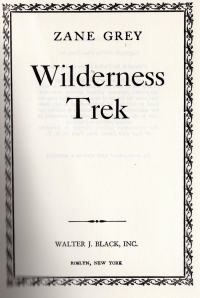
Book Report: Wilderness Trek by Zane Grey (1944)

Book coverI was talking to a friend of mine, and he mentioned that he was reading a Zane Grey western. It’d been a while since I read one (December 2011 to be exact), so I picked up this book.

The book takes place in Australia; two cowboy friends hire on as drovers for a man who is part of a large expedition designed to drive several thousand head of cattle from several “stations” (ranches) across the Australian outback. However, during the course of the trip, one of the two vies for the affection of a lovely young lady with a suspicious drover who has cattle-rustling designs on some of the docile Australian cattle.

The book is 304 pages long, and it feels every one of them. The descriptions are lush, and the action is slow to start as the characters, the relationships, and the courtships begin. Strangely, the confrontation and gunfight with the bad guys takes place at about page 200, which leaves 100 pages of wondering what’s coming next. As it stands, natural disaster and natives provide the set pieces between then and the successful arrival a continent away and the promises of marriage that follow. As my friend says, Western novels are just romance novels with horses and gunplay.

The book isn’t paced as fast as I prefer, and it’s not my bag (although it’s more my bag than, say, the Gunsmith series). Still, the Australian setting triggered my rewatching of Quigley Down Under and might have inspired the recent purchase of Crocodile Dundee. So it’s got that going for it.

Books mentioned in this review:
Buy My Books!
Buy John Donnelly's Gold Buy The Courtship of Barbara Holt Buy Coffee House Memories

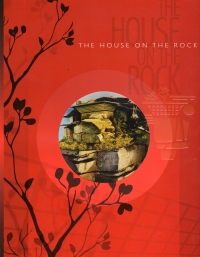
Book Report: House on the Rock

Book coverThis book is a picture book sold at the House on the Rock to help you remember your visit. It does more than that, actually, as the photographers used lights in taking the pictures. You can actually see the rooms.

For those of you who haven’t seen it, the House on the Rock is a domicile of sorts built by a man atop a sandstone column starting in the 1950s. The original house stands atop the column, but over the decades between then and now, the fellow (Alex Jordan) and the people he picked to maintain the building have continued adding to it. So the flavor is something between (I would presume) the Winchester House and Hearst Castle. The original house is now surrounded by gardens, other buildings, and a museum dedicated to Alex Jordan, so it’s not clear to the casual visitor that the house is on a rock at all.

But back to this book: It’s a tourist hagiography of the facility and a bit of Alex Jordan, so don’t expect any depth or criticism. Instead, it goes on in marketingese about the various collections and oddities that the attaction houses, which is useful, since one should expect to be overwhelmed when visiting the place in person. It took us almost four hours to go through all the stuff at a pretty consistent pace throughout, without dithering or lingering on anything in particular.

The images in the book are brighter and clearer than the underlit interior of most of the actual House on the Rock itself which has a definite cave feel. Whether they do this to spotlight different things in each room or just to save money on lighting, I don’t know; however, the images are better than the real thing in the areas that they depict.

At any rate, it’s worth a look if you find the book at a book sale. It might not be worth the $20 they charge for it (shrinkwrapped, so you can’t see its contents until you’ve ponied up the dough) at the gift shop.

Buy My Books!
Buy John Donnelly's Gold Buy The Courtship of Barbara Holt Buy Coffee House Memories

A Loss, Finalized

LaVerne Holliday dies; former radio host sold peanuts outside Busch Stadium

I remember listening to her radio program daily when I lived in Casinoport, and when the linked article explains the way she announced herself on the radio, I heard it.

It’s sad to read how she spent her last days. I can’t believe nobody would give her a shot on some other station unless, as the story hints, there was more to her dismissal than cost-cutting.

(You can read more of my raving about WSIE here and here.)

Buy My Books!
Buy John Donnelly's Gold Buy The Courtship of Barbara Holt Buy Coffee House Memories

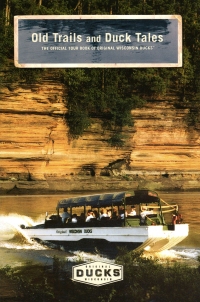
Book Report: Old Trails and Duck Tales

Book coverThis book is a small booklet that recaps the tour of the Original Wisconsin Ducks in the Wisconsin Dells. I recently took this tour, so I know.

I was a little torn as to whether to count this as a book read or to write a book report on it, but I’ve done so for similar booklets offered by tourist attractions I’ve not visited (such as Thomas Jefferson’s Monticello), so I figured why not?

So the trails and tales are the same that you ride on if you tour with this particular flock of ducks (in Wisconsin Dells, there are many, many companies running tours with the Ducks, apparently). The tour talks a little about the Dells, about the history of the area (which includes a lost town of Newport), about the benefactor who donated land for the Wisconsin Ducks to tour on and the home her heirs still share, and about the flooding in 2008 that almost altered the artificial topography of Lake Delton and the Wisconsin River forever until a massive effort of man returned it to its “natural” original artificial existence.

The booklet is very lightweight and doesn’t delve much into the region or any of the historical anecdotes it covers, but it does serve its purpose of refreshing a visitor on the things he or she has seen. It might be a little fresher or novel for someone who hasn’t taken the tour; reading it without the experience of the ride and the guide’s patter as she recounted the stories from the book in order might make the book seem a little deeper (although the paragraphs in the book are slightly more detailed than the audio presentation, but not much) might give one more urge to learn more about the things herein. Or maybe not.

At any rate, it’s worth the quarter I’d pay for it in a book sale, and because I took the trip, it’s worth the fiver I paid for it on the duck.

Books mentioned in this review:
Buy My Books!
Buy John Donnelly's Gold Buy The Courtship of Barbara Holt Buy Coffee House Memories