Tam K. nails it.
Warning: Contains spoilers.
To be able to say "Noggle," you first must be able to say "Nah."
Buy My Books!

One of my Christmas presents was a gift certificate (well, two) for Relics Antique Mall. Which meant I could get something old and/or nice and/or overpriced (like common Atari 2600 cartridges for $8 each, although someday that will be a bargain).
So, of course, I got records.

I got:
Overall, not a bad haul. For free with the gift certificates. Had I known, I would not have put down the copy of Lee Aaron’s Metal Queen which I put back because I don’t tend to listen to rock on the turntable, but as the night went on, I vowed to return for it.
Buy My Books!
In the middle of December, we hit the local Vintage Stock, which sells old comic book, video games, movies, and, I discovered, LPs, to see if they had a Game Boy Advance Legend of Zelda game. They did not, but did I mention they have LPs, many as low as a dollar each?
So I bought a few.

Here’s what I picked up:
They were only a buck each, and one of the Dean Martin covers came with two unrelated platters in it. When I pointed it out to the kid behind the counter, he said “Freebie.” As I said, many of the albums are only a dollar which is cheaper than the thrift stores, and the dollar ones are the ones in my wheelhouse. Others, such as 1970s and 1980s rock, are more than that, but they’re not the sort of thing I listen to on LP.
Hours of listening pleasure, and I ran out of Mylar album protectors after this batch. I know, you’re saying “Did he use four hundred-packs or only three?” Well, to tell you the truth, in all the excitement, I lost track myself. So the question you have to ask yourself is, “Did he order more, the punk?”
Well, yes, I did. And I’ve used over a quarter of the new pack already, but that’s a Good Album Hunting post for another day.
Buy My Books!
This year, I read 104 books, and I’m proud to say they weren’t all genre fiction. As a matter of fact, I’m quite proud of some of the smarter titles I’ve polished off this year, including Existentialism and Thomism; The Gallic and Civil Wars; Discourses, the collection of Aesop, The Brothers Grimm, and Hans Christian Anderson that I read to my children over the course of years; The Screwtape Letters; The Death of Ivan Ilyich; Travels with Charley; and Ivanhoe.
Looking over the annual list, I’m struck again (as I am annually) with that it means in the passage of the year. I can remember where I read many of the books, whether on a trip or sitting on a bench during the Sunday School hour at church. I’m also surprised sometimes that my reading of a book was just this year. On the other hand, when I look back at book reports from years passed, I think, “Wow, has it been eight years since I read….?”
At any rate, here’s the list:
A motley collection of pulp fiction, literary masterpieces, history, biography, philosophy, humor, poetry, drama, art, and sports books.
As I mentioned, or meant to mention, I can remember what most of the books were about, but the most interchangeable and forgetable are the pulp fiction I have so much of. Perhaps I should let this inform my reading for 2016. Or not.
Buy My Books!
On December 14, I wondered Donald Trump: The McCaskill Manipulation Goes National?
On December 28, Allahpundit wonders the same thing:
If this sounds familiar, it’s because Democrats used the same strategy to brilliant effect in the 2012 Senate race in Missouri. The GOP primary was jammed up with three candidates; Claire McCaskill, the Democratic incumbent, wanted to do something to help Todd Akin win, believing (correctly) that Akin would be the easiest of the three to beat in a general election. The solution: Start attacking Akin before the Republican primary, knowing that a big-name Democrat’s official seal of disapproval would be a strong lure to Republican voters to consider Akin. Some of that is pure tribalism at work — Democrats are bad, therefore things they dislike must be good — and some of it is “they’ll tell you who they fear” reasoning at work. The problem is, sometimes they’re not telling you who they fear when they attack. Sometimes they’re telling you who they don’t fear and hoping you’ll fall for it.
You know, this blog was a lot more political when I started out, but I’ve drifted away from it because, honestly, I’m not sure my insights add anything and I don’t think I’m convincing anybody of anything.
I’m not even getting my insights and moments of synthetic thought out into the wild before someone else comes up with them.
Buy My Books!
So amid the monsoon, I’m listening to the rain thunder on the roof of the industrial-plant-turned-antique-mall and the occasional thunder actually thunder throughout the building. I’ve got a couple of gift certificates that I received for Christmas (this is an antique mall, after all, and not a resale shop or used content venue), and I’ve put a stack of (24) LPs on the counter for the woman behind the counter to begin laboriously typing in the tags from each booth where I collected the records, and the man in the CHICAGO BEARS jersey dares to speak to me about vinyl coming back.
It seems he’s a collector, too. He had some 50s, 60s, and 70s stuff before he went into the service, he gave it all away and then spent years trying to recollect what he’d given away. He said he had about 300, which is a number my beautiful wife wishes I’d held to. The fellow also mentioned that Columbia House was restarting because the millenials are discovering vinyl.
I thought he meant Columbia, the recording label, but as Charles points out, the Columbia House record club is resurrecting and selling records.
Briefly, I predict.
On the other hand, I spent less than a penny for my twenty-four records with judicious application of gift certificates and gift cards.
Buy My Books!
The St. Louis Post-Dispatch sports columnist identifies a reason for empty seats at an annual Mizzou basketball game in St. Louis:
The stat that was most eye-catching from the game? Total attendance: 14,456.
Both teams entered the game with some bad losses on their records. But Missouri? Man, its fan base is apathetic because its team is often pathetic.
Missing from his explanation: the continuing ire of alumni after the recent ‘strike’ by members of the (often pathetic) football team that led to the dismissal/resignation of a couple of high-ranking administration.
University of Missouri lost a lot of goodwill from its graduates in that fiasco, and its repercussions are going to echo for years to come.
Buy My Books!
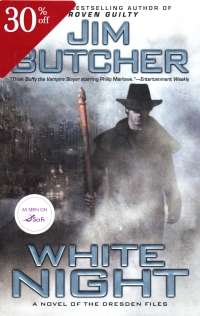 I got this book in October, and when I was looking for something sort of escapist to work into my rotation, it was right there atop the stack.
This is the ninth book in the Dresden Files series, which is indeed about a powerful gun-toting hard-boiled wizard. In this volume, the wizard is looking for someone who is killing witches. While dressed up in his usual clothing. Some clues indicate his brother might be involved. His brother is a vampire, you see, but not a blood-sucking vampire. Instead, he feasts upon the emotions of his victims.
So the book starts out with the current crime and details and starts working us into the case, but just as suddenly it veers into Series Business. Characters from previous books and plotlines impact what’s going on. Of course, the houses of the vampires are politicking and manuvering against each other. Then there’s a mysterious figure whose identity is not revealed at the end, which means that’s something for a later book.
So it’s an interesting conceit–not unlike Hard Magic. But the Series Business distracts me and emphasizes that I’m an outsider to this series, not someone who’s been with it from the beginning. And I think it detracts from the current book’s plot some. It’s not only this book, gentle reader; as you know, I often complained about Robert B. Parker’s later books for the same reason. In the middle 1990s, I started the Anita Blake series by Laurell K. Hamilton, but I dropped out after book five or six (of apparently 21 by now) because so much of the business in each book deals with characters and plots from other books. You don’t get much of that at all in classic pulp, but I guess the modern publishing world relies on the brandification of series and this sort of thing solidifies the connection with recurrent readers. But I don’t like it.
At any rate, reading Butcher’s bio indicates his path to becoming a published writer (and apparently a better-selling author than Larry Correia. He wrote and wrote and submitted and finally started doing conferences where he met…. Laurell K. Hamilton. And his career was on track. It’s pleasing to read of hard work leading to success.
But in a final reflection on the book: I’ll take others in the series if I find them easily, but I’m not going to go buy them new for myself or specifically looking for them at used book stores or book sales. I did, however, buy the first two in the series for my nephew (the same one I got the Correia books for a couple years back). So I did put a couple pennies in Butcher’s kitty which is more than I do for most authors I read these days.
Oh, and this book is the second one I’ve read this month that was originally sold at a Border’s (Blog being the other). I hadn’t thought of that book store in a while. I remember a time when there were a bunch of big book stores like that in St. Louis and here in Springfield. We’re still lucky enough to have a free-standing Barnes and Noble that’s only half-given over to Nooks and toys, and I only get in there three or four times a year. Sadly, I have enough to read without hitting a new book store frequently.
Buy My Books!
I had a little fun on Twitter contributing a bit to the list of #TheForceAwakensSpoilers (caution: may contain actual spoilers).
I wrote most of my spoilers before I saw the film. And they were spot on.
They include:
It’s almost like I had a pirated copy of the script!
Buy My Books!
Buy My Books!
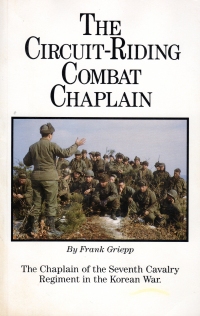 This book is a self-published memoir of a man who served as a chaplain during the Korean War. It’s built from his daily journal, so each day or so we get a paragraph or two that details where he was going, what he was doing, and the services that he held. It’s a remarkable time capsule and throws light on the daily activities of a chaplain in a war zone that you don’t get from M*A*S*H‘s Father Mulcahy. I mean, he has a box he throws in his jeep, and that acts as his altar and whatnot when he stops amongst a squad or brigade to perform an impromptu service. He highlights a piece of scripture, does a short sermon, and then encourages the men. It’s remarkable; Griepp actually won a Bronze Star for performing a service calmly while getting shelled.
At any rate, I highlighted (well, flagged; I’m not the type to put my own ink in books) a couple passages for comment:
In response to a letter from his mother, I looked up Pvt Roy Hartford of the King Company, age 16, and arranged a minority discharge for him.
Can you imagine a modern 16-year-old lying to get into the military? It happened a bunch back then.
Met some of the Marines, as they are fighting right next to our troops. Good soldiers, too, neither superior nor inferior to troopers of the 7th Cavalry.
My whole line wilts a little at this thought. On the other hand, this is a chaplain, so he has to say nice things about his sheep.
May 12 is “M-Day” for Operation Mascot. All of these children had experienced abandonment, rejection, or loss of both parents. Now it was time for another separation.
Apparently, various companies adopted orphans and lost children, and it got to be such a problem that the Army had to make a concentrated effort to keep its soldiers from taking care of the weak and the unfortunate in a war zone. Contrast this with the behaviour of most armies throughout history. And make a point of it in a history class if you dare.
Our personnel officer and Lt Edward Jirikowik, the center company commander, are having a problem. The Lt is expected to locate men to fill vacancies for jobs other than riflemen. Rotation is sending the riflemen home, but leaving typists, drivers, radio operators, and wire men. Such men cannot go until they are replaced by men of like skills.
My father, fresh out of boot camp, was lined up with the others and the first ten men were sent to Okinawa for a clerical position if they knew their alphabet, and the rest went to Vietnam. Which is why my father spent his overseas time in Okinawa. I always thought he felt bad about that because it meant he was unable to fight with his mates, but he might not have liked it because it represented a lengthened committment. I’ll never know, of course.
At any rate, it’s a fast and fascinating read if you’re interested in the history of the Korean War or whatnot. As I mentioned, the book is not just a book, it’s an artifact of a man who wanted to publish it. Check out the rudimentary layout:
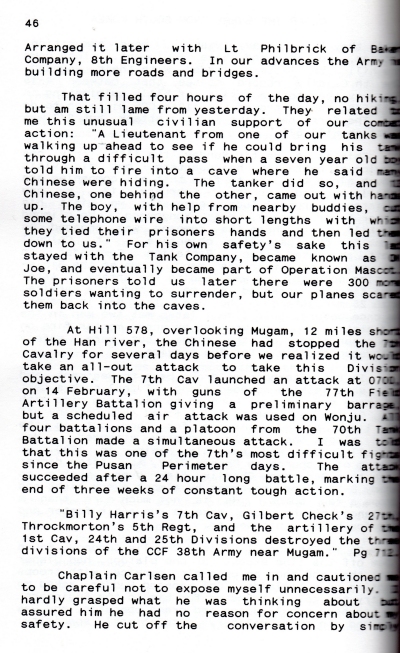
Dan Rather emailed me to say that was laid out using Adobe Pagemaker on an Apple II.
The book also bears an inscription to a presumed comrade (forty years after the conflict). The handwritten message is for the recipient to see page 28; page 28 is starred. I presume this is where the Chaplain and the inscribee met. I hope it’s not the first clue to a treasure hidden in the Korean wilderness since I mentioned it on the Internet and would have put myself in the crosshairs of unscrupulous fortune-seekers if I did.
Buy My Books!
In the middle of September, Instapundit linked to a call for submissions on Jerry Pournelle’s blog:
Accepting submissions for a new volume of the There Will Be War series. Send with cover note to submission@therewillbewar.net. Stories should preferably be 20,000 words or less. Poetry encouraged, but see the previous series; it needs to make sense. Hard science fiction mainly; urban fantasy with a military theme possibly acceptable, but mostly we want hard, realistic stories. They need not be action adventure; good command decision stories encouraged. Space opera always considered. Again see the previous nine volumes.
I was struck pretty instantly with an idea: update Rudyard Kipling’s “Tommy” by re-writing it from the perspective of a cloned cyrogenically preserved mercenary called a Canny. Okay, the name came first and the conceit almost instantly thereafter.
Man, the idea came fast, and I wanted to do it, but I was a haunted man this summer. Timing on various and sundry life activities left me little time to complete projects that I wanted to do. I’d started painting the interior of the house, but didn’t finish, leaving a room half painted; I’d meant to refinish my deck, but I’d only done the inside of the deck, where I could see it on the deck; I have a couple of items on the to-write list that I could certainly place if only I sat still long enough to write them; and so on. I wasn’t finishing anything I started. I was almost paralyzed with self-doubt regarding this idea for a poem.
I mean, in the old coffee shop days, I filled legal pads with sonnets and poems, easily scratching something out in an hour if I wanted to or felt inspired. But lately, writing something is harder than pulling middle-aged teeth as the infrequency of this blog attests. Somehow, a gap emerged between the inspiration/idea and the effort to carry it through.
I did a little research to procrastinate: I ordered one of the earlier volumes of the series to see what kind of poetry it contained. It had Kipling. I thought I was in like Dave in an emergency airlock in 2001. I mean, if I wrote a poem and it turned out any good.
So in spite of my recognition of my recent non-successes, I was determined, and I discovered a gap between determination and doing something. Probably the same gap between inspiration and doing something: laziness or disbelief in an effort resulting in the desired result. Still, I started carving out a half hour every morning. I’d drop my children at school and duck into the local coffee shop to work. I fully expected nothing more to come of it than coffee drinking. Did I mention paralysis in self-doubt? It wasn’t so much paralysis as actively working against myself.
I started out with a laptop so I could do a side-by-side comparison of “Tommy” and what I was putting down, but I quickly switched to a printed copy of “Tommy” and a legal pad. I was dismayed to find out the poem was in iambic heptameter; to someone seasoned in sonnets and iambic pentameter, that seemed a little syllablely, but over the course of four weeks, I managed to eke something out.
And then when all the lines and syllables were filled, I reached the next Hamlet moment: How much do I tweak it? Should I share it with science-fiction savvy Internet connections to see if it works? It was Hamlet and J. Alfred Prufrock time. Could my darker side dither long enough for the submission period to close while I was tweaking and transposing stresses?
Finally, one Saturday morning, I just emailed it in a moment of “What’s the worst that could happen?” By Saturday night, it was accepted.
Today, There Will Be War Volume X was released in a Kindle version.
I understand there is to be a hardcover version next year.
I wondered if the editors would recognize the source material; I expected Dr. Pournelle would, but I didn’t know if he was on the selection committee. Apparently, the source was recognized, as it is included in the introduction to the piece.
At any rate, how about that? Maybe there’s some hope for me as a writer yet if I just put my back into it.
Buy My Books!
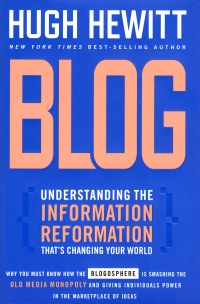 This book was a mighty big deal back in the day when it came out. Bloggers were talking about it, Hugh Hewitt was talking about it. Of course, I didn’t talk about it then because I didn’t get the book fresh off the presses. I don’t tend to get my current events books new unless I get them as a gift; even then, I don’t tend to get right to them because, man, I’ve got 1960s science fiction and/or pulp paperbacks to read, man.
So, what is this book? It’s Hewitt cashing in on the relatively new blogging trend that really reached a crescendo around the 2004 election. Dude, even I was live-blogging presidential debates and nominating conventions. Although I thought blogging would be a good way to get myself writing regularly rather than a way to make money (although in those days, who knew how far you could go?) The book is pretty short; although it is 222 pages, it’s really only 156 pages of new material and then sixty pages of Hewitt’s previous columns on the topic and a number of comments from his Web site.
It’s a quick hitter “aimed” at businessmen who need to know about blogs and what they can do to a business, both positively and negatively. He thumps the washbin about executives hiring Glenn Reynolds, the Powerline guys, Ed Morrissey, and other leading lights as consultants. And it paints a fairly rosy picture of blogs.
Ten years later, most of the people he mentioned as leading lights are still leading lights, or at least bloggers I still read. There’s been a lot of consolidation in the industry, so the aggregate blog trumps individual blogging as far as the amount of noise they can raise. And the microblogging (Twitter) and social media trends quickly overwhelmed blogging, as it’s easier and more accessible to individuals to put up a pithy short sentence than to write what amounts to a short, coherent essay from time to time.
So in 2015, the book is a historical document relevant mostly for its place and moment in the history of online communication. I suppose you could read it and replace the word “blog” with “social media” and get something out of it, but there are probably more modern books on the theme all looking to make a quick two bits on explaining the current state of the Web, and they all come with an expiration date of about two weeks from now.
Strangely enough, though, I got the most out of the early comparison to the Protestant Reformation–in the early going, he likens the rise of Web logs to the changes in communication that made the Reformation possible and how the blogs paralleled it. So it has a history of the Reformation and the rise of printing in it, and I liked that.
At any rate, it might be worth your time if you haven’t read it already.
Buy My Books!
Ed Driscoll says “ANNOY THE MEDIA, VOTE TRUMP” and includes a round-up of media reactions to the Donald Trump candidacy show:

And I can’t help wonder if we’re not seeing a McCaskill Manipulation strategy at work here.
As you might remember, gentle reader, back in 2012 I highlighted a pre-primary strategy by Claire McCaskill to run ads claiming that Todd Akin was too conservative for Missouri. Her organization did this because they felt that Akin would be the weakest candidate to face Claire McCaskill in the actual election.
It worked, of course; Akin was nominated and then said something that everyone could pile on, and Akin lost and we have Senator McCaskill for a couple more years.
I said it in 2012; McCaskill admitted it in 2015 in Politico Magazine:
It was August 7, 2012, and I was standing in my hotel room in Kansas City about to shotgun a beer for the first time in my life. I had just made the biggest gamble of my political career—a $1.7 million gamble—and it had paid off. Running for reelection to the U.S. Senate as a Democrat from Missouri, I had successfully manipulated the Republican primary so that in the general election I would face the candidate I was most likely to beat. And this is how I had promised my daughters we would celebrate.
Now, I don’t want to go all JournoList / Conspiracy Theory here (although the mere inclusion of the word JournoList and the aforementioned boasted McCaskill Manipulation should indicate that conspiracy theories might often involve actual conspiracies), but could we be seeing something like it in the Trump candidacy?
We’ve got a lightweight candidate that the Gatekeepers of Knowledge can fulminate against, and perhaps they hope those mere fulminations will be enough to get less engaged conservative and Republican primary voters and caucus attendees to nominate Trump–so Hillary Clinton can turn him into the national equivalent of Rick Lazio or Todd Akin.
Could it be so? Given the triumphal nature of McCaskill’s article this very year, it’s not unthinkable that it was offered as a template for a national victory.
UPDATE: See also NBC/WSJ poll: Clinton beats Trump by 10 points in head-to-head matchup
Buy My Books!
 This book is a little Hallmark gift pick-up from the 1960s, the kind of simple gift that says I’m thinking about you but don’t know what to get you that’s more substantial. In the late 20th century, gift certificates served the same function. This particular volume was given as a Mother’s Day gift in 1966.
Unlike some books of this type, it collects poems from real poets, like Longfellow, Emerson, Wordsworth, and so on. Real poets whose works were (and still are) in the public domain, but the poems themselves had a greated depth than more recent ones. Of course, the Classics Club was popular enough to be in business in this post GI Bill world of the middle 20th century, so readers and compilers of gift volumes aspired higher than a collection of images with quips cribbed off the Internet.
And this book was not only read, but the recipient read the poems within at socials, and she noted which she’d read so she wouldn’t repeat herself, I guess.
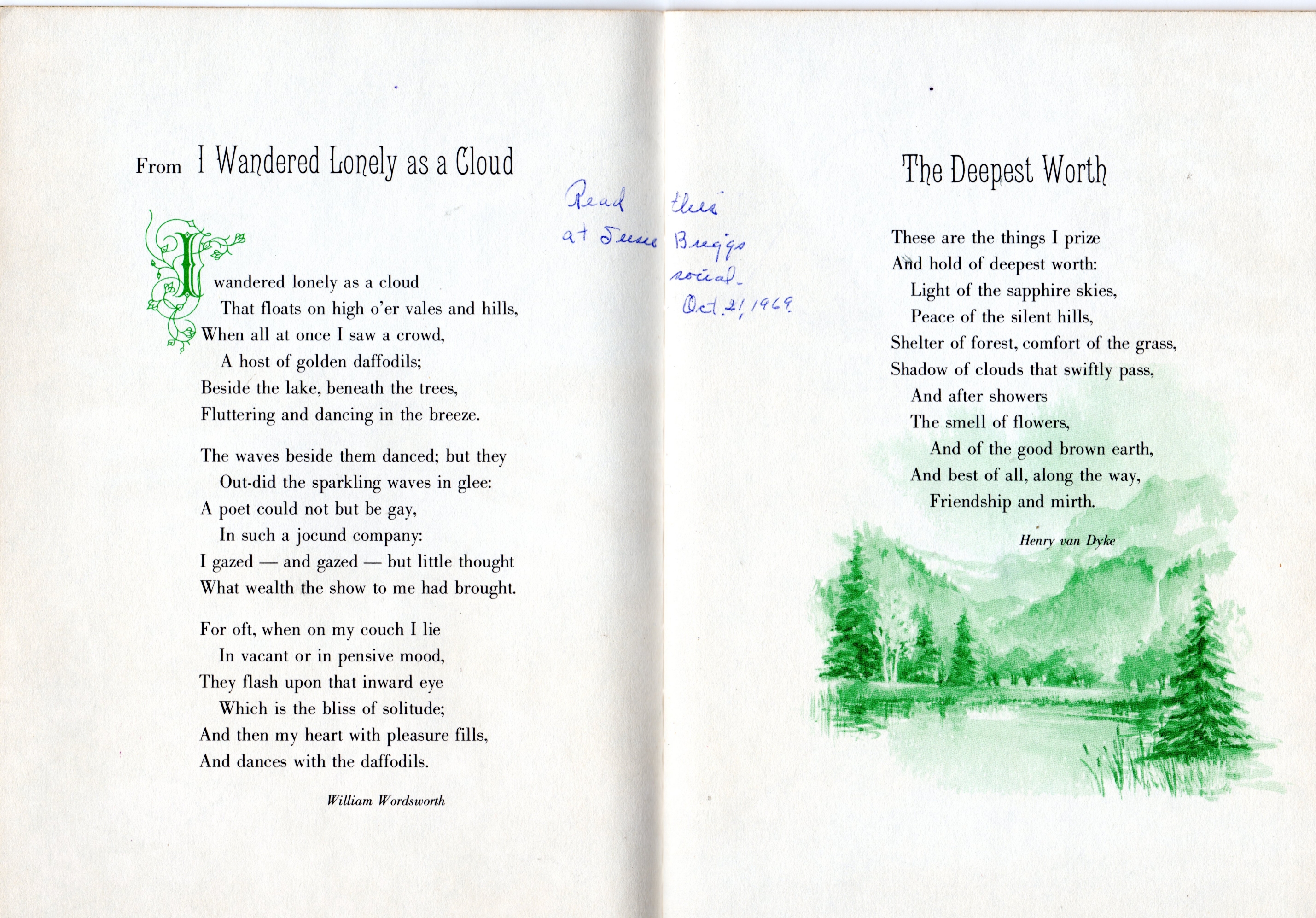
So someone enjoyed this book more than I did, for sure.
It’s a nice, brief collection, and it most pleased me to know someone else, someone’s mother, read and appreciated the poems, perhaps even without a college degree in English.
Buy My Books!
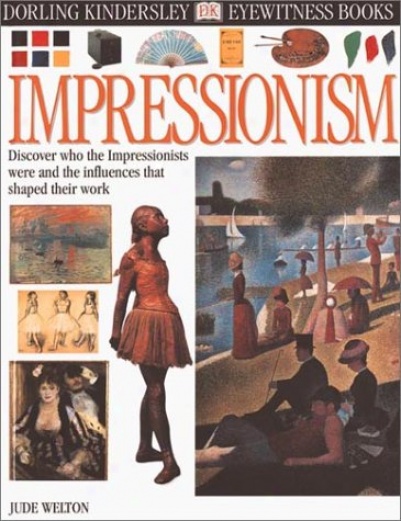 As you can guess, I flipped through this book during football games.
As a Eyewitness book, it’s a graphically designed, visually oriented work with a number of images surrounding brief text, history, and explanations. Like a lot of these survey course coffee table books, the book covers a lot of ground in the Impressionist movement, a brief history, and a bit of individual information about the artists. It has sections (two page spreads) covering some themes and practices shared by the Impressionists and reasons why they’re considered Impressionists. As survey books, it’s not bad; I also see there are titles in the series that deal with the individual authors as well.
Serious students might think these books are a waste of time, but unserious students like me can pick up some tidbits. Two I did from this book: Renoir was one of the first to prime his canvases (that is, put down a base coat of white or gesso so that colors overlaid on the base coat would pop out more) and that Renoir worked wet-on-wet (I know what that is because Bob Ross did that). So I learned something certain in addition to adding to my familiarity with the works and images.
The book also gives a bunch more depth to the non-painting work, such as the sculptures and the cast bronze of the artists. Some other books shy away from this a bit because the paintings are easier to represent two-dimensionally perhaps.
At any rate, a good book to look at for a bit. I’ll keep my eyes out for others in the Eyewitness Books series on art. I think I have one or two on other topics that I’ll have to move up in my reading queue.
Books mentioned in this review:
Buy My Books!
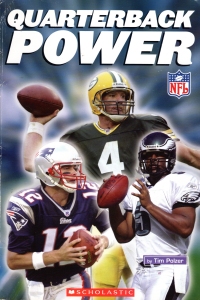 On Thanksgiving, my mother-in-law brought trinkets and gifts for the kids, and I guess I qualify since she brought this book for me. She found it at a church bazaar or something, and it has Brett Favre’s picture right on it (as did this book which is about the same thing).
This book is a Scholastic paperback aimed at grade school children. I’m not sure what sort of statement my mother-in-law was making in giving this book to me. Or was she? Did I just steal a book from my children only because it has Brett Favre on the cover? WHAT KIND OF MAN AM I? Well, it’s only fair. They steal my cartoon books.
At any rate, the book gives brief laudatory bios of good NFL quarterbacks of 2004, including Tom Brady, Brett Favre, Peyton Manning, Michael Vick, Donovan McNabb, and Chad Pennington. The first three are creme-de-la-creme; Michael Vick played for a long time; Donovan McNabb had his day; and Chad Pennington was a quarterback in New York, which New Yorkers think is automatically worth two elsewhere before the season starts and they stink.
It was a quick read, and I was able to finish it on Thanksgiving before the Packers game which the Packers lost. I’d have been better off re-reading this book six times rather than watching that tragedy.
So it’s a bit dated, but not as dated as it will be in four or five years when all of the aforementioned quarterbacks are out of the league and some are in the Hall of Fame, including Chad Pennington if he goes to visit.
Books mentioned in this review:
Buy My Books!
When this song comes on the radio:
And a cherubic voice from the back seat says, “Why does he want to drive 55?”
Now, if we still lived in St. Louis, I might be able to parry this off by referring to Interstate 55, but not here in southwest Missouri.
Instead, I have to tell him about the 1970s, the Arab Oil Embargo, and arbitrary limits enacted by the Federal government through chicanery and the threat of withholding money from the states and their dependence upon that system of wealth redistribution for basic government services.
The past was a strange place. No stranger than the present, actually, but exotic because it was a different strange.
Buy My Books!
 This book is a short collection of photos and prose about the state of Missouri, but it’s published by the University of Kansas Press. So all of its information is suspect.
The prose is a bit boilerplate and rah-rah, but the photographs are interesting. They’re grouped by city or town, and almost forty years later, they’re more poingant because they’re not only a collection of images of places you might not have been (or maybe you have), but they’re historical throwbacks to the Carter years. So although I didn’t live in Missouri at the time, the types of cars and haircuts depicted in the pictures remind me a little of when I was young. Very young, I guess; I was pre-school aged when the images were taken.
A neat book to flip through during a football game. Or whatever you might watch that doesn’t require that much attention. Hey, some people knit. I flip through books to pad out my annual total.
Books mentioned in this review:
Buy My Books!
Spotted at Walmart yesterday (but before the fusillade):

Christmas stakes.
For when you have to kill a vampire but want to remain festive.
Buy My Books!